
Lower chest exercises with dumbbells: decline, flat bench or floor
Published October 19, 2026
The best lower chest exercises with dumbbells are the decline dumbbell press and decline fly, because a decline bench sets your arms to push down toward your waist, the direction the lower pec fibers pull. With only a flat bench, use the flat press lowered to the bottom of the breastbone, the hex press and the pullover. With no bench, use the floor press and floor fly with tucked elbows. Two sessions a week of 9 to 10 hard sets each is enough to bring up the lower chest.
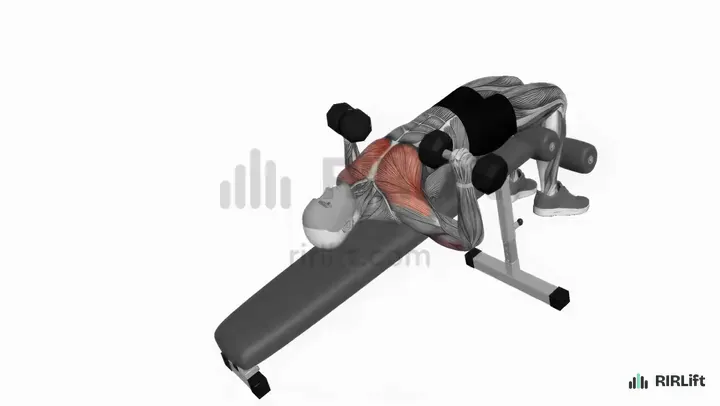
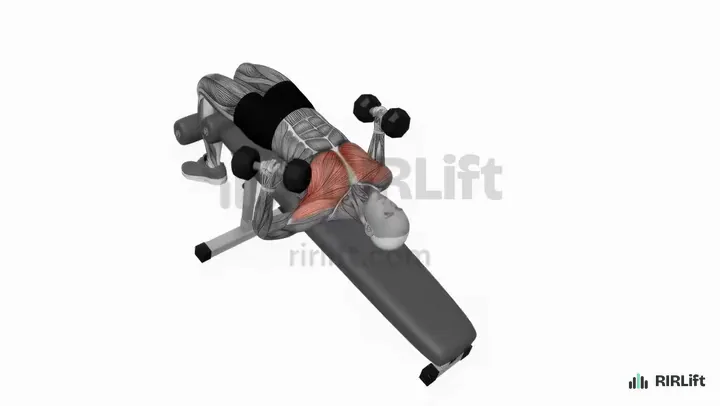
- Decline Dumbbell Press Chest
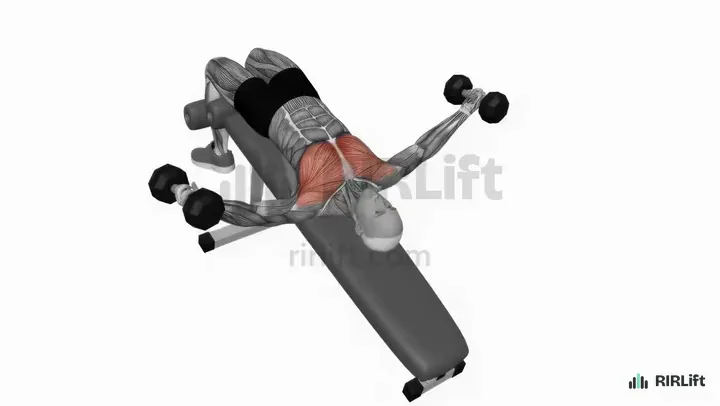
- Decline Dumbbell Fly Chest
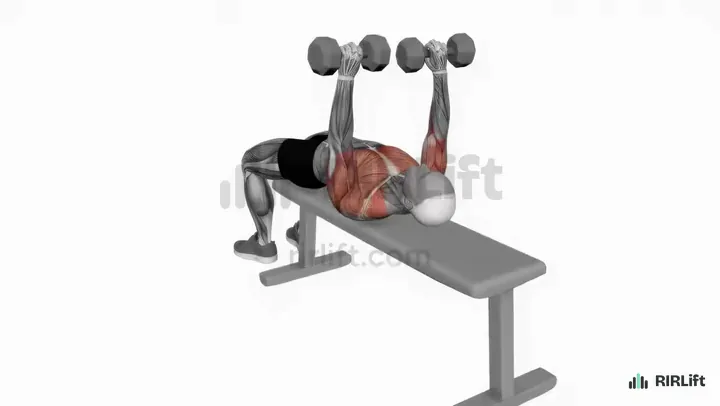
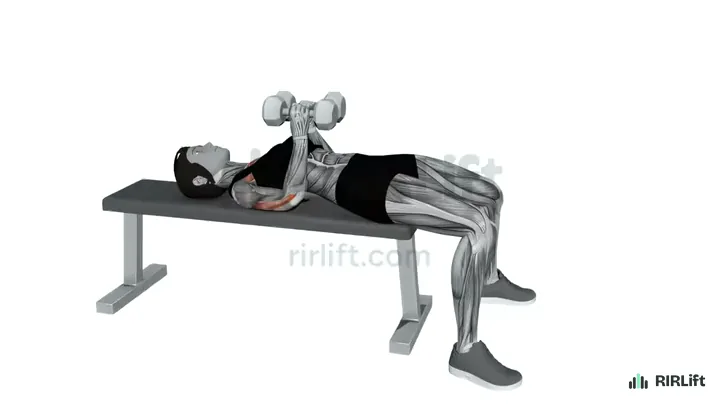
- Flat Dumbbell Press Chest
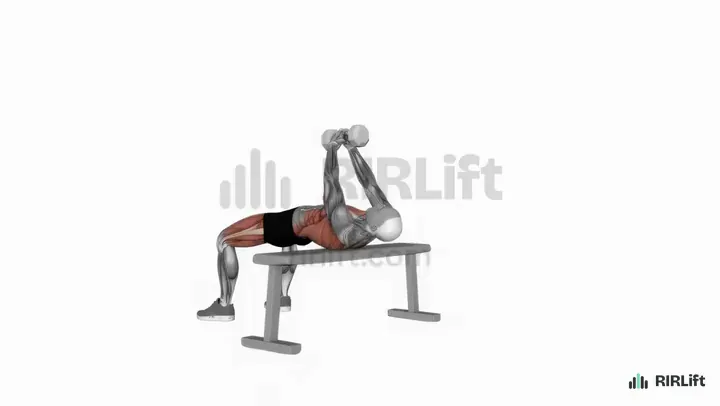
- Dumbbell Chest Pullover Chest
- Decline Dumbbell Neutral-Grip Press Chest
- Dumbbell Hex Press Chest
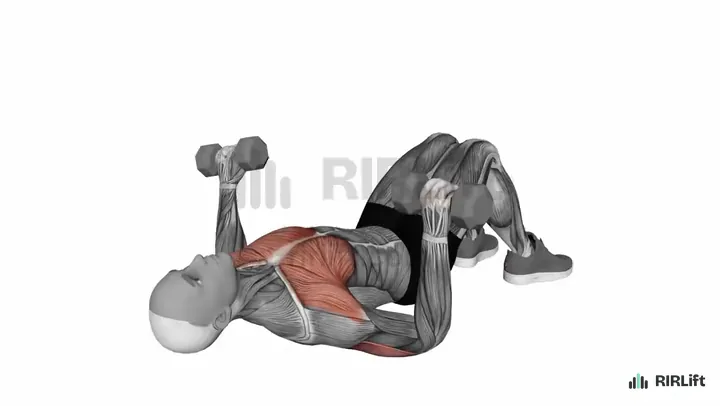
- Dumbbell Floor Press Chest, Triceps
Put them together: example sessions
Each session below picks from the exercises above for one situation, with the sets, reps, rest and RIR filled in. Open one in the session builder to change a pick, price it from a recent set, and add it to RIRLift.
-
Session 1
You have a decline bench
You train in a gym or own an adjustable bench that declines, and you want a lower-chest focus without dropping the rest of your chest work.
2× a week · 19 sets a week · ~25 min
-
Session 2
A flat bench and no decline
Your bench only goes flat or incline, so the decline exercises are out, and you want the lower chest to get more work anyway.
2× a week · 19 sets a week · ~25 min
-
Session 3
Dumbbells on the floor, no bench
You have dumbbells at home and nothing to lie on but the floor or a mat.
2× a week · 18 sets a week · ~20 min
Session 1
You have a decline bench
- Workouts2× a week
- Working sets19 a week
- Per workout~25 min
- EquipmentDecline Bench, Dumbbells, Flat Bench
You train in a gym or own an adjustable bench that declines, and you want a lower-chest focus without dropping the rest of your chest work.
With a real decline, the session can lead with the most direct lower-chest press and load it heavy at 1 to 2 reps in reserve, then follow with a flat press so the rest of the chest still gets trained. The decline fly finishes Session A at 0 to 1 reps in reserve because it is light and safe to push. Session B uses the neutral-grip decline press and the alternating version so the same muscle gets a different stimulus. A has 10 working sets and B has 9.
| Exercise | Sets × reps | RIR | Rest |
|---|---|---|---|
| Decline Dumbbell Press1 warm-up set firstLower to the bottom of the ribs. | 4 × 6–10 | 2 | 2:30 min |
| Flat Dumbbell PressTuck the elbows. | 3 × 8–12 | 1 | 2 min |
| Decline Dumbbell FlyFixed elbows. Pause in the stretch. | 3 × 12–15 | 1 | 1 min |
Open Session A in the session builder
| Exercise | Sets × reps | RIR | Rest |
|---|---|---|---|
| Decline Dumbbell Neutral-Grip Press1 warm-up set firstPalms in, elbows brush the ribs. | 3 × 8–12 | 1 | 2 min |
| Alternating Decline Dumbbell PressReps per arm. Waiting arm stays up. | 3 × 8–12 | 1 | 90 s |
| Dumbbell Chest PulloverAcross the bench. Ribs down. | 3 × 10–15 | 1 | 1 min |
Open Session B in the session builder
- How to run it
- Do Session A and Session B on two separate days a week, at the start of your chest or push day. Keep any incline work you already do; these plans add lower-chest emphasis, not a whole chest program.
- How to progress
- When every set of the decline press reaches the top of its range at the target reps in reserve, move up one dumbbell size. On the fly and alternating press, add reps until you reach the top of the range before going heavier.
Session 2
A flat bench and no decline
- Workouts2× a week
- Working sets19 a week
- Per workout~25 min
- EquipmentDumbbells, Flat Bench
Your bench only goes flat or incline, so the decline exercises are out, and you want the lower chest to get more work anyway.
Without a decline, the lower chest gets its emphasis from technique: the flat press lowers to the bottom of the breastbone, the hex press keeps the elbows tucked and the chest squeezing, and the fly finishes over the lower chest. The pullover covers the stretched position that a decline fly would. The flat press stays at 1 to 2 reps in reserve so you can add weight; the other three go to 0 or 1. Session A has 10 sets and Session B has 9.
| Exercise | Sets × reps | RIR | Rest |
|---|---|---|---|
| Flat Dumbbell Press1 warm-up set firstLower to the bottom of the breastbone. | 4 × 6–10 | 2 | 2:30 min |
| Dumbbell Hex PressSqueeze the dumbbells together. | 3 × 10–15 | 1 | 90 s |
| Dumbbell Chest FlyFinish over the lower chest. | 3 × 12–15 | 1 | 1 min |
Open Session A in the session builder
| Exercise | Sets × reps | RIR | Rest |
|---|---|---|---|
| Flat Dumbbell Press1 warm-up set firstElbows about 45 degrees. | 3 × 8–12 | 1 | 2 min |
| Dumbbell Chest PulloverSqueeze the chest toward the hips. | 3 × 10–15 | 0 | 1 min |
| Dumbbell Hex PressThree seconds down. | 3 × 12–15 | 1 | 1 min |
Open Session B in the session builder
- How to run it
- Run both sessions each week with at least two days between them. They work as the chest part of an upper-body or push day.
- How to progress
- Add reps until every set hits the top of its range at the target reps in reserve, then move up one dumbbell step. On the hex press, a slower three-second lowering is the first way to make it harder.
Session 3
Dumbbells on the floor, no bench
- Workouts2× a week
- Working sets18 a week
- Per workout~20 min
- EquipmentDumbbells
You have dumbbells at home and nothing to lie on but the floor or a mat.
Every exercise here starts from the floor, which limits the range, so the sets stay in higher rep ranges and close to failure to make a short range count. The two-arm floor press leads both sessions, the one-arm version lets a single heavier dumbbell do more work, and the floor fly and pullover add the stretch without any bench. Presses stop at 1 rep in reserve and flies at 0 to 1. Each session is 9 working sets.
| Exercise | Sets × reps | RIR | Rest |
|---|---|---|---|
| Dumbbell Floor PressElbows tucked. Pause on the floor. | 3 × 10–20 | 1 | 90 s |
| Dumbbell Floor FlyHands meet over the lower chest. | 3 × 12–20 | 1 | 1 min |
| Dumbbell Chest PulloverOn the floor, knees bent. | 3 × 12–20 | 1 | 1 min |
Open Session A in the session builder
| Exercise | Sets × reps | RIR | Rest |
|---|---|---|---|
| Single-Arm Dumbbell Floor PressReps per arm. Free arm pressing the floor. | 3 × 8–15 | 1 | 90 s |
| Dumbbell Floor PressThree seconds down. | 3 × 10–20 | 1 | 90 s |
| Dumbbell Floor FlyLast set to failure. | 3 × 12–20 | 0 | 1 min |
Open Session B in the session builder
- How to run it
- Do the two sessions on two non-consecutive days. A thick mat or folded towel under your upper back makes the floor press more comfortable.
- How to progress
- Push each set toward the top of its range at the target reps in reserve. Once a pair stops being hard at 20 reps, slow the lowering to three seconds and pause for two seconds with your arms on the floor before you look for heavier dumbbells.
Make it fit you
-
Your bench is flat but you want a decline
Run the flat-bench plan. Lowering to the bottom of your breastbone and tucking the elbows does most of what a decline does, and the pullover covers the stretch. Do not prop one end of a bench on plates; a bench that shifts under load is not worth the angle.
-
Shoulders ache on flat presses
Switch to the neutral-grip decline press or the floor press. Both keep the elbows closer to your body and stop them before the shoulder reaches its end range.
-
Only one heavy dumbbell
Use the one-arm floor press and the pullover, which both need just one dumbbell. Hold the dumbbell with both hands to get it into position, then press it with one.
-
Upper chest needs work too
Keep one of these sessions and replace the other with an incline session from the upper-chest page. The lower chest still gets plenty of work from flat presses in an incline-led week.
-
Training chest once a week
Do Session A only, but add one set to each exercise. That gives you 13 hard sets, which is about the most one session can use well before the reps get sloppy.
-
Log the RIR on every set
Record the reps in reserve along with the weight and reps. If you log in RIRLift, it uses the RIR you recorded to pick your next weight, so you know when the decline press is ready to go up.
Questions
What is the best lower chest exercise with dumbbells?
The decline dumbbell press. The decline sets your arms to push toward your waist, which lines up with the lower fibers of the pec, and dumbbells let you lower deep and load it heavily. If you have no decline bench, the flat dumbbell press lowered to the bottom of your breastbone is the next best.
Does the dumbbell press work the lower chest?
Yes. A flat dumbbell press works the sternal fibers, which make up the largest part of the chest and include the lower portion. Lowering the dumbbells to the bottom of your breastbone with your elbows at about 45 degrees shifts a bit more of the work toward the lower fibers.
What dumbbell chest exercises can I do without a bench?
The floor press, the one-arm floor press, the floor fly and the pullover lying on the floor. Keep your elbows tucked and the dumbbells over the lower half of your chest. The floor shortens the range, so use higher reps and get close to failure.
How do I work the lower chest without weights?
Use dips with your torso leaning forward and incline push-ups with your hands on a bench or counter, both of which push your arms down toward your waist. The bodyweight chest exercises page has the full list.
Can you target the lower chest on its own?
Partly. You cannot isolate one part of the pec completely, but the angle you press or fly at changes which fibers do the most work. Decline angles and pressing toward your waist favor the lower fibers, while incline angles favor the upper ones.
How many sets for lower chest a week?
Count your lower-chest sets as part of your total chest volume of about 10 to 20 hard sets a week. If the lower chest is a priority, give about half of those sets to decline, low-finishing or pullover work, as the plans here do.
What angle should a decline bench be for lower chest?
About 15 to 30 degrees below flat. That is enough to shift the work toward the lower pecs. Going steeper shortens the range and adds little, and it makes getting into and out of the bench with dumbbells harder.
Related templates
-
Chest exercises with dumbbells, with or without a bench
The full dumbbell chest list, including the upper chest and stretch moves.
-
Dumbbell upper chest exercises: incline presses and flies
The incline half of the chest, to pair with these sessions.
-
Lower chest exercises at home, from bodyweight to dumbbells
Lower chest options with bodyweight and home gear.
-
Bodyweight pec exercises: push-ups, harder variations and dips
Dips and push-up variations for the lower chest without weights.
-
The best workout for chest, matched to your setup
Full chest programs that cover every part of the pecs.
-
How to use reps in reserve (RIR)
How to judge the 0 to 2 reps in reserve targets in these sessions.