
Lower chest exercises at home, from bodyweight to dumbbells
Published October 19, 2026
The best lower chest exercises at home are the incline push-up, where your hands sit higher than your feet so you press down and away like a dip, and the dumbbell pullover, which pulls your arms from overhead down toward your hips. Add the floor press or a flat dumbbell press for weight, and a fly to finish. Your lower chest is the largest part of the pec and it works on every press that pushes forward or downward, so you do not need a decline bench: you need the right angle and sets that end 0 to 2 reps short of failure.
- Incline Push-Up Chest
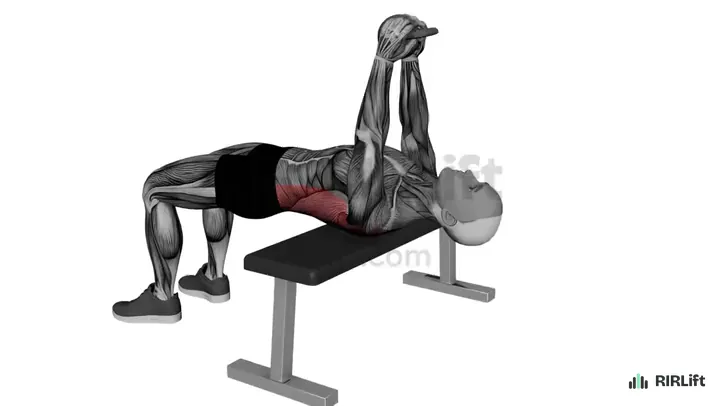
- Dumbbell Chest Pullover Chest
- Deep Push-Up Chest
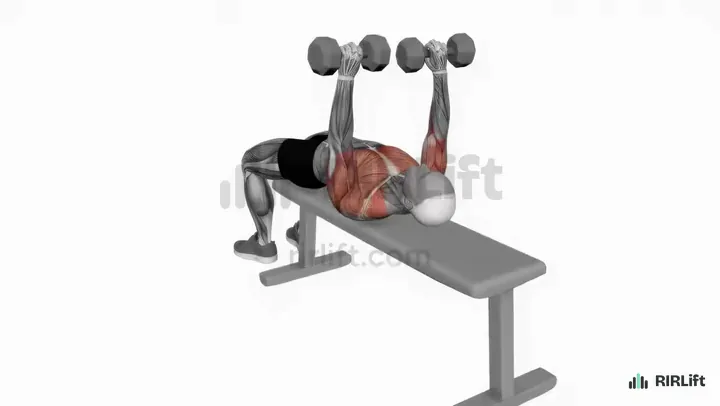
- Dumbbell Floor Press Chest, Triceps
- Flat Dumbbell Press Chest
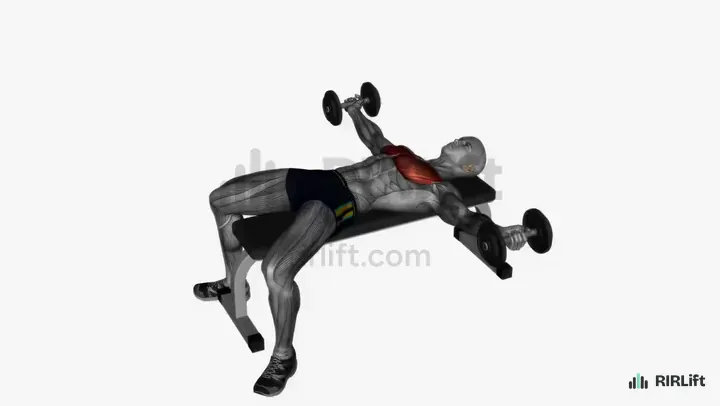
- Dumbbell Chest Fly Chest
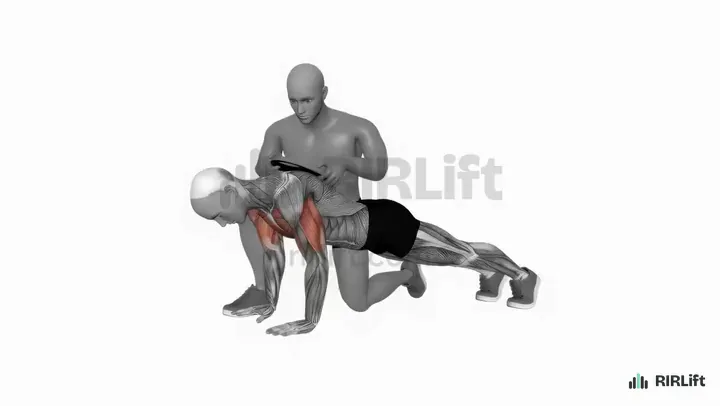
- Weighted Push-Up Chest
- Kettlebell Pullover Lats
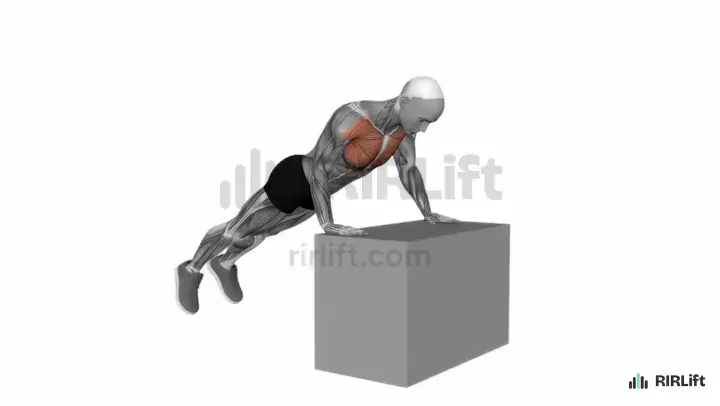
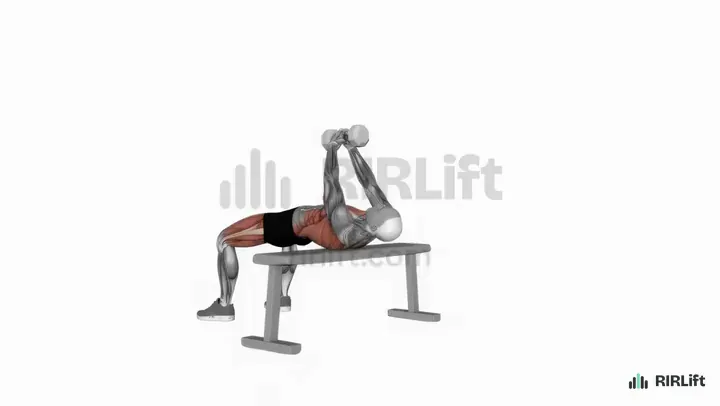
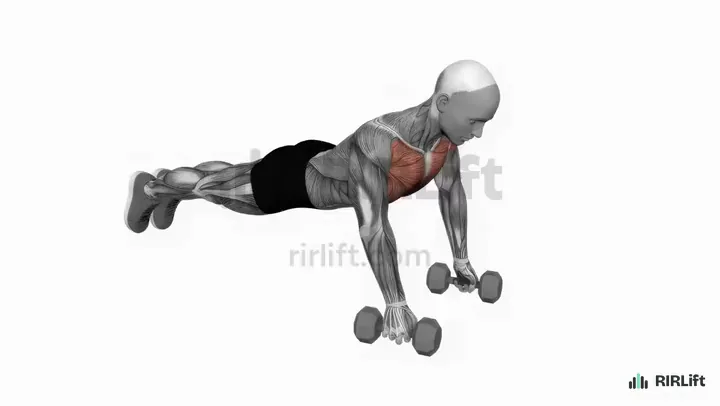
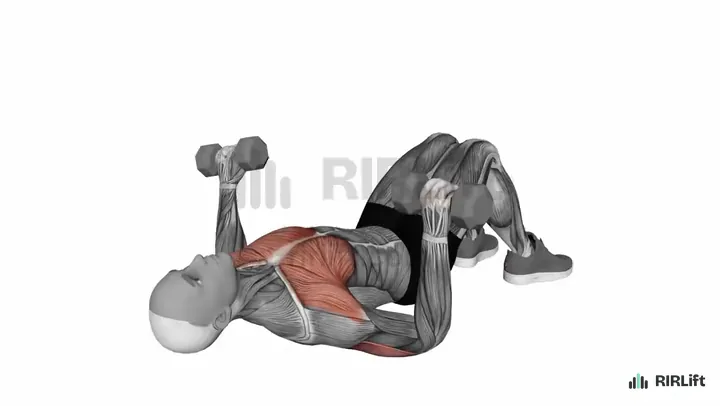
Put them together: example sessions
Each session below picks from the exercises above for one situation, with the sets, reps, rest and RIR filled in. Open one in the session builder to change a pick, price it from a recent set, and add it to RIRLift.
-
Session 1
No weights, just furniture and the floor
You have no equipment but a couch, counter or sturdy box, and maybe a backpack you can load.
3× a week · 24 sets a week · ~15 min
-
Session 2
Dumbbells but no bench
You have a pair of dumbbells or adjustable dumbbells and floor space, but no bench.
2× a week · 20 sets a week · ~20 min
-
Session 3
Dumbbells and a flat bench
You have a flat bench and dumbbells at home, and you want to get the most from the lower chest.
2× a week · 21 sets a week · ~20 min
Session 1
No weights, just furniture and the floor
- Workouts3× a week
- Working sets24 a week
- Per workout~15 min
- EquipmentBodyweight
You have no equipment but a couch, counter or sturdy box, and maybe a backpack you can load.
Without weights, the only way to make a chest set hard enough is to take it close to failure. These sessions lean on the incline push-up for the lower chest, add floor push-ups for the whole chest, and use a loaded backpack for weighted push-ups once floor reps climb past 20. All sets end 0 to 1 reps short of failure, for 9 sets per session.
| Exercise | Sets × reps | RIR | Rest |
|---|---|---|---|
| Incline Push-UpHands on the couch arm. | 4 × 10–20 | 1 | 90 s |
| Push-Up | 3 × 8–20 | 1 | 90 s |
| Incline Push-UpLast 2 sets: higher surface. | 2 × 15–30 | 0 | 1 min |
Open Session A in the session builder
| Exercise | Sets × reps | RIR | Rest |
|---|---|---|---|
| Weighted Push-UpLoaded backpack. | 4 × 8–15 | 1 | 90 s |
| Incline Push-Up3 s down. | 3 × 12–25 | 0 | 1 min |
Open Session B in the session builder
- How to run it
- Do the two sessions on alternate days, three times a week in total, cycling A, B, A one week and B, A, B the next.
- How to progress
- Lower the surface for the incline push-up when you can do 20 reps at 1 rep in reserve. On floor push-ups, add a book or bag of rice to the backpack once you pass 20 reps.
Session 2
Dumbbells but no bench
- Workouts2× a week
- Working sets20 a week
- Per workout~20 min
- EquipmentDumbbells
You have a pair of dumbbells or adjustable dumbbells and floor space, but no bench.
The floor press is the main loaded press here, and the floor fly and floor pullover give the lower chest the stretch and the downward pull the press misses. Presses stop at 1 to 2 reps in reserve to keep the setup safe on the floor, flies and pullovers at 0 to 1. Each session has 10 sets.
| Exercise | Sets × reps | RIR | Rest |
|---|---|---|---|
| Dumbbell Floor PressPause on the floor. | 4 × 8–15 | 1 | 2 min |
| Dumbbell Floor Fly | 3 × 10–20 | 0 | 1 min |
| Dumbbell Chest PulloverOn the floor, knees bent. | 3 × 10–15 | 1 | 1 min |
Open Session A in the session builder
| Exercise | Sets × reps | RIR | Rest |
|---|---|---|---|
| Deep Push-UpOn hex dumbbells. | 4 × 8–20 | 1 | 90 s |
| Dumbbell Floor Press | 3 × 10–15 | 2 | 90 s |
| Dumbbell Chest Pullover | 3 × 12–20 | 0 | 1 min |
Open Session B in the session builder
- How to run it
- Do Session A and Session B once each per week, two days apart. Do the pullover lying on the floor, knees bent.
- How to progress
- Add reps until every set hits the top of the range, then move to the next dumbbell size. When you max out the dumbbells, lower each rep over three seconds.
Session 3
Dumbbells and a flat bench
- Workouts2× a week
- Working sets21 a week
- Per workout~20 min
- EquipmentDumbbells, Flat Bench
You have a flat bench and dumbbells at home, and you want to get the most from the lower chest.
A bench lets the dumbbells travel below your chest, so the flat press and fly work the full range. The pullover across the bench adds the downward arc that matches lower chest fibers, and the incline push-up ends the session with a high-rep finisher. Presses stop at 1 to 2 reps in reserve, isolation sets at 0 to 1, for 10 to 11 sets per session.
| Exercise | Sets × reps | RIR | Rest |
|---|---|---|---|
| Flat Dumbbell Press1 warm-up set firstPress over the lower chest. | 4 × 8–12 | 2 | 2 min |
| Dumbbell Chest Fly | 3 × 10–15 | 1 | 1 min |
| Dumbbell Chest PulloverAcross the bench. | 3 × 10–15 | 1 | 1 min |
Open Session A in the session builder
| Exercise | Sets × reps | RIR | Rest |
|---|---|---|---|
| Flat Dumbbell Press | 3 × 10–15 | 1 | 90 s |
| Dumbbell Chest Pullover | 3 × 12–20 | 0 | 1 min |
| Incline Push-UpHands on the bench. | 2 × 15–25 | 0 | 1 min |
| Dumbbell Chest Fly | 3 × 12–20 | 0 | 1 min |
Open Session B in the session builder
- How to run it
- Do the two sessions once each per week. Lie across the bench for the pullover so your hips can drop.
- How to progress
- Move up a dumbbell size when all sets reach the top of the range. If you are at your heaviest pair, add a third second to each lowering.
Make it fit you
-
You have no decline bench
You do not need one. The incline push-up and the pullover give you the same downward press and pull. A flat dumbbell press aimed at the bottom of your chest covers the rest.
-
Push-ups are too hard
Start with your hands on a counter, which takes most of your weight off. Move to a couch arm, then a chair, then the floor as you get stronger.
-
Push-ups are too easy
Wear a loaded backpack, slow every lowering to three seconds, or switch to deep push-ups on handles so your chest drops further.
-
Only one light pair of dumbbells
Run the no-bench plan and take presses and flies to 0 to 1 reps in reserve, even if that means 20 or more reps. Pause each rep at the bottom to make the same weight harder.
-
Short on time
Superset the floor press with the floor fly: do a set of presses, then flies with the same dumbbells, then rest. You cover both in half the time.
-
Log the RIR, not just the weight
Note how many reps you had left on each set. If you log in RIRLift, it uses those numbers to suggest your next weight or rep target, so your home sessions keep getting harder as you get stronger.
Questions
What is the best way to work your lower chest at home?
Press or push in a downward direction. At home, that means incline push-ups with your hands on a raised surface and dumbbell pullovers, plus a flat dumbbell or floor press aimed at the lower chest. Take each set to 0 to 2 reps short of failure.
What are some alternatives to the decline bench press?
At home: the incline push-up, the dumbbell pullover and the flat dumbbell press. In a gym: chest dips, the machine decline press and a high-to-low cable fly all press or pull downward like a decline press does.
Can you target the lower chest specifically?
Partly. Every chest press works the whole muscle, but presses that push down and away from your body, and pullovers, shift more of the effort to the lower fibers. Expect the whole chest to grow, with the lower part getting a bit more.
What chest exercises can I do without equipment?
Push-ups and their variations. Incline push-ups for the lower chest, decline push-ups with your feet up for the upper chest, and regular floor push-ups for the whole muscle. Make them harder with slower reps or a loaded backpack.
What causes lower chest fat?
Body fat sits wherever your genetics put it, and you cannot burn fat from one spot with exercise. Building the muscle underneath makes your chest look firmer, and losing body fat overall is what reduces fat there.
How often should I train lower chest at home?
Two or three times a week, with at least a day between sessions. The bodyweight plan above runs three times a week because push-up sets are lighter; the dumbbell plans run twice.
Related templates
-
Chest exercises at home, with or without equipment
Home chest picks for every part of the chest, not just the lower fibers.
-
Upper chest exercises at home, with or without a bench
The other end of the chest, with decline push-ups and incline presses.
-
Lower chest exercises with dumbbells: decline, flat bench or floor
More dumbbell options if you have a decline or adjustable bench.
-
Dumbbell pullover: form, lats vs chest, and the best alternatives
Full guide to the pullover setup and set targets.
-
Push-ups: how to do them, what they work, and how to make them harder
Form, progressions and programming for the push-up.