Dumbbell exercises without a bench: the floor, a chair and your feet do the work

The best dumbbell exercises without a bench are the floor press, floor fly and one-arm floor press for the chest, standing alternating presses and lateral raises for the shoulders, bent-over and renegade rows for the back, goblet squats, Romanian deadlifts, reverse lunges and floor glute bridges for the legs, and hammer curls and kickbacks for the arms. The floor replaces the bench for pressing and bridging, and standing or hinging replaces it for everything else. Three full-body sessions a week, 3 or 4 sets per exercise, stopping 1 to 3 reps short of failure, covers every muscle.

  1. Dumbbell Floor Press Chest, Triceps
  2. Alternating Dumbbell Shoulder Press Shoulders
  3. Dumbbell Bent-Over Row Upper Back, Lats
  4. Goblet Squat Quads, Glutes
  5. Dumbbell Romanian Deadlift Hamstrings, Glutes
  6. Dumbbell Reverse Lunge Quads, Glutes
  7. Dumbbell Glute Bridge Glutes
  8. Renegade Row Lats, Upper Back

Chest on the floor

The floor stops your elbows a little short of a full bench press, so every rep reaches the same depth and the shoulders take less stretch. The chest and triceps still do all the work.

Chest and triceps, floor press

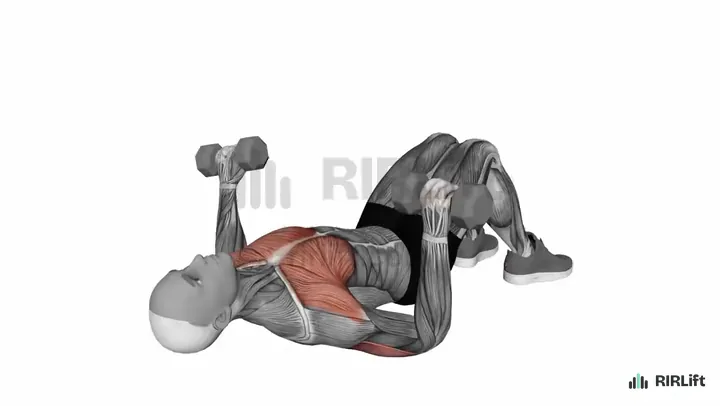
Dumbbell Floor Press

Chest, Triceps

The main chest exercise without a bench. Your upper arms touch the floor at the bottom, so every rep stops in the same place, and if a set fails you lower the dumbbells to the floor beside you instead of needing a spotter.

How to do it

  1. Sit on the floor with a dumbbell on each thigh, then lie back with your knees bent and pull the weights in to your chest.
  2. Press both dumbbells straight up over your chest until your arms are straight.
  3. Lower them until your upper arms touch the floor, elbows angled about 45 degrees from your sides.
  4. Let the arms rest for a moment on the floor, then press again.

Cues

  • Elbows touch down softly
  • Weights over your chest at the top
  • Knees bent, feet flat

Common mistakes

  • Dropping the elbows hard into the floor: lower slowly and land them gently.
  • Elbows flared straight out to the sides: point them toward your hips a little.

Swap for: Single-Arm Dumbbell Floor Press, Push-Up, Decline Push-Up

Chest, floor fly

Dumbbell Floor Fly

Chest

The floor stops your elbows before the deepest stretch, so you can use a little more weight than on a bench. It is the isolation move for the chest when presses are done.

How to do it

  1. Lie on the floor with your knees bent and both dumbbells up over your chest, palms facing each other.
  2. Bend your elbows a little and keep that angle fixed.
  3. Open your arms out to the sides until your upper arms just touch the floor.
  4. Sweep them back up to meet over your chest along the same curve.

Cues

  • Open like a book
  • Elbows stay slightly bent
  • Light touch on the floor

Common mistakes

  • Bending the elbows more each rep until it becomes a press: lighten the dumbbells.
  • Resting your arms on the floor between reps: touch down and come straight back up.

Swap for: Dumbbell Floor Press, Single-Arm Band Chest Fly, Push-Up

Chest and trunk, one-arm press

Single-Arm Dumbbell Floor Press

Chest

Pressing one dumbbell makes your trunk resist twisting and lets a single heavier dumbbell do the job when you own only one. It is also how you train a weaker side on its own.

How to do it

  1. Lie on your back, legs stretched out flat, with one dumbbell held over your chest, arm straight.
  2. Rest your free arm on the floor out to the side for balance.
  3. Lower the dumbbell until your upper arm meets the floor, elbow angled toward your hip.
  4. Press it back up over your chest. Do all reps on one side, then switch.

Cues

  • Don't let the weight roll you
  • Elbow lands softly
  • Press over the shoulder

Common mistakes

  • Letting your torso twist toward the working side: brace and keep both shoulders on the floor.
  • Rushing the lowering: take two seconds down so the light dumbbell feels heavy.

Swap for: Dumbbell Floor Press, Archer Push-Up, Push-Up

Shoulders, standing

Pressing and raising on your feet means no seat is needed, and the trunk has to brace to keep you upright, which a seated press skips.

Shoulders, standing press

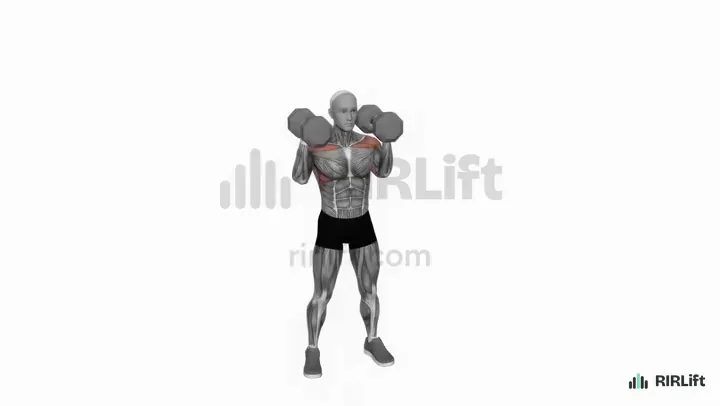
Alternating Dumbbell Shoulder Press

Shoulders

Standing replaces the seat, and pressing one arm at a time keeps the other dumbbell racked so your trunk braces against the shift. It is the main overhead press for a home setup without a bench.

How to do it

  1. Stand holding a dumbbell at each shoulder, palms turned in.
  2. Press one dumbbell up to a straight elbow while the other stays put.
  3. Lower it back to the shoulder.
  4. Press the other side and keep switching until both arms have done their reps.

Cues

  • One up, one parked
  • Brace before each press
  • Stay tall

Common mistakes

  • Leaning toward the side that is pressing: the parked dumbbell should help keep you level.
  • Letting the waiting arm drop: hold it at the shoulder the whole set.

Swap for: Dumbbell Push Press, Pike Push-Up, Kettlebell Overhead Press

Side shoulders, lateral raise

Dumbbell Lateral Raise

Shoulders

Light dumbbells raised to the side give the shoulders width that presses do not. It needs no bench and no heavy weight, so it suits any home set.

How to do it

  1. Pick light dumbbells you can raise for 12 clean reps, and stand with your feet hip width apart, the weights hanging by your thighs.
  2. Lean your chest forward a few degrees, pull your shoulders down away from your ears and soften your elbows.
  3. Sweep the weights out and slightly forward, leading with your elbows, until your upper arms are level with your shoulders.
  4. Hold that top position for a beat, then take two to three seconds to lower until the dumbbells are a hand's width from your thighs.
  5. Start the next rep from there without resting at the bottom or bouncing out of it.

Cues

  • Elbows lead, hands follow
  • Shoulders down, neck long
  • Push the weights out, not up

Common mistakes

  • Shrugging the weight up: if your shoulders rise toward your ears, drop to lighter dumbbells and stop each rep where your upper arm is level.
  • Swinging the torso to start each rep: brace, stand still and keep the first inch of the lift as slow as the rest.
  • Bending the elbows more and more as the set goes on: set the bend on rep one and keep it, or the lever shortens and the set gets easier without you noticing.

Swap for: Band Lateral Raise, Leaning Dumbbell Lateral Raise, Kettlebell Lateral Raise

Rows without a bench

Hinge forward and row both dumbbells, or hold a plank and row one at a time. Your hips and trunk take the place of the bench pad.

Upper back and lats, bent-over row

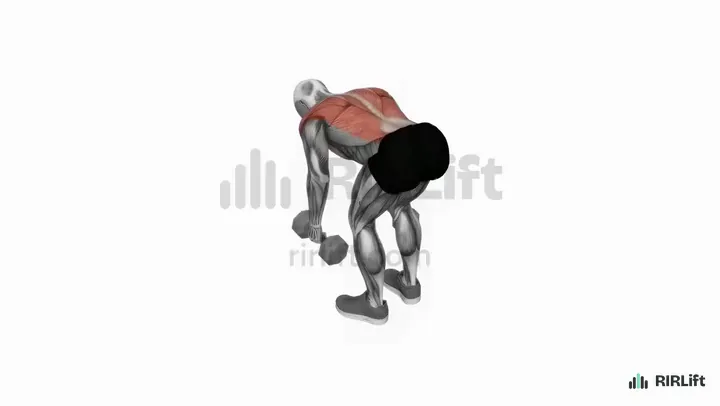
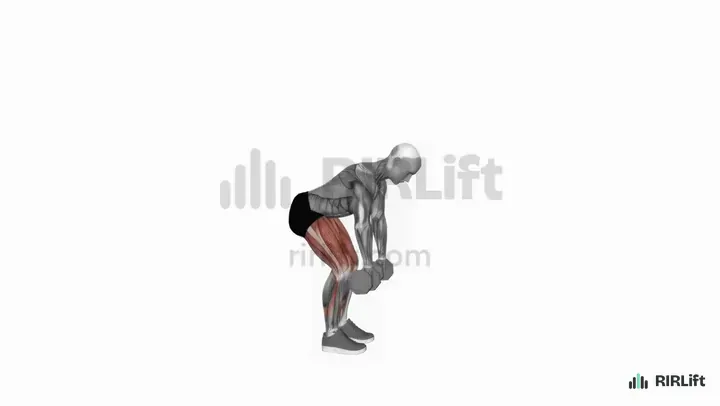
Dumbbell Bent-Over Row

Upper Back, Lats

Hinging forward lets you row two heavy dumbbells with no support at all. It replaces the chest-supported and one-arm bench rows most dumbbell programs lean on.

How to do it

  1. Take one dumbbell per hand, feet about hip-width apart, and hinge forward from the hips with soft knees until your torso is nearly level with the floor.
  2. Let the dumbbells hang straight down under your shoulders, palms turned in.
  3. Pull both dumbbells up to your lower ribs, keeping the elbows close, and hold the top for a beat.
  4. Lower to straight arms without letting your torso rise and repeat.

Cues

  • Torso angle stays locked
  • Pull to the ribs
  • Squeeze, then lower

Common mistakes

  • Letting the hinge rise until you are rowing upright: keep a mirror or phone camera to the side and stop the set when your chest climbs.
  • Yanking the dumbbells with your hips: the legs stay still and the elbows do the work.

Swap for: One-Arm Dumbbell Row, Kettlebell Gorilla Row, Band Bent-Over Row

Back and trunk, row from a plank

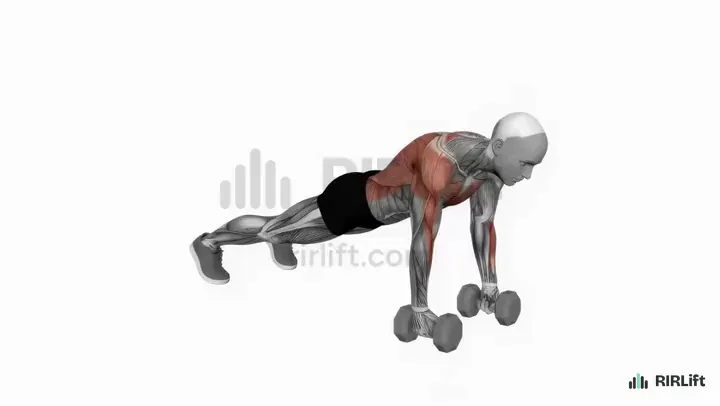
Renegade Row

Lats, Upper Back

Rowing from a plank puts the floor and your trunk where the bench would be, and trains the abs at the same time. Use hexagonal dumbbells so they do not roll.

How to do it

  1. Set up in a high plank with each hand on a dumbbell and your feet about hip-width apart.
  2. Shift your weight onto one hand and row the other dumbbell toward your hip.
  3. Lower it to the floor and repeat on the other side.

Cues

  • Hips stay square
  • Feet hip-width
  • Row to the hip

Common mistakes

  • Rotating the hips up on the rowing side.
  • Using dumbbells so heavy you have to twist to lift them.

Swap for: Plank Shoulder Tap, One-Arm Dumbbell Row

Legs and glutes

None of the best dumbbell leg exercises need a bench. Bridges on the floor replace hip thrusts, and lunges replace split squats with the back foot raised.

Quads and glutes, squat

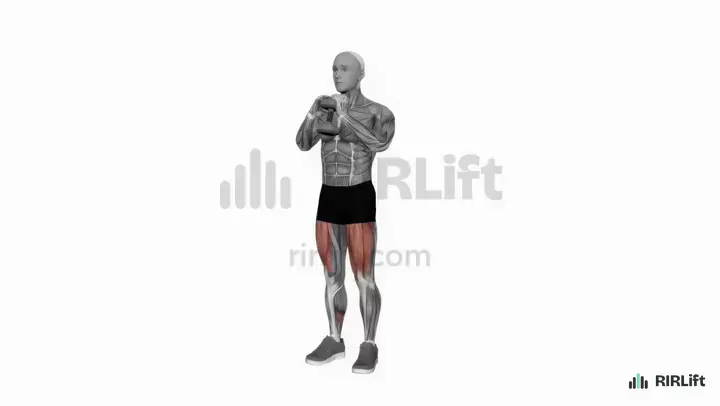
Goblet Squat

Quads, Glutes

Holding one dumbbell at your chest keeps you upright and lets you squat deep without a rack. It is the first leg exercise in every plan here.

How to do it

  1. Hold a dumbbell or kettlebell vertically against your chest.
  2. Sit down between your knees, elbows inside them at the bottom.
  3. Stand up tall.

Cues

  • Elbows nudge the knees out at the bottom.
  • Chest stays up behind the weight.

Common mistakes

  • Letting the weight pull you forward.

Swap for: Bodyweight Squat, Barbell Back Squat

Hamstrings and glutes, hip hinge

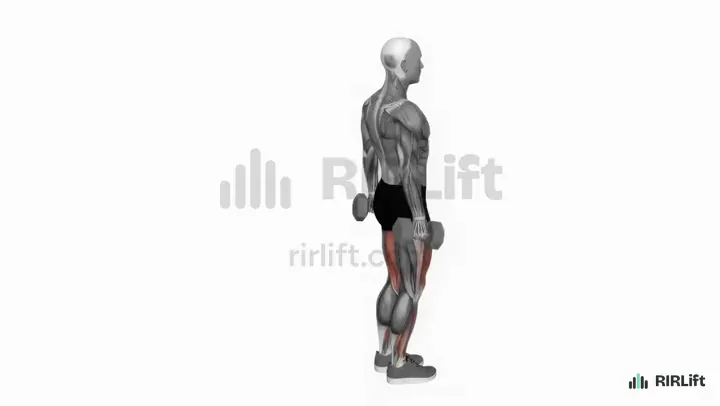
Dumbbell Romanian Deadlift

Hamstrings, Glutes

The Romanian deadlift loads the hamstrings and glutes heavily with dumbbells hanging at your thighs. It is the heaviest leg exercise most home dumbbell sets allow.

How to do it

  1. Stand hip-width apart with a dumbbell in each hand resting against the front of your thighs, palms facing you.
  2. Push your hips straight back and let your torso fold forward, knees softly bent, the dumbbells brushing your legs.
  3. Lower until the dumbbells pass your knees and you feel a strong stretch in your hamstrings, with your back still flat.
  4. Drive your hips forward to stand back up, squeezing your glutes at the top, and repeat.

Cues

  • Hips back, not down
  • Dumbbells slide down your legs
  • Flat back, chin tucked

Common mistakes

  • Bending the knees into a squat so the dumbbells go lower: the depth comes from the hips, and most people stop just past the knees.
  • Rounding the lower back at the bottom: end the rep where your back stays flat, and lighten the load if that is high.

Swap for: Single-Leg RDL, Dumbbell Good Morning, Kettlebell Deadlift

Quads and glutes, lunge

Dumbbell Reverse Lunge

Quads, Glutes

Stepping back keeps the front knee steady and replaces the Bulgarian split squat, which needs something to rest the rear foot on.

How to do it

  1. Start tall with a dumbbell hanging from each hand and your feet under your hips.
  2. Step one foot back and lower until your back knee is just above the floor and your front thigh is near parallel.
  3. Keep your front heel flat and your chest tall.
  4. Push through your front foot to bring the back foot forward to the start, then alternate or finish all reps on one side.

Cues

  • Front shin stays vertical
  • Back knee kisses the floor
  • Drive through the front heel

Common mistakes

  • Taking a short step so the front knee shoots forward and the heel lifts: step farther back.
  • Letting the torso twist or lean to the side as you tire; keep both dumbbells hanging straight down.

Swap for: Walking Lunge, Dumbbell Split Squat, Goblet Squat

Glutes, floor bridge

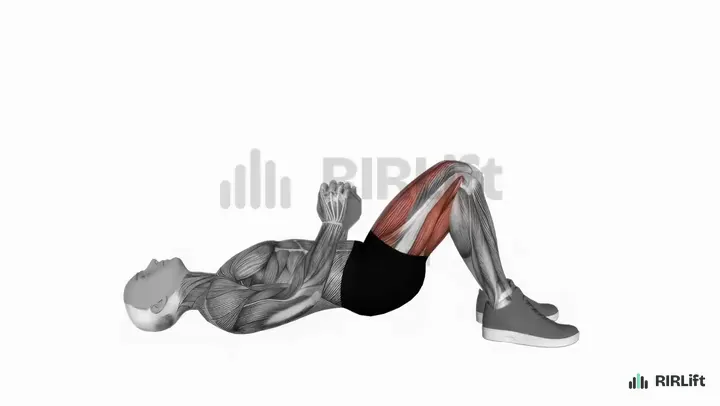
Dumbbell Glute Bridge

Glutes

With your shoulders on the floor instead of a bench, the bridge trains the glutes through a shorter range than a hip thrust but with a heavy dumbbell across your hips. Pause at the top of each rep.

How to do it

  1. Lie face up, knees bent, heels about a foot from your hips.
  2. Place a dumbbell across your hips and hold the ends.
  3. Press through your heels and lift your hips until your body makes a straight line from knees to shoulders.
  4. Hold the squeeze for a second at the top, lower until your glutes lightly reach the floor, and repeat.

Cues

  • Heels, not toes
  • Squeeze before you lower
  • Short range, hard squeeze

Common mistakes

  • Pushing off the toes so the thighs burn instead of the glutes: lift your toes slightly if it helps you feel the heels.
  • Bouncing off the floor between reps: let the hips touch down and pause.

Swap for: Dumbbell Hip Thrust, Single-Leg Glute Bridge, Dumbbell Staggered Hip Thrust

Arms

Curls are done standing anyway. For triceps, brace a hand on a chair or your knee for kickbacks and skip the lying extensions that need a bench.

Biceps and forearms, standing curl

Hammer Curl

Biceps, Forearms

Standing curls never needed a bench, and the neutral grip lets you use more weight than a regular curl. It trains the forearms for heavy rows at the same time.

How to do it

  1. Hold the dumbbells at your sides with your palms facing your thighs.
  2. Bend one elbow to bring that dumbbell up, thumb leading.
  3. Keep the dumbbell vertical the whole way, then lower it slowly to the start.
  4. Curl the other arm, and keep alternating until the set is done.

Cues

  • Thumbs lead
  • Dumbbells vertical
  • Elbows by your sides

Common mistakes

  • Swinging heavier weight with your back: keep your torso still.
  • Curling across your body: keep each dumbbell in line with its shoulder.

Swap for: Band Hammer Curl, Alternating Hammer Curl

Triceps, kickback

Triceps Kickback

Triceps

Bracing on a chair or your knee is all the support a kickback needs. It covers the triceps when lying extensions are out without a bench.

How to do it

  1. Brace one hand on a chair or bench and hinge forward with a flat back.
  2. Lift the dumbbell arm so your upper arm sits against your side, elbow bent.
  3. Push the dumbbell back until your arm is straight, and hold it for a second.
  4. Bend back to the start; finish the set, then change arms.

Cues

  • Upper arm stays level
  • Hold the lockout
  • Light weight

Common mistakes

  • Swinging the weight up: lighten it so you can pause at the top.
  • Upper arm sinking toward the floor: lift it back to your side.

Swap for: Cable Triceps Kickback, Seated Dumbbell Overhead Triceps Extension

Put them together: example sessions

Each session below picks from the exercises above for one situation, with the sets, reps, rest and RIR filled in.

Session 1

One set of dumbbells, three days a week

  • Workouts3× a week
  • Working sets41 a week
  • Per workout~40 min
  • EquipmentDumbbells

You have a pair of adjustable dumbbells or a few fixed pairs at home, no bench, and you want a complete routine.

Two alternating full-body sessions done three times a week give each major muscle about 8 to 12 hard sets a week. That is the range that builds muscle for most people, and it keeps each session to about 45 minutes.

Day A
ExerciseSets × repsRIRRest
Goblet Squat2 warm-up sets first 3 × 8–12 2 2 min
Dumbbell Floor Press1 warm-up set first 3 × 8–12 2 2 min
Dumbbell Bent-Over Row 3 × 8–12 2 90 s
Dumbbell Lateral Raise 2 × 12–15 1 1 min
Hammer Curl 2 × 10–12 1 1 min
Day B
ExerciseSets × repsRIRRest
Dumbbell Romanian Deadlift2 warm-up sets first 3 × 8–12 2 2 min
Alternating Dumbbell Shoulder PressPer arm. 3 × 8–10 2 90 s
Dumbbell Reverse LungePer leg. 3 × 8–10 2 90 s
Renegade RowPer arm. 3 × 6–8 2 90 s
Triceps KickbackPer arm. 2 × 12–15 1 1 min
How to run it
Alternate Day A and Day B on three non-consecutive days: A, B, A one week and B, A, B the next.
How to progress
Use double progression: add reps until every set hits the top of the range at the target reps in reserve, then move up one dumbbell size. Every set you log with its reps in reserve tells RIRLift whether the next session stays on the same pair or moves up.

Session 2

Push, pull, legs with no bench

  • Workouts6× a week
  • Working sets80 a week
  • Per workout~40 min
  • EquipmentDumbbells

You train five or six days a week, have a decent range of dumbbells, and want a split that gives each muscle more work.

Each muscle gets one focused day with 9 to 13 hard sets, and repeating the three days twice in a week doubles that, the volume range for experienced lifters. Isolation work goes to 0 to 1 reps in reserve, compounds stay at 1 to 2.

Push
ExerciseSets × repsRIRRest
Dumbbell Floor Press2 warm-up sets first 4 × 6–10 1 2:30 min
Alternating Dumbbell Shoulder PressPer arm. 3 × 8–10 1 2 min
Dumbbell Floor Fly 3 × 10–15 1 75 s
Dumbbell Lateral Raise 3 × 12–20 0 1 min
Triceps KickbackPer arm. 3 × 12–15 0 1 min
Pull
ExerciseSets × repsRIRRest
Dumbbell Bent-Over Row1 warm-up set first 4 × 8–12 1 2 min
Renegade RowPer arm. 3 × 6–10 2 90 s
Hammer Curl 3 × 8–12 1 75 s
Legs
ExerciseSets × repsRIRRest
Goblet Squat2 warm-up sets first 4 × 8–12 2 2:30 min
Dumbbell Romanian Deadlift 4 × 8–12 2 2:30 min
Dumbbell Reverse LungePer leg. 3 × 8–12 1 90 s
Dumbbell Glute BridgePause 1 s at the top. 3 × 10–15 1 75 s
How to run it
Run push, pull and legs in order and either repeat the cycle (six days) or take a rest day after each round.
How to progress
Add reps to each exercise until the top of the range at the target reps in reserve, then move up a dumbbell. On the floor press and Romanian deadlift, add weight as soon as all sets reach the top of the range.

Session 3

Only a light pair, around 15 to 25 pounds

  • Workouts2× a week
  • Working sets30 a week
  • Per workout~40 min
  • EquipmentDumbbells

You have one light pair of dumbbells and squats and presses already feel easy with them.

Light weights still build muscle if sets end close to failure, so this plan makes each rep harder instead: one arm or one leg at a time, slower lowering and higher reps. Two sessions a week give each muscle about 6 to 9 hard sets.

Full body
ExerciseSets × repsRIRRest
Dumbbell Reverse LungePer leg. 3 s down. 3 × 10–15 2 90 s
Single-Arm Dumbbell Floor PressPer arm. 3 × 10–15 1 75 s
Renegade RowPer arm. 3 × 8–12 1 75 s
Dumbbell Glute BridgePause 2 s at the top. 3 × 15–20 1 1 min
Dumbbell Romanian Deadlift3 s down. 3 × 12–20 2 90 s
How to run it
Do it twice a week, for example Tuesday and Saturday, with about 40 minutes per session.
How to progress
Push reps toward 20 at 1 to 2 reps in reserve before anything else, then add a 3-second lowering or a pause at the hardest point. A heavier pair is worth buying when 20 slow reps are easy.

Make it fit you

Questions

What can I do instead of bench press with dumbbells?

The dumbbell floor press. Lie on the floor with knees bent and press the dumbbells up from your chest; your upper arms touch the floor at the bottom. Add floor flyes and push-ups for the rest of your chest work.

Are 20 pound dumbbells enough to build muscle?

For many exercises, yes, if you take sets close to failure. Use one arm or one leg at a time, slow the lowering and work up to 15 to 20 reps. For squats and deadlifts, most people outgrow 20 pounds within a few months.

What is the 3-3-3 rule for dumbbells?

One common version is 3 exercises, 3 sets each, 3 days a week. With dumbbells and no bench, a goblet squat, a floor press and a bent-over row make a simple 3 that covers legs, chest and back.

Can you build chest with dumbbells and no bench?

Yes. Floor presses, floor flyes and one-arm floor presses train the chest well, and the floor stops the range at a depth most shoulders handle easily.

Do I need a bench for a dumbbell workout at home?

No. Every major muscle can be trained standing, hinged or on the floor. A bench adds incline pressing and split squats, which are useful but not required.