Pull exercises with dumbbells: a complete dumbbell pull day

The best pull exercises with dumbbells are the one-arm row and bent-over row for your lats, the incline row for your upper back, the rear delt row and face pull for the back of your shoulders, the shrug for your traps, and the incline curl and hammer curl for your biceps. A full dumbbell pull day is two rows, one rear delt exercise and one or two curls, done for 12 to 16 hard sets.

  1. One-Arm Dumbbell Row Lats, Upper Back
  2. Dumbbell Bent-Over Row Upper Back, Lats
  3. Incline Dumbbell Row Upper Back, Lats
  4. Dumbbell Rear Delt Row Shoulders
  5. Dumbbell Face Pull Shoulders, Upper Back
  6. Dumbbell Shrug Traps
  7. Incline Dumbbell Curl Biceps
  8. Hammer Curl Biceps, Forearms
  9. Dumbbell Lat Pullover Lats

Dumbbell pull exercises for your back

Rows are the core of a dumbbell pull day. Start with the heaviest one you can do, the one-arm row or a two-arm row, and add a second from a different angle. The pullover covers the overhead pull that dumbbells otherwise miss.

Lats, the main pull-day row

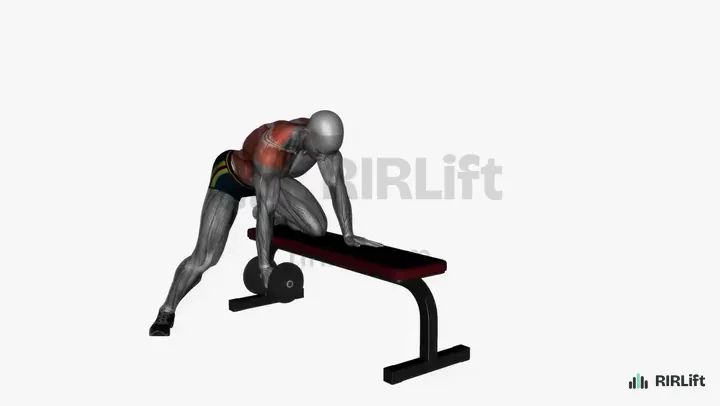
One-Arm Dumbbell Row

Lats, Upper Back

Of all the dumbbell pull exercises, this one takes the most weight, because your free hand braces you and your lower back has nothing to hold. Make it the first exercise of your pull day.

How to do it

  1. Plant one hand and knee on a bench, or one hand on a chair with both feet down, so your back is about flat.
  2. Let the dumbbell hang under your shoulder from a straight arm.
  3. Drive the elbow up and back toward your hip until the dumbbell touches your side.
  4. Lower slowly to a full stretch and repeat; finish one side before the other.

Cues

  • Elbow toward the hip
  • Full stretch each rep
  • Torso does not turn

Common mistakes

  • Yanking the dumbbell up with a twist of the torso: keep your chest facing the floor and take less weight.
  • Rowing with a half range: start from a long arm every time.

Swap for: Dumbbell Lawnmower Row, Dumbbell Bent-Over Row, Incline Dumbbell Row

Lats and mid back, two-arm row

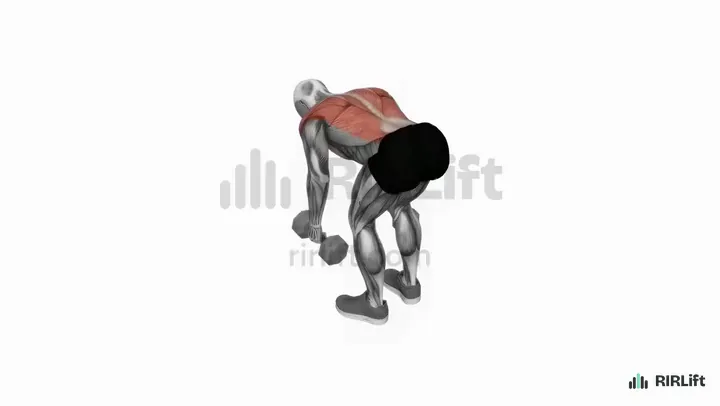
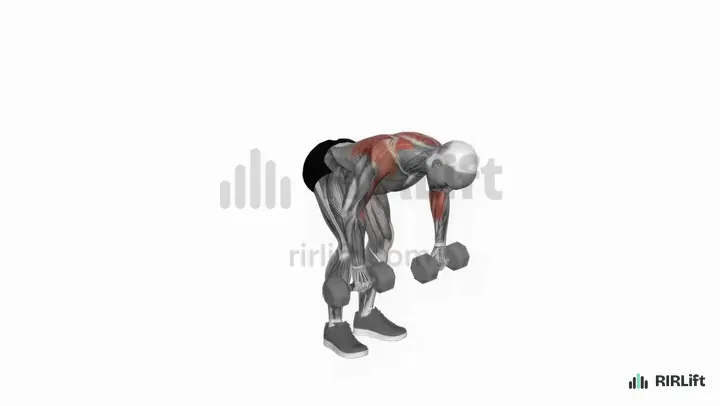
Dumbbell Bent-Over Row

Upper Back, Lats

Rowing both arms together gets twice the work done in the same time, which keeps a pull day short. It needs no bench, so it is the default row for home pull days.

How to do it

  1. Hinge forward with soft knees until your torso is nearly flat, a dumbbell hanging from each hand.
  2. Brace your belly so your back does not move.
  3. Row both dumbbells to your sides, elbows close to the body.
  4. Lower until your arms are straight, keeping the same hinge.

Cues

  • Same back angle all set
  • Row to your sides
  • Brace before each rep

Common mistakes

  • Straightening up as fatigue builds: end the set when you cannot hold the hinge.
  • Rounding to reach the floor: keep your back long and let the arms hang.

Swap for: One-Arm Dumbbell Row, Incline Dumbbell Row, Dumbbell Pendlay Row

Upper back, chest-supported row

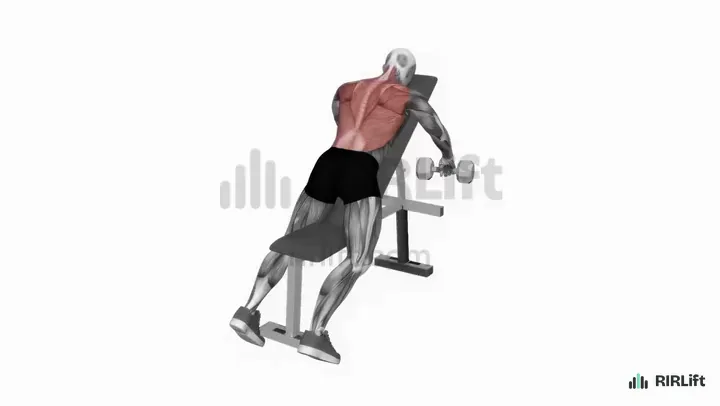
Incline Dumbbell Row

Upper Back, Lats

If you have an incline bench, lying face down on it removes every bit of cheating from the row. It is the best second row on a pull day, after your lower back has already worked through bent-over rowing.

How to do it

  1. Lie chest-down on a bench set to a low incline, feet on the floor.
  2. Hang the dumbbells below your shoulders.
  3. Row toward your lower chest with your elbows slightly out from your sides.
  4. Lower to straight arms without lifting your chest.

Cues

  • Chest stays down
  • Elbows a little wide
  • Reach at the bottom

Common mistakes

  • Peeling your chest off the pad: lower the weight until you can row without it.
  • Shrugging up instead of rowing back: keep your shoulders away from your ears.

Swap for: Dumbbell Bent-Over Row, Dumbbell Rear Delt Row, One-Arm Dumbbell Row

Upper back, row from the floor

Dumbbell Pendlay Row

Lats, Upper Back

Starting every rep from a dead stop on the floor stops you bouncing and makes the mid back and traps work hard from the first inch. Use it as the heavy two-arm row when you want power.

How to do it

  1. Hinge over two dumbbells resting on the floor, back flat and hips high.
  2. Grip them, brace, and pull them sharply to your lower ribs.
  3. Lower them to the floor and let them settle.
  4. Reset your brace, then pull again.

Cues

  • Floor to ribs, fast
  • Reset each rep
  • Hips stay high

Common mistakes

  • Using your legs to lift the dumbbells off the floor: your back angle should not change.
  • Losing the brace between reps: take a breath and tighten before every pull.

Swap for: Dumbbell Bent-Over Row, Incline Dumbbell Row, One-Arm Dumbbell Row

Lats, straight-arm pullover

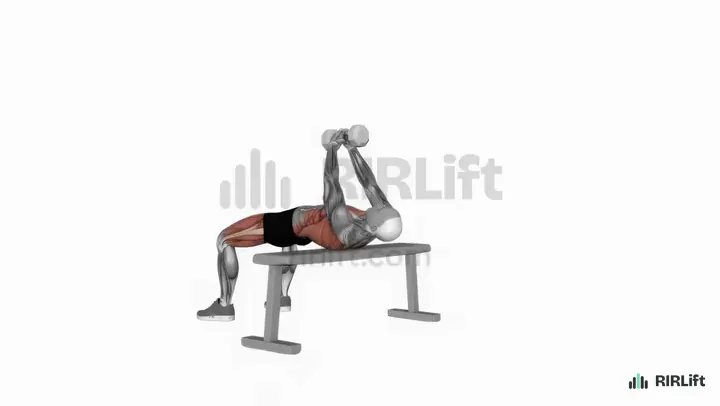
Dumbbell Lat Pullover

Lats

Pull-ups and pulldowns are missing from a dumbbell-only pull day. The pullover fills part of that gap by moving the lats from overhead with your arms nearly straight, so the biceps do not limit it.

How to do it

  1. Lie on a bench or the floor holding one dumbbell over your chest with both hands.
  2. Softly bend your elbows and keep that bend fixed.
  3. Arc the weight back behind your head until you feel a strong stretch in your sides.
  4. Bring it back over your chest along the same arc.

Cues

  • Elbows do not move
  • Stretch, then pull
  • Keep ribs tucked

Common mistakes

  • Bending and straightening the elbows: that is a triceps extension; lock the angle.
  • Going so deep your lower back arches: stop where your ribs begin to lift.

Swap for: Dumbbell Bent-Over Row, One-Arm Dumbbell Row, Dumbbell Rear Delt Row

Dumbbell pull exercises for rear delts and traps

The rear delts and traps also pull. One wide row, fly or face pull and one shrug round out the back of your shoulders. Keep these after your rows, when lighter loads are enough.

Rear delts, wide one-arm row

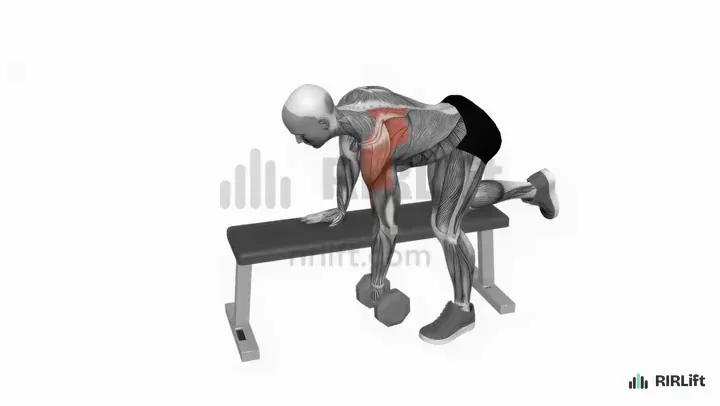
Dumbbell Rear Delt Row

Shoulders

The rear delts are a pull-day muscle that rows tucked to your side barely reach. Rowing one arm with the elbow out at shoulder height lets you load them heavier than any fly.

How to do it

  1. Set one knee and one hand on a bench with your back flat.
  2. Let the dumbbell hang, palm facing back toward your feet.
  3. Pull the elbow out and up until your upper arm is level with your back.
  4. Lower to a straight arm with control.

Cues

  • Elbow out at shoulder height
  • Pull wide, not back
  • Stop level

Common mistakes

  • Letting the elbow drift to your ribs: keep it out wide for the whole set.
  • Twisting for range: stop when your arm is level with your torso.

Swap for: Dumbbell Rear Delt Fly, Dumbbell Face Pull, Incline Dumbbell Row

Rear delts, seated bent-over fly

Dumbbell Rear Delt Fly

Shoulders

Sitting and folding over your knees is the steadiest way to do a rear delt fly without a bench. The weights are light and the reps high, so it makes a good finisher after rows.

How to do it

  1. Perch on the front of a bench or chair and fold forward so your chest nears your thighs.
  2. Hold light dumbbells under your knees, elbows a little bent.
  3. Lift your arms wide until your hands reach shoulder height.
  4. Lower slowly under your legs.

Cues

  • Elbows lead
  • Arms wide, not back
  • Slow down

Common mistakes

  • Rowing the dumbbells by bending the elbows more as you lift: keep the bend fixed.
  • Sitting up as you tire: stay folded over your knees.

Swap for: Dumbbell Rear Delt Row, Dumbbell Face Pull, Incline Dumbbell Row

Rear delts and rotator cuff, dumbbell face pull

Dumbbell Face Pull

Shoulders, Upper Back

This bent-over row-and-rotate covers the rear delts, mid traps and rotator cuff in one movement. It is the one exercise to keep if your pull day has room for only one shoulder movement.

How to do it

  1. Hinge forward, light dumbbells hanging, palms facing your thighs.
  2. Row the dumbbells high and wide until your upper arms reach shoulder height.
  3. Rotate your forearms up so your arms form a goalpost.
  4. Rotate back down, then lower.

Cues

  • Wide row first
  • Then rotate up
  • Light weight

Common mistakes

  • Leaving out the rotation: it is what trains the cuff.
  • Dumbbells so heavy you swing: a pair of 5 to 15 pounds is enough.

Swap for: Dumbbell Rear Delt Row, Dumbbell Rear Delt Fly, Dumbbell Shrug

Upper traps, shrug

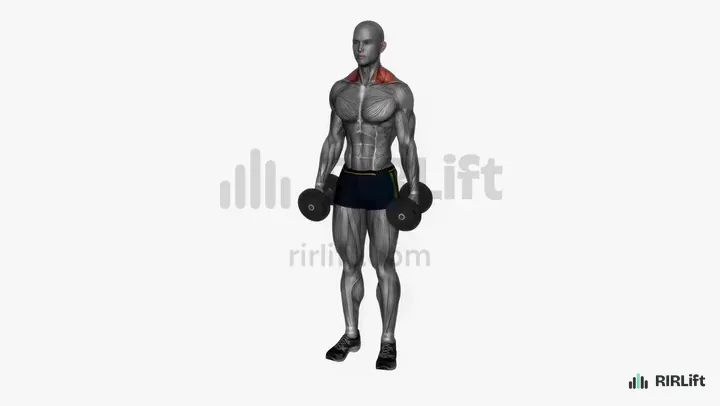
Dumbbell Shrug

Traps

Rows and deadlifts hit the traps, but a direct shrug lets you load them heavy and through a full range. It is quick to add and you can hold heavier dumbbells for it than for any other pull exercise.

How to do it

  1. Stand tall holding a heavy dumbbell at each side, arms straight.
  2. Raise your shoulders straight up toward your ears.
  3. Hold the top for a second.
  4. Lower until your shoulders sit fully down and your traps stretch.

Cues

  • Straight up, straight down
  • Hold the top
  • Arms are hooks

Common mistakes

  • Rolling the shoulders in circles: it adds nothing; lift straight up.
  • Bending the elbows to help: keep your arms long and let only the shoulders move.

Swap for: Farmer's Walk, Dumbbell Pendlay Row, Dumbbell Face Pull

Dumbbell pull exercises for biceps

Biceps finish the pull day. Your arms are already tired from rowing, so one or two curls for 2 to 3 sets each is enough. Pick one that stretches the biceps (incline curl) and one that you can load heavy (hammer curl).

Biceps, curl from a stretch

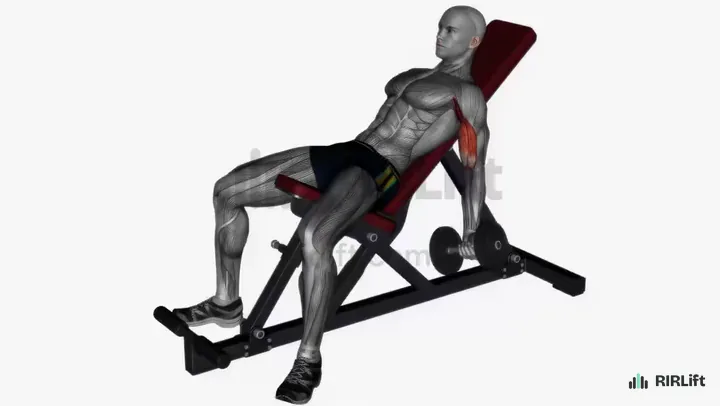
Incline Dumbbell Curl

Biceps

Sitting back on an incline bench lets your arms hang behind your body, so the biceps start every curl from a deep stretch. On pull day, after rows have pre-tired your arms, it gets a lot out of a light pair.

How to do it

  1. Set a bench to a moderate incline and sit back holding the pair.
  2. Let your arms drop behind your shoulders, palms forward.
  3. Curl both dumbbells up without bringing your elbows forward.
  4. Lower all the way to straight arms.

Cues

  • Elbows stay back
  • Full stretch at the bottom
  • Slow down

Common mistakes

  • Swinging the elbows forward to finish: that turns it into a front raise; keep the upper arms still.
  • Stopping short of straight arms: the stretch is why you picked it.

Swap for: Dumbbell Curl, Hammer Curl, Spider Curl

Biceps and brachialis, neutral-grip curl

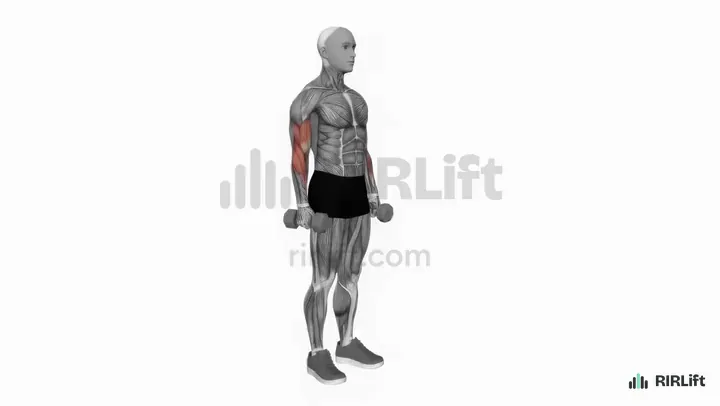
Hammer Curl

Biceps, Forearms

Holding the dumbbells like hammers moves more work to the brachialis and forearm, and most people can use a heavier pair than in any other curl. That makes it a good last exercise when your grip is already tired from rows.

How to do it

  1. Stand with a dumbbell at each side, palms facing your thighs.
  2. Pin your elbows to your sides.
  3. Curl the dumbbells up, keeping your palms facing each other, until your forearms are near vertical.
  4. Lower slowly to straight arms.

Cues

  • Thumbs up the whole way
  • Elbows pinned
  • Lower slowly

Common mistakes

  • Leaning back to swing the weight: stand tall and pick a load you can curl strictly.
  • Turning it into a cross-body curl by accident: keep the dumbbells moving straight up.

Swap for: Dumbbell Curl, Incline Dumbbell Curl, Spider Curl

Biceps, standing alternating curl

Dumbbell Curl

Biceps

The plain alternating curl is the basic biceps exercise. Turning your palm up as you lift trains the biceps' job of rotating the forearm as well as bending the elbow.

How to do it

  1. Stand with the dumbbells at your sides, palms facing in.
  2. Curl one dumbbell, turning your palm up as it rises.
  3. Squeeze at the top, then lower it while you start the other side.
  4. Keep your elbows still and your torso upright.

Cues

  • Turn the palm up
  • One side at a time
  • No swinging

Common mistakes

  • Rocking your torso on each rep: brace and slow down.
  • Dropping the dumbbell fast: take two seconds on the way down.

Swap for: Hammer Curl, Incline Dumbbell Curl, Spider Curl

Biceps, chest-supported curl

Spider Curl

Biceps

Lying face down on an incline with your arms hanging straight down, you cannot swing, and the biceps get the most tension where the curl finishes. It pairs well with the incline curl, which loads the bottom.

How to do it

  1. Lie chest-down on an incline bench with your arms hanging straight below you.
  2. Grip the pair, palms forward.
  3. Curl both dumbbells up without moving your upper arms.
  4. Squeeze at the top, then lower to straight arms.

Cues

  • Upper arms vertical
  • Squeeze the top
  • No chest lift

Common mistakes

  • Letting the elbows swing back: keep the upper arms pointing at the floor.
  • Going too heavy to reach the top: the top is the point of this curl.

Swap for: Incline Dumbbell Curl, Dumbbell Curl, Hammer Curl

Dumbbell carry for grip

A heavy carry at the end trains the grip that limits your rows, plus your traps and core.

Grip and traps, loaded carry

Farmer's Walk

Forearms, Traps, Shoulders

Picking up your heaviest dumbbells and walking trains your grip, traps and core together. On a dumbbell pull day it doubles as grip work, which every row depends on.

How to do it

  1. Deadlift a heavy dumbbell up beside each hip.
  2. Stand tall with your shoulders pulled back and down.
  3. Walk with short, quick steps for the set time or distance.
  4. Stop, set the dumbbells down with a flat back, and rest.

Cues

  • Tall and tight
  • Short steps
  • Crush the handles

Common mistakes

  • Leaning to one side or letting the dumbbells swing: slow your steps and brace.
  • Rounding to pick up and put down: hinge with a flat back each time.

Swap for: Dumbbell Shrug, Hammer Curl, Dumbbell Bent-Over Row

Put them together: example sessions

Each session below picks from the exercises above for one situation, with the sets, reps, rest and RIR filled in. Open one in the session builder to change a pick, price it from a recent set, and add it to RIRLift.

Session 1

Push-pull-legs, dumbbells and an incline bench

Open in the session builder
  • Workouts2× a week
  • Working sets29 a week
  • Per workout~35 min
  • EquipmentDumbbells, Incline Bench

You run push, pull, legs twice a week and have adjustable dumbbells and an incline bench.

Two different pull days spread the work: Pull A is heavy, with the one-arm row and the incline curl, and Pull B uses the Pendlay row and chest-supported work. Each day has five exercises because that is enough to cover lats, upper back, rear delts and biceps without junk sets. Rows end at 1 RIR; rear delt work and curls at 0 to 1. Pull A is 15 sets and Pull B is 14.

Pull A
ExerciseSets × repsRIRRest
One-Arm Dumbbell RowPer arm. 4 × 6–10 1 2 min
Incline Dumbbell Row 3 × 8–12 1 90 s
Dumbbell Rear Delt RowPer arm. 3 × 10–15 1 1 min
Dumbbell ShrugHold the top 1 s. 2 × 10–15 1 1 min
Incline Dumbbell Curl 3 × 8–12 0 1 min

Open Pull A in the session builder

Pull B
ExerciseSets × repsRIRRest
Dumbbell Pendlay RowDead stop each rep. 4 × 6–10 1 2 min
Dumbbell Lat Pullover 3 × 10–15 1 1 min
Dumbbell Face Pull 2 × 12–20 0 1 min
Spider Curl 2 × 10–15 0 1 min
Hammer Curl 3 × 8–12 1 1 min

Open Pull B in the session builder

How to run it
Do Pull A in the first half of the week and Pull B in the second, with push and legs between them.
How to progress
Move up one dumbbell step on any exercise once every set hits the top of its range at the target RIR. For curls and rear delt work, add reps to 20 first.

Session 2

30 minutes, one pair, no bench

Open in the session builder
  • Workouts2× a week
  • Working sets28 a week
  • Per workout~20 min
  • EquipmentDumbbells

You train at home with one pair of dumbbells, no bench, and about half an hour.

Supersets pair a back exercise with a non-competing one so you rest less without weaker sets. The bent-over row and one-arm row on a chair cover the back, the seated fly uses the same chair, and hammer and alternating curls finish the arms. A fixed pair means higher reps; sets end at 0 to 1 RIR. That is 12 sets.

Pull
ExerciseSets × repsRIRRest
A1 Dumbbell Bent-Over Row 3 × 10–20 1 1 min
A2 Dumbbell Rear Delt FlySeated on a chair. 3 × 12–25 0 1 min
B1 One-Arm Dumbbell RowPer arm. Hand on a chair. 3 × 10–20 1 1 min
B2 Hammer Curl 3 × 10–20 0 1 min
Farmer's WalkSeconds, not reps. 2 × 30–45 1 1 min
How to run it
Do the session once or twice a week. Do the paired exercises back to back, then rest the listed time.
How to progress
Add reps until you reach the top of every range. Then slow the lowering to three seconds before buying heavier dumbbells.

Session 3

New to lifting, first pull day

Open in the session builder
  • Workouts2× a week
  • Working sets24 a week
  • Per workout~25 min
  • EquipmentDumbbells

You have dumbbells and are learning these exercises for the first time.

Four exercises, three sets each, keep the session easy to learn and recover from. The one-arm row is the most stable row to learn first, the face pull teaches the shoulders to move well, the shrug is simple, and the alternating curl is the easiest curl. Every set stops 2 to 3 reps short of failure, so you can focus on form while still getting stronger. That is 12 sets.

Pull
ExerciseSets × repsRIRRest
One-Arm Dumbbell RowPer arm. 3 × 10–12 2 90 s
Dumbbell Face Pull 3 × 12–15 2 1 min
Dumbbell Shrug 3 × 10–15 2 1 min
Dumbbell Curl 3 × 10–12 3 1 min
How to run it
Do the session twice a week, at least two days apart. Use the same dumbbells for all sets of an exercise.
How to progress
Once all three sets hit the top of the rep range with 2 reps left, use the next dumbbell size. After 6 to 8 weeks, move to 1 RIR on the rows.

Make it fit you

Questions

What are the top 5 pull exercises with dumbbells?

The one-arm row, the bent-over row, the rear delt row, the dumbbell shrug and the hammer curl. That is two rows for the lats and upper back, one for the rear delts, one for the traps and one for the biceps.

Are 5 exercises enough for pull day?

Yes. Five exercises at 2 to 4 sets each is 12 to 16 hard sets, which is plenty for one pull day. The PPL plan on this page uses exactly five per day.

Is 4 exercises enough on a pull day?

Yes, if they cover a row, a second back exercise, the rear delts and a curl, and each set ends close to failure. The beginner plan here uses four.

What exercises are on a pull day?

Everything that pulls: rows and pullovers for your back, flies and face pulls for your rear delts, shrugs for your traps, and curls for your biceps. With dumbbells, rows replace pull-ups and pulldowns.

Can dumbbell exercises help me do pull-ups?

They build the lats and biceps a pull-up uses, so they help. To actually do a pull-up, you also need to practice pulling your bodyweight from a bar, for example with slow lowerings or band assistance.

How do I do a pull day without a bench?

Brace your free hand on a chair for one-arm rows, do bent-over rows and Pendlay rows standing, do the rear delt fly seated on a chair, and curl standing. The 30-minute plan on this page needs no bench.