Upper body exercises with dumbbells, sorted by push and pull

The best upper body exercises with dumbbells are the incline press, flat press, one-arm row, chest-supported row, seated shoulder press, lateral raise, hammer curl and skullcrusher. A complete upper-body session needs one press, one row, one overhead press and one or two raises or arm moves, which is five or six exercises in about 30 to 45 minutes. Take every set to 1 to 3 reps short of failure, and match each pressing set with a set of rows so your back gets as much work as your chest.

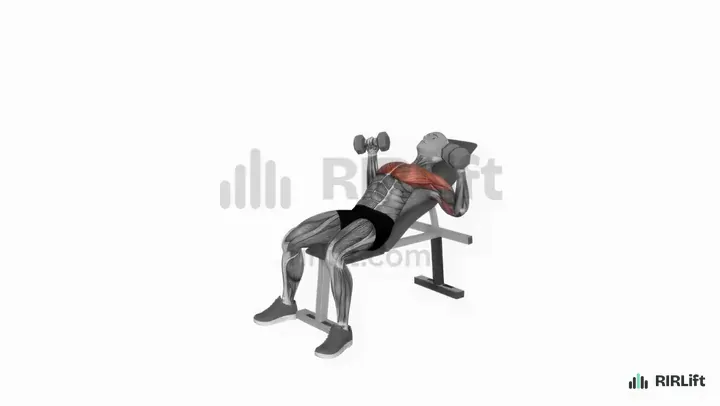
  1. Incline Dumbbell Press Chest
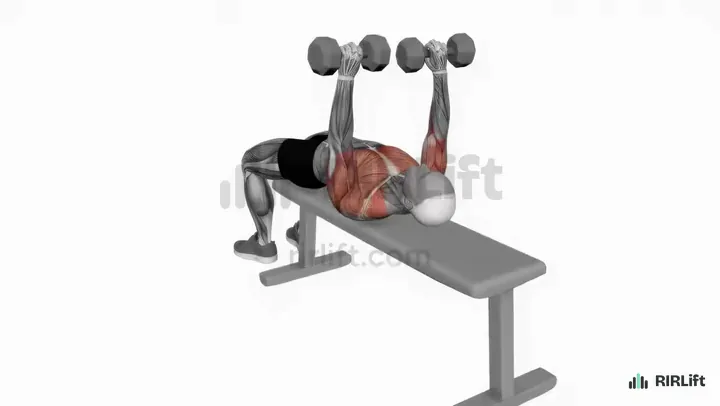
  2. Flat Dumbbell Press Chest
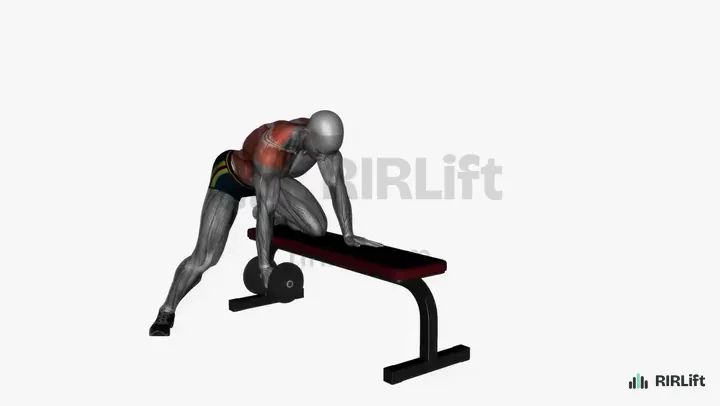
  3. One-Arm Dumbbell Row Lats, Upper Back
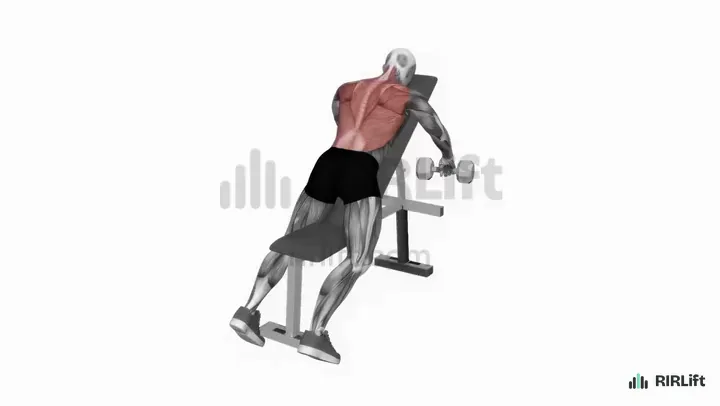
  4. Incline Dumbbell Row Upper Back, Lats
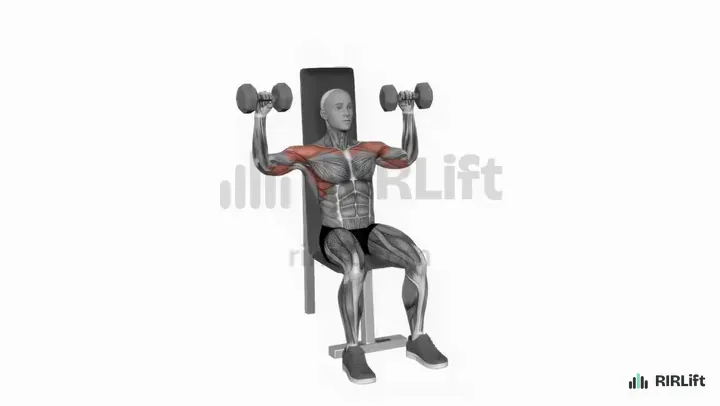
  5. Dumbbell Shoulder Press Shoulders
  6. Dumbbell Lateral Raise Shoulders
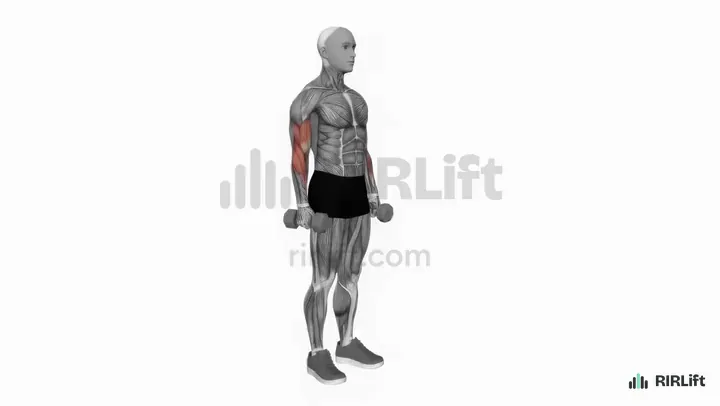
  7. Hammer Curl Biceps, Forearms
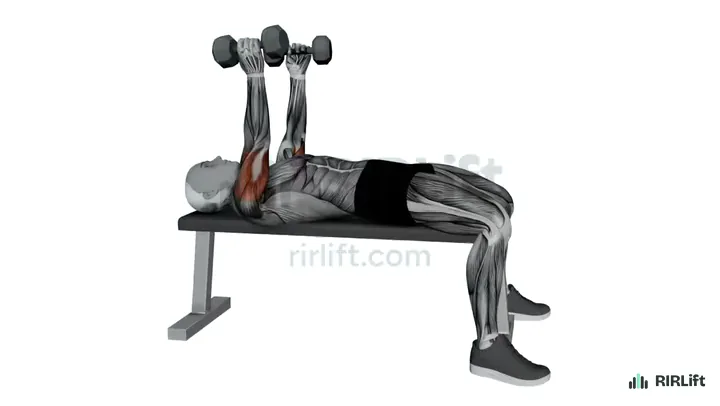
  8. Dumbbell Skullcrusher Triceps

Horizontal presses: chest, front delts, triceps

Your upper-body day starts with one of these, while you are fresh enough to press heavy. Pick the incline press if your upper chest lags, the flat press when you want the most load, and the floor press when there is no bench. Do one of them per session and rotate between them every few weeks.

Upper chest and front delts, angled press

Incline Dumbbell Press

Chest

A low incline puts the upper chest and the front of the shoulders to work together, and the dumbbells let your hands travel deeper than a bar would. On an upper-body day it is the press that gives you the most muscle for one slot.

How to do it

  1. Set a bench to a low incline, around 30 degrees, and sit with a dumbbell on each thigh.
  2. Lie back, kick the weights up one at a time and hold them above your upper chest with palms facing your feet.
  3. Lower both dumbbells until they sit just outside your upper chest, elbows a little below the bench line.
  4. Drive them back up over your collarbones until your elbows are straight.

Cues

  • Low incline, not a shoulder press
  • Upper arms at roughly 45 degrees
  • Stretch at the bottom, no bounce

Common mistakes

  • Setting the bench so steep that the shoulders take over. If you feel it mostly in the front delts, lower the back pad a notch.
  • Letting the dumbbells drift toward your face on the way up. Finish them over the top of your chest.

Swap for: Single-Arm Incline Dumbbell Press, Incline Dumbbell Squeeze Press, Reverse-Grip Incline Dumbbell Press

Mid chest and triceps, heaviest press

Flat Dumbbell Press

Chest

This is where your heaviest pressing sets live, since a flat bench lets the chest, front delts and triceps share the load. Put it first on days you want to push weight up rather than chase a pump.

How to do it

  1. Sit at the end of a flat bench, rest the dumbbells on your knees and roll back with them close to your chest.
  2. Set your shoulder blades back and down and plant both feet on the floor.
  3. Lower the weights to the sides of your mid chest with your forearms vertical.
  4. Push them up until your arms are straight and the dumbbells nearly meet.

Cues

  • Feet planted, glutes on the bench
  • Forearms stacked under the weights
  • Same depth on every rep

Common mistakes

  • Cutting the range short as the set gets hard. Stop the set when you can no longer reach chest level.
  • Dropping the dumbbells to the floor from straight arms at the end. Bring them to your chest, then sit up with them.

Swap for: Alternating Dumbbell Bench Press, Dumbbell Hex Press, Dumbbell Floor Press

Chest and triceps, no bench needed

Dumbbell Floor Press

Chest, Triceps

The floor stops your elbows at a fixed depth, which makes it the press for anyone without a bench and an easy way to keep pressing when the bottom of a full press bothers your shoulders.

How to do it

  1. Lie on your back with knees bent and both dumbbells, upper arms on the floor at about 45 degrees.
  2. Press both weights up until your elbows lock out over your chest.
  3. Lower under control until the backs of your upper arms touch the floor.
  4. Let the arms rest on the floor for a moment, then press again.

Cues

  • Soft touch, no thud
  • Pause with arms on the floor
  • Wrists straight over elbows

Common mistakes

  • Bouncing the elbows off the floor to start the press, which removes the hardest part of the rep.
  • Flaring the elbows straight out to the sides so the shoulders, not the chest, take the load.

Swap for: Single-Arm Dumbbell Floor Press, Dumbbell Floor Fly, Push-Up

Rows: lats, mid back, rear delts

Rows are the half of an upper-body day that people shortchange. Give them at least as many sets as your presses. The braced one-arm row carries the most weight, the incline row gives the strictest reps, and the bent-over row works when you only have floor space.

Lats and mid back, braced row

One-Arm Dumbbell Row

Lats, Upper Back

Bracing one hand on a bench takes your lower back out of the equation, so you can row a heavy dumbbell for clean reps. It is the row most people can load the hardest.

How to do it

  1. Put one hand and the same-side knee on a flat bench, with the other foot on the floor.
  2. Hold the dumbbell at arm's length under your shoulder with your back flat.
  3. Pull the dumbbell up and back toward your hip until your elbow passes your torso.
  4. Lower it until your arm is long and you feel your shoulder blade stretch forward.

Cues

  • Elbow toward the back pocket
  • Chest square to the floor
  • Full reach at the bottom

Common mistakes

  • Twisting the torso open to heave a weight that is too heavy. Your shoulders should stay level.
  • Shrugging the dumbbell up toward the ear instead of pulling the elbow back.

Swap for: Dumbbell Lawnmower Row, Dumbbell Pendlay Row, Kettlebell Row

Upper back, chest-supported row

Incline Dumbbell Row

Upper Back, Lats

Lying chest-down on an incline bench removes any chance to cheat with your hips, so the upper back and rear delts do all the work. It is the pull to pick when your lower back is already tired or when you want strict reps.

How to do it

  1. Set a bench to about 45 degrees and lie face down on it with your chest on the pad and toes on the floor.
  2. Let the dumbbells hang below your shoulders.
  3. Row both weights back until your elbows are level with your torso, pinching your shoulder blades.
  4. Lower slowly until your arms are straight again.

Cues

  • Chest stays glued to the pad
  • Pinch the shoulder blades at the top
  • Slow on the way down

Common mistakes

  • Lifting the chest off the bench to finish the rep, which turns it back into a cheat row.
  • Using such a heavy weight that the elbows only travel a few inches.

Swap for: Dumbbell Rear Delt Row, Reverse-Grip Dumbbell Row, One-Arm Dumbbell Row

Whole back, two-arm row

Dumbbell Bent-Over Row

Upper Back, Lats

Rowing both dumbbells at once trains the back with no bench at all, and holding the hinge works your hamstrings and spinal muscles too. It is the main pull for a floor-only setup.

How to do it

  1. Stand holding both dumbbells, soften your knees and hinge until your torso is around 45 degrees.
  2. Let the dumbbells hang under your shoulders with your back flat.
  3. Pull both dumbbells up to the sides of your waist.
  4. Lower them until your arms are straight without changing your torso angle.

Cues

  • Hips back, back flat
  • Torso angle never moves
  • Pull to the hips, not the chest

Common mistakes

  • Standing up a little more on every rep until it becomes a shrug.
  • Rounding the lower back to reach the weights further down.

Swap for: Renegade Row, Dumbbell Pendlay Row, Incline Dumbbell Row

Overhead presses

An overhead press covers the shoulders and triceps in a way flat pressing does not. Use the seated version when you have an upright bench, the standing alternating press when you train without one, and the Arnold press as a lighter second shoulder move.

Front and side delts, seated press

Dumbbell Shoulder Press

Shoulders

A seated press with back support lets your shoulders push a heavy load without your legs or lower back helping. It is the main overhead lift of the guide.

How to do it

  1. Set a bench upright, or almost upright, and sit with your back against the pad.
  2. Bring the dumbbells to shoulder height with palms forward and elbows slightly in front of your body.
  3. Press straight up until your arms are straight and the dumbbells are over your head.
  4. Lower them back to about ear level.

Cues

  • Back against the pad
  • Elbows a bit forward of the shoulders
  • Ears level with the dumbbells at the bottom

Common mistakes

  • Arching away from the backrest to turn the press into an incline press.
  • Stopping each rep at forehead height, which skips the part that builds the shoulders most.

Swap for: Neutral-Grip Dumbbell Shoulder Press, Single-Arm Dumbbell Shoulder Press, Arnold Press

Shoulders and trunk, standing press

Alternating Dumbbell Shoulder Press

Shoulders

Pressing one arm at a time while standing means your trunk has to resist leaning, and it needs nothing but floor space. It replaces the seated press when you have no bench.

How to do it

  1. Stand tall with feet hip-width apart and both dumbbells at shoulder height, palms facing in.
  2. Press one dumbbell overhead while the other stays parked at your shoulder.
  3. Lower it back to the shoulder, then press the other side.
  4. Keep alternating; a left and a right press count as one rep.

Cues

  • Ribs down, glutes tight
  • Parked arm stays still
  • Body does not lean away

Common mistakes

  • Leaning to the side of the working arm to get the weight up.
  • Letting the resting dumbbell sag to chest height between presses.

Swap for: Dumbbell Shoulder Press, Dumbbell Push Press, Single-Arm Dumbbell Shoulder Press

All three delt heads, rotating press

Arnold Press

Shoulders

The rotation from palms-in to palms-forward makes the front delt work through a longer path than a plain press, which suits a lighter second shoulder exercise on the same day.

How to do it

  1. Sit with the dumbbells in front of your shoulders, palms facing you, as if at the top of a curl.
  2. As you press up, turn your palms outward until they point ahead at the top.
  3. Finish with the arms straight overhead.
  4. Reverse the turn on the way down so your palms face you again at the bottom.

Cues

  • Rotate while pressing, not before
  • Elbows wide as you turn
  • Smooth, no pause mid-turn

Common mistakes

  • Turning first and then pressing, which makes it two separate moves instead of one path.
  • Using your heaviest press weight; take about two-thirds of it.

Swap for: Dumbbell Shoulder Press, Neutral-Grip Dumbbell Shoulder Press, Scott Press

Raises for the side and rear delts

Pressing barely reaches the side and rear delts, and they are what make shoulders look round from every angle. They respond to light weights and higher reps, so they slot in at the end of the session or between sets of a bigger lift.

Side delts, shoulder width

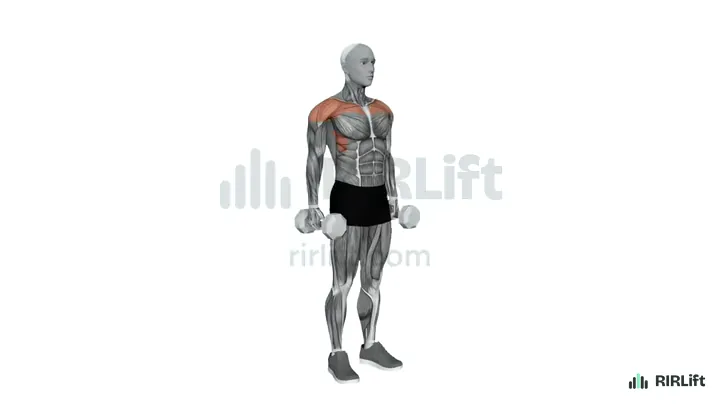
Dumbbell Lateral Raise

Shoulders

The side delts get little from pressing, and they are what make shoulders look wide from the front. Lateral raises fill that gap with a light weight and high reps.

How to do it

  1. Stand tall, dumbbells by your thighs, elbows softly bent.
  2. Raise the dumbbells sideways, leading with the elbows.
  3. Stop when your hands reach shoulder height.
  4. Lower slowly to your sides without resting at the bottom.

Cues

  • Elbows lead, hands follow
  • Stop at shoulder height
  • Slow lowering, no rest at the bottom

Common mistakes

  • Swinging the torso to throw the weight up. If you need momentum, drop the weight.
  • Shrugging toward the ears so the traps take over.

Swap for: Seated Dumbbell Lateral Raise, Leaning Dumbbell Lateral Raise, Incline Dumbbell Lateral Raise

Rear delts and upper back

Dumbbell Rear Delt Fly

Shoulders

Rear delts round out the back of the shoulder and balance all the pressing in an upper-body session. A light fly hits them better than a row, because the arm path keeps the lats out of it.

How to do it

  1. Sit on the end of a bench and lean forward until your chest nearly touches your thighs.
  2. Let the dumbbells hang under your knees with your palms turned in and elbows softly bent.
  3. Sweep your arms wide until they are level with your back.
  4. Lower them slowly back under your legs.

Cues

  • Chest down toward the thighs
  • Pinkies lead the way up
  • Arms wide, not back

Common mistakes

  • Pulling the elbows back like a row, which shifts the work to the lats and mid back.
  • Picking dumbbells so heavy you can only move them a few inches.

Swap for: Incline Dumbbell Rear Delt Raise, Dumbbell Face Pull, Dumbbell Rear Delt Row

Biceps and triceps

Rows already hit the biceps and presses already hit the triceps, so arm work is the last thing on an upper-body day. One curl and one triceps extension of 2 to 3 sets each is plenty; pair them back to back to save time.

Biceps, brachialis and forearms

Hammer Curl

Biceps, Forearms

A neutral grip loads the brachialis and forearm alongside the biceps and lets most people handle more weight than a regular curl. It is the one curl to keep if you only have room for one.

How to do it

  1. Stand holding both dumbbells, palms facing your thighs.
  2. Keep your upper arms against your sides and curl the weights up.
  3. Stop when your forearms are vertical and the dumbbells are near your shoulders.
  4. Lower slowly until your elbows are fully open.

Cues

  • Thumbs up the whole time
  • Upper arms pinned
  • Full straight arm at the bottom

Common mistakes

  • Swinging the hips to start each rep.
  • Letting the elbows drift forward so the shoulders lift part of the weight.

Swap for: Alternating Hammer Curl, Seated Dumbbell Hammer Curl, Dumbbell Curl

Biceps long head, stretched curl

Incline Dumbbell Curl

Biceps

Lying back on an incline puts your arms behind your body, so the biceps start every rep in a deep stretch. Use it as the second arm exercise when you already did a heavier curl or rows.

How to do it

  1. Set a bench to about 45 to 60 degrees and lie back holding both dumbbells.
  2. Let your arms drop behind your torso with palms forward.
  3. Curl both weights up without letting your elbows swing forward.
  4. Lower them all the way until your arms are straight and you feel the stretch.

Cues

  • Head and back on the pad
  • Elbows stay pointing down
  • Full stretch every rep

Common mistakes

  • Bringing the elbows forward at the top, which removes the stretch that makes this curl worth doing.
  • Choosing your regular curl weight; most people need a lighter pair here.

Swap for: Spider Curl, Dumbbell Curl, Concentration Curl

Triceps, lying extension

Dumbbell Skullcrusher

Triceps

Lying extensions load all three heads of the triceps and let you go heavier than kickbacks. With dumbbells you can keep a neutral grip, which most elbows tolerate better than a bar.

How to do it

  1. Lie on a flat bench holding the dumbbells above your chest, palms turned in.
  2. Keep your upper arms still and bend your elbows to lower the weights beside your head.
  3. Stop when the dumbbells are just past your ears.
  4. Straighten your elbows to bring them back over your chest.

Cues

  • Upper arms tilted slightly back
  • Only the elbows bend
  • Lower to the ears, not the nose

Common mistakes

  • Letting the elbows flare wide, which turns the rep into a press.
  • Bringing the dumbbells all the way back over your face between reps and losing tension.

Swap for: Seated Dumbbell Overhead Triceps Extension, Triceps Kickback, Kettlebell Skullcrusher

Triceps long head, overhead

Seated Dumbbell Overhead Triceps Extension

Triceps

With your arm overhead, the long head of the triceps works from a stretched position, which a press or pushdown never reaches. One dumbbell held in both hands is enough.

How to do it

  1. Sit upright and hold one dumbbell overhead with both hands cupped under the top plate.
  2. Keep your elbows pointing up and lower the weight behind your head.
  3. Go as deep as your shoulders allow while your elbows stay in place.
  4. Straighten your arms to bring the dumbbell back overhead.

Cues

  • Elbows point at the ceiling
  • Deep behind the head
  • Ribs down, no back arch

Common mistakes

  • Letting the elbows open wide to the sides as the set gets hard.
  • Arching the lower back to get the weight up.

Swap for: Dumbbell Skullcrusher, Kettlebell Overhead Triceps Extension, Triceps Kickback

Put them together: example sessions

Each session below picks from the exercises above for one situation, with the sets, reps, rest and RIR filled in. Open one in the session builder to change a pick, price it from a recent set, and add it to RIRLift.

Session 1

30 minutes, a bench and a few pairs

Open in the session builder
  • Workouts2× a week
  • Working sets30 a week
  • Per workout~30 min
  • EquipmentDumbbells, Incline Bench, Flat Bench

You have half an hour, an adjustable bench and access to a few dumbbell weights, at home or in a quiet corner of a gym.

Pairing a press with a row and a raise with an arm move keeps you working while the other muscle rests, so 15 hard sets fit in about 30 minutes. The incline press and one-arm row are the heaviest lifts and take 2 reps in reserve so form holds up; the lateral raise, curl and extension go to 1 because a missed rep on them costs nothing.

Upper 30
ExerciseSets × repsRIRRest
A1 Incline Dumbbell Press1 warm-up set firstLow incline. Pair with the row 3 × 8–12 2 90 s
A2 One-Arm Dumbbell RowReps per arm 3 × 8–12 2 90 s
Dumbbell Shoulder PressEars level with the dumbbells at the bottom 3 × 8–12 2 90 s
B1 Dumbbell Lateral RaiseElbows lead 2 × 12–20 1 1 min
B2 Hammer Curl 2 × 10–15 1 1 min
Dumbbell SkullcrusherLower to the ears 2 × 10–15 1 1 min
How to run it
Run it twice a week with at least two days between. Do the paired exercises back to back, rest, then repeat. Your legs go on other days.
How to progress
Add reps first. When every set of an exercise reaches the top of its range at the target RIR, go up to the next dumbbell and start again at the bottom of the range.

Session 2

Two upper days in an upper/lower split

Open in the session builder
  • Workouts2× a week
  • Working sets41 a week
  • Per workout~45 min
  • EquipmentDumbbells, Flat Bench, Incline Bench

You train four days a week, two of them for the upper body, and have a full rack of dumbbells and an adjustable bench.

With two upper days you can split the work: day A leads with the flat press and the heaviest rows, day B with the incline press and the strictest pulls, so every muscle gets two sessions a week from different angles. Big presses and rows stay at 2 reps in reserve across 3 to 4 sets; the shoulder and arm isolation moves go to 0 or 1 RIR on the last set because they recover fast.

Upper A
ExerciseSets × repsRIRRest
Flat Dumbbell Press2 warm-up sets firstHeaviest press of the week 4 × 6–10 2 2:30 min
One-Arm Dumbbell RowReps per arm 4 × 8–12 2 2 min
Arnold Press 3 × 10–12 2 90 s
Dumbbell Rear Delt Fly 3 × 12–20 1 1 min
A1 Incline Dumbbell CurlElbows stay pointing down 3 × 10–15 1 1 min
A2 Seated Dumbbell Overhead Triceps Extension 3 × 10–15 1 1 min

Open Upper A in the session builder

Upper B
ExerciseSets × repsRIRRest
Incline Dumbbell Press1 warm-up set first 4 × 8–12 2 2 min
Incline Dumbbell RowChest on the pad 4 × 10–15 2 90 s
Dumbbell Shoulder Press 3 × 8–12 2 2 min
Dumbbell Lateral RaiseLast set to failure 4 × 12–20 0 1 min
A1 Hammer Curl 3 × 8–12 1 1 min
A2 Dumbbell Skullcrusher 3 × 8–12 1 1 min

Open Upper B in the session builder

How to run it
Do A and B on two different days with a leg day between, for example Monday and Thursday. Always do the press before the row on each day.
How to progress
Use double progression on each exercise. When a block's sets all reach the top of the range, add the next dumbbell size. If you stall on the main press for two weeks, drop a set for one week and build back.

Session 3

No bench, one or two pairs, a bit of floor

Open in the session builder
  • Workouts3× a week
  • Working sets51 a week
  • Per workout~30 min
  • EquipmentDumbbells

You train at home with dumbbells and floor space, but no bench to lie or sit on.

Without a bench, the floor press replaces every bench press, the bent-over row replaces braced and chest-supported rows, and the standing alternating press replaces the seated one. Lighter pairs mean higher rep ranges and 1 rep in reserve, so the sets are still hard enough to grow from even when the weights are modest.

Upper on the Floor
ExerciseSets × repsRIRRest
Dumbbell Floor Press1 warm-up set firstPause with arms on the floor 3 × 10–20 1 90 s
Dumbbell Bent-Over RowTorso angle never moves 3 × 10–20 1 90 s
Alternating Dumbbell Shoulder PressReps count both arms 3 × 8–15 1 90 s
A1 Dumbbell Rear Delt FlySeated on a chair, chest to thighs 2 × 15–20 1 1 min
A2 Dumbbell Lateral Raise 2 × 15–20 1 1 min
B1 Hammer Curl 2 × 12–20 1 1 min
B2 Seated Dumbbell Overhead Triceps ExtensionSeated on a chair 2 × 12–20 1 1 min
How to run it
Run it two or three times a week on non-consecutive days. Use a mat for the floor press, and stand on a non-slip surface for the overhead work.
How to progress
Fixed pairs run out of reps quickly. Once you hit the top of a range, add a 3-second lowering before adding reps beyond it, and move to the heavier pair when the slow version also tops out.

Make it fit you

Questions

Can you build upper body muscle with dumbbells?

Yes. Dumbbells cover every upper-body movement: presses, rows, overhead presses, raises and arm work. Muscle grows when sets end close to failure and the load or reps go up over time, and dumbbells allow both as long as you have heavier pairs to move to or can switch to one-arm versions.

Are 3 exercises enough for the upper body?

Three can be enough if they are a press, a row and an overhead press, done for 3 to 4 hard sets each. That covers chest, back, shoulders and much of the arms. Add lateral raises and arm work once you have the time, because those muscles get less from the big lifts.

Is a 5 kg dumbbell enough to build muscle?

For lateral raises, rear delt flys and curls, often yes, especially early on. For presses and rows, a 5 kg pair gets easy fast. Use higher reps, slow lowering, one-arm versions and pauses to keep sets within 1 to 3 reps of failure, and get heavier dumbbells when sets need more than about 25 reps.

What are examples of compound upper body exercises with dumbbells?

The flat and incline press, floor press, one-arm row, bent-over row, chest-supported row and shoulder press are all compound, because each moves both the shoulder and elbow joints and trains several muscles at once. Raises, curls and extensions are isolation moves.

What is a good 30-minute upper body dumbbell workout?

Press and row as a pair for 3 sets, then a shoulder press for 3 sets, then a lateral raise with a curl and a triceps extension for 2 sets each. The first plan on this page lays it out with reps, rest and reps in reserve.

How often should I train upper body with dumbbells?

Two sessions a week for each muscle is a good default. That can be two upper days in an upper/lower split, or upper-body exercises inside three full-body sessions. Spread the sets so no muscle gets more than about 10 hard sets in one session.

Should I press or row first?

Put whichever you most want to improve first. Most people lead with a press because it is the heaviest lift of the day, then row right after. Pairing them back to back as a superset saves time without hurting either.