Dumbbell glute exercises: thrusts, hinges and single-leg moves

The best dumbbell glute exercises are the dumbbell hip thrust, the Romanian deadlift, the Bulgarian split squat and the reverse lunge. The thrust works your glutes hardest at full hip extension, the Romanian deadlift at the bottom, and the split squat and lunge load one glute at a time with your bodyweight added in. A session built from one thrust, one hinge and one single-leg move covers the whole muscle. When your dumbbells feel light, switch to the single-leg or kickstand versions before buying heavier ones.

  1. Dumbbell Hip Thrust Glutes
  2. Dumbbell Romanian Deadlift Hamstrings, Glutes
  3. Bulgarian Split Squat Quads, Glutes
  4. Dumbbell Reverse Lunge Quads, Glutes
  5. Single-Leg Hip Thrust Glutes
  6. Dumbbell B-Stance RDL Hamstrings, Glutes
  7. Step-Up Quads, Glutes
  8. Dumbbell Glute Bridge Glutes

Dumbbell hip thrusts and bridges

Thrusts and bridges are the most direct dumbbell glute exercises because nothing else in your body can finish the rep for you. A bench gives you the full range of the hip thrust; the floor bridge covers the same top position when you have no bench. Once one dumbbell stops being heavy for two legs, move to the staggered or single-leg version before you buy more weight.

Glute max, loaded hip extension

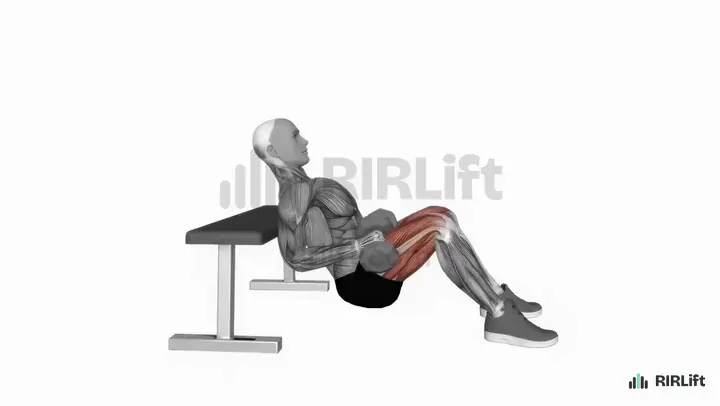
Dumbbell Hip Thrust

Glutes

The hip thrust puts the hardest part of the rep at the top, where your glutes are fully shortened, and a dumbbell on your hips is the simplest way to load it without a barbell. It is the exercise most people feel in their glutes first, which is why it leads every dumbbell plan below.

How to do it

  1. Sit down with the lower edge of your shoulder blades against the long side of a bench, knees bent, feet flat about hip-width apart.
  2. Set one dumbbell across your hip crease and hold each end so it cannot roll.
  3. Tuck your chin, brace, and drive through your heels until your hips are level with your knees and your shins are vertical.
  4. Squeeze hard for a second at the top, then lower your hips until they sit an inch off the floor and go again.

Cues

  • Chin tucked, eyes forward at the top
  • Shins vertical at lockout
  • Ribs down, no arch

Common mistakes

  • Arching your lower back to get the hips higher: stop when your thighs and torso form a straight line and let the glutes finish the rep.
  • Feet so far out that the hamstrings take over: walk them in until your shins are upright at the top.

Swap for: Dumbbell Glute Bridge, Dumbbell Staggered Hip Thrust, Single-Leg Hip Thrust

Glute max, one-leg hip thrust

Single-Leg Hip Thrust

Glutes

Working one leg at a time doubles the load each glute gets, so a 25 pound dumbbell feels like a heavy thrust. It also shows you quickly if one side is doing less of the work.

How to do it

  1. Set up with your upper back on a bench edge, one foot flat under your knee and the other foot lifted off the floor.
  2. Rest a dumbbell on the hip of the working leg and hold it in place with that hand.
  3. Push the planted heel into the floor and raise your hips until your torso and working thigh are in one line.
  4. Hold the top for a second, lower with control, and finish all reps before you switch legs.

Cues

  • Hips stay level, not tilted
  • Drive through the planted heel
  • Pause at the top

Common mistakes

  • Letting the hip of the lifted leg drop: if the pelvis tilts, use a lighter dumbbell or none.
  • Kicking the free leg up to help: keep it bent and still.

Swap for: Dumbbell Staggered Hip Thrust, Dumbbell Hip Thrust, Single-Leg Glute Bridge

Glute max, offset-stance hip thrust

Dumbbell Staggered Hip Thrust

Glutes

Moving one foot forward shifts most of the work to the back leg while the other leg still helps you balance. It is the halfway step between a two-leg and a one-leg thrust, so you can load it heavier than the single-leg version.

How to do it

  1. Sit against a bench with a dumbbell on your hips, then slide one foot forward so its heel sits roughly level with the toes of the other foot.
  2. Keep most of your weight on the back foot, with the front foot only lightly planted.
  3. Drive your hips up until your torso is level, pushing mainly through the back heel.
  4. Lower slowly and repeat, then swap the foot position for the other side.

Cues

  • Back heel does the work
  • Front foot just for balance
  • Squeeze one glute

Common mistakes

  • Pushing evenly through both feet, which turns it back into a normal thrust: keep the front foot light.
  • Rushing the lowering: take two seconds down.

Swap for: Single-Leg Hip Thrust, Dumbbell Hip Thrust, Dumbbell Glute Bridge

Glute max, floor bridge

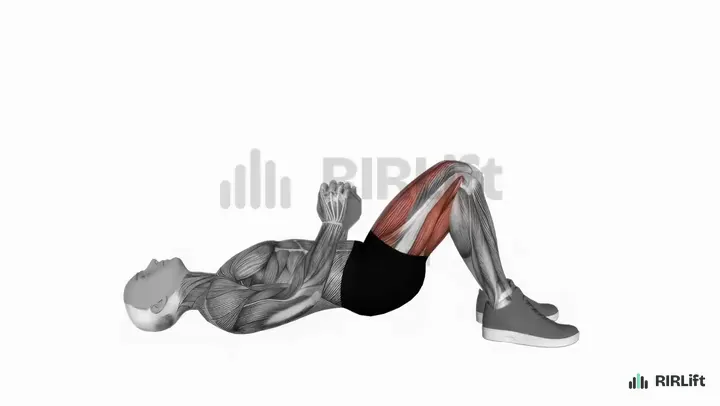
Dumbbell Glute Bridge

Glutes

The bridge is a hip thrust done from the floor, so it needs no bench and has a shorter range. It is the thrust for a light pair or a small room, and a good warm-up before heavier hip work.

How to do it

  1. Lie face up, knees bent, heels about a foot from your hips.
  2. Place a dumbbell across your hips and hold the ends.
  3. Press through your heels and lift your hips until your body makes a straight line from knees to shoulders.
  4. Hold the squeeze for a second at the top, lower until your glutes lightly reach the floor, and repeat.

Cues

  • Heels, not toes
  • Squeeze before you lower
  • Short range, hard squeeze

Common mistakes

  • Pushing off the toes so the thighs burn instead of the glutes: lift your toes slightly if it helps you feel the heels.
  • Bouncing off the floor between reps: let the hips touch down and pause.

Swap for: Dumbbell Hip Thrust, Single-Leg Glute Bridge, Dumbbell Staggered Hip Thrust

Dumbbell hinges for the glutes

Hinges stretch the glutes under load at the bottom of the rep, where thrusts are easy. Keep one hinge in every glute session. The B-stance and single-leg versions let a lighter pair stay challenging, and the swing adds speed when you have one dumbbell and little time.

Glutes and hamstrings, two-dumbbell hinge

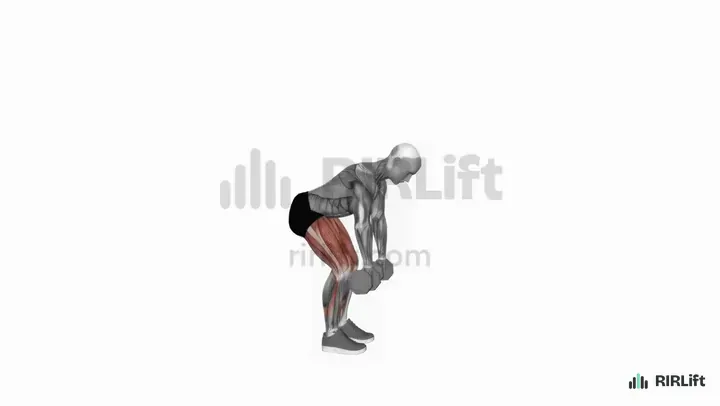
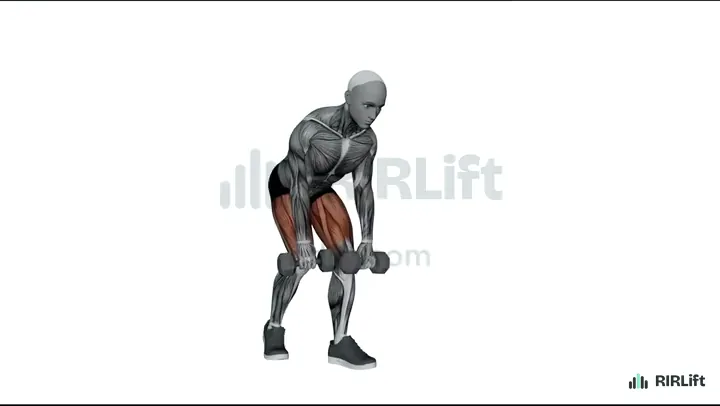
Dumbbell Romanian Deadlift

Hamstrings, Glutes

The Romanian deadlift loads your glutes at long length, at the bottom of the hinge, which is the opposite end of the range from the thrust. Pairing the two covers the whole range of hip extension with nothing but dumbbells.

How to do it

  1. Hold the pair against the front of your thighs with your feet under your hips.
  2. Unlock your knees, then push your hips back so your chest tips forward and the dumbbells slide down the front of your legs.
  3. Stop when you feel a deep pull behind your thighs and your back is still flat, usually a little below the knees.
  4. Stand up by driving your hips forward until your glutes are tight, without leaning back.

Cues

  • Hips travel back, shins stay put
  • Weights close to your legs
  • Stand tall, not leaning back

Common mistakes

  • Turning it into a squat by bending the knees more on the way down: keep the knee angle almost fixed.
  • Leaning back at the top to finish the rep: stand straight and squeeze.

Swap for: Dumbbell B-Stance RDL, Single-Leg RDL, Dumbbell Good Morning

Glutes and hamstrings, kickstand hinge

Dumbbell B-Stance RDL

Hamstrings, Glutes

With one foot set back on its toes like a kickstand, most of the weight stays on the front leg, so each side gets a near single-leg load without the balance problem. It makes a light pair of dumbbells do the work of a much heavier one.

How to do it

  1. Stand with dumbbells in both hands and slide one foot back so its toes sit level with the heel of the front foot.
  2. Put about four fifths of your weight on the front leg with a soft knee.
  3. Hinge forward by sending your hips back, lowering the dumbbells along the front leg until the back of that thigh is stretched.
  4. Drive the front hip forward to stand up and repeat, then switch legs.

Cues

  • Front leg holds the weight
  • Back foot is only a kickstand
  • Hips square to the floor

Common mistakes

  • Sharing the load evenly between both feet: lift the back heel and keep only the toes down.
  • Twisting the hips open as you lower: keep both hip bones pointing at the floor.

Swap for: Single-Leg RDL, Dumbbell Romanian Deadlift, Dumbbell Good Morning

Glutes and hamstrings, one-leg hinge

Single-Leg RDL

Hamstrings, Glutes

Balancing on one leg makes the glute work both to extend the hip and to stop your pelvis from twisting, so it trains the side of the hip as well. Use it once the B-stance version feels steady.

How to do it

  1. Stand on your left leg with the dumbbell held in your right hand and the standing knee softly bent.
  2. Hinge forward at the left hip while your right leg extends straight behind you, keeping your hips level.
  3. Lower until your torso and back leg are close to parallel to the floor or the standing hamstring stops you.
  4. Drive the left hip forward to come back up, then finish the set before switching sides.

Cues

  • Back leg and torso move as one
  • Hips level, toes of the back foot down
  • Slow on the way down

Common mistakes

  • Opening the hip so the back leg rotates out: point the back toes at the floor the whole time.
  • Touching the free foot down between reps to rebalance: slow down and hold a wall with your free hand if needed.

Swap for: Dumbbell B-Stance RDL, Dumbbell Romanian Deadlift, Step-Up

Glutes and hamstrings, explosive hinge

Dumbbell Swing

Glutes, Hamstrings

The swing trains a fast, hard hip snap with one dumbbell, which builds power and gets your heart rate up at the same time. It works best as a finisher or on a short day, not as your main glute builder.

How to do it

  1. Set your feet a bit wider than your hips and hold one dumbbell by its end with both hands.
  2. Hinge and hike the dumbbell back between your thighs, keeping your back flat.
  3. Snap your hips forward hard so the dumbbell floats up to about chest height, with your arms staying loose.
  4. Let it fall back between your legs, hinge to absorb it, and go straight into the next rep.

Cues

  • The hips throw, the arms just hold
  • Plank at the top
  • Hike it back high between the thighs

Common mistakes

  • Squatting the swing so the knees do the work: think hips back, not down.
  • Lifting the dumbbell with your shoulders: if your arms are tired before your glutes, the hips are not snapping.

Swap for: Dumbbell Romanian Deadlift, Dumbbell Hip Thrust, Dumbbell B-Stance RDL

Dumbbell split squats, lunges and step-ups

Single-leg moves let you load one glute with your whole bodyweight plus the dumbbells, which is how a modest pair still builds muscle. Lean your torso slightly forward and take longer steps to bias the glute over the quads. The lateral and curtsy lunges add side-to-side work that the others miss.

Glutes and quads, rear-foot-elevated split squat

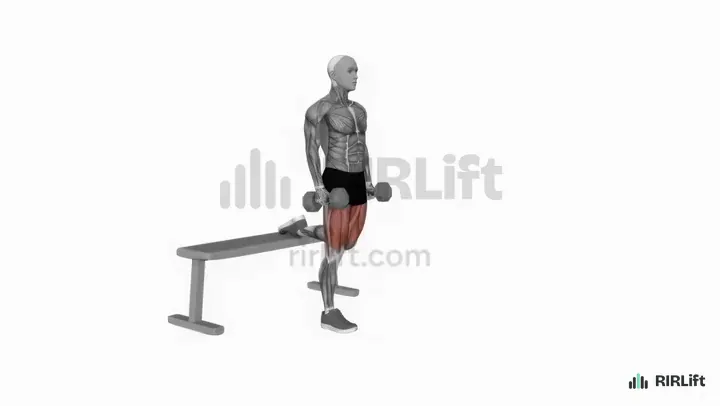
Bulgarian Split Squat

Quads, Glutes

With the back foot on a bench, almost all the weight lands on one leg, and a slight forward lean lets the front glute take a deep stretch at the bottom. It is the hardest dumbbell lower-body exercise per pound, so it grows glutes with modest weights.

How to do it

  1. Stand about two feet ahead of a bench and rest one foot on it, laces down, behind you, dumbbells in both hands.
  2. Lean your torso forward slightly and lower straight down until the front thigh is about parallel to the floor.
  3. Keep the front heel planted and the knee tracking over the middle of the foot.
  4. Push through the whole front foot to stand back up, finish the set, and switch legs.

Cues

  • Lean forward a little for more glute
  • Front heel stays heavy
  • Straight down, not forward

Common mistakes

  • Setting the front foot so close that the knee drives far past the toes and the quads take over: step out further from the bench.
  • Pushing off the back foot: it only rests on the bench.

Swap for: Dumbbell Split Squat, Dumbbell Goblet Split Squat, Dumbbell Reverse Lunge

Glutes and quads, step-back lunge

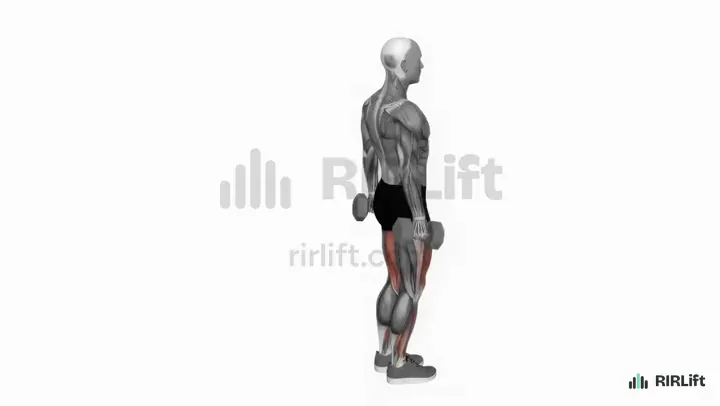
Dumbbell Reverse Lunge

Quads, Glutes

Stepping backward keeps your weight over the front heel, which favors the glute and is easier on the knees than a forward lunge. It needs only floor space, so it is the main single-leg move when you have no bench.

How to do it

  1. Stand tall with a dumbbell at each side.
  2. Take a long step back with one foot and lower until both knees are bent about 90 degrees, the back knee just above the floor.
  3. Keep your chest tipped slightly forward and the weight in the front heel.
  4. Push through the front foot to bring the back foot forward to standing, then alternate or finish one side first.

Cues

  • Long step back
  • Weight in the front heel
  • Tip the chest slightly forward

Common mistakes

  • Taking a short step so the front knee shoots forward: a longer step shifts the work to the glute.
  • Dropping the back knee onto the floor: lower with control and stop just above it.

Swap for: Dumbbell Split Squat, Bulgarian Split Squat, Dumbbell Forward Lunge

Glutes and quads, bench step-up

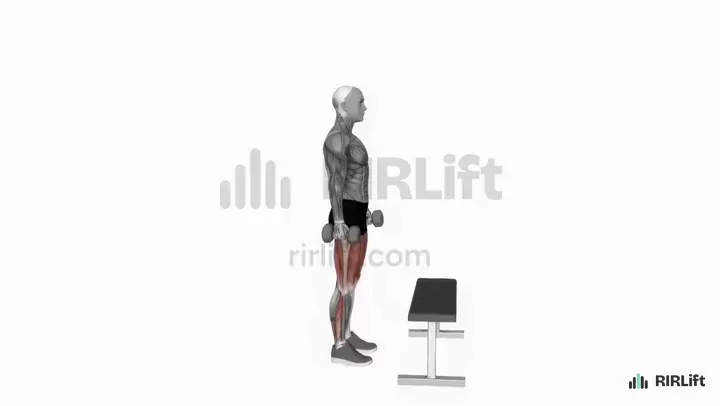
Step-Up

Quads, Glutes

The step-up loads one leg through a long range and stops it from cheating, because the leg on the floor cannot push. A higher box means more glute, so use a bench or sturdy step at about knee height.

How to do it

  1. Stand facing a bench at roughly knee height with dumbbells in both hands.
  2. Plant the whole right foot up on the bench.
  3. Lean your torso slightly forward and drive through the right heel to stand up on the bench, without pushing off the left foot.
  4. Lower the left foot back down slowly, with the right foot staying planted up top, and repeat for all reps before switching.

Cues

  • Whole foot on the box
  • Stand up, do not jump up
  • Slow down on the way back

Common mistakes

  • Bouncing off the back foot: lift the trailing toes slightly so only the top leg can work.
  • Dropping straight down from the top: control the lowering for two seconds.

Swap for: Dumbbell Reverse Lunge, Bulgarian Split Squat, Dumbbell Lateral Lunge

Build a session with Step-Up

Glute max and side glutes, crossover lunge

Dumbbell Curtsy Lunge

Quads, Glutes

Stepping the back foot behind and across your body puts the front glute on a stretch from a new angle and makes the side of your hip hold your knee in line. It is a useful second lunge for variety once the reverse lunge is in place.

How to do it

  1. Set your feet under your hips with a dumbbell at each side.
  2. Reach the right foot back and behind your left, as if crossing into a curtsy.
  3. Lower until the front thigh is near parallel, keeping your hips facing forward and the front knee over the middle of the foot.
  4. Drive through the left heel to come back up, then repeat on the other side.

Cues

  • Hips stay square
  • Front knee follows the toes
  • Cross back, not out

Common mistakes

  • Rotating the hips toward the back leg: keep both hip bones facing straight ahead.
  • Crossing so far that you lose balance: a moderate cross is enough to feel it.

Swap for: Dumbbell Reverse Lunge, Dumbbell Lateral Lunge, Bulgarian Split Squat

Glutes and inner thighs, side lunge

Dumbbell Lateral Lunge

Quads, Glutes, Adductors

Lunging sideways trains the glutes and inner thighs together while your hip moves in a direction most leg days skip. Keep it as an accessory for a light pair rather than a heavy builder.

How to do it

  1. Stand with your feet together and a dumbbell at each side or one held at your chest.
  2. Take a wide step out to the right and sit your hips back over the right foot, keeping the left leg straight.
  3. Lower until the right thigh is close to parallel, with your chest up and both feet flat.
  4. Push off the right foot to return to the start, then alternate sides.

Cues

  • Sit back, not down
  • Trailing leg straight
  • Both feet flat

Common mistakes

  • Letting the bent knee cave inward: keep it pointing the same way as the toes.
  • Stepping too narrow to get any depth: widen the step until you can sit back.

Swap for: Dumbbell Curtsy Lunge, Dumbbell Reverse Lunge, Step-Up

Put them together: example sessions

Each session below picks from the exercises above for one situation, with the sets, reps, rest and RIR filled in. Open one in the session builder to change a pick, price it from a recent set, and add it to RIRLift.

Session 1

One light pair of dumbbells, no bench

Open in the session builder
  • Workouts2× a week
  • Working sets24 a week
  • Per workout~30 min
  • EquipmentDumbbells

You have one fixed pair in the 10 to 25 pound range and some floor space, but no bench or box.

Without a bench, the floor bridge stands in for the thrust and the lunges replace the step-up and Bulgarian split squat. A light pair runs out of challenge on two-leg moves, so most sets are one leg at a time or kickstand style, at 12 to 20 reps. Bridges and lunges finish 1 rep short of failure because high-rep sets only grow muscle when they end hard; the hinges stop at 2 so your lower back holds position to the last rep. Each session is 12 working sets.

Glutes A
ExerciseSets × repsRIRRest
Dumbbell Glute BridgeBoth dumbbells on the hips. Pause 1 s at the top. 3 × 12–20 1 1 min
Dumbbell B-Stance RDLPer leg. Front leg holds the weight. 3 × 10–15 2 90 s
Dumbbell Reverse LungePer leg. Long step back. 3 × 10–15 1 90 s
Dumbbell Lateral LungePer side. Sit back over the heel. 3 × 10–15 1 1 min

Open Glutes A in the session builder

Glutes B
ExerciseSets × repsRIRRest
Dumbbell Reverse LungePer leg. 3 s down. 3 × 10–15 1 90 s
Single-Leg RDLPer leg. Free hand on a wall if needed. 3 × 10–15 2 90 s
Dumbbell Glute BridgeOne dumbbell, both legs, or march one heel up. 3 × 15–25 1 1 min
Dumbbell Curtsy LungePer leg. Hips square. 3 × 10–15 1 1 min

Open Glutes B in the session builder

How to run it
Do Glutes A and Glutes B once each per week with at least two days between. Hold the dumbbells at your sides on the lunges and both on the hips for the bridge.
How to progress
Add reps until each set reaches the top of its range at the target reps in reserve, then slow the lowering to three seconds or add a one-second pause at the bottom of the lunges. When 20 reps still feels easy that way, it is time for a heavier pair.

Session 2

Heavy adjustable dumbbells and a bench

Open in the session builder
  • Workouts2× a week
  • Working sets25 a week
  • Per workout~40 min
  • EquipmentDumbbells, Flat Bench

You have adjustable dumbbells that go to 50 pounds or more and a flat bench, and glutes are a priority in your week.

A bench unlocks the full hip thrust and the Bulgarian split squat, the two dumbbell lifts that load the glutes hardest, so they open sessions A and B with a warm-up set, lower reps and longer rests. The Romanian deadlift covers the stretched range, and the single-leg thrust and step-up come later in each session when lighter loads are enough. Heavy compounds stop at 1 to 2 reps in reserve because form breaks first; the last exercise of each day goes to 0 to 1. Session A has 13 working sets and B has 12.

Glutes A
ExerciseSets × repsRIRRest
Dumbbell Hip Thrust1 warm-up set firstPause 1 s at the top. Chin tucked. 4 × 8–12 1 2 min
Dumbbell Romanian Deadlift1 warm-up set firstHips back. Stop when the back stays flat. 3 × 8–12 2 2 min
Step-UpPer leg. Knee-height bench. 3 × 8–12 1 90 s
Single-Leg Hip ThrustPer leg. Dumbbell on the working hip. 3 × 10–15 0 1 min

Open Glutes A in the session builder

Glutes B
ExerciseSets × repsRIRRest
Bulgarian Split Squat1 warm-up set firstPer leg. Lean slightly forward. 4 × 8–12 1 2 min
Dumbbell Staggered Hip ThrustPer side. Back heel drives. 3 × 8–12 1 90 s
Dumbbell B-Stance RDLPer leg. 3 × 8–12 2 90 s
Dumbbell Lateral LungePer side. 2 × 10–15 1 1 min

Open Glutes B in the session builder

How to run it
Do Glutes A and Glutes B once each per week, two or three days apart. Put your upper-body training on the other days or after these blocks.
How to progress
Double progression: when every set of a lift reaches the top of its range at the target reps in reserve, add the next dumbbell step and build the reps back up. For the hip thrust, stack a second dumbbell on your hips once one dumbbell runs out.

Session 3

Lunges and squats bother your knees

Open in the session builder
  • Workouts2× a week
  • Working sets20 a week
  • Per workout~25 min
  • EquipmentDumbbells, Flat Bench

Deep knee bends under load are uncomfortable for you right now, but you still want to build your glutes with a pair of dumbbells and a bench.

Thrusts, bridges and hinges keep your shins nearly vertical, so the knee barely bends under load while the glutes do all the lifting. That is the whole session: one heavy thrust, one heavy hinge, a single-leg thrust to cover each side, and swings to finish. Bridges and thrusts run to 1 rep in reserve because they are easy to stop safely; the hinge stays at 2. Nine to eleven working sets per session, twice a week, gives the glutes as much weekly work as the other plans without a single lunge.

Thrust and Hinge
ExerciseSets × repsRIRRest
Dumbbell Hip Thrust1 warm-up set firstPause 2 s at the top. 3 × 10–15 1 2 min
Dumbbell Romanian DeadliftSoft knees. Hips back. 3 × 10–12 2 2 min
Single-Leg Hip ThrustPer leg. 3 × 10–15 1 1 min
Dumbbell SwingOne dumbbell. Hips snap, arms loose. 2 × 15–20 2 1 min

Open Thrust and Hinge in the session builder

Bridge and Kickstand
ExerciseSets × repsRIRRest
Dumbbell Glute BridgePause 2 s at the top. 3 × 15–20 1 90 s
Dumbbell B-Stance RDLPer leg. 3 × 10–15 2 90 s
Dumbbell Staggered Hip ThrustPer side. 3 × 10–15 1 1 min

Open Bridge and Kickstand in the session builder

How to run it
Do this session twice a week on non-consecutive days. On the second day, swap the Romanian deadlift for the B-stance version and the hip thrust for the floor bridge with a longer pause.
How to progress
Add reps first, then load. Once your knees feel fine, add a light step-up in the third slot and see how they respond over two weeks before adding lunges.

Make it fit you

Questions

Can you build glutes with dumbbells?

Yes. Glutes grow from hard sets taken close to failure, and dumbbell hip thrusts, Romanian deadlifts and split squats give you plenty of those. The catch is load: once two-leg moves stop being hard at 20 reps, move to single-leg versions, which roughly double the load on each side.

What are the top 4 dumbbell glute exercises?

The hip thrust, the Romanian deadlift, the Bulgarian split squat and the reverse lunge. Together they load the glutes in the fully squeezed position, at the bottom, and one leg at a time.

Are 3 or 4 exercises enough for a glute day?

Yes, if they are a thrust or bridge, a hinge and a single-leg move, done for 3 to 4 hard sets each. That is 9 to 16 sets for the day, which is plenty. A fourth exercise is useful for side-glute work like the lateral lunge, not for another thrust.

What weight dumbbells should I use for glutes?

Pick a weight that leaves 1 to 2 reps in reserve inside the rep range. For most people that means a heavier dumbbell for hip thrusts and Romanian deadlifts than for split squats and lunges, where balance limits the load. If your only pair is light, use the single-leg versions.

Will 100 squats a day grow my glutes?

Probably not much. Bodyweight squats soon become too easy to be a hard set, and the quads do most of the work. Fewer reps of a loaded hip thrust, a Romanian deadlift and a split squat, taken close to failure two or three times a week, will do more.

What are good glute and leg exercises with weights?

With dumbbells, the Bulgarian split squat, step-up and reverse lunge train your glutes and quads together, and the Romanian deadlift covers glutes and hamstrings. Add a hip thrust for the glutes alone and you have a full lower-body session.

Should I do dumbbell glute exercises every day?

No. Glutes need time to recover between hard sessions. Two sessions a week, two or three days apart, is enough for steady progress, and a third is only worth it if you keep each session short.