
Dumbbell hamstring exercises: hinges, swings and thrusts
Published October 19, 2026
The best dumbbell hamstring exercises are the dumbbell Romanian deadlift, the single-leg RDL, the B-stance RDL and the dumbbell good morning, all hinges that stretch the hamstrings under load. Add a hip thrust or glute bridge with your feet set further out for the locked-out end of the range, and the dumbbell swing if you want speed. Dumbbells can't easily load a leg curl, so make hinges the core of every session: 6 to 12 hard sets a week, 8 to 15 reps, stopping 1 to 2 reps short of failure.
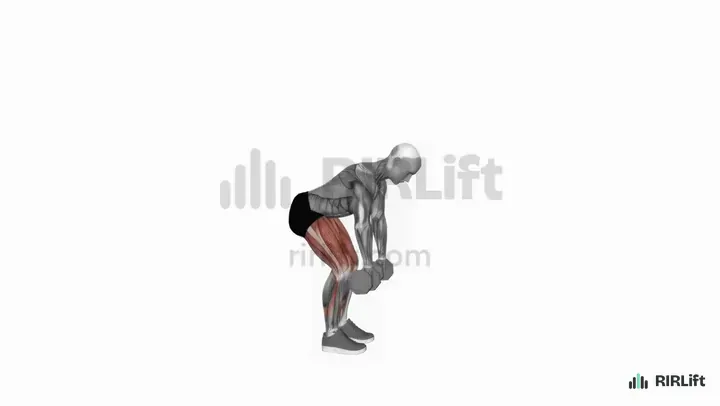
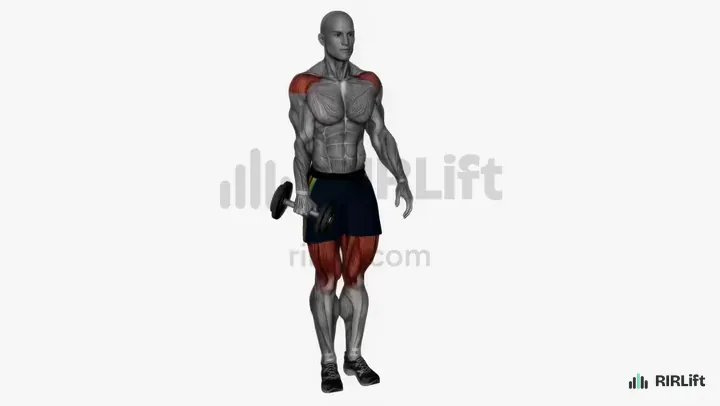
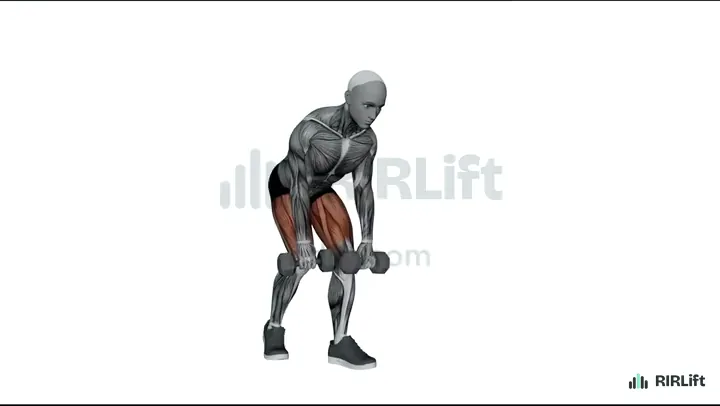
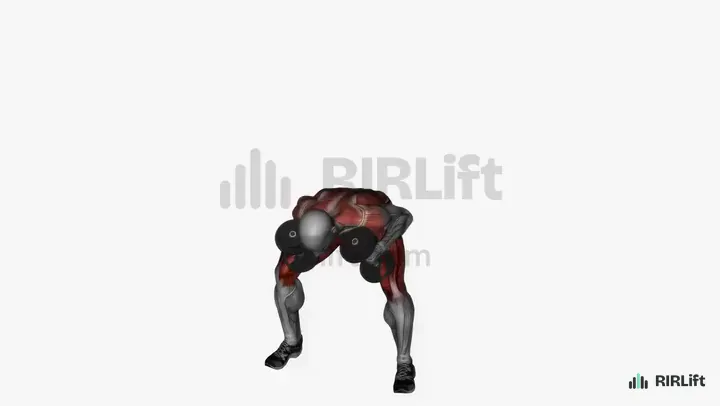
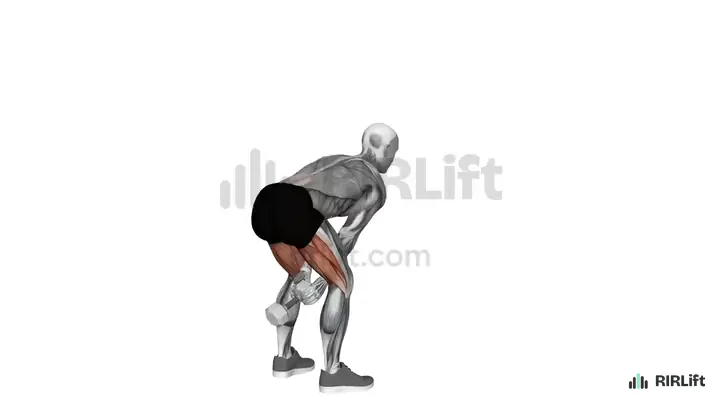
- Dumbbell Romanian Deadlift Hamstrings, Glutes
- Single-Leg RDL Hamstrings, Glutes
- Dumbbell B-Stance RDL Hamstrings, Glutes
- Dumbbell Good Morning Hamstrings, Lower Back
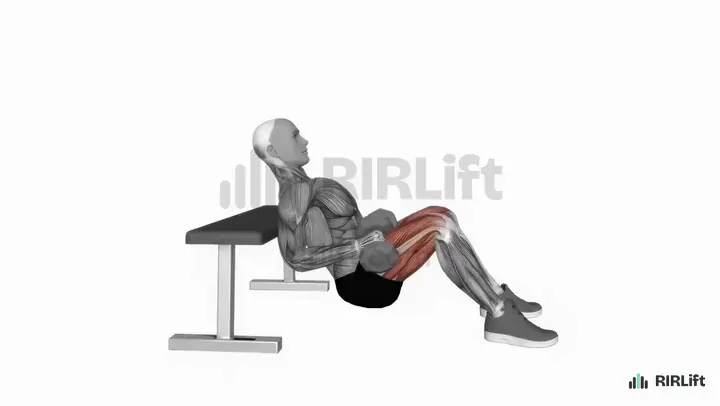
- Dumbbell Hip Thrust Glutes
- Dumbbell Swing Glutes, Hamstrings
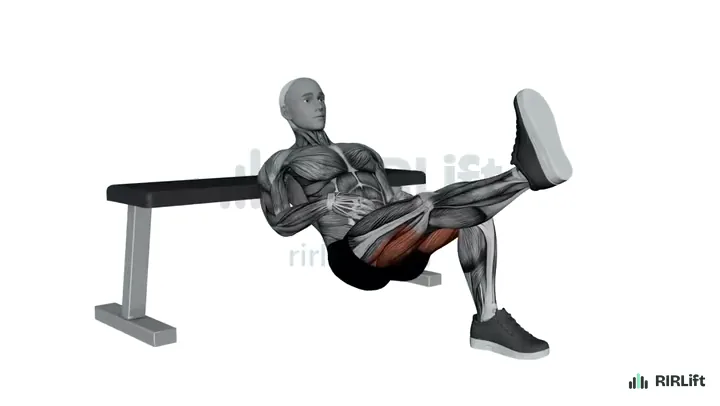
- Single-Leg Hip Thrust Glutes
Put them together: example sessions
Each session below picks from the exercises above for one situation, with the sets, reps, rest and RIR filled in. Open one in the session builder to change a pick, price it from a recent set, and add it to RIRLift.
-
Session 1
One light pair of dumbbells, no bench
You train at home with one fixed pair of light dumbbells, roughly 10 to 25 pounds each, and no bench.
2× a week · 22 sets a week · ~25 min
-
Session 2
Heavy or adjustable dumbbells and a bench
You have adjustable dumbbells or a rack that goes heavy enough to challenge a two-leg RDL for 8 reps, and a flat bench.
2× a week · 18 sets a week · ~30 min
-
Session 3
One dumbbell, 15 minutes after another workout
You train upper body or full body most days and want hamstrings covered in about 15 minutes at the end, with a single dumbbell and a couch or bench.
3× a week · 24 sets a week · ~15 min
Session 1
One light pair of dumbbells, no bench
- Workouts2× a week
- Working sets22 a week
- Per workout~25 min
- EquipmentDumbbells
You train at home with one fixed pair of light dumbbells, roughly 10 to 25 pounds each, and no bench.
A light pair runs out fast on two-leg RDLs, so this session moves the load onto one leg at a time and onto the shoulders: the single-leg RDL and B-stance RDL each double the work per hamstring, and the good morning lengthens the lever. The floor bridge closes the session without a bench. Every set ends 1 rep short of failure because light weights only grow muscle when sets are close to the limit, which gives 11 hard sets.
| Exercise | Sets × reps | RIR | Rest |
|---|---|---|---|
| Single-Leg RDLPer leg. Two dumbbells. | 3 × 10–15 | 1 | 75 s |
| Dumbbell B-Stance RDLPer leg. 3 s down. | 3 × 10–15 | 1 | 75 s |
| Dumbbell Good MorningDumbbells on the shoulders. | 2 × 12–20 | 1 | 90 s |
| Dumbbell Glute BridgeBoth dumbbells on the hips. Heels out. | 3 × 15–25 | 1 | 1 min |
- How to run it
- Run the session twice a week with two or more days between. Do the RDLs first while balance is fresh, then the good mornings and the bridge.
- How to progress
- Add reps until you reach the top of the range at the target RIR, then slow the lowering to four seconds, add a one-second pause at the bottom of each hinge, or add a set.
Session 2
Heavy or adjustable dumbbells and a bench
- Workouts2× a week
- Working sets18 a week
- Per workout~30 min
- EquipmentDumbbells
You have adjustable dumbbells or a rack that goes heavy enough to challenge a two-leg RDL for 8 reps, and a flat bench.
With enough load, the two-leg RDL becomes the main lift of Session A at 1 to 2 reps in reserve and 8 to 12 reps, and the hip thrust trains the top of the range with your back supported. Session B uses the good morning and single-leg thrust so each hamstring gets a heavy hinge, a one-side hinge and a thrust across the week, about 18 hard sets in total. The RDL stays at 2 reps in reserve on the first set because heavy hinges degrade technique first.
| Exercise | Sets × reps | RIR | Rest |
|---|---|---|---|
| Dumbbell Romanian Deadlift2 warm-up sets firstHeaviest pair. 2 RIR on set 1. | 4 × 8–12 | 1 | 2:30 min |
| Dumbbell Hip ThrustFeet a bit further out. | 3 × 8–12 | 1 | 2 min |
| Single-Leg RDLPer leg. | 2 × 8–12 | 2 | 75 s |
Open Hamstrings A in the session builder
| Exercise | Sets × reps | RIR | Rest |
|---|---|---|---|
| Dumbbell Good Morning1 warm-up set first3 s down. | 3 × 8–12 | 2 | 2 min |
| Dumbbell B-Stance RDLPer leg. | 3 × 8–12 | 1 | 90 s |
| Single-Leg Hip ThrustPer leg. Dumbbell on the hip. | 3 × 8–15 | 1 | 75 s |
Open Hamstrings B in the session builder
- How to run it
- Do Session A and Session B once each per week with at least two days between. Warm up the RDL with one or two lighter sets.
- How to progress
- When all sets hit the top of the range at the target RIR, move up one dumbbell increment and drop back to the bottom of the range.
Session 3
One dumbbell, 15 minutes after another workout
- Workouts3× a week
- Working sets24 a week
- Per workout~15 min
- EquipmentDumbbells, Flat Bench
You train upper body or full body most days and want hamstrings covered in about 15 minutes at the end, with a single dumbbell and a couch or bench.
After another workout you are short on time and energy, so this session uses three moves with low setup cost: swings to warm the hamstrings and add power, the staggered thrust for the top of the range, and the single-leg RDL for the stretch, paired with the thrust to save time. Eight sets at 1 to 2 reps in reserve, three times a week, adds up to more weekly volume than one long session without leaving you sore for the next one.
| Exercise | Sets × reps | RIR | Rest |
|---|---|---|---|
| Dumbbell SwingExplosive. Stop when the hips slow down. | 2 × 12–20 | 2 | 1 min |
| A1 Single-Leg RDLPer leg. | 3 × 8–15 | 1 | 45 s |
| A2 Dumbbell Staggered Hip ThrustPer side. Back on the couch or bench. | 3 × 10–15 | 1 | 1 min |
- How to run it
- Do it at the end of three of your weekly workouts. Swings first, then alternate the single-leg RDL and staggered thrust with minimal rest.
- How to progress
- Add reps to the RDL and thrust each week; once both reach the top at the target RIR, use a heavier dumbbell or slow the lowering to three seconds.
Make it fit you
-
Your dumbbells only go up to 20 pounds
Skip the two-leg RDL and do the single-leg RDL and good morning instead. Both feel two to three times heavier than the same dumbbells in a regular RDL.
-
Lower back gets tired before your hamstrings
Cut the good morning, do RDLs with a slightly shorter range, and add a set of single-leg hip thrusts. Thrusts and bridges train hip extension with your back supported.
-
You want more hamstring and less glute
Keep your knees straighter on every RDL and slow the lowering to three seconds. On thrusts and bridges, set your heels further from your hips and lift your toes.
-
You already squat and lunge on leg day
Add one hinge from this page after your squats, 3 sets at 1 to 2 reps in reserve, and one thrust on another day. Lunges already give the hamstrings a little work, so you do not need more.
-
No bench for the thrusts
Use the edge of a couch for the hip thrust and staggered thrust, or switch to the floor glute bridge with a longer pause at the top.
-
Log the RIR, not just the weight
Record how many reps you left in the tank on every set. RIRLift suggests the next dumbbell from the reps and RIR you log, so you can tell when an RDL set is ready to go up rather than guessing.
Questions
What is the best dumbbell exercise for hamstrings?
The dumbbell Romanian deadlift. It loads the hamstrings in a long stretch with the most weight you can hold, and it is easy to progress. If your dumbbells are light, the single-leg RDL is the better pick.
Can you do leg curls with a dumbbell?
You can lie face down and squeeze a dumbbell between your feet, but it is awkward to set up and the load tops out quickly. Most lifters get more from hinges like the RDL plus a hip thrust or bridge with the feet set further out.
How do I strengthen my hamstrings with dumbbells?
Do a Romanian deadlift variation twice a week, 3 to 4 sets of 8 to 15 reps, stopping 1 to 2 reps short of failure, and add a hip thrust or bridge. When you hit the top of the rep range, use a heavier dumbbell or move to the single-leg version.
Are lunges good for hamstrings?
They help a little, but the quads and glutes do most of the work. A reverse lunge with a slight forward lean brings the hamstrings in more; for real hamstring growth you still need a hinge.
How many reps should you do for hamstrings?
Between 8 and 15 reps works well for dumbbell hinges and thrusts, and up to 20 with lighter dumbbells. What matters more is stopping each set 0 to 2 reps short of failure.
How do I stretch my hamstrings with dumbbells?
The bottom of a slow Romanian deadlift is a loaded stretch: lower over three seconds and pause briefly at the deepest point you can hold with a flat back. That builds strength in the stretched position as well as flexibility.
Related templates
-
Hamstring exercises at home: curls, hinges and bridges with no machine
No-equipment Nordic curls and band and ball curls for the knee side of the hamstrings.
-
Dumbbell Romanian deadlift: form, muscles worked, and how heavy to go
The full technique and programming page for the main lift on this page.
-
Leg exercises with dumbbells: quads, hamstrings, glutes and calves
Squats, split squats and calves to build these hinges into a complete dumbbell leg day.
-
The best workout for hamstrings, built for your situation
Hamstring programs with machine curls and barbell hinges for when you have a gym.
-
RDL vs deadlift
Why the Romanian deadlift is the better hamstring builder of the two.