Standing ab exercises that load your core, with sessions for home, the gym and sport

The best standing ab exercises make your trunk resist or control a load: the Pallof press, suitcase carry, cable woodchop, dumbbell side bend and landmine twist. Resisting rotation and side bending works your obliques and deep abs, chops and twists train them through a turn, and slams and throws add speed. They work as well as floor exercises when the load is hard enough to end each set with 1 to 3 reps left.

  1. Pallof Press Abs
  2. Dumbbell Suitcase Carry Abs, Quads
  3. Cable Woodchop Abs
  4. Dumbbell Side Bend Abs
  5. Landmine Twist Abs
  6. Standing Cable Hip Flexion Abs
  7. Medicine Ball Slam Lats, Abs

Standing core exercises that resist movement

Here your abs work by keeping your trunk still while a load tries to twist or bend it. The Pallof press pulls you sideways from a cable, the suitcase carry pulls you down on one side, and the overhead carry makes your whole trunk stack under a weight. Hold still and breathe: if your body tilts, the load is too heavy.

Deep abs and obliques, anti-rotation

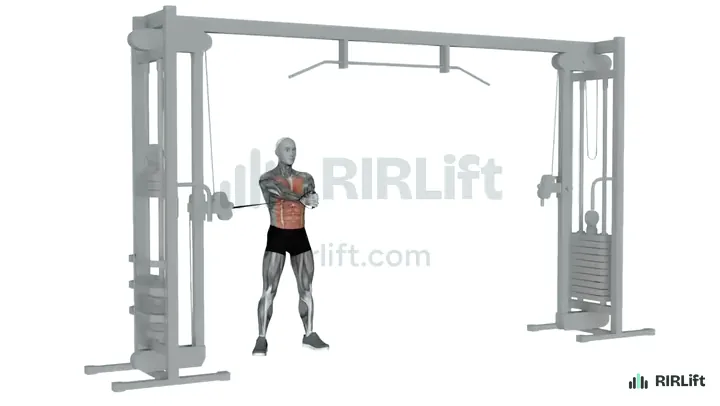
Pallof Press

Abs

The cable pulls you sideways and your abs keep you square, so the whole set is an isometric fight your obliques can feel straight away. Weight goes up in small steps, which makes it easy to progress.

How to do it

  1. Set a cable handle at chest height and stand side-on to the stack.
  2. Hold the handle at your chest with both hands and step out until the cable is taut.
  3. Brace and press the handle straight out in front of your chest.
  4. Hold for two seconds without letting your shoulders turn.
  5. Bring it back to your chest and repeat, then switch sides.

Cues

  • Square shoulders
  • Press straight out
  • Breathe behind the brace

Common mistakes

  • Standing too close so there is no pull: step out until you have to fight it.
  • Rotating toward the stack as you press: lighten it until your chest stays forward.

Swap for: Cable Woodchop, Dumbbell Suitcase Carry

Obliques, anti-side-bend while walking

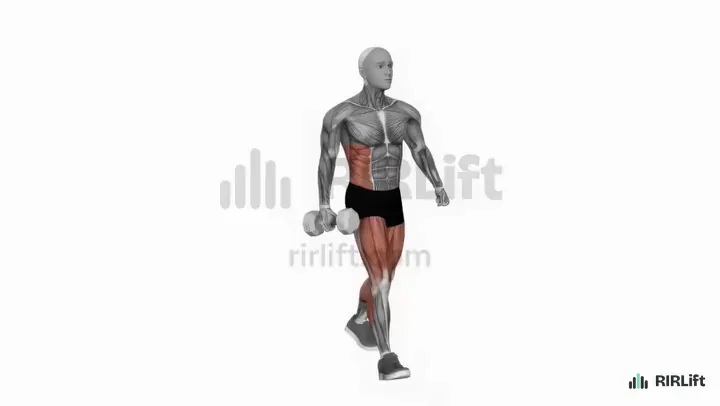
Dumbbell Suitcase Carry

Abs, Quads

Walking with one heavy dumbbell makes the opposite side of your trunk hold you upright step after step. It needs one dumbbell and a few meters of floor.

How to do it

  1. Pick up a heavy dumbbell in one hand, standing tall.
  2. Pull your shoulders level and brace.
  3. Walk forward with short, even steps.
  4. Keep the dumbbell hand still at your side.
  5. Turn around, switch hands and walk back.

Cues

  • Shoulders level
  • Tall, not leaning
  • Slow steps

Common mistakes

  • Leaning away from the weight: that is the body cheating. Use a lighter dumbbell.
  • Letting the dumbbell swing: walk slower.

Swap for: Dumbbell Side Bend, Dumbbell Single-Arm Overhead Carry

Core and shoulders, stacked carry

Dumbbell Single-Arm Overhead Carry

Shoulders, Abs

Holding a dumbbell overhead while you walk makes your ribs, pelvis and arm stack up, and any lean shows straight away. It trains the abs and the shoulder together.

How to do it

  1. Press a dumbbell overhead in one hand until your arm is straight.
  2. Lock your elbow and keep your bicep by your ear.
  3. Brace and walk forward slowly.
  4. Keep your ribs down and your free arm relaxed.
  5. Lower the weight, switch hands and walk back.

Cues

  • Bicep by ear
  • Ribs down
  • Walk like it's full of water

Common mistakes

  • Arching your lower back to hold the weight up: lighten it.
  • Letting the arm drift forward: keep it stacked over your shoulder.

Swap for: Dumbbell Suitcase Carry, Kettlebell Windmill

Standing rotation: chops and twists

Chops and twists train the obliques through the turn your trunk makes when you swing, throw or reach. The cable chop is the easiest to load in small steps; the plate versions need only a weight plate; the landmine twist is the hardest because the bar's lever grows as it drops toward your hip.

Obliques, rotation

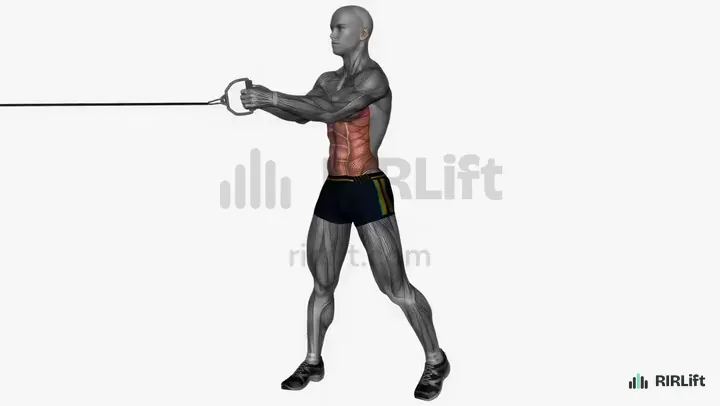
Cable Woodchop

Abs

Chopping a cable across your body trains the obliques through a full turn, with load you can change by one pin at a time.

How to do it

  1. Set a cable high on one side and take the handle in both hands.
  2. Stand side-on, feet wide, arms long.
  3. Chop the handle diagonally toward the opposite knee.
  4. Let your back foot pivot as your hips turn.
  5. Return slowly to the start and repeat, then switch sides.

Cues

  • Arms long
  • Turn from the trunk
  • Control the return

Common mistakes

  • Pulling with your arms: keep your elbows nearly straight.
  • Letting the stack yank you back: two seconds on the way up.

Swap for: Plate Woodchop, Pallof Press

Obliques and shoulders, rotation

Plate Woodchop

Abs

A weight plate is enough for a full chop from high to low, which makes it a gym-free option for rotation if you own a plate or two.

How to do it

  1. Hold a plate with both hands, arms extended.
  2. Start with the plate above one shoulder.
  3. Chop it down and across toward the opposite hip.
  4. Bend your knees and pivot as it comes down.
  5. Drive back up to the start, then switch sides.

Cues

  • Diagonal line
  • Pivot the feet
  • Trunk turns, arms follow

Common mistakes

  • Rounding your back at the bottom: bend your knees more.
  • Swinging the plate so momentum does the work: slow the upswing.

Swap for: Cable Woodchop, Plate Standing Twist

Obliques, standing rotation

Plate Standing Twist

Abs

Holding a plate out in front and turning side to side trains rotation with no cable or bench, and holding the plate farther away makes it harder without a heavier plate.

How to do it

  1. Stand with feet hip width and hold a plate at chest height.
  2. Straighten your arms partly to move it away from you.
  3. Turn your shoulders to one side, keeping your hips mostly forward.
  4. Pause, then turn to the other side.
  5. Keep the plate at the same height throughout.

Cues

  • Turn the ribs, not just the arms
  • Hips quiet
  • Smooth pace

Common mistakes

  • Whipping side to side: slow it down so you control each end.
  • Letting the plate drop: keep it at chest height.

Swap for: Plate Woodchop, Landmine Twist

Obliques, heavy rotation

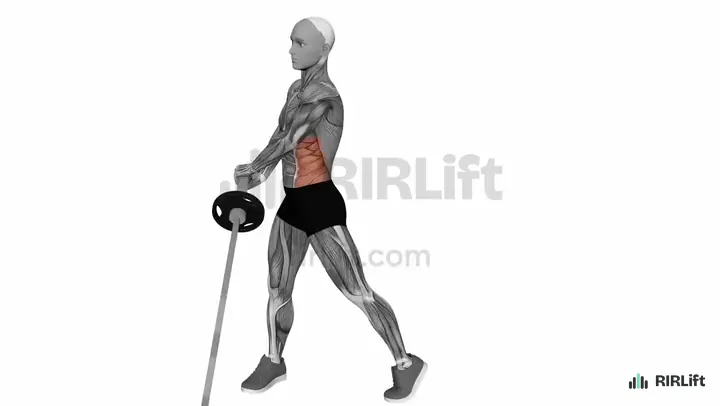
Landmine Twist

Abs

The lever grows as the bar drops toward your hip, so your trunk has to brake the hardest part of each rep. It is the most loadable standing rotation drill.

How to do it

  1. Stand facing the anchor, feet wide, holding the sleeve at arm's length in front of your chest.
  2. Brace and lower the sleeve toward one hip in an arc.
  3. Pivot your back foot as the bar goes down.
  4. Stop before the bar pulls you past your range.
  5. Bring it back across to the other side.

Cues

  • Long arms
  • Brake the drop
  • Pivot, don't twist the knees

Common mistakes

  • Bending your arms to shorten the lever: keep them long or use less weight.
  • Going so low you lose control: shorten the arc.

Swap for: Landmine Rotational Press, Cable Woodchop

Obliques and shoulders, rotate and press

Landmine Rotational Press

Shoulders, Abs

Turning from the hip and finishing with a press links your legs, trunk and arm, which is the pattern a throw or punch uses.

How to do it

  1. Stand side-on to the anchor, sleeve at your near hip in both hands.
  2. Turn your hips and pivot your back foot.
  3. Bring the sleeve up to your shoulder as you turn.
  4. Press it up and forward with one hand.
  5. Return to the hip and repeat.

Cues

  • Hips lead
  • Press last
  • Pivot the back foot

Common mistakes

  • Pressing with the arm alone: let the turn of your hips start the bar.
  • Going for speed before control: pause at the hip on the first sets.

Swap for: Landmine Twist, Med Ball Rotational Throw

Side bends and standing lower abs

A side bend works the obliques by bending the trunk against a weight on one side, and the windmill adds a long reach under a bell held overhead. For the front of your abs and hip flexors without lying down, the standing cable hip flexion drives your knee up against a cable.

Obliques, side bend

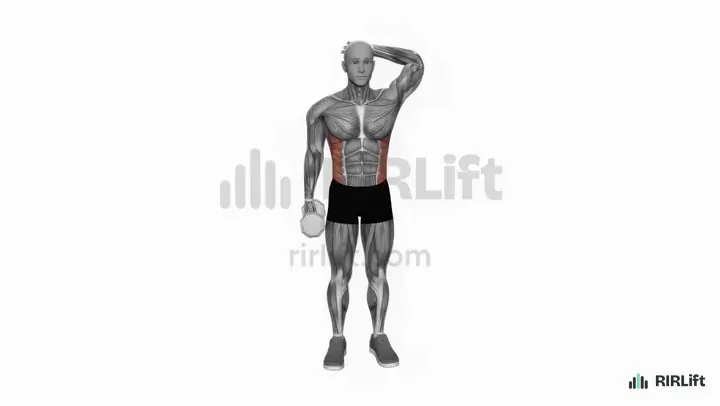
Dumbbell Side Bend

Abs

Bending your trunk over a dumbbell held at one side loads the obliques through a full range. It is simple, easy to add weight to and needs one dumbbell.

How to do it

  1. Grip one dumbbell beside your thigh, feet hip width.
  2. Bend toward the dumbbell, sliding it down your thigh.
  3. Stop when you feel a stretch on the opposite side.
  4. Pull yourself upright with the opposite side.
  5. Finish the set and switch hands.

Cues

  • Bend sideways, not forward
  • Slow down, slow up
  • Feel the far side

Common mistakes

  • Holding a dumbbell in each hand: they cancel out. Use one.
  • Twisting as you bend: keep your chest facing forward.

Swap for: Dumbbell Suitcase Carry, Kettlebell Windmill

Obliques and shoulder, hip hinge with reach

Kettlebell Windmill

Abs, Shoulders

Pressing a bell overhead and hinging sideways under it makes your trunk control a long reach while the shoulder stays locked. It trains the obliques and teaches you to keep a weight stacked.

How to do it

  1. Press a kettlebell overhead in one hand and turn your feet away from it.
  2. Look at the bell.
  3. Push your hip out toward the bell side and slide your free hand down your front leg.
  4. Go as low as your hip allows with the arm still vertical.
  5. Stand back up, keeping your eyes on the bell.

Cues

  • Eyes on the bell
  • Hip out, hand down
  • Arm stays vertical

Common mistakes

  • Bending your knees to reach lower: keep the back leg straight.
  • Letting the bell drift: start with no weight or a light bell.

Swap for: Dumbbell Side Bend, Dumbbell Single-Arm Overhead Carry

Lower abs and hip flexors

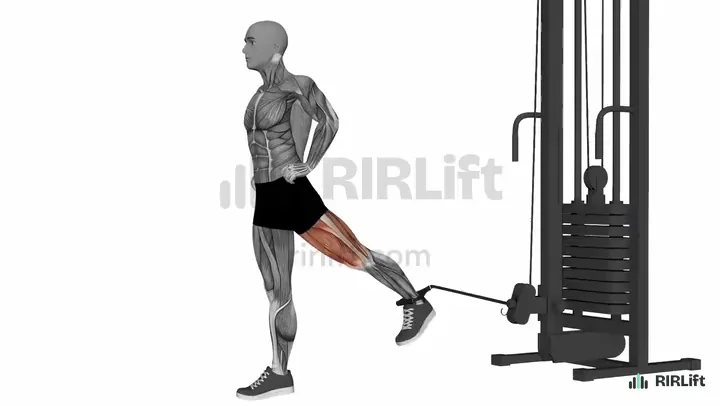
Standing Cable Hip Flexion

Abs

Driving one knee up against a cable strap trains the hip flexors and the lower part of your abs without lying on the floor, which is why it answers the standing lower ab question.

How to do it

  1. Attach an ankle strap to a low cable and face away from the stack.
  2. Hold the frame for balance and stand tall.
  3. Drive your knee up until your thigh passes parallel.
  4. Pause and tuck your pelvis slightly at the top.
  5. Lower slowly and repeat, then switch legs.

Cues

  • Knee up, tuck at the top
  • Tall standing leg
  • Slow lowering

Common mistakes

  • Leaning back to lift the knee: stay upright.
  • Swinging the leg: control both directions.

Swap for: Pallof Press, Medicine Ball Slam

Standing power: slams and throws

A medicine ball lets your abs work fast. Slams flex the trunk hard from overhead, and the rotational throw turns the hips and torso into a wall. Keep reps low and stop while every rep is still fast.

Abs and lats, power

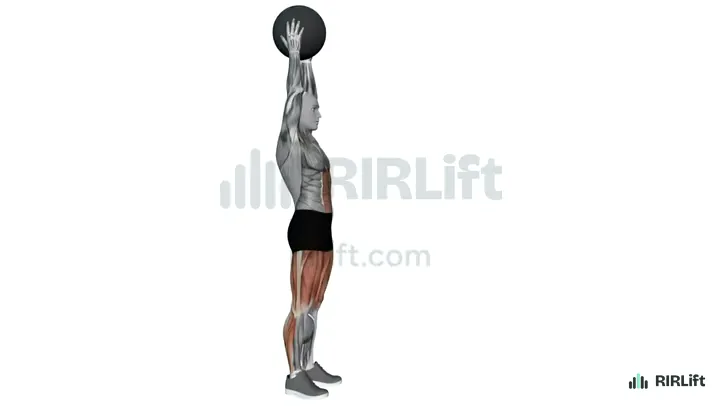
Medicine Ball Slam

Lats, Abs

Reaching overhead and slamming a ball into the floor makes your abs flex hard and fast, with the lats helping. It is a fast way to finish a session.

How to do it

  1. Hold the ball overhead with straight arms, rising onto your toes.
  2. Brace and slam the ball down in front of your feet.
  3. Hinge and bend your knees as you throw.
  4. Catch it on the bounce or pick it up.
  5. Reset tall and repeat.

Cues

  • Reach tall first
  • Slam with your whole trunk
  • Stop when it slows

Common mistakes

  • Throwing with only your arms: crunch your ribs toward your hips.
  • Using a ball that bounces back into your face: use a dead-bounce slam ball.

Swap for: Med Ball Rotational Throw, Cable Woodchop

Obliques, rotational power

Med Ball Rotational Throw

Abs

Throwing a ball sideways into a wall trains the turn of your hips and trunk at speed, the part of rotation a cable cannot load.

How to do it

  1. Stand side-on to a solid wall, ball held at your far hip.
  2. Load by turning away from the wall.
  3. Turn your hips toward the wall and throw the ball hard into it.
  4. Catch the rebound and absorb it back to the hip.
  5. Finish the set and switch sides.

Cues

  • Hips first
  • Throw through the wall
  • Catch soft

Common mistakes

  • Throwing with your arms: let your back foot pivot and hips turn.
  • Continuing after reps slow: stop the set there.

Swap for: Medicine Ball Slam, Landmine Rotational Press

Put them together: example sessions

Each session below picks from the exercises above for one situation, with the sets, reps, rest and RIR filled in. Open one in the session builder to change a pick, price it from a recent set, and add it to RIRLift.

Session 1

Ten minutes at home with one dumbbell and a plate

Open in the session builder
  • Workouts3× a week
  • Working sets30 a week
  • Per workout~25 min
  • EquipmentDumbbells, Barbells

You want a short standing ab session at home with a dumbbell and a weight plate, no cable and no floor work.

The carries and side bend use the one dumbbell, the chop and twist use the plate, so your obliques and deep abs work from three directions in ten minutes. Two sets each at 2 reps in reserve is enough because all of these add up across the week.

Standing Abs
ExerciseSets × repsRIRRest
Dumbbell Suitcase CarrySteps per side. 2 × 20–30 2 1 min
Dumbbell Side BendPer side. 2 × 10–15 2 1 min
Plate WoodchopPer side. 2 × 10–12 2 1 min
Plate Standing TwistTotal reps. 2 × 10–16 2 1 min
Dumbbell Single-Arm Overhead CarrySteps per side. 2 × 20–30 2 1 min
How to run it
Two or three times a week, after a workout or on its own. Walk carries for steps, counting each foot.
How to progress
Add steps to the carries and reps to the rest, then use a heavier dumbbell when the suitcase carry passes 30 steps per side.

Session 2

Cables and a landmine after lifting at the gym

Open in the session builder
  • Workouts3× a week
  • Working sets36 a week
  • Per workout~30 min
  • EquipmentLandmine, Adjustable Cable

You lift at a gym and want a standing ab block to end your sessions, with cables and a landmine available.

The cable lets you load the Pallof press, chop and hip flexion in small steps, which is how floor ab work rarely progresses. The landmine twist is the heaviest rotation and goes first. Three sets at 1 to 2 reps in reserve on two or three days a week gives the abs enough work to grow.

Standing Abs
ExerciseSets × repsRIRRest
Landmine TwistPer side. 3 × 8–12 2 90 s
Pallof PressPer side. Two-second hold. 3 × 8–12 2 1 min
A1 Cable WoodchopPer side. 3 × 10–15 1 1 min
A2 Standing Cable Hip FlexionPer side. 3 × 10–15 1 1 min
How to run it
Add it at the end of two or three of your lifting days. Pair the chop with the hip flexion to save time.
How to progress
Add a pin on the cable when you reach the top of the range at the target RIR; on the landmine twist add reps before plates.

Session 3

Power and control for a rotational sport

Open in the session builder
  • Workouts2× a week
  • Working sets26 a week
  • Per workout~35 min
  • EquipmentMedicine Ball, Landmine, Kettlebells, Dumbbells

You play golf, tennis, baseball or a combat sport and want your trunk to be fast and to hold position under load.

The slam and rotational throw are fast and stop with reps left, so you train speed, not fatigue. The rotational press links the hips to the arm, the windmill builds control under load overhead, and the suitcase carry holds it together at the end.

Power and Control
ExerciseSets × repsRIRRest
Medicine Ball Slam 3 × 5–8 3 90 s
Med Ball Rotational ThrowPer side. 3 × 5–8 3 90 s
Landmine Rotational PressPer side. 3 × 6–8 2 90 s
Kettlebell WindmillPer side. 2 × 5–8 2 90 s
Dumbbell Suitcase CarrySteps per side. 2 × 20–30 2 1 min
How to run it
Twice a week, away from hard practice. Rest fully between throw sets.
How to progress
Add a rep or a heavier ball when every rep stays fast; on the windmill and carry, add load at the top of the range.

Make it fit you

Questions

Do standing ab exercises actually work?

Yes, when there is load and the set ends close to failure. Carries, Pallof presses, chops and side bends all work the obliques and deep abs hard; standing marches or twists with no weight do much less.

What are some good 10 minute standing ab exercises?

The suitcase carry, dumbbell side bend, plate woodchop, plate standing twist and overhead carry, two sets each. That is the ten-minute home plan above.

What is the most effective ab exercise?

There is no single one. For standing work, the Pallof press and cable woodchop are the easiest to load and progress, and the suitcase carry works the obliques with almost no setup.

How do I tone my stomach while standing?

Train the abs with load two or three times a week and let your diet set how much fat covers them. Exercises cannot burn fat from one spot, so the standing work builds the muscle and your eating reveals it.

Can standing exercises work your lower abs?

Yes. The standing cable hip flexion drives your knee up against a cable and works the lower abs with the hip flexors. Slams also flex the trunk hard from top to bottom.

How many reps in reserve for ab exercises?

One or two for most, so the last rep is hard but clean. On slams and throws leave 3, because those are about speed and stop when reps slow down.