Exercises for outer chest: wide presses, deep flys and dips

There is no separate outer chest muscle. The edge of your chest is where the pec runs out to your upper arm, and it fills out when the whole pec grows, especially from work that loads the muscle in a deep stretch. The best exercises for it are the wide-grip bench press, dumbbell presses and flys taken to a full stretch, cable flys, chest dips and deep push-ups with your hands on dumbbells. Do 10 to 20 hard chest sets a week, pause for a second at the bottom of each rep, and stop 1 to 2 reps short of failure.

  1. Barbell Wide-Grip Bench Press Chest
  2. Dumbbell Chest Fly Chest
  3. Flat Dumbbell Press Chest
  4. Chest Dip Chest, Triceps
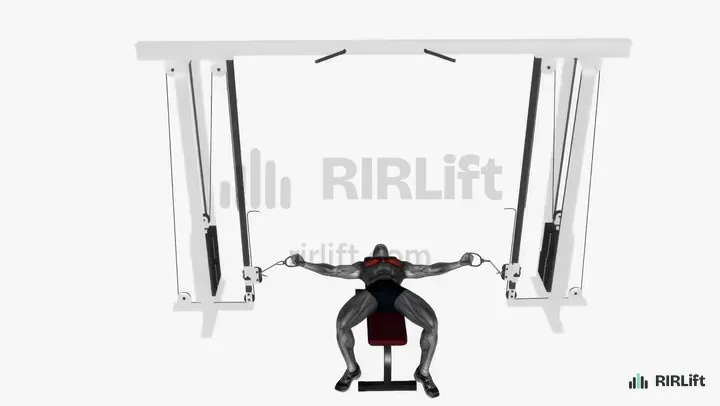
  5. Flat-Bench Cable Fly Chest
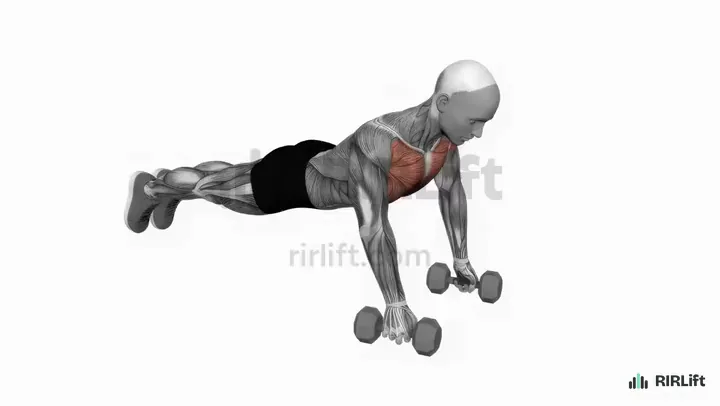
  6. Deep Push-Up Chest

Presses with a wide grip or a deep range

A wider grip and a deeper bottom position both stretch the pec further across the front of the shoulder. Pick one of these as your heavy lift and let the bar or dumbbells come all the way down every rep.

Chest, wide-grip barbell press

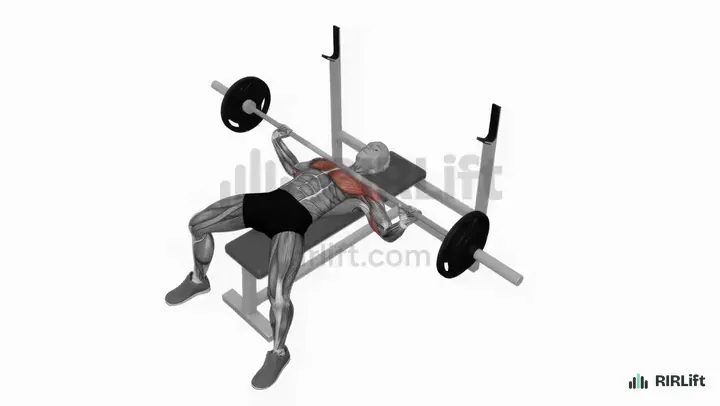
Barbell Wide-Grip Bench Press

Chest

A grip a few inches wider than your normal bench puts more of the work on the pecs and less on the triceps, and it stretches the outer fibers at the bottom. Keep the bar touching your chest; a half rep loses the point.

How to do it

  1. Set up as for the bench press, then take a grip one hand width wider on each side than your normal grip.
  2. Unrack and steady the bar above your shoulders.
  3. Lower it with control to the middle of your chest, letting your elbows travel out a little more than usual.
  4. Press back up to straight arms without letting your shoulder blades slide off the bench.

Cues

  • Wider hands, same tight back
  • Slow on the way down
  • Stop short of shoulder pain

Common mistakes

  • Going so wide that your shoulders ache at the bottom: bring the grip in until the bottom feels strong.
  • Dropping the bar fast to use the bounce: lower over about two seconds.

Swap for: Barbell Bench Press, Dumbbell Chest Fly, Pec Deck Fly

Chest, dumbbell press

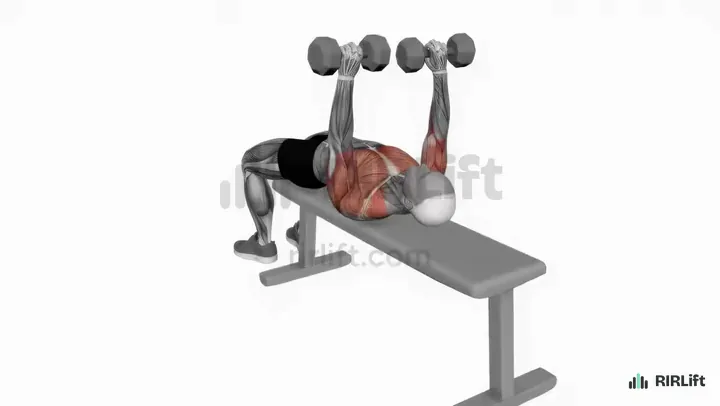
Flat Dumbbell Press

Chest

Dumbbells can travel below the line a barbell stops at, so the chest gets a deeper stretch on every rep. If a rep stalls you can lower them to your sides, so you can pause at the bottom without a spotter.

How to do it

  1. Lying on a flat bench, hold two dumbbells above your chest.
  2. Lower the bells to the sides of your chest with elbows at about 45 degrees.
  3. Press them back up over your shoulders.

Cues

  • Shoulder blades pinched.
  • Control the lowering.

Common mistakes

  • Flaring the elbows straight out.

Swap for: Push-Up, Barbell Bench Press

Upper and outer chest, incline press

Incline Dumbbell Press

Chest

The outer edge you see in the mirror runs up to the shoulder, and the upper fibers make up a good part of it. An incline press taken to a deep bottom covers that region.

How to do it

  1. Set the backrest to about 30 to 45 degrees and sit with the dumbbells on your thighs.
  2. Lean back and bring the weights to the outside of your shoulders as your back meets the pad.
  3. Squeeze your shoulder blades back and keep your hips on the seat.
  4. Press up and slightly in until your arms are straight over your upper chest.
  5. Lower under control until your elbows are just below the bench line.

Cues

  • Low incline, not a shoulder press
  • Wrists stacked over elbows
  • Touch the stretch, then press

Common mistakes

  • Setting the bench steeper than about 45 degrees: the front delts take over. Drop it a notch if you mostly feel your shoulders.
  • Lifting your hips off the seat to finish a rep: that turns it back into a flat press.

Swap for: Single-Arm Incline Dumbbell Press, Incline Dumbbell Squeeze Press, Incline Barbell Bench Press

Flys that load the stretch

Flys put the most tension on the chest when your arms are open wide, which is the position that builds the outer part of the muscle. Dumbbells load the bottom hardest; cables and the pec deck keep tension through the whole arc.

Chest, dumbbell fly

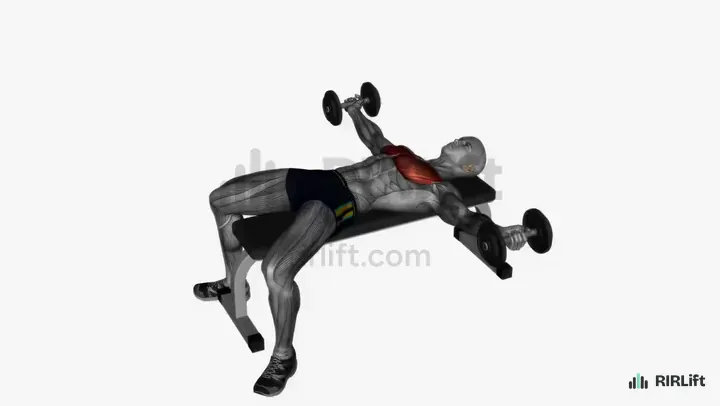
Dumbbell Chest Fly

Chest

The fly is hardest with the arms open wide, which is where the outer chest is stretched the most. Use a weight you can lower slowly and hold for a second at the bottom.

How to do it

  1. Lie on the bench, dumbbells pressed up over your chest, palms turned in.
  2. Bend your elbows slightly and keep that angle fixed for the whole set.
  3. Open your arms in a wide arc until you feel a deep stretch across your chest.
  4. Pull the weights back up along the same arc as if hugging a big barrel.
  5. Stop when the dumbbells are a few inches apart over your chest.

Cues

  • Fixed elbows, moving shoulders
  • Wide arc down, hug up
  • Stretch, do not strain

Common mistakes

  • Turning the fly into a press by bending the elbows more on the way down: lighter weights and a locked elbow angle fix it.
  • Going so deep that your shoulders roll forward off the pad: stop at the point where your chest is stretched and your shoulder blades still touch the bench.

Swap for: Incline Dumbbell Fly, Flat-Bench Cable Fly, Decline Dumbbell Fly

Upper and outer chest, incline fly

Incline Dumbbell Fly

Chest

The same deep stretch as a flat fly, aimed a little higher, so the upper-outer corner of the chest gets loaded too.

How to do it

  1. Set the bench to a low incline and lie back with the dumbbells over your upper chest.
  2. Turn your palms to face each other and soften your elbows.
  3. Lower the weights out and down until your chest is fully stretched.
  4. Bring them back up and in along the same arc.
  5. Pause briefly at the top without letting the weights clank.

Cues

  • Low incline, same arc
  • Lead with your elbows
  • Slow the bottom inch

Common mistakes

  • Using the same weight as your flat fly: the incline is weaker. Start lighter.
  • Letting your lower back arch high off the pad to make it easier: keep your hips and ribs down.

Swap for: Dumbbell Chest Fly, Incline Cable Fly, Incline Dumbbell Squeeze Press

Chest, cable fly on a bench

Flat-Bench Cable Fly

Chest

Lying on a bench between low pulleys gives you the stretch of a dumbbell fly plus tension at the top, where dumbbells go slack. Good second fly after a dumbbell press.

How to do it

  1. Pull a flat bench into the middle of the station so its middle lines up with the pulleys, and set both pulleys at the bottom.
  2. Grab both handles, lie back with feet flat, and start with your arms open level with your chest, palms up and elbows soft.
  3. Sweep both handles up until they nearly touch above your chest.
  4. Lower them back out to the sides with control until your hands are level with the bench, then repeat.

Cues

  • Arms open like wings
  • Handles meet over the nipples
  • Shoulder blades pinned to the bench

Common mistakes

  • Lowering the hands below the bench: stop at bench level, where the stretch is already deep.
  • Clanking the handles together at the top: stop an inch apart so the cables keep pulling.

Swap for: Incline Cable Fly, High-to-Low Cable Fly, Single-Arm Cable Fly

Chest, machine fly

Pec Deck Fly

Chest

The machine holds the path for you, so you can push the last sets close to failure and spend your effort on the chest instead of balancing weights. Let the arms open until you feel a full stretch across the chest before each rep.

How to do it

  1. Set the seat so your upper arms are level with your shoulders when your forearms rest on the pads.
  2. Sit tall with your back on the pad, elbows bent to about 90 degrees, forearms against the pads and hands on the handles.
  3. Drive your elbows forward and together until the pads nearly meet in front of your chest.
  4. Let the pads swing back slowly until your elbows are level with your shoulders, then repeat.

Cues

  • Push with your elbows, not your hands
  • Squeeze for a second
  • Chest up, shoulders down

Common mistakes

  • Letting the weight drag your elbows behind your shoulders: stop the return when they line up with your shoulders.
  • Hunching forward to close the pads: sit tall and use less weight.

Swap for: Flat-Bench Cable Fly, Dumbbell Chest Fly, Cable Fly

Bodyweight: dips and deeper push-ups

A normal push-up stops when your chest meets the floor. Putting your hands on a pair of dumbbells lets you sink lower, and dips give the deepest stretch of any bodyweight press.

Chest and triceps, deep bodyweight press

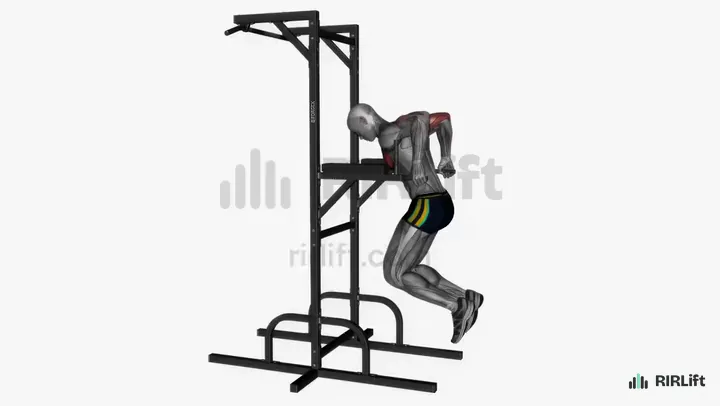
Chest Dip

Chest, Triceps

Dips load the chest at a deeper stretch than any other bodyweight press. Lean forward and let the elbows go slightly out to keep the work on the pecs.

How to do it

  1. Grip parallel bars and step or jump up until your arms are straight and you are holding yourself above the bars.
  2. Lean your chest slightly forward with your legs under you or a little behind.
  3. Bend your elbows to sink down until your upper arms are about level with the bars.
  4. Press back up to straight arms and lock out.

Cues

  • Shoulders down, chest proud
  • Slight forward lean
  • Lock out every rep

Common mistakes

  • Sinking so deep your shoulders ache: stop when your upper arms reach the level of the bars.
  • Swinging your legs to get up: keep them still and end the set when you need momentum.

Swap for: Machine Chest Dip, Deep Push-Up, Flat Dumbbell Press

Chest, deficit push-up

Deep Push-Up

Chest

Hands on a pair of dumbbells let your chest drop below them, which turns the push-up into a stretch-focused chest exercise you can do anywhere.

How to do it

  1. Set two dumbbells, handles or solid blocks on the floor a little wider than your shoulders and grip them.
  2. Walk your feet back into a plank, body rigid.
  3. Lower your chest between your hands until it sinks below the level of your grips.
  4. Press back up to straight arms, keeping the body as one piece.

Cues

  • Sink the chest between the hands
  • Slow in the hole
  • Straight body throughout

Common mistakes

  • Rolling dumbbells under your hands: use hex dumbbells or blocks that cannot roll.
  • Dropping fast into the deep bottom: lower over two seconds and go only as deep as your shoulders allow.

Swap for: Push-Up, Wide Push-Up, Chest Dip

Chest, wide push-up

Wide Push-Up

Chest

A wider hand position shifts the push-up toward the chest and away from the triceps. Use it as the easier home option before deep push-ups, or as a high-rep finisher.

How to do it

  1. Start in a plank with your hands about one and a half times shoulder width apart, fingers pointing forward or slightly out.
  2. Brace your trunk and keep your body rigid.
  3. Lower until your chest hovers a fist off the ground, letting the elbows bend out further than they would with a narrow grip.
  4. Press back up to straight arms.

Cues

  • Hands wider, depth the same
  • Feel the stretch across the chest
  • Steady tempo

Common mistakes

  • Going so wide that your shoulders ache at the bottom: bring the hands in until the bottom feels strong.
  • Doing half reps because the wide stance feels harder: full depth is the point.

Swap for: Push-Up, Deep Push-Up, Archer Push-Up

Put them together: example sessions

Each session below picks from the exercises above for one situation, with the sets, reps, rest and RIR filled in.

Session 1

Two chest days in a gym, chest looks narrow

  • Workouts2× a week
  • Working sets19 a week
  • Per workout~30 min
  • EquipmentBarbells, Flat Bench, Dumbbells, Dip Bar +2

You train chest twice a week with barbells, dumbbells and cables, and your chest looks narrow next to your shoulders.

Each day pairs one heavy press with two stretch-focused lifts, for 10 sets on day 1 and 9 on day 2. That is about 19 chest sets a week, enough to grow the whole pec without needing a third chest day.

Day 1: Wide bench and flys
ExerciseSets × repsRIRRest
Barbell Wide-Grip Bench Press2 warm-up sets first 4 × 6–10 2 3 min
Dumbbell Chest FlyPause 1 s at the bottom. 3 × 10–15 1 90 s
Chest Dip 3 × 6–12 1 2 min
Day 2: Dumbbells and cables
ExerciseSets × repsRIRRest
Flat Dumbbell Press1 warm-up set first 3 × 8–12 2 2:30 min
Incline Dumbbell Fly 3 × 10–15 1 90 s
Flat-Bench Cable Fly 3 × 12–15 1 75 s
How to run it
Put the days at least 48 hours apart, for example Monday and Thursday. Pause 1 second at the bottom of every press and fly.
How to progress
Keep each lift at its weight until the last set also reaches the top of its range with the reps in reserve shown, then take the smallest jump. A heavier fly is only earned at full depth, never by cutting the stretch short.

Session 2

At home, bodyweight only

  • Workouts3× a week
  • Working sets24 a week
  • Per workout~15 min
  • EquipmentDip Bar

You train at home with your bodyweight, a pair of dumbbells or push-up handles to put your hands on, and something sturdy to dip between.

Without load, range and reps do the work: deep push-ups and dips give the stretch, wide push-ups add volume. 8 sets per session, three times a week, is about 24 sets, which bodyweight sets stopped 2 reps short of failure recover from between sessions.

Deep push-ups and dips
ExerciseSets × repsRIRRest
Deep Push-Up 3 × 8–20 2 90 s
Chest Dip 3 × 5–15 2 90 s
Wide Push-Up 2 × 10–25 2 1 min
How to run it
Do it on three non-consecutive days. Rest about 90 seconds between sets so each one starts fresh.
How to progress
Add reps each week. When deep push-ups reach 20 at 2 reps in reserve, raise your feet on a step; when dips reach 15, hold a loaded backpack.

Session 3

One chest session a week, 45 minutes

  • Workouts1× a week
  • Working sets13 a week
  • Per workout~35 min
  • EquipmentDumbbells, Flat Bench, Incline Bench, Fly Machine

Chest gets one day a week in your split, and you want that session to cover the outer chest as well as the rest.

One session has to carry the week, so it uses 13 sets across a dumbbell press, an incline press and two flys, with the machine fly last where you can push close to failure safely.

Chest day
ExerciseSets × repsRIRRest
Flat Dumbbell Press2 warm-up sets first 4 × 6–10 2 2:30 min
Incline Dumbbell Press 3 × 8–12 2 2 min
Dumbbell Chest Fly 3 × 10–15 1 90 s
Pec Deck Fly 3 × 12–15 1 1 min
How to run it
Run it on your chest or push day. If your split has a second upper day, add 3 sets of dips there.
How to progress
Add 2 reps per set across the week before adding weight. On the pec deck, take the last set to 0 to 1 reps in reserve.

Make it fit you

Questions

How do I build the sides of my pecs?

Grow the whole chest and give it plenty of work in a deep stretch: wide-grip or dumbbell presses taken all the way down, flys with a pause at the bottom, and dips. You cannot grow only the outer part, but these load it the most.

How do I lose side chest fat?

Fat on the sides of the chest comes off as your overall body fat drops, not from chest exercises aimed at it. The training on this page builds the muscle underneath, which is what gives the chest its shape once the fat is down.

Can chest exercises lift saggy breasts?

Breast tissue is not muscle, so chest training cannot lift it. It does build the pec underneath, which can make the upper chest look fuller.

Is there an outer chest muscle?

No. The pectoralis major is one fan-shaped muscle; the outer chest is its edge near the armpit, where it attaches to the upper arm. Every chest exercise trains it, and stretch-heavy ones train it more.

Do wide push-ups work the outer chest?

They shift the push-up toward the chest and away from the triceps, so yes, the whole pec including its outer part works harder. Deep push-ups on dumbbells are better still, because the chest goes lower.