Exercises for a six pack: build the abs like any other muscle

The best exercises for a six pack are ones you can load and progress: cable and machine crunches and decline crunches for the upper abs, hanging leg raises, hanging knee raises and reverse crunches for the lower abs, the ab wheel rollout and dead bug for bracing, and cable woodchops and side planks for the obliques. Train abs two or three times a week with 6 to 10 hard sets per session, 8 to 15 reps, and add weight or range like any other lift. Thicker abs show through at a higher body fat level, but the fat over them comes off through overall fat loss, not ab work.

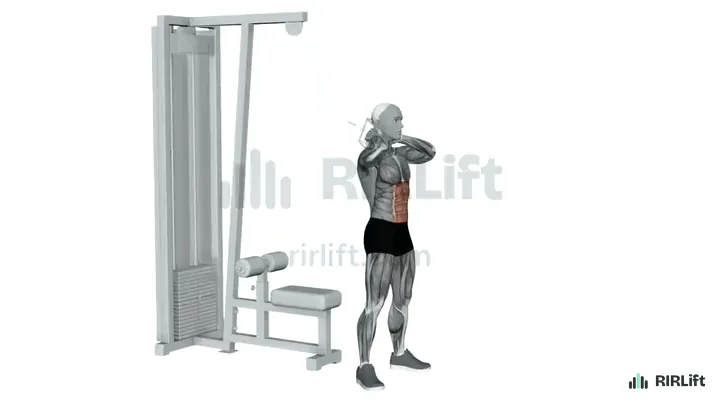
  1. Cable Crunch Abs
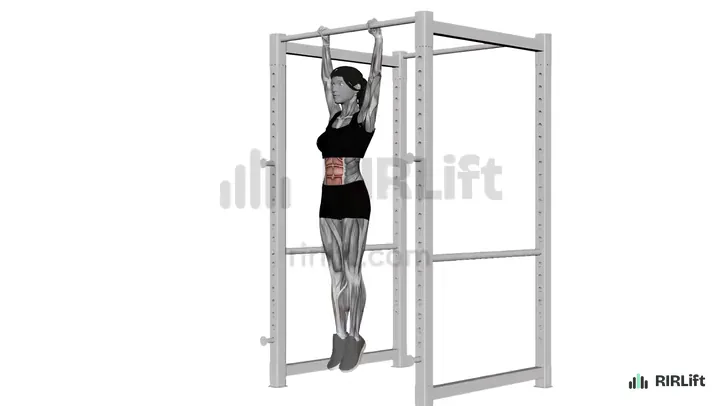
  2. Hanging Leg Raise Abs
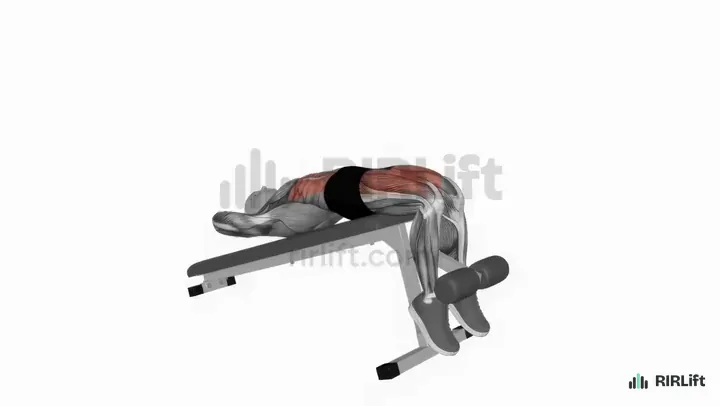
  3. Decline Crunch Abs
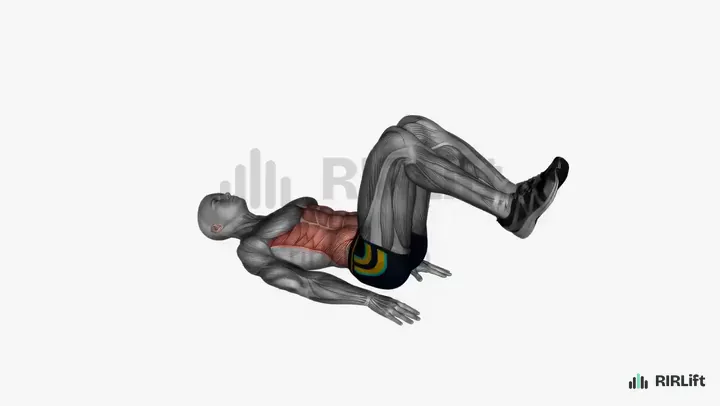
  4. Reverse Crunch Abs
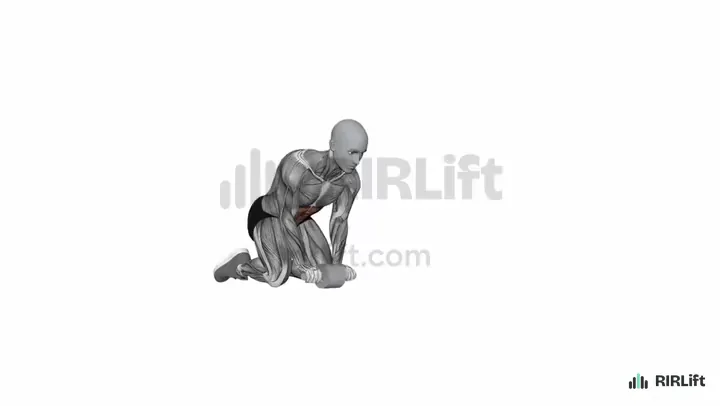
  5. Ab Wheel Rollout Abs
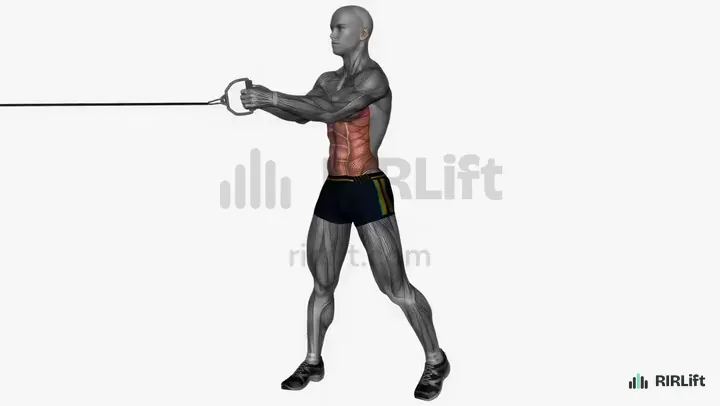
  6. Cable Woodchop Abs
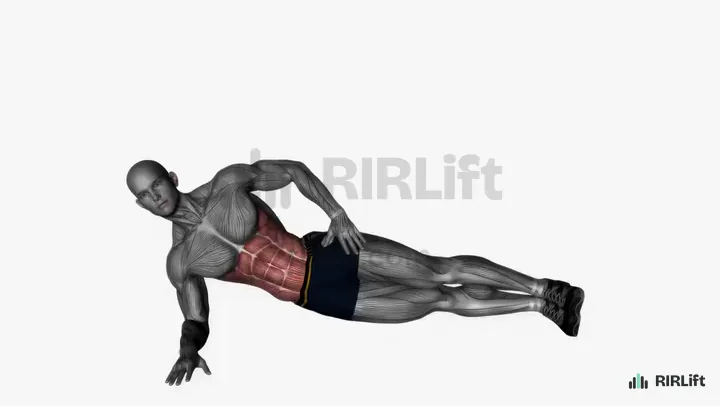
  7. Side Plank Abs

Crunches you can load

The six pack is the rectus abdominis, and its job is to curl your ribs toward your pelvis. Crunches done against a cable, a machine or a decline let you add load in small steps, which is what thickens the blocks so they show.

Upper abs, loaded crunch

Cable Crunch

Abs

Pulling the cable down as you curl your ribs toward your hips lets you load the abs like any other muscle and add weight a few pounds at a time. Sets of 8 to 15 with a real load are what make the blocks thicker.

How to do it

  1. Attach a rope to a high pulley, turn your back to the stack and hold the ends behind your head.
  2. Step forward so the weight lifts, then brace your hips in place and curl your ribs down toward your pelvis.
  3. Pause when your trunk is fully curled, then let the rope pull you back up slowly.

Cues

  • Ribs to pelvis
  • Hips still
  • Round, don't hinge

Common mistakes

  • Hinging at the hips so the body weight pulls the stack down.
  • Pulling the rope with the arms instead of keeping the hands at the head.

Swap for: Machine Crunch, Decline Crunch

Upper abs, machine crunch

Machine Crunch

Abs

The machine sets the path and the stack sets the load, so you can take every set close to failure without your hip flexors taking over. It is the easiest ab exercise to track week to week.

How to do it

  1. Set the seat height so the machine's pivot sits near your belly button and your feet hook under the pads or rest on the footplate.
  2. Hold the handles or place your arms on the pads with your elbows pointing forward, and sit tall with your back on the pad.
  3. Breathe out and curl your chest down toward your hips by rounding your spine, keeping your hips on the seat.
  4. Hold the squeeze for a second when your ribs are closest to your pelvis.
  5. Uncurl slowly back to upright and let the weight touch down lightly before the next rep.

Cues

  • Ribs to hips
  • Arms just hold on
  • Slow on the way back

Common mistakes

  • Pulling with your arms: if your shoulders and arms burn first, lower the weight and let your hands rest on the handles.
  • Hinging at the hips instead of curling: keep your lower back on the pad and think about shortening the distance from your ribs to your pelvis.
  • Bouncing the stack between reps: pause briefly at the top so the abs start every rep from a stop.

Swap for: Cable Crunch, Decline Crunch, Crunch

Upper abs, decline sit-up

Decline Crunch

Abs

The decline bench makes your abs lift more of your upper body through a longer range than a floor crunch. Hold a plate on your chest when 15 reps gets easy.

How to do it

  1. Hook your feet under the pads of a decline bench and lie back with your fingertips lightly behind your head.
  2. Curl up, chin tucked, until your trunk is upright.
  3. Lower slowly, one segment of the back at a time.

Cues

  • Curl up
  • Slow down
  • Plate at chest when easy

Common mistakes

  • Throwing the arms forward to sit up.
  • Dropping back fast and bouncing off the bench.

Swap for: Plate Sit-Up, Cable Crunch

Upper abs, floor crunch

Crunch

Abs

The floor crunch trains the same curl with nothing but your body weight. It works at home if you slow it down, pause at the top and take the sets close to failure.

How to do it

  1. Lie on your back with your knees bent, feet flat, and your arms reaching straight forward at shoulder height.
  2. Breathe out and curl your head and shoulders up until the shoulder blades clear the mat, sliding your hands toward your knees as your ribs move toward your hips.
  3. Pause for a second when your shoulder blades are just off the floor.
  4. Uncurl slowly until your shoulders touch down, then start the next rep.

Cues

  • Ribs to hips
  • Reach, don't pull
  • Exhale up

Common mistakes

  • Jerking your arms forward to get up: the reach follows the curl, your abs start it.
  • Bouncing off the floor: lower under control so every rep starts from rest.

Swap for: Decline Crunch, Cable Crunch

Leg and knee raises for the lower abs

Raises curl your pelvis up toward your ribs, the other end of the same muscle. They put more work into the lower part of the six pack, below the belly button, where crunches go lighter.

Lower abs, hanging straight-leg raise

Hanging Leg Raise

Abs

With straight legs, your lower body becomes a long, heavy lever, so this is the hardest lower-ab exercise most people will do. Curl your pelvis up at the top rather than just lifting your legs.

How to do it

  1. Hang from the bar, legs long and pressed together.
  2. Lift your legs, keeping your knees straight, until your feet reach at least hip height.
  3. Tilt your pelvis up at the top, then lower under control.

Cues

  • Legs locked
  • Pelvis tilts
  • No kip

Common mistakes

  • Bending the knees as you tire: switch to knee raises for the rest of the set.
  • Using a swing to get the legs up.

Swap for: Hanging Knee Raise, Lying Knee Raise

Lower abs, hanging knee raise

Hanging Knee Raise

Abs

Bending your knees shortens the lever, which makes it the way in to hanging leg raises. Use it until you can do 15 controlled reps, then straighten your legs.

How to do it

  1. Hang from the bar with straight arms and your legs together.
  2. Draw your knees up toward your chest and curl your pelvis up at the top.
  3. Lower your legs slowly until they hang straight and still.

Cues

  • Curl the pelvis
  • Stop the swing
  • Slow down

Common mistakes

  • Swinging into each rep: pause at the bottom until you are still.
  • Lifting the knees only to hip height, which works the hip flexors more than the abs.

Swap for: Captain's Chair Knee Raise, Reverse Crunch

Lower abs, floor raise

Reverse Crunch

Abs

Lying down and rolling your hips up off the floor trains the lower abs without a bar or grip strength. It is the lower-ab exercise for home sessions.

How to do it

  1. Lie face up, hands by your sides, knees bent and feet lifted.
  2. Pull your knees toward your chest and keep going until your hips peel off the floor.
  3. Lower your hips one vertebra at a time, then let your feet drift back to just above the floor.

Cues

  • Hips peel up
  • Slow way down
  • No swinging

Common mistakes

  • Throwing the legs back for momentum: the hips should curl up, not get flung.
  • Stopping when the knees reach the chest: the rep counts once the hips lift.

Swap for: Lying Knee Raise, Hanging Knee Raise

Rollouts and dead bugs for a braced core

These train the abs to stop your lower back from arching. The rollout does it under heavy load and builds the whole front of the trunk; the dead bug is the low-fatigue version for home or warm-ups.

Abs, anti-extension

Ab Wheel Rollout

Abs

Rolling out stretches the abs under load as they fight to keep your back from sagging, which builds the whole six pack hard in few reps. Start from your knees and only roll as far as you can return from with a flat back.

How to do it

  1. Kneel with the wheel under your shoulders and your arms straight.
  2. Brace and roll forward, letting your hips follow, until just before your back starts to sag.
  3. Pull the wheel back to your knees using your abs, not your hips.

Cues

  • Tuck the pelvis
  • Roll only as far as you own
  • Arms straight

Common mistakes

  • Letting the lower back cave at the far end.
  • Sitting the hips back first on the return instead of pulling with the abs.

Swap for: Stability Ball Body Saw, Plank

Deep abs, anti-extension

Dead Bug

Abs

Keeping your lower back pressed down while your opposite arm and leg reach out trains the abs to brace while your spine stays still. It is the base exercise for anyone whose back dislikes sit-ups.

How to do it

  1. Lie face up, arms pointing up and knees bent at right angles over your hips.
  2. Press your lower back into the floor.
  3. Reach one arm overhead and the opposite leg out long, both hovering above the floor.
  4. Bring them back and repeat with the other pair.

Cues

  • Back glued down
  • Breathe out as you reach
  • Opposite arm and leg

Common mistakes

  • Letting the back arch when the leg goes long: reach less far.
  • Going fast: each rep should take about three seconds.

Swap for: Plank, Alternating Leg Raise

Obliques for the edges

The obliques frame the six pack on each side. Rotation and side-bending holds train them; one oblique exercise per session is enough.

Obliques, rotation

Cable Woodchop

Abs

Pulling a cable diagonally across your body trains the obliques to rotate under load. The cable lets you add weight in small steps, unlike bodyweight twists.

How to do it

  1. Set a cable high, stand side-on and grip the handle two-handed above the near shoulder.
  2. Chop it on a diagonal to the far hip, turning your chest as your back heel lifts and spins.
  3. Let it return along the same line under control. Finish one side, then switch.

Cues

  • Turn the chest
  • Arms long
  • Pivot the back foot

Common mistakes

  • Pulling with the arms rather than turning the trunk.
  • Going so heavy the stack drags you back on the return.

Swap for: Dumbbell Woodchop, Pallof Press

Obliques, side hold

Side Plank

Abs

Holding your body straight on one forearm trains the obliques and the deep side muscles to resist bending. It needs no equipment and keeps your spine still while the sides work.

How to do it

  1. Lie on one side with your elbow under your shoulder and your legs stacked.
  2. Lift your hips until your body is straight from head to feet.
  3. Hold, then switch sides.

Cues

  • Hips high
  • Stacked feet
  • Elbow under shoulder

Common mistakes

  • Letting the hips drop toward the floor as the hold goes on.
  • Rolling the chest forward or back.

Swap for: Dumbbell Side Plank, Copenhagen Plank

Obliques, seated twist

Russian Twist

Abs

Twisting side to side while seated with your feet up trains the obliques at home. Hold a weight once 15 per side is easy, and turn from your ribs rather than just swinging your arms.

How to do it

  1. Sit with knees bent and heels on the floor, then lean back until your trunk is at an angle.
  2. Clasp your hands together at chest height.
  3. Turn your shoulders to one side, come back through the middle and turn to the other.

Cues

  • Turn the ribs
  • Chest tall
  • Slow

Common mistakes

  • Swinging only the arms while the chest faces forward.
  • Rounding your back to get lower.

Swap for: Dumbbell Woodchop, Windshield Wipers

Put them together: example sessions

Each session below picks from the exercises above for one situation, with the sets, reps, rest and RIR filled in.

Session 1

Gym, abs at the end of your lifting

  • Workouts3× a week
  • Working sets24 a week
  • Per workout~15 min
  • EquipmentAdjustable Cable, Pull-Up Bar, Ab Crunch Machine, Ab Wheel

You already lift three days a week in a gym and want to add focused ab work without a separate session.

Abs recover quickly, so short sessions on all three training days work better than one long one. Each session is 8 sets: a loaded crunch, a lower-ab raise and an oblique or bracing exercise. Across the week that is 24 sets, 15 of them crunches and raises for the six pack itself and 9 for obliques and bracing.

Session A: Cable crunch and leg raises
ExerciseSets × repsRIRRest
Cable Crunch 3 × 10–15 1 1 min
Hanging Leg Raise 3 × 8–12 1 90 s
Cable WoodchopPer side. 2 × 10–12 1 1 min
Session B: Machine crunch and rollouts
ExerciseSets × repsRIRRest
Machine Crunch 3 × 10–15 0 1 min
Ab Wheel Rollout 3 × 6–12 2 90 s
Side PlankSeconds per side. 2 × 30–60 1 1 min
How to run it
Add Session A, Session B and Session A to the end of your three lifting days, then start with B the next week. Each takes about 15 minutes.
How to progress
Treat the cable and machine crunches like any lift: when every set reaches 15 reps at the target reps in reserve, add one plate and build back up. On hanging leg raises, move from bent knees to straight legs, then hold a light dumbbell between your feet. Hold side planks longer until 60 seconds, then raise your top leg.

Session 2

At home with no equipment

  • Workouts2× a week
  • Working sets18 a week
  • Per workout~15 min
  • EquipmentBodyweight

You train at home with a floor and maybe a mat, and want visible abs without buying anything.

Bodyweight ab exercises get easy quickly, so each set runs higher reps, with a slow lowering, to finish within 1 rep of failure. The reverse crunch covers the lower abs and the floor crunch the upper, twice a week each, for 18 sets across two short sessions.

Day A: Reverse crunches and side planks
ExerciseSets × repsRIRRest
Reverse Crunch 3 × 12–20 1 1 min
Crunch 3 × 15–25 1 1 min
Side PlankSeconds per side. 3 × 30–60 1 45 s
Day B: Crunches, dead bugs and twists
ExerciseSets × repsRIRRest
CrunchPause 1 s at the top. 3 × 15–25 1 1 min
Reverse Crunch 3 × 12–20 1 1 min
Dead BugPer side. 2 × 8–12 2 45 s
Russian TwistPer side. 1 × 12–20 1 45 s
How to run it
Put Day A and Day B on two days that are not back to back. They take about 15 minutes and fit after a home workout or on their own.
How to progress
When a set passes 25 reps, slow the lowering to three seconds and pause for a second at the top. After that, hold a backpack or water jug on your chest for crunches and Russian twists.

Session 3

Sit-ups and crunches bother your lower back

  • Workouts2× a week
  • Working sets17 a week
  • Per workout~20 min
  • EquipmentPull-Up Bar, Adjustable Cable

You train in a gym, but sit-ups and crunches leave your lower back sore, and you still want stronger, more visible abs.

Every exercise here either keeps your spine still or, in the hanging knee raise, curls your pelvis up while you hang, so the abs work hard without your lower back being rounded against the floor. Day A is 9 sets and Day B is 8, with 2 reps in reserve on the bracing work until you trust the positions.

Day A: Knee raises and woodchops
ExerciseSets × repsRIRRest
Hanging Knee Raise 3 × 10–15 1 90 s
Cable WoodchopPer side. 3 × 10–12 2 1 min
Dead BugPer side. 3 × 8–12 2 1 min
Day B: Dead bugs and side planks
ExerciseSets × repsRIRRest
Dead BugPer side. Reach slower each week. 3 × 8–12 2 1 min
Hanging Knee Raise 3 × 10–15 1 90 s
Side PlankSeconds per side. 2 × 30–45 2 1 min
How to run it
Do Day A and Day B on any two non-consecutive days, at the end of your lifting session or on their own. Warm up with one easy set of dead bugs.
How to progress
Hold dead bugs longer at full reach before adding reps. On hanging knee raises, add reps up to 15, then move toward straight legs. Add a plate to the woodchop whenever all sets reach 12 per side at the target reps in reserve.

Make it fit you

Questions

How often should I work abs for a six pack?

Two or three times a week, with 6 to 10 hard sets each time, so 15 to 25 a week. Abs recover quickly, but daily training adds little over three good sessions.

Will 100 sit-ups a day give me abs?

Not by themselves. Once 100 is possible, each sit-up is too easy to keep building the muscle, and sit-ups burn too few calories to remove fat. Fewer, harder reps with load, plus a small calorie deficit, work better.

Can I get a six pack in 30 days?

Only if you are already lean and the abs are just under the surface. For most people, the time it takes depends on how much fat there is to lose, often a few months, while the ab training builds the muscle that shows when it does.

Do I need equipment for six pack abs?

No, but it helps you keep progressing. A pull-up bar for hanging raises and an ab wheel cover most of what a gym adds; at home, a backpack can load crunches.

Do I need to train lower abs separately?

The six pack is one muscle, but raises put more of the work into its lower part and crunches into the upper. Doing one of each per session covers both.