
Exercises for upper abs: crunches, weighted sit-ups and rollouts
Published October 29, 2026
Your upper abs are the top half of one muscle, the rectus abdominis, and they work hardest when you curl your ribs down toward your pelvis. The best exercises for them are the crunch, the cable crunch, the machine crunch and the weighted decline sit-up, plus the ab wheel rollout and hollow hold, which train the same muscle to resist arching. Do 10 to 20 hard sets a week over two or three sessions, add weight once you pass about 15 reps, and stop 1 to 2 reps short of failure.
- Cable Crunch Abs
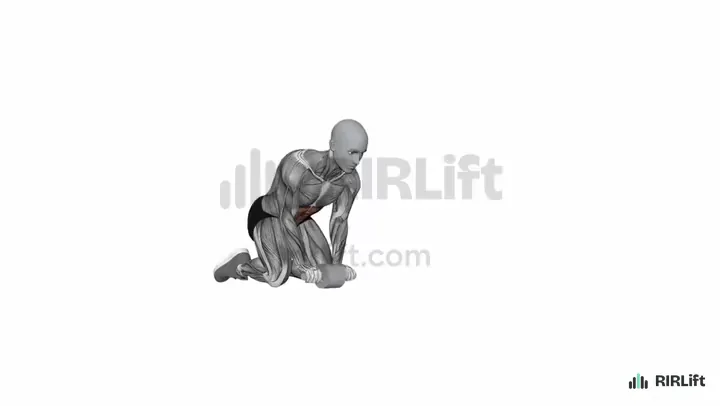
- Crunch Abs
- Machine Crunch Abs
- Decline Crunch Abs
- Ab Wheel Rollout Abs
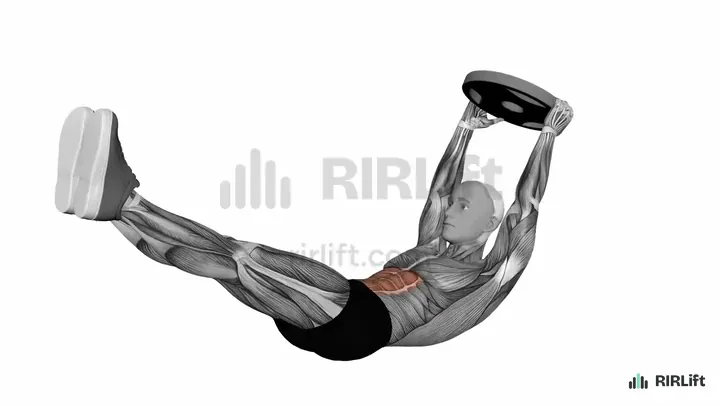
- Plate Hollow Hold Abs
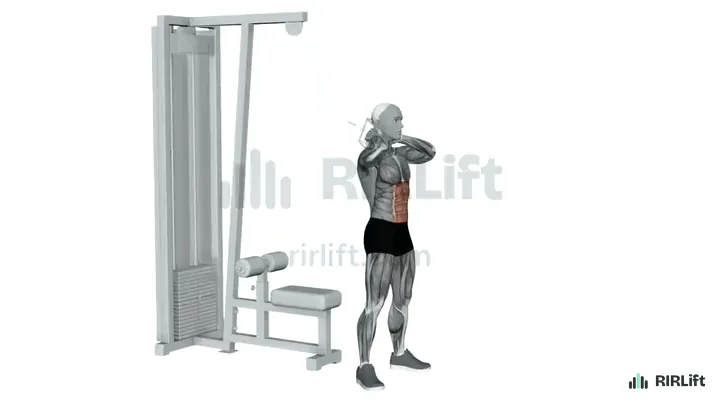
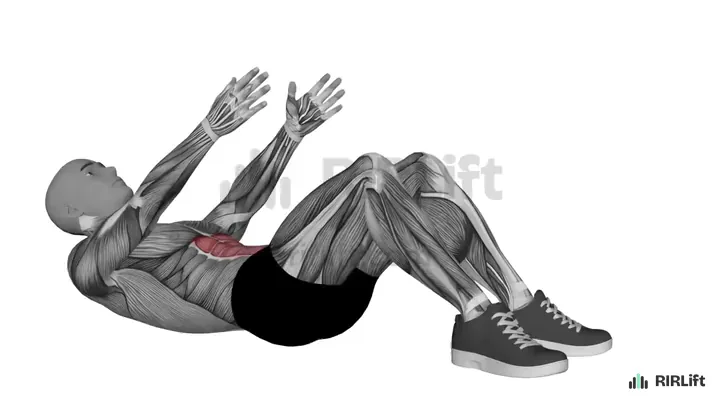
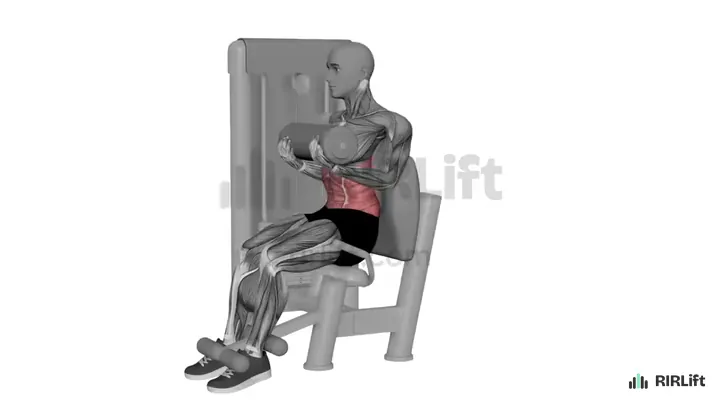
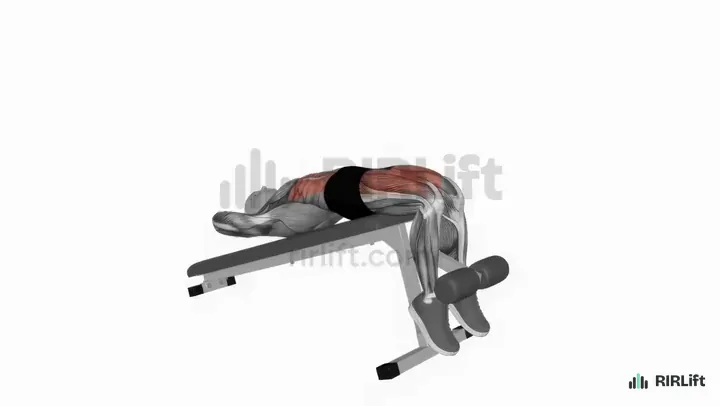
Put them together: example sessions
Each session below picks from the exercises above for one situation, with the sets, reps, rest and RIR filled in.
-
Session 1
At home, new to ab training
You train at home with a mat and maybe one weight plate or a heavy book, and you have not trained your abs regularly before.
3× a week · 18 sets a week · ~10 min
-
Session 2
Gym, crunches feel easy
You can already do 20 or more crunches and want visible ab muscle, so you train them in a gym with cables and a decline bench.
2× a week · 20 sets a week · ~20 min
-
Session 3
10 minutes at the end of a full-body workout
You already lift two or three times a week, squats and deadlifts work your trunk, and you only have a few minutes left for abs.
2× a week · 14 sets a week · ~10 min
Session 1
At home, new to ab training
- Workouts3× a week
- Working sets18 a week
- Per workout~10 min
- EquipmentBarbells
You train at home with a mat and maybe one weight plate or a heavy book, and you have not trained your abs regularly before.
Abs recover quickly, so three short sessions of 6 sets, 18 a week, build the habit while keeping each session easy to recover from. Every exercise is easy to scale, so you can stay 2 reps short of failure while you learn them.
| Exercise | Sets × reps | RIR | Rest |
|---|---|---|---|
| Crunch | 2 × 12–20 | 2 | 1 min |
| Toe Touch Crunch | 2 × 10–15 | 2 | 1 min |
| Plate Hollow HoldSeconds per hold. | 2 × 20–40 | 2 | 1 min |
- How to run it
- Do it after your main workout or on its own on three non-consecutive days. It takes about 8 minutes.
- How to progress
- Add 2 reps per set each week. When crunches reach 20, hold a plate on your chest; when the hollow hold reaches 40 seconds, use a heavier plate.
Session 2
Gym, crunches feel easy
- Workouts2× a week
- Working sets20 a week
- Per workout~20 min
- EquipmentAdjustable Cable, Decline Bench, Ab Wheel
You can already do 20 or more crunches and want visible ab muscle, so you train them in a gym with cables and a decline bench.
Once bodyweight is light, load is what makes the abs grow. Two sessions of 10 sets, about 20 a week, all in the 8 to 15 rep range where a cable or plate keeps them hard.
| Exercise | Sets × reps | RIR | Rest |
|---|---|---|---|
| Cable Crunch | 4 × 8–15 | 1 | 75 s |
| Decline CrunchHold a plate when 15 is easy. | 3 × 8–15 | 1 | 75 s |
| Ab Wheel Rollout | 3 × 6–12 | 2 | 90 s |
- How to run it
- Add it to the end of two lifting days, for example your upper and lower days, at least 48 hours apart.
- How to progress
- Double progression: when all cable crunch sets reach 15 at 1 rep in reserve, add one plate on the stack. Add 5 lb to the decline sit-up the same way. Roll the ab wheel a little farther each week before going to full range.
Session 3
10 minutes at the end of a full-body workout
- Workouts2× a week
- Working sets14 a week
- Per workout~10 min
- EquipmentAb Crunch Machine, Barbells, Exercise Ball
You already lift two or three times a week, squats and deadlifts work your trunk, and you only have a few minutes left for abs.
Heavy compound lifts train the abs to brace but rarely to curl, so this adds 7 sets of flexion and anti-extension. A superset of the first two keeps it inside 10 minutes.
| Exercise | Sets × reps | RIR | Rest |
|---|---|---|---|
| A1 Machine Crunch | 3 × 10–15 | 1 | 1 min |
| A2 Plate Sit-Up | 2 × 10–15 | 2 | 1 min |
| Stability Ball Body Saw | 2 × 8–12 | 2 | 1 min |
- How to run it
- Do it at the end of two of your full-body sessions. Skip it on a day when your lower back is tired from deadlifts.
- How to progress
- Add one plate on the machine when all sets reach 15 reps. Add reps to the plate sit-up until 15, then take a heavier plate.
Make it fit you
-
Neck gets sore on crunches
Rest your head in your hands without pulling, and look at the ceiling instead of your knees. The cable and machine crunch take the neck out of it almost entirely.
-
Lower back arches on rollouts
Shorten the roll until you can come back with your back flat, or use the ball body saw for a few weeks first.
-
Want lower abs too
Add one leg-raise or reverse crunch movement for 2 to 3 sets on the same day. It is the same muscle, so you do not need more total ab sets, just a mix of the two.
-
Load them like any other lift
Log reps in reserve on your ab sets too. RIRLift raises the cable or plate weight when the reps say you are ready, which is how the abs get the same progression as your squat.
Questions
Is 20 minutes of abs a day enough?
It is more than you need. Two or three sessions of about 10 minutes, with weight on the exercises once they get easy, build the abs better than daily high-rep circuits.
Do ab workouts burn belly fat?
No. Fat over the stomach comes off as your overall body fat goes down, through what you eat and how much you move. Ab training builds the muscle under it, which is what shows once the fat is low enough.
Can I get a six pack in 2 weeks?
Only if you are already lean and the muscle is there. For most people it takes months of fat loss plus loaded ab work; two weeks of training will make the abs stronger but not visibly different.
Can you target the upper abs separately?
Partly. The rectus abdominis is one muscle, but curling the ribs toward the hips, as in a crunch, works the top part harder, and lifting the legs works the bottom part harder.
Why do my upper abs bulge out?
Usually it is not the muscle. What sits behind the abs and the way you stand and breathe, for example with the ribs flared up, can push the upper stomach out. Training the abs to keep the ribs down, as in rollouts and hollow holds, helps you hold a flatter position.
Related templates
-
Exercises for lower abs for men: reverse crunches, hanging raises and harder holds
Leg raises and reverse crunches for the bottom half of the abs.
-
Ab exercises at the gym: machines, cables and stations
The full gym directory, including obliques and hanging work.
-
Exercises for a six pack: build the abs like any other muscle
How to train and diet when visible abs are the goal.
-
Ab exercises at home, with or without equipment
More floor options for training without equipment.
-
How to use reps in reserve (RIR)
How to judge reps in reserve on a crunch, not just a squat.