
Exercises for a flat stomach: crunches, leg raises and planks
Published October 29, 2026
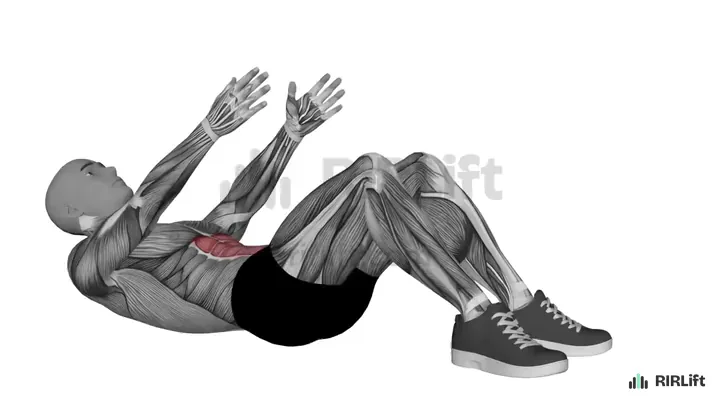
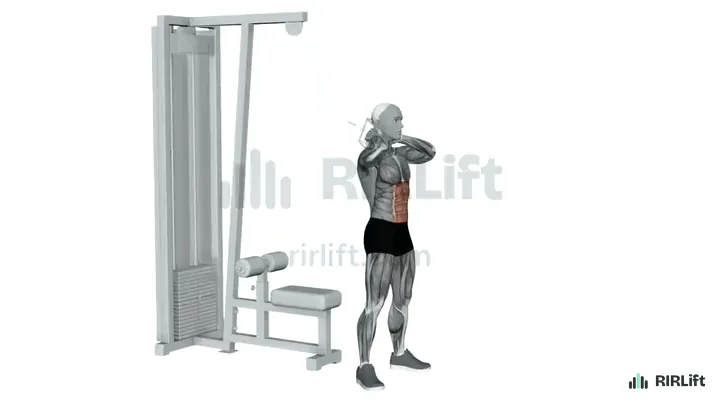
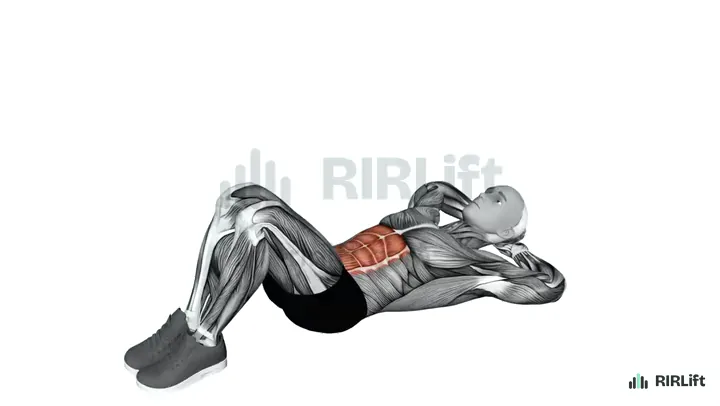
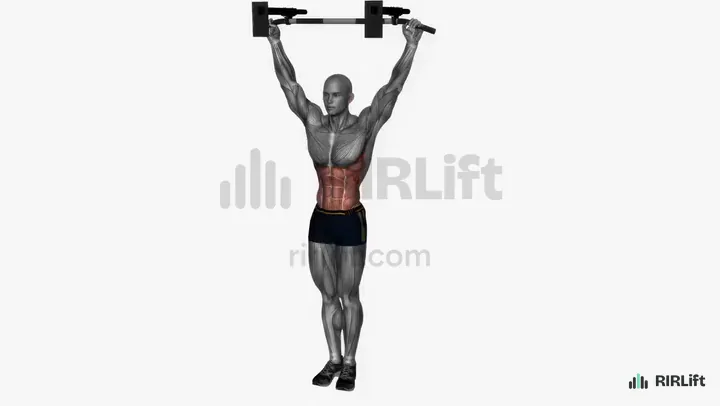
The best exercises for a flat stomach are crunches and cable crunches for the upper abs, lying and hanging knee raises for the lower abs, and the long lever plank and walkout to train your stomach to stay tight. Pair them with full-body moves such as the dumbbell swing and burpee. A flat stomach needs both stronger abs and less fat over them, and that fat comes off with overall fat loss, not from ab work alone. Do 15 to 25 hard ab sets a week over 2 or 3 sessions, 10 to 20 reps each.
- Crunch Abs
- Cable Crunch Abs
- Lying Knee Raise Abs
- Hanging Knee Raise Abs
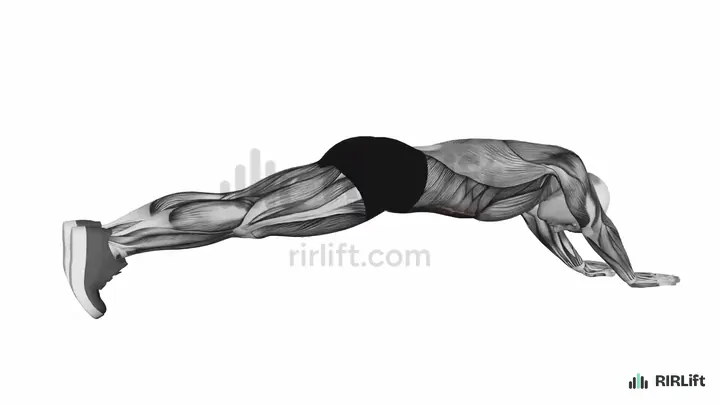
- Long Lever Plank Abs
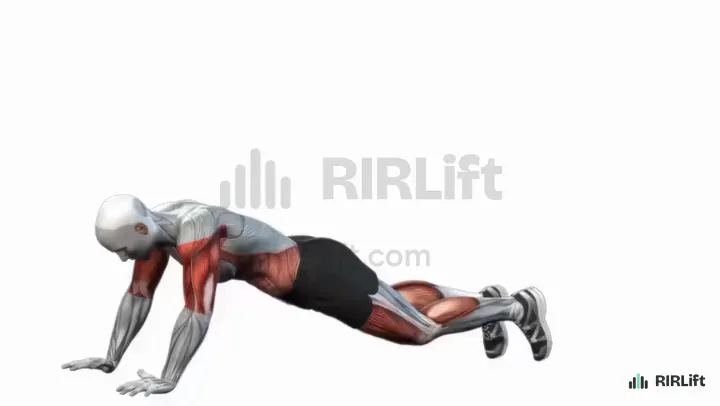
- Walkout Abs, Shoulders, Chest
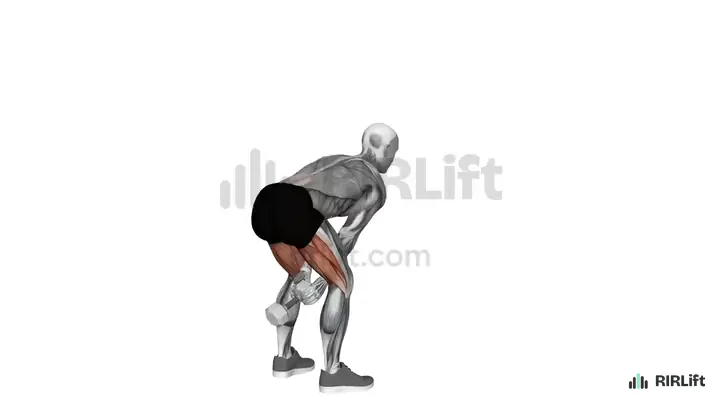
- Dumbbell Swing Glutes, Hamstrings
Put them together: example sessions
Each session below picks from the exercises above for one situation, with the sets, reps, rest and RIR filled in.
-
Session 1
Starting at home with no equipment
You are new to ab training, you have a mat and 15 minutes, and you want to start three times a week at home.
3× a week · 24 sets a week · ~15 min
-
Session 2
In the gym, building visible abs
You lift in a gym already and want to build ab muscle that shows, with weighted work you can progress like any other lift.
2× a week · 18 sets a week · ~20 min
-
Session 3
Losing fat at home in 20 minutes
You are losing weight, you train at home with one dumbbell, and you want sessions that burn more than a floor routine while still working your abs.
3× a week · 39 sets a week · ~25 min
Session 1
Starting at home with no equipment
- Workouts3× a week
- Working sets24 a week
- Per workout~15 min
- EquipmentBodyweight
You are new to ab training, you have a mat and 15 minutes, and you want to start three times a week at home.
Each session is 8 sets: one upper-ab move, one lower-ab move and one hold or walkout, about 24 hard sets a week. Abs recover quickly, so three short sessions build the habit faster than one long one.
| Exercise | Sets × reps | RIR | Rest |
|---|---|---|---|
| Crunch | 3 × 10–20 | 2 | 1 min |
| Lying Knee Raise | 3 × 8–15 | 2 | 1 min |
| Long Lever PlankSeconds per hold. | 2 × 15–30 | 2 | 1 min |
| Exercise | Sets × reps | RIR | Rest |
|---|---|---|---|
| Walkout | 2 × 5–8 | 3 | 1 min |
| Toe Touch Crunch | 3 × 10–15 | 2 | 1 min |
| Alternating Leg RaisePer leg. | 3 × 8–12 | 2 | 1 min |
- How to run it
- Spread Abs A and Abs B over three days with a gap between each, e.g. Tuesday, Thursday and Saturday.
- How to progress
- Each week, aim for 2 more reps or 5 more seconds on every set. When a move passes the top of its range at the target reps in reserve, move to the next version: toe-touch crunch to cable crunch, lying knee raise to alternating leg raise.
Session 2
In the gym, building visible abs
- Workouts2× a week
- Working sets18 a week
- Per workout~20 min
- EquipmentDumbbells, Adjustable Cable, Pull-Up Bar, Decline Bench
You lift in a gym already and want to build ab muscle that shows, with weighted work you can progress like any other lift.
Two sessions of 9 sets give 15 ab sets a week, mostly weighted, plus 3 sets of swings to open one session. Abs grow like other muscles, so loaded sets of 10 to 15 close to failure build more than endless bodyweight reps.
| Exercise | Sets × reps | RIR | Rest |
|---|---|---|---|
| Dumbbell Swing1 warm-up set first | 3 × 12–15 | 2 | 90 s |
| Cable Crunch | 3 × 10–15 | 1 | 1 min |
| Hanging Knee Raise | 3 × 8–12 | 1 | 75 s |
| Exercise | Sets × reps | RIR | Rest |
|---|---|---|---|
| Decline CrunchPlate on the chest when easy. | 3 × 10–15 | 1 | 75 s |
| Hanging Knee Raise | 3 × 8–12 | 1 | 75 s |
| Long Lever PlankSeconds per hold. | 3 × 20–30 | 1 | 1 min |
- How to run it
- Bolt Session A and Session B onto two existing gym days, after your main lifts, with a rest day between them.
- How to progress
- Once all sets reach the top of the range at the planned reps in reserve, make it harder: a plate more on the cable crunch, a heavier plate on decline crunches, or a slower lowering on hanging knee raises.
Session 3
Losing fat at home in 20 minutes
- Workouts3× a week
- Working sets39 a week
- Per workout~25 min
- EquipmentDumbbells
You are losing weight, you train at home with one dumbbell, and you want sessions that burn more than a floor routine while still working your abs.
Two full-body moves open each session for 7 sets, then two ab moves add 6 more, 13 sets in about 20 minutes. Three sessions a week give the abs 18 sets and add hard conditioning on top.
| Exercise | Sets × reps | RIR | Rest |
|---|---|---|---|
| Dumbbell Swing1 warm-up set first | 4 × 15–20 | 2 | 1 min |
| Burpee | 3 × 6–12 | 3 | 1 min |
| Crunch | 3 × 15–25 | 1 | 45 s |
| Lying Knee Raise | 3 × 10–15 | 1 | 45 s |
- How to run it
- Do the circuit on three non-consecutive days and walk on the others. Move between exercises with the listed rest only.
- How to progress
- Add reps across the set range first. Then use a heavier dumbbell on the swing, and move from lying knee raises to alternating leg raises once 15 reps feel easy.
Make it fit you
-
Lower back aches on leg raises
Bend your knees more, shorten the range so your lower back stays on the floor, and use the lying knee raise instead of alternating leg raises until the ache is gone.
-
No pull-up bar
Replace hanging knee raises with alternating leg raises done slowly with a 3-second lowering, or lying knee raises with a light dumbbell between your feet.
-
Burpees feel too hard on your joints
Step back into the plank instead of jumping, and stand up without the hop. Or swap burpees for an extra set of swings.
-
You want more for the sides
Add side planks or the Pallof press to one session a week. They train the obliques along the sides of your waist, which crunches and knee raises barely reach.
Questions
How can I flatten my tummy?
Lose body fat by eating a little less than you burn, walk most days, and train your abs 2 or 3 times a week with crunches, knee raises and planks. Lifting weights for the rest of your body helps by keeping your muscle while the fat comes off.
Can walking for 30 minutes reduce belly fat?
Walking 30 minutes a day burns extra energy every day, which adds up to fat loss over weeks, including from your belly. It works best combined with a small calorie deficit and strength training.
Do crunches flatten your stomach?
Crunches build the abdominal muscle, which makes your stomach firmer. They do not burn the fat on top of it. You need both: stronger abs and lower body fat.
What is the best time to exercise for a flat stomach?
The time you can stick to. Morning, lunch and evening sessions give similar results when the training and eating are the same, so pick the slot you will keep for months.
How long does it take to get a flat stomach?
It depends on how much fat you have to lose. Your abs get stronger within a few weeks; a change you can see takes months rather than weeks, and longer the more fat there is to lose.
Related templates
-
Exercises for a smaller waist: core, shoulders, back and glutes
Core holds plus the back, shoulder and glute work that changes your proportions.
-
Muffin top exercises for your sides, lower belly and whole body
For the sides of the waist and the roll above your waistband.
-
Lower ab exercises for women: floor, bar and gym picks
More options for the area below the belly button.
-
Ab exercises at home, with or without equipment
More home ab moves for every level.
-
How to use reps in reserve (RIR)
How to judge 1 or 2 reps short of failure on ab work.