Exercises for taekwondo: kicking power, balance, hips and conditioning

The best exercises for taekwondo are the Bulgarian split squat and single-leg Romanian deadlift for the standing leg, the trap bar deadlift and jump squat for kicking power, the standing cable hip flexion and hanging knee raise for a fast chamber, the Cossack squat and Copenhagen plank for strong, mobile hips, skater hops for side-to-side footwork, and the Pallof press for a trunk that holds while you turn. Two strength sessions a week next to class are enough: about 45 minutes, stopping 1 to 3 reps short of failure so your legs are still quick on the mat.

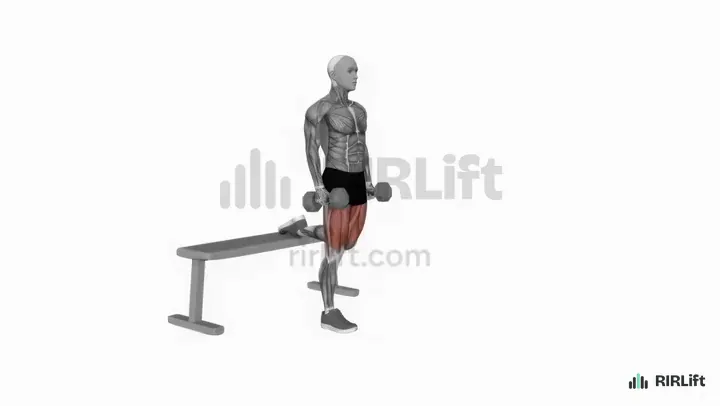
  1. Bulgarian Split Squat Quads, Glutes
  2. Single-Leg RDL Hamstrings, Glutes
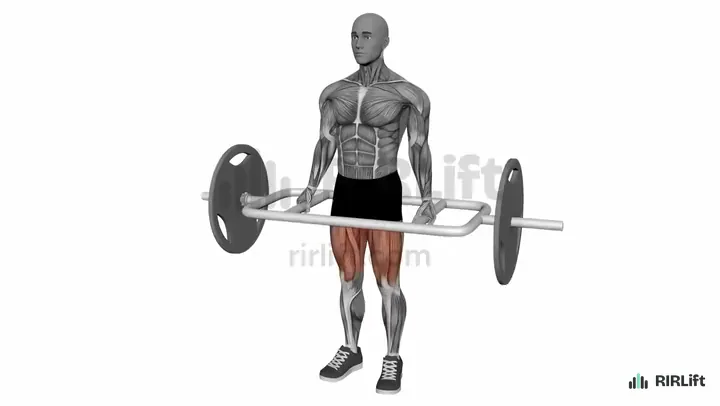
  3. Trap Bar Deadlift Quads, Glutes
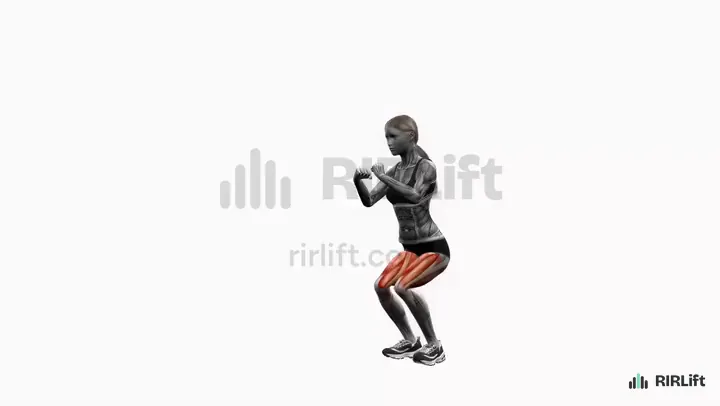
  4. Jump Squat Quads, Glutes
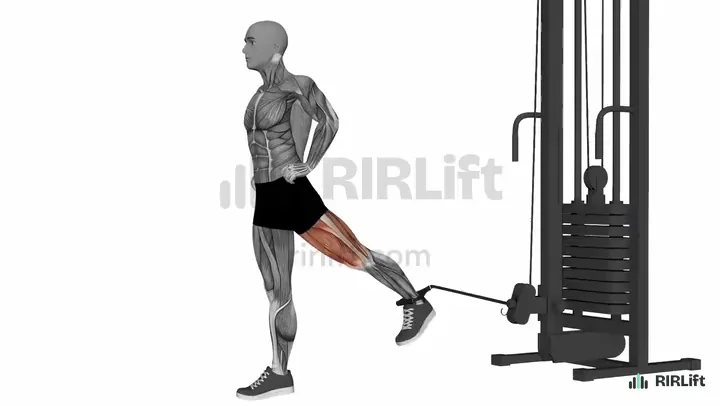
  5. Standing Cable Hip Flexion Abs
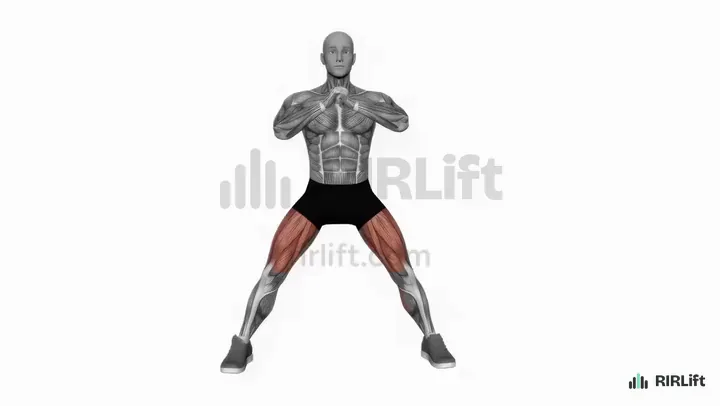
  6. Cossack Squat Quads, Adductors
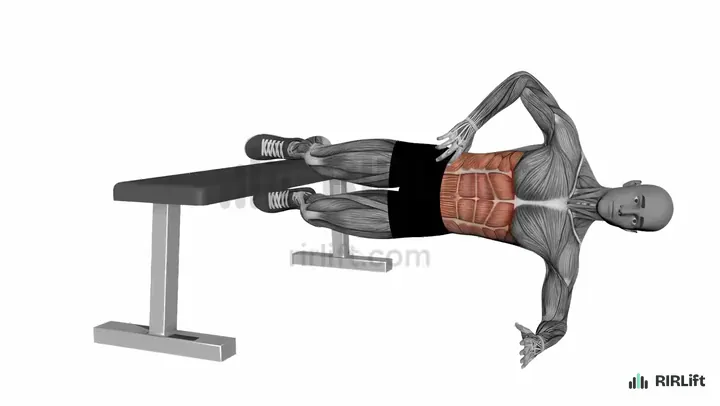
  7. Copenhagen Plank Adductors, Abs
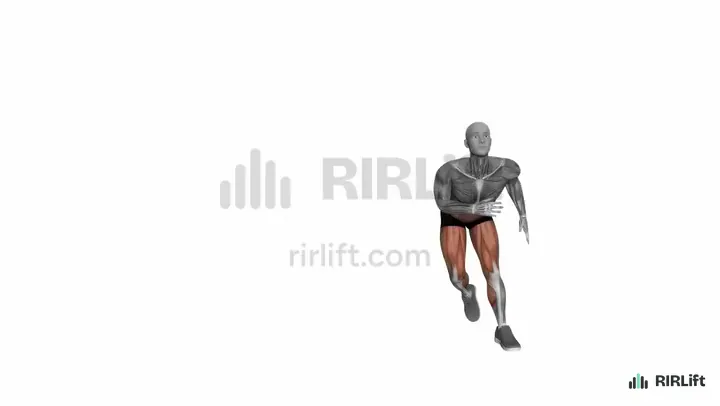
  8. Skater Hop Glutes, Quads, Abductors
The standing leg: single-leg strength and balance

Every kick is thrown from one leg, and a stable, strong support leg is what lets the kicking leg go fast and high without you falling off the technique. These three exercises build the hip, knee and ankle of that leg.

Support-leg strength

Bulgarian Split Squat

Quads, Glutes

The Bulgarian split squat puts almost all your weight on one leg, which is where taekwondo lives. It builds the quads and glutes of the standing leg and shows you whether one side is weaker, which often explains a weaker kicking side.

How to do it

  1. Rest the laces of your back foot on a bench behind you and hop the front foot forward until you can lower straight down. Hold dumbbells if you are ready for load.
  2. Bend the front knee and drop your back knee toward the floor.
  3. Stop just above the floor with your front shin fairly upright.
  4. Push through the whole front foot to rise. Complete one side, then switch.

Cues

  • Weight on the front foot
  • Down, not forward
  • Hips square

Common mistakes

  • Letting the front knee cave inward: push it out over your little toes.
  • Rushing reps: a slow lower builds the control you want for kicking.

Swap for: Dumbbell Split Squat, Reverse Lunge, Step-Up

Balance and hamstrings on one leg

Single-Leg RDL

Hamstrings, Glutes

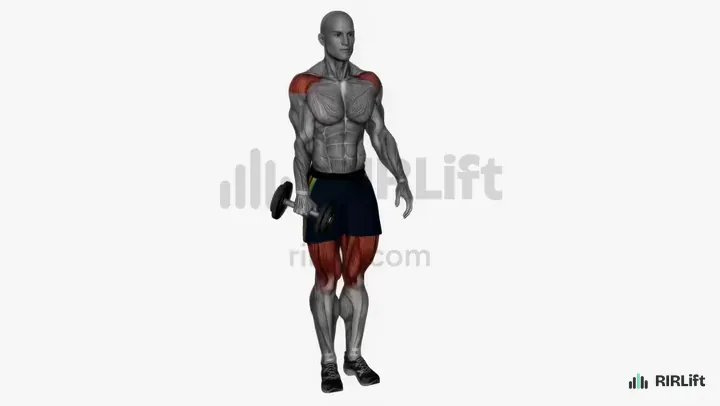
Tipping forward on one leg while the other reaches back is close to the position of a back or side kick. The single-leg RDL builds the hamstrings and glutes of the standing leg and the balance to stay steady while you move.

How to do it

  1. Hold a dumbbell in the hand opposite your standing leg and stand tall on that leg with a soft knee.
  2. Tip your torso forward from the hip as the free leg reaches straight back.
  3. Lower until your torso is close to level, keeping your hips square to the floor.
  4. Pull yourself back up by squeezing the glute of the standing leg.

Cues

  • Hips square
  • Reach the heel back
  • Soft standing knee

Common mistakes

  • Opening the hip so the back leg turns out: point the back toes down.
  • Rounding the back to go lower: stop where your balance and hamstrings allow.

Swap for: Dumbbell B-Stance RDL, Dumbbell Romanian Deadlift, Romanian Deadlift

Ankle strength for bouncing footwork

Single-Leg Calf Raise

Calves

Taekwondo athletes spend whole rounds on the balls of their feet, bouncing and pivoting. Training the calf one leg at a time through a full range builds the ankle strength and endurance for that.

How to do it

  1. Stand on one foot on a step edge with your heel free, holding something for balance and a dumbbell if needed.
  2. Let the heel sink slowly until the calf stretches.
  3. Press up as high as you can onto the ball of the foot.
  4. Hold the top briefly and lower slowly.

Cues

  • Full range
  • Pause at the top
  • Big toe stays heavy

Common mistakes

  • Short, bouncing reps: use the full stretch and a pause.
  • Leaning on the support to cheat: use it only for balance.

Swap for: Standing Calf Raise, Jump Rope, Dumbbell Standing Calf Raise

Kicking power and footwork

A fast kick starts with a hard push off the floor, and footwork in sparring is a constant stream of small bounces and lateral steps. Heavy deadlifts raise your overall leg strength, and jumps turn it into speed.

Whole-leg strength

Trap Bar Deadlift

Quads, Glutes

The trap bar deadlift is the easiest heavy leg lift to learn and loads the legs and hips without much stress on the lower back. More raw leg strength means a harder push off the floor into every kick.

How to do it

  1. Step inside the trap bar with feet about hip-width and grab the handles at your sides.
  2. Sit your hips down and back until you can hold the handles with a flat back and your chest up.
  3. Push the floor away and stand tall, keeping the bar balanced.
  4. Lower by pushing your hips back and bending your knees until the plates touch the floor.

Cues

  • Push the floor away
  • Flat back
  • Stand all the way up

Common mistakes

  • Jerking the bar off the floor: take the slack out first.
  • Leaning back at the top: just stand tall and squeeze your glutes.

Swap for: Romanian Deadlift, Goblet Squat, Kettlebell Deadlift

Explosive push off the floor

Jump Squat

Quads, Glutes

Jump squats turn leg strength into speed, which is what a fast, snapping kick needs. Keep them bodyweight or very light and treat every rep as a maximal effort.

How to do it

  1. Stand with feet about shoulder-width and arms relaxed.
  2. Squat down quickly to about a quarter or half squat.
  3. Explode up as high as you can, driving your arms.
  4. Land softly with bent knees and go straight into the next rep, or reset if form slips.

Cues

  • Quick down, faster up
  • Quiet landing
  • Every rep is max height

Common mistakes

  • Doing long, tiring sets: stop when your height drops.
  • Landing stiff-legged: absorb with your knees and hips.

Swap for: Box Jump, Frog Jump, Jumping Lunge

Lateral power and footwork

Skater Hop

Glutes, Quads, Abductors
Side-to-side hops from one leg to the other train the sideways push of a sparring step and the single-leg landing control of kicking. They also build the quick feet that let you close and escape range.

How to do it

  1. Stand on your right foot knee softly bent.
  2. Push off sideways to jump to your left and land on your left foot.
  3. Let your right foot swing behind you as you land, and hold for a moment.
  4. Push back the other way and continue alternating.

Cues

  • Push sideways hard
  • Stick each landing
  • Chest stays up

Common mistakes

  • Landing with the knee caving in: shorten the jump.
  • Flailing for balance: hold each landing a beat before the next.

Swap for: Single-Leg Jump, Lateral Box Jump, Dumbbell Lateral Lunge

Chamber: hip flexors and lower abs

Lifting the knee fast and high into the chamber is a hip flexor job, and most athletes never train it under load. Cable hip flexion trains it standing, the way you kick, and hanging knee raises add the lower abs that hold the pelvis steady.

Hip flexor strength for the chamber

Standing Cable Hip Flexion

Abs

Pulling your knee up against a cable trains the hip flexors exactly as you use them to chamber a kick. A stronger, faster chamber means a faster kick and less telegraphing.

How to do it

  1. Attach an ankle strap to a low cable and fasten it around one ankle, standing with your back to the machine.
  2. Hold a support for balance and start with the strapped leg slightly behind you.
  3. Drive the knee up and forward until your thigh is at least level with your hip.
  4. Lower slowly to the start. Do all reps, then switch legs.

Cues

  • Drive the knee up fast
  • Lower slowly
  • Stand tall on the other leg

Common mistakes

  • Leaning back to lift higher: keep your torso upright.
  • Swinging the leg: control both directions.

Swap for: Hanging Knee Raise, Captain's Chair Knee Raise, Lying Knee Raise

Lower abs and hip flexors

Hanging Knee Raise

Abs

Hanging knee raises train the hip flexors and lower abs together, the combination that lifts and holds a chambered knee. They also build grip and shoulder stability on the side.

How to do it

  1. Hang from an overhead bar, arms straight and your legs together.
  2. Brace and curl your knees up toward your chest, tilting your pelvis up at the top.
  3. Pause briefly with your knees high.
  4. Lower your legs slowly without swinging.

Cues

  • Curl the pelvis up
  • No swing
  • Slow lower

Common mistakes

  • Swinging to get the knees up: pause at the bottom of each rep.
  • Only lifting the thighs: finish by rolling the pelvis up.

Swap for: Captain's Chair Knee Raise, Lying Knee Raise, Reverse Crunch

Hip mobility and inner and outer hip strength

High side and roundhouse kicks need hips that are both mobile and strong at the end of their range. The Cossack squat trains a deep side lunge, the Copenhagen plank strengthens the inner thigh, and band abduction builds the outer hip that lifts the leg sideways.

Deep side lunge for mobile hips

Cossack Squat

Quads, Adductors

The Cossack squat moves you deep into a side lunge with the other leg straight, building strength and mobility in the hips and inner thighs. That range is what high roundhouse and side kicks need.

How to do it

  1. Stand with your feet very wide and toes slightly turned out.
  2. Shift your weight to one side and sit down into that hip, keeping the other leg straight with its toes pointing up.
  3. Go as deep as you can with your heel down and chest up.
  4. Push back to the middle and repeat on the other side.

Cues

  • Heel stays down
  • Straight leg, toes up
  • Sit into the hip

Common mistakes

  • Lifting the heel of the bent leg: go less deep or hold a weight in front for balance.
  • Folding the torso over: keep your chest up.

Swap for: Dumbbell Lateral Lunge, Kettlebell Lateral Lunge, Goblet Squat

Inner thigh strength

Copenhagen Plank

Adductors, Abs

The Copenhagen plank loads the adductors, the inner thigh muscles that work hard in every kick and stance change. Strong adductors are part of taking high, fast kicks for years.

How to do it

  1. Lie on your side and place your top leg on a bench, the inside of the knee or ankle on the edge.
  2. Prop yourself on your forearm, elbow under your shoulder.
  3. Lift your hips until your body is straight, letting the bottom leg hang or lift toward the bench.
  4. Hold for the target time, lower, and switch sides.

Cues

  • Hips high
  • Squeeze the top leg into the bench
  • Straight line

Common mistakes

  • Hips sagging: shorten the hold.
  • Starting at the ankle when the knee is hard enough: progress from knee to ankle.

Swap for: Side Plank, Hip Adduction Machine, Band Hip Adduction

Outer hip for side kicks

Band Standing Hip Abduction

Abductors

Lifting your leg sideways against a band trains the outer hip muscles that raise the leg for side kicks and keep the standing knee stable. It is easy to do as part of your warm-up before class.

How to do it

  1. Loop a band around your ankles and stand tall next to a support.
  2. Shift your weight onto one leg and keep that knee slightly bent.
  3. Lift the other leg straight out to the side without leaning.
  4. Lower slowly and repeat, then switch legs.

Cues

  • Lift from the hip
  • Toes forward
  • Don't lean

Common mistakes

  • Leaning over the standing leg to lift higher: smaller range, tall torso.
  • Turning the toes up: keep them pointing forward.

Swap for: Hip Abduction Machine, Lateral Band Walk, Standing Side Leg Raise

Trunk, upper body and conditioning

Spinning and turning kicks need a trunk that transfers force instead of leaking it, and sparring rounds need a light, quick engine. The Pallof press handles the trunk, push-ups keep the upper body solid with no equipment, and jump rope builds the bouncy footwork rhythm.

Trunk that holds while you turn

Pallof Press

Abs

Turning and spinning kicks put a lot of rotational force through the trunk. The Pallof press trains you to control that force so it reaches the kick.

How to do it

  1. Set a cable or band at chest height and stand side-on, the handle at your chest.
  2. Step out until you feel tension and set your feet.
  3. Push the handle straight out, keeping your hips and shoulders facing forward.
  4. Hold a moment, bring it back, and switch sides after the set.

Cues

  • Nothing turns
  • Exhale on the press
  • Stand tall

Common mistakes

  • Letting the cable rotate you: step in or use less weight.
  • Arching your back: keep your ribs down.

Swap for: Side Plank, Dead Bug, Cable Woodchop

Upper-body strength anywhere

Push-Up

Chest

Taekwondo is mainly a kicking art, but hand techniques, blocks and getting up off the floor all need upper-body strength. Push-ups cover it without equipment and are easy to fit after class.

How to do it

  1. Set your hands slightly wider than your shoulders and step your feet back into a straight plank.
  2. Lower your chest toward the floor with elbows angled back about 45 degrees.
  3. Touch lightly near the floor while keeping your body straight.
  4. Press back up to straight arms.

Cues

  • Body in one line
  • Elbows back
  • Chest to the floor

Common mistakes

  • Sagging hips: squeeze glutes and abs.
  • Half reps: lower until the chest nearly touches.

Swap for: Kneeling Push-Up, Explosive Push-Up, Dumbbell Floor Press

Build a session with Push-Up

Footwork rhythm and conditioning

Jump Rope

Calves, Quads

Skipping rope trains light, quick, bouncing feet for minutes at a time, which is how you move in sparring. It is also an easy way to condition without extra running.

How to do it

  1. Hold the handles at hip height with your elbows close to your sides.
  2. Turn the rope with your wrists, not your shoulders.
  3. Jump just high enough to clear it, landing on the balls of your feet.
  4. Keep a steady rhythm for the round, then rest.

Cues

  • Wrists turn the rope
  • Small jumps
  • Stay on the balls of your feet

Common mistakes

  • Jumping too high: a small hop is enough.
  • Swinging your arms wide: keep the elbows in.

Swap for: Skipping in Place, Jump Rope Alternating Foot, High Knees

Build a session with Jump Rope

Put them together: example sessions

Each session below picks from the exercises above for one situation, with the sets, reps, rest and RIR filled in. Open one in the session builder to change a pick, price it from a recent set, and add it to RIRLift.

Session 1

Two gym days next to class

Open in the session builder
  • Workouts2× a week
  • Working sets32 a week
  • Per workout~45 min
  • EquipmentTrap Bar, Dumbbells, Adjustable Cable, Pull-Up Bar

You train taekwondo three or four times a week, have access to a gym, and want stronger, faster kicks without feeling slow in class.

Two full-body sessions of about 15 working sets each are enough when class already trains speed and conditioning. Each day has one heavy leg exercise, one power exercise, one single-leg exercise, hip flexor work and one hip or trunk exercise. Heavy lifts stop at 2 reps in reserve and the accessories at 1, so the muscles get stronger but your legs still snap on the mat.

Day A
ExerciseSets × repsRIRRest
Jump Squat 3 × 5 4 1 min
Trap Bar Deadlift2 warm-up sets first 4 × 4–6 2 2:30 min
Single-Leg RDLPer leg. 3 × 6–8 2 90 s
Standing Cable Hip FlexionPer leg. 3 × 8–12 1 1 min
Copenhagen PlankSeconds, per side. 3 × 15–30 2 1 min

Open Day A in the session builder

Day B
ExerciseSets × repsRIRRest
Skater HopPer side. 3 × 6–8 4 1 min
Bulgarian Split SquatPer leg. 4 × 6–8 2 2 min
Cossack SquatPer side. 3 × 6–8 2 90 s
Hanging Knee Raise 3 × 8–12 1 1 min
Pallof PressPer side. 3 × 8–10 2 1 min

Open Day B in the session builder

How to run it
Lift on two days with at least one day between them, ideally on lighter class days or after class rather than before sparring.
How to progress
Add weight to the trap bar deadlift and split squat when every set reaches the top of the range at the target reps in reserve. Add seconds to the Copenhagen plank before moving from knee to ankle.

Session 2

At home, bands and one pair of dumbbells

Open in the session builder
  • Workouts2× a week
  • Working sets30 a week
  • Per workout~35 min
  • EquipmentJump Rope, Dumbbells, Resistance Bands

You train at your dojang but do your strength work at home with a band, a pair of dumbbells and a bench or sturdy chair.

Without heavy loads, these sessions lean on single-leg exercises, which make light dumbbells feel heavy, and on higher reps taken to 1 rep in reserve so the work stays hard enough to drive progress. Jumps and rope keep the speed and footwork side. Each session is about 35 minutes and fits on a non-class day.

Home A
ExerciseSets × repsRIRRest
Jump RopeSeconds per round. 3 × 45–60 3 45 s
Bulgarian Split SquatPer leg. 3 × 10–15 1 75 s
Single-Leg RDLPer leg. 3 × 10–12 1 1 min
Band Standing Hip AbductionPer leg. 3 × 12–15 1 45 s
Push-Up 3 × 10–20 1 1 min

Open Home A in the session builder

Home B
ExerciseSets × repsRIRRest
Jump Squat 3 × 6 4 1 min
Cossack SquatPer side. 3 × 8–10 1 1 min
Single-Leg Calf RaisePer leg. 3 × 12–15 1 45 s
Copenhagen PlankSeconds, per side. 3 × 20–30 2 45 s
Skater HopPer side. 3 × 8 3 45 s

Open Home B in the session builder

How to run it
Do Home A and Home B on two days a week, with a day between them. Use a chair seat for the split squat and a sofa edge for the Copenhagen plank.
How to progress
Add reps until every set reaches the top of the range at 1 rep in reserve, then slow the lowering to three seconds or add a pause at the bottom before looking for heavier dumbbells.

Session 3

Tournament season, one or two short sessions

Open in the session builder
  • Workouts2× a week
  • Working sets18 a week
  • Per workout~25 min
  • EquipmentTrap Bar, Dumbbells, Adjustable Cable, Jump Rope

You have competitions every few weeks, sparring is intense, and you may be making weight.

Close to competition, lifting has one job: keep your strength without leaving fatigue in your legs. These sessions cut to two or three sets per exercise at 2 to 3 reps in reserve and keep the jumps short and sharp. The second session is optional and drops out completely in competition week.

Main
ExerciseSets × repsRIRRest
Jump Squat 3 × 3 4 1 min
Trap Bar Deadlift2 warm-up sets first 3 × 3–4 3 2:30 min
Bulgarian Split SquatPer leg. 2 × 5–6 2 90 s
Standing Cable Hip FlexionPer leg. 2 × 8–10 2 1 min

Open Main in the session builder

Optional
ExerciseSets × repsRIRRest
Skater HopPer side. 2 × 5 4 1 min
Single-Leg RDLPer leg. 2 × 6 3 75 s
Pallof PressPer side. 2 × 8 3 45 s
Jump RopeSeconds per round. 2 × 60 3 45 s

Open Optional in the session builder

How to run it
Do the main session early in the week and the optional one midweek. In competition week, do only the main session, at least four days out, with one set fewer on each exercise.
How to progress
Hold the loads you reached before the season. If a weight feels lighter than its target reps in reserve, add a little the next week; if your kicks feel heavy, cut a set.

Make it fit you

Questions

What is the best workout for taekwondo?

Two full-body strength sessions a week with single-leg strength, a heavy leg lift, jumps, hip flexor and adductor work and a trunk exercise, alongside your class training. The two-day gym plan on this page is built that way.

What are some basic exercises for taekwondo?

Split squats, single-leg RDLs, jump squats, push-ups, Cossack squats, planks and jump rope. They need little or no equipment and cover the balance, leg power and hips that kicking needs.

Is strength training good for taekwondo?

Yes. Stronger legs push off harder, stronger hips lift the leg higher and faster, and a strong trunk keeps turning kicks controlled. Keeping sets a couple of reps short of failure stops lifting from slowing you down in class.

How do I kick higher in taekwondo?

Combine stretching with strength at the end of your range: Cossack squats, Copenhagen planks, hip abduction and cable hip flexion. Being strong in the high position lets you reach it with speed and hold it with control.

Can I do taekwondo exercises at home?

Yes. The home plan on this page uses a band, one pair of dumbbells and a chair: split squats, single-leg RDLs, Cossack squats, Copenhagen planks, calf raises, jump squats and jump rope.