
Exercises for weightlifting: the main lifts and the Olympic lifts
Published October 24, 2026
The best weightlifting exercises are the back squat and front squat for the legs, the deadlift and good morning for the back and hips, the bench press and overhead press for pushing, the Pendlay row and pull-up for pulling, and the plank for bracing. If you train Olympic weightlifting, add the snatch, the clean and jerk, the power clean and the snatch-grip deadlift. A weightlifting workout starts with the most technical lift, then one squat or hinge, one press and one pull, with sets ending 2 to 3 reps short of failure so technique holds.
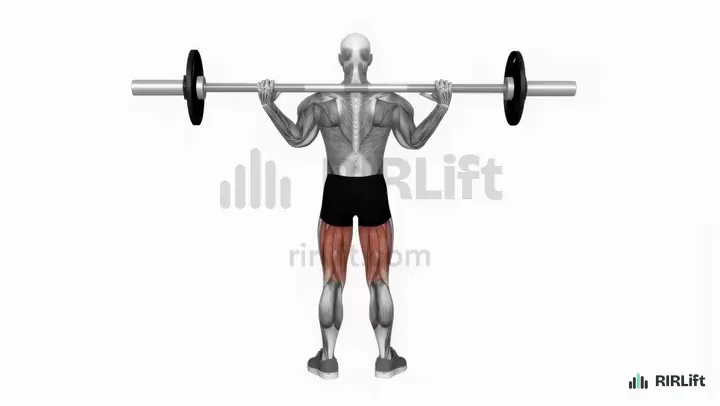
- Barbell Back Squat Quads, Glutes, Adductors
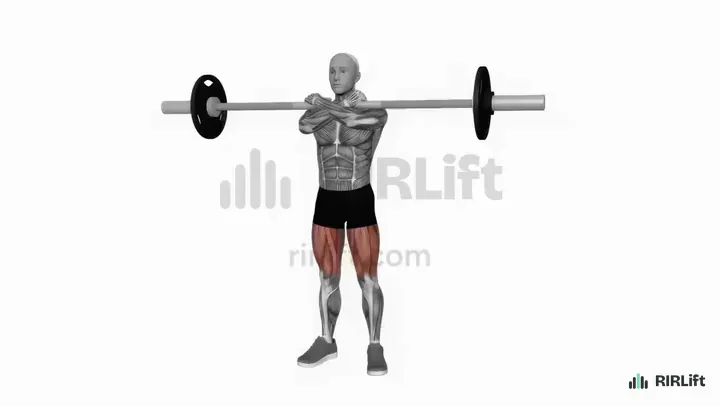
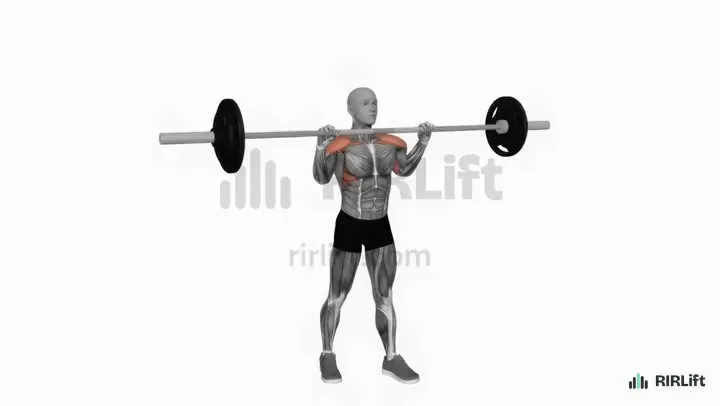
- Front Squat Quads, Glutes, Adductors
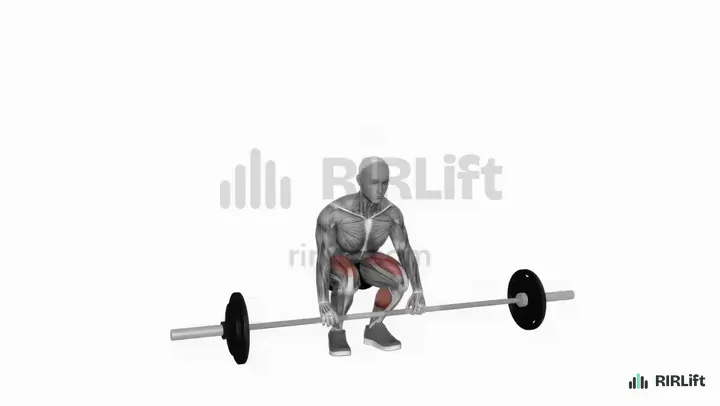
- Barbell Deadlift Glutes, Lower Back
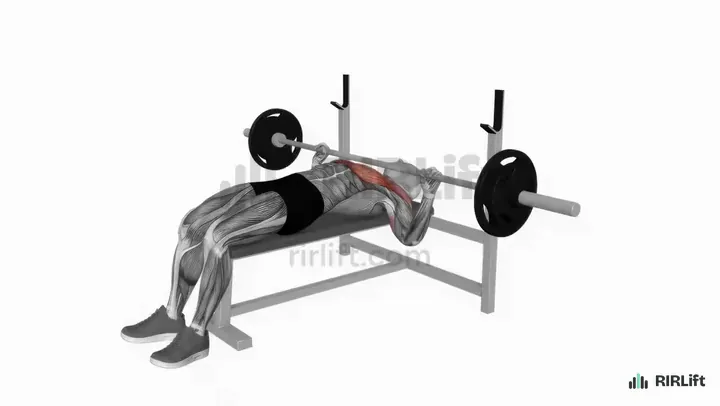
- Barbell Bench Press Chest
- Barbell Overhead Press Shoulders
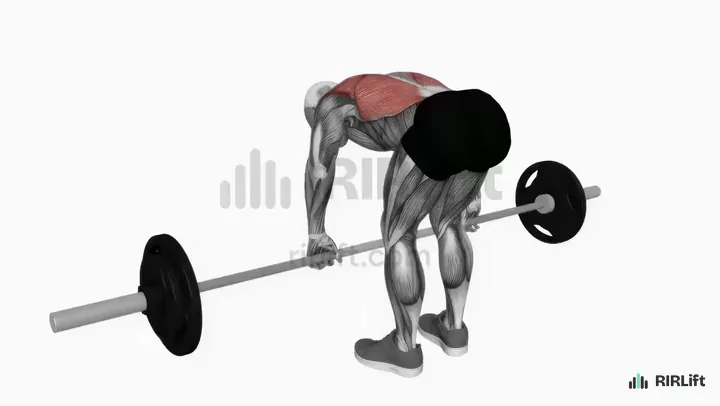
- Pendlay Row Upper Back, Lats
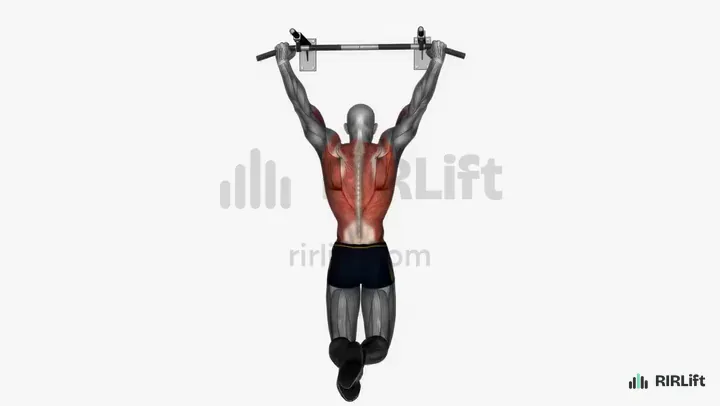
- Pull-Up Lats
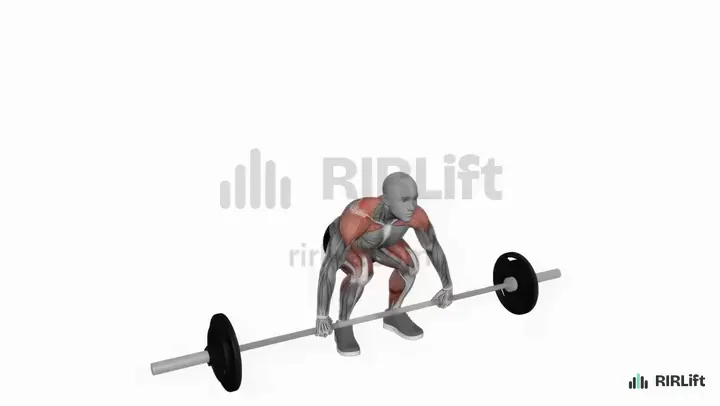
- Power Clean Glutes, Hamstrings, Traps
Put them together: example sessions
Each session below picks from the exercises above for one situation, with the sets, reps, rest and RIR filled in. Open one in the session builder to change a pick, price it from a recent set, and add it to RIRLift.
-
Session 1
Beginner, 3 days a week
You are new to weight lifting and want to learn the main barbell lifts and get stronger.
3× a week · 32 sets a week · ~35 min
-
Session 2
Training the snatch and clean and jerk
You do Olympic weightlifting, or are starting to, and want a week that practices the competition lifts and builds the strength behind them.
3× a week · 45 sets a week · ~55 min
-
Session 3
Strength and power for another sport
You play a sport and want a twice-a-week weight lifting session for strength and explosiveness, without learning the full snatch and clean and jerk.
2× a week · 30 sets a week · ~50 min
Session 1
Beginner, 3 days a week
- Workouts3× a week
- Working sets32 a week
- Per workout~35 min
- EquipmentBarbells, Flat Bench, Pull-Up Bar
You are new to weight lifting and want to learn the main barbell lifts and get stronger.
A beginner gets stronger almost every week with a few big lifts done often. Two sessions alternate on three days, with the main lifts in sets of 5 to 8 that stop 2 reps short of failure so your technique stays clean while you learn. Each session is about 13 working sets.
| Exercise | Sets × reps | RIR | Rest |
|---|---|---|---|
| Barbell Back Squat3 warm-up sets first | 3 × 5–8 | 2 | 3 min |
| Barbell Bench Press2 warm-up sets first | 3 × 5–8 | 2 | 2:30 min |
| Pendlay Row | 3 × 6–10 | 2 | 90 s |
| PlankSeconds. | 2 × 30–45 | 2 | 45 s |
Open Day A in the session builder
| Exercise | Sets × reps | RIR | Rest |
|---|---|---|---|
| Barbell Deadlift3 warm-up sets first | 2 × 4–6 | 2 | 3 min |
| Barbell Overhead Press2 warm-up sets first | 3 × 5–8 | 2 | 2 min |
| Pull-Up | 3 × 4–10 | 2 | 90 s |
| Good Morning | 2 × 8–10 | 3 | 90 s |
Open Day B in the session builder
- How to run it
- Alternate A and B on three nonconsecutive days.
- How to progress
- Add 5 pounds to the squat and deadlift and 2.5 to 5 pounds to the presses every session that every set reaches the top of its range at the target reps in reserve.
Session 2
Training the snatch and clean and jerk
- Workouts3× a week
- Working sets45 a week
- Per workout~55 min
- EquipmentBarbells, Pull-Up Bar
You do Olympic weightlifting, or are starting to, and want a week that practices the competition lifts and builds the strength behind them.
Technique work in the snatch and clean and jerk needs fresh legs and low reps, so they come first with long rests and stop 3 reps short of failure: miss-free practice teaches better than grinding. Squats and pulls build strength afterward at 2 reps in reserve. Each day has one competition lift, one squat and one strength lift.
| Exercise | Sets × reps | RIR | Rest |
|---|---|---|---|
| Barbell Snatch3 warm-up sets firstTechnique first. No misses. | 5 × 2–3 | 3 | 2:30 min |
| Snatch-Grip Deadlift | 3 × 3–5 | 2 | 2:30 min |
| Barbell Back Squat2 warm-up sets first | 4 × 4–6 | 2 | 3 min |
| Pull-Up | 3 × 6–8 | 2 | 90 s |
Open Snatch Day in the session builder
| Exercise | Sets × reps | RIR | Rest |
|---|---|---|---|
| Clean & Jerk3 warm-up sets firstOne clean plus one jerk per rep. | 5 × 1–2 | 3 | 3 min |
| Front Squat2 warm-up sets first | 4 × 3–5 | 2 | 3 min |
| Barbell Overhead Press | 3 × 5–6 | 2 | 2 min |
| Good Morning | 3 × 6–8 | 2 | 90 s |
Open Clean & Jerk Day in the session builder
- How to run it
- Rotate the two days across three or four sessions a week (snatch, clean and jerk, snatch, then start the next week with clean and jerk).
- How to progress
- Raise the competition lifts by small jumps only when every rep is technically clean. Squats and pulls follow normal progression: add weight once every set reaches the top of its range.
Session 3
Strength and power for another sport
- Workouts2× a week
- Working sets30 a week
- Per workout~50 min
- EquipmentBarbells, Flat Bench
You play a sport and want a twice-a-week weight lifting session for strength and explosiveness, without learning the full snatch and clean and jerk.
The power clean gives you most of the explosive benefit of the Olympic lifts with far less technique. Placed first at 3 reps in reserve, it is followed by a heavy squat and press at 2, and the session ends with a row, keeping it to about 15 sets so it fits next to practice.
| Exercise | Sets × reps | RIR | Rest |
|---|---|---|---|
| Power Clean3 warm-up sets first | 4 × 3 | 3 | 2:30 min |
| Front Squat2 warm-up sets first | 4 × 4–6 | 2 | 3 min |
| Barbell Bench Press | 3 × 5–8 | 2 | 2:30 min |
| Pendlay Row | 3 × 6–8 | 2 | 90 s |
| PlankSeconds. | 1 × 30–45 | 2 | 45 s |
- How to run it
- Twice a week, at least two days apart and away from your hardest practices.
- How to progress
- Add weight to the power clean only when your catch is fast and high. Squat and press progress normally.
Make it fit you
-
Log reps in reserve with each set
Record each set in RIRLift with the reps you had left. The next session's weight is picked from that, so your progression follows how hard the last session actually was.
-
No platform or bumper plates
Skip the snatch and clean and jerk, and use the beginner or athlete plan with the power clean done from the hang if you can't drop the bar.
-
Tight hips or ankles in the squat
Raise your heels on small plates for front and back squats while you work on depth, and keep the reps in the 5 to 8 range.
-
Two days a week
Run the beginner plan's Day A and Day B once each per week and add one set to the squat and deadlift.
-
Older lifter
Keep every main lift at 2 to 3 reps in reserve and swap the barbell deadlift for the trap bar version.
Questions
What are the 5 major weightlifting exercises?
The squat, deadlift, bench press, overhead press and barbell row. In Olympic weightlifting, the competition lifts are the snatch and the clean and jerk, built on squats and pulls.
What are the top 10 weightlifting exercises?
Back squat, front squat, deadlift, bench press, overhead press, barbell row, pull-up, Romanian deadlift or good morning, power clean, and plank. That covers every muscle with barbells and bodyweight.
Is weightlifting the same as Olympic weightlifting?
Weight lifting usually means any strength training with weights. Olympic weightlifting is the sport with two lifts, the snatch and the clean and jerk.
Is it okay to lift when I'm sore?
Mild soreness is fine to train through; it usually eases once you warm up. If it changes how you move, train a different area that day or lower the weight for the session.
How many days a week should I do weightlifting?
Three full-body days for beginners. Olympic weightlifters often train four or more because the competition lifts need frequent practice at moderate effort.
Related templates
-
Squat: how to do the barbell back squat, what it works and what to swap in
Depth, stance and bar position for the main leg lift.
-
Deadlift: how to set up, pull and program the barbell deadlift
Setup and form for pulling from the floor.
-
Overhead press: how to do it, and what to do instead
Strict pressing technique and common fixes.
-
Beginner strength program
A longer progression plan for your first months of lifting.
-
How to use reps in reserve (RIR)
How to judge 2 to 3 reps in reserve on heavy barbell sets.