
Forearm exercises at home: grip, wrist and elbow work with the gear you own
Published October 19, 2026
The best forearm exercises at home are the dead hang and loaded carries for grip, wrist curls and wrist extensions for the two sides of the forearm, and hammer curls for the thick muscle on top near the elbow. A pull-up bar, one kettlebell or a pair of dumbbells covers all of them, and a resistance band can stand in for the curls. Train forearms two or three times a week with 2 to 3 sets per exercise, stopping wrist work 0 to 1 reps short of failure.
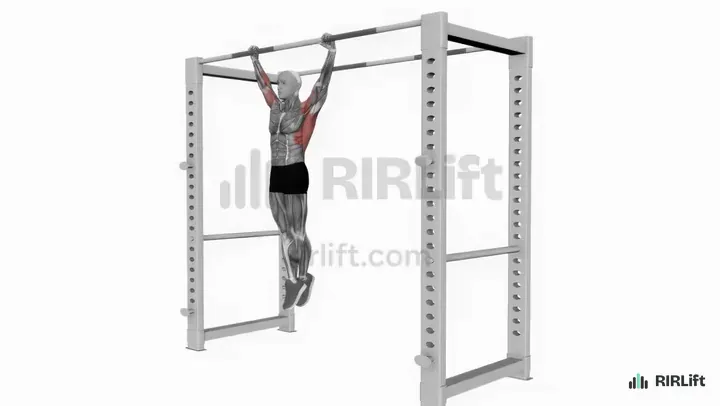
- Dead Hang Forearms
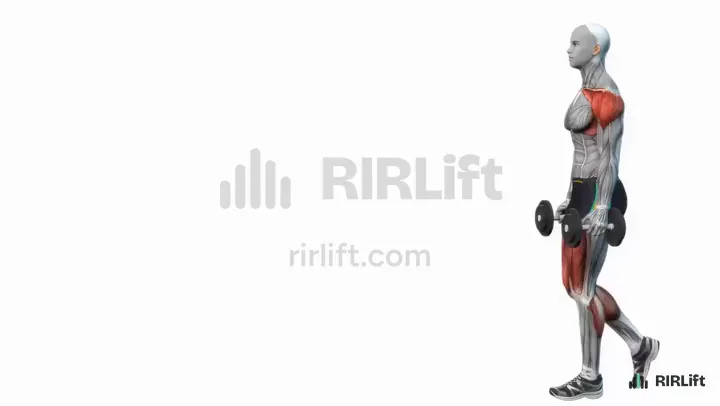
- Farmer's Walk Forearms, Traps, Shoulders
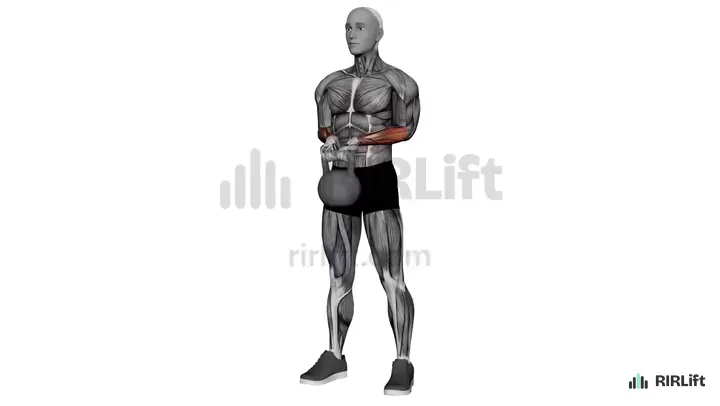
- Kettlebell Wrist Curl Forearms
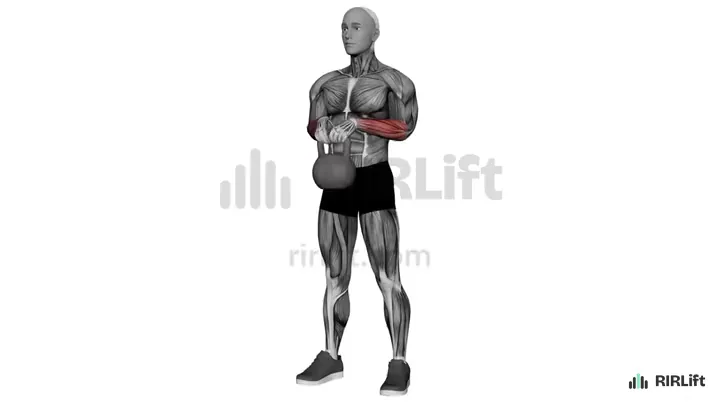
- Kettlebell Wrist Extension Forearms
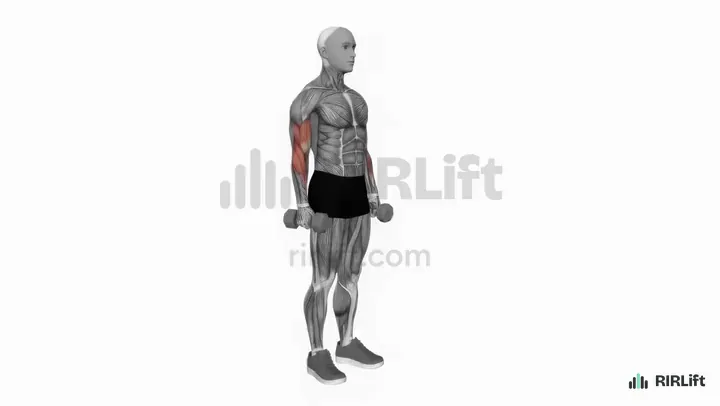
- Hammer Curl Biceps, Forearms
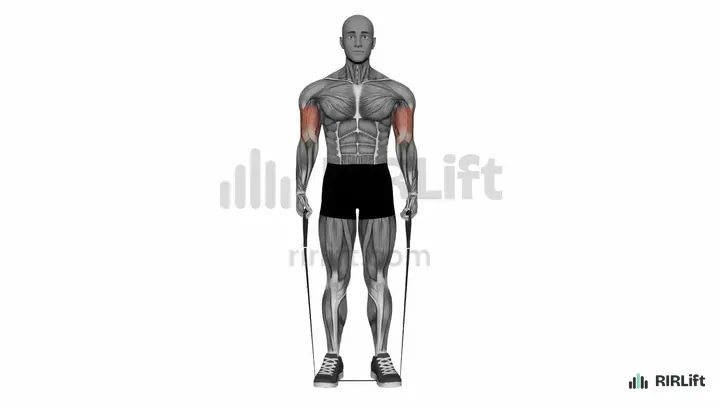
- Band Hammer Curl Biceps
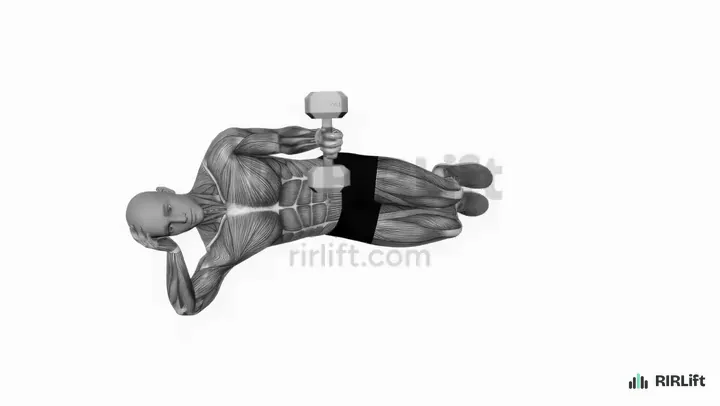
- Dumbbell Wrist Pronation-Supination Forearms
Put them together: example sessions
Each session below picks from the exercises above for one situation, with the sets, reps, rest and RIR filled in. Open one in the session builder to change a pick, price it from a recent set, and add it to RIRLift.
-
Session 1
A doorway pull-up bar and one kettlebell
You have a bar in a doorway and a single kettlebell, and want bigger, stronger forearms without buying more gear.
3× a week · 30 sets a week · ~25 min
-
Session 2
A pair of dumbbells, forearm size as the goal
You lift at home with adjustable or fixed dumbbells and want thicker forearms to match your upper arms.
2× a week · 17 sets a week · ~20 min
-
Session 3
A resistance band and one light dumbbell, short sessions
You have a band and a single light dumbbell, maybe in an apartment, and want ten minutes a few times a week for grip and wrist strength.
3× a week · 21 sets a week · ~10 min
Session 1
A doorway pull-up bar and one kettlebell
- Workouts3× a week
- Working sets30 a week
- Per workout~25 min
- EquipmentPull-Up Bar, Kettlebells, Dumbbells
You have a bar in a doorway and a single kettlebell, and want bigger, stronger forearms without buying more gear.
The bar gives you the dead hang, the hardest grip hold at home, and the kettlebell covers both wrist directions plus a one-handed carry. Hangs and carries are timed sets taken close to letting go; the wrist work uses higher reps at 0 to 1 RIR because a single bell is often light for the wrist curl. Ten sets fits in about 20 minutes.
| Exercise | Sets × reps | RIR | Rest |
|---|---|---|---|
| Dead HangReps = seconds. | 3 × 20–45 | 1 | 90 s |
| Kettlebell Wrist CurlPer arm. | 3 × 12–25 | 0 | 1 min |
| Kettlebell Wrist ExtensionPer arm. Lighter grip on the handle. | 2 × 12–25 | 1 | 1 min |
| Dumbbell Suitcase CarrySeconds per hand, using the kettlebell. | 2 × 20–40 | 1 | 1 min |
- How to run it
- Do this routine two or three times a week, after any workout or on its own. Keep at least a day between sessions.
- How to progress
- Add five seconds to the hang and carry each week. For wrist work, add reps up to the top of the range, then slow the lowering to three seconds.
Session 2
A pair of dumbbells, forearm size as the goal
- Workouts2× a week
- Working sets17 a week
- Per workout~20 min
- EquipmentDumbbells
You lift at home with adjustable or fixed dumbbells and want thicker forearms to match your upper arms.
Size on the forearm comes mostly from the brachioradialis and the wrist muscles, so this plan leads with hammer and Zottman curls in the 8 to 15 range, then adds a farmer's walk for heavy grip and two wrist exercises. Curls stop at 1 RIR so form holds; the wrist work goes to 0. Two sessions of about 11 sets give each forearm muscle group enough weekly volume to grow.
| Exercise | Sets × reps | RIR | Rest |
|---|---|---|---|
| Hammer CurlThumbs up, no swing. | 3 × 8–12 | 1 | 90 s |
| Reverse Wrist Curl | 3 × 12–20 | 0 | 1 min |
| Farmer's WalkReps = seconds. | 3 × 30–45 | 1 | 90 s |
Open Forearms A in the session builder
| Exercise | Sets × reps | RIR | Rest |
|---|---|---|---|
| Zottman Curl3 s down, palms down. | 3 × 8–12 | 1 | 90 s |
| Dumbbell Wrist Pronation-SupinationPer arm. | 2 × 10–15 | 1 | 1 min |
| Hammer Curl | 3 × 12–20 | 0 | 1 min |
Open Forearms B in the session builder
- How to run it
- Run Forearms A and Forearms B on separate days, for example after upper-body workouts.
- How to progress
- Use double progression on the curls: add a rep each session until all sets hit the top of the range, then add weight. Add distance to the walk before weight.
Session 3
A resistance band and one light dumbbell, short sessions
- Workouts3× a week
- Working sets21 a week
- Per workout~10 min
- EquipmentResistance Bands, Dumbbells
You have a band and a single light dumbbell, maybe in an apartment, and want ten minutes a few times a week for grip and wrist strength.
A band hammer curl gives you a full forearm curl without heavy weights, the pronation drill makes a light dumbbell useful by leverage, and the suitcase carry uses that same dumbbell for grip. Everything is high-rep or timed because the loads are light, so sets go to 0 to 1 RIR. Seven sets keeps each session to about ten minutes.
| Exercise | Sets × reps | RIR | Rest |
|---|---|---|---|
| Band Hammer Curl2 s down. | 3 × 15–25 | 0 | 45 s |
| Dumbbell Wrist Pronation-SupinationPer arm. | 2 × 12–20 | 1 | 45 s |
| Dumbbell Suitcase CarrySeconds per hand. | 2 × 30–60 | 1 | 45 s |
- How to run it
- Three short sessions a week, on any days that are not back to back.
- How to progress
- Move to a stronger band when you pass 25 reps. Hold the dumbbell nearer one end for rotations as they get easy.
Make it fit you
-
No pull-up bar
Swap the dead hang for farmer's walks with the heaviest weights you own, or hold a loaded backpack by its top handle for time.
-
Weights feel too light for carries
Carry one weight at a time so each hand holds more, or wrap a towel around the handle to make it thicker and harder to hold.
-
Wrists feel sore after wrist curls
Shorten the range so you stop before the wrist bends fully, and keep the reps slow. Hammer curls and carries train the forearm with the wrist held straight, so lean on them for a week or two.
-
Want grip for climbing or deadlifts
Prioritize hangs and carries, held close to letting go, and do them at the start of the session while your hands are fresh.
-
Already doing curls and rows
Your forearms get grip work from every pull. Keep one wrist exercise and one carry or hang, and skip the hammer curl if you already do one on arm day.
-
Log the RIR, not just the time
After each set, write down how many more reps or seconds you had left. RIRLift stores that RIR beside the set and uses it to suggest the next load, so wrist curls that stay easy at 1 RIR get heavier next time.
Questions
What are some good forearm exercises at home?
The dead hang, the farmer's walk, the wrist curl, the wrist extension and the hammer curl. Together they train grip, both sides of the forearm and the thick muscle on top near the elbow, and all of them need only a bar, a kettlebell, dumbbells or a band.
Can I train forearms at home without weights?
Yes. Dead hangs from a doorway bar and band hammer curls work grip and the top of the forearm. Without any equipment at all, squeezing a rolled towel hard for time trains grip, but it will not build size as well as loaded work.
What muscles make up the forearm?
Mainly the flexors on the palm side, which bend the wrist and close the hand; the extensors on the back side, which lift the hand and open it; and the brachioradialis on top near the elbow, which helps bend the elbow. Wrist curls, wrist extensions and hammer curls cover one group each.
Is 3 exercises enough for forearms?
Yes, if they cover different jobs: one grip hold or carry, one wrist curl or extension, and one hammer or Zottman curl. Two or three sets of each, two or three times a week, is plenty for most people.
How long does it take to see forearm gains?
Grip strength usually improves within a few weeks. Visible size takes longer, often a few months of steady training, because the forearm muscles are small and grow slowly like any muscle.
How often should I train forearms at home?
Two or three times a week works well. Forearms recover quickly from light wrist work, but leave a day between hard grip sessions so your hands are fresh for other lifts.
Related templates
-
Forearm exercises with dumbbells: wrist curls, hammer curls and carries
More dumbbell options and a plan for when grip limits your deadlifts and rows.
-
Arm exercises at home: biceps, triceps and grip with whatever you have
Add biceps and triceps work to make it a full home arm session.
-
Wrist curl: how to do it for bigger forearms and a stronger grip
The wrist curl in depth, with variations and programming.
-
Zottman curl: how to do it, what it works, and when to use it
How to time the turn and the slow lowering for forearm size.
-
Pull-up bar exercises for back, arms, grip and abs, with plans for your first rep to your first muscle-up
More ways to use a doorway bar beyond the dead hang.