Glute exercises for seniors: stand up, climb and balance

The best glute exercises for seniors are the sit-to-stand squat, glute bridge and step-up, which train the big glute muscle for getting up and climbing stairs, plus clamshells and seated band presses for the side glutes that keep you steady on one leg. Add the dumbbell Romanian deadlift and hip thrust as you get stronger. Twice a week, 2 to 3 sets of 8 to 15 reps of 3 or 4 of these is enough, stopping each set with 2 or 3 reps left. Start with body weight and a chair, then add a band or dumbbell.

  1. Bodyweight Squat Quads
  2. Dumbbell Glute Bridge Glutes
  3. Step-Up Quads, Glutes
  4. Dumbbell Romanian Deadlift Hamstrings, Glutes
  5. Clamshell Abductors
  6. Dumbbell Hip Thrust Glutes
  7. Band Seated Hip Abduction Glutes, Abductors
Sit-to-stands and squats

Standing up from a seat is the job the glutes do most often. Practice it directly with a chair, then hold a dumbbell at your chest to make it a loaded squat.

Glutes and quads, bodyweight squat

Bodyweight Squat

Quads

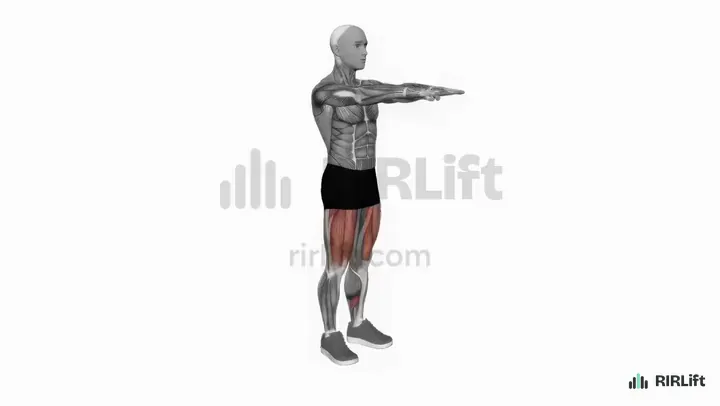
The bodyweight squat is the sit-to-stand without needing the seat; put a chair behind you as a depth target and stand back up without your hands. Count how many you can do in 30 seconds now and again in six weeks.

How to do it

  1. Stand with your feet about shoulder-width apart, toes turned out slightly, arms out in front for balance.
  2. Push your hips back and bend your knees, keeping your heels flat and your chest up.
  3. Lower until your thighs are at least parallel to the floor, deeper if your heels stay down.
  4. Drive through your whole foot to stand tall, then go straight into the next rep.

Cues

  • Heels glued to the floor
  • Knees over toes
  • Thighs to parallel or lower

Common mistakes

  • Knees caving in on the way up: push them out over your little toes.
  • Quarter squats to hit a rep count: a full-depth set of 12 beats a shallow set of 30.

Swap for: Reverse Lunge, Wall Sit, Jump Squat

Glutes and quads, loaded squat

Goblet Squat

Quads, Glutes

Once sit-to-stands feel easy for 15 reps, a dumbbell at your chest adds load in small steps. Sitting back toward a chair keeps the glutes doing the work.

How to do it

  1. Hold a dumbbell or kettlebell vertically against your chest.
  2. Sit down between your knees, elbows inside them at the bottom.
  3. Stand up tall.

Cues

  • Elbows nudge the knees out at the bottom.
  • Chest stays up behind the weight.

Common mistakes

  • Letting the weight pull you forward.

Swap for: Bodyweight Squat, Barbell Back Squat

Step-ups and lunges

Every stair you climb is a one-leg glute exercise. These train that motion with a rail or wall nearby, and the reverse lunge adds the stepping back you do when you lose your footing.

Glutes, single leg

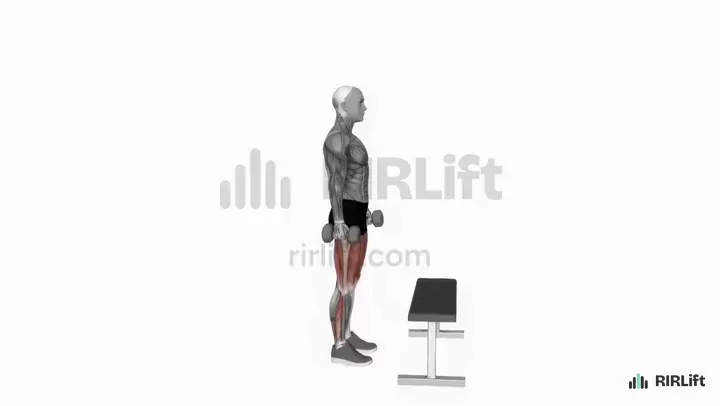
Step-Up

Quads, Glutes

Pushing through the heel of the top foot to stand up on a step is one of the hardest glute exercises for its simplicity. Use a low step and a rail first; height and dumbbells come later.

How to do it

  1. Stand facing the bench with two dumbbells.
  2. Place one whole foot on the bench.
  3. Lean forward a little and push through the top foot to stand up on the bench.
  4. Bring the other foot up only to touch, then lower it back to the floor.
  5. Finish all reps on one leg before switching.

Cues

  • Whole foot on the bench
  • Push through the top heel
  • Lower slowly, do not drop

Common mistakes

  • Pushing off the floor with the back foot: that halves the work. Keep the trailing foot light.
  • Using a bench so high that your knee is far above your hip: you will rock instead of step.

Swap for: Barbell Step-Up

Glutes and quads, step back

Dumbbell Reverse Lunge

Quads, Glutes

Stepping back into a lunge loads the front leg's glute and practices the step you take to catch yourself. Hold a wall with one hand until it feels steady, then add light dumbbells.

How to do it

  1. Start tall with a dumbbell hanging from each hand and your feet under your hips.
  2. Step one foot back and lower until your back knee is just above the floor and your front thigh is near parallel.
  3. Keep your front heel flat and your chest tall.
  4. Push through your front foot to bring the back foot forward to the start, then alternate or finish all reps on one side.

Cues

  • Front shin stays vertical
  • Back knee kisses the floor
  • Drive through the front heel

Common mistakes

  • Taking a short step so the front knee shoots forward and the heel lifts: step farther back.
  • Letting the torso twist or lean to the side as you tire; keep both dumbbells hanging straight down.

Swap for: Reverse Lunge, Dumbbell Split Squat, Step-Up

Bridges, thrusts and hinges

These push the hips forward against resistance, the motion where the big glute muscle works hardest. Bridges are done lying down; the Romanian deadlift and kickback train it standing.

Glutes, bridge

Dumbbell Glute Bridge

Glutes

The bridge lets the glutes work hard while your back rests on the floor and balance plays no part. Squeeze for a second at the top of every rep.

How to do it

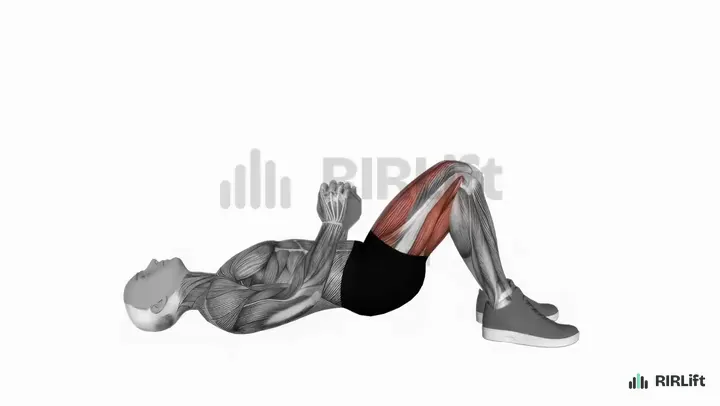
  1. Lie face up, knees bent, heels about a foot from your hips.
  2. Place a dumbbell across your hips and hold the ends.
  3. Press through your heels and lift your hips until your body makes a straight line from knees to shoulders.
  4. Hold the squeeze for a second at the top, lower until your glutes lightly reach the floor, and repeat.

Cues

  • Heels, not toes
  • Squeeze before you lower
  • Short range, hard squeeze

Common mistakes

  • Pushing off the toes so the thighs burn instead of the glutes: lift your toes slightly if it helps you feel the heels.
  • Bouncing off the floor between reps: let the hips touch down and pause.

Swap for: Dumbbell Hip Thrust, Single-Leg Glute Bridge, Dumbbell Staggered Hip Thrust

Glutes, hip thrust

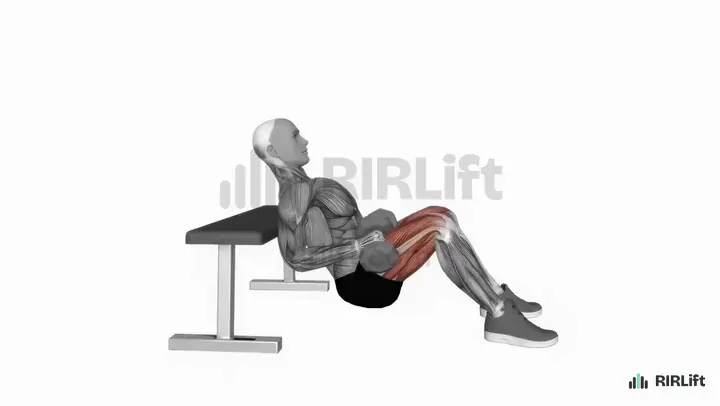
Dumbbell Hip Thrust

Glutes

With your shoulders on a bench, the hip thrust lets the hips travel further than a floor bridge and takes more weight. It is the next step when bridges pass 15 easy reps.

How to do it

  1. Sit down with the edge of a bench just under your shoulder blades and roll a dumbbell into the crease of your hips, a folded towel underneath it.
  2. Plant your feet flat about hip-width apart, close enough that your shins will be vertical when your hips are up, and hold the dumbbell at both ends.
  3. Tuck your chin slightly and press through your whole foot to lift your hips until your torso and thighs form a flat line.
  4. Pause for a second at the top with your glutes squeezed hard and your ribs pulled down, not flared.
  5. Lower your hips until they are a few inches above the floor and start the next rep from there.

Cues

  • Chin tucked, eyes forward
  • Shins vertical at the top
  • Ribs down, glutes squeezed

Common mistakes

  • Arching your lower back to get the last inch: stop when your hips are level with your knees and your ribs stay down; the glutes finish the rep, not your spine.
  • Feet too far away or too close: if you feel it mostly in your hamstrings, walk your feet in; if it lands on your quads, walk them out until your shins are vertical at the top.
  • Letting the dumbbell roll toward your stomach: hold both ends and put a folded towel under it so it stays in the hip crease for the whole set.

Swap for: Dumbbell Glute Bridge, Kettlebell Hip Thrust, Hip Thrust

Glutes and hamstrings, hinge

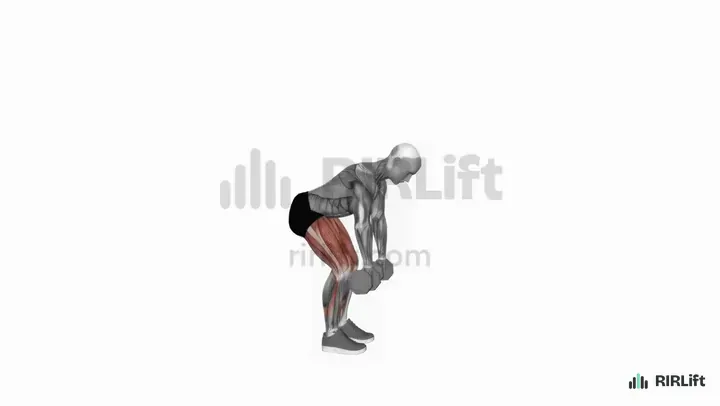
Dumbbell Romanian Deadlift

Hamstrings, Glutes

Standing tall from a forward bend is a glute exercise, and the Romanian deadlift trains it with a weight in your hands. It also grooves the hip hinge you use to pick things up off the floor.

How to do it

  1. Stand hip-width apart with a dumbbell in each hand resting against the front of your thighs, palms facing you.
  2. Push your hips straight back and let your torso fold forward, knees softly bent, the dumbbells brushing your legs.
  3. Lower until the dumbbells pass your knees and you feel a strong stretch in your hamstrings, with your back still flat.
  4. Drive your hips forward to stand back up, squeezing your glutes at the top, and repeat.

Cues

  • Hips back, not down
  • Dumbbells slide down your legs
  • Flat back, chin tucked

Common mistakes

  • Bending the knees into a squat so the dumbbells go lower: the depth comes from the hips, and most people stop just past the knees.
  • Rounding the lower back at the bottom: end the rep where your back stays flat, and lighten the load if that is high.

Swap for: Single-Leg RDL, Dumbbell Good Morning, Kettlebell Deadlift

Glutes, standing kickback

Cable Glute Kickback

Glutes

Kicking one leg back against a cable while holding the machine is a standing glute exercise that needs no floor work and little balance. It isolates each side, which helps if one is weaker.

How to do it

  1. Strap an ankle cuff to a low pulley and attach it to one ankle.
  2. Face the machine, hold the frame and hinge forward slightly.
  3. Kick the cuffed leg straight back, leading with the heel, until your hip is fully open.
  4. Return slowly until your foot is beside the other one, finish the reps, then switch.

Cues

  • Heel back, not up
  • Squeeze at the end, hold one second
  • Hips stay square

Common mistakes

  • Arching your lower back to get the leg higher: the rep ends when your hip is straight, not when your foot is high.
  • Swinging the leg: control the return as slowly as the kick.

Swap for: Hip Thrust, Cable Pull-Through, Glute Bridge

Side glutes for balance

The smaller glute muscles on the side of the hip hold your pelvis level on one leg. Train them lying, seated, walking or on a machine, whichever suits your balance.

Side glutes, lying

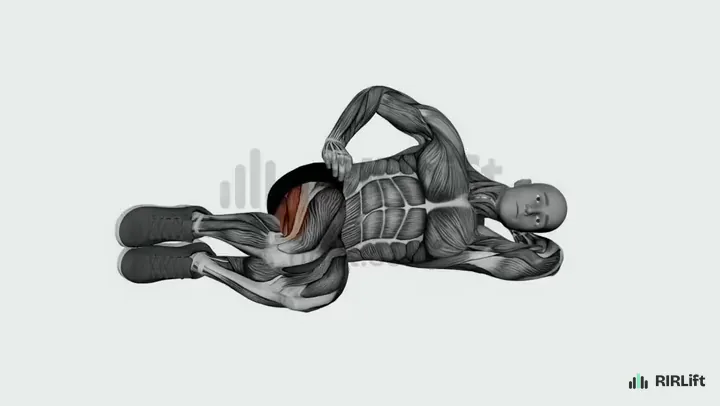
Clamshell

Abductors

Lying on your side, opening the top knee works the side glutes in a small, controlled range. Add a loop band above the knees once 20 reps are easy.

How to do it

  1. Lie on one hip with knees bent, stacked, heels touching.
  2. Pillow your head on the lower arm; keep the hips stacked.
  3. Keep your feet touching and lift the top knee as high as you can.
  4. Lower the knee slowly back to the other one.

Cues

  • Feet together
  • Hips stacked
  • Pause up top

Common mistakes

  • Rolling the top hip back: only the knee should move.
  • Rushing the reps: a two-second lowering makes a light move useful.

Swap for: Fire Hydrant, Standing Side Leg Raise

Side glutes, chair and band

Band Seated Hip Abduction

Glutes, Abductors
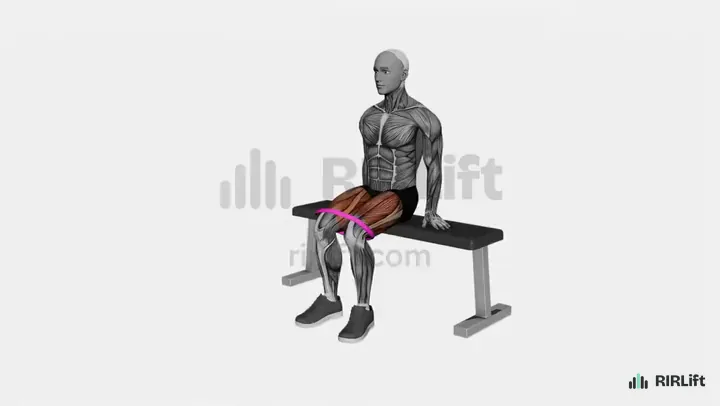
Sitting in a chair and pushing your knees apart against a band works the side glutes with no balance demand at all, which makes it the first chair exercise to learn.

How to do it

  1. Sit with a band above your knees and feet flat.
  2. Push your knees apart against the band.
  3. Return slowly.

Cues

  • Lean forward a little
  • Slow return

Common mistakes

  • Bouncing: hold a second at the widest point.

Swap for: Clamshell, Lateral Band Walk, Hip Abduction Machine

Side glutes, walking

Lateral Band Walk

Abductors

Side-stepping with a band around your legs trains the side glutes while you move, much like walking sideways around furniture. Short steps and a slight knee bend keep it working.

How to do it

  1. Place a mini band around your legs just above the knees or at the ankles.
  2. Sink into a quarter squat with your feet hip-distance apart.
  3. Step sideways with the lead foot, follow with the other without letting the feet touch, and keep tension in the band.

Cues

  • Stay low
  • Toes point forward

Common mistakes

  • Swaying the torso side to side: keep your shoulders level and take shorter steps.

Swap for: Clamshell, Band Standing Hip Abduction

Side glutes, machine

Hip Abduction Machine

Abductors

The abduction machine lets you load the side glutes heavily while seated. A small forward lean in the seat moves more of the effort to the glutes.

How to do it

  1. Sit with the outside of your knees against the pads and set the start so your legs are close together.
  2. Lean your torso forward slightly and hold the handles.
  3. Push your knees apart as far as the machine allows.
  4. Pause at the widest point, return slowly without letting the stack touch, and repeat.

Cues

  • Lean forward a little
  • Pause at the widest point
  • Do not let the plates rest

Common mistakes

  • Bouncing the pads out and letting them slam back: count two seconds on the way in.
  • Using so much weight that the range shrinks to a few inches: full range with less load works better.

Swap for: Lateral Band Walk, Band Seated Hip Abduction, Standing Side Leg Raise

Put them together: example sessions

Each session below picks from the exercises above for one situation, with the sets, reps, rest and RIR filled in.

Session 1

Home, with a chair and a loop band

  • Workouts2× a week
  • Working sets18 a week
  • Per workout~20 min
  • EquipmentDumbbells, Resistance Bands, Flat Bench

You train at home, you want stronger glutes for getting up and walking, and you have a sturdy chair, a loop band and a pair of light dumbbells.

Two sessions give the big glute muscle about 11 sets a week and the side glutes 7, 18 working sets in all. That is plenty to build glute strength from a low starting point while every set stops with 2 to 3 reps to spare.

Day A
ExerciseSets × repsRIRRest
Bodyweight SquatSit to a chair, no hands if you can. 3 × 8–15 3 90 s
Dumbbell Glute BridgeBodyweight to start. 3 × 10–15 2 75 s
Band Seated Hip Abduction 3 × 12–15 2 1 min
Day B
ExerciseSets × repsRIRRest
Dumbbell Romanian Deadlift1 warm-up set first 3 × 8–12 3 90 s
Step-UpPer leg. Low step, hold a rail. 2 × 6–10 3 75 s
ClamshellPer side. 2 × 12–15 2 1 min
Lateral Band WalkSteps each way. 2 × 10–15 2 1 min
How to run it
Do Day A and Day B two or three days apart, such as Tuesday and Friday. Each takes about 20 minutes.
How to progress
Add reps until each set reaches the top of the range with 2 reps in reserve, then progress: a lower chair, a dumbbell on the bridge, a stronger band, or a slightly higher step.

Session 2

Gym, ready to load the glutes

  • Workouts2× a week
  • Working sets26 a week
  • Per workout~35 min
  • EquipmentDumbbells, Adjustable Cable, Hip Abductor

You train at a gym, bodyweight glute work is easy, and you want to add weight.

Heavier hip thrusts and squats build the big glute muscle with 8 sets a session; the kickback and machine add 5 sets for each side and the side glutes. At 13 sets twice a week, the glutes get about 26 sets, a full program for an experienced older lifter.

Glutes at the gym
ExerciseSets × repsRIRRest
Dumbbell Hip Thrust1 warm-up set first 3 × 8–12 2 2 min
Goblet Squat 3 × 8–12 2 2 min
Dumbbell Reverse LungePer leg. 2 × 8–10 2 90 s
Cable Glute KickbackPer leg. 2 × 10–15 2 1 min
Hip Abduction Machine 3 × 12–15 2 1 min
How to run it
Run it twice a week. Hip thrust first while you are fresh, then squat, then the single-side and machine work.
How to progress
Use double progression with 2 reps in reserve on every exercise. Add 5 pounds to the dumbbell or one plate on the stack when all sets hit the top of the range.

Session 3

Feeling unsteady after 70

  • Workouts3× a week
  • Working sets24 a week
  • Per workout~15 min
  • EquipmentDumbbells, Resistance Bands, Flat Bench

You are past 70, you have started to feel unsteady on your feet or slow getting out of a chair, and you want short, supported sessions.

Short sessions three days a week give each glute muscle repeated practice: 8 sets a session, 24 a week, all at 3 reps in reserve. Every exercise is done seated, lying down, or with a chair or rail in reach.

Steady glutes
ExerciseSets × repsRIRRest
Bodyweight SquatSit to a chair, use your hands if needed. 2 × 5–10 3 90 s
Dumbbell Glute BridgeNo weight to start. 2 × 8–12 3 1 min
Band Seated Hip Abduction 2 × 10–15 3 1 min
Step-UpPer leg. Bottom stair, both hands on the rail. 2 × 5–8 3 75 s
How to run it
Do it on three days a week, such as Monday, Wednesday and Friday, at a time when you feel steady. It takes about 15 minutes.
How to progress
Add reps first. Then take away support: fewer hands on the chair for the sit-to-stand, a slightly higher step, then a light band or dumbbell.

Make it fit you

Questions

What is the best exercise to tighten buttocks?

The glute bridge and hip thrust load the glutes more directly than any other exercise. Firmer glutes come from building that muscle, while how much fat covers it depends on overall eating and activity.

What are good chair and resistance band exercises for the glutes?

Sit-to-stands from the chair and seated band hip presses, where you push your knees apart against a loop band. Both work with no balance demand, and the chair plan above uses them.

How many days a week should a 70 year old work out?

Two or three days of strength training, plus walking or other light activity most days. Three short sessions suit balance goals; two longer ones suit general strength.

What are signs of weak side glutes?

A hip that drops on the opposite side when you stand on one leg, a side-to-side sway when you walk, or needing to hold on when you climb a step. Clamshells, band presses and band walks train those muscles.

Can seniors build glute muscle?

Yes. Glute muscle grows at any age when the last reps of a set are hard and the load goes up over time. Start with body weight and add a band or dumbbell as you progress.