Hip exercises for seniors: strength in every direction

The best hip exercises for seniors train all four directions the hip moves: clamshells, side leg raises and band walks for the outer hip; band or machine adduction for the inner thigh; glute bridges and kickbacks to push the hip back; and standing knee drives for the front of the hip. Add the single-leg Romanian deadlift once you can stand on one leg with a light hold. Do 4 to 6 of them twice a week, 2 to 3 sets of 10 to 15 reps, stopping each set with 2 or 3 reps to spare.

  1. Clamshell Abductors
  2. Standing Side Leg Raise Abductors
  3. Dumbbell Glute Bridge Glutes
  4. Lateral Band Walk Abductors
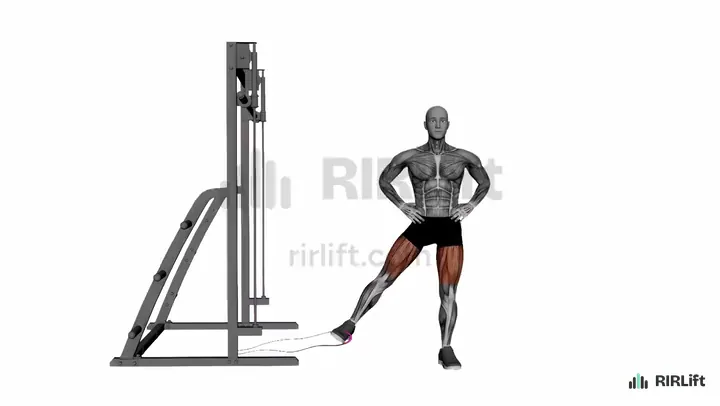
  5. Band Hip Adduction Adductors
  6. Standing Cable Hip Flexion Abs
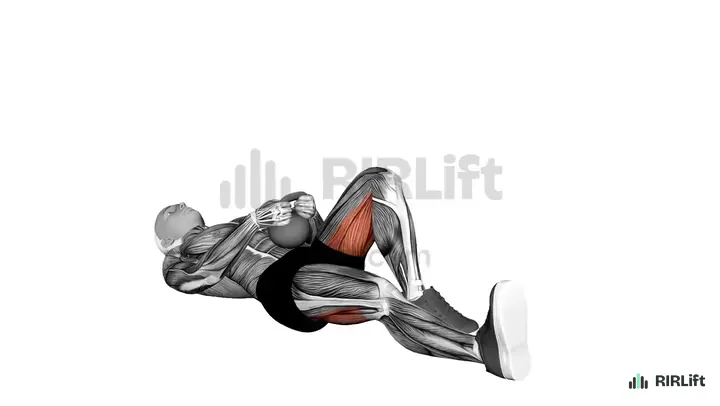
  7. Single-Leg Glute Bridge Glutes
  8. Hip Abduction Machine Abductors
Outer hip: side-to-side stability

The muscles on the side of your hip hold your pelvis level every time you take a step. When they are weak, you tend to sway or lean as you walk. Start with the clamshell lying down and progress to standing and walking versions.

Outer hip, side-lying

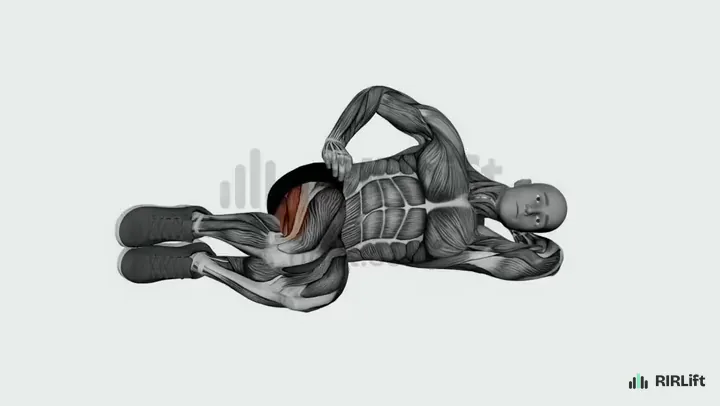
Clamshell

Abductors

Lying on your side with knees bent, the clamshell works the deep outer-hip muscles in a small, comfortable range. It is the usual first hip exercise because the floor supports you completely.

How to do it

  1. Lie on one hip with knees bent, stacked, heels touching.
  2. Pillow your head on the lower arm; keep the hips stacked.
  3. Keep your feet touching and lift the top knee as high as you can.
  4. Lower the knee slowly back to the other one.

Cues

  • Feet together
  • Hips stacked
  • Pause up top

Common mistakes

  • Rolling the top hip back: only the knee should move.
  • Rushing the reps: a two-second lowering makes a light move useful.

Swap for: Fire Hydrant, Standing Side Leg Raise

Outer hip, seated band

Band Seated Hip Abduction

Glutes, Abductors

Pressing your knees apart against a loop while you sit trains the outer hips with your full weight on the chair. It is the version to use when lying on your side or standing on one leg is not comfortable yet.

How to do it

  1. Sit with a band above your knees and feet flat.
  2. Push your knees apart against the band.
  3. Return slowly.

Cues

  • Lean forward a little
  • Slow return

Common mistakes

  • Bouncing: hold a second at the widest point.

Swap for: Clamshell, Lateral Band Walk, Hip Abduction Machine

Outer hip, standing

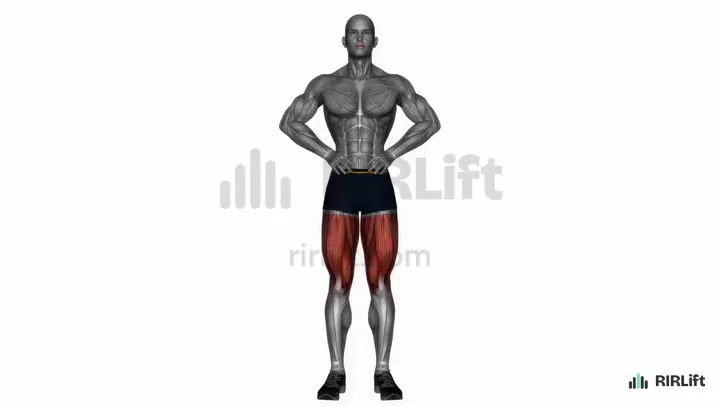
Standing Side Leg Raise

Abductors

Lifting a straight leg out to the side while you stand works the outer hip of both legs at once: one lifts, the other holds you up. Keep a hand on a counter and your toes facing forward.

How to do it

  1. Stand tall, feet under your hips, hands resting on your hips.
  2. Keep the outer leg straight with the toes pointing forward.
  3. Lift it out to the side without leaning your torso away.
  4. Lower slowly until the foot almost touches the floor.

Cues

  • Toes forward
  • Stay tall
  • Slow lower

Common mistakes

  • Turning the toes up: that shifts the work to the front of the hip.
  • Leaning sideways: lift only as high as you can with an upright body.

Swap for: Fire Hydrant, Clamshell

Outer hip, side steps

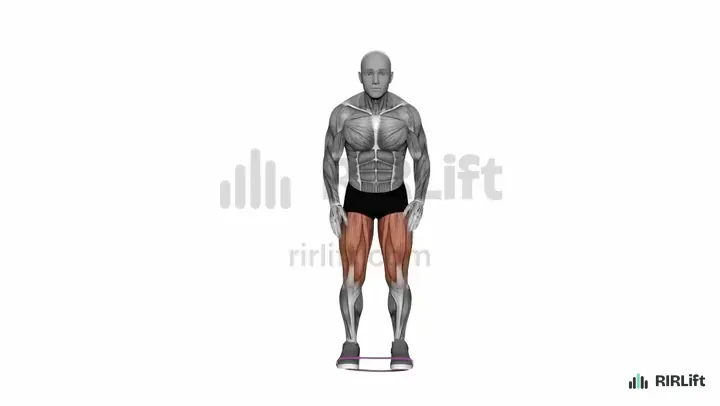
Lateral Band Walk

Abductors

Stepping sideways against a loop band trains the outer hips in a walking pattern, which carries over to side-stepping in a crowded room. Take small steps and keep the band tight.

How to do it

  1. Place a mini band around your legs just above the knees or at the ankles.
  2. Sink into a quarter squat with your feet hip-distance apart.
  3. Step sideways with the lead foot, follow with the other without letting the feet touch, and keep tension in the band.

Cues

  • Stay low
  • Toes point forward

Common mistakes

  • Swaying the torso side to side: keep your shoulders level and take shorter steps.

Swap for: Clamshell, Band Standing Hip Abduction

Outer hip, machine

Hip Abduction Machine

Abductors

The seated abduction machine loads the outer hips heavily with no balance needed. It is the easiest way to keep adding weight to this muscle at a gym.

How to do it

  1. Sit with the outside of your knees against the pads and set the start so your legs are close together.
  2. Lean your torso forward slightly and hold the handles.
  3. Push your knees apart as far as the machine allows.
  4. Pause at the widest point, return slowly without letting the stack touch, and repeat.

Cues

  • Lean forward a little
  • Pause at the widest point
  • Do not let the plates rest

Common mistakes

  • Bouncing the pads out and letting them slam back: count two seconds on the way in.
  • Using so much weight that the range shrinks to a few inches: full range with less load works better.

Swap for: Lateral Band Walk, Band Seated Hip Abduction, Standing Side Leg Raise

Inner thigh

The adductors pull your legs together and help steady you when you shift weight from foot to foot. A band at home or the machine at the gym trains them directly.

Inner thigh, band

Band Hip Adduction

Adductors

Sweeping one leg across your body against a band works the inner thigh while you hold a chair. Bands are light enough to start with even if this muscle has never been trained.

How to do it

  1. Anchor a band low on a door or table leg and loop it around the ankle nearest the anchor.
  2. Step away until the band pulls your leg out to the side, and stand tall with a hand on a wall or chair.
  3. Sweep the banded leg across the front of your standing leg, keeping the knee straight and toes forward.
  4. Let the band draw the leg back out slowly, stopping before the band goes slack, then repeat. Switch sides.

Cues

  • Sweep, do not swing
  • Torso stays upright
  • Slow return

Common mistakes

  • Leaning your whole body away from the band to finish the rep: only the leg moves.
  • Standing so close to the anchor that the band has no tension at the start: step out until it pulls from the first inch.

Swap for: Copenhagen Plank, Sumo Squat, Cossack Squat

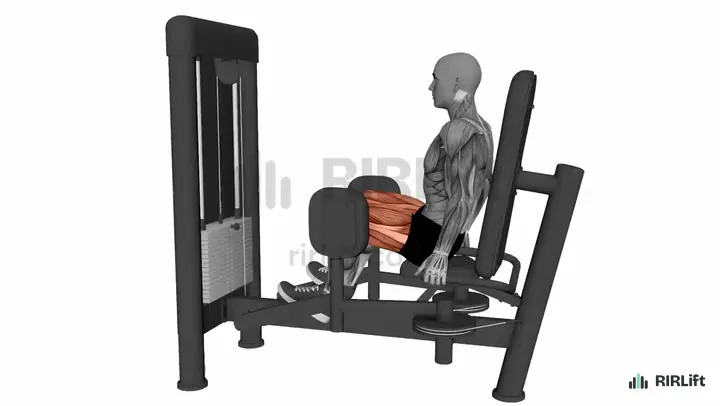
Inner thigh, machine

Hip Adduction Machine

Adductors

Squeezing the pads together on the adduction machine loads the inner thighs in a seated, supported position. Start with a moderate width so the stretch feels comfortable.

How to do it

  1. Set the range lever so the pads start wide enough to give your inner thighs a stretch you can hold without strain, and pick the weight on the stack.
  2. Sit with your back and hips pressed into the back pad, put your feet on the footrests and place the inside of your knees against the pads.
  3. Hold the side handles and brace your stomach lightly so your hips stay planted.
  4. Squeeze your knees together in a smooth arc until the pads meet or nearly meet, and hold the squeeze for a moment.
  5. Let your legs open slowly back to the starting stretch, stopping just before the plates touch, then start the next rep.

Cues

  • Hips glued to the seat
  • Squeeze, pause, open slowly
  • Stop the stack from resting

Common mistakes

  • Setting the start too wide: if your hips lift or your groin pinches at the bottom, bring the range lever in a notch and add depth over a few weeks.
  • Slamming the pads together: close at a steady speed and pause, so the adductors do the work rather than momentum.
  • Letting the legs fly open: control the return for about two seconds; that stretch is where most of the work happens.

Swap for: Band Hip Adduction, Multi-Hip Adduction

Back of the hip: pushing the leg back

Hip extension is what drives you up from a chair and up the stairs. Bridges train both sides together, the single-leg bridge finds the weaker side, and kickbacks isolate the motion one leg at a time.

Glutes, both legs

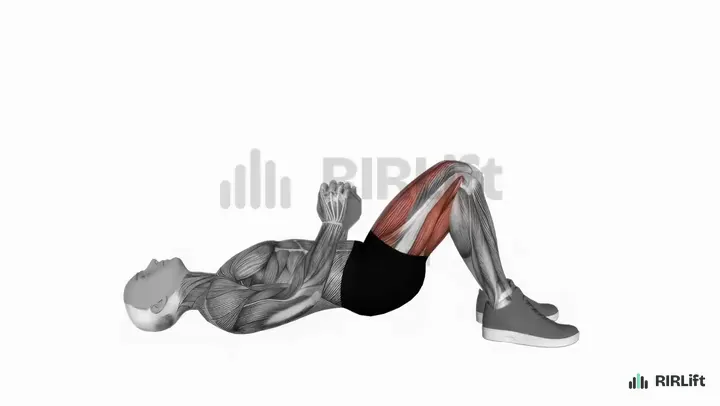
Dumbbell Glute Bridge

Glutes

The bridge trains the hip extension you use to stand up, with your back and head supported on the floor. Begin with bodyweight, then rest a dumbbell on your hips as it gets easy.

How to do it

  1. Lie face up, knees bent, heels about a foot from your hips.
  2. Place a dumbbell across your hips and hold the ends.
  3. Press through your heels and lift your hips until your body makes a straight line from knees to shoulders.
  4. Hold the squeeze for a second at the top, lower until your glutes lightly reach the floor, and repeat.

Cues

  • Heels, not toes
  • Squeeze before you lower
  • Short range, hard squeeze

Common mistakes

  • Pushing off the toes so the thighs burn instead of the glutes: lift your toes slightly if it helps you feel the heels.
  • Bouncing off the floor between reps: let the hips touch down and pause.

Swap for: Dumbbell Hip Thrust, Single-Leg Glute Bridge, Dumbbell Staggered Hip Thrust

Glutes, one leg

Single-Leg Glute Bridge

Glutes

Bridging on one leg shows you whether one hip is weaker than the other and then trains it. It is a big step up from the two-leg bridge, so keep the range small at first.

How to do it

  1. On your back, plant one foot flat and the other leg lifted; rest a light kettlebell on the working hip if you have one.
  2. Press the planted heel down and raise your hips until your body is straight from knee to shoulder.
  3. Lower slowly and finish the set before switching.

Cues

  • Push through the heel
  • Hips level
  • Pause at the top

Common mistakes

  • Letting one hip drop: lower the height until both stay level.

Swap for: Donkey Kick, Dumbbell Glute Bridge, Clamshell

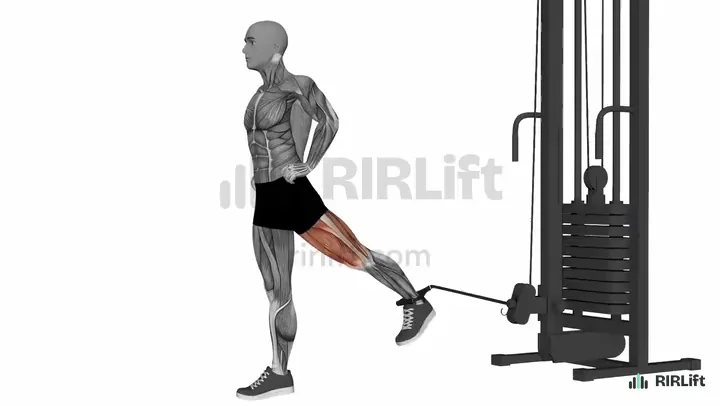
Glutes, band kickback

Band Glute Kickback

Glutes

On your hands and knees, pushing one foot back against a band trains the glute through hip extension without loading your spine. It is a home option when you have no machine.

How to do it

  1. Get on your hands and knees and hook a loop band under the arch of one foot, with the other end held under your hand on the same side.
  2. Brace your trunk so your back stays flat.
  3. Push the banded foot back and up until your leg is fully extended and level with your torso.
  4. Bring the knee back under your hip slowly and repeat. Finish the set before changing sides.

Cues

  • Push the heel back
  • Back stays flat
  • Slow return

Common mistakes

  • Arching the lower back to lift the leg higher: the leg stops level with your body.
  • Rotating your hips toward the ceiling: keep both hip bones pointing at the floor.

Swap for: Cable Glute Kickback, Donkey Kick

Glutes, machine

Multi-Hip Glute Extension

Glutes

The multi-hip machine trains standing hip extension with a pad behind your thigh and handles to hold. Holding the handles means balance never limits how hard the glute works.

How to do it

  1. Set the machine for hip extension and adjust the platform so the pivot lines up with your hip.
  2. Stand on the platform, put the back of your working thigh against the pad, and hold the handles.
  3. Drive the leg back until your hip is fully extended, keeping your torso still.
  4. Return under control and finish all reps before switching legs.

Cues

  • Pivot lined up with the hip
  • Torso stays still
  • Slow return

Common mistakes

  • Leaning forward and back to move more weight: fix your torso and lower the stack.
  • Short reps that never bring the leg forward: let the pad come all the way back.

Swap for: Cable Glute Kickback, Band Glute Kickback

Front of the hip and single-leg control

The hip flexors lift your foot to clear a step or a curb. The single-leg Romanian deadlift brings every hip muscle together while you balance on one foot.

Hip flexors, standing

Standing Cable Hip Flexion

Abs

Driving the knee up against a cable trains the front of the hip that lifts your foot when you walk and climb. It is the one exercise here for the front of the hip, so add it once the other directions feel solid.

How to do it

  1. Attach an ankle strap to a low pulley, strap one ankle and face away from the stack.
  2. Hold the frame for balance and stand tall on the other leg.
  3. Drive the strapped knee up toward hip height or above, then lower it slowly.

Cues

  • Tall chest
  • Knee high
  • Control the return

Common mistakes

  • Leaning back to lift the knee higher.
  • Letting the stack yank the leg back.

Swap for: Hanging Knee Raise, Captain's Chair Knee Raise

Glutes, hamstrings and balance

Single-Leg RDL

Hamstrings, Glutes

Hinging forward on one leg trains the whole hip while you balance, the closest exercise to how your hips work when you walk. Rest a fingertip on a wall and use a light dumbbell or none.

How to do it

  1. Stand on your left leg with a dumbbell in your left hand and the standing knee softly bent.
  2. Hinge forward at the left hip while your right leg extends straight behind you, keeping your hips level.
  3. Lower until your torso and back leg are close to parallel to the floor or the standing hamstring stops you.
  4. Drive the left hip forward to come back up, then finish the set before switching sides.

Cues

  • Back leg and torso move as one
  • Hips level, back toes down
  • Slow on the way down

Common mistakes

  • Opening the hip so the back leg rotates out: point the back toes at the floor the whole time.
  • Touching the free foot down between reps to rebalance: slow down and hold a wall with your free hand if needed.

Swap for: Dumbbell Romanian Deadlift, Kettlebell Deadlift

Put them together: example sessions

Each session below picks from the exercises above for one situation, with the sets, reps, rest and RIR filled in.

Session 1

At home with a mat and a loop band

  • Workouts2× a week
  • Working sets16 a week
  • Per workout~20 min
  • EquipmentDumbbells, Resistance Bands

You train at home, you can get on and off the floor, and you want stronger hips for walking, stairs and getting up.

Two sessions cover the outer hip, the inner thigh and the back of the hip: 7 working sets for the outer hip, 7 for hip extension and 2 for the inner thigh each week, 16 in total. Every set stops with 2 to 3 reps in reserve so the hips feel better, not stiffer, the next day.

Day A
ExerciseSets × repsRIRRest
Dumbbell Glute Bridge1 warm-up set first 3 × 10–15 2 75 s
ClamshellPer side. 2 × 12–15 2 1 min
Band Hip AdductionPer leg. Hold a chair. 2 × 10–15 2 1 min
Standing Side Leg RaisePer leg. Hold a counter. 2 × 10–12 2 1 min
Day B
ExerciseSets × repsRIRRest
Single-Leg Glute BridgePer leg. 2 × 8–12 3 75 s
Lateral Band WalkSteps each way. 3 × 10–15 2 1 min
Band Glute KickbackPer leg. 2 × 10–15 2 1 min
How to run it
Each week, do the bridge-and-adduction day first and the band-walk day two or three days later. Keep the band and a chair beside your mat so each session takes about 20 minutes.
How to progress
Add reps up to the top of the range while keeping 2 to 3 in reserve, then make it harder: a dumbbell on the bridge, a stronger band, or the band moved from above the knees to the ankles.

Session 2

Gym with hip machines

  • Workouts2× a week
  • Working sets30 a week
  • Per workout~35 min
  • EquipmentHip Abductor, Hip Adductor, Adjustable Cable, Dumbbells

You train at a gym, and you want to load every direction of the hip heavier than bands allow while machines handle the balance.

Machines make it possible to train each direction with 3 sets close to your limit, 15 working sets in one session and 30 a week. The single-leg Romanian deadlift at the end turns that strength into balance.

Hip machines
ExerciseSets × repsRIRRest
Hip Abduction Machine 3 × 10–15 2 75 s
Hip Adduction Machine 3 × 10–15 2 75 s
Multi-Hip Glute ExtensionPer leg. 3 × 10–12 2 75 s
Standing Cable Hip FlexionPer leg. 3 × 10–12 2 1 min
Single-Leg RDLPer leg. Fingertip on a wall. 3 × 6–10 3 90 s
How to run it
Run it twice a week, on its own or after your usual leg workout. Hold the handles on every machine and do the single-leg deadlift next to a rack or wall.
How to progress
Add a rep per set each week until all sets reach the top of the range at 2 reps in reserve, then move the pin down one plate. For the single-leg deadlift, add 2 to 5 pounds only when you can do every rep without touching the wall.

Session 3

Stiff or arthritic hips

  • Workouts3× a week
  • Working sets24 a week
  • Per workout~15 min
  • EquipmentDumbbells, Resistance Bands

Your hips feel stiff or ache with long walks, and you want to strengthen them through ranges that feel comfortable.

Short, frequent sessions in small ranges keep the work easy to recover from: four exercises, 8 sets, three days a week for 24 sets, all at an easy 3 reps in reserve. Three of the four are done lying or seated, so the hip muscles work without your body weight on the joint.

Gentle hips
ExerciseSets × repsRIRRest
Dumbbell Glute BridgeBodyweight to start. 2 × 10–15 3 1 min
ClamshellPer side. 2 × 10–15 3 1 min
Band Seated Hip Abduction 2 × 12–15 3 1 min
Standing Side Leg RaisePer leg. Small lift, hold a counter. 2 × 8–12 3 1 min
How to run it
Do it three days a week, at the time of day your hips feel loosest. Move only through the range that feels comfortable and let it grow by itself.
How to progress
Add reps before range and range before resistance. When every set reaches 15 with reps to spare and a full range, add a light band or rest a light dumbbell on the bridge.

Make it fit you

Questions

How do I build muscle around my hips?

Train each direction the hip moves against resistance two or three times a week: out to the side, in toward the other leg, back and forward. Add weight or a stronger band when the reps get easy. The plans above cover all four.

What is the best hip exercise for seniors?

The glute bridge is the most useful single exercise, since it trains the hip extension that gets you out of a chair. The clamshell or standing side leg raise is the best second choice for side-to-side stability.

Can I do hip exercises standing up?

Yes. The standing side leg raise, band adduction, cable knee drive, multi-hip machine and single-leg deadlift are all done standing with a hand on support.

Are hip exercises good for hip arthritis?

They train the muscles around the hip without forcing range. Start with the lying and seated exercises, keep every rep in a range that feels comfortable, and add reps before you add a band or dumbbell. The stiff-hips plan above is built that way.

How often should seniors do hip exercises?

Two or three days a week. Hip muscles recover quickly from these exercises, so short sessions on alternate days work well.