HIIT exercises for men: machines, kettlebells, sleds and bodyweight

The best HIIT exercises for men are air bike, rowing machine and ski erg sprints for pure conditioning; kettlebell swings, thrusters, clean and presses and medicine ball slams for weighted circuits; sled pushes and farmer's walks for strength-heavy finishers; and burpees, push-ups, jump squats, box jumps and mountain climbers when you have no equipment. Use short all-out efforts of 20 to 30 seconds with longer rest on machines, or 40 to 45 seconds on and 15 to 20 off in circuits, for 10 to 25 minutes, two or three times a week around your lifting.

  1. Air Bike Quads, Hamstrings, Glutes
  2. Kettlebell Swing Glutes, Hamstrings
  3. Rowing Machine Quads, Hamstrings, Glutes, Lats
  4. Sled Push Quads, Glutes
  5. Burpee Quads, Glutes, Chest, Shoulders
  6. Kettlebell Thruster Quads, Shoulders
  7. Medicine Ball Slam Lats, Abs
  8. Box Jump Quads, Glutes, Hamstrings
Air bike, rower and ski erg sprints

Conditioning machines let you go all-out with no technique breaking down and no landing to absorb. The air bike uses your arms and legs together and gets harder the faster you push, the rower adds a big pull from your back and hips, and the ski erg trains your lats and core with almost no work for your legs, so it fits after a leg day.

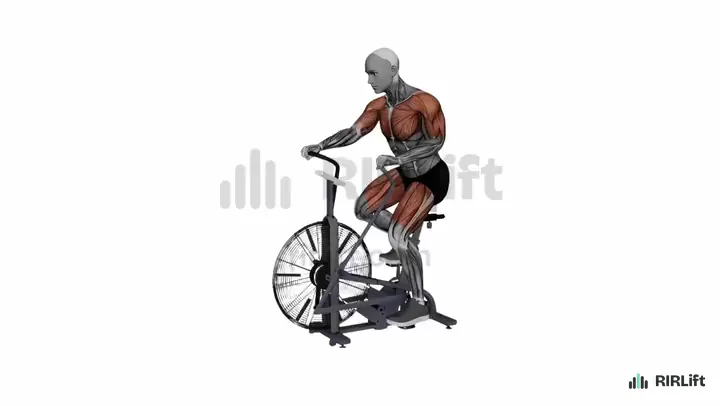
Full body, fan bike sprint

Air Bike

Quads, Hamstrings, Glutes

The fan resistance rises the harder you push, so a 20-second sprint is as hard as you make it and you cannot coast. It is the hardest conditioning machine in most gyms and the easiest on your joints.

How to do it

  1. Set the seat so your knee is slightly bent at the bottom.
  2. Let your arms drive the handles in time with your legs.
  3. Start easy for 2 minutes and 30 seconds, then build to moderate for the last 30 seconds.

Cues

  • Arms push and pull
  • Breathe through your nose at first

Common mistakes

  • Sprinting in the first minute: save it for the WOD.
  • Gripping the handles so tight your shoulders shrug.

Swap for: Rowing Machine, Stationary Bike, Ski Erg

Legs, back and heart, rowing sprint

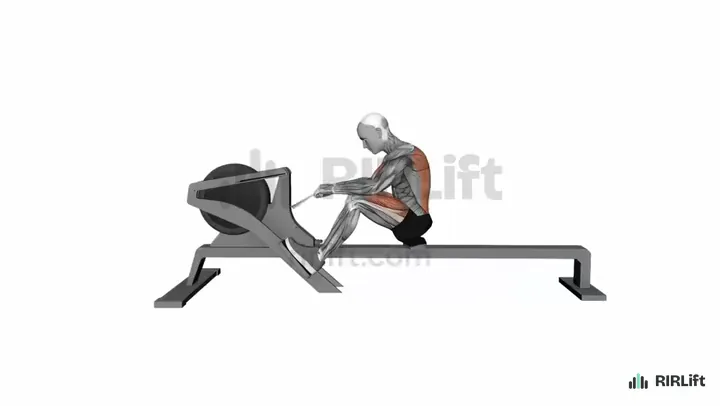
Rowing Machine

Quads, Hamstrings, Glutes, Lats

Each stroke starts with a hard leg drive and finishes with a pull to your ribs, so rowing intervals train your posterior chain as well as your conditioning. Hard intervals are 26 to 32 strokes a minute with full leg drive.

How to do it

  1. Strap your feet in and hold the handle with straight arms.
  2. Push with your legs first, then lean back slightly and bring the handle to your lower ribs.
  3. Reverse the order on the way back: arms forward, body tips forward, knees bend.
  4. Keep the pace conversational, around 20 strokes a minute.

Cues

  • Legs, body, arms; arms, body, legs
  • Easy enough to talk

Common mistakes

  • Racing the first minute: this is a warm-up, so finish feeling fresher than you started.

Swap for: Stationary Bike, Air Bike, Jump Rope

Lats, core and heart, ski pull

Ski Erg

Shoulders, Upper Back

Pulling the handles down from overhead works your lats, triceps and abs with very little leg work, which makes it the sprint machine to use the day after heavy squats or deadlifts.

How to do it

  1. Stand facing the machine with the handles above your head and arms straight.
  2. Pull the handles down toward your thighs, hinging your hips back and bending your knees slightly.
  3. Finish with the hands beside your thighs and your torso leaning forward.
  4. Rise back up and reach high for the next stroke, keeping a steady rhythm.

Cues

  • Reach tall at the top
  • Pull with lats, not just arms
  • Hinge into each stroke

Common mistakes

  • Pulling only with the arms: drive the handles down with your lats and a hip hinge.
  • Going too hard on the first interval: pace so the last one is as strong.

Swap for: Rowing Machine, Battle Rope Wave, Air Bike

Kettlebell and medicine ball circuits

Explosive loaded moves keep your heart rate high while training power and muscle. Swings drive your hips, thrusters chain a squat into a press, the clean and press works one side at a time from floor to overhead, and slams let you throw as hard as you can with nothing to catch.

Glutes and hamstrings, explosive hinge

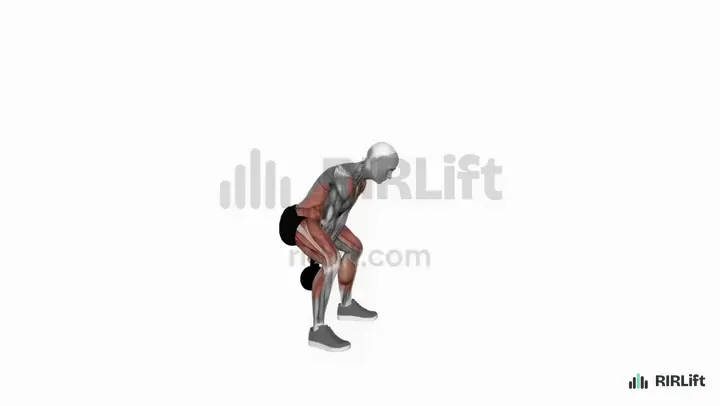
Kettlebell Swing

Glutes, Hamstrings

A heavy swing is a hard hip extension done 15 to 20 times in a row, which builds your glutes and hamstrings while it drives your heart rate up. Most men can start with a 44 to 53 lb (20 to 24 kg) bell.

How to do it

  1. Stand with your feet a little wider than your hips, the bell set about a foot in front of you.
  2. Hinge down, grip the handle with both hands, and hike the bell back between your thighs.
  3. Snap your hips forward to stand tall, letting the bell float up to about shoulder height on straight arms.
  4. Let it fall back between your legs as you hinge again, and go straight into the next rep.

Cues

  • Hips snap, arms just hold on
  • Stand tall at the top
  • Bell passes high between the thighs

Common mistakes

  • Squatting the swing by bending the knees deeply: push your hips back and keep the shins nearly vertical.
  • Lifting the bell with your shoulders: if your arms are working, the hips are not driving it.

Swap for: Dumbbell Romanian Deadlift, Kettlebell Deadlift, Superman

Legs and shoulders, squat to press

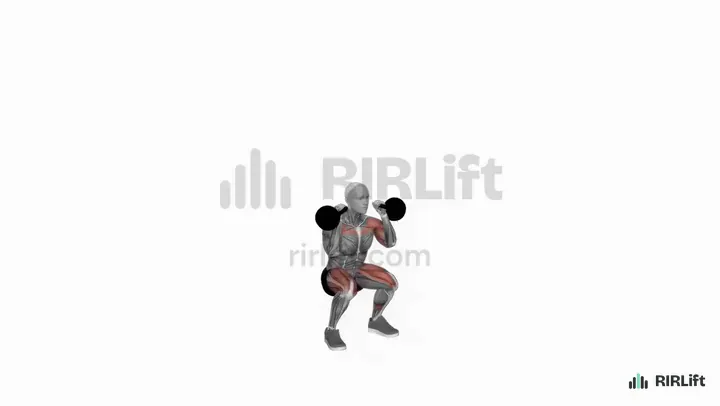
Kettlebell Thruster

Quads, Shoulders

Driving out of the bottom of a squat straight into an overhead press uses your legs, trunk and shoulders in one motion, which is why a 40-second set of thrusters is among the hardest stations in any circuit.

How to do it

  1. Clean a bell into each rack, elbows tucked, feet a little wider than your hips.
  2. Squat until your thighs are at least level with the floor, keeping your elbows up.
  3. Drive up out of the squat and let the momentum carry straight into a press to lockout.
  4. Lower the bells to the rack as you drop into the next squat.

Cues

  • Elbows up through the squat
  • Legs start the press, arms finish it
  • Lock out before the next squat

Common mistakes

  • Cutting the squat short to make the press easier: full depth, then press.
  • Pausing at the top and losing the rhythm: the bells go up and come straight down into the next rep.

Swap for: Kettlebell Clean & Press, Kettlebell Overhead Press, Goblet Squat

Full body, one-arm floor to overhead

Kettlebell Clean & Press

Shoulders, Quads

Cleaning the bell to your shoulder and pressing it overhead trains your hips, back and shoulders on one side at a time. It forces you to brace against an uneven load, which carries over to sports and lifting.

How to do it

  1. Stand over the bell as for a swing, a foot in front of you, one hand on the handle.
  2. Hike the bell back, then drive your hips and pull your elbow back so the bell stays close to your body instead of swinging out.
  3. As the bell reaches chest height, loosen your grip and let it roll around your wrist into the rack, elbow tucked.
  4. Press to lockout, lower to the rack, then drop the bell back into the next hike.

Cues

  • Keep the bell close, elbow back
  • Catch it soft, no bang on the forearm
  • Strict press every rep

Common mistakes

  • Swinging the bell out and letting it crash onto your wrist: the bell should travel up your body, not around it.
  • Pressing before the rack is settled: pause for a beat in the rack, then press.

Swap for: Kettlebell Overhead Press, Kettlebell Snatch, Kettlebell Thruster

Lats and abs, overhead slam

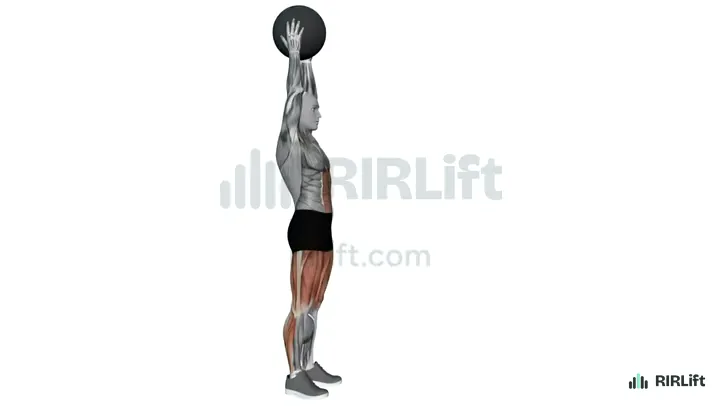
Medicine Ball Slam

Lats, Abs

Lifting a ball overhead and throwing it into the floor as hard as you can is pure power output with nothing to catch or control on the way down. It is a simple station to go all-out on at the end of a circuit.

How to do it

  1. Stand with feet about shoulder-width holding a medicine ball.
  2. Reach the ball overhead and rise onto your toes.
  3. Slam it into the floor in front of you as hard as you can, bending the hips and knees.
  4. Pick it up and repeat.

Cues

  • Reach tall
  • Slam with the whole body
  • Exhale hard

Common mistakes

  • Slamming with the arms only: hinge the hips into it.
  • Using a bouncy ball: use a slam ball that stays down.

Swap for: Med Ball Rotational Throw, Battle Rope Slam, Kettlebell Swing

Sled pushes and carries

Pushing a sled and carrying heavy weights are the most strength-heavy intervals you can do. Neither has a lowering phase, so they leave you breathless without the muscle soreness that makes the next leg day hard.

Quads and glutes, sled drive

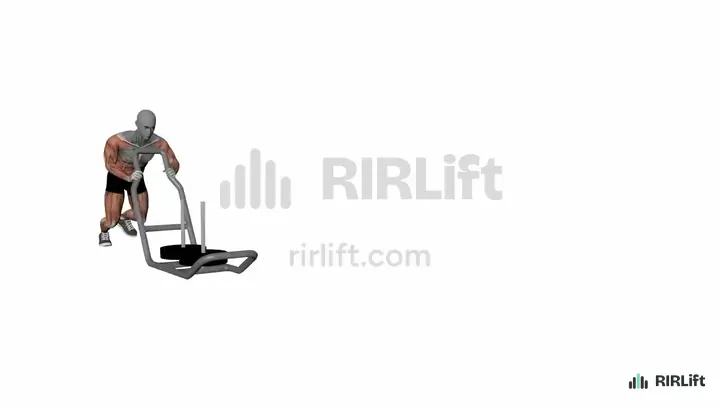
Sled Push

Quads, Glutes

Driving a loaded sled with short steps is one of the hardest 20-second efforts there is, and it trains your legs with no lowering phase, so it adds conditioning without much soreness. Load it so you can keep moving without stopping.

How to do it

  1. Load the sled and grip the high or low handles with your arms extended.
  2. Lean in until your body forms a straight line from head to back foot.
  3. Drive the sled forward with short, powerful steps, pushing through the balls of your feet.
  4. Keep pushing for the target time, then rest fully.

Cues

  • Low body angle
  • Short, hard steps
  • Keep the arms locked

Common mistakes

  • Standing too upright so the sled stalls: lower the hips and lean in.
  • Long, loping strides: keep steps short and fast.

Swap for: Sled Pull, Air Bike, Barbell Back Squat

Grip, traps and core, heavy carry

Farmer's Walk

Forearms, Traps, Shoulders

Walking with a heavy dumbbell in each hand works your grip, traps and trunk while your heart rate climbs. Paired with the sled, it makes a finisher that feels like strongman training.

How to do it

  1. Pick up two heavy dumbbells with your back flat.
  2. Stand tall with your ribs down and walk with short, quick steps.
  3. Set the weights down with a flat back when the time or distance is up.

Cues

  • Ribs down
  • Crush the handles
  • Quick steps

Common mistakes

  • Letting the shoulders round forward.
  • Walking so slowly the dumbbells start to swing.

Swap for: Dumbbell Suitcase Carry, Dumbbell Single-Arm Overhead Carry

Bodyweight moves for anywhere

When you are travelling or training at home, five moves cover a full HIIT session: burpees and mountain climbers for the whole body, push-ups for your chest and arms, and jump squats or box jumps for leg power. A sturdy step or bench is enough for the box jump.

Full body, floor-to-jump

Burpee

Quads, Glutes, Chest, Shoulders

The burpee takes you from standing to the floor and back into a jump on every rep, which makes it the most demanding bodyweight HIIT move. Ten crisp reps in 30 seconds is a good target.

How to do it

  1. Stand tall, then squat down and plant your palms.
  2. Kick your feet back into a plank.
  3. Jump your feet back under you.
  4. Stand up and jump, reaching your arms overhead.

Cues

  • Fast down, fast up
  • Solid plank
  • Land soft

Common mistakes

  • Sagging hips in the plank: brace on every rep.
  • Slowing to a walk-out: keep it crisp or rest.

Swap for: Half Burpee, Mountain Climber, Dumbbell Burpee

Chest, shoulders and triceps

Push-Up

Chest

Push-ups bring upper-body strength work into a no-equipment circuit. Do them for as many good reps as you can in the interval, and switch to elevated hands when your form slips.

How to do it

  1. Set your hands slightly wider than your shoulders with your body straight from head to heels.
  2. Lower until your chest nearly touches the floor, elbows at about 45 degrees.
  3. Press back up to straight arms.

Cues

  • One straight line
  • Elbows angled back

Common mistakes

  • Flaring the elbows straight out: tuck them toward your ribs.

Swap for: Kneeling Push-Up, Incline Push-Up, Push-Up Plus

Quads and glutes, vertical jump

Jump Squat

Quads, Glutes

A fast squat into a full jump trains leg power while your heart rate climbs. Land soft and absorb each rep before the next jump, and keep the reps crisp rather than fast and sloppy.

How to do it

  1. Stand with your feet about shoulder width and your arms ready.
  2. Dip into a quarter to half squat, then jump straight up, swinging your arms.
  3. Land softly with bent knees and reset before the next jump.

Cues

  • Soft, quiet landing
  • Reset between reps

Common mistakes

  • Landing stiff-legged: let the hips and knees bend to absorb the landing.

Swap for: Box Jump, Bodyweight Squat

Legs, explosive jump to a box

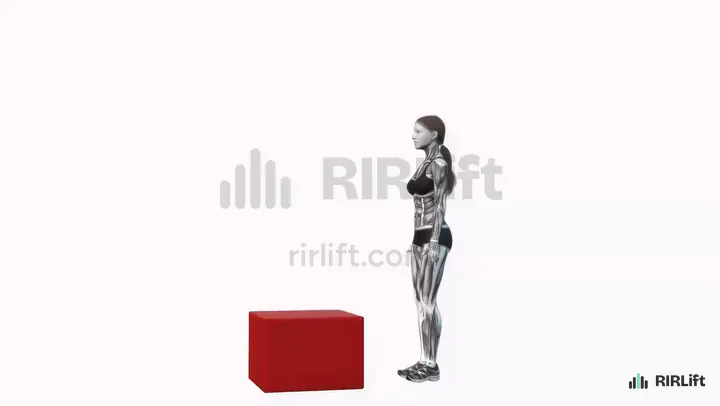
Box Jump

Quads, Glutes, Hamstrings
Jumping onto a box trains explosive power with a soft landing, since you land high instead of falling back to the floor. Step down between reps and pick a height you can land on quietly.

How to do it

  1. Stand a short step from a sturdy box.
  2. Dip into a quarter squat and swing the arms back.
  3. Spring onto the box and absorb the landing quietly.
  4. Straighten up on top, then step back down.

Cues

  • Quick dip
  • Soft landing
  • Step down

Common mistakes

  • Using a box so tall you land in a deep squat: lower the box.
  • Jumping tired: keep sets short.

Swap for: Jump Squat, Lateral Box Jump, Single-Leg Box Jump

Core and shoulders, fast knee drives

Mountain Climber

Abs

Driving your knees fast from a plank works your core and shoulders while it keeps your heart rate high. It slots between push-ups and squats so the circuit never stops.

How to do it

  1. Start in a high plank.
  2. Drive one knee toward your chest, then switch legs quickly.
  3. Bursts: 15 seconds at half pace, then faster.

Cues

  • Shoulders over hands
  • Hips level

Common mistakes

  • Raising your hips high.
  • Bouncing on your hands.

Swap for: Plank Jack, Mountain Climber Jump, High Knees

Put them together: example sessions

Each session below picks from the exercises above for one situation, with the sets, reps, rest and RIR filled in.

Session 1

You lift three or four days and want conditioning finishers

  • Workouts2× a week
  • Working sets20 a week
  • Per workout~15 min
  • EquipmentAir Bike, Sled, Dumbbells

Strength training is your main thing, you lift three or four days a week, and you want better conditioning without losing strength or adding long cardio sessions.

Two short finishers, about 10 minutes each, add about 9 minutes of hard work a week. The air bike and sled train hard with no lowering phase, so they leave your legs far fresher for the next session than a running interval or a jump circuit would.

Finisher A: Air bike sprints
ExerciseSets × repsRIRRest
Air BikeSeconds. All-out sprint, then pedal slowly during the rest. 8 × 20 1 40 s
Finisher B: Sled and carry
ExerciseSets × repsRIRRest
A1 Sled PushSeconds. 6 × 20–30 1 30 s
A2 Farmer's WalkSeconds. Heavy dumbbells. 6 × 30–40 2 1 min
How to run it
Do Finisher A at the end of an upper-body day and Finisher B at the end of a second upper or full-body day. Keep both away from the session before your heaviest squats or deadlifts.
How to progress
On the air bike, try to beat your total calories or distance each week. On the sled, add 25 to 45 lb when all six pushes stay smooth. Add sets only after the load or output stops climbing.

Session 2

No equipment, travelling or at home

  • Workouts3× a week
  • Working sets48 a week
  • Per workout~15 min
  • EquipmentBodyweight

You are away from your gym or train at home with nothing, and you want a hard 20-minute session that keeps your fitness and some strength.

Four moves at 45 seconds on and 15 off make a 4-minute round, done four times: 12 minutes of work inside 16 minutes. Pairing push-ups and squats with burpees and climbers keeps your whole body working, and three sessions a week holds both conditioning and muscle while you are away from weights.

Bodyweight circuit
ExerciseSets × repsRIRRest
A1 BurpeeReps in 45 seconds. 4 × 10–15 2 15 s
A2 Push-UpReps in 45 seconds. 4 × 15–30 2 15 s
A3 Jump SquatReps in 45 seconds. 4 × 15–25 2 15 s
A4 Mountain ClimberSeconds. Rest 60 seconds after this station. 4 × 45 2 1 min
How to run it
Three sessions a week with a day off between each. Warm up with a slow round at half pace first.
How to progress
Count your reps for each station and write them down. Each session, try to beat one station's count. When all four reach the top of the range, add a fifth round or a weighted backpack for the squats.

Session 3

Cutting body fat while still lifting three days

  • Workouts2× a week
  • Working sets32 a week
  • Per workout~20 min
  • EquipmentRowing Machine, Kettlebells, Medicine Ball, Ski Ergometer +1

You are dieting to lose fat, you lift three days a week to keep your muscle, and you want two conditioning sessions in the gym that burn calories and still feel like training.

Two circuits of 4 rounds, about 20 minutes each, mix a machine sprint with kettlebell and power moves. Every station is a strength exercise or a full-body effort, so the sessions support your muscle while you eat less, and two a week leaves room to recover while you eat less.

Circuit A
ExerciseSets × repsRIRRest
A1 Rowing MachineSeconds. 4 × 40 2 20 s
A2 Kettlebell SwingReps in 40 seconds. 4 × 15–20 2 20 s
A3 Kettlebell ThrusterReps in 40 seconds. 4 × 8–12 2 20 s
A4 Medicine Ball SlamReps in 40 seconds. Rest 60 seconds after this station. 4 × 12–15 2 1 min
Circuit B
ExerciseSets × repsRIRRest
A1 Ski ErgSeconds. 4 × 40 2 20 s
A2 Kettlebell Clean & PressPer arm, 20 seconds each side. 4 × 4–6 2 20 s
A3 Box JumpReps in 40 seconds. Step down every rep. 4 × 8–10 3 20 s
A4 Kettlebell SwingReps in 40 seconds. Rest 60 seconds after this station. 4 × 15–20 2 1 min
How to run it
Do Circuit A and Circuit B on two days without lifting, or after a short upper-body session. Keep one full rest day a week.
How to progress
Keep the kettlebell weight the same while you are dieting and aim to add a rep per station each week. On the rower and ski erg, try to hold a slightly higher pace for each 40-second effort. If your lifts start dropping, cut each circuit to three rounds.

Make it fit you

Questions

Are HIIT workouts good for men?

Yes. HIIT improves conditioning and heart and lung fitness in a short time, and done after lifting or on separate days, it helps with fat loss without taking much away from strength. Keep it to two or three sessions a week.

Is 20 minutes of HIIT a day good?

Twenty minutes is a complete HIIT session, but daily HIIT is too much for most people who also lift. Two or three sessions a week let each one be truly hard, which is what makes intervals work.

Does HIIT burn belly fat?

HIIT helps you burn fat overall, but you cannot choose to lose it from your belly first. Your waist shrinks as total body fat drops, which comes mostly from eating less, with HIIT and lifting helping you hold on to muscle while it happens.

What is the best HIIT exercise for men?

For conditioning alone, air bike sprints, because they are all-out, full-body and easy on your joints. For conditioning that also builds muscle, kettlebell swings. With no equipment, burpees.

Should I do HIIT before or after lifting?

After, or on a separate day. HIIT before lifting tires the muscles you need for your heavy sets. A short finisher right after lifting or a separate session works best.