
HIIT exercises at home: no-equipment and kettlebell circuits
Published October 29, 2026
The best HIIT exercises at home are burpees, jump squats, mountain climbers, high knees and skater hops for hard bursts, with squats, reverse lunges, push-ups and plank shoulder taps as quiet no-jump options and kettlebell swings and thrusters if you own one bell. Pick four or five moves, work 30 to 40 seconds and rest 20 to 30 seconds, and go round the circuit 3 to 5 times. Two or three 15 to 25 minute sessions a week, on days apart, is enough. Beginners start with 20 seconds on and 40 seconds off.
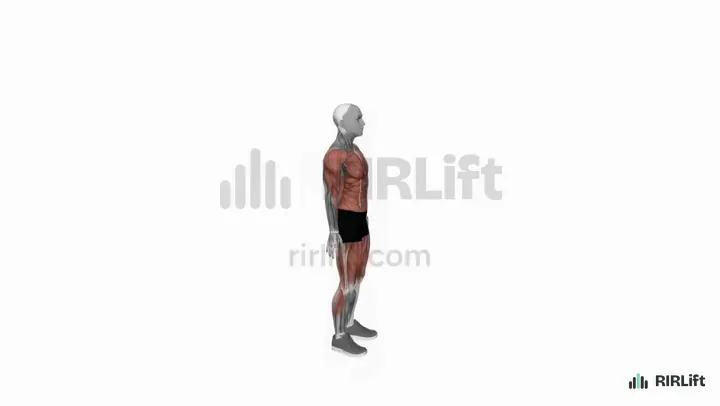
- Burpee Quads, Glutes, Chest, Shoulders
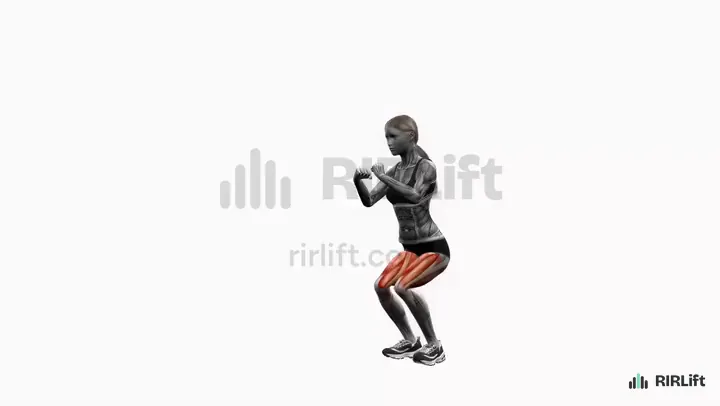
- Jump Squat Quads, Glutes
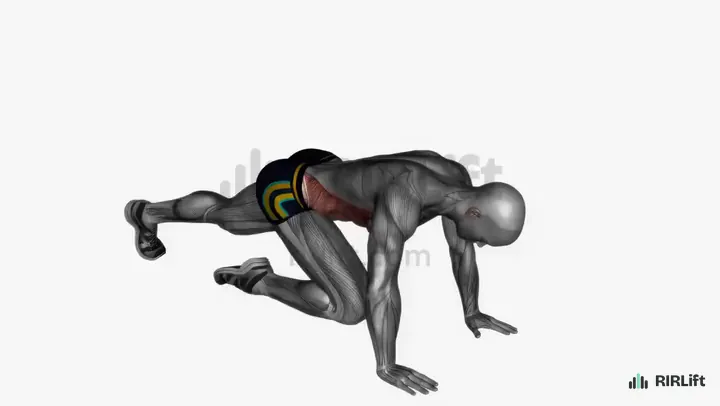
- Mountain Climber Abs
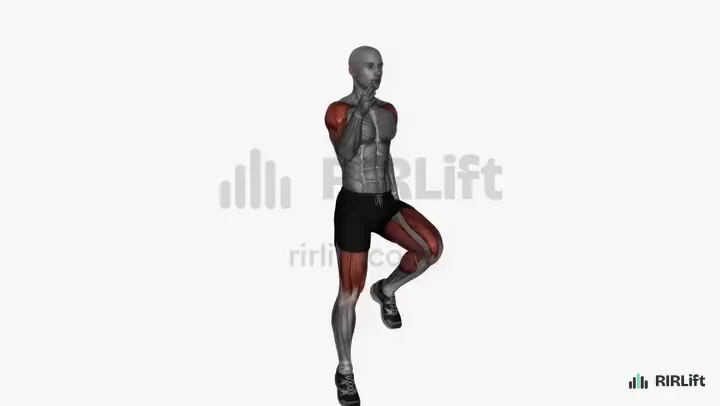
- High Knees Quads
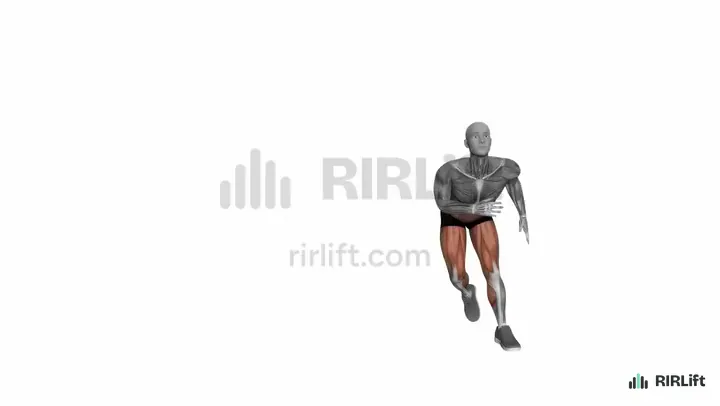
- Skater Hop Glutes, Quads, Abductors
- Reverse Lunge Quads, Glutes
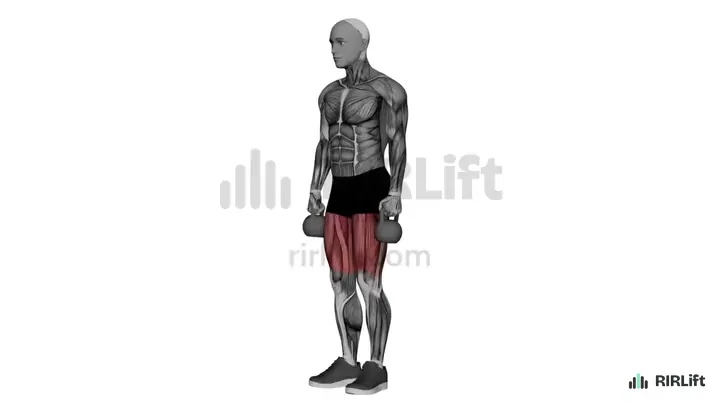
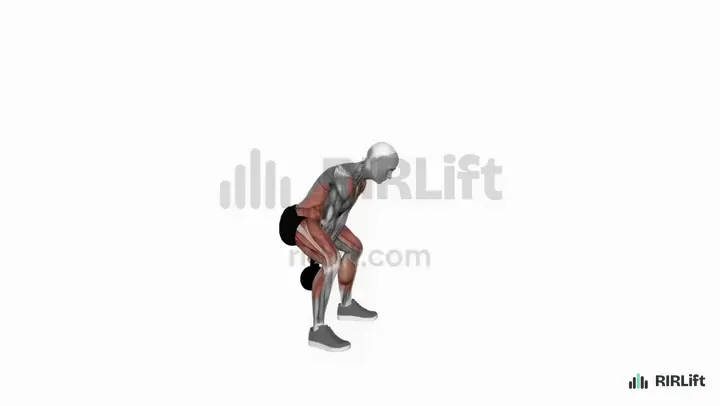
- Kettlebell Swing Glutes, Hamstrings
Put them together: example sessions
Each session below picks from the exercises above for one situation, with the sets, reps, rest and RIR filled in.
-
Session 1
New to HIIT, no jumping yet
You are starting from little or no exercise, or you want two weeks of easier sessions before adding jumps.
2× a week · 30 sets a week · ~20 min
-
Session 2
Twenty minutes, no equipment, three days a week
You can do a set of burpees and jump squats comfortably and want a harder home session that fits before work.
3× a week · 60 sets a week · ~25 min
-
Session 3
One kettlebell, 25 minutes, twice a week
You own a single kettlebell and want home sessions that build strength as well as fitness, without adding a third workout.
2× a week · 32 sets a week · ~20 min
Session 1
New to HIIT, no jumping yet
- Workouts2× a week
- Working sets30 a week
- Per workout~20 min
- EquipmentBodyweight
You are starting from little or no exercise, or you want two weeks of easier sessions before adding jumps.
Five moves, three rounds each: 15 working sets in a session of about 15 minutes. Twice a week gives your knees, ankles and lungs time to adapt before you add landings, and 2 to 3 reps in reserve keeps every rep clean while you learn the pace.
| Exercise | Sets × reps | RIR | Rest |
|---|---|---|---|
| A1 Bodyweight Squat | 3 × 12–20 | 3 | 40 s |
| A2 Push-UpHands on a couch or counter if needed. | 3 × 5–12 | 3 | 40 s |
| A3 Reverse LungePer leg. | 3 × 6–10 | 3 | 40 s |
| A4 Half Burpee | 3 × 6–10 | 2 | 40 s |
| A5 Plank Shoulder TapPer side. | 3 × 8–12 | 2 | 2 min |
- How to run it
- Do it on two days that are not back to back, for example Tuesday and Saturday. Go through the five moves as a circuit, resting 40 seconds between moves and about 2 minutes after each round.
- How to progress
- When every round hits the top of each range with 2 reps left, add a fourth round. After two weeks at four rounds, move to the 20-minute circuit and swap the half burpee for full burpees.
Session 2
Twenty minutes, no equipment, three days a week
- Workouts3× a week
- Working sets60 a week
- Per workout~25 min
- EquipmentBodyweight
You can do a set of burpees and jump squats comfortably and want a harder home session that fits before work.
Two alternating circuits of four moves, five rounds each: 20 hard intervals per session and 60 a week. Three sessions is the most this plan asks for, with a rest day between each, and keeping each set 1 to 2 reps short of failure keeps the landings soft and controlled on the last round.
| Exercise | Sets × reps | RIR | Rest |
|---|---|---|---|
| A1 Burpee | 5 × 6–10 | 2 | 20 s |
| A2 Jump Squat | 5 × 10–15 | 2 | 20 s |
| A3 Mountain ClimberSeconds of work. | 5 × 20–30 | 1 | 20 s |
| A4 Plank Shoulder TapTotal taps. | 5 × 10–16 | 2 | 90 s |
| Exercise | Sets × reps | RIR | Rest |
|---|---|---|---|
| A1 Skater HopPer side. | 5 × 8–12 | 2 | 20 s |
| A2 Push-Up | 5 × 8–15 | 2 | 20 s |
| A3 High KneesSeconds of work. | 5 × 30–40 | 1 | 20 s |
| A4 Plank Jack | 5 × 12–20 | 2 | 90 s |
- How to run it
- Run Circuit A on Monday and Friday and Circuit B on Wednesday one week, then flip them the next. Move straight from one exercise to the next with 20 seconds of rest, and take 90 seconds after each round.
- How to progress
- Add reps first: when every round reaches the top of each range, add a round, then cut the rest between moves from 20 to 15 seconds. Change one thing at a time, every two or three weeks.
Session 3
One kettlebell, 25 minutes, twice a week
- Workouts2× a week
- Working sets32 a week
- Per workout~20 min
- EquipmentKettlebells
You own a single kettlebell and want home sessions that build strength as well as fitness, without adding a third workout.
The bell adds load, so two sessions a week build strength that bodyweight circuits stop building: four moves, four rounds, 16 working sets in about 25 minutes. The swings and thrusters sit at 2 reps in reserve so your back and shoulders stay in good positions when you are out of breath.
| Exercise | Sets × reps | RIR | Rest |
|---|---|---|---|
| A1 Kettlebell Swing1 warm-up set first | 4 × 15–20 | 2 | 30 s |
| A2 Burpee | 4 × 6–10 | 2 | 30 s |
| A3 Kettlebell Thruster | 4 × 8–12 | 2 | 30 s |
| A4 Mountain ClimberSeconds of work. | 4 × 20–30 | 1 | 2 min |
- How to run it
- Do it on two separated days, such as Monday and Thursday, and walk or rest on the others. Rest 30 seconds between moves and 2 minutes after each round.
- How to progress
- When all four rounds hit the top of the swing and thruster ranges at 2 reps in reserve, buy or borrow the next bell size up and drop back to the bottom of the range. Until then, add a fifth round.
Make it fit you
-
Downstairs neighbors
Swap every jump for its quiet partner: jump squats become fast bodyweight squats, skater hops become reverse lunges, burpees become half burpees with a step back instead of a hop. Keep the same timing and the session stays hard.
-
Only 10 minutes
Pick two moves, one lower body and one upper body, and alternate them for 10 rounds of 20 seconds on and 10 seconds off. Two of those blocks with a minute between is a full session.
-
Joints that complain
Use the no-jump section only for the first month, put a folded mat under your hands for planks, and stop each set the moment the landings or knee position change.
-
Log reps, not just time
Count the reps you get in each interval and how many you had left. RIRLift sets next session's targets from that number, so you can see the circuit getting easier instead of guessing.
-
Pairing HIIT with lifting
Do HIIT on days you do not lift legs, or after an upper-body session. A hard circuit the day before squats leaves your legs flat for the heavier work.
Questions
Which HIIT workout is best at home?
A circuit of four or five full-body moves, such as burpees, jump squats, mountain climbers and push-ups, done for 30 to 40 seconds each with 20 seconds of rest and repeated 3 to 5 times. It needs no equipment and works in a small room.
Is 10 minutes of HIIT a day enough?
Ten hard minutes is a real workout, but doing it every day leaves little room to recover. Two or three 10 to 20 minute sessions a week, with walking or strength work on the other days, gets you more.
Is 20 minutes of HIIT effective?
Yes. Twenty minutes of intervals at a hard effort, with a short warm-up first, is enough to improve fitness. Longer sessions usually mean the intervals get easier, not that more work gets done.
Do HIIT classes raise cortisol?
Hard exercise raises cortisol for a short time afterward, as any training does. It settles back down with rest, which is one reason to keep HIIT to two or three sessions a week with easier days between.
Can beginners do HIIT at home?
Yes, with longer rest: 20 seconds of work and 40 seconds of rest, using no-jump moves like squats, reverse lunges and half burpees. Add jumps and shorter rest after a few weeks.
Related templates
-
HIIT exercises for weight loss: intervals that fit around a diet
Interval plans built around a calorie deficit, with gym machines as well as home moves.
-
Cardio exercises at home: no treadmill, no bike, no problem
Steadier home cardio for the days between hard circuits.
-
Low impact HIIT exercises: hard intervals with no jumping
More no-jump intervals for knees, ankles or quiet floors.
-
Full body exercises at home, with or without equipment
Strength work at home to pair with your HIIT days.
-
How to use reps in reserve (RIR)
How to judge the reps you have left when you are out of breath.