
HIIT exercises for women: bodyweight, weighted and machine intervals
Published October 29, 2026
The best HIIT exercises for women are jumping jacks, high knees, mountain climbers and burpees for full-body bodyweight intervals; jump squats and skater hops for leg power; kettlebell swings, goblet squats, renegade rows and step-ups for weighted circuits that also build muscle; and treadmill sprints and the stair climber for machine intervals. Pick 4 to 6 moves, work 30 to 40 seconds and rest 20 to 30, repeat for 3 or 4 rounds, and keep it to 15 to 25 minutes, two or three times a week with a rest day between.
- Burpee Quads, Glutes, Chest, Shoulders
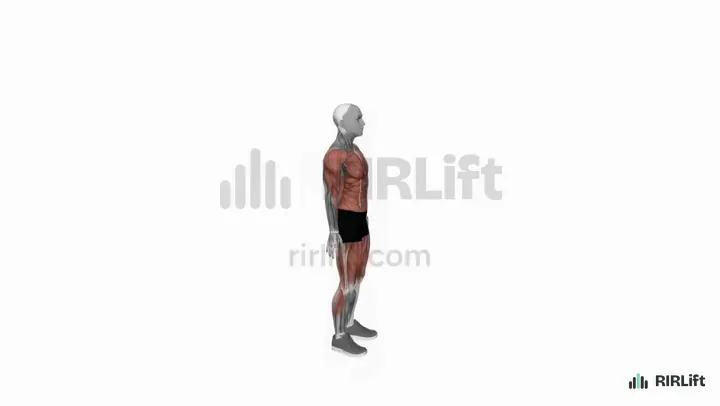
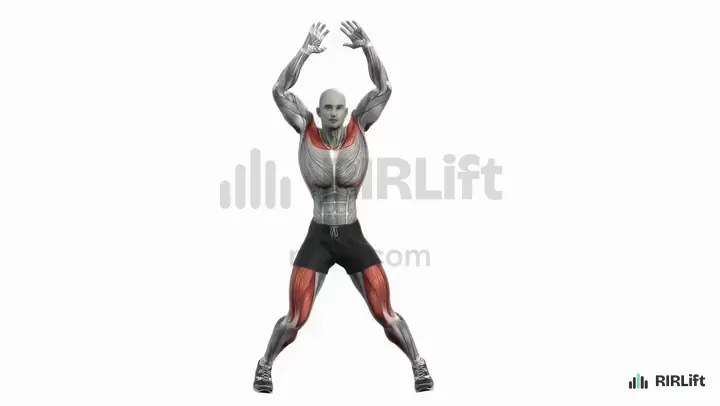
- Jumping Jack Calves, Quads
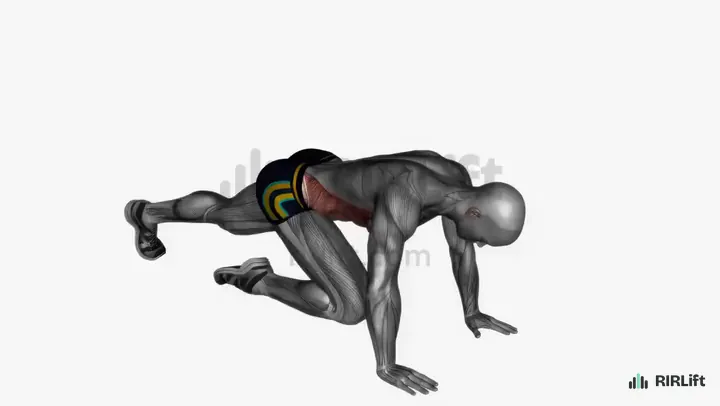
- Mountain Climber Abs
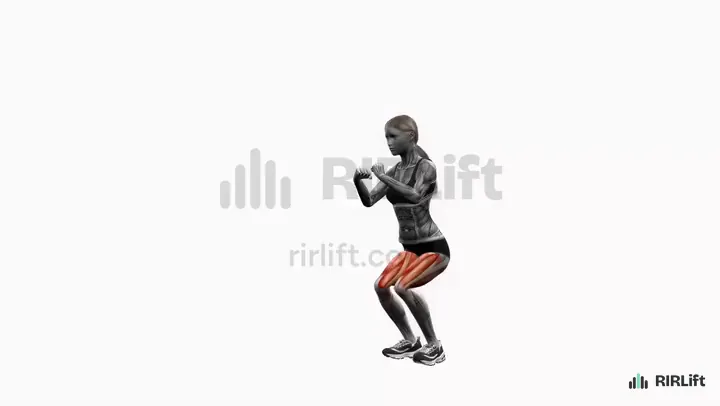
- Jump Squat Quads, Glutes
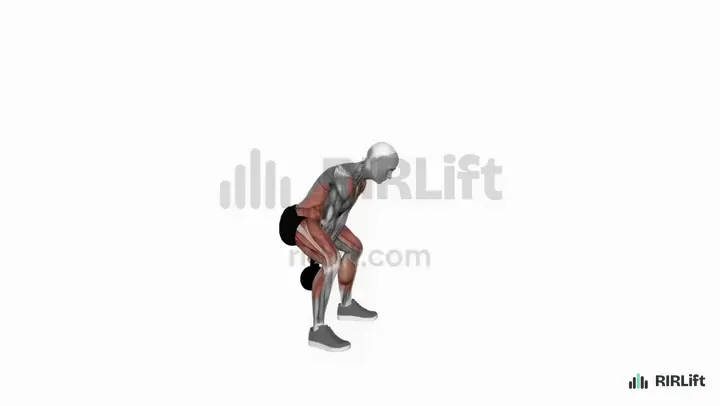
- Kettlebell Swing Glutes, Hamstrings
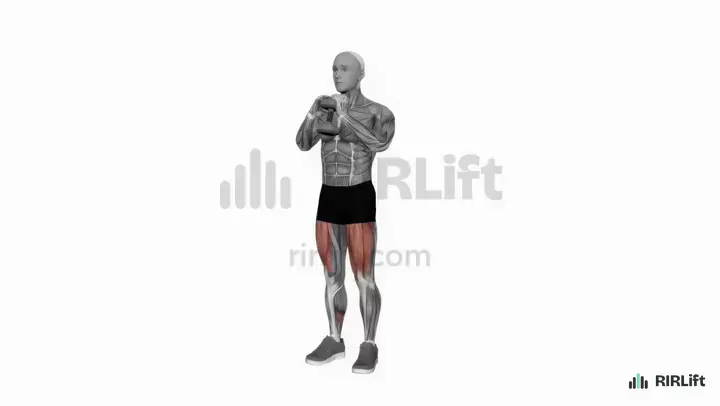
- Goblet Squat Quads, Glutes
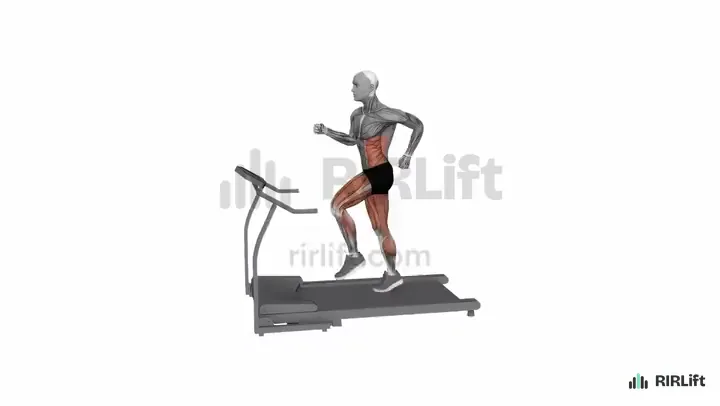
- Treadmill Run Quads, Hamstrings, Glutes
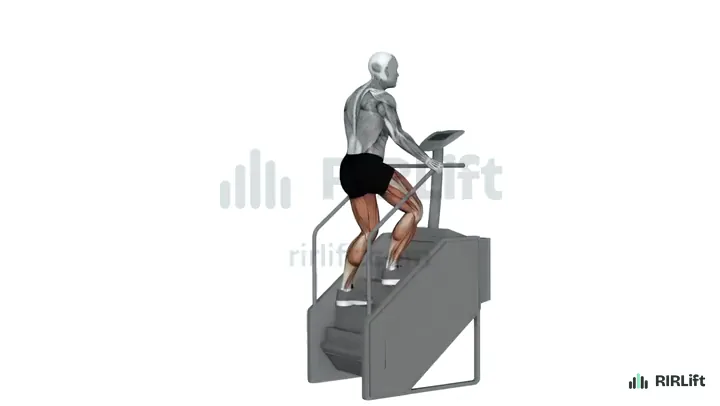
- Stair Climber Quads, Glutes, Calves
Put them together: example sessions
Each session below picks from the exercises above for one situation, with the sets, reps, rest and RIR filled in.
-
Session 1
At home, no equipment, 20 minutes
You want HIIT at home with nothing but floor space, and 20 minutes is what you have.
3× a week · 54 sets a week · ~15 min
-
Session 2
A weighted circuit that builds muscle as well
You want HIIT that also shapes your legs, glutes and back, and you have a kettlebell and a pair of dumbbells at home or in the gym.
2× a week · 32 sets a week · ~20 min
-
Session 3
In the gym, short sprints next to strength training
You already lift two or three times a week, you want conditioning that leaves your legs fresh for lifting, and you prefer machines to jumping.
2× a week · 24 sets a week · ~20 min
Session 1
At home, no equipment, 20 minutes
- Workouts3× a week
- Working sets54 a week
- Per workout~15 min
- EquipmentBodyweight
You want HIIT at home with nothing but floor space, and 20 minutes is what you have.
Six moves in a 30 seconds on, 30 seconds off circuit is a 6-minute round, done three times, about 20 minutes with a short warm-up. The bodyweight moves and the jumps alternate so your legs get a short break while your heart rate stays high. Three sessions a week gives about 27 minutes of hard work, enough to improve your fitness without wearing you down.
| Exercise | Sets × reps | RIR | Rest |
|---|---|---|---|
| A1 Jumping JackReps in 30 seconds. | 3 × 25–35 | 2 | 30 s |
| A2 Jump SquatReps in 30 seconds. | 3 × 10–15 | 2 | 30 s |
| A3 Mountain ClimberSeconds. | 3 × 30 | 2 | 30 s |
| A4 Skater HopTotal hops in 30 seconds. | 3 × 12–20 | 2 | 30 s |
| A5 High KneesSeconds. | 3 × 30 | 2 | 30 s |
| A6 BurpeeReps in 30 seconds. Rest 60 seconds after this station, then start the next round. | 3 × 6–10 | 2 | 1 min |
- How to run it
- Run the circuit on three days with a rest day after each, such as Monday, Wednesday and Friday. Warm up with one easy round of jumping jacks and high knees at half pace. If you also lift weights, do HIIT on separate days or after your lifting, never before.
- How to progress
- Start at the low end of each rep range. Each week add 1 or 2 reps per interval for the moves counted in reps, and push the pace on the timed ones. When the top of every range feels manageable, add a fourth round, then shorten the rest to 20 seconds.
Session 2
A weighted circuit that builds muscle as well
- Workouts2× a week
- Working sets32 a week
- Per workout~20 min
- EquipmentKettlebells, Dumbbells, Flat Bench
You want HIIT that also shapes your legs, glutes and back, and you have a kettlebell and a pair of dumbbells at home or in the gym.
Four weighted moves for 40 seconds on, 20 off, four rounds, about 17 minutes start to finish. Each station is a real strength exercise taken near the end of its range, so you build muscle while your heart rate stays high. Twice a week gives 8 weighted sets each for your glutes, legs and back on top of the conditioning.
| Exercise | Sets × reps | RIR | Rest |
|---|---|---|---|
| A1 Kettlebell SwingReps in 40 seconds. | 4 × 15–20 | 2 | 20 s |
| A2 Goblet SquatReps in 40 seconds. | 4 × 12–15 | 2 | 20 s |
| A3 Renegade RowTotal rows in 40 seconds. | 4 × 8–12 | 2 | 20 s |
| A4 Step-UpPer leg, 20 seconds each side. Rest 60 seconds after this station. | 4 × 6–10 | 2 | 1 min |
- How to run it
- Do it twice a week with at least two days between, for example Tuesday and Friday. It can replace one full-body strength session if you are short on time.
- How to progress
- Log the reps you get in each 40-second interval and how many you had left. When you reach the top of the range on every round with 2 in reserve, move up one kettlebell or dumbbell size. RIRLift reads those reps in reserve and moves you to the next bell when every round has earned it.
Session 3
In the gym, short sprints next to strength training
- Workouts2× a week
- Working sets24 a week
- Per workout~20 min
- EquipmentTreadmill, Stair Climber
You already lift two or three times a week, you want conditioning that leaves your legs fresh for lifting, and you prefer machines to jumping.
A handful of hard efforts on a machine trains your heart and lungs hard, and costs your legs far less than a 30-minute circuit. Six 30-second treadmill sprints on one day and eight 40-second stair climbs on the other add only 3 to 5 minutes of hard work each, so your lifting does not suffer.
| Exercise | Sets × reps | RIR | Rest |
|---|---|---|---|
| Treadmill WalkSeconds. Five minutes of easy incline walking, back to back. | 5 × 60 | 4 | 0 s |
| Treadmill RunSeconds. Hard sprint, then walk slowly during the rest. | 6 × 30 | 1 | 90 s |
| Exercise | Sets × reps | RIR | Rest |
|---|---|---|---|
| Stair ClimberSeconds. Fast climb, then the slowest speed for the rest. | 8 × 40 | 1 | 1 min |
| Treadmill WalkSeconds. Five-minute cool-down walk. | 5 × 60 | 4 | 0 s |
- How to run it
- Do Sprints after an upper-body lifting day and Stairs on a separate day, or after a short session. Walk easily for 5 minutes before the first hard effort.
- How to progress
- Raise the treadmill speed by 0.5 km/h (0.3 mph) once all six sprints feel even. On the stair climber, add one level when all eight climbs feel the same. Add a round only after the speed stops going up.
Make it fit you
-
No jumping
Swap each jump for its step version: step-out jacks for jumping jacks, bodyweight squats for jump squats, a lateral step for skater hops, and a step-back burpee without the jump. The circuit stays just as long; your heart rate climbs a little slower.
-
Brand new to HIIT
Use 20 seconds on and 40 off for the first two weeks, and do two rounds instead of three. Pick the four moves you can do well and leave the burpee for later.
-
Lifting weights is your main goal
Keep HIIT to two short sessions a week and put them after lifting or on separate days. The machine sprints are the plan that interferes least with leg strength.
-
Over 50 or 60
The weighted circuit and the stair intervals suit this best: they work hard without landings. Start with 3 rounds of 30 seconds on and 30 off, and pick a kettlebell you could swing 20 times.
-
Check your effort
HIIT intervals should feel like an 8 out of 10, hard enough that talking is not possible. If every interval feels the same and you could chat through it, raise the pace or the weight; if you cannot finish the last round, lengthen the rest.
Questions
What are the top 10 HIIT exercises for women?
Burpees, jumping jacks, mountain climbers, high knees, jump squats, skater hops, kettlebell swings, goblet squats, renegade rows and treadmill sprints. Add step-ups or the stair climber when you want intervals without jumping.
Is 20 minutes of HIIT a day enough?
Twenty minutes is a full HIIT session, but not every day. Two or three 20-minute sessions a week, with a rest or lifting day between, improves fitness well. Daily HIIT tends to leave you too tired to keep the intervals truly hard.
Are HIIT workouts effective for women?
Yes. HIIT improves heart and lung fitness in less time than steady cardio, and weighted circuits add muscle work too. The work and rest times on this page are the same ones any interval program uses; adjust them to your fitness, not your sex.
Does HIIT burn belly fat?
HIIT burns calories and helps you lose fat overall, but no exercise picks where the fat comes from. Belly fat goes down as your total body fat goes down, mostly through eating, with HIIT and strength training helping you keep muscle while it happens.
How many times a week should women do HIIT?
Two or three times, with at least one day between sessions. If you also lift weights three or more days a week, two HIIT sessions is usually the most that still lets you recover.
Related templates
-
HIIT exercises at home: no-equipment and kettlebell circuits
More no-equipment intervals for small spaces.
-
Low impact HIIT exercises: hard intervals with no jumping
Intervals without any jumping, for days when landings feel wrong.
-
HIIT exercises for weight loss: intervals that fit around a diet
Interval plans built around losing fat with strength training.
-
HIIT warm-up exercises that build to full speed
A short warm-up to do before any of these workouts.
-
The best workout for women, for your week
Full strength programs to pair with two HIIT sessions a week.