Hip dip exercises: building the glutes above and around the dip

Hip dips come from the shape of your pelvis and where your thigh bone sits, so no exercise removes them. What training can do is build the glute muscles above and beside the dip so the curve from waist to thigh looks fuller. The exercises that do that best are hip thrusts and single-leg hip thrusts, Bulgarian split squats, step-ups, single-leg Romanian deadlifts and curtsy lunges, cable kickbacks and donkey kicks, and the abduction machine, seated band abductions, fire hydrants and band walks for the side glutes. Train glutes 2 or 3 times a week, from about 18 hard sets a week as a beginner up to 30 or more once you are experienced or training with light weights at home.

  1. Hip Thrust Glutes
  2. Bulgarian Split Squat Quads, Glutes
  3. Hip Abduction Machine Abductors
  4. Cable Glute Kickback Glutes
  5. Step-Up Quads, Glutes
  6. Single-Leg RDL Hamstrings, Glutes
  7. Fire Hydrant Abductors

Glute builders: thrusts and kickbacks

The gluteus maximus is the biggest muscle around the hip, and its upper part sits right above where most hip dips show. Thrusts load it heavily; kickbacks finish it with lighter, focused reps.

Glutes, loaded hip extension

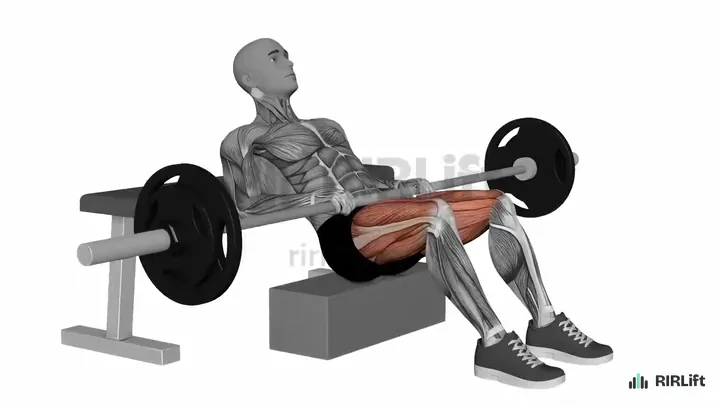
Hip Thrust

Glutes

The barbell hip thrust lets you put the most load on your glutes, and more glute muscle is the main thing that changes how hip dips look. Make it the first lift of your glute days.

How to do it

  1. Sit with your shoulder blades against the long side of a flat bench and roll a padded bar over your hips.
  2. Plant your feet flat about hip width apart, close enough that your shins are vertical at the top.
  3. Drive through your heels and lift your hips until your torso and thighs form a straight line.
  4. Hold the top for a second with your chin tucked, then lower your hips most of the way down and repeat.

Cues

  • Chin tucked, ribs down
  • Shins vertical at the top
  • One-second squeeze

Common mistakes

  • Arching your lower back to get higher: stop when your hips are level with your knees and squeeze your glutes there.
  • Feet too far out, which turns it into a hamstring exercise: bring them in until your shins are vertical at lockout.

Swap for: Dumbbell Hip Thrust, Smith Machine Hip Thrust, Glute Bridge

Glutes, single-leg hip extension

Single-Leg Hip Thrust

Glutes

Thrusting off one foot doubles the work for each glute without heavy weight, and the side glute steadies your pelvis at the same time. It is the home version of the barbell thrust.

How to do it

  1. Set up with your upper back on a bench edge, one foot flat under your knee and the other foot lifted off the floor.
  2. Rest a dumbbell on the hip of the working leg and hold it in place with that hand.
  3. Push the planted heel into the floor and raise your hips until your torso and working thigh are in one line.
  4. Hold the top for a second, lower with control, and finish all reps before you switch legs.

Cues

  • Hips stay level, not tilted
  • Drive through the planted heel
  • Pause at the top

Common mistakes

  • Letting the hip of the lifted leg drop: if the pelvis tilts, use a lighter dumbbell or none.
  • Kicking the free leg up to help: keep it bent and still.

Swap for: Single-Leg Glute Bridge, Dumbbell Hip Thrust, Dumbbell Staggered Hip Thrust

Upper glutes, kickback

Cable Glute Kickback

Glutes

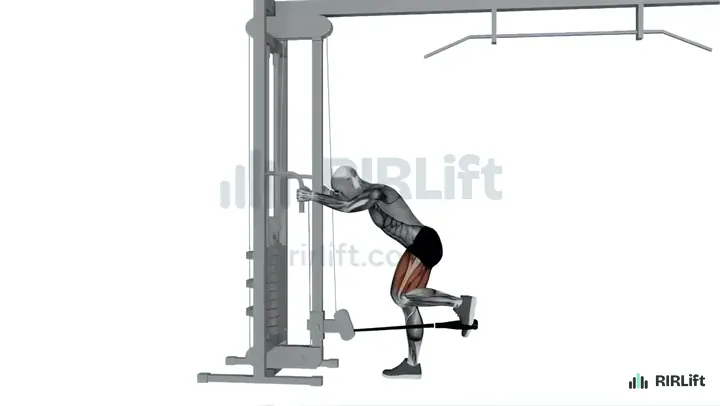
Kicking the leg back and slightly out from a low cable trains the upper glute fibers that sit right above the hip dip. Lean forward a little and stop when your lower back starts to arch.

How to do it

  1. Strap an ankle cuff to a low pulley and attach it to one ankle.
  2. Face the machine, hold the frame and hinge forward slightly.
  3. Kick the cuffed leg straight back, leading with the heel, until your hip is fully open.
  4. Return slowly until your foot is beside the other one, finish the reps, then switch.

Cues

  • Heel back, not up
  • Squeeze at the end, hold one second
  • Hips stay square

Common mistakes

  • Arching your lower back to get the leg higher: the rep ends when your hip is straight, not when your foot is high.
  • Swinging the leg: control the return as slowly as the kick.

Swap for: Hip Thrust, Cable Pull-Through, Glute Bridge

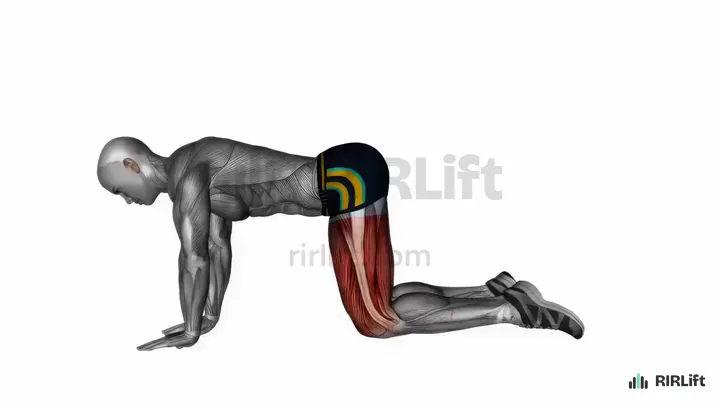
Glutes, kickback on all fours

Donkey Kick

Glutes

A no-equipment kickback for the glutes that you can do anywhere for high reps. Keep the knee bent at a right angle and press the heel up, not back.

How to do it

  1. Get on hands and knees with your wrists under your shoulders and knees under your hips.
  2. Keep one knee bent at a right angle and lift that foot toward the ceiling.
  3. Stop when your thigh is level with your back and squeeze for a second.
  4. Lower the knee back under your hip without touching the floor, finish the set, then switch legs.

Cues

  • Foot to the ceiling
  • Flat back
  • Squeeze at the top

Common mistakes

  • Arching your lower back to kick higher: the lift should come from your hip.
  • Swinging the leg: if momentum is moving it, slow down and pause at the top.

Swap for: Cable Glute Kickback, Band Glute Kickback, Fire Hydrant

Single-leg lifts

Standing on one leg makes the side glute hold your pelvis level while the main glute drives you up. That combination trains both muscles that frame a hip dip in the same rep.

Glutes and quads, rear foot raised

Bulgarian Split Squat

Quads, Glutes

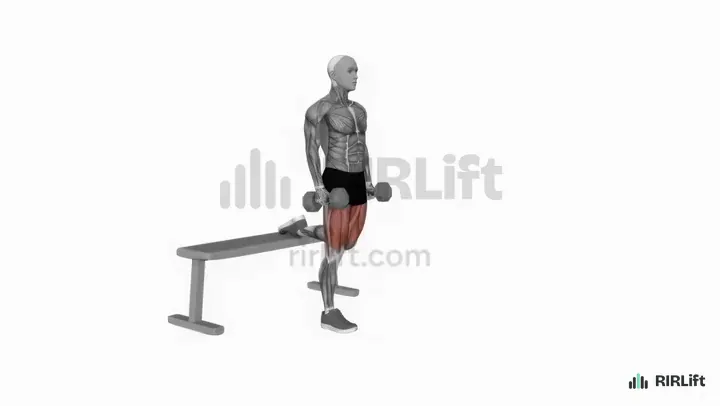
With your back foot on a bench and your torso leaning slightly forward, the front glute gets a deep stretch and most of the load. Each set is mostly front-leg glute and quad work, with the back leg only for balance.

How to do it

  1. Set the top of your back foot on a bench and place your front foot a long stride ahead.
  2. Hold a dumbbell in each hand at your sides, and keep your front foot flat.
  3. Drop your back knee straight toward the floor until the front thigh is close to level.
  4. Press through the front foot to rise, then finish all reps before switching legs.

Cues

  • Go deep for the inner thigh
  • Front foot flat
  • Rear foot is just a kickstand

Common mistakes

  • Pushing up with the back leg: let it relax and make the front leg do the work.
  • Front knee collapsing inward: keep it pointed the same way as your toes.

Swap for: Dumbbell Split Squat, Step-Up, Reverse Lunge

Glutes and quads, single leg

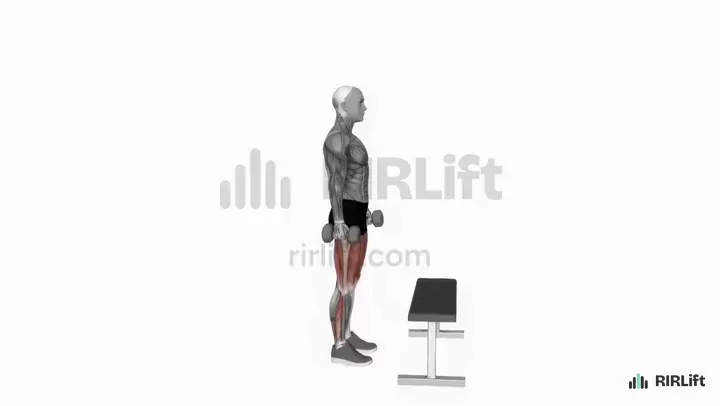
Step-Up

Quads, Glutes

Pushing up onto a bench through the front heel trains the glute through a long range while the side glute keeps your hips level. A higher box shifts more of the work to the glutes.

How to do it

  1. Stand facing the bench with two dumbbells.
  2. Place one whole foot on the bench.
  3. Lean forward a little and push through the top foot to stand up on the bench.
  4. Bring the other foot up only to touch, then lower it back to the floor.
  5. Finish all reps on one leg before switching.

Cues

  • Whole foot on the bench
  • Push through the top heel
  • Lower slowly, do not drop

Common mistakes

  • Pushing off the floor with the back foot: that halves the work. Keep the trailing foot light.
  • Using a bench so high that your knee is far above your hip: you will rock instead of step.

Swap for: Barbell Step-Up

Glutes and hamstrings, single-leg hinge

Single-Leg RDL

Hamstrings, Glutes

Hinging on one leg loads the glute of the standing side on a long stretch and makes the side glute fight to keep your hips square. Balance comes within a few sessions; hold a wall at first.

How to do it

  1. Stand on your left leg with a dumbbell in your left hand and the standing knee softly bent.
  2. Hinge forward at the left hip while your right leg extends straight behind you, keeping your hips level.
  3. Lower until your torso and back leg are close to parallel to the floor or the standing hamstring stops you.
  4. Drive the left hip forward to come back up, then finish the set before switching sides.

Cues

  • Back leg and torso move as one
  • Hips level, back toes down
  • Slow on the way down

Common mistakes

  • Opening the hip so the back leg rotates out: point the back toes at the floor the whole time.
  • Touching the free foot down between reps to rebalance: slow down and hold a wall with your free hand if needed.

Swap for: Dumbbell B-Stance RDL, Dumbbell Romanian Deadlift, Kettlebell Deadlift

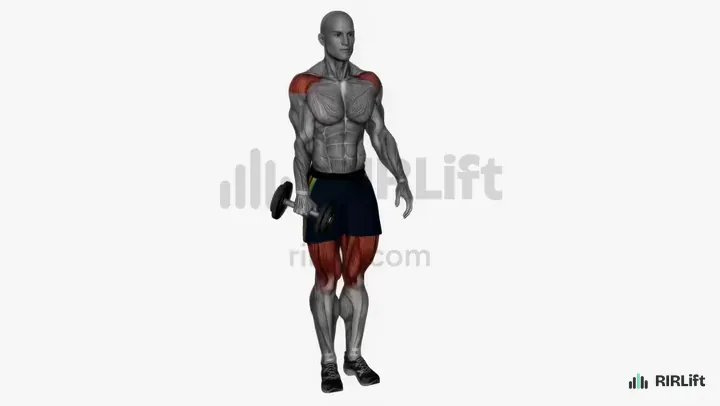
Side and main glutes, crossing lunge

Dumbbell Curtsy Lunge

Quads, Glutes

Stepping back and across puts the outer part of the front glute under stretch, close to where hip dips sit. Keep the front knee over your toes as you lower.

How to do it

  1. Stand tall with your feet under your hips and a pair of dumbbells held up at your chest.
  2. Step your right foot back and across, landing it behind and outside your left heel on the ball of the foot.
  3. Bend both knees and sink straight down until your front thigh is close to parallel and your back knee hovers just off the ground.
  4. Keep your hips and chest facing forward, with your front knee pointing over your front toes.
  5. Push through the whole front foot to stand, bring the back foot home, and repeat with the other leg stepping across.

Cues

  • Hips square to the front
  • Sink down, not forward
  • Front knee over front toes

Common mistakes

  • Twisting your hips toward the back leg: step only as far across as you can while your belt buckle still faces forward.
  • Letting the front knee cave inward: push it out over your middle toes, and use lighter dumbbells until it stays there.
  • Shifting your weight onto the back foot: keep most of your weight on the front heel and midfoot, and let the back leg only balance you.

Swap for: Reverse Lunge, Dumbbell Lateral Lunge, Bulgarian Split Squat

Side glutes

The glute medius and minimus sit on the side of the pelvis above the dip. They respond to high-rep abduction work, done after the heavy lifts while they still have something left.

Side glutes, seated abduction

Hip Abduction Machine

Abductors

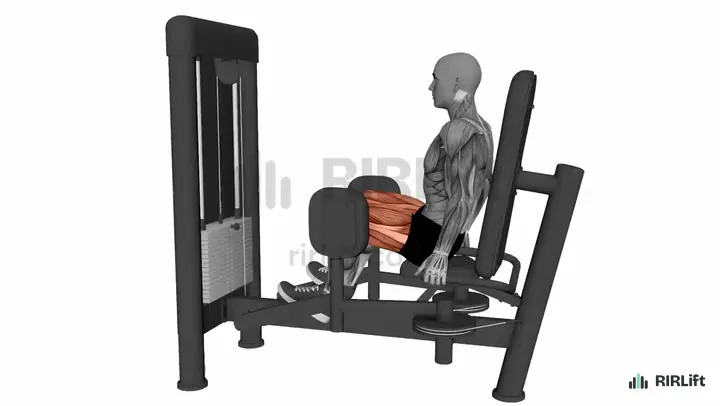
Pushing the pads apart while leaning forward loads the glute medius and upper glute at the side of the hip, the area that fills in above a dip. It is easy to push close to failure without your form breaking down.

How to do it

  1. Sit with the outside of your knees against the pads and set the start so your legs are close together.
  2. Lean your torso forward slightly and hold the handles.
  3. Push your knees apart as far as the machine allows.
  4. Pause at the widest point, return slowly without letting the stack touch, and repeat.

Cues

  • Lean forward a little
  • Pause at the widest point
  • Do not let the plates rest

Common mistakes

  • Bouncing the pads out and letting them slam back: count two seconds on the way in.
  • Using so much weight that the range shrinks to a few inches: full range with less load works better.

Swap for: Lateral Band Walk, Band Seated Hip Abduction, Standing Side Leg Raise

Side glutes, banded abduction

Band Seated Hip Abduction

Glutes, Abductors

Sitting with a mini loop above your knees and pushing out gives the abduction machine's work at home. Do sets leaning forward and sitting upright to hit the side glutes from two angles.

How to do it

  1. Sit with a band above your knees and feet flat.
  2. Push your knees apart against the band.
  3. Return slowly.

Cues

  • Lean forward a little
  • Slow return

Common mistakes

  • Bouncing: hold a second at the widest point.

Swap for: Clamshell, Lateral Band Walk, Hip Abduction Machine

Side glutes, abduction on all fours

Fire Hydrant

Abductors

Lifting a bent leg out to the side from hands and knees works the side glutes with nothing but a mat. Add a mini loop above the knees once 20 reps feels easy.

How to do it

  1. Start on hands and knees with your back flat.
  2. Keep the knee bent and swing one thigh sideways, away from your body.
  3. Lift until the thigh is close to level with your hip without tipping your body.
  4. Lower slowly and repeat before changing legs.

Cues

  • Hips stay square
  • Knee leads
  • Slow down

Common mistakes

  • Rolling the body away to lift higher: a smaller lift with level hips works more.
  • Letting the foot rise above the knee: it turns the thigh the wrong way.

Swap for: Clamshell, Standing Side Leg Raise

Side glutes, side steps

Lateral Band Walk

Abductors

Walking sideways in a half squat keeps the side glutes working on both legs, the stepping leg and the one holding you up. Use it as a warm-up or a high-rep finisher.

How to do it

  1. Place a mini band around your legs just above the knees or at the ankles.
  2. Sink into a quarter squat with your feet hip-distance apart.
  3. Step sideways with the lead foot, follow with the other without letting the feet touch, and keep tension in the band.

Cues

  • Stay low
  • Toes point forward

Common mistakes

  • Swaying the torso side to side: keep your shoulders level and take shorter steps.

Swap for: Clamshell, Band Standing Hip Abduction

Put them together: example sessions

Each session below picks from the exercises above for one situation, with the sets, reps, rest and RIR filled in.

Session 1

New to glute training, two gym days

  • Workouts2× a week
  • Working sets18 a week
  • Per workout~25 min
  • EquipmentBarbells, Flat Bench, Dumbbells, Hip Abductor +2

You go to the gym, have not trained your glutes on purpose before, and want to build the area around your hips with two lower-body days.

Two sessions give the glutes about 18 hard sets a week, a level beginners grow on without being sore for days. Each day pairs one heavy glute lift, one single-leg lift and one side-glute move. Each day has 9 working sets and takes about 40 minutes.

Day 1
ExerciseSets × repsRIRRest
Hip Thrust2 warm-up sets first 3 × 8–12 2 2:30 min
Step-UpPer leg. 3 × 8–12 2 90 s
Hip Abduction Machine 3 × 12–20 1 1 min
Day 2
ExerciseSets × repsRIRRest
Bulgarian Split Squat1 warm-up set firstPer leg. 3 × 8–12 2 2 min
Cable Glute KickbackPer leg. 3 × 12–15 1 1 min
Lateral Band WalkSteps each way. 3 × 12–20 2 1 min
How to run it
Leave two or three days after Day 1 before Day 2 so the glutes are fresh for split squats. Train your upper body on separate days or after these.
How to progress
Add weight to hip thrusts and split squats when every set reaches the top of the range at 2 reps in reserve. Abduction work progresses one plate at a time at 1 rep in reserve.

Session 2

At home with dumbbells and a mini band

  • Workouts3× a week
  • Working sets33 a week
  • Per workout~25 min
  • EquipmentDumbbells, Resistance Bands

You train at home with a pair of dumbbells, a bench or sturdy chair, and a mini loop band.

Lighter loads mean more sets are needed, so three sessions give the glutes about 33 sets a week, a third of them quick band and body-weight sets, with the heaviest single-leg lifts first. Each session has 11 working sets and takes about 35 minutes.

Day A
ExerciseSets × repsRIRRest
Bulgarian Split SquatPer leg. 3 × 8–15 2 90 s
Single-Leg Hip ThrustPer leg. 3 × 10–15 1 90 s
Fire HydrantPer side. 3 × 15–20 1 45 s
Donkey KickPer leg. 2 × 15–20 1 45 s
Day B
ExerciseSets × repsRIRRest
Single-Leg RDLPer leg. 3 × 8–12 2 90 s
Dumbbell Curtsy LungePer leg. 3 × 10–12 2 90 s
Band Seated Hip Abduction 3 × 15–25 1 45 s
Lateral Band WalkSteps each way. 2 × 15–20 2 45 s
How to run it
Rotate Day A and Day B across three days with a rest day after each, so one week runs A, B, A and the next B, A, B. Use a couch or a step instead of a bench if needed.
How to progress
Single-leg lifts reach 15 reps at 2 reps in reserve before you go heavier. When the dumbbells run out, slow each lowering to 3 seconds and pause at the bottom.

Session 3

Experienced lifter, three glute sessions

  • Workouts3× a week
  • Working sets30 a week
  • Per workout~30 min
  • EquipmentBarbells, Flat Bench, Dumbbells, Hip Abductor +1

You have trained glutes for a year or more, you are fairly lean so the dips show clearly, and you want as much glute size as you can recover from.

Trained glutes need more to keep growing, so three sessions bring the weekly total to 30 hard sets, spread so no single day runs past 10. Thrusts appear twice a week and side-glute work every day. Each day has 10 working sets and takes about 45 minutes.

Day 1: Heavy
ExerciseSets × repsRIRRest
Hip Thrust2 warm-up sets first 4 × 6–10 1 3 min
Single-Leg RDLPer leg. 3 × 8–10 2 2 min
Hip Abduction Machine 3 × 15–20 0 1 min
Day 2: Single leg
ExerciseSets × repsRIRRest
Bulgarian Split Squat1 warm-up set firstPer leg. 4 × 8–12 1 2 min
Cable Glute KickbackPer leg. 3 × 12–15 0 1 min
Fire HydrantPer side. 3 × 15–20 1 45 s
Day 3: Pump
ExerciseSets × repsRIRRest
Hip Thrust1 warm-up set first 3 × 12–20 1 2 min
Step-UpPer leg. 3 × 10–12 1 90 s
Hip Abduction Machine 4 × 20–30 0 45 s
How to run it
Glute days on Monday, Wednesday and Saturday, with upper body on the days between or after these.
How to progress
Thrusts and split squats run on double progression at 1 to 2 reps in reserve. Kickbacks and abductions go to 0 to 1 reps in reserve. Every sixth week, cut all sets in half to recover.

Make it fit you

Questions

Can hip dips be fixed with exercise?

Not removed, because they come from your bone structure. Building the glutes around them can make the dip look shallower and the hip line rounder, and that is what the plans on this page aim for.

Do hip dip exercises really work?

They work for building glute muscle, which changes the shape of your hips over months. They do not change the bones, so results vary with your build.

What body shape has hip dips?

Any body shape can. Hip dips depend on how wide your pelvis is, how high your hip bones sit and where your thigh bone attaches, not on your weight or fitness.

How long does it take to see a change in hip dips?

Expect a few months of training glutes two or three times a week before the shape around your hips looks different. Strength in the lifts rises much sooner.

Are hip dips normal?

Yes. They are part of normal skeletal shape and show up in people of every size, including athletes.