Hip exercises for women: side glutes, glutes, inner thighs and single-leg strength

The best hip exercises for women are the hip thrust and Romanian deadlift for the glutes, lateral band walks and the abduction machine for the side of the hips, the hip adduction machine and Copenhagen plank for the inner thighs, and the Bulgarian split squat and curtsy lunge for single-leg strength. Your hips move your thigh in four directions, so a complete hip session covers back, out, in, and one leg at a time. Strong hips look fuller from the side and keep your knees and pelvis steady when you run, climb or lift.

  1. Hip Thrust Glutes
  2. Hip Abduction Machine Abductors
  3. Bulgarian Split Squat Quads, Glutes
  4. Romanian Deadlift Hamstrings, Glutes
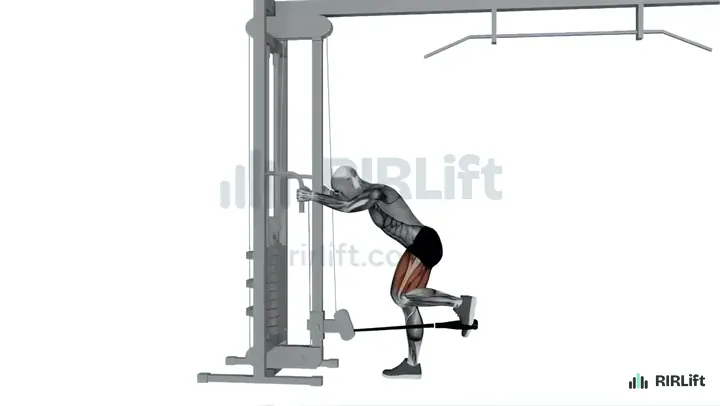
  5. Cable Glute Kickback Glutes
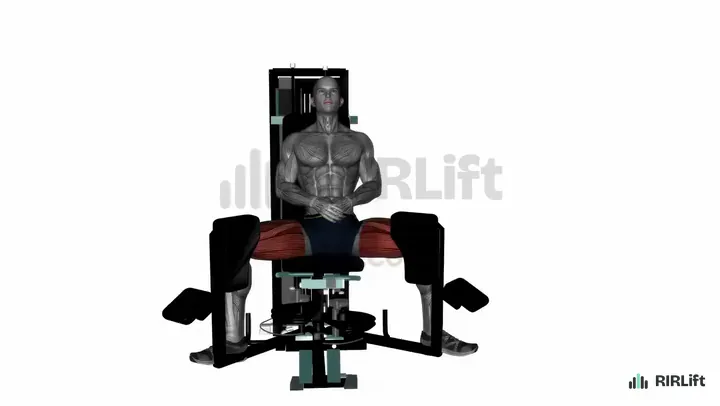
  6. Hip Adduction Machine Adductors
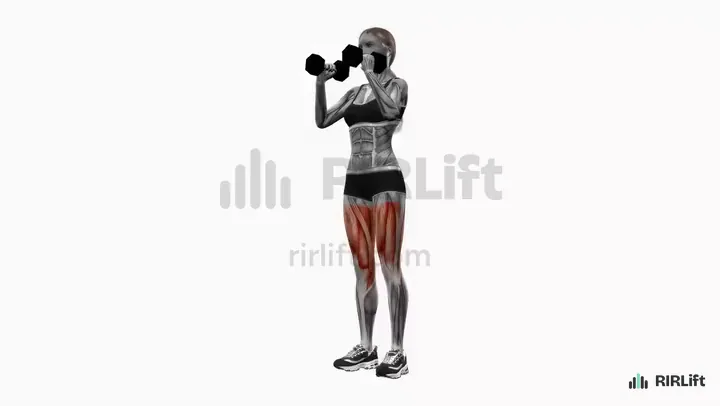
  7. Dumbbell Curtsy Lunge Quads, Glutes
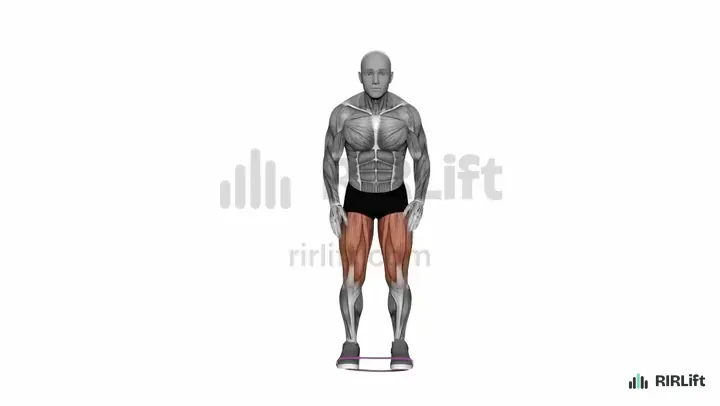
  8. Lateral Band Walk Abductors

Exercises for the side of your hips

The outer hip muscles lift your leg out to the side and keep your pelvis level when you stand on one foot. They shape the upper, outer part of your hips, and they are the muscles most people mean when they ask about filling out the side of the hips. A machine lets you load them hard; a band works anywhere.

Side glutes, seated abduction

Hip Abduction Machine

Abductors

The machine loads the muscles on the outside of your hip through a full arc without any balance demand, so you can push every set close to failure. It is the most direct way to build the upper, outer part of the glutes that shapes the side of your hips.

How to do it

  1. Sit with your back against the pad and set the start so your knees are together or close to it.
  2. Rest the pads on the outside of your thighs and hold the handles at your sides.
  3. Drive your knees apart as far as the machine allows, and hold the widest point for a second.
  4. Let the pads come back in slowly until the weight stack nearly touches, then press out again.

Cues

  • Knees out, not feet
  • Hold the wide point
  • Control the close

Common mistakes

  • Letting the stack slam between reps: stop the return just before the plates touch.
  • Rocking your torso forward and back to move more weight: sit still and use a load you can open fully.

Swap for: Multi-Hip Abduction, Lateral Band Walk, Band Seated Hip Abduction

Side glutes, standing one-leg abduction

Multi-Hip Abduction

Abductors

Standing on one leg while the other lifts out against the pad trains both hips at once: the moving side lifts, and the standing side works to keep your pelvis level. That second job is the one you need on stairs, trails and single-leg lifts.

How to do it

  1. Set the pad just above the outside of your knee and stand side-on to the machine, holding the handle.
  2. Put your weight on the leg nearest the machine and stand tall with your hips square.
  3. Sweep the working leg out to the side against the pad, keeping your toes pointing forward.
  4. Return it under control until it nearly crosses your standing leg, then repeat. Switch sides after the set.

Cues

  • Toes forward
  • Tall standing hip
  • Slow on the way in

Common mistakes

  • Leaning your torso away to get the leg higher: the lift ends where your trunk starts to tip.
  • Turning the toes up toward the ceiling, which shifts the work to the front of the hip.

Swap for: Hip Abduction Machine, Standing Side Leg Raise, Band Standing Hip Abduction

Side glutes, banded side steps

Lateral Band Walk

Abductors

A loop band and a few meters of floor turn side steps into steady tension on the outer hip. It fits as a warm-up before squats and lunges, or as a burnout at the end when the machines are taken.

How to do it

  1. Place a loop band just above your knees or around your ankles and stand with your feet under your hips.
  2. Sit into a quarter squat with your chest up and your weight even across both feet.
  3. Step sideways with your lead foot, then follow with the trailing foot, never letting the band go slack.
  4. Take the set's steps in one direction, then walk back the other way.

Cues

  • Stay low the whole time
  • Band stays tight
  • Small, steady steps

Common mistakes

  • Standing up between steps: keep the same knee bend from the first step to the last.
  • Dragging the trailing foot so your feet click together, which takes the tension off the band.

Swap for: Band Standing Hip Abduction, Fire Hydrant, Clamshell

Exercises for glutes and hip extension

Your glutes extend the hip, driving your thigh back behind you. Train them at both ends of their range: a thrust or kickback where they are short and squeezed, and a hinge where they are long and stretched under load.

Glutes, loaded hip extension

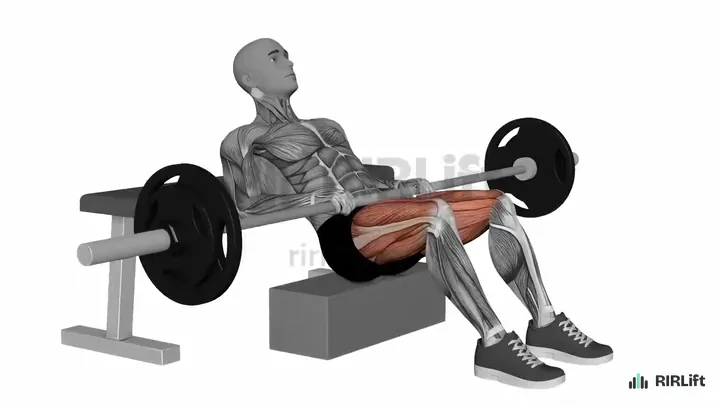
Hip Thrust

Glutes

With your upper back on a bench and a barbell across your hips, the glutes take the load at the top, where they are fully shortened and working hardest. It lets you load the hips heavier than almost any other glute exercise, which is why it leads most glute programs.

How to do it

  1. Sit down with your shoulder blades against the side of a bench and a padded barbell over your hip crease.
  2. Plant your feet flat, about hip-width apart, so your shins will be vertical at the top.
  3. Drive through your heels and lift your hips until your torso and thighs form a straight line, chin tucked.
  4. Squeeze hard at the top for one second, then lower until your hips nearly touch the floor and go again.

Cues

  • Shins vertical at the top
  • Ribs down, chin tucked
  • Pause and squeeze

Common mistakes

  • Arching your lower back to finish the rep: the lift ends when your hips are level with your knees.
  • Feet too far out, which turns it into a hamstring exercise: walk them in until the shins stand up.

Swap for: Smith Machine Hip Thrust, Dumbbell Hip Thrust, Glute Bridge

Glutes and hamstrings, barbell hinge

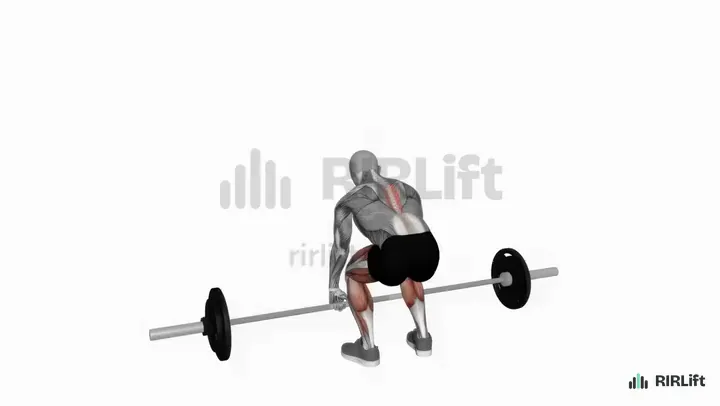
Romanian Deadlift

Hamstrings, Glutes

The Romanian deadlift loads your hips in a deep stretch with your knees almost straight, which the hip thrust never reaches. Pairing the two covers the glutes from both ends of their range.

How to do it

  1. Stand holding a barbell at your thighs with an overhand grip, feet hip-width apart.
  2. Soften your knees, then push your hips back while the bar slides down your thighs.
  3. Stop when you feel a strong stretch in your hamstrings, usually just below the knees, with your back flat.
  4. Push your hips through to stand tall and finish with your glutes tight.

Cues

  • Hips back, not down
  • Bar stays on your legs
  • Stand up with the glutes

Common mistakes

  • Bending your knees more as you go lower, which turns it into a squat: keep the knee angle fixed.
  • Rounding your back to reach the floor: depth is set by your hamstrings, not the plates.

Swap for: Dumbbell Romanian Deadlift, Single-Leg RDL, Sumo Romanian Deadlift

Glutes, one-leg cable extension

Cable Glute Kickback

Glutes

A cable on the ankle keeps the load constant through the whole kick, and working one leg at a time stops your stronger side from doing the work. It is a high-rep finisher that adds glute volume without loading your back.

How to do it

  1. Strap the cuff around one ankle, set the pulley low, and face the machine holding the frame.
  2. Hinge forward slightly with a soft knee on the standing leg and brace your trunk.
  3. Kick the working leg back and slightly up, leading with the heel, until your hip is fully open.
  4. Return slowly until your foot is under your hip, then repeat. Finish all reps before switching legs.

Cues

  • Heel leads the kick
  • Hips stay square
  • Stop before your back arches

Common mistakes

  • Swinging the leg with momentum: pause for a beat at the top of every rep.
  • Rotating the hip open to get the foot higher, which moves the work to the side of the hip.

Swap for: Machine Glute Kickback, Multi-Hip Glute Extension, Band Glute Kickback

Glutes, cable hinge

Cable Pull-Through

Glutes, Hamstrings

Facing away from a low cable, you hinge with the rope between your legs and stand up by driving the hips forward. It teaches the hinge with the load pulling you backward, which is easier on the lower back than a barbell and good for higher reps.

How to do it

  1. Attach a rope to a low pulley, face away, and hold the rope between your legs with both hands.
  2. Walk forward until the cable is taut and stand with your feet a little wider than your hips.
  3. Push your hips back and let the rope travel through your legs while your back stays flat.
  4. Drive your hips forward until you stand tall and squeeze your glutes; your arms only hold the rope.

Cues

  • Hips back to the wall
  • Arms are just hooks
  • Lock out with the glutes

Common mistakes

  • Squatting down instead of hinging back: your shins should stay close to vertical.
  • Leaning back at the top to finish: stand straight and stop.

Swap for: Band Pull-Through, Kettlebell Swing, Romanian Deadlift

Exercises for inner thighs

The adductors pull your legs together, and they help steady your hips in every squat and lunge. One direct exercise per session is usually enough, and the Cossack squat adds range while it adds strength.

Inner thighs, seated adduction

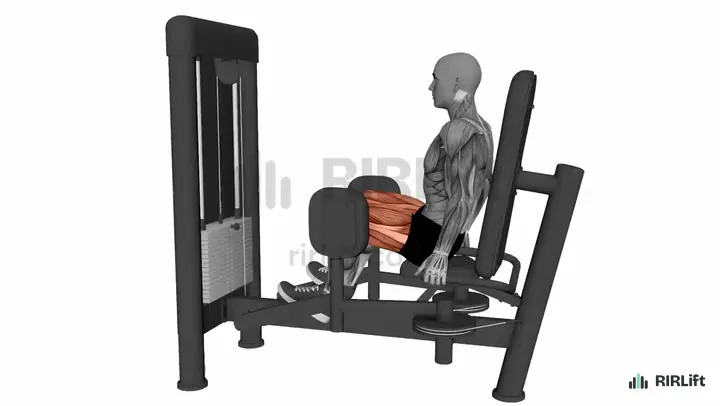
Hip Adduction Machine

Adductors

The adductors make up a large share of your upper thigh and help steady your hips in squats, lunges and side steps. The machine is the plainest way to load them hard without balance or setup getting in the way.

How to do it

  1. Sit with your back against the pad and set the start so your legs open to a comfortable stretch.
  2. Place your inner thighs against the pads and hold the handles.
  3. Squeeze your knees together until the pads meet, and hold for a second.
  4. Open back out slowly to the stretch you started from, then repeat.

Cues

  • Squeeze the pads together
  • Slow on the way out
  • Sit tall

Common mistakes

  • Starting with the legs wider than you can control, which loads the groin at its weakest point: begin with a modest stretch and widen it over weeks.
  • Using a burst of speed to snap the pads shut: two seconds out, one second in.

Swap for: Multi-Hip Adduction, Copenhagen Plank, Band Hip Adduction

Inner thighs and trunk, side plank on a bench

Copenhagen Plank

Adductors, Abs

Holding a side plank with your top leg on a bench makes the inner thigh of that leg support most of your body. It builds strength there that machines miss, along with the side of your trunk, and needs nothing but a bench.

How to do it

  1. Lie on your side next to a bench, and place the inside of your top knee or ankle on the bench.
  2. Set your bottom forearm under your shoulder and let the bottom leg hang free or rest on the floor.
  3. Raise your hips until your shoulders, hips and knees line up, pressing down into the bench with the top leg.
  4. Hold for the set time, lower, and switch sides. For a rep version, lift and lower your hips under control.

Cues

  • Press the bench down
  • Hips in line with shoulders
  • Knee on the bench to start

Common mistakes

  • Letting your hips sag toward the floor: shorten the hold and keep the line.
  • Starting with the ankle on the bench before the knee version is easy, which puts a long lever on the groin too early.

Swap for: Hip Adduction Machine, Multi-Hip Adduction, Band Hip Adduction

Inner thighs and hips, side-to-side squat

Cossack Squat

Quads, Adductors

You sit deep into one hip while the other leg stays straight out to the side, so the adductors of the straight leg stretch under load and the bent leg's hip works through a big range. It builds strength and range at the same time, which is what most people mean by hip mobility.

How to do it

  1. Stand with your feet about twice shoulder-width apart, toes turned slightly out.
  2. Move your hips over to the right and sit down into that side, keeping the left leg straight with toes up.
  3. Go as low as you can with your right heel on the floor and your chest up.
  4. Push back up through the right foot to the middle, then sink to the left side.

Cues

  • Bent-side heel stays down
  • Straight leg, toes to the ceiling
  • Chest proud

Common mistakes

  • Lifting the heel of the working leg: stop higher, or hold a light weight in front as a counterbalance.
  • Bouncing out of the bottom: pause a moment before you stand.

Swap for: Dumbbell Lateral Lunge, Kettlebell Lateral Lunge, Barbell Lateral Lunge

Single-leg exercises for stable hips

Standing on one leg is where weak hips show: the knee drifts in, the pelvis drops, the torso leans. These three load one hip at a time so you can see and fix the difference between sides.

Glutes and hips, rear-foot-elevated split squat

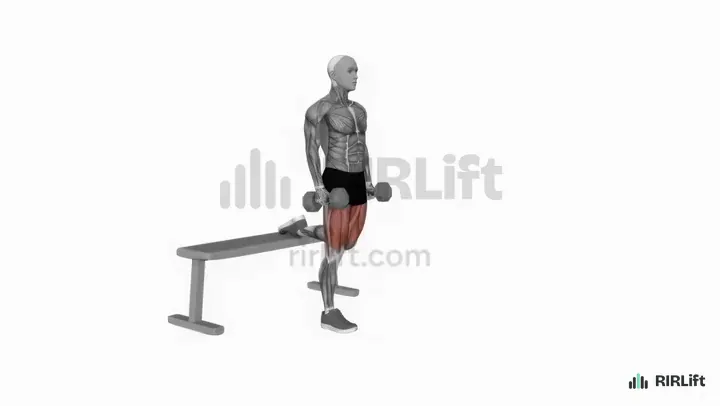
Bulgarian Split Squat

Quads, Glutes

With your back foot on a bench, almost all of the work lands on the front leg, and a slight forward lean turns it into one of the hardest glute exercises you can do with dumbbells. It also shows you quickly whether one hip is weaker or less stable than the other.

How to do it

  1. Stand a long stride ahead of a bench with a pair of dumbbells at your sides, and rest the top of your back foot on it.
  2. Lean your torso slightly forward and keep your front foot flat.
  3. Lower straight down until the front thigh is about level with the floor with the back knee hovering near the ground.
  4. Drive through the whole front foot to stand back up. Finish the set, then switch legs.

Cues

  • Slight forward lean for glutes
  • Front knee tracks over the toes
  • Down slow, up strong

Common mistakes

  • Standing so close to the bench that your front heel lifts: move the front foot out until the shin stays near vertical at the bottom.
  • Pushing off the back foot: it is there for balance only.

Swap for: Dumbbell Split Squat, Smith Machine Bulgarian Split Squat, Barbell Bulgarian Split Squat

Side glutes and quads, crossover lunge

Dumbbell Curtsy Lunge

Quads, Glutes

Stepping the back leg behind and across your body puts the front hip in a position where the outer glute must hold the knee in line. You get side-hip work and leg work from one exercise, with only a pair of dumbbells.

How to do it

  1. Stand tall with the dumbbells hanging at your sides, feet hip-width apart.
  2. Step your right foot behind and across to the left, as if dropping into a curtsy.
  3. Bend both knees until the front thigh is near level with the floor, front knee pointing over the toes.
  4. Push through the front foot to return to standing, then repeat on the same side or alternate.

Cues

  • Hips stay facing forward
  • Front knee over the toes
  • Drive through the front heel

Common mistakes

  • Twisting the hips toward the back leg, which removes the side-glute work: keep both hip bones pointing ahead.
  • Crossing so far that you lose balance: a moderate step behind is enough.

Swap for: Barbell Curtsy Lunge, Landmine Curtsy Lunge, Band Curtsy Lunge

Glutes, hamstrings and balance, one-leg hinge

Single-Leg RDL

Hamstrings, Glutes

Hinging on one leg asks the hip of the standing leg to stretch, carry the load and keep your pelvis from tipping, all at once. A light dumbbell is enough to make it hard, and it carries straight over to running, hiking and stairs.

How to do it

  1. Balance on your left leg, knee slightly bent, with one dumbbell in the right hand.
  2. Hinge forward at the hip while your right leg extends straight behind you.
  3. Lower until your torso is near parallel to the floor or you feel a strong hamstring stretch, hips level.
  4. Push the left hip through to stand tall, then repeat. Switch legs after the set.

Cues

  • Hips square to the floor
  • Back leg and torso move as one
  • Soft standing knee

Common mistakes

  • Letting the free hip rotate open toward the ceiling: point the back toes down.
  • Rushing the lowering: take two to three seconds down so you keep your balance.

Swap for: Dumbbell B-Stance RDL, Landmine RDL, Dumbbell Romanian Deadlift

Put them together: example sessions

Each session below picks from the exercises above for one situation, with the sets, reps, rest and RIR filled in. Open one in the session builder to change a pick, price it from a recent set, and add it to RIRLift.

Session 1

Two gym days built around the hips

Open in the session builder
  • Workouts2× a week
  • Working sets31 a week
  • Per workout~45 min
  • EquipmentBarbells, Flat Bench, Dumbbells, Hip Abductor +2

You train in a gym with machines, cables and a barbell, and you want your lower-body days to put the glutes and side hips first.

Each day opens with a heavy hip exercise while you are fresh: the hip thrust on day A and the Romanian deadlift on day B, at 1 to 2 reps in reserve with longer rests. A single-leg lift follows, then the abduction and adduction machines and a cable exercise at 0 to 1 in reserve, because those small, stable movements are safe to push close to failure. The side hips get two exercises a week and the inner thighs one, about 16 working sets per day.

Hips A
ExerciseSets × repsRIRRest
Hip Thrust2 warm-up sets firstPause 1 s at the top. 4 × 6–10 2 2:30 min
Bulgarian Split SquatPer leg. Slight forward lean. 3 × 8–12 1 90 s
Hip Abduction MachineHold the wide point 1 s. 3 × 12–20 0 1 min
Hip Adduction Machine2 s on the way out. 3 × 12–15 1 1 min
Cable Glute KickbackPer leg. 3 × 12–20 0 1 min

Open Hips A in the session builder

Hips B
ExerciseSets × repsRIRRest
Romanian Deadlift2 warm-up sets firstBar on the legs. Hips back. 4 × 6–10 2 2:30 min
Dumbbell Curtsy LungePer leg. 3 × 8–12 1 90 s
Cable Pull-Through 3 × 12–15 1 90 s
Multi-Hip AbductionPer leg. Toes forward. 3 × 12–20 0 1 min
Cossack SquatPer side. Heel down. 2 × 6–10 2 90 s

Open Hips B in the session builder

How to run it
Do Hips A and Hips B once each per week with at least two days between them. Train upper body on other days.
How to progress
Double progression: once every set of an exercise reaches the top of its rep range at the target reps in reserve, add the smallest weight step and build the reps back up. On the machines, add one plate.

Session 2

A short side-hip block after leg day

Open in the session builder
  • Workouts2× a week
  • Working sets20 a week
  • Per workout~15 min
  • EquipmentHip Abductor, Hip Adductor, Resistance Bands

You already squat or leg-press and do a hinge, and you want a 20-minute block that targets the side and inner hips the big lifts leave undertrained.

Squats and deadlifts work the glutes as hip extensors but barely ask the outer and inner hip muscles to move. This block gives them their own sets: the abduction machine and band walks for the side glutes, the adduction machine and Copenhagen plank for the inner thighs, paired as supersets so the block stays short. Rest is short and RIR is 0 to 1 on the machines, because they recover fast and the big lifts are already done.

Hip Block
ExerciseSets × repsRIRRest
A1 Hip Abduction MachineHold the wide point 1 s. 3 × 15–25 0 45 s
A2 Hip Adduction Machine2 s on the way out. 3 × 12–20 1 1 min
B1 Lateral Band WalkSteps per direction. 2 × 12–20 1 30 s
B2 Copenhagen PlankReps per side, lift and lower. 2 × 6–12 2 1 min
How to run it
Add it to the end of one or two lower-body days a week. Do each pair back to back, rest, then repeat.
How to progress
When all sets reach the top of the range at the target reps in reserve, add a plate on the machines, move the band from your knees to your ankles, or progress the Copenhagen plank from knee to ankle on the bench.

Session 3

Stable hips for running, hiking and stairs

Open in the session builder
  • Workouts3× a week
  • Working sets36 a week
  • Per workout~35 min
  • EquipmentDumbbells, Hip Abductor

You run, hike or play a sport, and what you want from hip training is a pelvis that stays level and knees that stay in line on one leg.

This plan is built from single-leg work and slow hinges, because those train the side hip the way your sport uses it: holding the pelvis steady under your bodyweight. Loads stay moderate and RIR sits at 2 on the balance-heavy lifts so form holds every rep, while the multi-hip abduction and Copenhagen plank go closer to failure. Three short sessions fit around running better than two long ones.

Single-Leg Hips
ExerciseSets × repsRIRRest
Single-Leg RDL1 warm-up set firstPer leg. 3 s down. 3 × 8–12 2 90 s
Bulgarian Split SquatPer leg. 3 × 8–12 2 90 s
Multi-Hip AbductionPer leg. 2 × 12–20 1 1 min
Copenhagen PlankReps per side. 2 × 6–10 1 1 min
Cossack SquatPer side. 2 × 6–10 2 1 min
How to run it
Do it three times a week on easy-run or rest days, not the day before a long run or race. One session takes about 30 minutes.
How to progress
Add reps first, then load. On the single-leg RDL, add a second dumbbell or a heavier one only when every rep is steady with hips square.

Make it fit you

Questions

What workouts work your hips?

Any exercise that moves your thigh against resistance: back (hip thrust, Romanian deadlift, kickback), out to the side (hip abduction, band walks), in (hip adduction, Copenhagen plank) or under one leg (split squats and lunges). A session that includes one exercise from each of those groups works the whole hip.

Can you widen your hips with exercise?

Your hip width is set by the bones of your pelvis, so no exercise changes it. Building the glutes, especially the upper outer part, adds size and roundness to the side and back of the hips, which changes how they look in clothes.

Should women train hips differently from men?

No. Muscle responds to the same things in everyone: hard sets taken close to failure and more load over time. Women often prioritize the glutes and side hips, which is a choice of emphasis, not a different way of training.

How often should I do hip exercises?

Two sessions a week per muscle group is a solid default. The plans here train the glutes, side hips and inner thighs twice a week each, with one or two days between sessions.

Are hip abduction machines worth it?

Yes, for the side glutes. Squats and deadlifts barely work them through their range, so a direct abduction exercise is the most reliable way to grow them. Push it close to failure with a pause at the widest point.

How many reps should I do for hip exercises?

Heavy lifts like the hip thrust and Romanian deadlift work well at 6 to 12 reps with 1 to 2 reps in reserve. Machine and cable exercises for the side and inner hips respond well to 12 to 20 reps taken to 0 or 1 in reserve.

Do hip exercises help with knee pain on squats?

Weak side glutes let the knee cave inward on squats and lunges. Strengthening them often helps the knee track over the toes. If a movement still hurts, swap it for one that does not, and keep training the rest.