How to track weight lifting on Apple Watch, set by set

Start Traditional Strength Training in Apple's Workout app and the Watch records the session's time, heart rate and calories, but not your exercises, weights or reps. To track the lifts themselves, run the session in a lifting app on the Watch. In RIRLift you start the day's routine on your wrist, each set comes prefilled from last time, you confirm the weight, reps and reps in reserve, and the workout is saved to Apple Health as Traditional Strength Training.

  1. Barbell Back Squat Quads, Glutes, Adductors
  2. Barbell Bench Press Chest
  3. Romanian Deadlift Hamstrings, Glutes
  4. Lat Pulldown Lats
  5. Leg Press Quads, Glutes
  6. Flat Dumbbell Press Chest
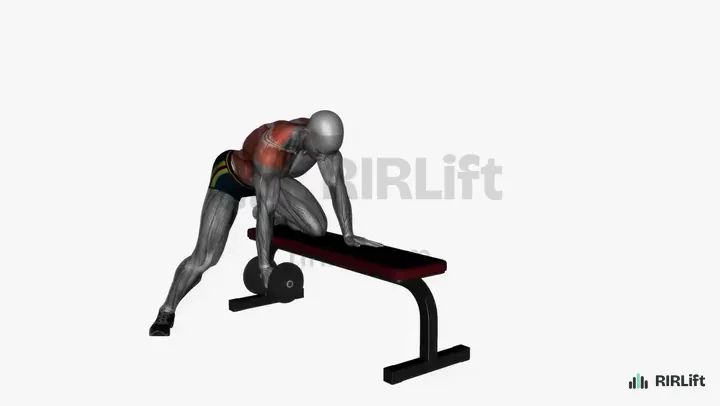
  7. One-Arm Dumbbell Row Lats, Upper Back
Barbell lifts, logged before you rest

Log the set as you rack the bar, while the reps are exact. The weight is already filled in from last time; turn the Digital Crown only when you loaded something else.

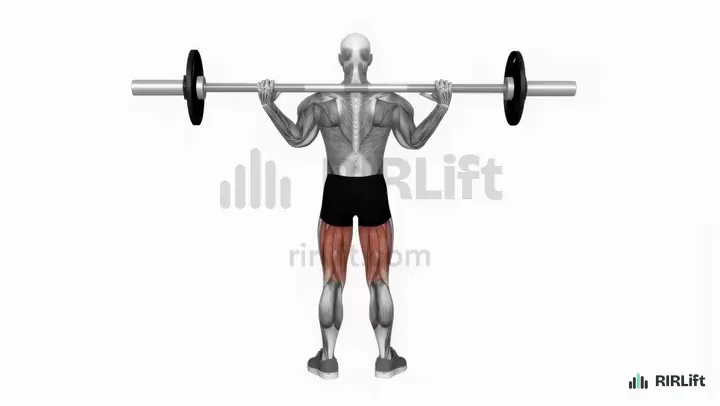
Quads and glutes, barbell squat

Barbell Back Squat

Quads, Glutes, Adductors

The heaviest lift of the barbell day. Log it the moment the bar is back in the hooks, before the next set's rest starts.

How to do it

  1. Set the bar across your upper back, grip it firmly, and step out with feet about shoulder-width apart.
  2. Take a big breath into your belly and brace.
  3. Sit down between your heels until your thighs are at least parallel to the floor.
  4. Drive up, keeping your chest and hips rising together.

Cues

  • Brace before every rep
  • Knees track over toes
  • Stand up fast

Common mistakes

  • Cutting depth as the weight rises: keep the same depth and load what you can hit there.
  • Folding forward out of the bottom: keep the chest up and drive your upper back into the bar.

Swap for: Front Squat, Goblet Squat

Chest, shoulders and triceps, barbell press

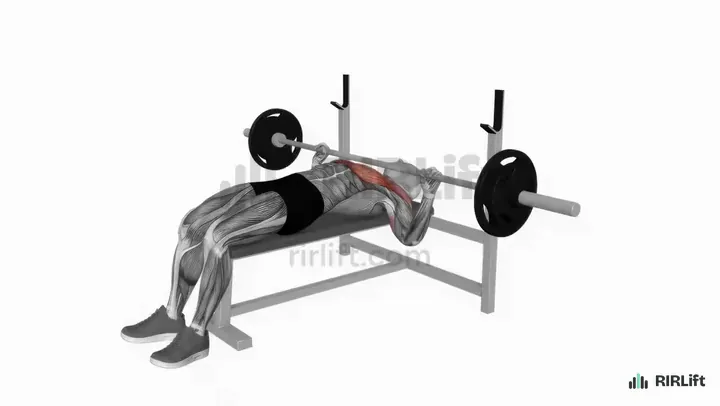
Barbell Bench Press

Chest

The upper-body lift of day A. With the weight prefilled, logging a set you matched is one tap on the bench.

How to do it

  1. Lie on the bench with your eyes under the bar, feet planted, and squeeze your shoulder blades back and down into the pad.
  2. Grip the bar a little wider than shoulder width, unrack it, and hold it over your shoulders with locked elbows.
  3. Lower the bar to your lower chest, around nipple height, with your elbows angled roughly 45 to 70 degrees from your sides.
  4. Touch your chest without bouncing, then press the bar up and slightly back until it is over your shoulders again.

Cues

  • Shoulder blades stay pinned
  • Bar to the nipple line
  • Drive your feet into the floor

Common mistakes

  • Flaring the elbows straight out to the sides: let them sit a bit closer to your ribs so your shoulders stay comfortable.
  • Lifting your hips off the bench to finish a rep: keep your glutes down and count that rep as your last.

Swap for: Flat Dumbbell Press, Smith Machine Bench Press, Machine Chest Press

Hamstrings and glutes, barbell hinge

Romanian Deadlift

Hamstrings, Glutes

Day B's main lift. A 6 to 10 range gives the log room to show a new rep before the bar goes up.

How to do it

  1. Stand with a barbell at your thighs, hands just outside your legs, feet under your hips.
  2. Soften your knees and push your hips back, sliding the bar down your thighs.
  3. Stop when your hamstrings are fully stretched, usually just below the knee, with your back flat.
  4. Push your hips forward to stand up, glutes tight at the top.

Cues

  • Hips back
  • Bar stays on your legs
  • Back flat

Common mistakes

  • Bending the knees into a squat: keep them soft and still.
  • Reaching for the floor: stop where your back would round.

Swap for: Weighted Back Extension

Upper back and lats, barbell row

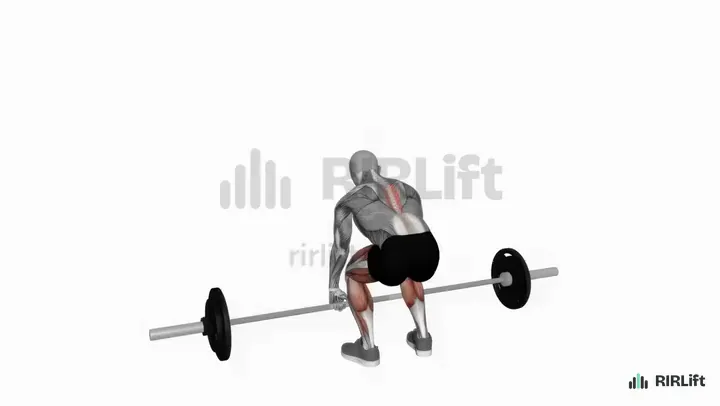
Barbell Row

Upper Back, Lats

The back lift that pairs with the deadlift day. Log the reps you did with a flat back, not the ones you heaved.

How to do it

  1. Hinge forward with the bar in an overhand grip, torso about 45 degrees or lower, back flat.
  2. Let the bar hang under your shoulders with straight arms.
  3. Pull it to your lower ribs, driving your elbows back.
  4. Lower it under control without standing up.

Cues

  • Torso angle stays fixed
  • Elbows back, not up
  • Pause at the ribs

Common mistakes

  • Standing up more each rep: lighten the bar and keep your torso still.
  • Jerking the weight with your hips: the back pulls, the legs only hold position.

Swap for: One-Arm Dumbbell Row, T-Bar Row

Machines when the rack is taken

Swap the lift from the Watch instead of skipping it. A lift you have never logged starts at a weight worked out from the one it replaces, adjusted for the equipment.

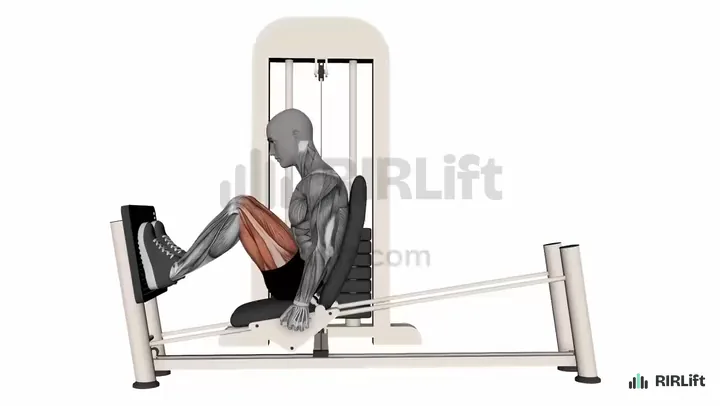
Quads and glutes, machine press

Leg Press

Quads, Glutes

The swap for the squat when the rack has a queue. Its first weight comes from your squat, so the day still counts.

How to do it

  1. Sit in the machine with your whole back against the pad and your feet hip-width on the platform.
  2. Release the safety handles and bend your knees, bringing the platform toward you under control.
  3. Lower until your knees are bent to about 90 degrees or a little deeper, without your lower back curling off the pad.
  4. Press the platform away until your legs are nearly straight, and repeat.

Cues

  • Lower back stays on the pad
  • Whole foot pushes
  • Stop just short of locking out

Common mistakes

  • Going so deep that your hips roll up off the seat: stop where your back stays flat.
  • Snapping the knees straight at the top: keep a soft bend.

Swap for: 45-Degree Leg Press, Hack Squat, Barbell Back Squat

Lats and upper back, cable pull

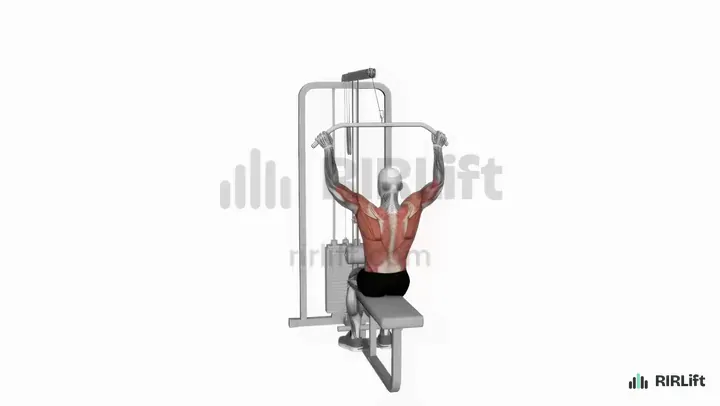
Lat Pulldown

Lats

A pin-loaded back lift that is quick to log: the number on the stack is the weight you enter.

How to do it

  1. Set the thigh pad so your legs are locked under it, then stand up and take the bar a little wider than your shoulders, palms forward.
  2. Sit down with your arms fully stretched overhead and lean back only slightly.
  3. Pull the bar to your upper chest by driving your elbows down toward your hips.
  4. Let the bar rise until your arms are straight and your shoulders lift toward your ears, then pull again.

Cues

  • Elbows to your back pockets
  • Bar to the top of the chest
  • Let the stack lift you at the top

Common mistakes

  • Leaning far back and rowing the bar to your stomach: stay nearly upright so it remains a vertical pull.
  • Stopping with the arms still bent at the top: the stretch overhead is half of what makes the pulldown work.

Swap for: Pull-Up, Neutral-Grip Lat Pulldown, Single-Arm Lat Pulldown

Mid back, cable row

Seated Cable Row

Upper Back, Lats

The second back lift of the rack-free day. Short rests suit it, so the Watch's rest timer does most of the pacing.

How to do it

  1. Sit at the cable row with your feet on the platform and knees slightly bent, holding a close-grip handle with your arms straight.
  2. Sit tall with your chest up and let the cable pull your shoulder blades forward a little.
  3. Row the handle to your lower ribs, driving your elbows back past your torso.
  4. Return it under control until your arms are straight and your shoulders reach forward, then repeat.

Cues

  • Sit tall, no rocking
  • Handle to the belly button
  • Shoulders reach at the front

Common mistakes

  • Rocking back and forth to move the stack: your torso should stay close to upright throughout.
  • Shrugging the handle up toward your neck: pull your shoulders down before the elbows bend.

Swap for: Chest-Supported Row, Single-Arm Cable Row, Barbell Row

Quads and glutes, dumbbell lunge

Walking Lunge

Quads, Glutes

Single-leg work that needs only floor space and a pair of dumbbells. Log the weight of one dumbbell.

How to do it

  1. Hold a dumbbell in each hand at your sides and stand tall with your feet about hip-width apart in a clear lane.
  2. Step forward with one foot, far enough that your front shin stays roughly vertical when you lower.
  3. Drop straight down until your back knee is an inch or two above the floor, keeping your torso upright.
  4. Push through the whole front foot to stand up, and bring the back foot forward past the front one into your next step.
  5. Keep alternating legs until you have done the planned number of steps on each side.

Cues

  • Down like an elevator, not forward like a skier
  • Two train tracks, not a tightrope
  • Let the back knee kiss, not crash

Common mistakes

  • Stepping in a straight line, one foot in front of the other: keep your feet about hip-width apart side to side so you have a stable base.
  • Taking short, choppy steps: lengthen your stride until your front knee stops traveling far past your toes and your back knee can reach the floor.
  • Pausing upright between steps to rebalance: if you need to stop, the dumbbells are too heavy for now; take a lighter pair and keep moving.

Swap for: Cardio Lunge, Dumbbell Forward Lunge, Reverse Lunge

Dumbbells for your first week

On a lift you have never logged, the first weight is a light estimate and the first set asks for as many good reps as you can do. That one set replaces the guess.

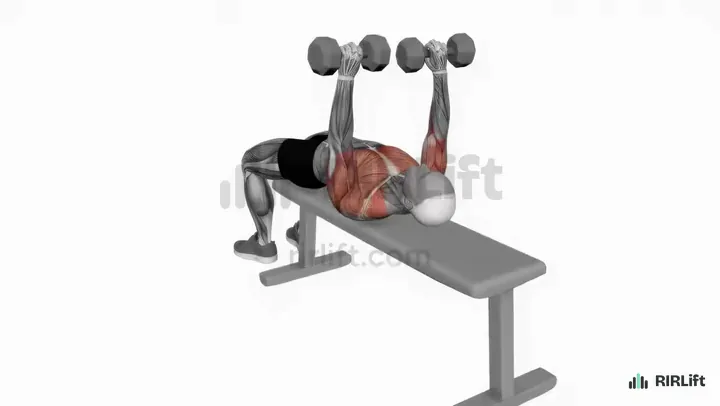
Chest and triceps, dumbbell press

Flat Dumbbell Press

Chest

The first-week press. Dumbbells change in small jumps, so a wrong first guess is fixed by the next set.

How to do it

  1. Lying on a flat bench, hold two dumbbells above your chest.
  2. Lower the bells to the sides of your chest with elbows at about 45 degrees.
  3. Press them back up over your shoulders.

Cues

  • Shoulder blades pinched
  • Control the lowering

Common mistakes

  • Flaring the elbows straight out: keep them at about 45 degrees from your sides.

Swap for: Push-Up, Barbell Bench Press

Lats and upper back, one-arm row

One-Arm Dumbbell Row

Lats, Upper Back
One dumbbell and a bench. Do both sides, then log the weight and the reps of your weaker side.

How to do it

  1. Brace one hand and knee on a bench with a flat back.
  2. Hold the dumbbell at arm's length under your shoulder.
  3. Row the elbow back to your hip.
  4. Lower to a full stretch.

Cues

  • Elbow to the hip
  • Shoulder blade moves
  • Torso still

Common mistakes

  • Twisting the torso: keep the shoulders square.
  • Shrugging: lead with the elbow.

Swap for: Seal Row, Single-Arm Cable Row, Inverted Row

Quads and glutes, dumbbell squat

Goblet Squat

Quads, Glutes

The leg lift of the first week. Holding one dumbbell at your chest keeps the squat upright while you learn it.

How to do it

  1. Hold a dumbbell or kettlebell vertically against your chest.
  2. Sit down between your knees, elbows inside them at the bottom.
  3. Stand up tall.

Cues

  • Elbows nudge the knees out at the bottom
  • Chest stays up behind the weight

Common mistakes

  • Letting the weight pull you forward: hold it tight to your chest and sit between your heels.

Swap for: Bodyweight Squat, Barbell Back Squat

Side delts, dumbbell raise

Dumbbell Lateral Raise

Shoulders

A light lift with a high rep range, so the reps you log, not the weight, show most of the progress.

How to do it

  1. Pick light dumbbells you can raise for 12 clean reps, and stand with your feet hip width apart, the weights hanging by your thighs.
  2. Lean your chest forward a few degrees, pull your shoulders down away from your ears and soften your elbows.
  3. Sweep the weights out and slightly forward, leading with your elbows, until your upper arms are level with your shoulders.
  4. Hold that top position for a beat, then take two to three seconds to lower until the dumbbells are a hand's width from your thighs.
  5. Start the next rep from there without resting at the bottom or bouncing out of it.

Cues

  • Elbows lead, hands follow
  • Shoulders down, neck long
  • Push the weights out, not up

Common mistakes

  • Shrugging the weight up: if your shoulders rise toward your ears, drop to lighter dumbbells and stop each rep where your upper arm is level.
  • Swinging the torso to start each rep: brace, stand still and keep the first inch of the lift as slow as the rest.
  • Bending the elbows more and more as the set goes on: set the bend on rep one and keep it, or the lever shortens and the set gets easier without you noticing.

Swap for: Cable Lateral Raise, Band Lateral Raise, Machine Lateral Raise

Put them together: example sessions

Each session below picks from the exercises above for one situation, with the sets, reps, rest and RIR filled in.

Session 1

Barbell days, phone in the locker

  • Workouts3× a week
  • Working sets36 a week
  • Per workout~35 min
  • EquipmentBarbells, Flat Bench, Lat Pulldown, Dumbbells +1

You lift with a barbell three times a week and want every set on record without taking the phone out.

A squat and bench day and a hinge and row day, each with 12 working sets. The barbell lifts get 2 to 3 minutes of rest, which leaves time to log the set before the next one.

Day A: Squat and bench
ExerciseSets × repsRIRRest
Barbell Back Squat2 warm-up sets first 3 × 3–5 2 3 min
Barbell Bench Press1 warm-up set first 3 × 5–8 2 2:30 min
Lat Pulldown 3 × 8–12 2 90 s
Dumbbell Lateral Raise 3 × 10–15 1 1 min
Day B: Hinge and row
ExerciseSets × repsRIRRest
Romanian Deadlift1 warm-up set first 3 × 6–10 2 2:30 min
Barbell Row 3 × 6–10 2 2 min
Leg Press 3 × 10–15 2 2 min
Flat Dumbbell Press 3 × 8–12 2 90 s
How to run it
Alternate A and B, three days a week. Start the day's routine on the Watch. After each set, check the prefilled weight and reps, change what differs, set the reps you had left, and confirm; the rest timer starts on its own.
How to progress
Double progression, judged on your weakest set. Squat at 225 lb for 5, 5, 5 tops the 3 to 5 range on every set, so the next session opens at 230 lb for 3. Romanian deadlift at 185 lb for 8, 8, 7 against a target of 7: the weakest set hit it, so the bar stays at 185 lb and the target goes to 8.

Session 2

Peak hour: the rack is taken

  • Workouts1× a week
  • Working sets12 a week
  • Per workout~30 min
  • EquipmentLeg Press, Lat Pulldown, Dumbbells, Cable Row

The squat racks have a queue, and you would rather keep lifting than stand around or lose the day's numbers.

The leg press and walking lunges stand in for squats, the pulldown and cable row cover the back. Every station loads with a pin or a pair of dumbbells: 12 working sets, no rack needed.

Rack-free day
ExerciseSets × repsRIRRest
Leg Press1 warm-up set first 3 × 8–12 2 2 min
Lat Pulldown 3 × 8–12 2 90 s
Walking Lunge 3 × 8–12 2 90 s
Seated Cable Row 3 × 8–12 2 90 s
How to run it
Use it in place of a barbell day when the rack is busy. If you have already started the barbell routine, swap the squat for the leg press from the Watch instead: its first weight is worked out from your squat, adjusted for the machine.
How to progress
Leg press at 360 lb for 10, 10, 9 against a target of 10: the weakest set fell short but stayed inside 8 to 12, so the weight and the target both hold. Walking lunges with 40 lb dumbbells for 12, 12, 12 top the 8 to 12 range, so the next session opens at 45 lb for 8.

Session 3

First week: no idea what to lift

  • Workouts2× a week
  • Working sets24 a week
  • Per workout~25 min
  • EquipmentDumbbells, Flat Bench

You have never written down what you lift. Your gym has a dumbbell rack and a bench, and you want the log to work out your weights.

Four dumbbell lifts for legs, chest, back and shoulders, 12 working sets. Dumbbells change in small jumps, so the first guesses settle within a session or two.

Dumbbell full body
ExerciseSets × repsRIRRest
Goblet Squat 3 × 8–12 2 90 s
Flat Dumbbell Press 3 × 8–12 2 2 min
One-Arm Dumbbell Row 3 × 8–12 2 90 s
Dumbbell Lateral Raise 3 × 10–15 1 1 min
How to run it
Twice a week with a day between. On a lift you have never logged, the first weight is a light estimate and the first set asks for as many good reps as you can do; log them and every set after is set from that. Log the weight of one dumbbell.
How to progress
Dumbbell press with 50 lb dumbbells for 12, 12, 12 tops the 8 to 12 range: next session it is 55 lb for 8. One-arm row with 50 lb for 10, 9, 8 against a target of 10: the weakest set fell short, so the weight and the target hold. Lateral raises at 15 lb for 15, 13, 11 against a target of 12: the weakest set was 11, so 15 lb and the target of 12 both stay.

Make it fit you

Questions

Does Apple Watch track weight lifting?

Apple's Workout app records a lifting session's time, heart rate and calories when you start a strength workout. It does not record exercises, weights or reps; a lifting app on the Watch adds those.

Which Apple Watch workout should I choose for weight lifting?

Traditional Strength Training for lifts like the squat, bench press and deadlift. In RIRLift you don't choose: any session with a lift in it is saved to Apple Health as Traditional Strength Training.

Do I need my phone at the gym?

No. Logging, the rest timer, swaps and the next weight all run on the Watch, and the session syncs back to your iPhone afterward.

Is it free?

Logging, the rest timer, swaps and the next weight on the Watch are free on iPhone and Apple Watch. Pro adds the plates per side on the Watch and your own plates and bar.