
Kettlebell deadlift: how to do it, what it works, and how heavy to go
Published October 19, 2026
A kettlebell deadlift is a hip hinge with one kettlebell: stand with the bell between your feet, push your hips back to reach it with a flat back, and stand up by pushing your hips through. It is the simplest way to learn the deadlift and the base for kettlebell swings. Keep the bell close, your arms long and your back flat.
- WorksGlutes, Hamstrings, Lower Back
- AlsoTraps, Quads
- EquipmentKettlebells
- Start with3 × 8–12, 2 in reserve, 2:30 min rest
How to do the kettlebell deadlift
The bell sits between your feet, right under your center, so it is easier to keep close than a barbell and you can practice the hinge with almost no setup. It builds the glutes and hamstrings, teaches the hip drive that swings and heavier deadlifts need, and works at home with a single bell.
Steps
- Stand with your feet about hip to shoulder-width apart and the bell resting on the floor between them, in line with your ankles.
- Push your hips back and let your knees bend a little until you can grab the handle with long arms and a flat back.
- Pull your shoulders down and back, take a breath and brace your stomach so you feel tight before the bell leaves the floor.
- Push the floor away and drive your hips forward, keeping the bell close, until you stand tall with your glutes squeezed.
- Push your hips back again and lower the bell to the same spot on the floor under control before the next rep.
Cues
- Hips back, not down
- Long arms, tight lats
- Stand up tall, don't lean back
Common mistakes
- Squatting the bell up: if your knees travel forward and your hips sink low, push your hips back more and keep your shins near vertical.
- Rounding your back to reach the floor: raise the bell on a step or plates until you can reach it with a flat back.
- Leaning back at the top: finish by squeezing your glutes with your ribs down, standing straight rather than bending backward.
Swap for: Kettlebell Sumo Deadlift, Dumbbell Romanian Deadlift, Band Deadlift
Muscles the kettlebell deadlift works
The kettlebell deadlift works the glutes and hamstrings as the main movers, with the quads helping off the floor. Your lower back, lats and abs hold your spine still under the bell, and your grip and forearms work on every rep.
Sets, reps and reps in reserve for the kettlebell deadlift
| Goal | Sets × reps | RIR | Rest |
|---|---|---|---|
| Learning the hinge | 3 × 8–10 | 3 | 60–90 s |
| Use a light bell and pause briefly with it on the floor between reps. | |||
| Build muscle | 3–4 × 10–15 | 1–2 | 90 s |
| Most people outgrow one bell quickly; slow the lowering or add a pause once 15 reps is easy. | |||
| Strength | 4 × 5–8 | 2 | 2 min |
| Use the heaviest bell you can lift with a flat back, or hold one in each hand. | |||
Kettlebell deadlift variations
-
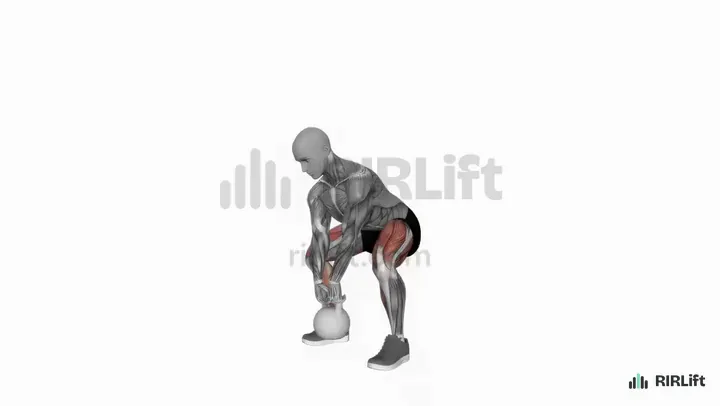
Kettlebell Sumo Deadlift
Take a wider stance with toes turned out when you want more inner thighs and a more upright torso.
Build a session with it -
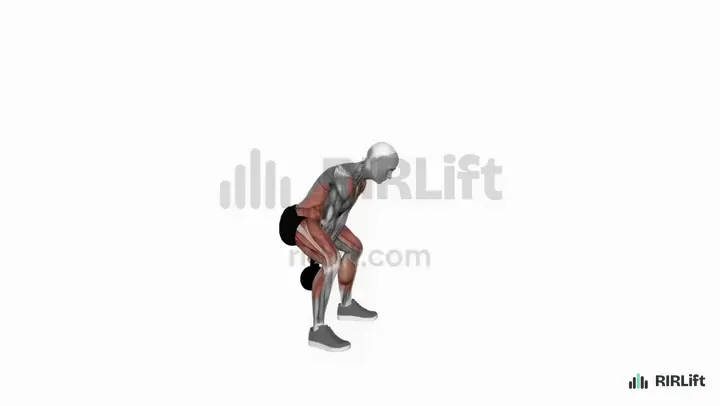
Kettlebell Swing
Swing the bell once the deadlift hinge is solid and you want to train the same hip drive fast.
Build a session with it -
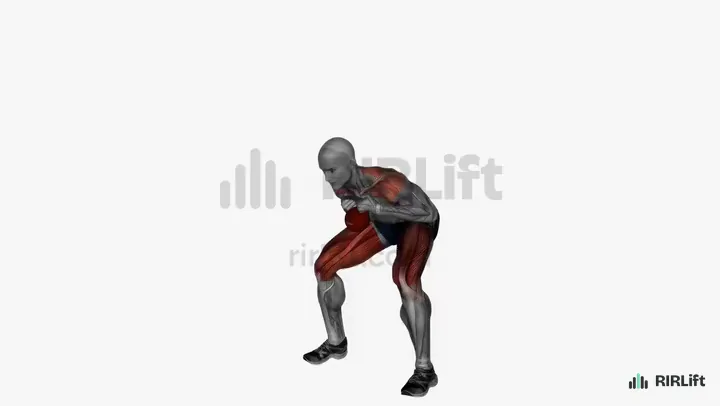
Kettlebell Good Morning
Hold the bell at your chest and hinge when you want the hamstrings to work harder with a light weight.
Build a session with it
Kettlebell deadlift alternatives
Dumbbells
-
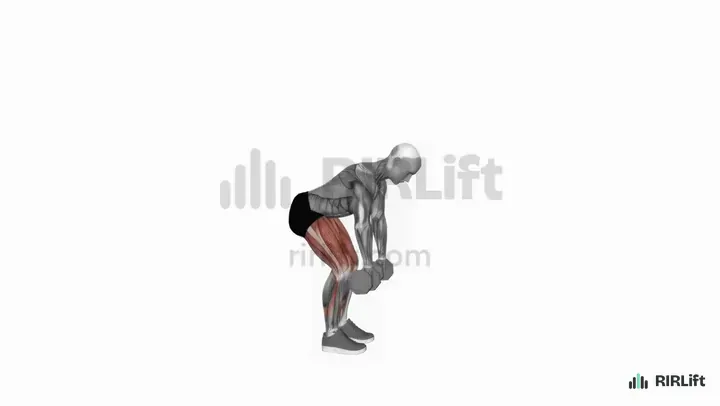
Dumbbell Romanian Deadlift
Use two dumbbells and keep them off the floor when you want more hamstring stretch.
Build a session with it -
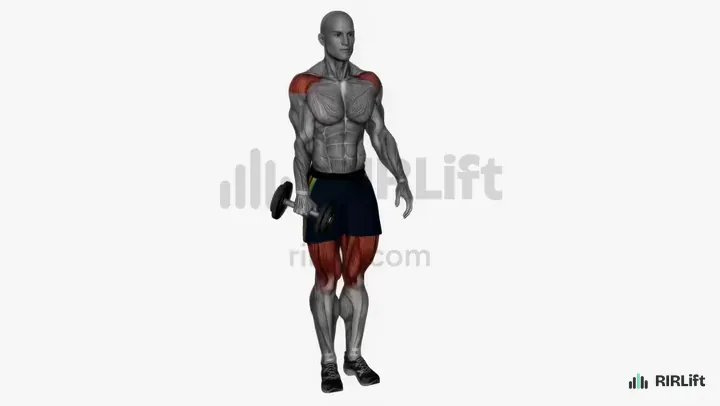
Single-Leg RDL
Hinge on one leg when your bell is too light for two-leg deadlifts.
Build a session with it
Barbell
-
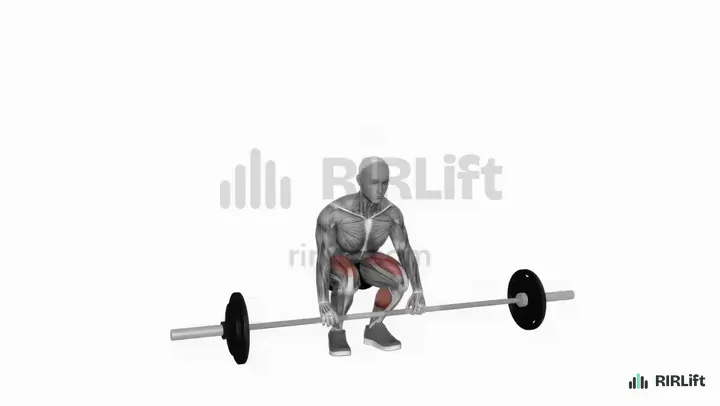
Barbell Deadlift
Move to a barbell when you want to load the deadlift heavier than any kettlebell.
Build a session with it -
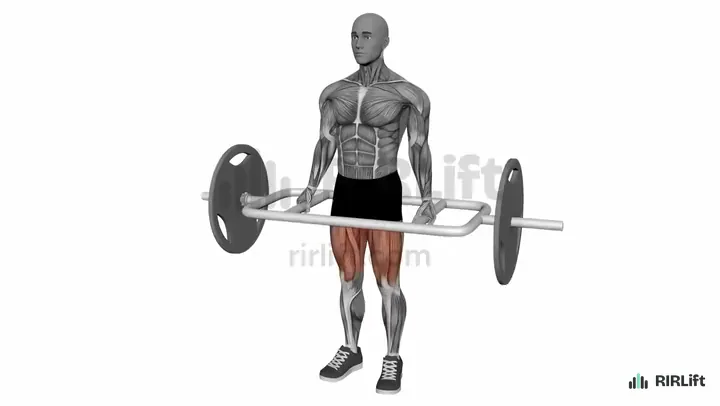
Trap Bar Deadlift
Use a trap bar when you want a heavy deadlift with the weight centered, like the kettlebell.
Build a session with it
With a band
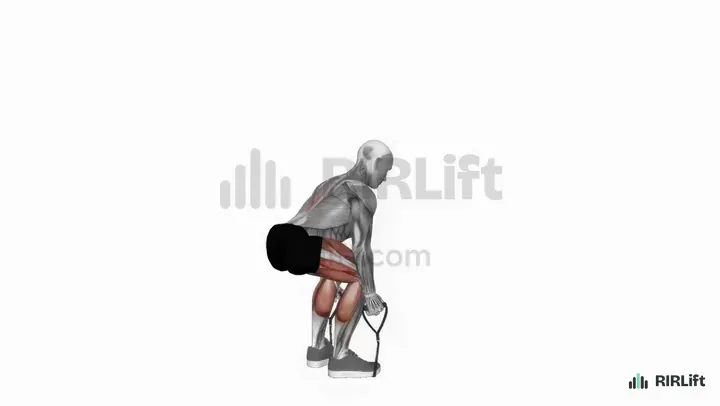
One hand or two
The standard kettlebell deadlift uses both hands on one bell between your feet. Holding the bell in one hand beside or in front of you works the same hinge but makes your trunk resist leaning to that side, which adds core and grip work. Use two hands to learn the movement and lift heavier, and one hand once your bell feels light, doing all reps on one side before switching.
What weight to start with
Pick a bell you can lift for 10 reps with a flat back and still have about three reps left. For many beginners that is somewhere around 8 to 16 kg; people who already lift often start at 16 to 24 kg. Move up when all sets reach the top of your rep range with one or two reps in reserve. If your heaviest bell is too light, hold two bells or switch to a single-leg version.
Questions
What do kettlebell deadlifts work?
The glutes and hamstrings most, with the quads, lower back, lats, abs and grip helping.
Is a kettlebell deadlift good for beginners?
Yes. The weight sits between your feet under your center, so it is easy to keep close and practice a clean hip hinge before swings or barbell deadlifts.
What is the difference between a kettlebell deadlift and a swing?
A deadlift is slow and returns the bell to the floor every rep; a swing hikes the bell back between your legs and snaps the hips to float it forward. Learn the deadlift first.
Should you squat or hinge in a kettlebell deadlift?
Hinge. Push your hips back with a slight knee bend; if your knees move forward and hips drop low, it turns into a squat.
How heavy should a kettlebell deadlift be?
Heavy enough to finish your sets with one or two reps in reserve while keeping your back flat. Most people outgrow their first bell within weeks.
Can you build muscle with kettlebell deadlifts?
Yes, if the sets are hard. With one bell, use higher reps, a slow lowering, pauses, or a single-leg version to keep sets close to failure.
Related templates
-
Kettlebell swing: how to do it, what it works, and what to swap it for
The next step once your hinge is solid.
-
Deadlift: how to set up, pull and program the barbell deadlift
The barbell deadlift to move on to.
-
Kettlebell exercises, grouped by what they train, with sessions for the bells you own
More moves for the same bell.
-
Romanian deadlift: how to do it, and what to swap it for
A hinge that keeps the weight off the floor for more hamstrings.
-
RDL vs deadlift
How the two hinges differ and when to use each.
-
How to use RIR
How to judge reps in reserve with a light bell.