
Kettlebell leg exercises: squats, lunges, hinges and swings
Published October 19, 2026
The best kettlebell leg exercises are the suitcase squat and split squat for your quads, the kettlebell deadlift and good morning for your hamstrings, the hip thrust for your glutes, the swing for power, and the calf raise. A complete kettlebell leg session has one squat or lunge, one hinge, and a swing or thrust, done for 3 hard sets each, 1 to 2 reps short of failure. One bell is enough to start; when it gets light, switch to single-leg moves before you buy a heavier one.
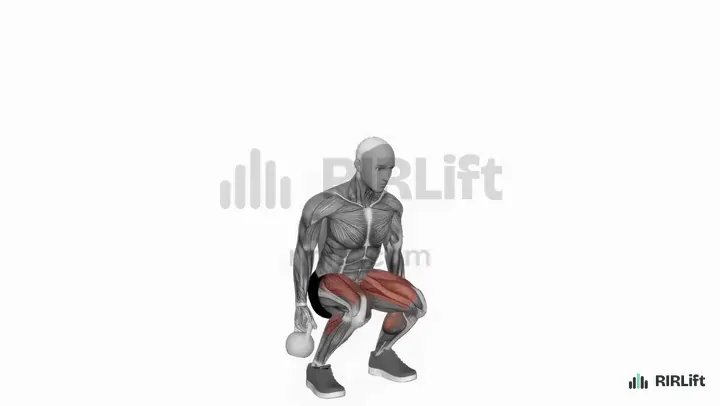
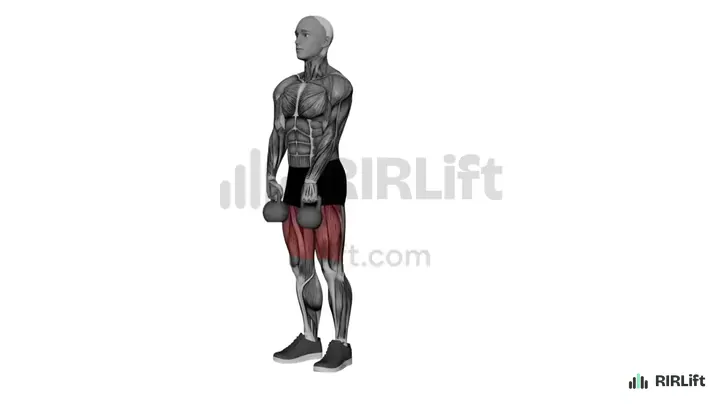
- Kettlebell Suitcase Squat Quads
- Kettlebell Split Squat Quads, Glutes
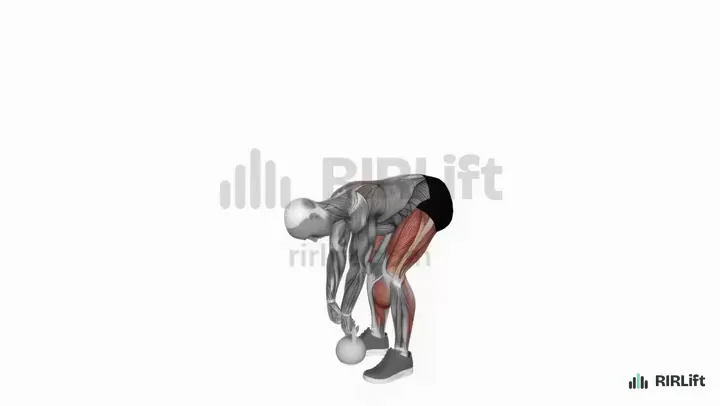
- Kettlebell Deadlift Glutes, Hamstrings, Lower Back
- Kettlebell Swing Glutes, Hamstrings
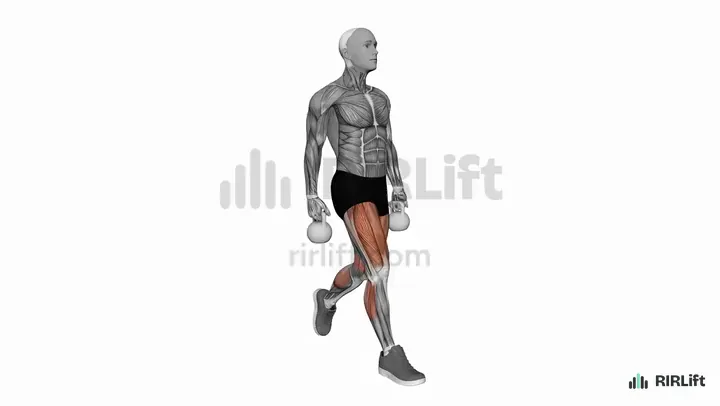
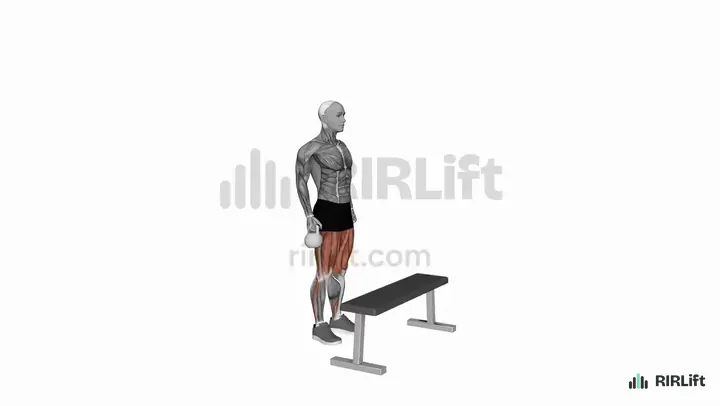
- Kettlebell Step-Up Quads, Glutes
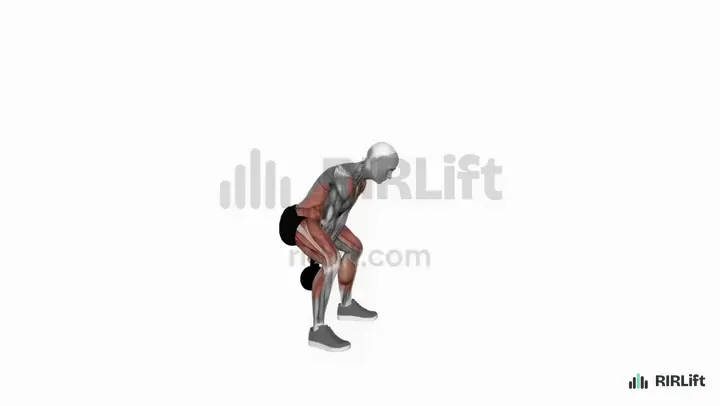
- Kettlebell Good Morning Hamstrings, Lower Back
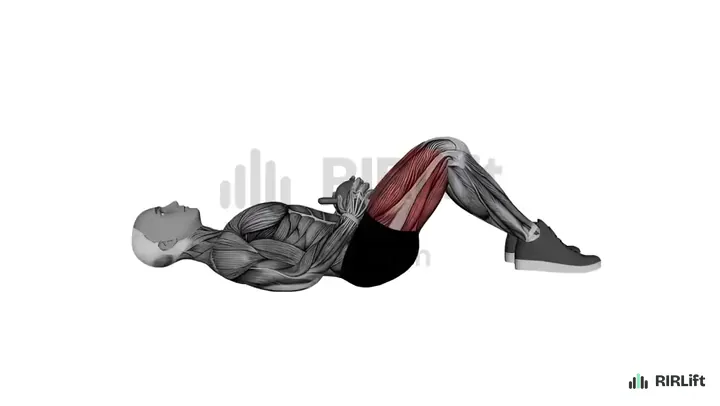
- Kettlebell Hip Thrust Glutes
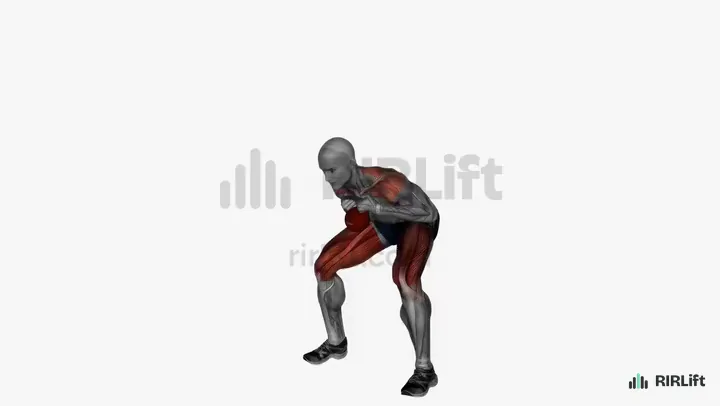
- Kettlebell Lateral Lunge Quads, Glutes
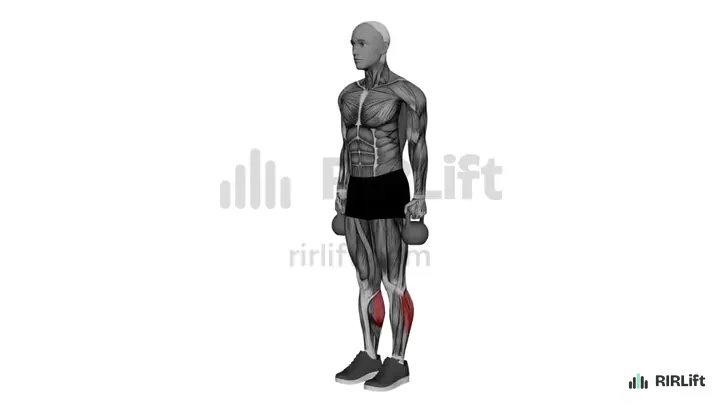
- Kettlebell Calf Raise Calves
Put them together: example sessions
Each session below picks from the exercises above for one situation, with the sets, reps, rest and RIR filled in. Open one in the session builder to change a pick, price it from a recent set, and add it to RIRLift.
-
Session 1
One kettlebell, 12 to 16 kg
You own one kettlebell in the 12 to 16 kg range and want to build your legs with it at home.
2× a week · 28 sets a week · ~35 min
-
Session 2
Two matching kettlebells, legs twice a week
You have a pair of kettlebells, or two different weights, and want two proper leg days per week.
2× a week · 24 sets a week · ~30 min
-
Session 3
20 minutes, swings and supersets
You have 20 minutes, a bell or two, and want leg training that also gets your heart rate up.
3× a week · 30 sets a week · ~15 min
Session 1
One kettlebell, 12 to 16 kg
- Workouts2× a week
- Working sets28 a week
- Per workout~35 min
- EquipmentKettlebells
You own one kettlebell in the 12 to 16 kg range and want to build your legs with it at home.
One moderate bell is too light for two-leg squats and deadlifts to stay hard for long, so this session leans on positions that make it heavier: the bell at your side for the squat, one leg at a time for the split squat, and the bell at your chest for the good morning. Calf raises close out the session because nothing else trains them. Fourteen sets at 1 rep in reserve, twice a week, gives every leg muscle hard work despite the light load.
| Exercise | Sets × reps | RIR | Rest |
|---|---|---|---|
| Kettlebell Suitcase SquatPer side. Switch hands each set. | 3 × 10–20 | 1 | 90 s |
| Kettlebell Split SquatPer leg. Bell at the chest. | 4 × 8–15 | 1 | 75 s |
| Kettlebell Good MorningBell at the chest. 3 s down. | 3 × 10–15 | 1 | 90 s |
| Kettlebell Calf RaisePer leg on a step. | 4 × 12–20 | 0 | 45 s |
- How to run it
- Do the session twice a week with two days between. For the split squat, hold the bell against your chest with both hands.
- How to progress
- Add reps until you reach the top of each range at the target RIR, then slow down the lowering to three seconds or add a one-second pause at the bottom before you buy a heavier bell.
Session 2
Two matching kettlebells, legs twice a week
- Workouts2× a week
- Working sets24 a week
- Per workout~30 min
- EquipmentKettlebells, Flat Bench
You have a pair of kettlebells, or two different weights, and want two proper leg days per week.
A pair of bells lets you load split squats and step-ups much heavier per leg, so each session starts with a quad lift at 1 to 2 reps in reserve, then a hinge with the heavier bell, then a glute or calf exercise. Day A works quads and hamstrings straight; Day B shifts to side lunges, sumo deadlifts and thrusts so the same muscles are hit from different angles. That gives about 12 sets per session and every lower-body muscle about 6 to 9 hard sets a week.
| Exercise | Sets × reps | RIR | Rest |
|---|---|---|---|
| Kettlebell Split Squat1 warm-up set firstPer leg. Bell in each hand. | 4 × 8–12 | 1 | 90 s |
| Kettlebell DeadliftHeaviest bell. | 3 × 8–15 | 1 | 90 s |
| Kettlebell Step-UpPer leg. Knee-height box. | 3 × 8–12 | 1 | 75 s |
| Kettlebell Calf RaisePer leg. | 3 × 10–20 | 0 | 45 s |
Open Legs A in the session builder
| Exercise | Sets × reps | RIR | Rest |
|---|---|---|---|
| Kettlebell Lateral LungePer side. Bell at the chest. | 3 × 8–12 | 1 | 75 s |
| Kettlebell Sumo DeadliftHeaviest bell. | 3 × 8–15 | 1 | 90 s |
| Kettlebell Hip ThrustPause 1 s at the top. | 3 × 10–15 | 1 | 90 s |
| Kettlebell ThrusterTwo bells. | 2 × 8–12 | 2 | 90 s |
Open Legs B in the session builder
- How to run it
- Do Legs A and Legs B once each per week with two or more days between them. Use the heavier bell for the deadlift and hip thrust.
- How to progress
- When every set reaches the top of its range at the target RIR, move up a bell size for that exercise. Until then, add reps.
Session 3
20 minutes, swings and supersets
- Workouts3× a week
- Working sets30 a week
- Per workout~15 min
- EquipmentKettlebells
You have 20 minutes, a bell or two, and want leg training that also gets your heart rate up.
To fit a full leg session in 20 minutes, the exercises are paired: a thruster with a swing for power and conditioning, and a step-up with a glute bridge so one muscle rests while the other works. The swing and thruster stop 2 reps short of failure because technique on fast moves breaks down before the muscles do, and the slower pair goes to 1. Ten sets in 20 minutes, three times a week, is enough leg work to grow, as long as each set is hard.
| Exercise | Sets × reps | RIR | Rest |
|---|---|---|---|
| A1 Kettlebell ThrusterTwo bells, or one held at the chest. | 3 × 8–12 | 2 | 30 s |
| A2 Kettlebell SwingStop when the hip snap slows. | 3 × 15–25 | 2 | 75 s |
| B1 Kettlebell Step-UpPer leg. | 2 × 8–12 | 1 | 30 s |
| B2 Kettlebell Glute BridgeBell on the hips. | 2 × 12–20 | 1 | 1 min |
- How to run it
- Do the session three times a week. Alternate the paired exercises with as little rest as you need to keep form, then rest the full time after each pair.
- How to progress
- Add reps each week; when you reach the top of each range at the target RIR, use a heavier bell or shorten the rest between pairs.
Make it fit you
-
Your bell is too light for squats
Move to one-leg exercises: split squats and step-ups with the bell at your chest, and single-leg calf raises. Slow every lowering phase to three seconds before you look for a heavier bell.
-
Your bell is too heavy to press
Skip the thruster and use the suitcase squat or split squat instead. A heavy bell is a strength asset for deadlifts, sumo deadlifts and hip thrusts, so put it there.
-
Swings bother your lower back
Drop the swing until your deadlift is solid, then come back to it with a lighter bell and fewer reps. Most back complaints from swings come from squatting the bell or lifting it with the arms.
-
You want bigger quads specifically
Start each session with the split squat or step-up, add a set to each, and drop the snatch and thruster. Quads grow from deep knee bends under load, and the power moves are mainly for conditioning.
-
Mixing kettlebells with dumbbells
Use the kettlebell for swings and hinges, where the handle shape helps, and dumbbells for heavier split squats if you have them. The plans work the same with either.
-
Log the RIR on every set
Note how many reps you had left after each set. RIRLift uses the RIR you log to suggest when a lift is ready for the next bell size, which matters with kettlebells because the jumps are big.
Questions
Can you build legs with kettlebells?
Yes. Hard sets taken close to failure grow muscle regardless of the tool, and kettlebells can give you 6 to 10 hard sets a week for each leg muscle. When your bells get light, switch to one-leg exercises and slower lowering phases to keep sets hard.
What are the 3 best kettlebell leg exercises?
The split squat for your quads, the deadlift for your hamstrings and glutes, and the swing for power. Those three cover the whole lower body; add a calf raise if you want calves too.
Is a 20 minute kettlebell workout enough for legs?
Yes, if the sets are hard. The 20-minute plan above fits 10 sets into the time by pairing exercises, and three short sessions a week give your legs plenty of volume to grow.
Are kettlebell swings good for your lower back?
Swings train your back to stay stiff while your hips move fast, which is useful. They bother your back when you squat the bell or pull it up with your arms; fix the hinge with deadlifts first and start light.
What weight kettlebell should I use for legs?
Most people need heavier bells for legs than for upper body. For deadlifts and swings, many start with 12 to 16 kg; for split squats and step-ups, a bell you can hold for 8 to 15 reps with 1 to 2 reps left is right.
Are kettlebells better than dumbbells for legs?
Not better, different. Kettlebells suit swings and hinges because of the handle; dumbbells are easier to hold in pairs for heavy split squats. Use whichever lets you take the set close to failure with good form.
Related templates
-
Kettlebell exercises, grouped by what they train, with sessions for the bells you own
The full kettlebell directory, with upper-body presses and rows to pair with these leg days.
-
Kettlebell glute exercises for strength and size
More hip thrusts, bridges and hinges when your glutes are the priority.
-
Kettlebell swing: how to do it, what it works, and what to swap it for
Step-by-step swing technique and how to program it.
-
Leg exercises at home: squats, lunges, hinges, glutes and calves without a gym
Bodyweight and band options to fill out a home leg day around your kettlebell.
-
The best workout for legs, built for your situation
Full leg programs including machines and barbells for the gym.