
Kettlebell glute exercises for strength and size
Published October 19, 2026
The best kettlebell glute exercises are the swing, the sumo deadlift and the hip thrust for hip extension, and the split squat, step-up and lateral lunge for single-leg work. The swing trains the glutes explosively; the slow lifts build them with heavier, controlled reps. A good kettlebell glute session pairs one hinge or thrust with one single-leg move and a few sets of swings, 2 to 4 sets each, ending 1 to 2 reps short of failure.
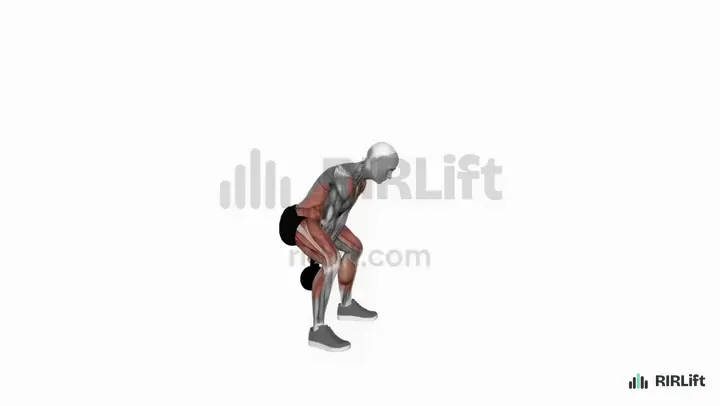
- Kettlebell Swing Glutes, Hamstrings
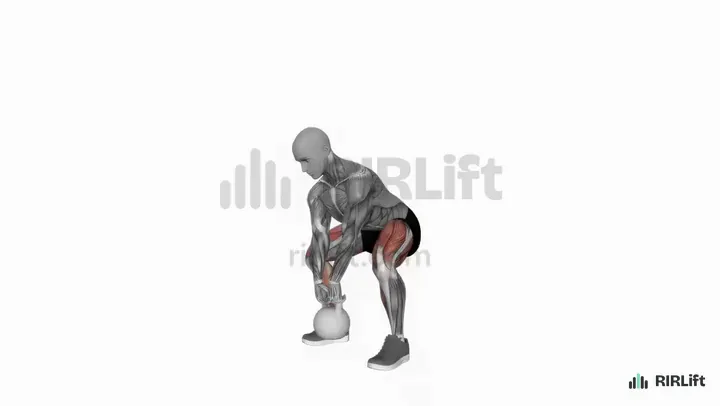
- Kettlebell Sumo Deadlift Glutes, Hamstrings
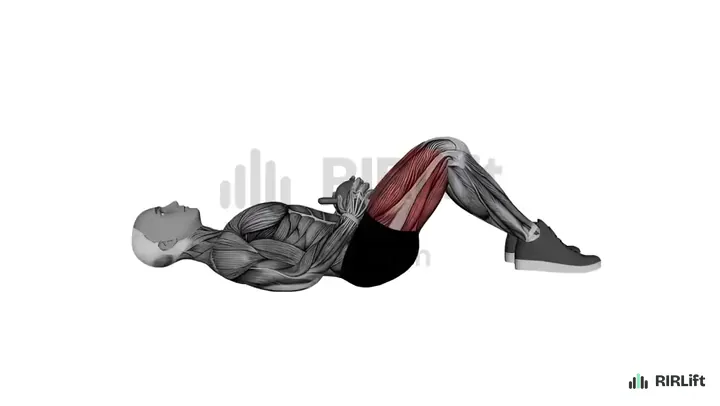
- Kettlebell Hip Thrust Glutes
- Kettlebell Split Squat Quads, Glutes
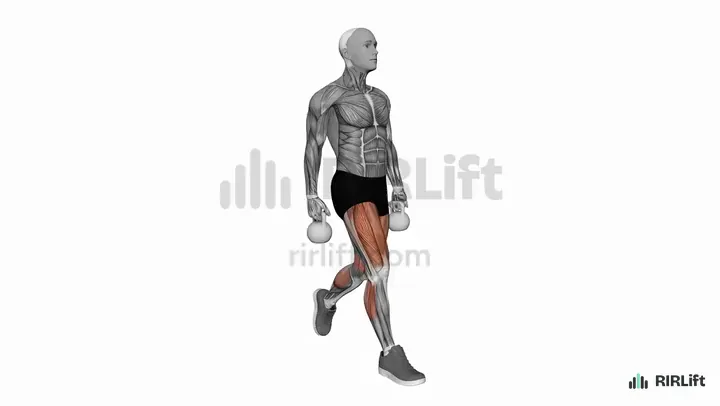
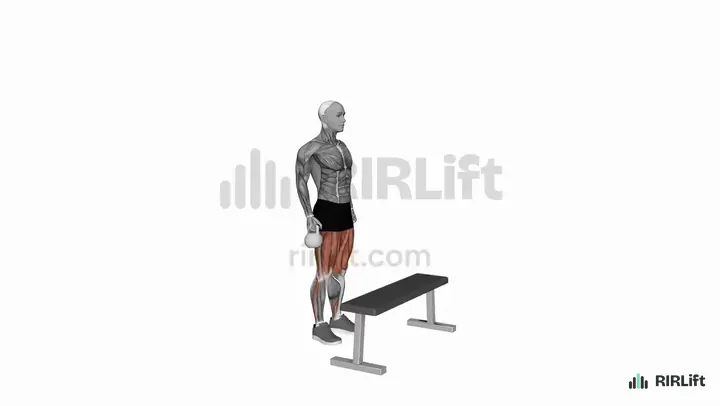
- Kettlebell Step-Up Quads, Glutes
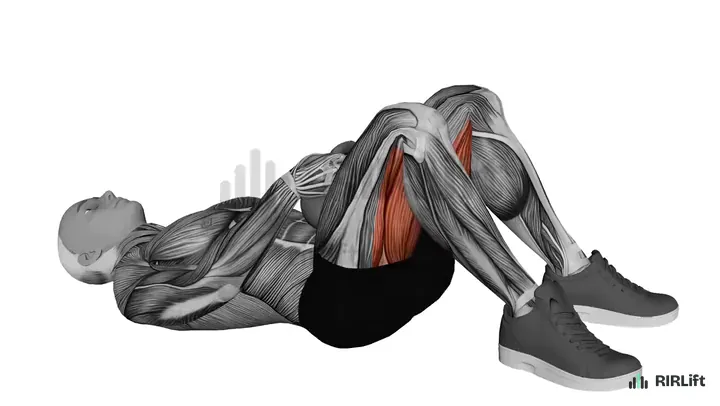
- Kettlebell Glute Bridge Glutes
- Kettlebell Lateral Lunge Quads, Glutes
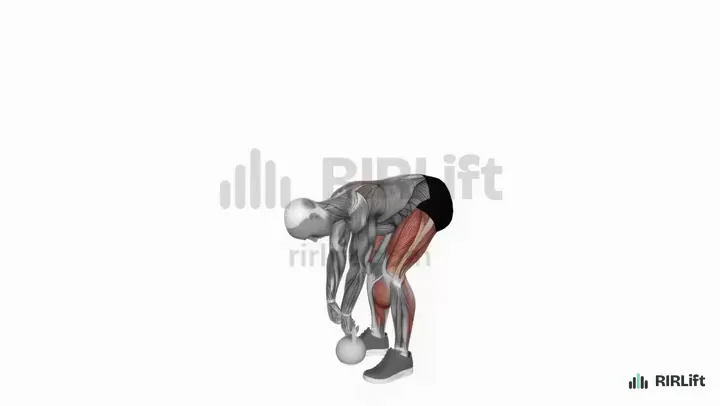
- Kettlebell Deadlift Glutes, Hamstrings, Lower Back
Put them together: example sessions
Each session below picks from the exercises above for one situation, with the sets, reps, rest and RIR filled in. Open one in the session builder to change a pick, price it from a recent set, and add it to RIRLift.
-
Session 1
One medium kettlebell, a small room, 30 minutes
You own one bell, about 12 to 20 kg, and want to build your glutes with it at home.
3× a week · 35 sets a week · ~25 min
-
Session 2
A pair of bells, one heavy bell and a bench
You have a few kettlebells, including a heavy one, and a flat bench. You want the glute-size work closest to a gym.
3× a week · 39 sets a week · ~35 min
-
Session 3
20 minutes, you want glutes and conditioning together
You already lift on other days and want a short kettlebell session that works the glutes hard and leaves you out of breath.
2× a week · 28 sets a week · ~25 min
Session 1
One medium kettlebell, a small room, 30 minutes
- Workouts3× a week
- Working sets35 a week
- Per workout~25 min
- EquipmentKettlebells
You own one bell, about 12 to 20 kg, and want to build your glutes with it at home.
A single bell is too light for heavy two-leg lifts, so the plan gets its load from single-leg work and speed: the split squat with the bell at your chest, the lateral lunge, swings for power, and the floor bridge with the bell on your hips. The slow lifts go to 1 RIR, the bridge to 0, and swings stop well before your form fades. Day A has 12 sets, Day B 11.
| Exercise | Sets × reps | RIR | Rest |
|---|---|---|---|
| Kettlebell SwingCrisp reps. Stop when they slow. | 4 × 10–20 | 2 | 1 min |
| Kettlebell Split SquatPer leg. Bell at the chest. | 3 × 8–15 | 1 | 90 s |
| Kettlebell Glute BridgePause at the top. | 3 × 15–25 | 0 | 1 min |
| Kettlebell Lateral LungePer side. | 2 × 8–12 | 1 | 1 min |
Open Day A in the session builder
| Exercise | Sets × reps | RIR | Rest |
|---|---|---|---|
| Kettlebell DeadliftSlow stretch. | 3 × 10–20 | 1 | 75 s |
| Kettlebell Lateral LungePer side. | 3 × 8–12 | 1 | 75 s |
| Kettlebell Glute Bridge3 s down. | 3 × 15–25 | 0 | 1 min |
| Kettlebell Swing | 2 × 15–20 | 2 | 1 min |
Open Day B in the session builder
- How to run it
- Alternate Day A and Day B, two to four times a week.
- How to progress
- Add reps to the top of each range, then slow the lowering on the split squat and bridge. For swings, add sets before reps.
Session 2
A pair of bells, one heavy bell and a bench
- Workouts3× a week
- Working sets39 a week
- Per workout~35 min
- EquipmentFlat Bench, Kettlebells
You have a few kettlebells, including a heavy one, and a flat bench. You want the glute-size work closest to a gym.
With heavier bells and a bench available, the plan puts the slow lifts first: the hip thrust and sumo deadlift with your heaviest bell, step-ups and split squats with two bells, and good mornings to round out the hinge. Main lifts stop at 1 to 2 RIR, isolation at 0 to 1. Each day has 13 to 14 sets, about half of them glute-dominant.
| Exercise | Sets × reps | RIR | Rest |
|---|---|---|---|
| Kettlebell Hip Thrust1 warm-up set firstHeaviest bell. Pause at the top. | 4 × 10–20 | 1 | 2 min |
| Kettlebell Step-UpPer leg. Two bells. | 3 × 8–12 | 1 | 90 s |
| Kettlebell Good Morning | 3 × 10–15 | 2 | 75 s |
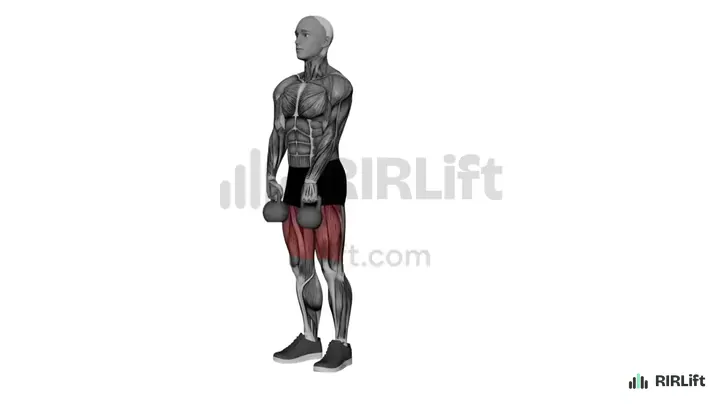
| Kettlebell Suitcase SquatSwitch hands each set. | 3 × 10–15 | 1 | 75 s |
Open Thrust Day in the session builder
| Exercise | Sets × reps | RIR | Rest |
|---|---|---|---|
| Kettlebell Sumo Deadlift1 warm-up set firstHeaviest bell. | 4 × 8–15 | 2 | 2 min |
| Kettlebell Split SquatPer leg. Two bells. | 3 × 8–12 | 1 | 90 s |
| Kettlebell Hip Thrust3 s down. | 3 × 12–20 | 0 | 75 s |
| Kettlebell Step-UpPer leg. | 3 × 10–15 | 1 | 75 s |
Open Squat Day in the session builder
- How to run it
- Do Thrust Day and Squat Day once or twice a week each, a day apart.
- How to progress
- Use double progression: reach the top of the rep range on all sets at the target RIR, then move to the next bell and start at the bottom of the range.
Session 3
20 minutes, you want glutes and conditioning together
- Workouts2× a week
- Working sets28 a week
- Per workout~25 min
- EquipmentKettlebells
You already lift on other days and want a short kettlebell session that works the glutes hard and leaves you out of breath.
This session uses the explosive lifts: swings, sumo deadlift high pulls and snatches, all driven by the glutes, with step-ups in between as active rest that still trains a leg. Ballistic sets stop 2 reps short because speed falls apart before strength does, and fast reps with a bad back position are the risk. It has 14 sets.
| Exercise | Sets × reps | RIR | Rest |
|---|---|---|---|
| A1 Kettlebell SwingTwo hands. | 4 × 12–20 | 2 | 0 s |
| A2 Kettlebell Step-UpPer leg. One bell at the chest. | 4 × 8–12 | 2 | 1 min |
| B1 Kettlebell Sumo Deadlift High Pull | 3 × 8–12 | 2 | 0 s |
| B2 Kettlebell SnatchPer arm. | 3 × 5–8 | 2 | 75 s |
- How to run it
- Do Hip Power once or twice a week. Go from one exercise in a pair straight into the other and rest after the pair.
- How to progress
- Add a round, then shorten the rest between rounds, then use a heavier bell for the swing. Learn the snatch only once the swing is solid; until then, replace it with more swings.
Make it fit you
-
Only a light bell
Lean on single-leg moves and the floor bridge, and slow every lowering to three seconds. Swings with a light bell still help, but push the reps to 20 and the pace up.
-
Lower back gets tired
Take the good morning out and keep the deadlifts at 2 RIR. Move the hip thrust and bridge to the start of the session, where your glutes are freshest and your back is supported.
-
You feel swings in your arms or back
Do a few slow kettlebell deadlifts first to find the hinge, then swing with the bell only reaching hip height until the snap comes from the hips.
-
No bench
Swap the hip thrust for the glute bridge and the step-up for the split squat. Both keep the plan intact on the floor.
-
Want bigger glutes, not cardio
Use the bench plan and keep swings to a warm-up. Slow lifts with a full stretch and sets near failure build more muscle than fast ballistic reps.
-
Log the RIR, not just the bell
Kettlebells come in big jumps, so the reps you have left decide when to move up. In RIRLift you log the RIR with each set and it shows when you are ready for the next bell.
Questions
Can you build glutes with kettlebells?
Yes. Kettlebell hip thrusts, deadlifts, split squats and step-ups load the glutes through a full range, and swings add power. The catch is that bells come in big weight jumps, so you progress mostly with reps and single-leg work between bells.
Can you build legs with kettlebells?
Yes, especially the glutes and hamstrings, which kettlebell hinges and swings load well. For the quads, single-leg squats and step-ups with two bells do the work that a heavy barbell squat would otherwise do.
What is the best kettlebell exercise for glutes?
For glute size, the kettlebell hip thrust, because the glutes do nearly all the lifting through a full range. For power and conditioning, the swing. A complete plan uses both.
What happens if I do 100 kettlebell swings every day?
Your conditioning and hip power will improve, and your grip will get stronger. For glute size it is less effective than three or four hard sessions a week with slower lifts, and daily swings can wear on the lower back if your form slips when you are tired.
Is a 20-minute kettlebell workout enough?
For most people, yes, two or three times a week. Twenty minutes fits 10 to 14 hard sets, which is enough to train the glutes well if each set ends close to failure.
How do I actually activate my glutes?
Start the session with a slow glute bridge or a few kettlebell deadlifts, squeezing hard at the top of each rep. Then, in every hinge, finish by pushing your hips forward until you stand straight; that is the moment the glutes work hardest.
What weight kettlebell should I use for glutes?
Heavier than for upper body work. Many people start swings and deadlifts with 12 to 16 kg and use 20 kg or more for hip thrusts. The right bell is one that leaves you 1 to 2 reps short of failure in the target rep range.
Related templates
-
Kettlebell swing: how to do it, what it works, and what to swap it for
The swing in detail, with how to fix a squatted or arm-driven swing.
-
Kettlebell exercises, grouped by what they train, with sessions for the bells you own
Kettlebell moves for the rest of the body.
-
Dumbbell glute exercises: thrusts, hinges and single-leg moves
The same glute patterns with dumbbells.
-
Hip thrust: how to do it, what it works, and what to swap it for
The barbell version of the best glute exercise.
-
The best workout for your glutes and butt
Full glute programs with gym equipment.