Kettlebell swing alternatives: no kettlebell, a cranky back, or still learning the hinge

The best kettlebell swing alternative is the dumbbell swing: hold one dumbbell by the end and do the exact same hip snap. If swings bother your lower back, the cable pull-through keeps the hinge and glute squeeze with the load behind you; for power, use medicine ball slams or one-arm dumbbell snatches. If you want more strength than swings build, a Romanian deadlift or hip thrust loads the same hips far heavier, and at home a band pull-through copies the motion.

What a kettlebell swing alternative has to replace

The kettlebell swing trains your glutes and hamstrings with a fast, hard hip snap, while your lower back, core and grip hold the bell in place. Its hardest moments are the bottom, where you catch the bell with your hips back, and the top, where your glutes lock you upright. A replacement should keep the hip hinge, and either the speed (for power and conditioning) or the load (for strength).

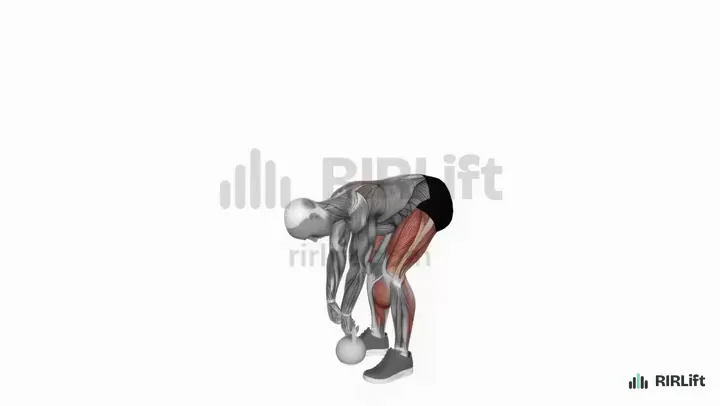
How to do the kettlebell swing

Keep the speed: power and conditioning

If you swung for power or to get your heart rate up, these keep the fast hip drive.

Closest swap, no kettlebell

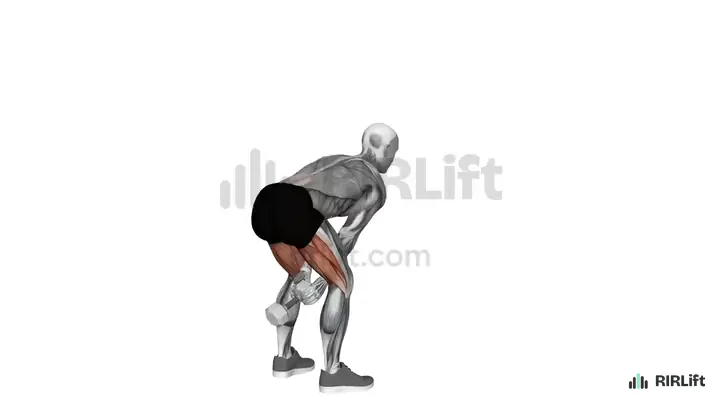
Dumbbell Swing

Glutes, Hamstrings

One dumbbell held by its end swings just like a kettlebell, so the hip snap, the reps and the conditioning effect stay the same. This is what RIRLift puts in the kettlebell swing's place when you train with dumbbells.

How to do it

  1. Set your feet a bit wider than your hips and hold one dumbbell by its end with both hands.
  2. Hinge and hike the dumbbell back between your thighs, keeping your back flat.
  3. Snap your hips forward hard so the dumbbell floats up to about chest height, with your arms staying loose.
  4. Let it fall back between your legs, hinge to absorb it, and go straight into the next rep.

Cues

  • The hips throw, the arms just hold
  • Plank at the top
  • Hike it back high between the thighs

Common mistakes

  • Squatting the swing so the knees do the work: think hips back, not down.
  • Lifting the dumbbell with your shoulders: if your arms are tired before your glutes, the hips are not snapping.

Power swap with one dumbbell

One-Arm Dumbbell Snatch

Shoulders, Glutes

The same explosive hip drive, but the dumbbell keeps going overhead, which adds your shoulders and upper back. Keep reps low and crisp, since it is harder to learn than a swing.

How to do it

  1. Stand with feet about shoulder-width, the dumbbell standing between your feet, and squat down to grip it with one hand.
  2. Drive through your legs and hips explosively, as if jumping, pulling the weight up tight along your body.
  3. As it passes your chest, punch your arm straight up and stand tall with the dumbbell locked out overhead.
  4. Lower it to your shoulder, then back to the floor, and repeat. Switch hands each set.

Cues

  • Jump, then punch
  • Dumbbell close to the body
  • Lock out overhead

Common mistakes

  • Pulling with the arm first: the legs start it; the arm only steers.
  • Letting the dumbbell arc away from you: it should rise in a straight line close to your body.

Power swap, easiest to learn

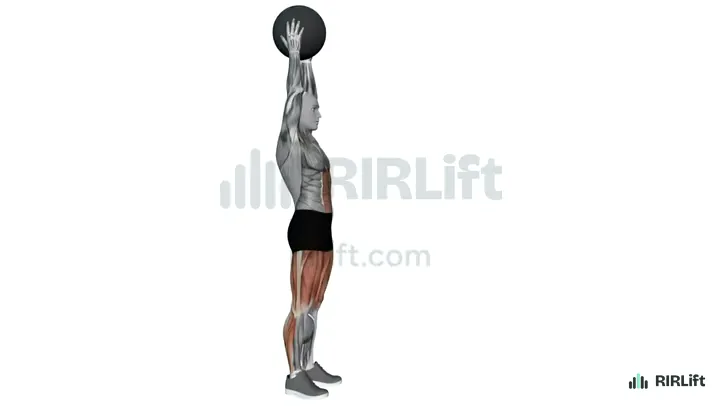
Medicine Ball Slam

Lats, Abs

You reach tall and throw a slam ball into the floor as hard as you can. It trains fast, full-body power with nothing to catch, so it suits beginners and tired backs.

How to do it

  1. Stand with feet shoulder width, ball held in both hands at your waist.
  2. Reach it overhead and rise onto your toes.
  3. Brace and drive the ball down into the floor just in front of your feet.
  4. Bend your hips and knees as the ball leaves your hands.
  5. Pick it up with a flat back and repeat.

Cues

  • Get tall, then crunch
  • Throw through the floor
  • Stop when it slows

Common mistakes

  • Throwing only with your arms: the trunk should fold hard as you throw.
  • Using a bouncy ball that rebounds at your face: use a slam ball.

Easier on your lower back

No catching a weight in front of you: the load pulls from behind, sits on your hips, or moves slowly.

Back-friendly cable swap

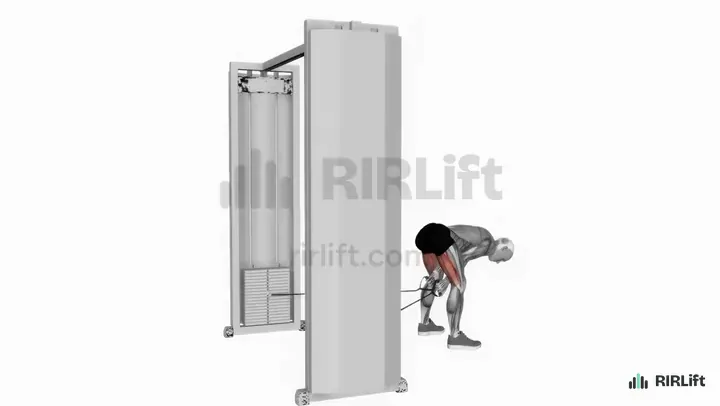
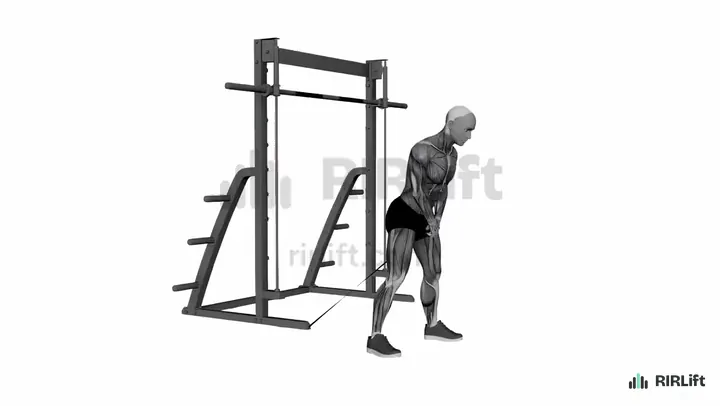
Cable Pull-Through

Glutes, Hamstrings

You hinge back against a low cable and drive your hips forward to a full squeeze. The load pulls from behind instead of swinging in front, so your lower back works far less.

How to do it

  1. Set a rope on the lowest pulley, face away from the stack, and reach between your legs to grab both ends.
  2. Walk forward two or three steps so the weight lifts off the stack, and set your feet a bit wider than your hips.
  3. With a soft bend in your knees, push your hips back toward the machine and let the rope travel back through your legs while your back stays flat.
  4. Stop when you feel a strong stretch in your hamstrings, usually with your torso close to 45 degrees.
  5. Drive your hips forward until you stand straight, squeezing your glutes, with your arms staying long the whole time.

Cues

  • Hips back, not down
  • Arms are just hooks
  • Stand tall, do not lean back

Common mistakes

  • Squatting the weight: if your knees bend a lot and your hips drop, you are using your quads. Keep the shins nearly vertical and reach back with your hips.
  • Pulling with your arms: the rope should rise only because your hips extend. Keep your elbows straight.
  • Leaning back at the top: finish standing straight with your ribs down; arching past vertical shifts the effort to your lower back.

Heaviest glute swap

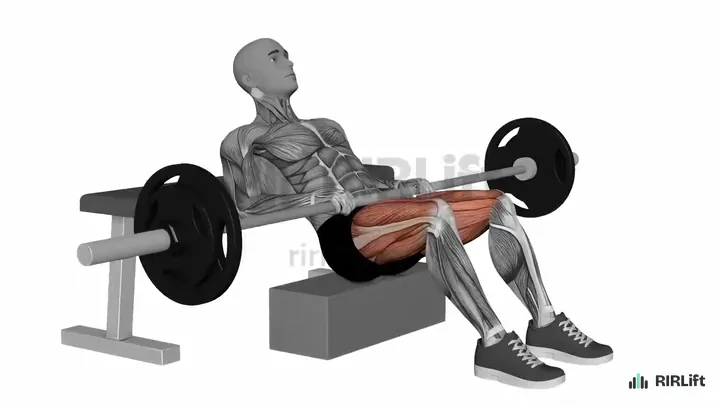
Hip Thrust

Glutes

Your upper back rests on a bench and a bar sits on your hips, so your glutes take heavy load at the lockout every swing finishes with. No momentum, and almost nothing for your lower back.

How to do it

  1. Sit on the floor with the edge of a flat bench just under your shoulder blades, and roll a padded barbell into the crease of your hips.
  2. Plant your feet about hip width, a foot or so in front of you, so your shins will be vertical when your hips are up.
  3. Hold the bar with both hands, tuck your chin slightly and brace as if someone is about to poke your stomach.
  4. Push the floor away through your whole foot and lift your hips until your thighs and torso are level, pivoting on the bench.
  5. Hold the top for one second with your glutes squeezed and ribs down, then lower until the plates almost touch the floor.

Cues

  • Ribs down, chin tucked
  • Shins vertical at the top
  • Squeeze for one second, then lower

Common mistakes

  • Arching your lower back to get the hips higher: stop when your thighs are level with your torso and keep your ribs pulled down.
  • Feet too close or too far: if you feel it mostly in your quads move your feet out, if mostly in your hamstrings move them in, until your shins are vertical at lockout.
  • Bouncing out of the bottom with half reps: let the plates nearly touch the floor and start each rep from there.

Back and glutes, bodyweight

45-Degree Back Extension

Glutes, Hamstrings

Hinging over a 45-degree bench trains the lower back, glutes and hamstrings the swing uses, with control instead of speed. Hold a plate to make it harder.

How to do it

  1. Set the pad so it sits just below your hip bones, then hook your heels under the foot rollers.
  2. Fold your arms over your chest and stand straight in line with the bench.
  3. Bend forward at the hips until you feel a stretch in your hamstrings.
  4. Lift your torso back to a straight line with your legs, squeezing your glutes, and stop there.

Cues

  • Hinge at the hips
  • Stop at a straight line
  • Squeeze your glutes at the top

Common mistakes

  • Arching back past a straight line at the top: the rep ends when your body is straight.
  • Setting the pad too high so it blocks your hips: you should be able to fold freely over it.

Wide-stance kettlebell hinge

Kettlebell Sumo Deadlift

Glutes, Hamstrings

If you have a kettlebell but swings bother your back, a wide stance and slow pull from the floor trains your glutes and inner thighs with no swinging at all.

How to do it

  1. Stand wide with toes turned out and the bell resting below you, between the heels.
  2. Push your hips back and bend the knees until you can grip the handle, chest up.
  3. Drive through your heels and squeeze your glutes to stand all the way up.
  4. Lower the bell back to the floor along the same path.

Cues

  • Knees out
  • Chest up
  • Finish tall

Common mistakes

  • Rounding to reach the bell: put it on a book or step if you cannot reach it flat-backed.
  • Bouncing the bell off the floor: settle it on every rep.

Slow and heavy: hinges for strength

Swings top out early for strength. These hinges keep loading the same hips as you get stronger, and the kettlebell deadlift teaches the pattern first.

Strength swap with a barbell

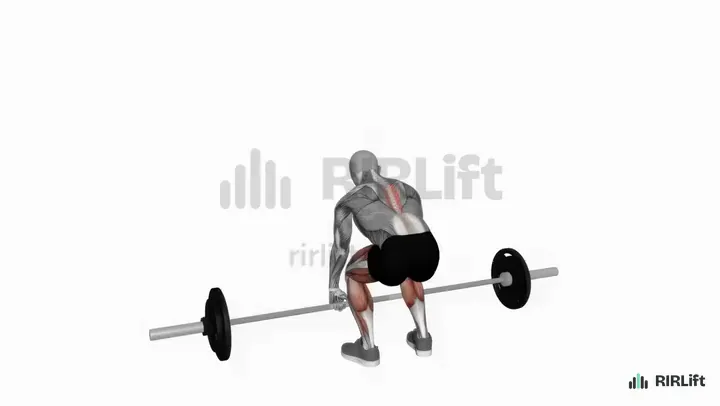
Romanian Deadlift

Hamstrings, Glutes

The same hinge, slow and heavy. It builds the hamstrings and glutes more than swings can, because you can keep adding weight for months.

How to do it

  1. Stand with your feet about hip width and the bar over your midfoot, squat down to grip it overhand just outside your thighs, and stand up with it.
  2. Stand tall with the bar against your thighs, unlock your knees slightly and keep that bend fixed for the whole set.
  3. Push your hips straight back and let the bar slide down your thighs, chest coming forward as your hips go back.
  4. Stop when your hips stop moving backward and you feel a hard stretch in your hamstrings, usually somewhere between your knees and mid-shin.
  5. Push your feet into the floor and drive your hips forward until you stand tall, without leaning back at the top.

Cues

  • Hips back, not chest down
  • Bar stays on your legs
  • Knees soft and still

Common mistakes

  • Chasing the floor: if your back rounds to reach lower, your hamstrings have already run out. End the rep where your hips stop going back.
  • Squatting the weight down: if your knees keep bending as you lower, the stretch leaves your hamstrings. Lock in the knee angle at the top and only move at the hips.
  • Letting the bar drift forward: a bar a few inches off your legs pulls on your lower back. Drag it down your thighs, and use straps if your grip is what makes it swing.

Strength swap with dumbbells

Dumbbell Romanian Deadlift

Hamstrings, Glutes

The Romanian deadlift with a dumbbell in each hand, for when you have dumbbells and want a slow, heavy hinge alongside dumbbell swings.

How to do it

  1. Stand with your feet about hip-width apart, one dumbbell per hand resting against the front of your thighs, palms facing you.
  2. Unlock your knees slightly, pull your shoulders down and back, and take a breath into your stomach.
  3. Push your hips straight back and let your chest tip forward, sliding the dumbbells down the front of your legs with your back flat and knees barely changing angle.
  4. Stop when your hamstrings are fully stretched and your hips will not travel back any farther, typically with the dumbbells somewhere between the knee and mid-shin.
  5. Drive your hips forward and squeeze your glutes to stand tall, finishing upright without leaning back.

Cues

  • Hips back, not down
  • Dumbbells skim your legs
  • Stand tall, don't lean back

Common mistakes

  • Bending the knees more as you go down: that turns the hinge into a squat; keep the knee bend you started with and let the hips do the moving.
  • Rounding the back to reach lower: end the rep where your hips stop going back, even if the dumbbells are only at your knees.
  • Letting the dumbbells drift forward: keep them brushing your thighs and shins so the load stays over your feet and off your lower back.

Hinge to learn before swinging

Kettlebell Deadlift

Glutes, Hamstrings, Lower Back

You hold one kettlebell in one hand and hinge slowly, in the same hips-back position a swing starts from. Use it until the hinge feels natural, then go back to swings.

How to do it

  1. Stand with your feet about hip-width apart, one kettlebell in one hand, arm long and the bell hanging by the front of that thigh.
  2. Pull your shoulders down and back, take a breath and brace your stomach.
  3. Push your hips back and let your knees bend a little, sliding the bell down close to your leg with a flat back.
  4. Push the floor away and drive your hips forward until you stand tall with your glutes squeezed and your shoulders level.
  5. Finish the set, then switch hands for the next one.

Cues

  • Hips back, not down
  • Bell close to your leg
  • Stand up tall, don't lean back

Common mistakes

  • Squatting the bell up: if your knees travel forward and your hips sink low, push your hips back more and keep your shins near vertical.
  • Rounding your back to reach lower: stop each rep where your back is still flat.
  • Leaning toward the bell: brace your trunk and keep your shoulders level.

At home with a band or one light weight

Light, so take sets close to failure and squeeze hard at the top of every rep.

Home swap with a band

Band Pull-Through

Glutes

A band tied to a post behind you lets you hinge back and snap your hips through, the closest copy of the swing's motion without a weight.

How to do it

  1. Anchor a long band low behind you, face away from it, and hold the band with both hands between your legs.
  2. Walk forward until the band is tight and stand with a wider than hip-width stance.
  3. Push your hips back, letting your hands pass between your legs, knees softly bent.
  4. Squeeze your glutes to drive your hips forward and stand tall. Pause for a second.

Cues

  • Hips back, hands follow
  • Arms are just hooks
  • Squeeze at the top

Common mistakes

  • Pulling with your arms: keep them straight; the hips do the work.
  • Squatting down instead of hinging: keep your shins nearly vertical.

Glute lockout with one light weight

Single-Leg Glute Bridge

Glutes

One foot planted, a kettlebell on that hip and your hips driven up trains the glute squeeze that finishes every swing. A light bell is enough for hard sets of 12 to 20.

How to do it

  1. Lie face up, both knees bent, feet flat and hip-width apart, heels about a hand's length from your glutes, with a kettlebell resting on the hip of the leg that will work.
  2. Hold the kettlebell in place with both hands, then lift the other foot and straighten that leg in line with the working thigh.
  3. Press your lower back gently toward the floor and push down through the heel of the planted foot.
  4. Lift your hips until your shoulders, hips and working knee form one line, keeping both hip bones at the same height.
  5. Hold the top for a second with the glute squeezed, then lower slowly until your hips just touch the floor, and repeat.

Cues

  • Push the floor away with your heel
  • Hips level, like a tray
  • Ribs down at the top

Common mistakes

  • Letting the free side drop or twist: if the hip on the lifted-leg side sags, shorten the range or hug the free knee in tighter until you can keep it level.
  • Arching the lower back to get higher: stop when your hips line up with your shoulders and knee; any higher comes from your spine, not your glute.
  • Feet too close or too far: too close and your quads take over, too far and your hamstring cramps; move the foot until you feel the glute working most.

Example sessions without the kettlebell swing

Session 1

Home, dumbbells but no kettlebell

Open in the session builder
  • Workouts2× a week
  • Working sets24 a week
  • Per workout~30 min
  • EquipmentDumbbells

You train at home with adjustable dumbbells and want the swing's mix of power and conditioning.

Dumbbell swings take the kettlebell swing's place for the same reps. One-arm snatches add explosive work, the dumbbell Romanian deadlift adds a slow hinge, and single-leg glute bridges finish the glutes. 12 working sets.

Hinge and power
ExerciseSets × repsRIRRest
Dumbbell Swing1 warm-up set firstHold one dumbbell by its end. 4 × 12–20 2 1 min
One-Arm Dumbbell SnatchSets are per arm. 3 × 5–8 2 75 s
Dumbbell Romanian Deadlift 3 × 8–12 2 90 s
Single-Leg Glute BridgeSets are per leg. 2 × 12–20 1 45 s
How to run it
Twice a week on non-consecutive days, or as the second half of a lower-body day. Stop a swing set when the dumbbell stops floating up to chest height.
How to progress
Add reps to the top of each range first, then use a heavier dumbbell. On swings, cut rest toward 45 seconds before you add weight if conditioning is the goal.

Session 2

Gym, swings bother your lower back

Open in the session builder
  • Workouts2× a week
  • Working sets26 a week
  • Per workout~30 min
  • EquipmentMedicine Ball, Barbells, Flat Bench, Adjustable Cable +1

You train in a gym and like what swings do for your glutes, but the catch at the bottom leaves your lower back tight.

The hip thrust loads the glutes heavy with your back supported, the cable pull-through keeps the hinge and squeeze, and back extensions train your lower back slowly. Medicine ball slams keep some speed with nothing to catch. 13 working sets.

Hinge and power
ExerciseSets × repsRIRRest
Medicine Ball SlamEvery rep at full speed. 3 × 8–10 2 1 min
Hip Thrust1 warm-up set first 4 × 8–12 2 2 min
Cable Pull-Through 3 × 12–15 1 75 s
45-Degree Back Extension 3 × 12–15 2 75 s
How to run it
Once or twice a week. Do the slams first while you are fresh, then the strength work.
How to progress
On the hip thrust, pull-through and back extension, add the smallest weight jump once every set reaches the top of its range at the RIR shown. On slams, use a heavier ball when 10 hard reps feel easy.

Session 3

New to swings, learning the hinge

Open in the session builder
  • Workouts3× a week
  • Working sets30 a week
  • Per workout~25 min
  • EquipmentKettlebells, Resistance Bands, Dumbbells

You are new to kettlebells, your swings look more like squats, and you want to build the pattern before you swing.

The kettlebell deadlift teaches the hips-back position slowly, the band pull-through adds speed with light resistance, and single-leg glute bridges train the lockout. Reps stay moderate and well short of failure while you learn. 10 working sets.

Hinge practice
ExerciseSets × repsRIRRest
Kettlebell Deadlift1 warm-up set firstHips back, shins stay still. 4 × 8–12 3 90 s
Band Pull-Through 3 × 12–15 3 1 min
Single-Leg Glute BridgeSets are per leg. 3 × 10–15 2 1 min
How to run it
Two or three times a week for three to four weeks, then add swings back in at the start of the session.
How to progress
Add reps to the top of each range, then a heavier bell on the deadlift. Once you can push your hips back to a wall behind you with a flat back, start swinging.

Make it fit you

Questions

What can I substitute for kettlebell swings?

The dumbbell swing is the closest. For power, use medicine ball slams or one-arm dumbbell snatches; for a sore back, the cable pull-through; for strength, the Romanian deadlift or hip thrust.

How do you do a kettlebell swing without a kettlebell?

Hold one dumbbell by the top end with both hands and swing it the same way: hike it back between your legs, then snap your hips forward so it floats to chest height.

What is a modification for a kettlebell swing?

Use a lighter bell and stop the swing at belly height, or do kettlebell deadlifts until the hinge feels natural. If your back is the problem, swap to cable or band pull-throughs.

Are kettlebell swings actually useful?

Yes, for power, conditioning and glute work in one move. They are not the best for maximum strength or size, so pair them with a heavier hinge like the Romanian deadlift.

What is a good substitute for a kettlebell?

A single dumbbell held by one end works for swings, deadlifts and goblet squats. A loaded backpack can stand in for light work if you have nothing else.

What is a good kettlebell swing alternative for beginners?

The kettlebell deadlift or band pull-through. Both teach pushing your hips back with a flat back, which is the part most beginners get wrong on swings.