
Lat activation exercises: learn to feel your lats before rows, pulldowns and deadlifts
Published October 24, 2026
To activate your lats, row easily for 3 minutes, do 10 kettlebell pullovers, then 2 sets of 12 straight-arm pulldowns and 1 set of 10 one-arm pulldowns per side, all stopping with 3 to 4 reps left. It takes about 7 minutes. Then do 2 to 3 lighter sets of your first back lift. The cue that ties them together is driving your elbow down toward your hip.
- Rowing Machine Quads, Hamstrings, Glutes, Lats
- Kettlebell Pullover Lats
- Straight-Arm Pulldown Lats
- Single-Arm Lat Pulldown Lats
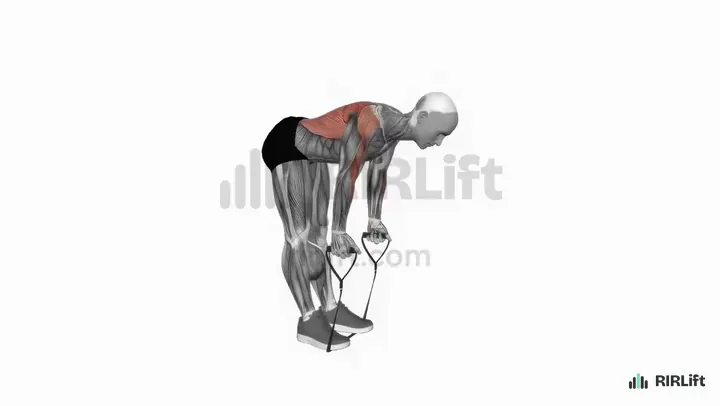
- Band Bent-Over Row Lats, Upper Back
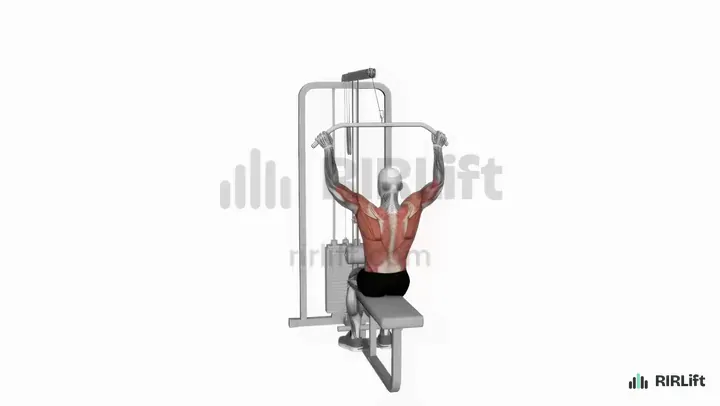
- Lat Pulldown Lats
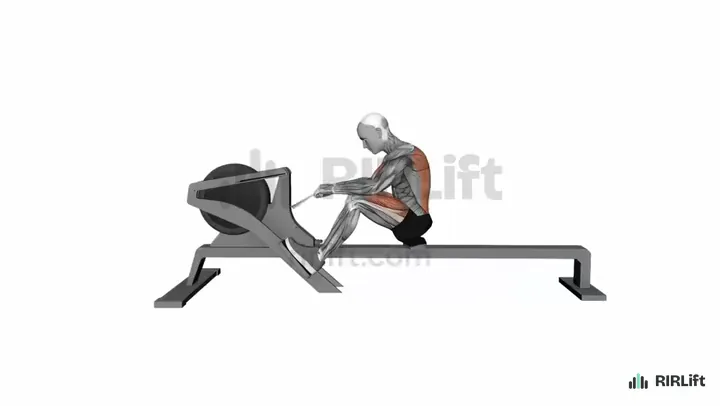
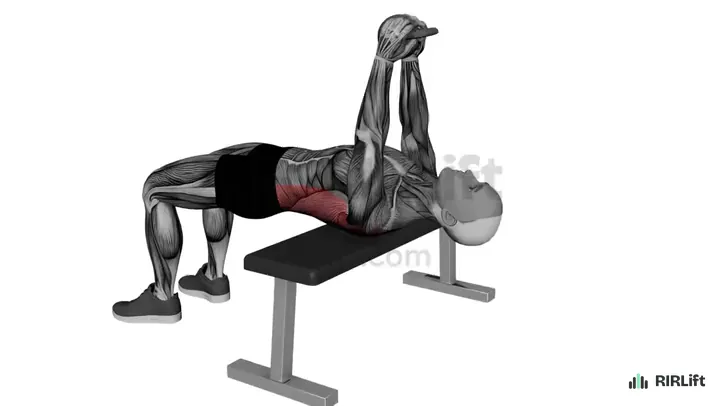
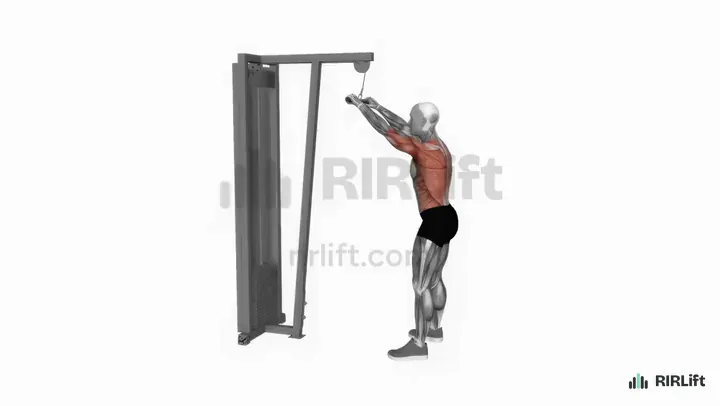
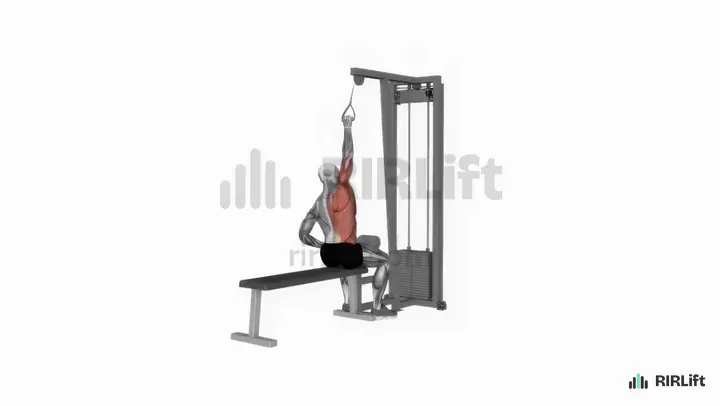
Put them together: example sessions
Each session below picks from the exercises above for one situation, with the sets, reps, rest and RIR filled in. Open one in the session builder to change a pick, price it from a recent set, and add it to RIRLift.
-
Session 1
Back day that starts with pulldowns
You train back at the gym and want to feel your lats instead of only your arms.
2× a week · 20 sets a week · ~15 min
-
Session 2
Before deadlifts
You deadlift and want the bar to stay close and your back to stay set.
1× a week · 10 sets a week · ~20 min
-
Session 3
Row day with free weights
You open with barbell rows and the lats never seem to join in.
2× a week · 18 sets a week · ~20 min
Session 1
Back day that starts with pulldowns
- Workouts2× a week
- Working sets20 a week
- Per workout~15 min
- EquipmentRowing Machine, Kettlebells, Lat Pulldown
You train back at the gym and want to feel your lats instead of only your arms.
The straight-arm pulldown goes first because it is the clearest lat signal, the one-arm pulldown second, and the pulldown itself last with two ramp-up sets. All drills stop with 3 to 4 reps left, and working sets end at 1 to 2.
| Exercise | Sets × reps | RIR | Rest |
|---|---|---|---|
| Rowing MachineSeconds. | 3 × 60 | 5 | 0 s |
| Kettlebell Pullover | 1 × 10 | 4 | 0 s |
| Straight-Arm Pulldown | 2 × 12 | 4 | 30 s |
| Single-Arm Lat PulldownPer arm. | 1 × 10 | 3 | 0 s |
| Lat Pulldown2 warm-up sets first | 3 × 8–12 | 1 | 90 s |
- How to run it
- Do the warm-up blocks, then two light pulldown sets, then your working sets.
- How to progress
- Add reps on the pulldown up to 12 at the target RIR, then raise the weight one step.
Session 2
Before deadlifts
- Workouts1× a week
- Working sets10 a week
- Per workout~20 min
- EquipmentRowing Machine, Kettlebells, Lat Pulldown, Resistance Bands +1
You deadlift and want the bar to stay close and your back to stay set.
Lats hold the bar against your legs, so this version uses the straight-arm drill as a lat-tightness rehearsal, adds band rows, then ramps up the trap bar deadlift in three steps. Working sets stop at 2 reps in reserve.
| Exercise | Sets × reps | RIR | Rest |
|---|---|---|---|
| Rowing MachineSeconds. | 3 × 60 | 5 | 0 s |
| Kettlebell Pullover | 1 × 8 | 4 | 0 s |
| Straight-Arm PulldownHold 1 s at the hips. | 2 × 10 | 4 | 30 s |
| Band Bent-Over Row | 1 × 15 | 4 | 0 s |
| Trap Bar Deadlift3 warm-up sets first | 3 × 4–6 | 2 | 3 min |
- How to run it
- Warm-up blocks in order, then the deadlift ramp-up. On each ramp-up rep, squeeze your armpits down before the bar leaves the floor.
- How to progress
- Add weight when all sets reach 6 reps at 2 reps in reserve.
Session 3
Row day with free weights
- Workouts2× a week
- Working sets18 a week
- Per workout~20 min
- EquipmentRowing Machine, Lat Pulldown, Resistance Bands, Barbells
You open with barbell rows and the lats never seem to join in.
One-arm pulldowns and band rows teach the elbow-to-hip path, then the barbell row ramps up in two sets. Keep the warm-up sets slow so the feel carries into the working sets.
| Exercise | Sets × reps | RIR | Rest |
|---|---|---|---|
| Rowing MachineSeconds. | 2 × 60 | 5 | 0 s |
| Single-Arm Lat PulldownPer arm. | 2 × 10 | 4 | 20 s |
| Band Bent-Over Row | 2 × 15 | 4 | 20 s |
| Barbell Row2 warm-up sets first | 3 × 8–10 | 2 | 2 min |
- How to run it
- Warm-up blocks, then two light barbell row sets, then working sets.
- How to progress
- Add weight when you reach 10 reps on all sets at 2 reps in reserve.
Make it fit you
-
Only a band
Use band rows and a band anchored high for straight-arm pulldowns. A heavy door anchor works.
-
Biceps take over
Think of your hands as hooks and pull with your elbows. Two extra sets of straight-arm pulldowns teach this faster than any cue.
-
Short on time
One set of straight-arm pulldowns and two ramp-up sets of your first lift. That's about 3 minutes.
-
Pull-up day
Use the pull-up warm-up instead: it adds hanging and scapular work that pulldowns don't need.
-
Can't feel one side
Do the one-arm pulldown on that side first, with a 1-second pause at the bottom of each rep.
-
Log the reps you had left
Log your working sets with the reps you had left. RIRLift uses it to set the next session's pulldown or row weight.
Questions
How do you actually activate your lats?
Pull your elbows toward your hips, not just your hands. Straight-arm pulldowns are the best drill to learn it, because your arms can't bend to help.
Why are my lats not activating?
Usually because the arms and upper back are doing the pulling. Slow down, use less weight, and practice with straight-arm and one-arm pulldowns before your main sets.
What are the 3 best exercises for lats?
For building them: pull-ups or pulldowns, a row with elbows tucked, and a straight-arm pulldown or pullover. The last one doubles as the best activation drill.
Should I activate my lats before deadlifts?
It helps many lifters keep the bar close. One or two sets of straight-arm pulldowns and the cue to squeeze your armpits down are enough.
How many sets of lat activation should I do?
One to two light sets of one or two drills, with 3 or more reps left in each. More than that starts to tire the muscle you want fresh.
Related templates
-
How to warm up for pull-ups: a 6-minute routine
The pull-up version, with hanging and scapular drills.
-
Straight-arm pulldown: how to do it, what it works, and where it fits
The full guide to the best lat drill on this page.
-
Cable lat exercises: pulldowns, rows and single-arm work
Lat exercises to train hard after the warm-up.
-
The best workout for back: width, thickness and traps
Full back sessions to run after this routine.
-
Warm-up sets
How many light sets of the first lift to do, and how fast to climb to your working weight.