
Straight-arm pulldown: how to do it, what it works, and where it fits
Published October 19, 2026
A straight-arm pulldown is a cable exercise where you sweep a bar or rope from about head height down to your thighs while your arms stay long, with only a soft bend at the elbow. Because the elbows never bend, the biceps can't help, so the lats do the pulling through their full range. Hinge forward a little, keep your ribs down and move only at the shoulders.
- WorksLats
- EquipmentLat Pulldown
- Start with3 × 12–20, 2 in reserve, 90 s rest
How to do the straight-arm pulldown
It trains the lats without the biceps getting in the way, which makes it the easiest way to learn what a lat contraction feels like. It works as a warm-up before rows and pulldowns, or as a finisher once your arms are tired from heavier pulling.
Steps
- Set a straight bar or rope on the high pulley and stand a step or two back, feet about hip width.
- Take the handle with straight arms, hinge forward slightly at the hips and let the cable pull your arms up until you feel a stretch under your armpits.
- Lock in a small bend at the elbows, tuck your ribs down and keep your chest still.
- Sweep your hands down in an arc until they reach your thighs, squeezing your armpits toward your sides.
- Let the handle rise back along the same arc under control until your arms are overhead again.
Cues
- Long arms, soft elbows
- Hands to pockets
- Ribs down, chest still
Common mistakes
- Bending the elbows to push the bar down: that turns it into a triceps pushdown; lighten the stack and keep the elbow angle fixed.
- Rocking the torso to finish the rep: keep your hip angle the same from top to bottom so the lats, not your body weight, move the cable.
- Cutting the top short: let your arms travel back up until you feel the stretch, since that is the part the lats work hardest in.
Swap for: Dumbbell Lat Pullover, Lat Pulldown, Kettlebell Pullover
Muscles the straight-arm pulldown works
The straight-arm pulldown works mainly your lats. The teres major, the back of your shoulders and the long head of your triceps help, and your abs work to stop your ribs from flaring. Your biceps do almost nothing, which is the point of keeping the arms straight.
Sets, reps and reps in reserve for the straight-arm pulldown
| Goal | Sets × reps | RIR | Rest |
|---|---|---|---|
| Build muscle | 3 × 10–15 | 1–2 | 60–90 s |
| Use a weight you can sweep all the way to your thighs without bending your elbows. | |||
| Warm-up before rows or pulldowns | 2 × 12–15 | 3–4 | 45 s |
| Light and slow, just enough to feel the lats switch on. | |||
| Finisher | 2 × 15–20 | 0–1 | 60 s |
| Take the last set close to failure once heavier pulling is done. | |||
Straight-arm pulldown variations
-
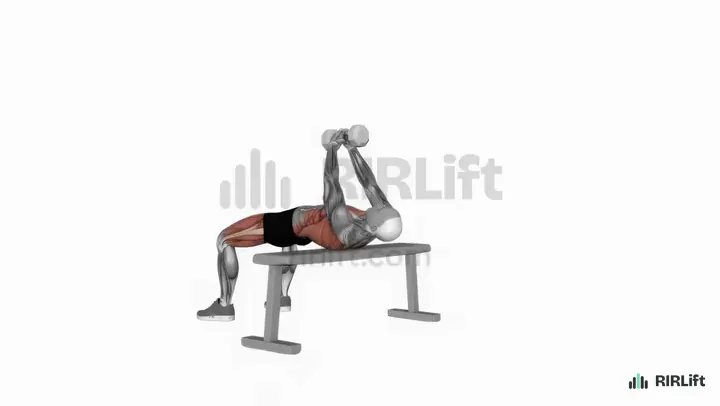
Dumbbell Lat Pullover
Lie across a bench with one dumbbell when you have no cable; it trains the same arm path from overhead to your chest.
Build a session with it -
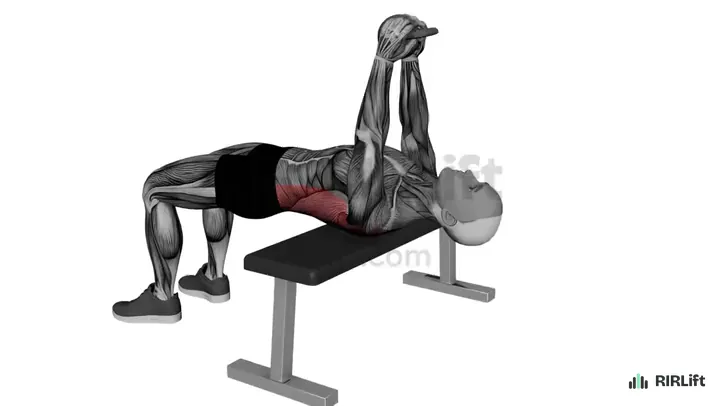
Kettlebell Pullover
Use a kettlebell held by the horns for the same pullover arc at home.
Build a session with it -
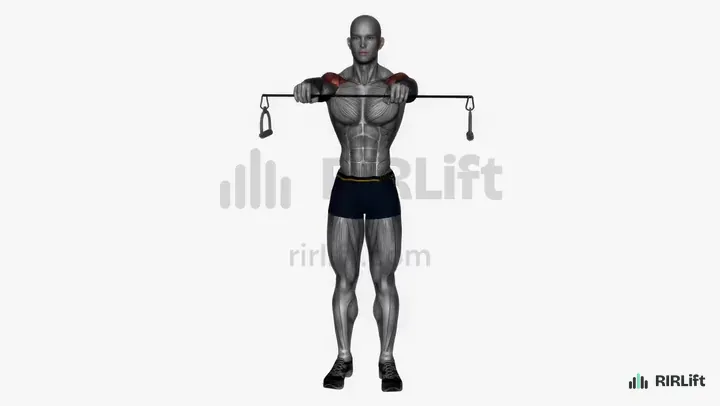
Band Pull-Apart
Pull a band apart with straight arms when you only have bands and want to train the upper back with the same long-arm idea.
Build a session with it
Straight-arm pulldown alternatives
Lat pulldowns
-
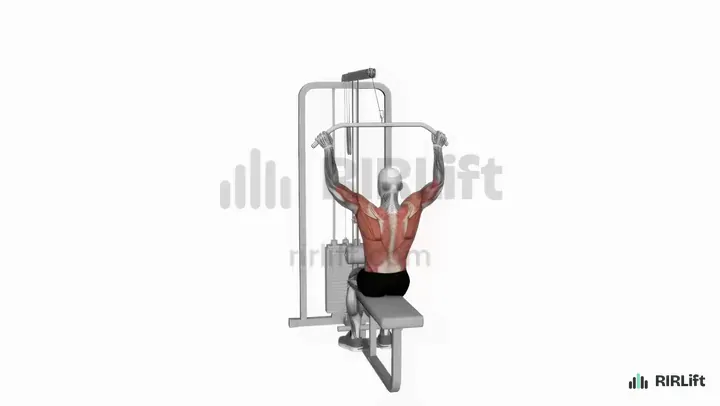
Lat Pulldown
Pick the regular pulldown when you want heavier loads and your biceps helping.
Build a session with it -
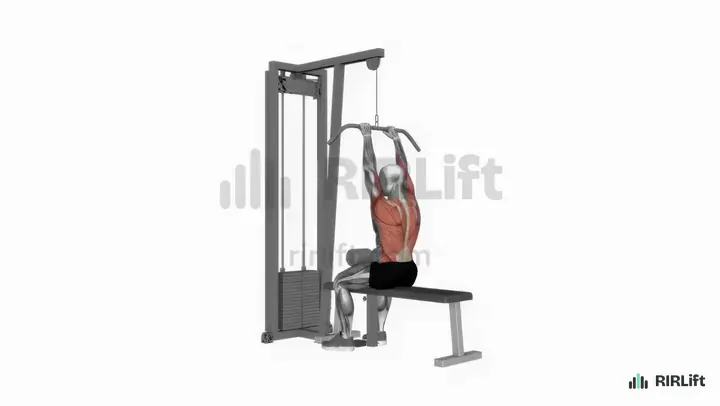
Neutral-Grip Lat Pulldown
Use a neutral grip when you want the pulldown with a comfortable hand position for the shoulders.
Build a session with it
Bodyweight pulling
-
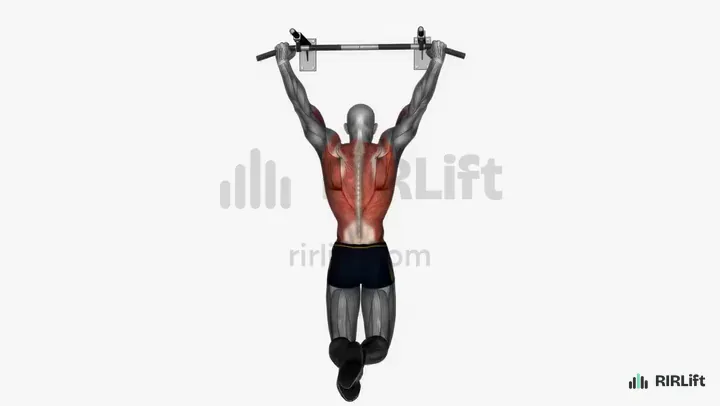
Pull-Up
Hang from a bar when you want the heaviest vertical pull with no machine.
Build a session with it -
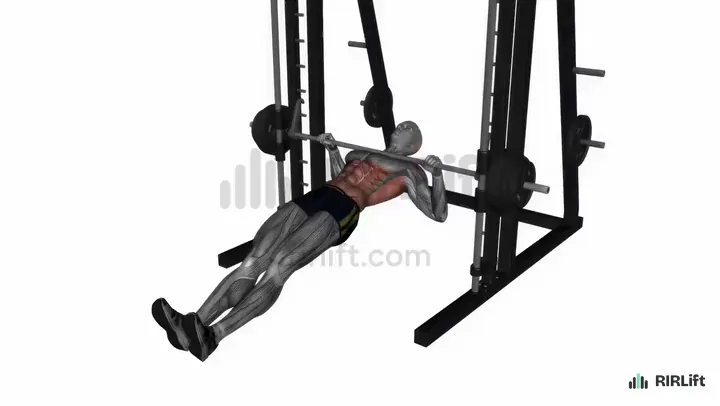
Inverted Row
Row your body to a low bar when pull-ups are still out of reach.
Build a session with it
Straight-arm pulldown vs lat pulldown
A lat pulldown bends the elbows, so your biceps and upper back help and you can load it heavy. A straight-arm pulldown keeps the elbows nearly locked, so the lats work alone and the weight is much lighter.
Neither replaces the other. Use the lat pulldown or pull-ups as the main vertical pull of the day, then add two or three sets of straight-arm pulldowns when your lats are lagging or you struggle to feel them in rows.
Bar, rope or a lat prayer
A straight bar keeps your hands fixed at shoulder width and lets you use the most weight. A rope lets your hands drift apart and slightly past your hips at the bottom, which many people find gives a stronger squeeze. A lat prayer is the same movement done kneeling or standing with your arms starting overhead and the hands close together, as if praying; it adds a longer stretch at the top. The cable pullover is just another name for this family of movements.
Questions
What do straight-arm pulldowns work?
Mostly the lats, with help from the teres major, rear shoulders and the long head of the triceps. Your abs work to keep your torso still.
Are straight-arm pulldowns better than lat pulldowns?
They do a different job. Lat pulldowns build more overall back and arm strength with heavier loads; straight-arm pulldowns isolate the lats. Most programs use both.
Should you lean forward on straight-arm pulldowns?
A small hip hinge, around 20 to 30 degrees, lets the cable line up with your arms and gives you a longer stretch at the top. Keep that angle fixed through the whole set.
How can you do a straight-arm pulldown at home?
Lie across a bench and do a dumbbell or kettlebell pullover, or anchor a band high on a door and sweep it down with straight arms.
How heavy should straight-arm pulldowns be?
Light enough that your elbows never bend and you can finish every rep at your thighs. Stop each set with one or two reps left in reserve and add weight when you reach the top of your rep range.
Is a cable pullover the same as a straight-arm pulldown?
Yes, the names are used for the same cable movement. Some people use cable pullover for the version done lying on a bench, which trains the same muscles.
Related templates
-
Lat pulldown: form, grip width and the best alternatives
The heavier vertical pull to pair with straight-arm work.
-
Dumbbell pullover: form, lats vs chest, and the best alternatives
The bench version of the same arc with one dumbbell.
-
Pull ups: form, your first rep and the best alternatives
The bodyweight lat builder for when you want to go heavier.
-
Dumbbell lat exercises: rows and pullovers for wider lats
Lat work for days without a cable machine.
-
The best workout for back: width, thickness and traps
A full back session with a slot for straight-arm work.
-
How to use RIR
How to judge how many reps you have left on each set.