Low impact exercises for weight loss: burn calories, keep muscle, spare your joints

The best low impact exercises for weight loss are incline treadmill walking, brisk walking, the stationary bike, elliptical and rowing machine for calories, and goblet squats, step-ups, Romanian deadlifts, the leg press, chest press, lat pulldown, cable rows and farmer's walks to keep muscle while you eat less. Aim for 150 to 300 minutes of that cardio a week, most of it walking, plus two or three strength sessions of about 30 to 45 minutes. None of it involves jumping, and all of it can be made harder with incline, resistance or weight instead of impact.

  1. Treadmill Walk Quads, Glutes, Calves
  2. Stationary Bike Quads, Hamstrings
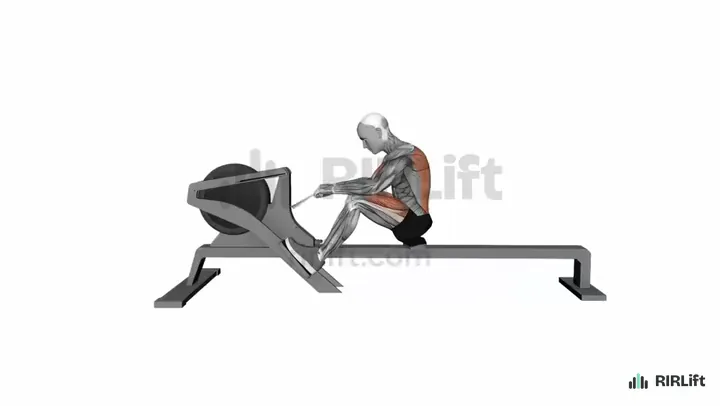
  3. Rowing Machine Quads, Hamstrings, Glutes, Lats
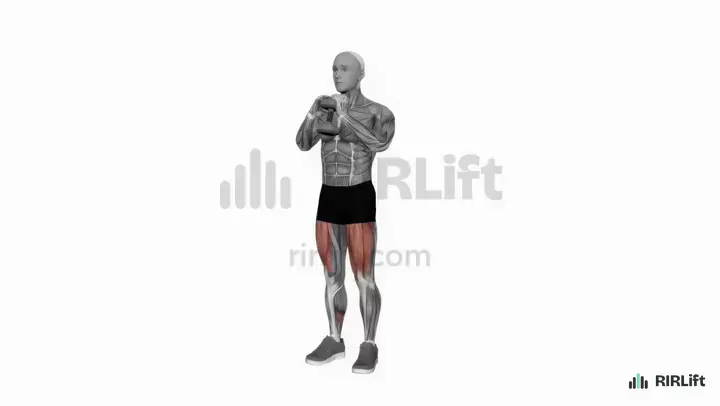
  4. Goblet Squat Quads, Glutes
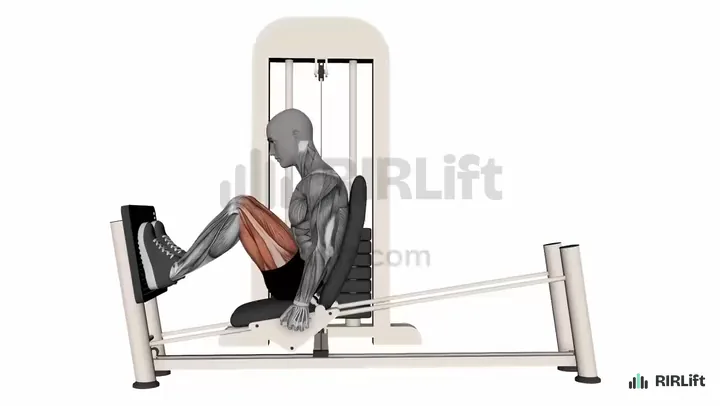
  5. Leg Press Quads, Glutes
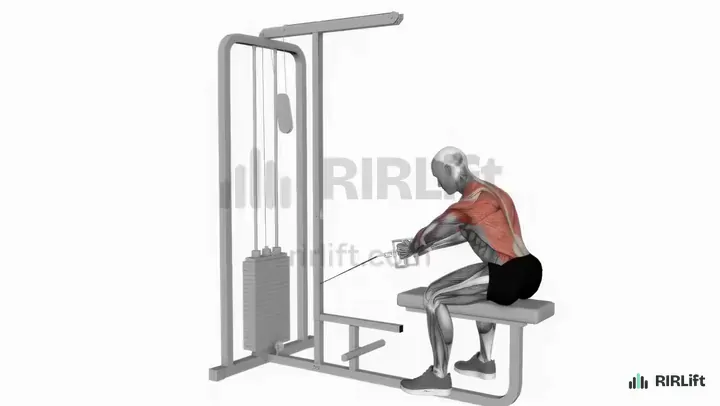
  6. Seated Cable Row Upper Back, Lats
  7. Farmer's Walk Forearms, Traps, Shoulders
Walking for calories

Walking is where most of the weekly calories in a low impact plan come from, because you can do it every day. A treadmill incline turns a walk into a workout without adding any landing.

Legs, walking

Brisk Walk

Quads, Hamstrings, Glutes, Calves

Brisk walking burns more calories in a week than any workout you might skip, because you can do it every day without needing recovery. Build toward 8,000 to 10,000 steps or 45 minutes a day.

How to do it

  1. Walk at a pace a little faster than your normal stride.
  2. Let your arms swing from the shoulders and stand tall.
  3. Keep going until you feel warm and your breathing has picked up a little.

Cues

  • Tall posture
  • Arms swing freely

Common mistakes

  • Slouching over a phone while you walk: the arm swing is what loosens your upper back.

Swap for: Treadmill Walk, Stationary Bike, Elliptical

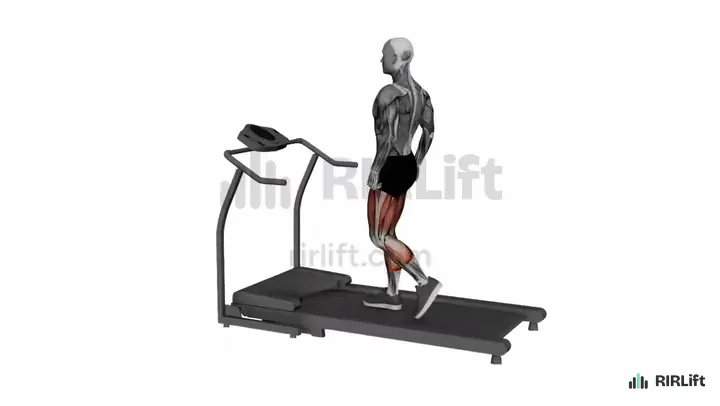
Legs and glutes, incline walking

Treadmill Walk

Quads, Glutes, Calves

Walking uphill burns far more than walking on the flat at the same speed, and each step stays gentle. It is the single most useful machine in a low impact weight loss plan.

How to do it

  1. Start the belt at an easy walking pace.
  2. Raise speed or incline every minute until you are walking briskly.
  3. Walk with a normal arm swing.

Cues

  • Let go of the rails.
  • Short, quick steps as speed rises.

Common mistakes

  • Holding the rails and leaning back.

Swap for: Brisk Walk, Elliptical

Cardio machines

For your harder cardio days. All three spare your joints, and you raise the burn by adding resistance rather than speed.

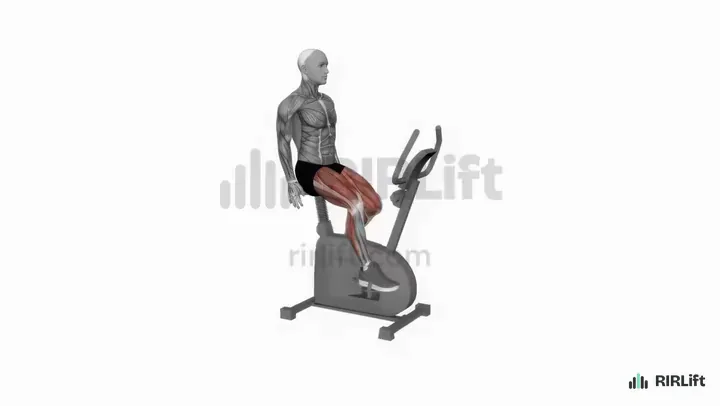
Quads and hamstrings, cycling

Stationary Bike

Quads, Hamstrings

With the seat carrying your weight, the bike lets you work hard for 20 to 40 minutes with little load on your knees. It is the best starting point if walking long distances still hurts.

How to do it

  1. Adjust the seat to hip height when you stand beside the bike.
  2. Pedal at a light resistance with a steady, smooth cadence.
  3. Add a little resistance in the last minute so you finish slightly out of breath.

Cues

  • Smooth circles
  • Slightly warm, not tired

Common mistakes

  • Cranking heavy resistance: this is to get warm, not to train your legs before chest day.

Swap for: Air Bike, Rowing Machine, Elliptical

Legs and arms, gliding stride

Elliptical

Quads, Hamstrings, Glutes

The elliptical gives a running effort with no foot strike and works the arms through the handles. Raise the resistance until it feels like work, not a glide.

How to do it

  1. Step on, hold the moving handles and start striding at a relaxed pace.
  2. Push the pedals through your whole foot and let your hips swing naturally.
  3. Add a little resistance for the last minute.

Cues

  • Tall chest
  • Long, even strides

Common mistakes

  • Leaning your weight onto the handles: stand up over your feet.

Swap for: Stationary Bike, Brisk Walk

Legs, back and arms, rowing

Rowing Machine

Quads, Hamstrings, Glutes, Lats

Rowing uses most of your muscle in every stroke while you sit, so it burns a lot for a low impact machine. Short hard intervals on it fit well at the end of a strength session.

How to do it

  1. Strap your feet in and hold the handle with straight arms.
  2. Push with your legs first, then lean back slightly and bring the handle to your lower ribs.
  3. Reverse the order on the way back: arms forward, body tips forward, knees bend.
  4. Keep the pace conversational, around 20 strokes a minute.

Cues

  • Legs, body, arms; arms, body, legs
  • Easy enough to talk

Common mistakes

  • Racing the first minute: this is a warm-up, so finish feeling fresher than you started.

Swap for: Stationary Bike, Air Bike, Jump Rope

Lower body strength

Your legs and hips hold most of your muscle, so keeping them strong while dieting matters most. These four load them steadily with no jumping.

Quads and glutes, squat

Goblet Squat

Quads, Glutes

A dumbbell held at your chest makes the squat stable and easy to load. Squat to a bench if full depth feels uncomfortable, and add weight from there.

How to do it

  1. Hold a dumbbell or kettlebell vertically against your chest.
  2. Sit down between your knees, elbows inside them at the bottom.
  3. Stand up tall.

Cues

  • Elbows nudge the knees out at the bottom.
  • Chest stays up behind the weight.

Common mistakes

  • Letting the weight pull you forward.

Swap for: Bodyweight Squat, Barbell Back Squat

Quads and glutes, single-leg step

Step-Up

Quads, Glutes

Step-ups build the leg strength that makes stairs and hills easier, and they double as a light cardio effort when you keep the reps steady.

How to do it

  1. Stand facing the bench with two dumbbells.
  2. Place one whole foot on the bench.
  3. Lean forward a little and push through the top foot to stand up on the bench.
  4. Bring the other foot up only to touch, then lower it back to the floor.
  5. Finish all reps on one leg before switching.

Cues

  • Whole foot on the bench
  • Push through the top heel
  • Lower slowly, do not drop

Common mistakes

  • Pushing off the floor with the back foot: that halves the work. Keep the trailing foot light.
  • Using a bench so high that your knee is far above your hip: you will rock instead of step.

Swap for: Barbell Step-Up

Hamstrings and glutes, hip hinge

Dumbbell Romanian Deadlift

Hamstrings, Glutes

The hinge trains the back of the legs and hips, which walking and cycling barely load. Hold the dumbbells close to your legs and stop when your hamstrings are fully stretched.

How to do it

  1. Stand hip-width apart with a dumbbell in each hand resting against the front of your thighs, palms facing you.
  2. Push your hips straight back and let your torso fold forward, knees softly bent, the dumbbells brushing your legs.
  3. Lower until the dumbbells pass your knees and you feel a strong stretch in your hamstrings, with your back still flat.
  4. Drive your hips forward to stand back up, squeezing your glutes at the top, and repeat.

Cues

  • Hips back, not down
  • Dumbbells slide down your legs
  • Flat back, chin tucked

Common mistakes

  • Bending the knees into a squat so the dumbbells go lower: the depth comes from the hips, and most people stop just past the knees.
  • Rounding the lower back at the bottom: end the rep where your back stays flat, and lighten the load if that is high.

Swap for: Single-Leg RDL, Dumbbell Good Morning, Kettlebell Deadlift

Quads and glutes, machine press

Leg Press

Quads, Glutes

The leg press lets you push heavy weight with your back supported and no balance to manage, which makes it the easiest way for a larger body to train the legs hard.

How to do it

  1. Sit in the machine with your whole back against the pad and your feet hip-width on the platform.
  2. Release the safety handles and bend your knees, bringing the platform toward you under control.
  3. Lower until your knees are bent to about 90 degrees or a little deeper, without your lower back curling off the pad.
  4. Press the platform away until your legs are nearly straight, and repeat.

Cues

  • Lower back stays on the pad
  • Whole foot pushes
  • Stop just short of locking out

Common mistakes

  • Going so deep that your hips roll up off the seat: stop where your back stays flat.
  • Snapping the knees straight at the top: keep a soft bend.

Swap for: 45-Degree Leg Press, Hack Squat, Barbell Back Squat

Upper body and carries

Seated machines make the upper body easy to train with your back supported, and the farmer's walk ties grip, shoulders and trunk together while getting you breathing hard.

Chest and triceps, machine press

Machine Chest Press

Chest

A seated chest press trains the chest, shoulders and arms with a fixed path, so you can push close to your limit safely from the first week.

How to do it

  1. Raise or lower the seat until the handles line up with the middle of your chest, then sit with your back on the pad.
  2. Take the handles with straight wrists and your shoulder blades pressed back.
  3. Push forward until your arms are nearly straight.
  4. Return slowly until your hands are level with your chest, then press again.

Cues

  • Handles at mid-chest
  • Back stays on the pad
  • Slow on the way back

Common mistakes

  • Seat too high, so your shoulders take over: lower it until the handles meet your mid-chest.
  • Stopping the handles short of your chest: let them come all the way back each rep.

Swap for: Flat Dumbbell Press, Incline Push-Up, Smith Machine Bench Press

Lats and biceps, vertical pull

Lat Pulldown

Lats

The pulldown trains the back and arms from a seat with an adjustable weight, the practical version of a pull-up for anyone who cannot yet do one.

How to do it

  1. Set the thigh pad so your legs are locked under it, then stand up and take the bar a little wider than your shoulders, palms forward.
  2. Sit down with your arms fully stretched overhead and lean back only slightly.
  3. Pull the bar to your upper chest by driving your elbows down toward your hips.
  4. Let the bar rise until your arms are straight and your shoulders lift toward your ears, then pull again.

Cues

  • Elbows to your back pockets
  • Bar to the top of the chest
  • Let the stack lift you at the top

Common mistakes

  • Leaning far back and rowing the bar to your stomach: stay nearly upright so it remains a vertical pull.
  • Stopping with the arms still bent at the top: the stretch overhead is half of what makes the pulldown work.

Swap for: Neutral-Grip Lat Pulldown, Assisted Pull-Up, Band-Assisted Pull-Up

Upper back, horizontal pull

Seated Cable Row

Upper Back, Lats

Rows balance the pressing work and train the upper back, so the front and back of your upper body get the same amount of work.

How to do it

  1. Sit at the cable row with your feet on the platform and knees slightly bent, holding a close-grip handle with your arms straight.
  2. Sit tall with your chest up and let the cable pull your shoulder blades forward a little.
  3. Row the handle to your lower ribs, driving your elbows back past your torso.
  4. Return it under control until your arms are straight and your shoulders reach forward, then repeat.

Cues

  • Sit tall, no rocking
  • Handle to the belly button
  • Shoulders reach at the front

Common mistakes

  • Rocking back and forth to move the stack: your torso should stay close to upright throughout.
  • Shrugging the handle up toward your neck: pull your shoulders down before the elbows bend.

Swap for: Chest-Supported Row, Single-Arm Cable Row, Barbell Row

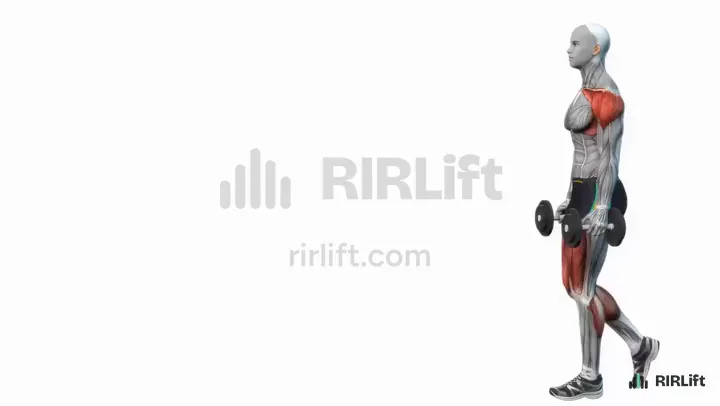
Grip, shoulders and core, loaded carry

Farmer's Walk

Forearms, Traps, Shoulders
Carrying heavy dumbbells is strength and cardio in one: your heart rate climbs within half a minute while your grip and trunk work hard. A good finisher for any strength day.

How to do it

  1. Pick up two heavy dumbbells with your back flat.
  2. Stand tall with your ribs down and walk with short, quick steps.
  3. Set the weights down with a flat back when the time or distance is up.

Cues

  • Ribs down
  • Crush the handles
  • Quick steps

Common mistakes

  • Letting the shoulders round forward.
  • Walking so slowly the dumbbells start to swing.

Swap for: Dumbbell Suitcase Carry, Dumbbell Single-Arm Overhead Carry

Put them together: example sessions

Each session below picks from the exercises above for one situation, with the sets, reps, rest and RIR filled in.

Session 1

Lifting while dieting, three gym days

  • Workouts3× a week
  • Working sets45 a week
  • Per workout~35 min
  • EquipmentDumbbells, Chest Press, Cable Row, Rowing Machine +3

You have a gym membership, you are eating in a calorie deficit, and you want to lose fat without losing strength or hurting your joints.

Two alternating full-body sessions give each major muscle 4 to 6 hard sets a week, enough to hold on to muscle while calories are low, and a short rower or elliptical block adds cardio. Each session has 9 strength sets and 6 intervals, about 45 minutes.

Day A
ExerciseSets × repsRIRRest
Goblet Squat1 warm-up set first 3 × 8–12 2 2 min
Machine Chest Press 3 × 8–12 1 90 s
Seated Cable Row 3 × 10–12 1 90 s
Rowing MachineSeconds at a firm pace. Row easy between. 6 × 30–45 2 1 min
Day B
ExerciseSets × repsRIRRest
Dumbbell Romanian Deadlift1 warm-up set first 3 × 8–12 2 2 min
Lat Pulldown 3 × 8–12 1 90 s
Step-UpPer leg. 3 × 8–12 2 90 s
EllipticalSeconds at higher resistance. Easy stride between. 6 × 45–60 2 1 min
How to run it
Take turns with A and B on Monday, Wednesday and Friday. Walk 30 to 45 minutes on most other days, on an incline if you can.
How to progress
Double progression on the lifts: when every set hits the top of the range with 2 reps in reserve, add the smallest weight you can. If your lifts drop for two weeks in a row, keep the weights and remove one cardio interval.

Session 2

At home, 30 minutes, with dumbbells

  • Workouts3× a week
  • Working sets60 a week
  • Per workout~35 min
  • EquipmentDumbbells, Flat Bench

You train at home with a pair of dumbbells and a sturdy step, and you want half-hour sessions that cover strength and calories.

Three dumbbell moves and a carry, 3 sets each, give 12 strength sets in about 20 minutes, followed by 8 minutes of brisk walking intervals outdoors or around the block. Three sessions a week plus daily walks is a complete low impact week.

Dumbbells and walk
ExerciseSets × repsRIRRest
A1 Goblet Squat 3 × 10–15 2 1 min
A2 Dumbbell Romanian Deadlift 3 × 10–15 2 1 min
Step-UpPer leg. 3 × 8–12 2 1 min
Farmer's WalkSeconds of walking. 3 × 30–45 2 1 min
Brisk WalkSeconds fast. Walk easy between. 8 × 60 3 1 min
How to run it
Do it on Monday, Wednesday and Friday. Pair the squat and the deadlift with a minute of rest between, then do step-ups and carries. Head straight out for the walk afterward.
How to progress
Add reps until all sets reach the top of the range with 2 reps left, then slow the lowering to three seconds. When you buy heavier dumbbells, go back to the bottom of the range. Add one fast walking minute every week.

Session 3

A lot to lose, joints first

  • Workouts2× a week
  • Working sets36 a week
  • Per workout~40 min
  • EquipmentLeg Press, Chest Press, Lat Pulldown, Cable Row +1

You have a lot of weight to lose, standing for long or getting up and down from the floor is hard, and you want to start where your body is today.

Every lift here is done seated with your back supported, so you can train hard without balancing or getting down to the floor. Two sessions of 12 strength sets plus 6 bike intervals, about 40 minutes, is a strong start; daily walks add the rest.

Seated full body
ExerciseSets × repsRIRRest
Leg Press1 warm-up set first 3 × 10–12 2 2 min
Machine Chest Press 3 × 10–12 2 90 s
Lat Pulldown 3 × 10–12 2 90 s
Seated Cable Row 3 × 10–12 2 90 s
Stationary BikeSeconds at higher resistance. Spin easy between. 6 × 30–45 3 1 min
How to run it
Do it on two days such as Tuesday and Friday. Start every session with 5 minutes of easy cycling. On other days, walk for 10 to 20 minutes, building up slowly, or ride the bike if walking hurts.
How to progress
On the machines, add one pin or 5 pounds whenever all three sets reach 12 reps with 2 reps in reserve. Add one bike interval every two weeks. When getting around feels easier, move to the three-day gym plan.

Make it fit you

Questions

What low-impact exercise burns the most fat?

Rowing, incline walking and hard stationary bike intervals burn the most per minute. Over a week, daily brisk or incline walking usually burns the most because you can do so much of it.

Can you lose weight with only low-impact exercise?

Yes. Weight loss comes from eating less than you burn, and low impact cardio plus strength training burns plenty. Because it is easy on your joints, it is easier to keep up week after week, which is what counts.

How do I drop 20 pounds fast?

At 1 to 2 pounds a week, 20 pounds takes about 10 to 20 weeks. The training side is daily walking, two or three strength sessions and a couple of harder cardio days; the speed comes from your eating.

What can I do if I'm struggling to lose weight?

Track your food for two weeks to see what you are actually eating, raise your daily steps, and keep lifting so the weight you lose is fat. Small, steady changes beat a sudden hard program you cannot keep up.

Is walking enough to lose weight?

Walking plus a calorie deficit is enough to lose weight. Adding two strength sessions a week helps you keep muscle, so you end up leaner, not just lighter.