
Dumbbell upper chest exercises: incline presses and flies
Published October 19, 2026
The best dumbbell upper chest exercise is the incline dumbbell press on a bench set to about 30 degrees, because that angle lines the press up with the collarbone fibers of the pec. Add a second press with a grip change, the underhand or squeeze press, and finish with an incline fly for the stretch. Lead every chest session with an incline exercise and give the upper chest 10 to 20 hard sets a week, ending each set 0 to 2 reps short of failure.
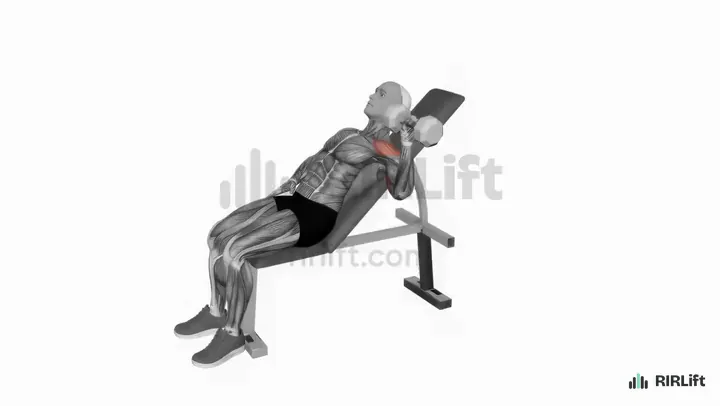
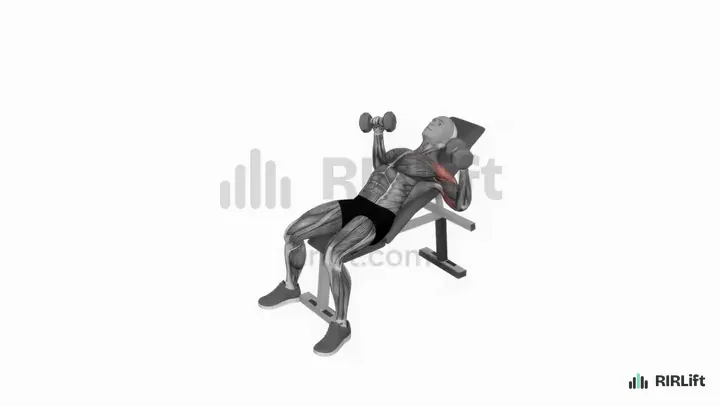
- Incline Dumbbell Press Chest
- Incline Dumbbell Fly Chest
- Reverse-Grip Incline Dumbbell Press Chest
- Incline Dumbbell Squeeze Press Chest
- Single-Arm Incline Dumbbell Press Chest
- Alternating Incline Dumbbell Press Chest
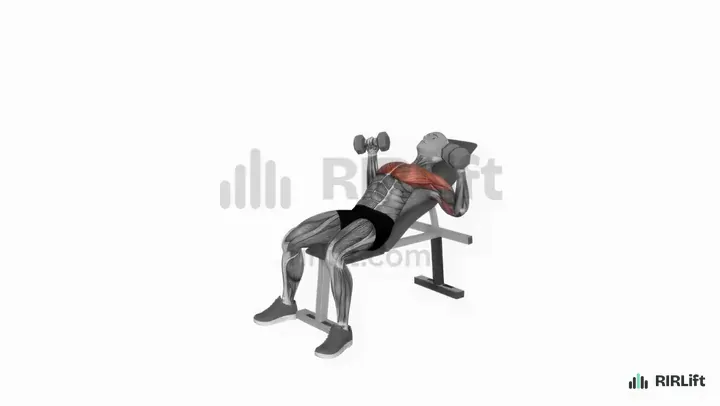
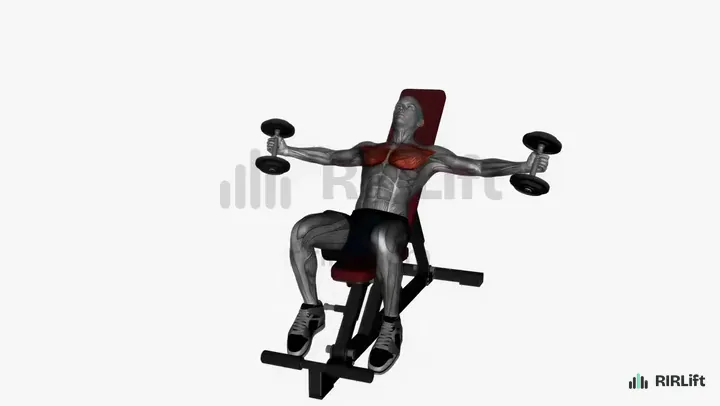
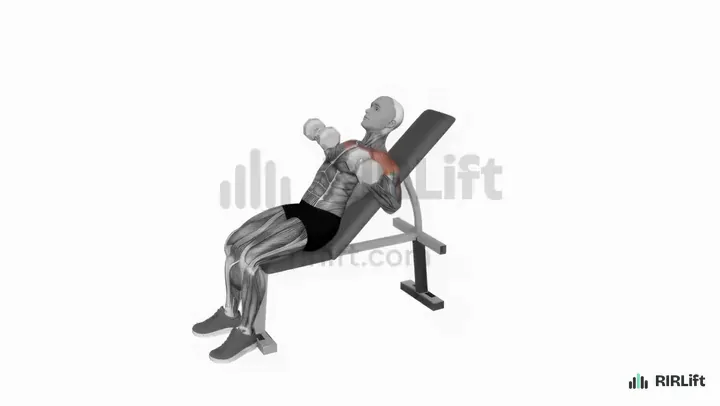
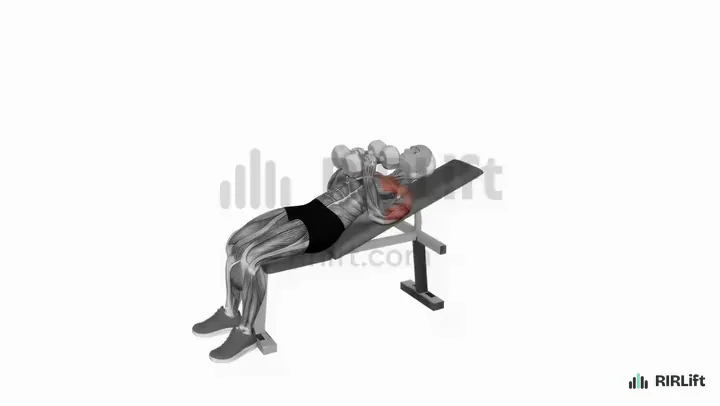
Put them together: example sessions
Each session below picks from the exercises above for one situation, with the sets, reps, rest and RIR filled in. Open one in the session builder to change a pick, price it from a recent set, and add it to RIRLift.
-
Session 1
Adjustable bench and heavy dumbbells
You have an adjustable bench and dumbbells that go heavy, either a full rack or adjustable dumbbells, and the upper chest is the priority.
2× a week · 20 sets a week · ~25 min
-
Session 2
One light pair and a bench
You train at home with a single pair of fixed dumbbells, around 15 to 30 pounds, and a bench that inclines.
2× a week · 18 sets a week · ~20 min
-
Session 3
Gym add-on after flat bench
You train in a gym and already bench press flat, but your upper chest lags behind the rest.
2× a week · 16 sets a week · ~20 min
Session 1
Adjustable bench and heavy dumbbells
- Workouts2× a week
- Working sets20 a week
- Per workout~25 min
- EquipmentDumbbells, Incline Bench
You have an adjustable bench and dumbbells that go heavy, either a full rack or adjustable dumbbells, and the upper chest is the priority.
Heavier dumbbells mean the regular incline press can be loaded progressively, so it opens Session A for 4 sets at 6 to 10 reps and 1 to 2 reps in reserve. Session B starts with the underhand press for a different stimulus and then returns to the incline press for higher reps, with the squeeze press last. The fly in Session A goes to 0 to 1 reps in reserve because it is light and safe to push. Each session is 10 working sets, putting the upper chest near 20 hard sets a week.
| Exercise | Sets × reps | RIR | Rest |
|---|---|---|---|
| Incline Dumbbell Press1 warm-up set firstBench at 30 degrees. | 4 × 6–10 | 2 | 2:30 min |
| Single-Arm Incline Dumbbell PressReps per arm. Weaker side first. | 3 × 8–12 | 1 | 90 s |
| Incline Dumbbell FlySlow into the stretch. | 3 × 12–15 | 1 | 1 min |
Open Session A in the session builder
| Exercise | Sets × reps | RIR | Rest |
|---|---|---|---|
| Reverse-Grip Incline Dumbbell Press1 warm-up set firstPalms toward your face. | 3 × 8–12 | 1 | 2 min |
| Incline Dumbbell PressLighter than Session A. | 4 × 10–15 | 1 | 90 s |
| Incline Dumbbell Squeeze PressKeep the dumbbells touching. | 3 × 12–15 | 0 | 1 min |
Open Session B in the session builder
- How to run it
- Do Session A and Session B on separate days, two or three days apart, at the start of your chest, push or upper-body day.
- How to progress
- When every set of the incline press reaches 10 reps at the target reps in reserve, move up one dumbbell size and start back at 6. Add reps to the other exercises first, then weight.
Session 2
One light pair and a bench
- Workouts2× a week
- Working sets18 a week
- Per workout~20 min
- EquipmentDumbbells, Incline Bench
You train at home with a single pair of fixed dumbbells, around 15 to 30 pounds, and a bench that inclines.
A light pair stops being hard on a two-arm press quickly, so this plan uses ways to make the same weight harder: alternating presses keep each side loaded longer, the squeeze press adds constant inward tension, and the reps run up to 20 with sets taken to 0 or 1 reps in reserve. The fly finishes both sessions. Each session is 9 working sets.
| Exercise | Sets × reps | RIR | Rest |
|---|---|---|---|
| Alternating Incline Dumbbell PressReps per side. Top arm stays locked. | 3 × 10–20 | 1 | 90 s |
| Incline Dumbbell Squeeze PressThree seconds down. | 3 × 12–20 | 1 | 1 min |
| Incline Dumbbell FlyPause in the stretch. | 3 × 15–20 | 0 | 1 min |
Open Session A in the session builder
| Exercise | Sets × reps | RIR | Rest |
|---|---|---|---|
| Single-Arm Incline Dumbbell PressReps per arm. Free hand grips the bench. | 3 × 10–20 | 1 | 90 s |
| Alternating Incline Dumbbell PressOne-second pause at the bottom. | 3 × 10–20 | 0 | 90 s |
| Incline Dumbbell FlyElbows fixed. | 3 × 15–20 | 1 | 1 min |
Open Session B in the session builder
- How to run it
- Do the two sessions on non-consecutive days. Keep the bench at the same notch every session so you can compare reps.
- How to progress
- Add reps until every set reaches the top of its range at the target reps in reserve, then slow the lowering to three seconds and add a one-second pause at the bottom. Buy the next pair up when the alternating press passes 20 reps per side with that tempo.
Session 3
Gym add-on after flat bench
- Workouts2× a week
- Working sets16 a week
- Per workout~20 min
- EquipmentDumbbells, Incline Bench
You train in a gym and already bench press flat, but your upper chest lags behind the rest.
Your flat bench already covers the middle and lower chest and your overall pressing strength, so this block adds only upper chest work, in one routine. The underhand press goes first for a heavier set without asking more of your front delts, the one-arm press lets you even out the sides, and the fly finishes the stretch. It is 8 working sets, short enough to add after your main press without running long.
| Exercise | Sets × reps | RIR | Rest |
|---|---|---|---|
| Reverse-Grip Incline Dumbbell Press1 warm-up set firstPalms toward you. Elbows tucked. | 3 × 8–12 | 1 | 2 min |
| Single-Arm Incline Dumbbell PressReps per arm. | 3 × 8–12 | 1 | 90 s |
| Incline Dumbbell FlyLight. Two seconds down. | 2 × 12–15 | 0 | 1 min |
- How to run it
- Add this block right after your flat bench on one or two days a week. If you bench twice a week, do it both days.
- How to progress
- Add reps until all sets hit the top of the range at the target reps in reserve, then move to the next dumbbell on the rack.
Make it fit you
-
No adjustable bench
Use the exercise ball fly with your hips dropped for the incline, and do your pressing on the floor or a flat bench. The upper chest gets less direct work this way, so an adjustable bench is the first piece of gear worth buying for it.
-
Front of the shoulders takes over
Lower the bench a notch toward 15 to 30 degrees, switch the main press to the underhand grip, and keep your shoulder blades pulled back throughout.
-
One side is weaker
Make the one-arm incline press your first exercise for a few weeks, start every set with the weaker side, and stop the stronger side at the same rep count.
-
Short on time
Do the incline press and the incline fly as a superset, resting only after the fly. Three rounds take about 12 minutes.
-
Upper chest and the rest of the chest
The upper chest is not a separate muscle; it is part of the pec. Keep at least one flat press or push-up in your week so the middle and lower chest grow along with it.
-
Log reps in reserve on the incline press
Record how many reps you had left on each set. If you log in RIRLift, it uses that number to suggest the next weight, which keeps your incline press moving up session to session.
Questions
How do I target my upper chest with dumbbells?
Press or fly on a bench set to about 30 degrees. That angle lines up the movement with the upper fibers of the pec. Put the incline exercise first in your session while you are fresh, and keep your elbows angled about 45 degrees from your sides.
What is the best bench angle for upper chest?
About 30 degrees, often the second or third notch on an adjustable bench. Steeper than about 45 degrees makes the front delts do more of the work, and flat puts the emphasis on the middle chest.
How many reps of incline dumbbell press should I do?
Six to 15 reps per set for most people, 3 to 4 sets, ending each set 1 to 2 reps short of failure. Heavier sets of 6 to 10 build strength best; lighter sets of 12 to 15 work just as well for muscle size if they end close to failure.
Are 4 exercises enough for chest day?
Yes, usually more than enough. Three or four exercises with 3 to 4 hard sets each puts you at 10 to 15 sets, which is a full session. For upper chest, two of those should be incline exercises.
Can I work my upper chest with dumbbells at home?
Yes, if you have a bench that inclines. All the presses and flies here work at home. Without an adjustable bench, use the exercise ball fly for the incline and decline push-ups for extra upper-chest pressing.
How do I stop my shoulders taking over on incline presses?
Keep the bench at or below 30 degrees, pull your shoulder blades back and down before you unrack, and lower the dumbbells to the top of your chest with your elbows about 45 degrees from your sides. If the front of your shoulders still does most of the work, switch to the underhand grip for your main press.
Is the incline dumbbell press better than the barbell incline press?
For the upper chest they are close. Dumbbells allow a deeper stretch and let each arm find a comfortable path, while a barbell lets you load more total weight. Use whichever you can progress on and train close to failure with good form.
Related templates
-
Incline dumbbell press: how to do it, which angle to use, and how to program it
The full technique guide for the main upper chest exercise.
-
Lower chest exercises with dumbbells: decline, flat bench or floor
Decline and flat dumbbell work for the bottom of the chest.
-
Upper chest exercises at home, with or without a bench
Upper chest options with bodyweight and home gear.
-
Chest exercises with dumbbells, with or without a bench
The full dumbbell chest list, every part of the pecs.
-
How to use reps in reserve (RIR)
How to judge the reps in reserve targets in these sessions.