Medicine ball slam alternatives: no slam ball, no noise, no problem

The best medicine ball slam alternative at the gym is the cable woodchop, because it keeps the same reach-high, pull-down path without hitting the floor. For the same explosive full-body effort, do kettlebell or dumbbell swings. With a soft medicine ball and a wall, wall balls and chest throws keep the throw; with no equipment, bear crawls keep your abs working and your heart rate up.

What a medicine ball slam alternative has to replace

Power through the abs, lats and hips

Medicine Ball Slam

Lats, Abs

You reach tall and then fold hard to drive the ball into the floor, so your abs, lats and hips fire together and fast. It is the move every swap below is trying to replace.

How to do it

  1. Stand with feet shoulder width, ball held in both hands at your waist.
  2. Reach it overhead and rise onto your toes.
  3. Brace and drive the ball down into the floor just in front of your feet.
  4. Bend your hips and knees as the ball leaves your hands.
  5. Pick it up with a flat back and repeat.

Cues

  • Get tall, then crunch
  • Throw through the floor
  • Stop when it slows

Common mistakes

  • Throwing only with your arms: the trunk should fold hard as you throw.
  • Using a bouncy ball that rebounds at your face: use a slam ball.

Swap for: Cable Woodchop, Kettlebell Swing, Wall Ball

The slam trains your abs, lats and hips to fire together and fast: you reach tall, then fold hard and drive the ball into the floor. Most people use it for power at the start of a session or for conditioning in a circuit.

A replacement has to keep one of those jobs. Swings and snatches keep the explosive hip drive, chops and crunches keep the folding ab work, and throws against a wall keep the throw.

Still have a medicine ball

If the problem is a ball that bounces or a floor you cannot slam on, throw it into a wall or open space instead.

Best swap with a soft medicine ball

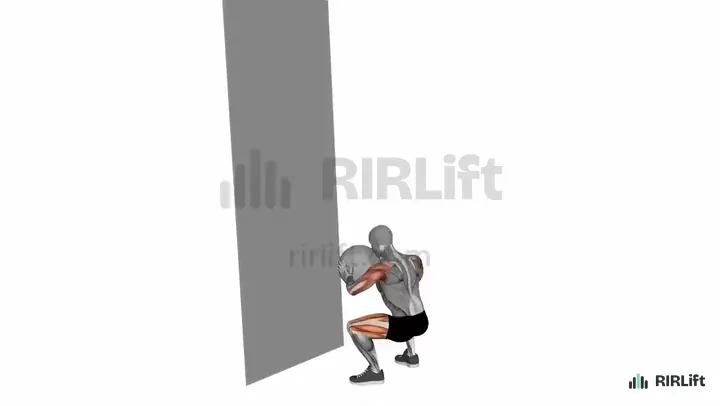
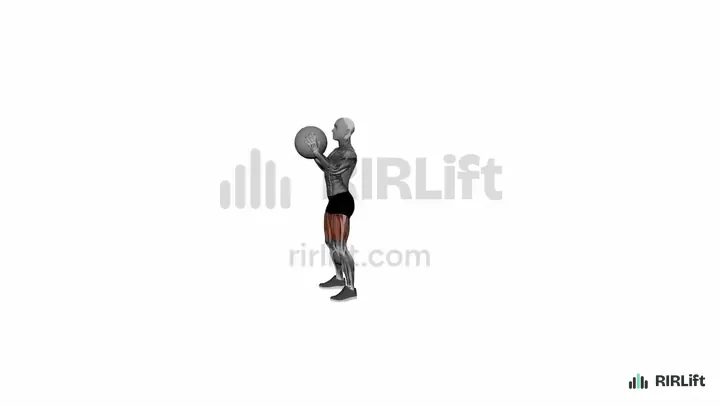
Wall Ball

Quads, Glutes, Shoulders

A squat and a throw up to a target keeps the full-body, fast effort of a slam, and the ball comes back to you instead of hitting the floor. It needs a wall and some ceiling height.

How to do it

  1. Stand an arm's length from the wall, ball held at your chest.
  2. Squat down until your hips are below your knees.
  3. Drive up hard and throw the ball to a target on the wall.
  4. Catch it as it comes down and sink straight into the next squat.
  5. Keep the rhythm even until the set ends.

Cues

  • Squat deep
  • Push the ball from the legs
  • Catch into the squat

Common mistakes

  • Throwing before you stand: the legs push the ball, the arms finish.
  • Standing too far from the wall: the ball comes back out of reach.
Build a session with Wall Ball

Abs and a throw, on the floor

Med Ball Chest Throw

Abs

You sit up and push the ball into a wall in one move, so your abs still finish a fast throw. It is quieter than a slam and needs only a little floor space.

How to do it

  1. Sit facing a solid wall, knees bent and feet flat near its base, holding the ball at your chest.
  2. Lie back until your shoulders near the floor, keeping the ball at your chest.
  3. Curl up hard and, as your torso rises, push the ball straight into the wall with both arms.
  4. Catch the rebound at your chest, roll back down with it and repeat.

Cues

  • Sit up and push in one move
  • Elbows wide
  • Catch soft, roll back slow

Common mistakes

  • Throwing with only the arms while your torso stays down: the sit-up starts every throw.
  • Dropping back to the floor after the catch: lower your back under control.

Rotational power with a ball

Med Ball Rotational Throw

Abs

Throwing sideways into a wall trains the same fast hip and trunk drive as a slam, turned into a rotation. Pick it when you want power for sports that swing or throw.

How to do it

  1. Stand side-on to a solid wall, an arm's length or two away.
  2. Hold the ball at your far hip, feet wide.
  3. Turn your hips toward the wall and throw the ball into it hard.
  4. Catch the rebound and take it back to the hip.
  5. Finish the set, then switch sides.

Cues

  • Back foot pivots
  • Hips before arms
  • Absorb the catch

Common mistakes

  • Throwing with your arms alone: the turn of your hips does most of it.
  • Rushing the reset: each rep starts from the loaded position.

Outdoors with a medicine ball

Medicine Ball Overhead Throw

Shoulders, Abs

A swing between your legs and a release overhead keeps the all-out hip snap of a slam with nothing hitting the floor. You need open space or a field to throw into.

How to do it

  1. Stand with feet wider than your hips, ball held in both hands.
  2. Swing it down between your knees with a quick hinge.
  3. Drive your hips forward and swing the ball up.
  4. Release it overhead and forward as your body straightens.
  5. Collect the ball and reset before the next throw.

Cues

  • Hips snap first
  • Arms finish the throw
  • Full reset each rep

Common mistakes

  • Squatting the ball up instead of hinging: knees bend only a little.
  • Throwing with tired legs: each rep is a single, all-out effort.

At the gym

A cable and a kettlebell cover both jobs a slam does: the fast pull-down through your abs and the explosive hips.

Closest swap at the gym

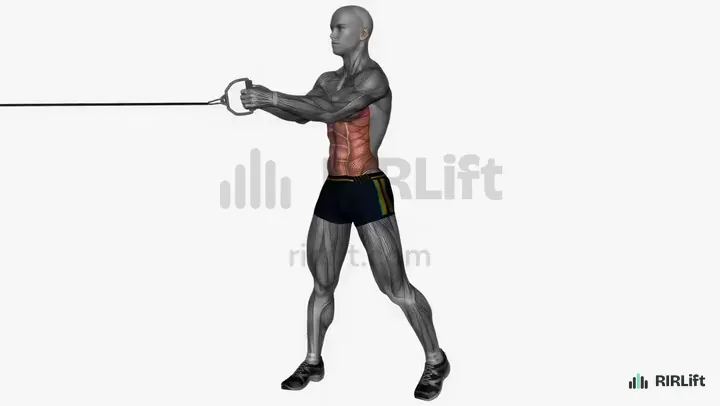
Cable Woodchop

Abs

A high-to-low chop on a cable copies the slam's reach-and-pull-down path, with smooth tension and no noise. Pull fast and return slowly.

How to do it

  1. Set a single handle at about shoulder height and stand side-on to the stack, feet a little wider than your shoulders.
  2. Grip it two-handed with your arms long, reaching toward the pulley.
  3. Turn your chest away from the stack and sweep it on a diagonal past your far hip, letting your back foot pivot.
  4. Let it travel back up the same diagonal under control, finish your reps, then face the other way.

Cues

  • Turn the chest, not just the arms
  • Arms stay long
  • Pivot the back foot

Common mistakes

  • Pulling with your arms while your trunk stays still: lighten the stack and let your ribs lead the turn.
  • Letting the cable yank you back on the return: take two seconds to bring it back up.

Just the ab part, loaded

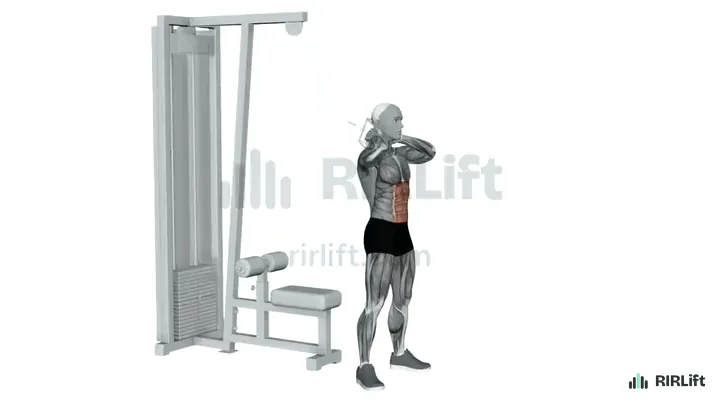
Cable Crunch

Abs

If you used slams for your abs, the cable crunch trains the same folding motion with weight you can add each week.

How to do it

  1. Attach a rope to a high pulley and hold it behind your head.
  2. Stand with your back to the machine, a step forward, with a slight bend in your knees.
  3. Round your back and curl your elbows down toward your thighs.
  4. Return under control until your back is straight again.

Cues

  • Round, don't bow
  • Elbows to thighs
  • Hips stay put

Common mistakes

  • Bending at the hips and pulling with your arms.
  • Using so much weight you can't curl your spine.

Best swap with a kettlebell

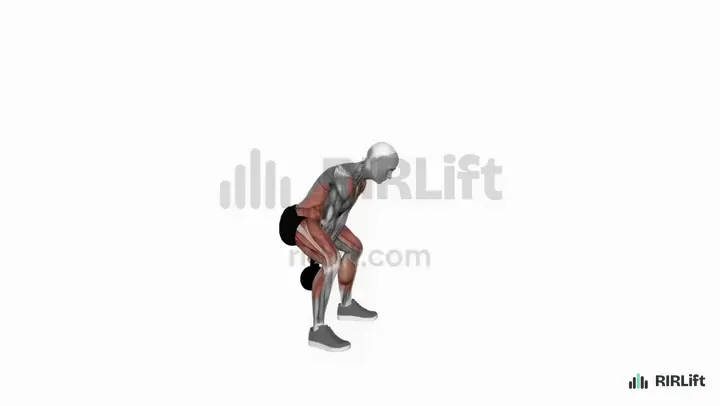
Kettlebell Swing

Glutes, Hamstrings

The swing gives you the same explosive hip snap and heart-rate spike as a slam without throwing anything. It trains more hamstrings and glutes and less abs.

How to do it

  1. Stand with the bell a foot in front of you, feet a bit wider than your hips.
  2. Hinge to grip the handle with both hands, then hike the bell back between your thighs.
  3. Snap your hips forward to stand tall, letting the bell float to about shoulder height with straight arms.
  4. As it falls, hinge back and let it pass between your legs, then snap up again for the next rep.

Cues

  • Hinge, do not squat
  • Snap the hips
  • Arms are ropes

Common mistakes

  • Lifting the bell with your shoulders: the hips do the work and the arms only guide it.
  • Leaning back at the top: finish standing straight with glutes tight.

With dumbbells, quietly

Never throw a dumbbell. Swing it, snatch it or chop with it, and you keep the power or the ab work with nothing hitting the floor.

Swing with one dumbbell

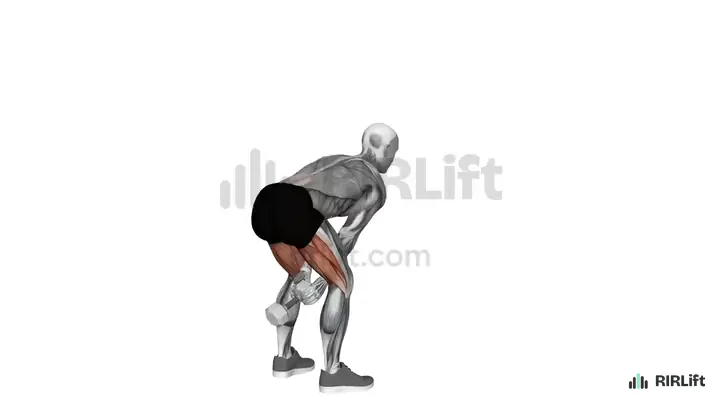
Dumbbell Swing

Glutes, Hamstrings

The same hip-driven swing, holding one dumbbell by its end. Use it when you have no kettlebell and need it quiet.

How to do it

  1. Hold one dumbbell by one end with both hands, feet a little wider than your hips.
  2. Hike the dumbbell back between your legs by hinging at the hips.
  3. Snap your hips forward so the dumbbell floats up to chest height on its own.
  4. Let it fall back between your legs and hinge into the next rep.

Cues

  • Hinge, do not squat
  • Hips drive, arms just hold
  • Stand fully tall at the top

Common mistakes

  • Lifting the dumbbell with your shoulders instead of driving it with your hips.
  • Letting the dumbbell drop toward your knees on the backswing; keep it high between your thighs.

Full-body power with a dumbbell

One-Arm Dumbbell Snatch

Shoulders, Glutes

One fast pull from the floor to overhead uses your legs, hips, back and shoulders together, the way a slam does in reverse. Keep the reps low and every one fast.

How to do it

  1. Stand with feet about shoulder-width, the dumbbell standing between your feet, and squat down to grip it with one hand.
  2. Drive through your legs and hips explosively, as if jumping, pulling the weight up tight along your body.
  3. As it passes your chest, punch your arm straight up so the dumbbell finishes overhead on a locked arm as you stand tall.
  4. Lower it to your shoulder, then back to the floor, and repeat. Switch hands each set.

Cues

  • Jump, then punch
  • Dumbbell close to the body
  • Lock out overhead

Common mistakes

  • Pulling with the arm first: the legs start it; the arm only steers.
  • Letting the dumbbell arc away from you: it should rise in a straight line close to your body.

Quiet chop with a dumbbell

Dumbbell Woodchop

Abs

A kneeling diagonal chop trains the trunk turn of a slam slowly and silently. Good for an apartment.

How to do it

  1. Kneel tall on both knees and hold one dumbbell by both ends beside one hip.
  2. Lift it diagonally across your body to above the opposite shoulder, turning your chest as it goes.
  3. Bring it back down the same path under control.
  4. Do every rep on one side, then switch sides.

Cues

  • Turn the chest
  • Arms long
  • Control the return

Common mistakes

  • Bending the arms so the shoulders do the work.
  • Letting the hips rotate too, which takes the load off the obliques.

Bodyweight

No weights at all: a crawl keeps your abs braced and your heart rate up, with no noise.

No equipment, keeps it hard

Bear Crawl

Abs, Shoulders

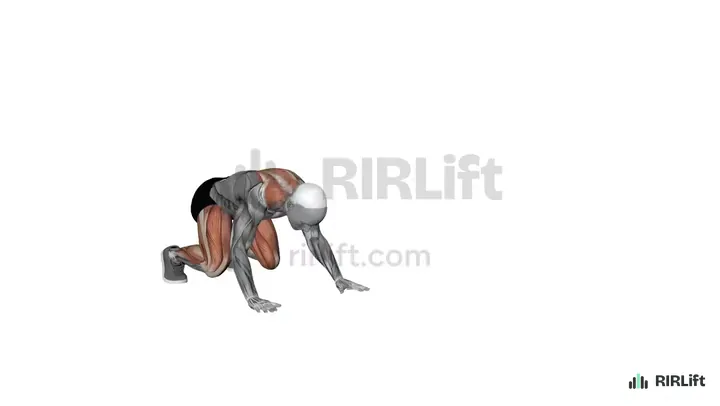
Crawling with your knees an inch off the floor keeps your abs braced and your heart rate up in a circuit, the job slams often do. It makes no noise.

How to do it

  1. Start on all fours with your hands below your shoulders, knees under your hips.
  2. Lift your knees an inch off the floor and keep your back flat.
  3. Crawl forward by moving one hand and the opposite foot a short step at the same time.
  4. Keep your hips low and level, take a set number of steps forward and back, then rest.

Cues

  • Knees an inch off the ground
  • Opposite hand and foot together
  • Back flat enough to hold a glass

Common mistakes

  • Hips rising high into a pike: keep them at shoulder height.
  • Taking long steps: short steps keep the brace.

Example sessions without the medicine ball slam

Session 1

Gym, no slam ball

Open in the session builder
  • Workouts2× a week
  • Working sets20 a week
  • Per workout~25 min
  • EquipmentKettlebells, Adjustable Cable

You train in a gym with cables and kettlebells, and the slam balls are missing or there is no space to throw.

Kettlebell swings take the slam's place as the explosive opener, the cable woodchop keeps the fast pull-down through your trunk, and the cable crunch loads your abs. 10 working sets.

Power and core
ExerciseSets × repsRIRRest
Kettlebell Swing1 warm-up set first 4 × 10–15 2 90 s
Cable WoodchopReps per side. Fast down, slow up. 3 × 10–12 2 1 min
Cable Crunch 3 × 10–15 1 1 min
How to run it
Do it at the end of a lower- or full-body day, or on its own as a short power and core session, twice a week.
How to progress
Add reps on the swing until you hit 15 on every set, then move up a kettlebell. On the chop and crunch, add one plate when every set reaches the top of the range.

Session 2

Apartment, dumbbells, must be quiet

Open in the session builder
  • Workouts2× a week
  • Working sets24 a week
  • Per workout~25 min
  • EquipmentDumbbells

You train at home with dumbbells and cannot drop or throw anything.

The dumbbell snatch and swing keep the explosive part of the slam, the woodchop keeps the ab work, and bear crawls finish with conditioning. The snatch comes first while you are fresh, with low reps and plenty in reserve. 12 working sets.

Power and core
ExerciseSets × repsRIRRest
One-Arm Dumbbell SnatchReps per arm. Every rep fast. 3 × 5–8 3 90 s
Dumbbell Swing 3 × 12–15 2 75 s
Dumbbell WoodchopReps per side. 3 × 10–12 2 45 s
Bear CrawlCount steps forward and back. 3 × 10–20 2 1 min
How to run it
Two or three times a week. Stop each set of snatches and swings when the speed drops, even if the rep range is not done.
How to progress
On the snatch and swing, add reps until the top of the range, then move up a dumbbell. On the bear crawl, add steps, then slow them down.

Session 3

Medicine ball and a wall

Open in the session builder
  • Workouts3× a week
  • Working sets30 a week
  • Per workout~20 min
  • EquipmentMedicine Ball

You have a soft medicine ball and a solid wall, but you cannot slam it into the floor.

Wall balls keep the fast full-body effort, rotational throws train the same trunk drive sideways, and chest throws finish your abs with a sit-up and a throw. 10 working sets.

Power and core
ExerciseSets × repsRIRRest
Wall Ball 4 × 10–15 2 75 s
Med Ball Rotational ThrowReps per side. 3 × 6–10 2 1 min
Med Ball Chest Throw 3 × 10–15 2 1 min
How to run it
Two or three times a week, as a short session or a finisher. Throw every rep as hard as you can and stop the set when the throws slow down.
How to progress
Add reps until you reach the top of each range, then use a heavier ball or a higher target on the wall balls.

Make it fit you

Questions

What is a good substitute for medicine ball slams?

The cable woodchop is the closest at the gym, and kettlebell or dumbbell swings keep the explosive full-body effort. With a soft ball and a wall, wall balls work well.

What can I do instead of slams in an apartment?

Dumbbell swings, dumbbell woodchops and bear crawls make almost no noise. None of them put anything on the floor.

What can I use in place of a medicine ball?

Use a dumbbell or kettlebell for swings, snatches and chops, or a cable for woodchops. Never throw a dumbbell or kettlebell.

What is the difference between medicine balls, slam balls and wall balls?

Slam balls are dead and do not bounce, so they are made to hit the floor. Wall balls are large and soft for catching, and medicine balls are firmer and can bounce back at you, so throw them into a wall instead of the floor.

Are wall balls a good workout?

Yes. Each rep is a deep squat and a throw, so they train your legs and shoulders and raise your heart rate fast. They are one of the best slam swaps if you have a wall.

What muscles do medicine ball rotational throws work?

Your obliques, hips and shoulders, with your legs starting the turn. They train fast rotation, which a slam does not.