
Pallof press alternatives: anti-rotation core work without a cable
Published October 23, 2026
With one dumbbell, the best Pallof press alternative is the dumbbell suitcase carry: the weight pulls you sideways with every step and your trunk has to stay still, the same job the Pallof press trains. In the gym with the cable taken, use the landmine twist. With no equipment, plank shoulder taps make your abs stop your body from rolling each time a hand lifts.
- Cable station taken Landmine Twist Brake a loaded bar at each side, no cable needed.
- One dumbbell Dumbbell Suitcase Carry Walk tall while the weight tries to bend you sideways.
- No equipment Plank Shoulder Tap Stop your hips rolling every time a hand lifts.
- Lower back is sensitive Dead Bug Lying down, back flat, same brace-and-hold idea.
- Want it harder Dumbbell Single-Arm Overhead Carry A locked-out weight overhead tips you every step.
- Want to rotate, not resist Cable Woodchop Moves across your body under control.
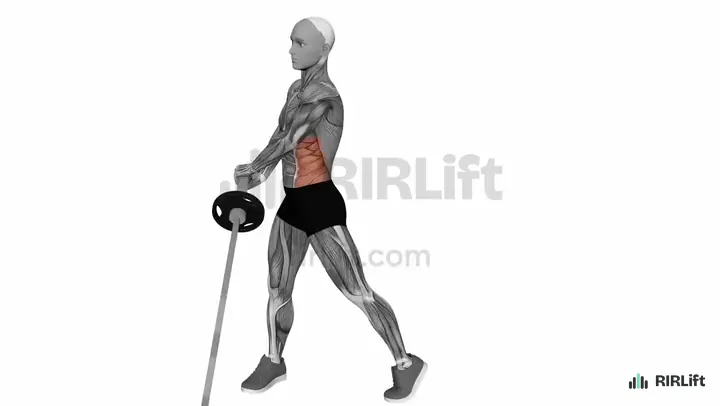
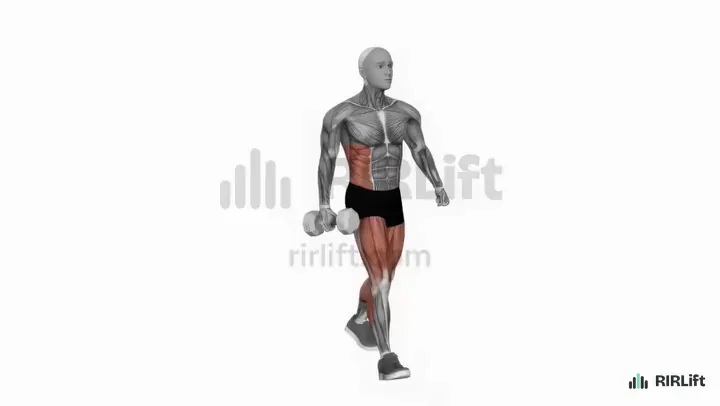
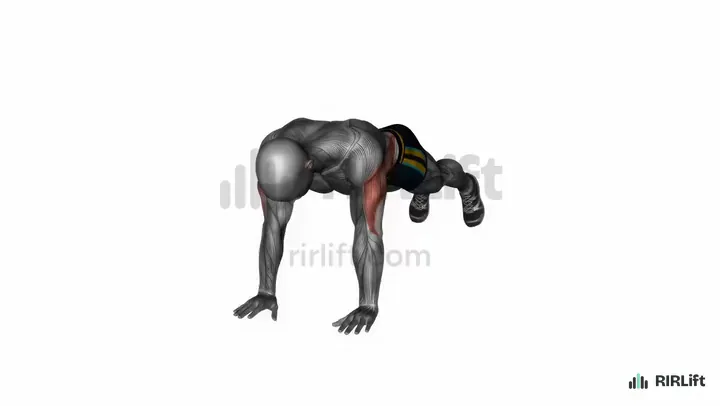
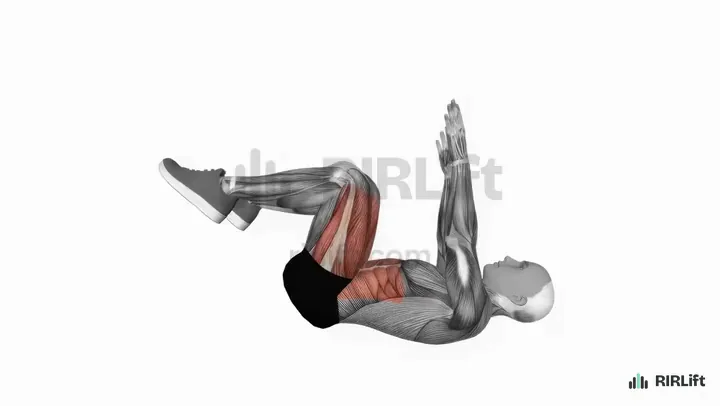
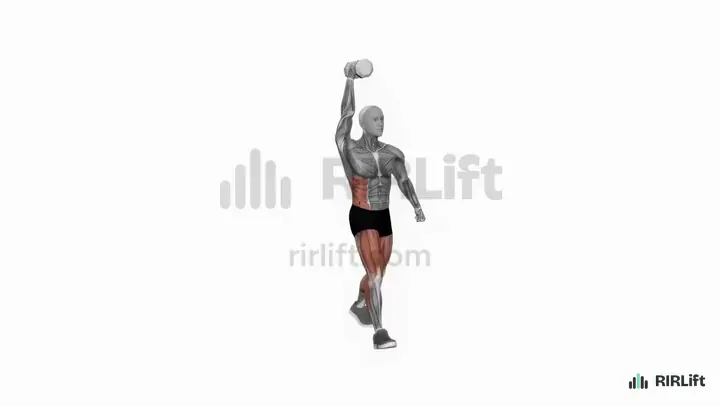
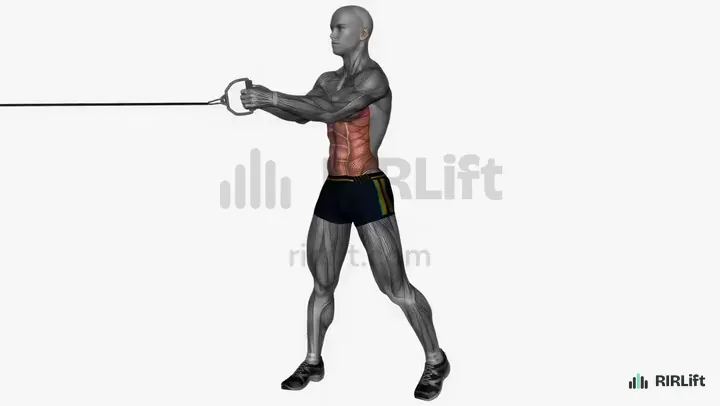
What a Pallof press alternative has to replace
The Pallof press trains your abs and obliques to stop your trunk from twisting. The cable pulls you sideways toward the stack, and the hardest moment is with your arms fully out, where the pull has the most leverage.
So a swap has to give your trunk a force to resist, not a twist to perform.
Example sessions without the Pallof press
-
Session 1
Gym, cable station taken
You train in a gym with a landmine and dumbbells, but the cable column is always busy.
2× a week · 20 sets a week · ~25 min
-
Session 2
Home with dumbbells
You train at home with a pair of dumbbells or one heavy one, and no cable or band.
3× a week · 30 sets a week · ~20 min
-
Session 3
No equipment
You train at home with just a mat and your bodyweight.
3× a week · 36 sets a week · ~25 min
Session 1
Gym, cable station taken
- Workouts2× a week
- Working sets20 a week
- Per workout~25 min
- EquipmentLandmine, Dumbbells
You train in a gym with a landmine and dumbbells, but the cable column is always busy.
The landmine twist takes the Pallof press's place as a side-to-side load to control, the overhead carry makes your trunk stay stacked under a weight, and the side plank holds you against bending sideways. 10 working sets.
| Exercise | Sets × reps | RIR | Rest |
|---|---|---|---|
| Landmine TwistReps per side. Brake at the hip. | 4 × 8–12 | 2 | 75 s |
| Dumbbell Single-Arm Overhead CarryReps are steps per arm. | 3 × 20–30 | 2 | 75 s |
| Side PlankSeconds per side. | 3 × 20–40 | 1 | 1 min |
- How to run it
- At the end of two training days a week, with a day between.
- How to progress
- On the landmine twist, add a small plate when every set reaches 12 smooth reps per side. On the carry, add steps until you hit 30 per arm, then move up a dumbbell. On the side plank, add five seconds per side.
Session 2
Home with dumbbells
- Workouts3× a week
- Working sets30 a week
- Per workout~20 min
- EquipmentDumbbells
You train at home with a pair of dumbbells or one heavy one, and no cable or band.
The suitcase carry replaces the Pallof press with a heavier sideways pull to resist, the kneeling dumbbell woodchop adds controlled rotation, and slow dead bugs finish with your back flat on the floor. 10 working sets.
| Exercise | Sets × reps | RIR | Rest |
|---|---|---|---|
| Dumbbell Suitcase CarryReps are steps. Left, then right. | 4 × 20–30 | 2 | 75 s |
| Dumbbell WoodchopReps per side. | 3 × 10–15 | 1 | 1 min |
| Dead BugReps per side. | 3 × 8–12 | 1 | 45 s |
- How to run it
- Two or three times a week; walk the carry across a room and back.
- How to progress
- Add steps to the carry until you reach 30 per hand, then use a heavier dumbbell. On the woodchop, add reps to 15 per side before going heavier.
Session 3
No equipment
- Workouts3× a week
- Working sets36 a week
- Per workout~25 min
- EquipmentBodyweight
You train at home with just a mat and your bodyweight.
Shoulder taps and bear crawls make your trunk resist twisting each time a hand lifts, the side plank resists bending sideways, and the dead bug adds slow bracing on your back. 12 working sets.
| Exercise | Sets × reps | RIR | Rest |
|---|---|---|---|
| Plank Shoulder TapEach tap is one rep. | 3 × 16–30 | 1 | 1 min |
| Bear CrawlReps are steps forward and back. | 3 × 10–20 | 2 | 1 min |
| Side PlankSeconds per side. | 3 × 15–30 | 1 | 45 s |
| Dead BugReps per side. | 3 × 8–12 | 2 | 45 s |
- How to run it
- Two or three times a week, after a workout or on its own; move slowly on every rep.
- How to progress
- Add reps or seconds to the top of each range. Then narrow your feet on shoulder taps and pause each hand in the air for a second.
Make it fit you
-
Stay still, don't twist
The point of every swap here is that your trunk does not move. If your hips turn on shoulder taps or you lean on a carry, slow down, widen your feet, or go lighter.
-
Lower back is sensitive
Start with the dead bug and side plank, which keep you lying down with your back supported, before carries or the landmine twist.
-
Too easy
Narrow your feet on shoulder taps, carry a heavier dumbbell, or switch the suitcase carry for the overhead carry. Harder versions beat longer sets.
-
Train both sides
Every swap here works one side at a time. Do the same reps or steps on each side, and start with your weaker one.
-
Short on time
Pair a carry with shoulder taps: walk, set the dumbbell down, do your taps, and rest. One carry and one plank exercise cover the Pallof press's job.
Questions
What can I do instead of a Pallof press?
With a dumbbell, do suitcase carries; in the gym without a free cable, the landmine twist; with no equipment, plank shoulder taps. All of them make your trunk resist being twisted or pulled sideways.
Can you do a Pallof press with a dumbbell?
Not really, because a dumbbell pulls straight down, not sideways. Hold it in one hand and walk instead: the suitcase carry gives your trunk the same kind of force to resist.
What is a good Pallof press alternative at home?
Plank shoulder taps and bear crawls with no equipment, or a suitcase carry with one dumbbell. Each makes your abs stop your body from twisting or tipping.
What is a Pallof press hold?
It is the Pallof press with a long pause at full reach, where the cable's pull is strongest. A side plank or a slow shoulder tap trains the same kind of hold without a cable.
What are some variations of the Pallof press?
Change your stance to change the challenge: kneeling on one knee locks your hips, feet together cuts your base, and pressing up overhead makes the lever longer. Without a cable, carries and shoulder taps do the same job.
Is the landmine twist the same as a Pallof press?
Not exactly: you move the bar side to side, so there is some turning. Keep the arc slow and stop it at each hip, and your trunk does the same braking work.
Related templates
-
Pallof press: how to do it, what it trains, and what to do instead
Form, muscles and setup for the cable version.
-
Side plank alternatives: oblique swaps for sore shoulders, home and the gym
More ways to train your trunk against sideways bending.
-
Standing ab exercises that load your core, with sessions for home, the gym and sport
Carries, chops and other ab work on your feet.
-
Russian twist alternatives: oblique swaps that load more and are easier on your back
Rotation work for your obliques that is easy on your back.
-
Core exercises at the gym: machines, cables, bars and free weights
Landmine, cable and machine core work in one place.