Side plank alternatives: oblique swaps for sore shoulders, home and the gym

The best side plank alternative is the dumbbell suitcase carry: one heavy dumbbell pulls you sideways and the opposite side of your waist holds you upright, with nothing on your shoulder. If side planks got easy, the Copenhagen plank or a dumbbell side plank makes the hold much harder. In the gym, the Pallof press trains the same hold standing at a cable.

What a side plank alternative has to replace

The side plank trains your obliques and the deep muscles along the side of your lower back to hold your body straight while gravity pulls your hips toward the floor. Your bottom shoulder and elbow carry your weight the whole time.

A swap has to make one side of your waist stop you from bending sideways. Carries and side bends do it standing up, which takes your shoulder out of it; harder planks keep the position and add load.

How to do the side plank

Harder side planks

Side planks got easy? Add load, turn the hold into reps, or lengthen the lever. Each makes a short set hard again.

Harder hold, same position

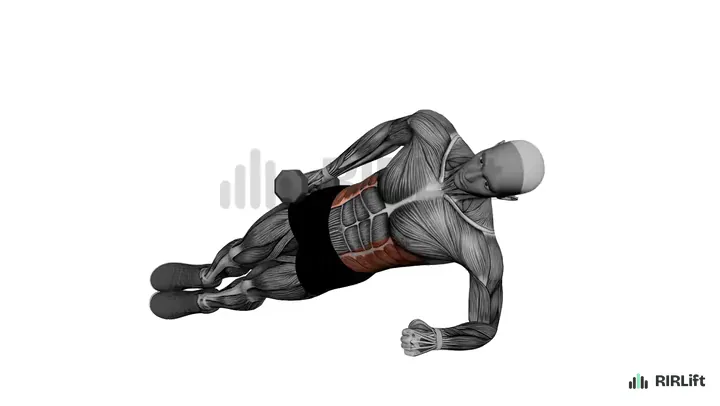
Dumbbell Side Plank

Abs

A dumbbell resting on your top hip adds load to the same hold, so a side plank that got easy becomes a short, hard set again. Start light.

How to do it

  1. Lie on your side propped on one elbow under your shoulder, legs straight and stacked.
  2. Hold a dumbbell on your top hip or pressed up in your top hand.
  3. Lift your hips until your body makes a straight line from head to feet.
  4. Hold that line for the target time, then lower and switch sides.

Cues

  • Elbow under shoulder
  • Hips high and stacked
  • Push the floor away

Common mistakes

  • Letting the hips sag or roll back: stop the set when either starts.
  • Using a dumbbell so heavy the hold drops to a few seconds: aim for at least 15 seconds of clean holding.

Side plank for reps

Dumbbell Side Plank Hip Dip

Abs

Lowering your hips toward the floor and driving them back up past straight turns the hold into reps your obliques have to lift. Pick it when long holds get boring.

How to do it

  1. Set up in a side plank on your forearm, elbow under your shoulder, feet stacked.
  2. Rest a light dumbbell on your top hip, holding it in place with your top hand.
  3. Lower your hip toward the floor without touching down.
  4. Lift it back up past straight until your side is fully squeezed.
  5. Do all reps, then switch sides.

Cues

  • Elbow under shoulder
  • Hips forward, not back
  • Lift past straight

Common mistakes

  • Letting the hips drift backward: keep your body in one line from head to heels.
  • Dropping the hip all the way to the floor: stop an inch short and lift.

Hardest swap, with just a bench

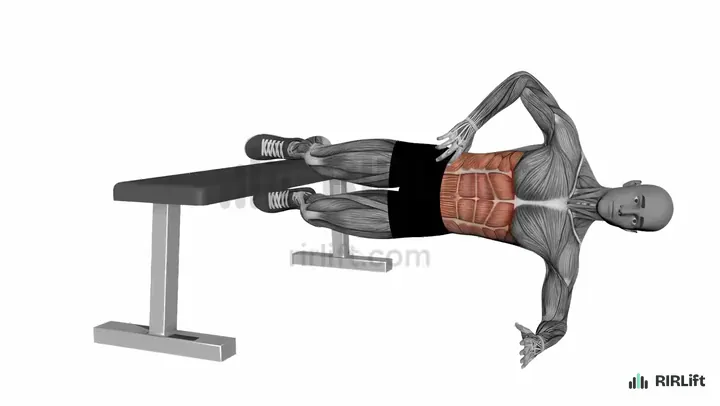
Copenhagen Plank

Adductors, Abs

Your top leg rests on a bench and holds you up, so your inner thighs and the side of your waist work together. It is much harder than a side plank; start with your knee on the bench instead of your foot.

How to do it

  1. Lie on your side next to a flat bench, propped on your bottom forearm with the elbow under your shoulder.
  2. Rest the inside of your top foot and ankle on the bench, top leg straight, and let your bottom leg hang beneath it.
  3. Press the top leg down into the bench and raise your hips until your body runs in one line from head to foot.
  4. Hold for the set's time, then lower, turn over and do the other side.

Cues

  • Push the bench away with your top leg
  • Hips stacked, not rolled back
  • Breathe while you hold

Common mistakes

  • Starting with the foot on the bench before you can hold a side plank for a minute: rest your knee on the bench instead until 30-second holds feel clean.
  • Hips drifting backward so the plank turns into a pike: keep your hips in line with your shoulders.

Standing: off your shoulder

If your shoulder or elbow complains, stand up. A weight in one hand gives the side of your waist the same job.

Best swap if your shoulder or elbow hurts

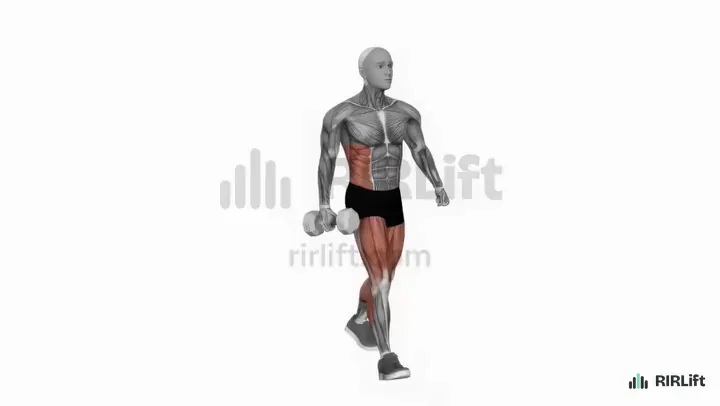
Dumbbell Suitcase Carry

Abs, Quads

One heavy dumbbell in one hand pulls you sideways as you walk, and the opposite side of your waist keeps you upright. It trains the same muscles as the side plank with nothing on your shoulder.

How to do it

  1. Pick up a heavy dumbbell in one hand like a suitcase.
  2. Stand tall with your shoulders level and the free arm relaxed.
  3. Walk forward with short, steady steps.
  4. Keep your torso from leaning toward the weight.
  5. Set it down after the distance or time, then carry it in the other hand.

Cues

  • Shoulders level
  • Stand taller than normal
  • Short, even steps

Common mistakes

  • Leaning away from the weight to balance it: you should look like you carry nothing.
  • Going so heavy that your grip gives out before your core does: shorten the walk instead.

Standing hold, harder

Dumbbell Single-Arm Overhead Carry

Shoulders, Abs

With the dumbbell locked overhead, a sideways tilt is easier to fall into and harder to stop, so your trunk works more than on a suitcase carry. Go lighter than you think.

How to do it

  1. Press a dumbbell overhead with one arm until your elbow locks.
  2. Keep your bicep beside your ear and your ribs tucked down.
  3. Walk forward with slow, controlled steps.
  4. Hold the arm vertical the whole way.
  5. Lower the weight carefully at the end, then switch arms.

Cues

  • Lock the elbow
  • Ribs down, do not arch
  • Weight over your heel

Common mistakes

  • Arching your lower back to hold the weight up: lighten it until you can keep your ribs down.
  • Letting the arm drift forward: keep it stacked over your shoulder.

Simplest dumbbell swap

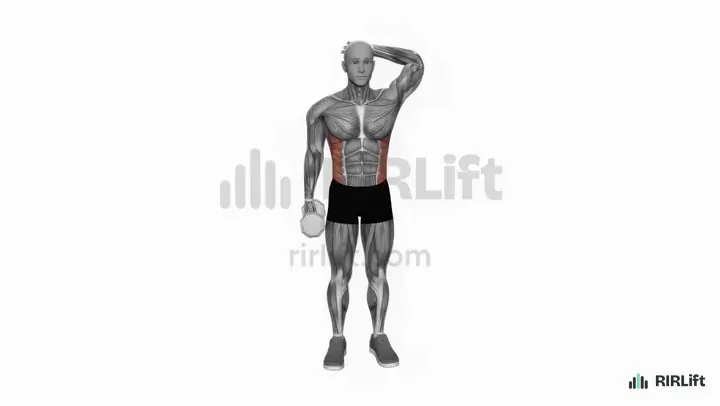
Dumbbell Side Bend

Abs

Bending sideways toward one dumbbell and pulling yourself back up trains your obliques through a full range, which a hold never does. Use one dumbbell, never two.

How to do it

  1. Stand tall with one dumbbell hanging at your side and your other hand on your hip or behind your head.
  2. Lean toward the dumbbell, letting it slide down your thigh.
  3. Bend down your side until you feel the far side stretch, without turning.
  4. Pull your torso back up with the opposite side.
  5. Finish the set, then switch hands.

Cues

  • Bend sideways, not forward
  • Slide down the leg
  • Pull up with the far side

Common mistakes

  • Twisting as you bend: keep your chest facing forward.
  • Holding a dumbbell in each hand: the weights cancel out. Use one.

Side bend with a plate

Plate Side Bend

Abs

The same side bend with a plate pinched in one hand, which also works your grip. Use it if the dumbbells you need are taken.

How to do it

  1. Stand tall with a plate pinched in one hand at your side, the other hand on your hip or behind your head.
  2. Bend sideways toward the plate, sliding it down the outside of your leg.
  3. Stop when you feel a stretch along the opposite side of your waist.
  4. Pull yourself back to upright using the opposite side, and finish all reps before switching.

Cues

  • Bend straight sideways
  • Hips stay level
  • Pull up from the other side

Common mistakes

  • Twisting or leaning forward as you bend: the plate wanders in front of your thigh. Keep it brushing the outside of your leg.
  • Holding a plate in each hand: they cancel each other out. One plate, one side at a time.

Kettlebell swap for obliques and hips

Kettlebell Windmill

Abs, Shoulders

Holding a kettlebell overhead while you hinge sideways makes the side of your waist and your hips control a slow tilt down and back. Learn it light; it takes practice.

How to do it

  1. Press a kettlebell overhead with one arm and turn both feet about 45 degrees away from that arm.
  2. Keep your eyes on the bell.
  3. Push your hips toward the bell side and reach your free hand down the inside of your front leg.
  4. Go as low as you can while the top arm stays vertical.
  5. Drive your hips back under you to stand.

Cues

  • Eyes on the bell
  • Hips push out
  • Top arm stays vertical

Common mistakes

  • Bending the knees to get low: the depth should come from the hip shift.
  • Letting the overhead arm drift forward: if it moves, the bell is too heavy.

At the cable

A cable pulling you sideways lets you train the hold standing and add weight in small steps.

Standing swap in the gym

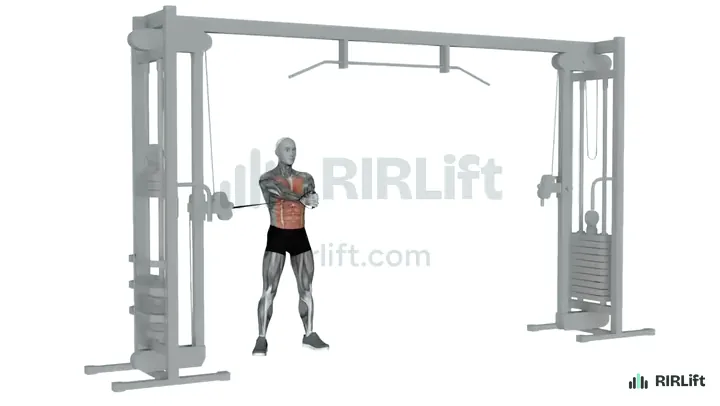
Pallof Press

Abs

Standing side-on to a cable and holding the handle out at your chest, your trunk stops being pulled toward the stack. It trains the same brace-and-hold idea as the side plank, standing up.

How to do it

  1. Set a single handle at chest height on a cable column, or loop a band around a rack post or a closed door at the same height.
  2. Hold the handle with both hands against your breastbone, then walk sideways away from the anchor until the cable pulls clearly toward it.
  3. Stand side-on with feet just wider than your hips, knees soft, and squeeze your glutes and abs as if bracing for a shove.
  4. Press the handle straight out from your chest until your arms are long, keeping your hands in line with your breastbone.
  5. Hold the long-arm position for two seconds without letting your hands drift toward the anchor, then bring the handle back to your chest.
  6. Finish every rep on one side, then turn to face the other way and repeat.

Cues

  • Hands stay on your midline
  • Ribs down, hips square to the front
  • Long arms, slow count, no drift

Common mistakes

  • Letting the handle drift toward the anchor as you press: take a step closer to the stack, or pick a lighter band, until your hands stay on your midline.
  • Turning your hips or shoulders to meet the cable: point both hip bones and your chest forward, and squeeze your glutes before every rep.
  • Pressing fast and returning fast: the hard part is the hold at full reach, so count two seconds there on every rep.

Bar and floor, for reps

When you want your obliques to move, not just hold.

Pull-up bar swap

Hanging Oblique Crunch

Abs

Knees up and across toward one shoulder makes the side of your waist curl, not just hold. Choose it when you want obliques that you train with reps.

How to do it

  1. Hang from the bar with straight arms, your shoulders set down and your legs still.
  2. Bend your knees and bring them up and across toward one shoulder.
  3. Squeeze the side of your waist at the top for a second.
  4. Lower with control to a still hang and alternate sides.

Cues

  • Knees to the armpit
  • Shorten one side of the waist
  • Pause before switching

Common mistakes

  • Swinging from side to side: stop the hang before every rep.
  • Raising the knees straight up: aim them clearly to one side.

Floor swap with no load on your shoulders

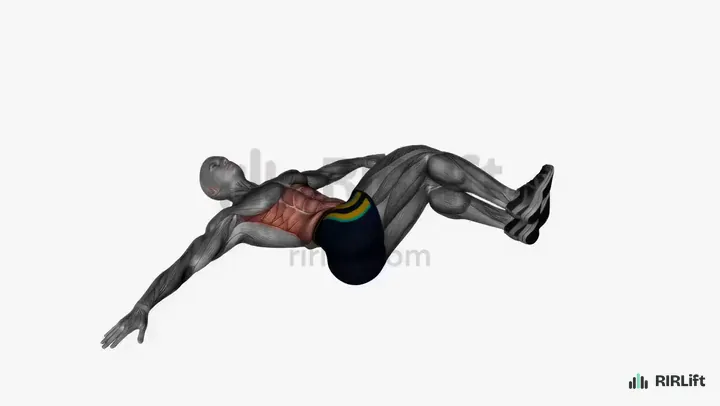
Windshield Wipers

Abs

Lying on your back with your knees up, you lower them side to side and pull them back with your obliques. Nothing rests on your shoulder or elbow.

How to do it

  1. Lie face up with your arms out to the sides, palms down, and lift your legs so your knees are bent at 90 degrees above your hips.
  2. Keep both shoulders on the floor.
  3. Lower your knees to one side as far as you can without lifting the opposite shoulder.
  4. Pull them back to the middle with your obliques and go to the other side.

Cues

  • Shoulders stay flat
  • Lower slowly, lift with the waist
  • Straighter legs, harder rep

Common mistakes

  • Dropping the legs all the way and bouncing: stop a few inches above the floor.
  • Letting the shoulder lift: shorten the range until it stays down.

Example sessions without the side plank

Session 1

Home, side planks hurt your shoulder

Open in the session builder
  • Workouts3× a week
  • Working sets30 a week
  • Per workout~25 min
  • EquipmentDumbbells

You train at home with a dumbbell or two, and side planks bother your shoulder or elbow.

The suitcase carry replaces the side plank with a standing hold, the side bend trains your obliques through a full range, and windshield wipers finish them lying down. Nothing loads your shoulder. 10 working sets.

Abs
ExerciseSets × repsRIRRest
Dumbbell Suitcase CarryReps are steps. Left, then right. 4 × 20–30 2 75 s
Dumbbell Side BendReps per side. One dumbbell. 3 × 10–15 1 1 min
Windshield WipersReps per side. 3 × 8–12 1 1 min
How to run it
Two or three times a week; walk the carry across a room and back.
How to progress
Add steps to the carry until you reach 30 per hand, then use a heavier dumbbell. On the side bend, add reps to 15 per side before going heavier.

Session 2

Side planks got too easy

Open in the session builder
  • Workouts2× a week
  • Working sets20 a week
  • Per workout~25 min
  • EquipmentDumbbells

You can hold a side plank for a minute on each side and want it to be hard again.

The Copenhagen plank makes the hold far harder and adds your inner thighs, hip dips turn it into reps, and a loaded side plank finishes with a short, heavy hold. 10 working sets.

Abs
ExerciseSets × repsRIRRest
Copenhagen PlankSeconds per side. Knee on the bench. 4 × 15–30 2 1 min
Dumbbell Side Plank Hip DipReps per side. 3 × 10–15 1 1 min
Dumbbell Side PlankSeconds per side. 3 × 15–30 1 1 min
How to run it
Twice a week, with a day between.
How to progress
On the Copenhagen plank, add seconds to 30 per side, then move the support from your knee to your foot. On the loaded side plank, add a heavier dumbbell once every hold reaches 30 seconds.

Session 3

Gym, want loaded oblique work

Open in the session builder
  • Workouts2× a week
  • Working sets22 a week
  • Per workout~30 min
  • EquipmentKettlebells, Adjustable Cable, Pull-Up Bar, Barbells

You train in a gym and want oblique work you can add weight to, instead of longer holds.

The kettlebell windmill and plate side bend load your obliques through a range, the Pallof press takes the side plank's place as a hold at a cable, and hanging oblique crunches curl them on the bar. 11 working sets.

Abs
ExerciseSets × repsRIRRest
Kettlebell Windmill1 warm-up set firstReps per side. Eyes on the bell. 3 × 5–8 2 90 s
Pallof PressReps per side. Two-second hold. 3 × 8–12 2 1 min
Hanging Oblique CrunchReps per side. 3 × 8–12 1 75 s
Plate Side BendReps per side. 2 × 10–15 1 1 min
How to run it
At the end of two gym days a week.
How to progress
When every set reaches the top of its range, add the smallest weight jump: one plate on the cable, the next kettlebell or plate up.

Make it fit you

Questions

What can I do instead of a side plank?

The dumbbell suitcase carry trains the same side of your waist standing up. A side bend, the Pallof press or windshield wipers all work too, depending on what you have.

What is a side plank alternative if my shoulder hurts?

Standing swaps: the suitcase carry, the side bend or the Pallof press. Windshield wipers on your back also leave your shoulder out of it.

How do I make side planks harder?

Lift your top leg, rest a dumbbell on your top hip, or do hip dips for reps. The Copenhagen plank, with your top leg on a bench, is the hardest step up.

What muscles does the side plank work?

Mainly your obliques and the deep muscles along the side of your lower back, with your glutes and shoulder holding you up.

Are side bends as good as side planks?

They train the same obliques, but through a full range instead of a hold, and you can add weight. Doing one of each covers both.