Softball workout: speed, rotation and strong shoulders

A softball workout opens with a few fast box jumps or medicine ball rotational throws, then a heavy leg lift such as the trap bar deadlift, a glute exercise like the hip thrust, a lateral lunge for fielding, at least as many rows as presses, and light rotator cuff and face pull work for the throwing shoulder. Off season, run three days a week at 1 to 2 reps in reserve; in season, drop to two shorter sessions at 2 to 3 reps in reserve so your legs and arm are fresh for games.

  1. Trap Bar Deadlift Quads, Glutes
  2. Hip Thrust Glutes
  3. Dumbbell Lateral Lunge Quads, Glutes, Adductors
  4. Box Jump Quads, Glutes, Hamstrings
  5. Med Ball Rotational Throw Abs
  6. Cable Woodchop Abs
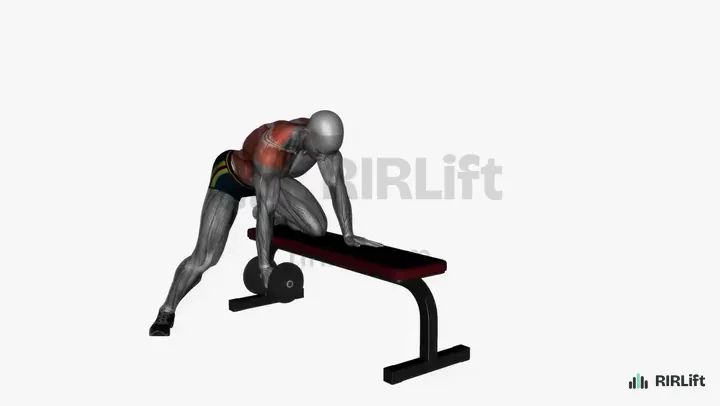
  7. One-Arm Dumbbell Row Lats, Upper Back
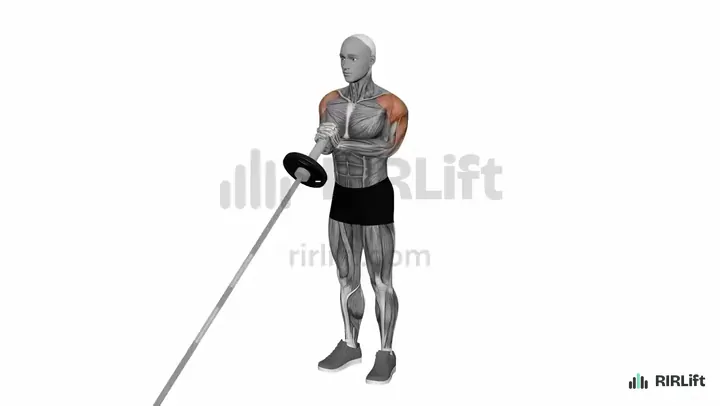
  8. Landmine Press Shoulders
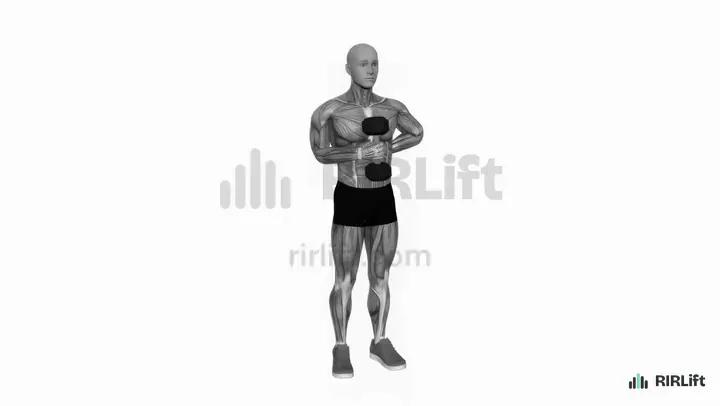
  9. Dumbbell External Rotation Shoulders
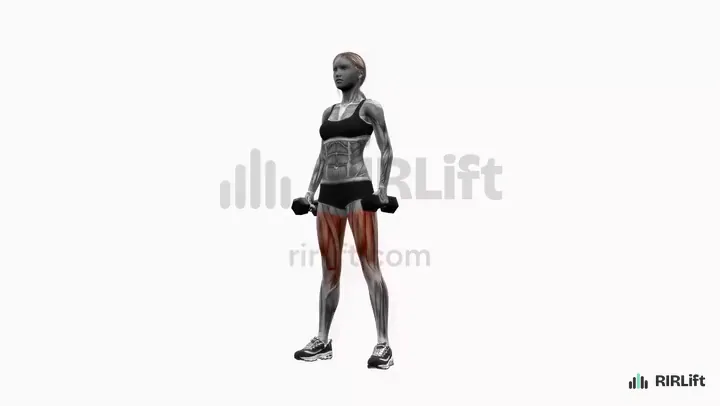
Lower-body exercises for softball players

Every throw, swing and sprint starts from the legs and hips. Use one heavy lift, one glute exercise and one lateral exercise per week.

Leg and hip strength for sprinting and hitting

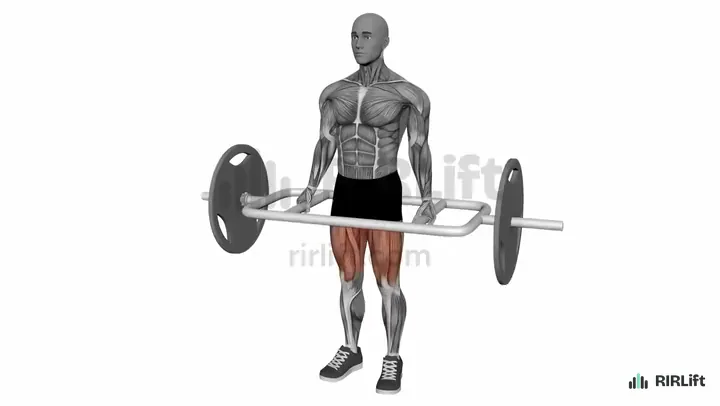
Trap Bar Deadlift

Quads, Glutes

Bat speed and a fast first step both start from the ground, and the trap bar is the simplest way to load the hips and legs heavy. The handles at your sides make it easier to learn than a straight-bar deadlift.

How to do it

  1. Stand in the middle of the trap bar, feet under the hips, handles beside your ankles.
  2. Bend at the hips and knees to grab the handles, then set your back flat and look ahead.
  3. Drive through your feet to stand up tall.
  4. Return the bar to the floor by hinging back and bending your knees.

Cues

  • Feet drive the floor
  • Flat back
  • Lock out with the glutes

Common mistakes

  • Rounding the back at the start: lower the weight until you can set it flat.
  • Hips shooting up before the bar moves: push with the legs and lift the chest together.

Swap for: Barbell Deadlift, Kettlebell Deadlift, Dumbbell Romanian Deadlift

Squat strength with good posture

Goblet Squat

Quads, Glutes

Squatting builds the legs used to sprint the bases and hold a fielding stance. The front-held dumbbell keeps the torso upright and the lower back happy, so it is a smart first squat for any player.

How to do it

  1. Cup one dumbbell under your chin, elbows pointing down.
  2. Stand a little wider than your hips with the toes slightly out.
  3. Sit down between your heels until your elbows nearly touch your knees.
  4. Stand up by driving through the middle of your feet.

Cues

  • Sit between your heels
  • Elbows inside knees
  • Stay tall

Common mistakes

  • Rising onto the toes at the bottom: keep the whole foot pressed down.
  • Collapsing the chest forward: hug the dumbbell tighter and squat less deep until it improves.

Swap for: Dumbbell Squat, Front Squat, Barbell Back Squat

Glute power

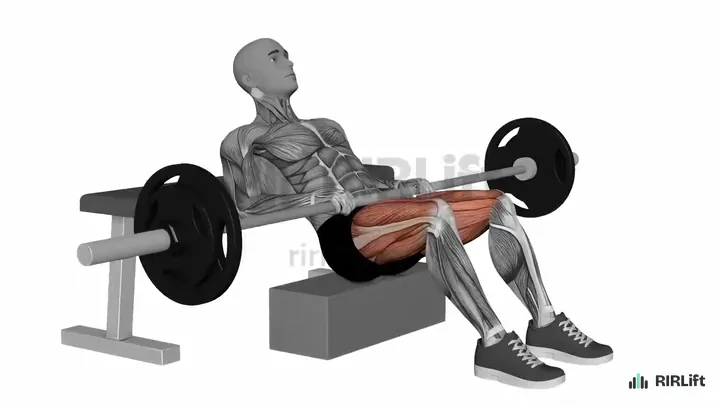
Hip Thrust

Glutes

The glutes drive hip rotation in the swing and push off in a sprint. The hip thrust loads them at full hip extension, which squats and deadlifts don't reach as hard.

How to do it

  1. Rest your shoulder blades on the edge of a bench, seated low, and a padded barbell over your hips.
  2. Plant your feet flat so your shins are vertical at the top.
  3. Drive through your heels and lift your hips until your body is flat from shoulders to knees.
  4. Squeeze for a second, then lower until your hips nearly touch the floor.

Cues

  • Chin tucked
  • Shins vertical at the top
  • Squeeze and hold

Common mistakes

  • Arching the lower back to get higher: finish with the glutes and keep the ribs down.
  • Feet too far out so the hamstrings take over: walk them closer.

Swap for: Dumbbell Hip Thrust, Glute Bridge, Single-Leg Hip Thrust

Side-to-side strength for fielding

Dumbbell Lateral Lunge

Quads, Glutes, Adductors

Infielders and outfielders move sideways first, and the lateral lunge strengthens the legs and inner thighs in that wide, low position. It also teaches you to load the hip rather than the knee.

How to do it

  1. Hug one dumbbell at your sternum and stand with your feet together.
  2. Take a big step sideways and sit back into that hip while the other leg stays straight.
  3. Keep the working foot flat and the knee over the toes.
  4. Push hard off the working foot to return to the start, then go to the other side.

Cues

  • Sit back into the hip
  • Trailing leg long
  • Push back to center

Common mistakes

  • Letting the knee shoot past the toes: sit your hips further back.
  • Short steps that never load the hip: step wide enough to feel the inner thigh stretch.

Swap for: Cossack Squat, Kettlebell Lateral Lunge, Barbell Lateral Lunge

Power exercises for speed and bat speed

Speed comes from moving loads fast. Keep jumps and throws at the start of a session, after a warm-up, and stop each set while every rep is still quick.

Lower-body explosiveness

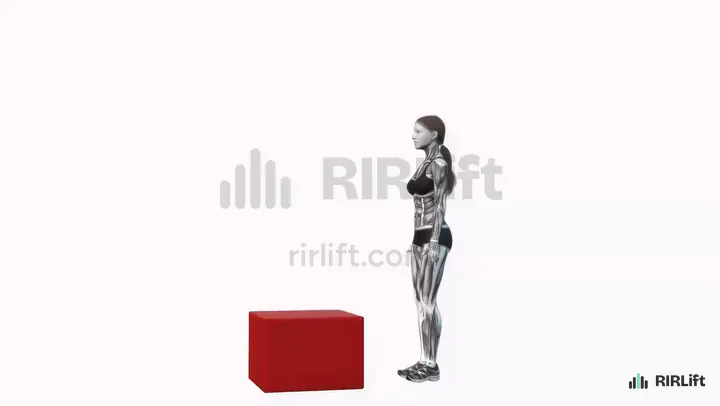
Box Jump

Quads, Glutes, Hamstrings

Jumps train the fast force production behind a quick first step out of the box or a burst toward a ball. Low reps with full rest keep each jump fast.

How to do it

  1. Stand a short step from a sturdy box with feet about hip width.
  2. Swing your arms back and dip into a quarter squat.
  3. Jump up and land softly on the box with both feet, knees bent.
  4. Stand up on the box, step down, and reset before the next jump.

Cues

  • Jump up, land soft
  • Step down, don't jump down
  • Reset every rep

Common mistakes

  • Using a box so high you land in a deep squat: pick a height you clear easily.
  • Rushing reps: each jump should be your best.

Swap for: Jump Squat, Single-Leg Box Jump, Lateral Box Jump

Build a session with Box Jump

Rotational power for hitting and throwing

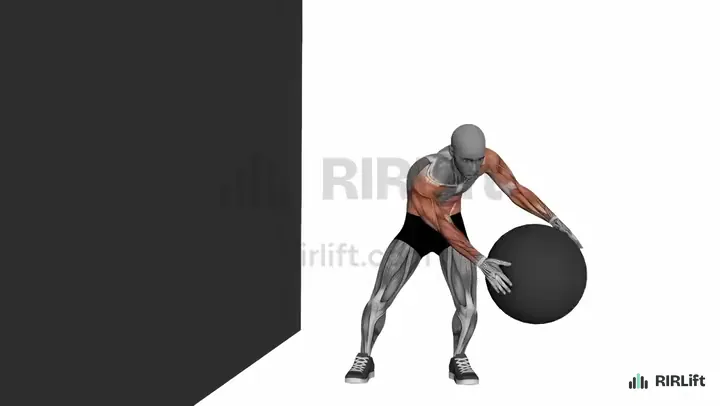
Med Ball Rotational Throw

Abs

Swinging and throwing are both fast rotations from the back hip through the front. Throwing a medicine ball into a wall trains that sequence at full speed, which slow lifts can't do.

How to do it

  1. Stand side-on to a solid wall, about an arm's length plus a step away, holding a medicine ball at your back hip.
  2. Load your weight into the back leg and turn your shoulders away from the wall.
  3. Rotate your hips first, then your torso and arms, and throw the ball hard into the wall.
  4. Catch it on the rebound, reset, and do all reps before turning to face the other way.

Cues

  • Hips lead, arms follow
  • Throw through the wall
  • Reset each rep

Common mistakes

  • Throwing with the arms only: start the turn from your back foot and hip.
  • Using a ball so heavy it moves slowly: pick a weight you can throw fast.

Swap for: Med Ball Woodchop, Cable Woodchop, Landmine Rotational Press

Core exercises for hitting and throwing

Softball trunks need to rotate hard and also resist rotation until the right moment. Pair a loaded rotation with an anti-rotation hold.

Loaded rotation

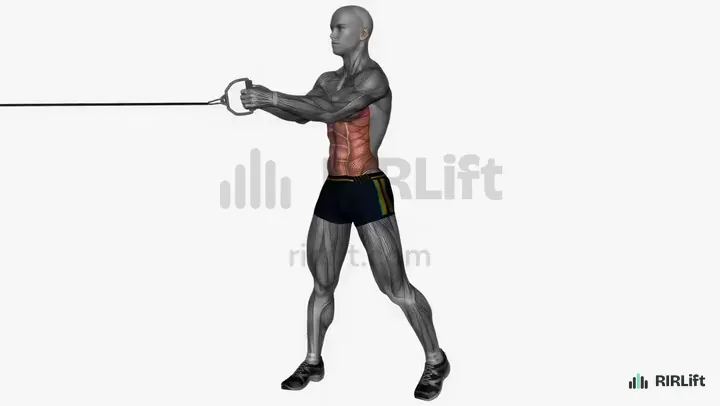
Cable Woodchop

Abs

The woodchop trains the same hip-to-shoulder turn as a swing, with a cable resisting the whole path. It builds the strength the medicine ball throws then turn into speed.

How to do it

  1. Set a cable handle high and stand side-on to the machine, feet wider than your shoulders.
  2. Take the handle in an overlapping grip, arms long, reaching up toward the pulley.
  3. Chop the handle diagonally past your torso to the far hip, turning your hips and pivoting the back foot.
  4. Return slowly to the start and finish all reps before switching sides.

Cues

  • Turn the hips with the arms
  • Arms stay long
  • Control the return

Common mistakes

  • Bending the elbows and turning it into a row: keep your arms long.
  • Leaving the feet planted so the lower back twists: pivot on the back foot.

Swap for: Med Ball Rotational Throw, Dumbbell Woodchop, Landmine Twist

Trunk control for stable throws

Pallof Press

Abs

A strong throw depends on a trunk that can resist turning until the right moment. The Pallof press trains you to hold steady against a cable pulling you sideways.

How to do it

  1. Stand side-on to a cable set at chest height and hold the handle at your sternum.
  2. Step out until there is tension and set your feet just wider than your hips.
  3. Push the handle straight out in front until your arms are straight, without turning toward the cable.
  4. Hold a beat, pull it back to your chest, and repeat, then face the other way.

Cues

  • Don't let it turn you
  • Long arms, tight trunk
  • Breathe out as you press

Common mistakes

  • Leaning away from the cable: stand tall and lighten the weight.
  • Pressing up instead of straight out: keep the handle at chest height.

Swap for: Dead Bug, Side Plank, Cable Woodchop

Upper body and shoulder exercises for softball

Pulls outnumber pushes here on purpose: the back and rear shoulders slow the throwing arm down after release. The press and push-up use paths that let the shoulder blade move.

Back strength for the arm path

One-Arm Dumbbell Row

Lats, Upper Back

Your back muscles decelerate the throwing arm and pull the bat through. Rowing one side at a time builds both sides evenly and lets you brace on a bench.

How to do it

  1. Brace one hand and the same-side knee on a flat bench, back flat.
  2. Hold the dumbbell below your shoulder with a straight arm.
  3. Pull it toward your hip, keeping the elbow tucked in.
  4. Lower it all the way down and repeat, then switch sides.

Cues

  • Elbow to hip
  • Square shoulders
  • Full stretch at the bottom

Common mistakes

  • Twisting your torso to lift more: keep both shoulders level.
  • Shortening the bottom of the rep: start every rep from a straight arm.

Swap for: Single-Arm Cable Row, Dumbbell Pendlay Row, Kettlebell Row

Standing pull with rotation control

Single-Arm Cable Row

Upper Back, Lats

Rowing with one arm while standing makes your hips and trunk stop the cable from turning you, which ties the back and the trunk together the way throwing does.

How to do it

  1. Set a cable at chest height and hold the handle with one hand, standing in a staggered stance.
  2. Reach forward with the arm long and let the shoulder blade slide forward.
  3. Pull the handle to your ribs, drawing the shoulder blade back.
  4. Return slowly to full reach and repeat before switching arms.

Cues

  • Reach, then pull
  • Hips stay square
  • Shoulder blade moves first

Common mistakes

  • Rotating the whole body to finish the rep: stay square and use less weight.
  • Shrugging the shoulder up: keep it down and back.

Swap for: One-Arm Dumbbell Row, Seated Cable Row, TRX Row

Shoulder-friendly pressing

Landmine Press

Shoulders

Overhead strength helps throwing, but heavy straight overhead pressing is a lot of stress on a throwing shoulder. The landmine moves in an arc in front of you, so the shoulder works through a safer path.

How to do it

  1. Wedge one end of a barbell in a landmine or corner and stand square to the free end, feet about shoulder width.
  2. Hold the end of the bar at your upper chest with both hands, elbows under it.
  3. Press the bar up and forward until your arms are straight, letting the shoulder blades move with it.
  4. Lower it back to your chest under control.

Cues

  • Press up and out
  • Ribs stay down
  • Reach at the top

Common mistakes

  • Leaning back to finish: stay stacked from head to heels.
  • Letting the elbows flare wide: keep them under the bar.

Swap for: Single-Arm Dumbbell Shoulder Press, Push-Up, Incline Dumbbell Press

Upper-body push with free shoulder blades

Push-Up

Chest

The push-up builds chest, shoulders and triceps while your shoulder blades move freely, which suits throwing athletes better than bench-pressing heavy. Add weight or slow reps when it gets easy.

How to do it

  1. Set your hands just wider than your shoulders and your body rigid like a board.
  2. Lower your chest toward the floor with your elbows angled back at about 45 degrees.
  3. Stop with your chest a fist above the floor.
  4. Push the floor away until your arms are straight and your upper back rounds slightly.

Cues

  • Straight body
  • Elbows angled back
  • Push all the way up

Common mistakes

  • Hips sagging: squeeze your glutes and brace.
  • Half reps: lower until your chest is close to the floor.

Swap for: Incline Push-Up, Weighted Push-Up, Flat Dumbbell Press

Build a session with Push-Up

Rotator cuff strength

Dumbbell External Rotation

Shoulders
The rotator cuff slows the arm down after every throw. A light, controlled external rotation keeps it strong enough to handle the throwing load.

How to do it

  1. Stand holding a light dumbbell with your upper arm against your side.
  2. Bend the elbow to a right angle so the dumbbell sits in front of your belly.
  3. Rotate the forearm out as far as you can without the elbow leaving your ribs.
  4. Return over two or three seconds and repeat.

Cues

  • Elbow stays put
  • Slow lowering
  • Light load

Common mistakes

  • Leaning or twisting to get the weight further out: keep your chest still.
  • Using a weight you have to swing: go lighter.

Swap for: Dumbbell Lying External Rotation, Face Pull, Band Face Pull

Upper back and rear shoulders

Face Pull

Shoulders, Upper Back

Face pulls train the rear shoulders and the muscles between the shoulder blades that hold the throwing shoulder in position. They are light, high-rep work that fits at the end of any session.

How to do it

  1. Set a rope on a cable at about face height and hold the ends with your palms facing each other.
  2. Step back until your arms are straight and the stack lifts.
  3. Pull the rope toward your face, pulling the ends apart and rotating your hands back.
  4. Hold the finish a moment, then return slowly.

Cues

  • Pull the rope apart
  • Hands finish beside your ears
  • Slow return

Common mistakes

  • Leaning back and pulling with your body: stand tall and lighten the stack.
  • Pulling to your chest: aim for your forehead.

Swap for: Band Face Pull, Band Pull-Apart, Dumbbell Rear Delt Fly

Build a session with Face Pull

Put them together: example sessions

Each session below picks from the exercises above for one situation, with the sets, reps, rest and RIR filled in. Open one in the session builder to change a pick, price it from a recent set, and add it to RIRLift.

Session 1

Off-season, three days a week

Open in the session builder
  • Workouts3× a week
  • Working sets43 a week
  • Per workout~35 min
  • EquipmentPlyo Box, Trap Bar, Dumbbells, Barbells +5

Your season is over and you have three gym days to get stronger and faster before preseason.

Off season you can handle more volume, so each day has 13 to 15 working sets with strength lifts at 1 to 2 reps in reserve. Power work comes first every day, and the shoulder work appears on all three days because throwing volume will climb again soon.

Lower
ExerciseSets × repsRIRRest
Box Jump 3 × 3 3 90 s
Trap Bar Deadlift2 warm-up sets first 4 × 4–6 2 3 min
Dumbbell Lateral Lunge 3 × 6–8 2 90 s
Hip Thrust 3 × 8–10 1 2 min
Pallof Press 2 × 10 2 1 min

Open Lower in the session builder

Upper
ExerciseSets × repsRIRRest
One-Arm Dumbbell Row 4 × 8–10 1 90 s
Landmine Press 3 × 6–10 2 90 s
Single-Arm Cable Row 3 × 10–12 1 1 min
Push-Up 3 × 8–15 1 90 s
Face Pull 2 × 12–15 1 45 s

Open Upper in the session builder

Power
ExerciseSets × repsRIRRest
Med Ball Rotational ThrowFive throws per side. 4 × 5 3 1 min
Goblet Squat 3 × 8–10 2 2 min
Cable Woodchop 3 × 8–10 2 1 min
Dumbbell External Rotation 3 × 12–15 2 45 s

Open Power in the session builder

How to run it
Train Monday, Wednesday and Friday. Do your throwing and hitting on the other days.
How to progress
Add weight to the trap bar deadlift, goblet squat and hip thrust when every set reaches the top of the range. Every fourth week, halve the sets and keep the weights.

Session 2

In-season, two short sessions

Open in the session builder
  • Workouts2× a week
  • Working sets21 a week
  • Per workout~25 min
  • EquipmentPlyo Box, Trap Bar, Dumbbells, Adjustable Cable +1

You have practice most days and games every week, and you want to keep strength without tired legs or a sore arm.

In season the goal is to hold on to what you built. Two 40-minute sessions with 2 to 3 sets per exercise at 2 to 3 reps in reserve keep strength without soreness, and there are no heavy overhead presses so the throwing arm only does throwing.

In-Season A
ExerciseSets × repsRIRRest
Box Jump 2 × 3 3 90 s
Trap Bar Deadlift2 warm-up sets first 3 × 3–5 3 2:30 min
One-Arm Dumbbell Row 3 × 8–10 2 90 s
Pallof Press 2 × 10 2 1 min

Open In-Season A in the session builder

In-Season B
ExerciseSets × repsRIRRest
Med Ball Rotational ThrowFour throws per side. 3 × 4 3 1 min
Goblet Squat 2 × 6–8 2 2 min
Push-Up 2 × 8–12 2 90 s
Dumbbell External Rotation 2 × 12–15 2 45 s
Face Pull 2 × 12–15 2 45 s

Open In-Season B in the session builder

How to run it
Lift the day after a game and again two days before the next one. Skip the second session in weeks with a tournament.
How to progress
Keep the same weights or add a little when everything moves fast. If your arm feels heavy, drop the landmine press for that week.

Session 3

Pitchers and high-volume throwers

Open in the session builder
  • Workouts2× a week
  • Working sets28 a week
  • Per workout~35 min
  • EquipmentTrap Bar, Barbells, Flat Bench, Dumbbells +3

You pitch or play a high-throw position and want a strong throwing shoulder plus legs that drive the pitch.

Pitchers already throw hundreds of times a week, so this plan has no overhead pressing and twice as many pulling and rotator cuff sets as pushing sets. Leg and hip work stays heavy because the drive comes from there, but every set stops at 2 reps in reserve to leave you fresh for throwing days.

Legs and Back
ExerciseSets × repsRIRRest
Trap Bar Deadlift2 warm-up sets first 3 × 4–6 2 2:30 min
Hip Thrust 3 × 8–10 2 2 min
Dumbbell Lateral Lunge 2 × 6–8 2 90 s
Single-Arm Cable Row 3 × 10–12 2 1 min
Dumbbell External Rotation 3 × 12–15 2 45 s

Open Legs and Back in the session builder

Rotation and Shoulders
ExerciseSets × repsRIRRest
Med Ball Rotational ThrowFive throws per side. 3 × 5 3 1 min
Goblet Squat 3 × 8–10 2 2 min
One-Arm Dumbbell Row 3 × 8–12 2 90 s
Face Pull 3 × 12–15 2 45 s
Pallof Press 2 × 10 2 1 min

Open Rotation and Shoulders in the session builder

How to run it
Do both sessions every week, away from your heaviest pitching day. Throw the bullpen first if you do both on one day.
How to progress
Add weight to the legs first. For the cuff and face pull, add reps up to the top of the range before you move up a dumbbell.

Make it fit you

Questions

What exercises are good for softball players?

Trap bar deadlifts, hip thrusts and lateral lunges for the legs, box jumps and medicine ball rotational throws for power, woodchops and Pallof presses for the trunk, rows and face pulls for the back, and light rotator cuff work for the throwing shoulder.

How often should softball players lift?

Three times a week in the off season and twice a week in season, with sessions under an hour and none the day before a game.

Should softball players lift heavy?

Yes, for the legs and hips, which drive throwing, hitting and sprinting. Keep upper-body pressing moderate and pulls plentiful to balance all the throwing.

How do I practice softball by myself?

Off the field, the sessions here cover the strength and power side alone in a gym. For skills, a tee and a net for hitting and a wall for throwing and fielding grounders let you get reps in without a partner.

Should pitchers do overhead presses?

Many coaches leave heavy straight-overhead pressing out for pitchers because of the throwing volume. The pitcher plan here uses rows, face pulls and rotator cuff work instead, and the landmine press is the overhead option for position players.

What muscles does softball use?

The glutes and legs drive every swing, throw and sprint, the obliques and trunk turn that drive into rotation, and the back and rotator cuff slow the arm down after a throw.