
Weight plate exercises for shoulders, triceps, grip and core, with sessions for one plate or a few
Published October 19, 2026
A single weight plate is good for the lifts where you hold one load in both hands: front raises, halos, overhead triceps extensions and overhead carries for your shoulders and arms, pinch deadlifts for your grip, and hollow holds, loaded sit-ups, side bends, woodchops and standing twists for your core. A plate is too light and too awkward for heavy squats or presses; it shines as a shoulder and core tool or as a finisher after a barbell or dumbbell session.
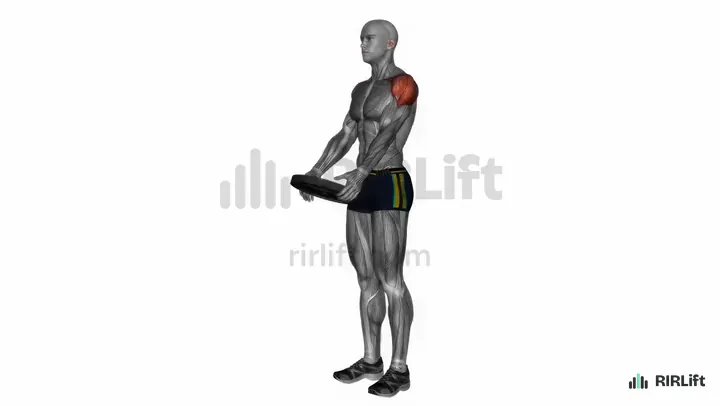
- Plate Front Raise Shoulders
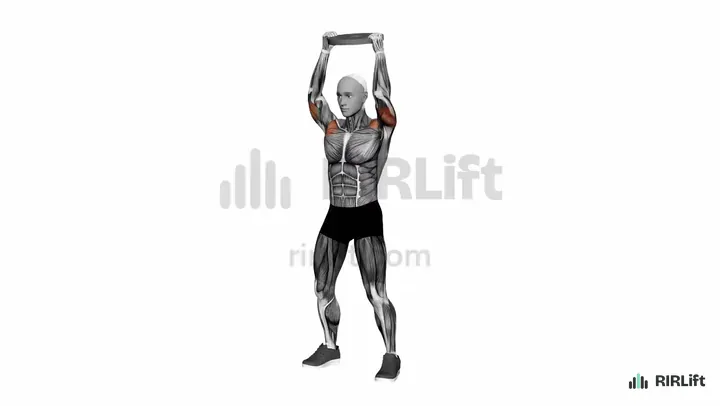
- Plate Overhead Triceps Extension Triceps
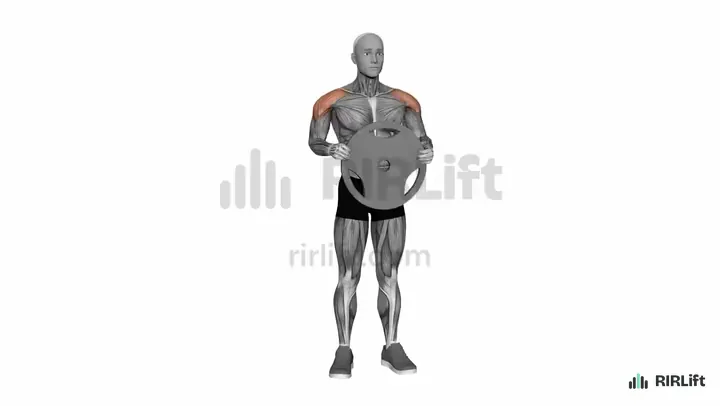
- Plate Halo Shoulders
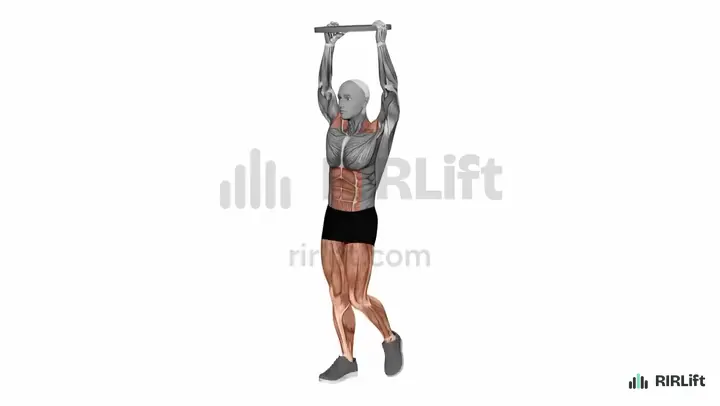
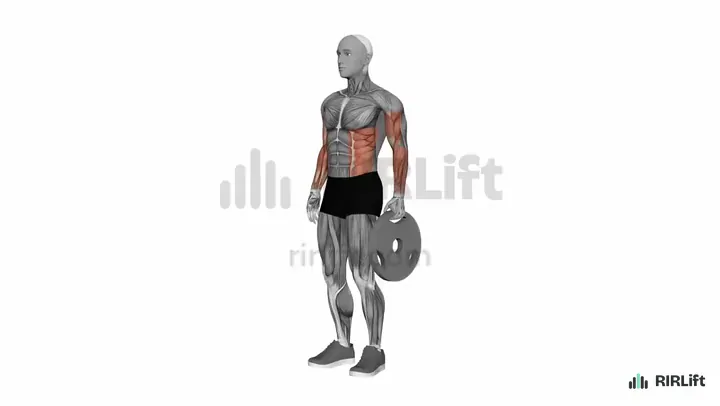
- Plate Overhead Carry Shoulders, Abs
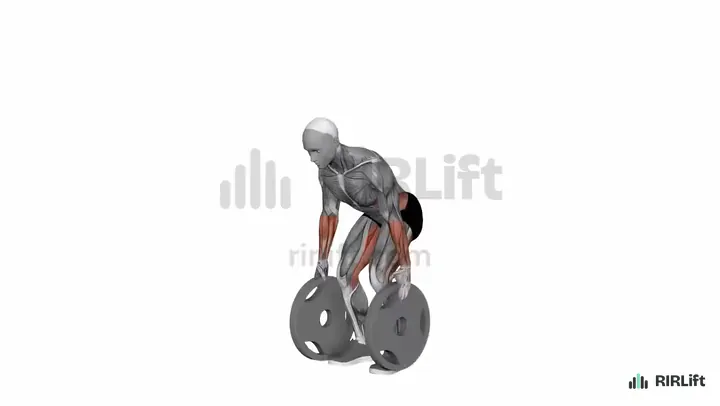
- Plate Pinch Deadlift Forearms
- Plate Sit-Up Abs
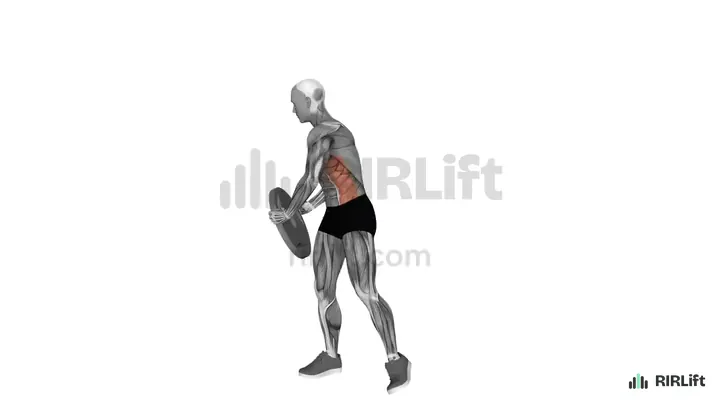
- Plate Woodchop Abs
- Plate Side Bend Abs
Put them together: example sessions
Each session below picks from the exercises above for one situation, with the sets, reps, rest and RIR filled in. Open one in the session builder to change a pick, price it from a recent set, and add it to RIRLift.
-
Session 1
One plate and some floor at home
You have one 10 to 25 pound plate, no rack, and 30 minutes, and you want to work your upper body and core with it.
3× a week · 45 sets a week · ~25 min
-
Session 2
A core finisher after a gym session
You finished your main lifts at the gym and want 10 to 12 minutes of core work with whatever plate is next to you.
2× a week · 16 sets a week · ~15 min
-
Session 3
Your grip gives out before your back does
Deadlifts and rows end because the bar slips, not because your back is done, and you want a short add-on for your hands and shoulders on pull days.
2× a week · 20 sets a week · ~20 min
Session 1
One plate and some floor at home
- Workouts3× a week
- Working sets45 a week
- Per workout~25 min
- EquipmentBarbells
You have one 10 to 25 pound plate, no rack, and 30 minutes, and you want to work your upper body and core with it.
With one light plate, the exercises that use leverage are the ones that stay hard: overhead extensions, front raises and sit-ups with the plate held out. Sets run 10 to 20 reps at 1 to 2 reps in reserve, because light loads only build muscle when the set ends close to failure. The halo warms the shoulders up first, and the overhead carry ends the session.
| Exercise | Sets × reps | RIR | Rest |
|---|---|---|---|
| Plate HaloPer direction. Warm-up pace. | 2 × 6–10 | 3 | 45 s |
| Plate Overhead Triceps ExtensionDeep stretch at the bottom. | 3 × 12–20 | 1 | 1 min |
| Plate Front RaiseTo eye level, slow down. | 3 × 12–20 | 1 | 1 min |
| Plate Sit-UpPlate on your chest. | 3 × 10–15 | 2 | 1 min |
| Plate Standing TwistHips still. Reps are total turns. | 2 × 10–16 | 2 | 45 s |
| Plate Overhead CarryReps are steps. | 2 × 20–40 | 1 | 1 min |
- How to run it
- Run it two or three times a week on days between your lower-body training. Do the halo as written, then take every other exercise to its RIR target. If 20 reps come with more than 2 in reserve, slow the lowering to three seconds before buying a heavier plate.
- How to progress
- Add reps first, then tempo, then a heavier plate. When the extension and the front raise both reach 20 reps at 1 RIR, step up to the next plate size.
Session 2
A core finisher after a gym session
- Workouts2× a week
- Working sets16 a week
- Per workout~15 min
- EquipmentBarbells
You finished your main lifts at the gym and want 10 to 12 minutes of core work with whatever plate is next to you.
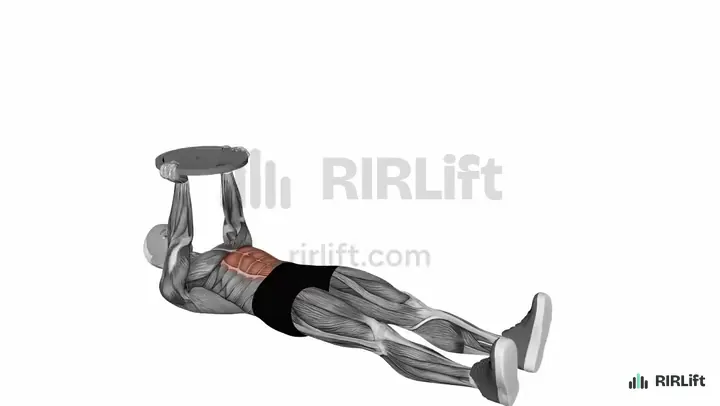
Four exercises, one per direction your trunk resists or produces: the hollow hold for extension, the sit-up for flexion, the side bend for the side, and the woodchop for rotation. Two sets each keeps it short enough to do after heavy lifting, and holds stop 1 rep short of shaking out of position. The hollow hold and sit-up are a superset because they work the same area from opposite sides of the effort.
| Exercise | Sets × reps | RIR | Rest |
|---|---|---|---|
| A1 Plate Hollow HoldReps are seconds. Low back flat. | 2 × 20–40 | 1 | 30 s |
| A2 Plate Sit-UpPlate held above chest. | 2 × 8–15 | 1 | 1 min |
| Plate Side BendPer side. Pinch grip. | 2 × 10–15 | 1 | 45 s |
| Plate WoodchopPer side. Pivot the back foot. | 2 × 8–12 | 2 | 45 s |
- How to run it
- Add it to the end of two sessions a week. Use a 10 or 25 pound plate for the hold and sit-up and a 25 or 45 for the side bend. Keep rests short; the working muscle is small and recovers fast.
- How to progress
- Add 5 to 10 seconds to the hollow hold or 2 reps to the others until you hit the top of each range, then use the next plate up.
Session 3
Your grip gives out before your back does
- Workouts2× a week
- Working sets20 a week
- Per workout~20 min
- EquipmentBarbells
Deadlifts and rows end because the bar slips, not because your back is done, and you want a short add-on for your hands and shoulders on pull days.
The pinch deadlift goes first while your hands are fresh, because it is the one that fixes the slipping. The overhead carry and halo train your shoulders to hold weight in awkward positions, which your grip work does not. RIR stays higher on the halo since it is there for position, not for fatigue.
| Exercise | Sets × reps | RIR | Rest |
|---|---|---|---|
| Plate Pinch DeadliftReps are seconds held at the top. | 3 × 10–20 | 1 | 90 s |
| Plate Overhead CarryReps are steps. | 3 × 20–40 | 1 | 90 s |
| Plate HaloPer direction. | 2 × 8–12 | 3 | 45 s |
| Plate Front Raise | 2 × 10–15 | 1 | 1 min |
- How to run it
- Do it after your pulling session twice a week. Pinch the heaviest plate you can hold for 10 seconds with the smooth side out; if you only own plates with handles, turn them so the handles face the floor.
- How to progress
- Add seconds on the pinch deadlift until you reach 20, then pinch two plates together or move up a plate size. Add steps on the carry before adding weight.
Make it fit you
-
Your plates all have handles
Handle plates make front raises and carries easier to hold and the pinch deadlift too easy. Use the handles for the raises and extensions, and for grip work hold the plate by the rim on the side with no cut-out.
-
Only heavy plates
A 45 is too much for halos and front raises for most people. Use it for side bends, pinch holds and sit-ups held on your chest, and do the shoulder moves with a dumbbell or a lighter plate instead.
-
Training legs too
A plate is not a leg tool. Hug one to your chest for goblet-style squats or reverse lunges on easy days, but plan your real leg work with dumbbells, a barbell or machines.
-
A sore lower back
Drop the sit-up and woodchop for a while and keep the hollow hold, side bend and standing twist, which load your trunk without repeatedly bending it forward.
-
Short on time
Pair a shoulder move with a core move, for example front raise then side bend, and rest only after both. Two pairs cover most of a session in 10 minutes.
-
Log reps in reserve, and seconds when you hold
Plates go up in big steps, so reps and RIR are where your progress shows between plate sizes. Import a session into RIRLift, log reps (or seconds and steps on holds and carries) with RIR per set, and step up a plate when the top of the range comes at your RIR target.
Questions
What exercises can you do with a weight plate?
Front raises, halos and overhead triceps extensions for your shoulders and arms, pinch deadlifts and overhead carries for grip and posture, and hollow holds, sit-ups, side bends, woodchops and standing twists for your core.
Can you build muscle with just a weight plate?
For shoulders, triceps and abs, yes, if the sets end within one or two reps of failure. For legs, chest and back a single plate runs out quickly; use it as an add-on to other equipment.
What size plate should I use?
A 10 or 25 pound plate for halos, front raises, overhead extensions and holds; a 25 or 45 for side bends, sit-ups held on your chest and pinch deadlifts. Pick the size that ends a set inside its rep range at the target RIR.
What are the best plate exercises for the core?
One per direction: the hollow hold or sit-up for the front, the side bend for the sides, and the woodchop or standing twist for rotation. The core finisher plan above runs four of them in about 10 minutes.
Are plate front raises better than dumbbell front raises?
Not better, different. The plate keeps your hands close with palms facing in and gives you one weight to manage, which some shoulders prefer. Dumbbells let you raise one arm at a time and go up in smaller steps.
Is this about vibration plates?
No, every exercise here uses a regular iron or bumper weight plate, the kind that goes on a barbell.
Related templates
-
Core exercises with weights, grouped by how they train your trunk
More loaded core work with dumbbells, cables and kettlebells.
-
Medicine ball exercises: slams, throws and chops, with sessions for where you train
The other single object you can hold in two hands, with throws a plate cannot do.
-
Dumbbell exercises for every muscle, and how to put them together
The leg, chest and back work a plate cannot load.
-
Forearm exercises with dumbbells: wrist curls, hammer curls and carries
Grip and forearm work to pair with the pinch deadlift.
-
The best workout for abs, for your situation
Full ab plans when the plate finisher is not enough.