
Quad exercises for seniors: stronger thighs for chairs, stairs and walking
Published October 29, 2026
The best quad exercises for seniors are the chair squat (a bodyweight squat to a chair seat), the goblet squat, the wall sit, the step-up and, in a gym, the leg press and leg extension. At home, do chair squats, wall sits and step-ups 2 or 3 times a week for 2 to 3 sets each, stopping when you could still do 2 or 3 more good reps. Add a dumbbell, a higher step or a longer hold when the top of the rep range gets easy. If deep knee bends ache, use a higher chair, a shorter wall-sit angle and the leg extension.
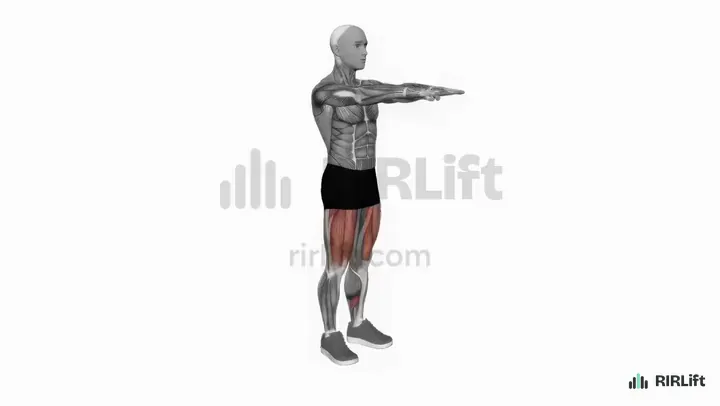
- Bodyweight Squat Quads
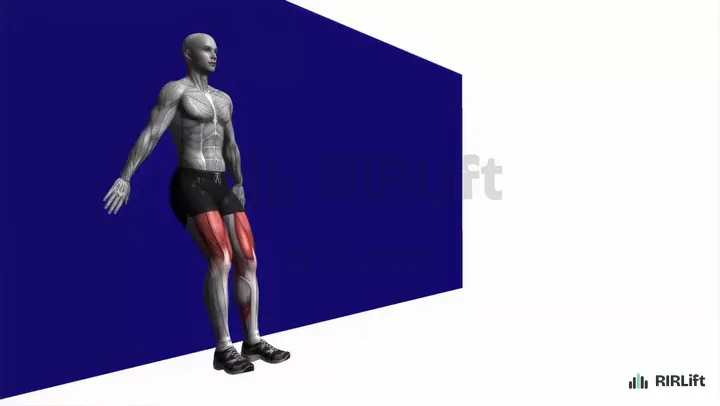
- Wall Sit Quads
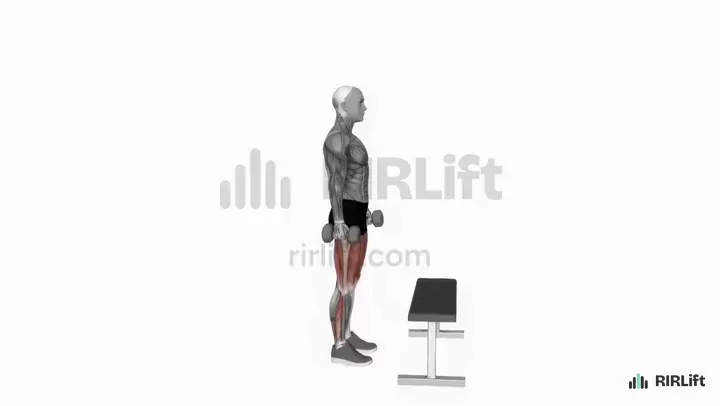
- Step-Up Quads, Glutes
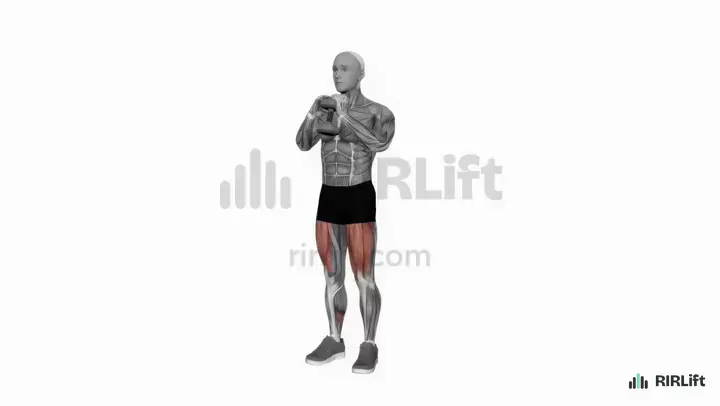
- Goblet Squat Quads, Glutes
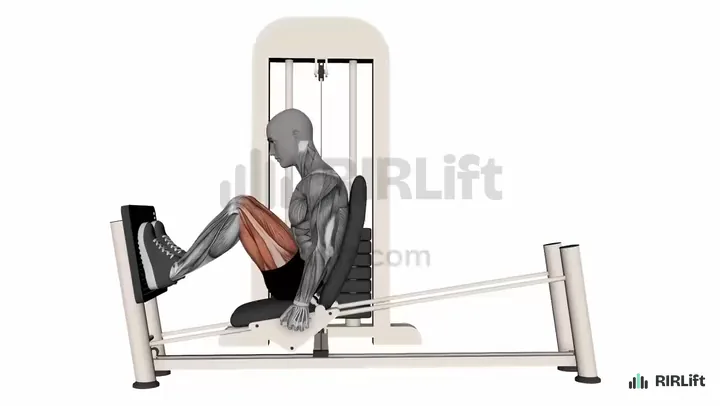
- Leg Press Quads, Glutes
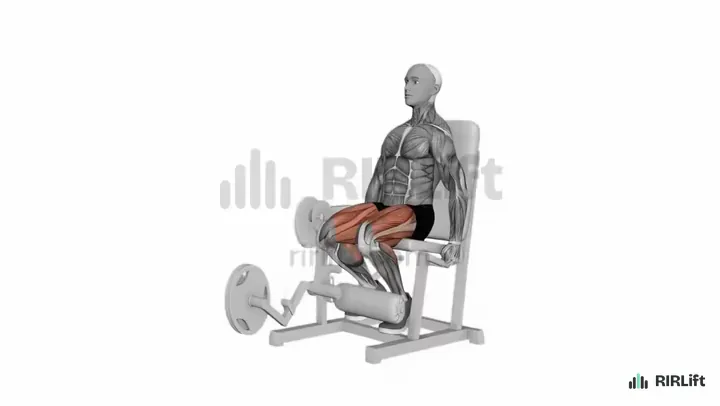
- Leg Extension Quads
Put them together: example sessions
Each session below picks from the exercises above for one situation, with the sets, reps, rest and RIR filled in.
-
Session 1
At home with a chair, a wall and a resistance band
You train at home, you want stronger thighs for getting up and climbing stairs, and the only equipment you have is a chair, a wall, a stair and a band.
3× a week · 24 sets a week · ~20 min
-
Session 2
A gym with a leg press and leg extension
You go to a gym twice a week and want your legs to get properly stronger, not just stay where they are.
2× a week · 18 sets a week · ~25 min
-
Session 3
Knees ache when you bend them deeply
You want stronger thighs, but deep squats and kneeling hurt your knees, and you have access to a gym.
2× a week · 20 sets a week · ~25 min
Session 1
At home with a chair, a wall and a resistance band
- Workouts3× a week
- Working sets24 a week
- Per workout~20 min
- EquipmentDumbbells, Flat Bench, Resistance Bands
You train at home, you want stronger thighs for getting up and climbing stairs, and the only equipment you have is a chair, a wall, a stair and a band.
One 15-minute routine of 4 quad exercises at 2 sets each, done 3 times a week, gives the thighs 24 easy-to-moderate sets weekly. Bodyweight exercises are light, so more frequent practice is what makes them work, and every set stops at 3 reps in reserve so the knees recover between days.
| Exercise | Sets × reps | RIR | Rest |
|---|---|---|---|
| Bodyweight SquatHips touch the chair seat, stand up without your hands. | 2 × 8–15 | 3 | 90 s |
| Wall SitSeconds per hold. Bend only as far as feels fine. | 2 × 15–45 | 3 | 90 s |
| Step-UpPer leg. Bottom stair, hand on the rail. | 2 × 6–12 | 3 | 90 s |
| Band Leg PressPer leg. Lying on the bed or floor. | 2 × 10–15 | 3 | 1 min |
- How to run it
- Do it Monday, Wednesday and Friday, or any three days with a rest day between. Keep the chair and the rail within reach for every exercise.
- How to progress
- Add 1 or 2 reps each week. When you can do 15 chair squats without your hands, use a lower chair or hold a light weight; when the wall sit reaches 45 seconds, sit a little lower; when step-ups reach 12 per leg, use a higher step.
Session 2
A gym with a leg press and leg extension
- Workouts2× a week
- Working sets18 a week
- Per workout~25 min
- EquipmentLeg Press, Leg Extension, Dumbbells, Flat Bench
You go to a gym twice a week and want your legs to get properly stronger, not just stay where they are.
Two leg-focused days with 9 quad sets each give 18 sets a week, close to what builds muscle at any age. Machines let you work at 2 reps in reserve with no balance risk, while the free-weight exercises stay at 2 to 3.
| Exercise | Sets × reps | RIR | Rest |
|---|---|---|---|
| Leg PressFeet hip-width, back flat on the pad. | 3 × 10–15 | 2 | 2 min |
| Leg Extension2 s down. | 3 × 10–15 | 2 | 75 s |
| Step-UpPer leg. Low box beside a rail. | 3 × 8–12 | 3 | 90 s |
| Exercise | Sets × reps | RIR | Rest |
|---|---|---|---|
| Goblet Squat1 warm-up set firstBench behind you as a depth target. | 3 × 8–12 | 2 | 2 min |
| Dumbbell Split SquatPer leg. One hand on a rack or wall. | 2 × 8–12 | 3 | 90 s |
| Reverse LungePer leg. Bodyweight to start. | 2 × 8–10 | 3 | 90 s |
| Leg ExtensionPause 1 s with the leg straight. | 2 × 12–15 | 2 | 75 s |
- How to run it
- Put Day A and Day B three or four days apart, for example Tuesday and Friday. If you also do upper-body work, add it after the leg exercises on the same days.
- How to progress
- Double progression: when every set reaches the top of its range at the target reps in reserve, add the smallest weight step. On the leg press that is often 10 pounds; on the leg extension, one plate on the stack.
Session 3
Knees ache when you bend them deeply
- Workouts2× a week
- Working sets20 a week
- Per workout~25 min
- EquipmentLeg Press, Leg Extension, Dumbbells, Flat Bench
You want stronger thighs, but deep squats and kneeling hurt your knees, and you have access to a gym.
The exercises here keep the knee in a range you choose: a wall sit at a shallow angle, a leg press that stops short, a low step and the one-leg extension. That is 10 sets per session, twice a week, all at 2 to 3 reps in reserve so no set ends in a grinding rep.
| Exercise | Sets × reps | RIR | Rest |
|---|---|---|---|
| Wall SitSeconds per hold. Shallow angle, knees behind the toes. | 3 × 20–45 | 3 | 90 s |
| Leg PressFeet high on the platform. Stop before it hurts. | 3 × 12–15 | 2 | 2 min |
| Single-Leg Leg ExtensionPer leg. Weaker leg first. | 2 × 10–15 | 2 | 1 min |
| Step-UpPer leg. 4 to 6 inch step. | 2 × 8–12 | 3 | 90 s |
- How to run it
- Do it twice a week with at least two days between. Set your depth on every exercise by where the knee still feels fine, and keep that depth for a couple of weeks before going lower.
- How to progress
- Earn range before load: once a depth feels fine for two weeks, go an inch deeper. After that, add reps, then weight in the smallest steps.
Make it fit you
-
You cannot stand up from a chair without your hands yet
Start with a higher seat, such as a chair with a firm cushion, and push lightly on your thighs or the armrests. Each week, use your hands a little less. Wall sits and the lying band press build strength in the meantime.
-
One leg is clearly weaker
Do the step-up, split squat and one-leg extension with the weaker leg first, and stop the stronger side at the same rep count. Most gaps shrink within a couple of months.
-
You only have 10 minutes
Do chair squats and step-ups back to back for 3 rounds. Those two cover the quads for standing up and for stairs.
-
Your balance is the bigger worry
Choose the standing single-leg exercises over the machines, and do them next to a counter you can touch. Strength and balance improve together when you practice on one leg.
-
Track the reps you had left
After every set, jot down how many more good reps were left. If you log in RIRLift, it uses that number to set your next weight, so a set you finished easily moves the load up and a hard one keeps it.
Questions
What are good exercises to strengthen my quadriceps at home?
Chair squats, wall sits and step-ups on the bottom stair. Do 2 to 3 sets of each, 2 or 3 times a week, stopping when 2 or 3 good reps are left. A resistance band adds a lying leg press, and a dumbbell turns the chair squat into a goblet squat when bodyweight gets easy.
What leg exercises are good after 60?
Squats to a chair, step-ups, split squats or reverse lunges with a hand on a counter, and in a gym the leg press and leg extension. Add a hamstring and calf exercise and you have a complete leg day. Start with bodyweight and add load once the movement is steady.
Can seniors still build quad muscle?
Yes. Older adults, including people in their 80s, gain thigh muscle and strength with regular strength training. The rule is the same as at any age: sets close enough to the end to be hard, and a little more weight or reps over time.
Are leg extensions bad for older knees?
Not when the weight is moderate and you lower it slowly. If the bottom of the movement bothers you, start each rep with the knee a little straighter, and use the one-leg version so each knee carries a lighter load.
How often should seniors do quad exercises?
Two or three times a week. Bodyweight routines can be done three times because they are light; gym sessions with heavier weights work well twice, with two or three days between them.
Related templates
-
Leg exercises for seniors: squats, step-ups and machines
Hamstrings, glutes and calves too, for a complete lower body.
-
Quad exercises at home: squats, split squats and no-equipment moves
More home quad exercises, including harder ones for later.
-
Leg exercises for bad knees: strength work you can scale to your knees
More options when knee pain limits squats and lunges.
-
The best workout for seniors: strength, power and balance
Full-body weekly plans that include this leg work.
-
Double progression
How to add reps first and weight second, as these plans do.