Renegade row alternatives: keep the row, the plank, or both

The best renegade row alternative depends on which half you want. For the back, a one-arm dumbbell row trains the same pull with far more weight; for the core, plank shoulder taps or a Pallof press keep the anti-rotation without dumbbells. To keep both at once, do kettlebell gorilla rows or TRX rows; with only a pull-up bar, archer pull-ups and plank shoulder taps cover them.

What a renegade row alternative has to replace

The renegade row is a dumbbell row done from the top of a push-up. Your lats and upper back pull the dumbbell to your hip while your abs, obliques and glutes stop your hips from turning toward the ceiling. The plank is the limit for most people, so the row itself stays light.

That is why most swaps split it in two: a row that lets your back work harder, plus a core exercise that trains the same resistance to twisting. A few keep both in one exercise. Pick by which half you are missing and what you have.

How to do the renegade row

Keep the row, drop the plank

With your body braced on a bench, a hinge or a seat, your back can pull far more than it can from a plank. Do one of these and add a core exercise from the next group.

Best swap for the back work

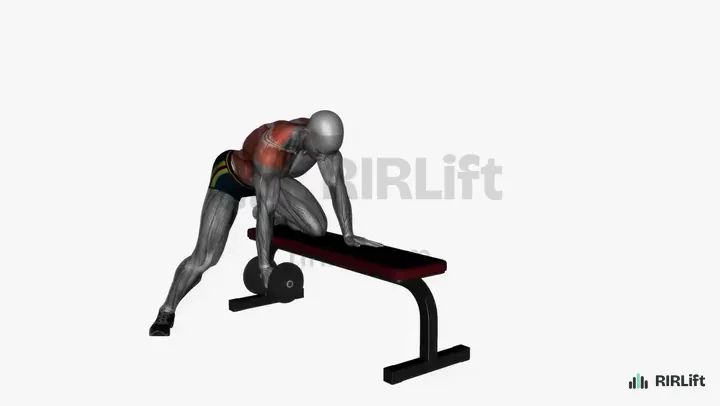
One-Arm Dumbbell Row

Lats, Upper Back

The same one-arm dumbbell pull, braced on a bench instead of balanced in a plank, so you can row far more weight. Pick it when the plank, not your back, is what ends your renegade row sets.

How to do it

  1. Put one hand and the same-side knee on a bench, or your hand on a chair seat with both feet on the floor, so your back is flat.
  2. Hold a dumbbell in the other hand with your arm hanging straight.
  3. Pull your elbow back toward your hip until the dumbbell reaches your ribs.
  4. Lower it until your arm is straight again, finish all reps, then switch sides.

Cues

  • Elbow to your hip
  • Back flat as a table
  • Full stretch at the bottom

Common mistakes

  • Twisting your chest open to lift the dumbbell higher: keep both shoulders level.
  • Shrugging the shoulder up toward your ear: pull the elbow back, not the shoulder up.

Both arms, standing

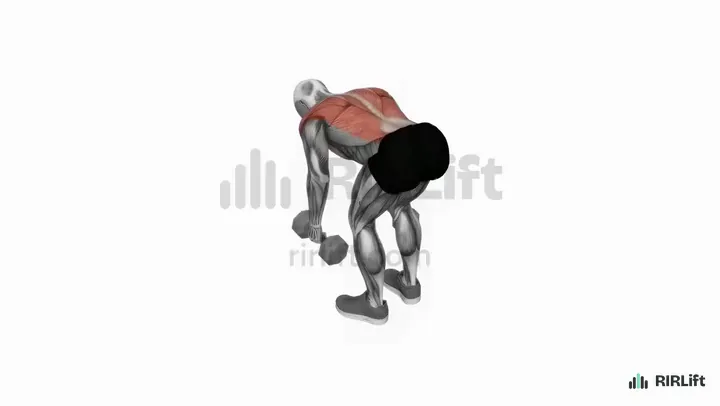
Dumbbell Bent-Over Row

Upper Back, Lats

A hinge holds the same torso angle as the plank, but your feet carry the load, so nothing presses on your wrists. Use it when your hands or wrists are what hurt.

How to do it

  1. Take one dumbbell per hand, feet about hip-width apart, and hinge forward from the hips with soft knees until your torso is nearly level with the floor.
  2. Let the dumbbells hang straight down under your shoulders, palms turned in.
  3. Pull both dumbbells up to your lower ribs, keeping the elbows close, and hold the top for a beat.
  4. Lower to straight arms without letting your torso rise and repeat.

Cues

  • Torso angle stays locked
  • Pull to the ribs
  • Squeeze, then lower

Common mistakes

  • Letting the hinge rise until you are rowing upright: keep a mirror or phone camera to the side and stop the set when your chest climbs.
  • Yanking the dumbbells with your hips: the legs stay still and the elbows do the work.

Back work with no core demand

Incline Dumbbell Row

Upper Back, Lats

Your chest rests on the bench, so your lower back and core are out of it and every rep goes to your upper back and lats. Pick it when you want the back half of the renegade row as hard as possible.

How to do it

  1. Set a bench to about 45 degrees and lie chest-down on it, a dumbbell in each hand, arms hanging straight toward the floor.
  2. Row the dumbbells up by driving your elbows back and slightly out, until your upper arms reach the line of your body.
  3. Squeeze your shoulder blades together for a second at the top with your chest still on the pad.
  4. Lower until your arms are straight and your shoulder blades slide forward, then repeat.

Cues

  • Chest glued to the pad
  • Elbows wide for upper back, tucked for lats
  • Full stretch between reps

Common mistakes

  • Lifting your chest off the pad to finish reps: that is your lower back joining in. Stop the set there.
  • Shrugging the dumbbells up instead of rowing them: pull the shoulder blades down and back before the elbows bend.

One-arm cable row

Single-Arm Cable Row

Upper Back, Lats

The cable keeps tension through the whole pull and lets you add weight in small steps. The one-arm setup still asks your trunk to resist turning, a little like the plank does.

How to do it

  1. Set a pulley at about chest height with a single handle and stand facing it, feet about shoulder-width apart.
  2. Take the handle in one hand, step back until your arm is straight, then soften your knees and lean forward slightly from the hips.
  3. Row the handle to your side by driving your elbow back past your ribs, keeping your chest square to the stack.
  4. Let the arm straighten and your shoulder reach toward the pulley, finish the set, then switch hands.

Cues

  • Elbow to hip
  • Reach long, pull long
  • Keep your chest facing the stack

Common mistakes

  • Turning your whole torso away to finish: a little rotation at the end is fine, turning sideways means the load is too heavy.
  • Pulling with the hand and biceps: think about the elbow, not the handle.

Keep both in one exercise

These still make your trunk resist turning or sagging while your back pulls, so one exercise covers both halves.

Closest swap with kettlebells

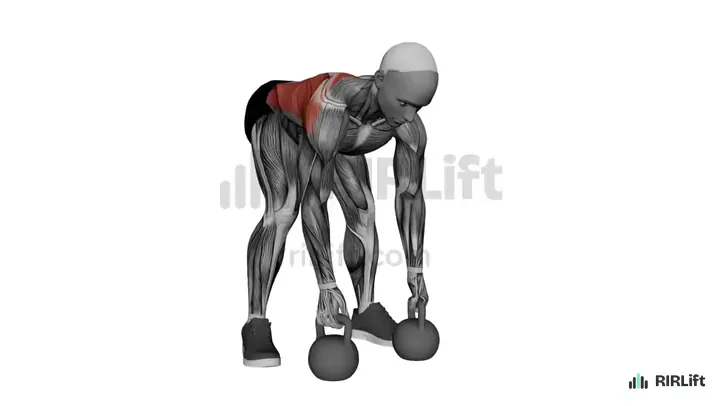
Kettlebell Gorilla Row

Lats, Upper Back

You hold a deep hinge and push one bell into the floor while rowing the other, so your trunk fights rotation the same way it does in the renegade row. It lets you row much heavier.

How to do it

  1. Stand with your feet wider than shoulder-width, two kettlebells on the floor between them, and hinge down to grip both handles with a flat back.
  2. Press one kettlebell into the floor to brace your trunk.
  3. Row the other kettlebell up to your hip, elbow close to your side, without twisting.
  4. Set it back down with control and row the other side. Alternate until the set is done.

Cues

  • Wide stance, low hips
  • Push down with the planted hand
  • Square shoulders

Common mistakes

  • Rotating your torso to lift the bell higher: the row ends at your hip with both shoulders level.
  • Standing up between reps: stay in the hinge from the first rep to the last.

Plank and row in one, with straps

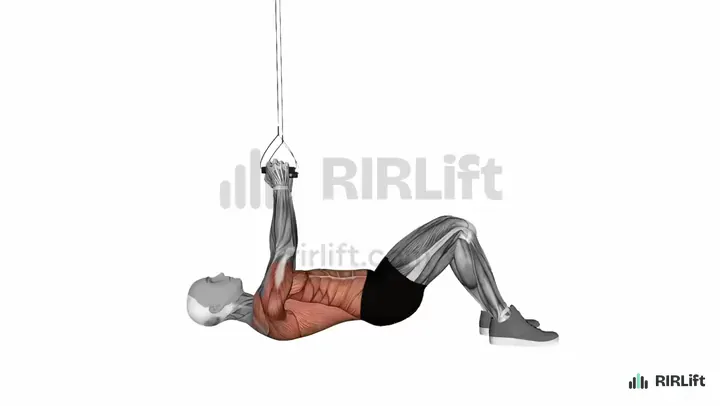
TRX Row

Upper Back, Lats

Your body stays stiff as a plank while you pull it up to the handles, so you train your back and the same straight-body brace. Walk your feet forward to make it harder.

How to do it

  1. Anchor the suspension straps above a closed door or a beam, take a handle in each hand, and sit back, knees bent, both soles planted.
  2. Lean back until your arms are straight and your body forms a line from knees to shoulders.
  3. Pull your chest up to the handles by driving your elbows back past your ribs.
  4. Lower back to straight arms under control and repeat.

Cues

  • Hips stay up in line
  • Elbows past the ribs
  • Walk the feet forward to make it harder

Common mistakes

  • Letting your hips sag as you tire: squeeze your glutes and end the set when the line breaks.
  • Pulling only with the arms and stopping short: the handles should finish beside your chest every rep.
Build a session with TRX Row

Bodyweight row under a bar

Inverted Row

Upper Back, Lats

A bar in a rack or Smith machine turns the plank upside down: brace from heels to head and pull your chest to the bar. It is an easy row to scale by raising or lowering the bar.

How to do it

  1. Set a bar at about hip height, lie under it, and grip it with your hands a little wider than your shoulders.
  2. Straighten your body from heels to head, or bend your knees with feet flat for an easier version.
  3. Pull your chest up to the bar, leading with your elbows, and keep your hips in line.
  4. Lower until your arms are straight, then pull again.

Cues

  • Body stays a straight plank
  • Chest touches the bar
  • Bend your knees to make it easier

Common mistakes

  • Letting your hips sag so only your chest rises: squeeze your glutes and move as one piece.
  • Pulling the bar to your neck: aim for the bottom of your chest.

Keep the plank, drop the row

If the renegade row was your core exercise, these keep the anti-rotation work without dumbbells under your hands.

Core part only, no weights

Plank Shoulder Tap

Abs

Lifting one hand off the floor is the renegade row's core challenge without the dumbbell. Use it to build up to renegade rows or as the core half of a split swap.

How to do it

  1. Start at the top of a push-up with your hands below your shoulders, feet a little wider than your hips.
  2. Brace your abs and squeeze your glutes.
  3. Lift one hand and touch the opposite shoulder while your hips stay still.
  4. Put the hand down and switch. Each tap counts as one rep.

Cues

  • Hips do not rock
  • Wider feet to start, narrower to progress
  • Slow taps beat fast ones

Common mistakes

  • Shifting your hips side to side with each tap: slow down or widen your feet.
  • Letting the lower back sag: keep the glutes tight.

Plank that moves

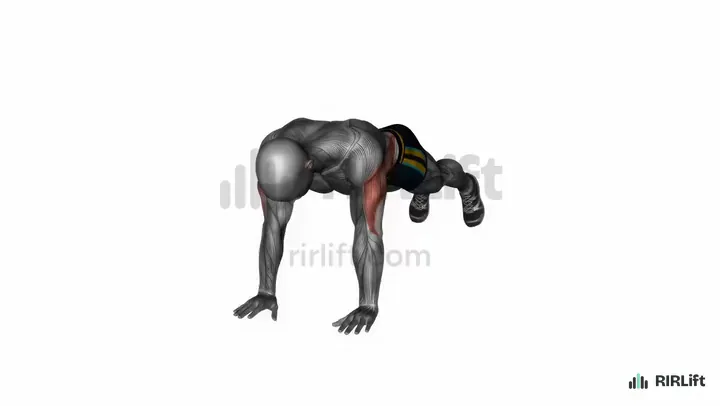
Plank to Push-Up

Abs, Shoulders

Switching between forearms and hands makes your trunk resist rocking with every rep, and your shoulders and triceps work too. Pair it with a row to cover both halves of the renegade row.

How to do it

  1. Start in a forearm plank with your feet about hip width apart.
  2. Place one hand where that elbow was and press up, then do the same with the other hand so you finish at the top of a push-up.
  3. Lower back to one forearm, then the other.
  4. Lead with the other arm on the next rep and keep alternating.

Cues

  • Hips stay level
  • Wider feet for more balance
  • Press the floor away

Common mistakes

  • Swaying your hips side to side as you press up: slow down and widen your feet.
  • Letting the lower back sag at the top: squeeze your glutes the whole set.

Core swap you can load

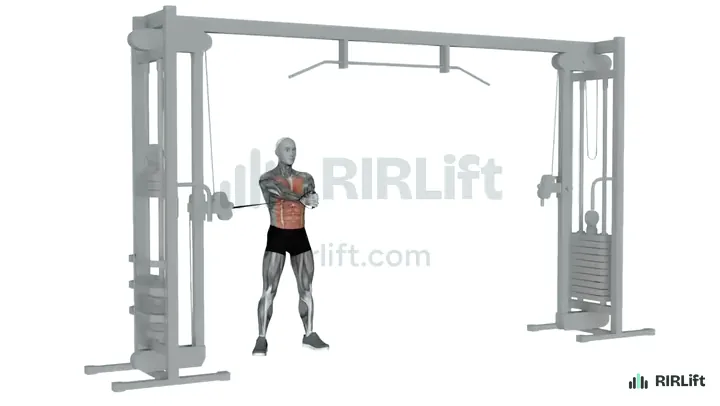
Pallof Press

Abs

You press a cable out in front of you and refuse to let it turn you, which trains the same anti-rotation as the plank row. You can add weight, which a plank cannot.

How to do it

  1. Set a pulley at chest height, stand side-on and hold the handle against your chest with both hands.
  2. Step out until the cable pulls, feet shoulder-width apart, knees soft.
  3. Press the handle straight out in front of your chest and hold it there for two seconds without turning.
  4. Bring it back to your chest, finish the reps, then face the other way.

Cues

  • Don't let it turn you
  • Ribs down, glutes on
  • Press straight, pause, return

Common mistakes

  • Rotating toward the machine as you press: step closer until you can hold square.
  • Rushing the reps: the pause with your arms straight is the exercise.

Bands and bodyweight

No dumbbells at all: a band row or a one-sided pull-up covers the back.

Bands only

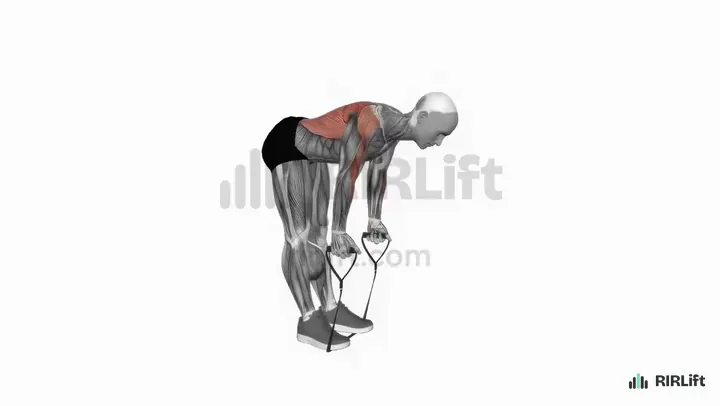
Band Bent-Over Row

Lats, Upper Back

Standing on a band gives you a row with no dumbbells and nothing on your wrists. Pause at the top, where the band pulls hardest.

How to do it

  1. Stand on the middle of a long band with your feet hip-width apart and hold an end in each hand.
  2. Hinge forward from the hips with soft knees until your torso is at about 45 degrees, back flat.
  3. Row both handles toward your lower ribs, elbows close, and pause with your shoulder blades pulled together.
  4. Let the band pull your arms back to straight slowly and repeat.

Cues

  • Hold the squeeze for a second
  • Slow on the way back
  • Shorten your grip to add tension

Common mistakes

  • Letting the band snap your arms back down: resist it all the way, because the lowering counts.
  • Using a band so light the set never gets close to failure: choke up on the band or switch to a heavier one.

One-sided pull on a bar

Archer Pull-Up

Lats, Upper Back

Shifting toward one hand puts most of your bodyweight on one arm, so you get a hard one-sided back pull from a bar.

How to do it

  1. Take an overhand grip about twice your shoulder width and hang with your arms straight.
  2. Pull your body toward your right hand, letting your left arm straighten along the bar.
  3. Get your chin near your right hand at the top, then lower back to the middle.
  4. Alternate sides each rep, or do all reps on one side and switch.

Cues

  • Pull toward one hand
  • Other arm straight
  • Lower to center

Common mistakes

  • Bending the assisting arm so both share the work: straighten it as much as you can.
  • Rushing back through the middle: control the lowering on each side.

Example sessions without the renegade row

Session 1

Gym, more back than the plank allows

Open in the session builder
  • Workouts2× a week
  • Working sets24 a week
  • Per workout~30 min
  • EquipmentDumbbells, Incline Bench, Cable Row, Adjustable Cable

You train in a gym and the renegade row is holding your back work back.

The one-arm dumbbell row and the chest-supported incline row let your back pull far more than it could from a plank, and the one-arm cable row adds a pull with steady tension. The Pallof press keeps the anti-rotation core work. 12 working sets.

Back and core
ExerciseSets × repsRIRRest
One-Arm Dumbbell Row1 warm-up set firstSets are per arm. 3 × 8–12 2 90 s
Incline Dumbbell Row 3 × 10–15 1 75 s
Single-Arm Cable RowSets are per arm. 3 × 10–12 2 75 s
Pallof PressReps per side, 2-second hold. 3 × 10–12 2 45 s
How to run it
Use it as your back day, or the pull half of an upper-body day, once or twice a week.
How to progress
When every set of a row hits the top of its range at the RIR shown, add the smallest dumbbell or plate jump next time. Add reps to the Pallof press, then step farther from the stack.

Session 2

Home, a pair of dumbbells

Open in the session builder
  • Workouts2× a week
  • Working sets20 a week
  • Per workout~20 min
  • EquipmentDumbbells

You have a pair of dumbbells at home and want the back and core work without the plank row.

The two-arm bent-over row trains your back with the same dumbbells and no weight on your wrists. Plank to push-up and shoulder taps cover the plank part, and both get hard only near the end, so they run close to failure. 10 working sets.
Back and core
ExerciseSets × repsRIRRest
Dumbbell Bent-Over Row1 warm-up set first 4 × 10–15 1 75 s
Plank to Push-UpSwitch the lead arm each rep. 3 × 8–12 2 1 min
Plank Shoulder TapEach tap is one rep. 3 × 16–24 1 45 s
How to run it
Twice a week on non-consecutive days, with 45 to 75 seconds between sets to keep it short.
How to progress
Add reps on the row until you hit 15 on every set, then slow the lowering to three seconds or move up a dumbbell. On the planks, narrow your feet once you reach the top of the range.

Session 3

No dumbbells: straps, a bar and a band

Open in the session builder
  • Workouts3× a week
  • Working sets30 a week
  • Per workout~25 min
  • EquipmentSuspension Trainer, Pull-Up Bar, Resistance Bands

You train with bodyweight, a pull-up bar, suspension straps and a band.

The TRX row keeps the plank brace while you pull, the archer pull-up loads one arm at a time, and the band row adds easy-to-recover volume at the end. 10 working sets.

Back and core
ExerciseSets × repsRIRRest
TRX Row 4 × 8–15 2 75 s
Archer Pull-UpReps are per side. 3 × 3–6 2 2 min
Band Bent-Over Row 3 × 15–25 1 45 s
How to run it
Two or three times a week. Keep two reps in reserve on the archer pull-up so every rep is clean; take the band rows to within a rep of failure.
How to progress
On the TRX row, walk your feet forward a little each week once you reach 15 reps. On the archer pull-up, add one rep per side before making the assisting arm straighter.

Make it fit you

Questions

What is a good alternative to the renegade row?

For your back, the one-arm dumbbell row. For your core, plank shoulder taps or a Pallof press. To train both in one exercise, do kettlebell gorilla rows or TRX rows.

Do renegade rows work abs?

Yes. Your abs and obliques work hard to stop your hips from turning while one hand is off the floor. That anti-rotation, not crunching, is the core work you get from them.

Are renegade rows worth doing?

They are a good core exercise and a weak back exercise, because the plank limits how much you can row. Keep them for core work, or swap to a supported row if building your back is the goal.

What can I do instead of renegade rows if my wrists hurt?

Do a bent-over dumbbell row or an incline dumbbell row for your back, and a Pallof press for your core. None of them put weight on your hands.

What are some alternatives to one-arm dumbbell rows?

The incline dumbbell row, single-arm cable row, kettlebell gorilla row and inverted row all train the same back muscles. The incline row takes your lower back out of it completely.