
Resistance band back exercises: lats, posture and lower back
Published October 19, 2026
The best resistance band back exercises are the bent-over row and the band-assisted pull-up for your lats, the face pull, pull-apart and rear delt fly for your upper back and posture, and the band deadlift and good morning for your lower back. Most need only the band under your feet or in your hands. A door anchor adds the face pull, and a pull-up bar adds assisted pull-ups, the closest band move to a lat pulldown.
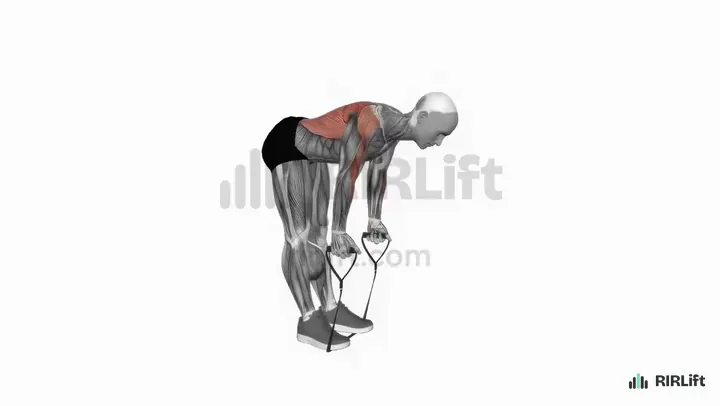
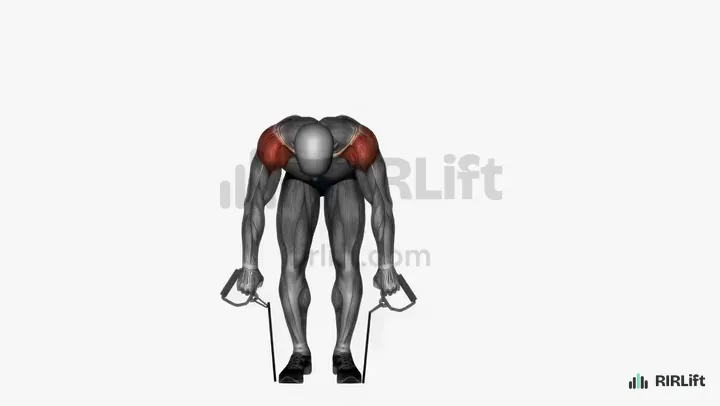
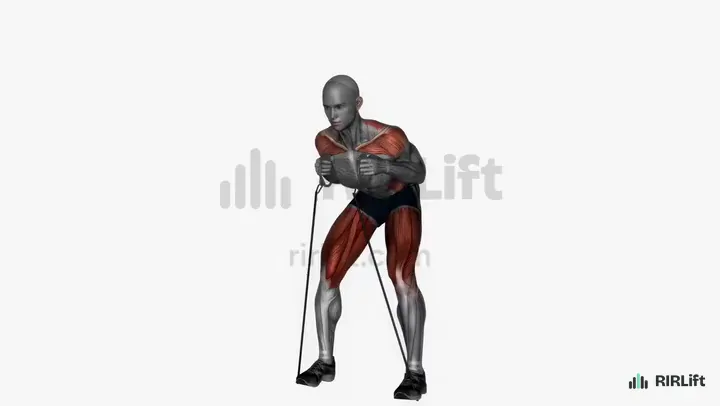
- Band Bent-Over Row Lats, Upper Back
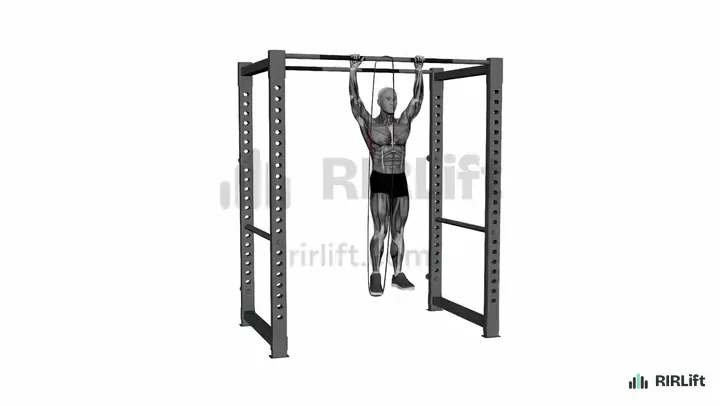
- Band-Assisted Pull-Up Lats
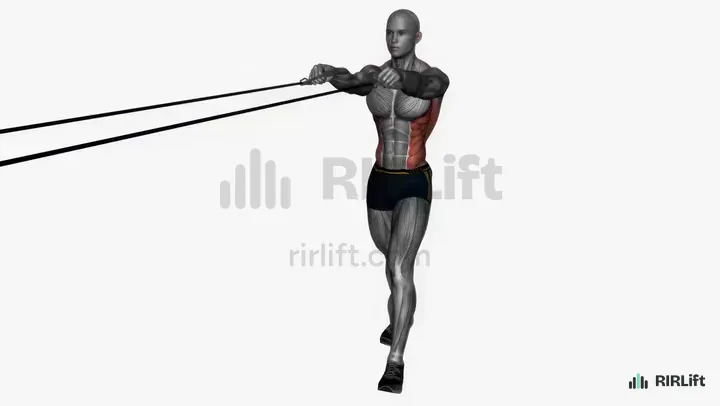
- Band Face Pull Shoulders, Upper Back
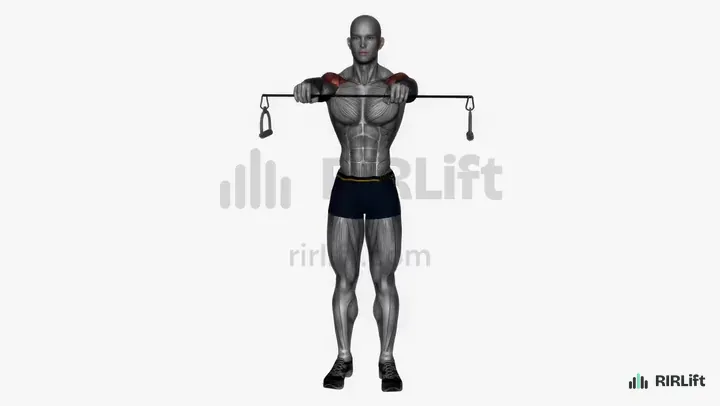
- Band Pull-Apart Shoulders, Upper Back
- Band Rear Delt Fly Shoulders
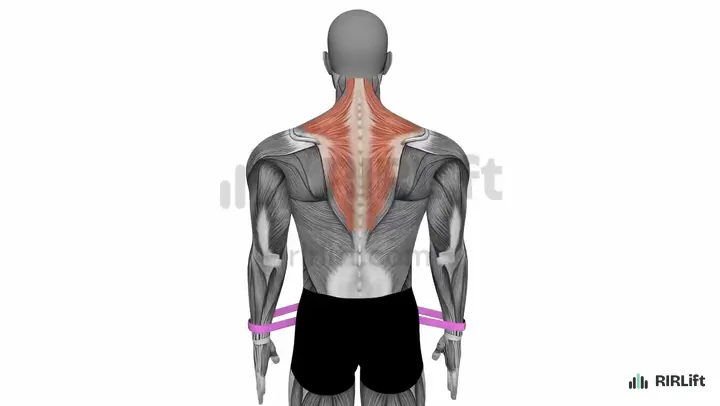
- Band Scapular Retraction Upper Back
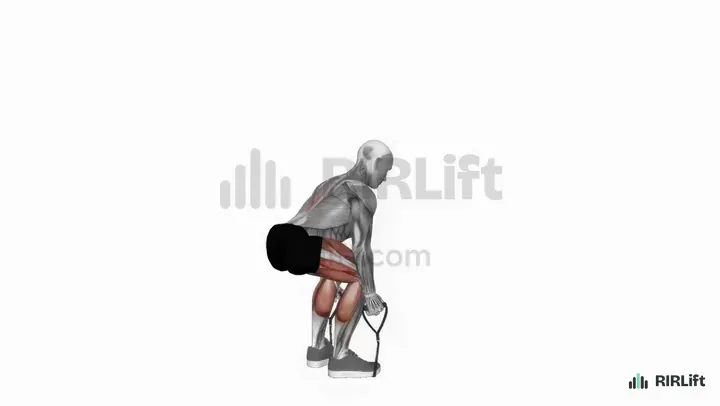
- Band Deadlift Glutes, Hamstrings, Lower Back
- Band Good Morning Hamstrings, Lower Back
Put them together: example sessions
Each session below picks from the exercises above for one situation, with the sets, reps, rest and RIR filled in. Open one in the session builder to change a pick, price it from a recent set, and add it to RIRLift.
-
Session 1
One band, nothing to anchor it to
You have a loop or tube band and floor space, no door anchor, no bar and no bench, such as in a hotel room or a small apartment.
2× a week · 24 sets a week · ~20 min
-
Session 2
Band and a door anchor at home
You train at home with a set of bands and a door anchor, and you want the posture work that only an anchored band gives.
2× a week · 25 sets a week · ~25 min
-
Session 3
Bands plus a pull-up bar and a bench
Your home setup has a pull-up bar and a flat bench as well as bands, and you can't do many full pull-ups yet.
2× a week · 23 sets a week · ~25 min
Session 1
One band, nothing to anchor it to
- Workouts2× a week
- Working sets24 a week
- Per workout~20 min
- EquipmentResistance Bands
You have a loop or tube band and floor space, no door anchor, no bar and no bench, such as in a hotel room or a small apartment.
Every pick here works by standing on the band or holding it in your hands, so no anchor is needed. The row comes first while you are fresh, the pull-apart and rear delt fly add upper-back work, and one hinge per session covers the lower back. Bands top out quickly, so the reps run high and most sets stop 0 to 1 reps short of failure; the hinges stop at 2 because form slips first there. Session A has 12 working sets and session B has 12.
| Exercise | Sets × reps | RIR | Rest |
|---|---|---|---|
| Band Bent-Over RowPause 1 s with elbows back. | 4 × 12–25 | 1 | 75 s |
| Band Pull-ApartLight band. Pull to your chest. | 3 × 15–30 | 0 | 45 s |
| Band Upright RowStop at chest height. | 2 × 12–20 | 1 | 1 min |
| Band DeadliftSqueeze glutes at the top. | 3 × 12–20 | 2 | 90 s |
Open Band Back A in the session builder
| Exercise | Sets × reps | RIR | Rest |
|---|---|---|---|
| Band Bent-Over RowPalms facing each other. | 3 × 12–25 | 1 | 75 s |
| Band Rear Delt FlyCross the band for more tension. | 3 × 15–30 | 0 | 45 s |
| Band Pull-Apart2 s squeeze each rep. | 3 × 15–30 | 1 | 45 s |
| Band Good MorningBand behind the neck. Knees soft. | 3 × 10–20 | 2 | 90 s |
Open Band Back B in the session builder
- How to run it
- Do Band Back A and Band Back B once each per week with a day between them. Double the band or step wider on it when a set feels too easy.
- How to progress
- Add reps until every set reaches the top of its range at the target reps in reserve. Then shorten the band by stepping on it with your feet wider apart, choke up on the ends, or move to the next band.
Session 2
Band and a door anchor at home
- Workouts2× a week
- Working sets25 a week
- Per workout~25 min
- EquipmentResistance Bands
You train at home with a set of bands and a door anchor, and you want the posture work that only an anchored band gives.
An anchor adds the face pull and the scapular retraction, so this plan leans on the upper back: those two lead each session, with the row as the main lat work. With a few bands of different strength you can load the row heavier than in the no-anchor plan, so its rep range drops to 10 to 20. One hinge closes each session. Session A has 12 working sets and session B has 13.
| Exercise | Sets × reps | RIR | Rest |
|---|---|---|---|
| Band Face PullAnchor at head height. | 3 × 15–25 | 1 | 1 min |
| Band Bent-Over RowHeaviest band you can pause with. | 4 × 10–20 | 1 | 90 s |
| Band Rear Delt Fly | 2 × 15–25 | 0 | 45 s |
| Band Deadlift | 3 × 12–20 | 2 | 90 s |
Open Anchored Back A in the session builder
| Exercise | Sets × reps | RIR | Rest |
|---|---|---|---|
| Band Scapular RetractionAnchor at chest height. Arms straight. | 3 × 12–20 | 1 | 45 s |
| Band Bent-Over Row | 3 × 10–20 | 1 | 90 s |
| Band Face PullHold 1 s by your ears. | 3 × 15–25 | 0 | 1 min |
| Band Upright Row | 2 × 12–20 | 1 | 1 min |
| Band Good Morning | 2 × 10–20 | 2 | 90 s |
Open Anchored Back B in the session builder
- How to run it
- Do the two sessions on non-consecutive days. Set the anchor at chest height for the scapular retraction and at head height for the face pull.
- How to progress
- Move up to the next band once you hit the top of the range on every set at the target RIR. Between bands, step one foot farther from the door to add tension.
Session 3
Bands plus a pull-up bar and a bench
- Workouts2× a week
- Working sets23 a week
- Per workout~25 min
- EquipmentPull-Up Bar, Resistance Bands, Flat Bench
Your home setup has a pull-up bar and a flat bench as well as bands, and you can't do many full pull-ups yet.
The bar brings in the band-assisted pull-up, the best lat builder on this page, so it opens both sessions. The bench brings the reverse hyper, which trains the lower back lying down and replaces the standing hinges. Pull-ups stop 2 reps short so every rep is clean; the row and pull-apart go closer to failure. Session A has 12 working sets and session B has 11.
| Exercise | Sets × reps | RIR | Rest |
|---|---|---|---|
| Band-Assisted Pull-UpFull hang between reps. | 4 × 6–12 | 2 | 2 min |
| Band Bent-Over Row | 3 × 10–20 | 1 | 90 s |
| Band Pull-Apart | 3 × 15–30 | 0 | 45 s |
| Band Reverse HyperextensionStop at a straight line. | 2 × 12–20 | 1 | 75 s |
Open Bar Back A in the session builder
| Exercise | Sets × reps | RIR | Rest |
|---|---|---|---|
| Band-Assisted Pull-UpChin over the bar. | 3 × 6–12 | 2 | 2 min |
| Band Rear Delt Fly | 3 × 15–25 | 0 | 45 s |
| Band Reverse HyperextensionHold 1 s at the top. | 3 × 12–20 | 1 | 75 s |
| Band Pull-ApartPalms up. | 2 × 20–30 | 1 | 45 s |
Open Bar Back B in the session builder
- How to run it
- Do the sessions twice a week with a rest day in between. Use the lightest band that still lets you reach the bottom of the pull-up rep range.
- How to progress
- When you get 12 assisted pull-ups on every set at 2 reps in reserve, switch to a lighter band and drop back to 6. Once the lightest band is easy for 8, try one or two unassisted reps at the start of each session.
Make it fit you
-
Only one light band
Run the no-anchor plan and fold the band in half for rows and hinges to double its tension. Slow every lowering to three seconds; with a light band, time under load is what keeps the sets hard.
-
Bands feel too easy for rows
Stand on the band with your feet wider, hold it lower down, or stack two bands together. If 25 reps is still easy at 1 rep in reserve, add a one-second pause with your elbows back on every rep.
-
Mostly here for posture
Start every session with the face pull or the pull-apart and add two extra sets of it. Keep the rows, but the upper-back drills are where most of your sets should go.
-
Twenty minutes, three days a week
Pick three exercises per day: one row or pull-up, one upper-back drill and one hinge, three sets each. Rotate the picks so each exercise shows up at least once a week.
-
Pairing bands with dumbbells
Do your heavy rows with dumbbells and use the band moves after them, where their lighter load and high reps finish the upper back without needing more weight.
-
Log the RIR, not the band color
Band tension changes with how you stand on it, so the color alone tells you little. Note the reps you had left on each set. If you log in RIRLift, write the band and stance in the set note and your RIR next to it, so you can tell when it's time for the next band.
Questions
Can you build your back with resistance bands?
Yes, as long as the sets are hard. Muscle grows from sets taken close to failure, and bands can do that for the upper back and rear delts easily and for the lats with rows and assisted pull-ups. The limit is tension: once your strongest band is easy for 25 reps, you need a heavier band, a pull-up bar or weights to keep progressing.
What are some exercises I can do at home for my back using resistance bands?
Bent-over rows, pull-aparts and rear delt flies need only the band and floor space. Add a door anchor and you can do face pulls and scapular retractions. With a pull-up bar, band-assisted pull-ups cover the lats. For the lower back, the band deadlift and band good morning both work standing on the band.
Can resistance bands replace a lat pulldown?
Partly. A band anchored high gives a pulldown-like motion, but none of the exercises here pull from overhead without a bar. The band-assisted pull-up is the closer match: it pulls your body up to the bar in the same path, and the band lets you set the difficulty.
How many sets of band back exercises should I do?
Twelve to twenty hard sets a week for the lats and upper back suits most people, split over two sessions. Each plan here gives 18 to 20 of those, plus 5 or 6 sets of lower-back work. Count only sets that end within about 2 reps of failure.
Which resistance band should I use for back exercises?
Use a heavier band for rows, deadlifts and good mornings, and a lighter one for pull-aparts, rear delt flies and face pulls. The right band is the one that lets you finish the rep range with 0 to 2 reps left; if you get far past the top of the range, go heavier.
How long do resistance bands last?
It depends on how often you use them and how far you stretch them. Check your bands before each session for nicks, thin spots or a sticky surface, and replace any that show them, since a band that snaps mid-rep can hit your face.
Are resistance band back exercises good for lower back strength?
Yes. The band deadlift and good morning make the muscles along your spine hold your back flat under load, and the reverse hyper trains them while your torso rests on a bench. Start with 2 reps in reserve on those sets and build up the reps before you move to a heavier band.
Related templates
-
Resistance band exercises for every muscle, with the bands you own
The full band directory, every muscle, for building whole sessions around one band.
-
Shoulder exercises with resistance bands
The pressing and raising half of an upper-body band session.
-
Back exercises at home: with a bar, weights, bands or no equipment
Home back exercises with dumbbells, a bar and body weight to mix with your bands.
-
Band pull-apart: how to do it for your rear delts and upper back
Every variation of the pull-apart and how to program it.
-
The best workout for back: width, thickness and traps
Full back programs for when you move on to a gym.
-
How to use reps in reserve (RIR)
How to judge the 0 to 2 reps in reserve targets in these sessions.