Resistance band exercises for seniors: a full body with one set of bands

The best resistance band exercises for seniors are the band squat, deadlift and hip thrust for the legs and hips, the bent-over row, pull-apart and face pull for the upper back, and the overhead press, chest fly, lateral raise and hammer curl for the upper body. Do 6 to 8 of them twice a week, 2 to 3 sets of 10 to 15 reps, and stop each set when 2 or 3 more reps would still be possible. Start with a light band, and move to the next color when every set reaches 15 reps easily.

  1. Band Squat Quads
  2. Band Bent-Over Row Lats, Upper Back
  3. Band Deadlift Glutes, Hamstrings, Lower Back
  4. Band Pull-Apart Shoulders, Upper Back
  5. Band Hip Thrust Glutes
  6. Band Overhead Press Shoulders
  7. Band Seated Hip Abduction Glutes, Abductors
  8. Band Hammer Curl Biceps

Legs and outer hips

Bands give the legs the most resistance at the top of each movement, where your joints are strongest. A mini loop above the knees turns the squat into outer-hip work too, and a band anchored behind you gives a lying leg press.

Quads and glutes, squat

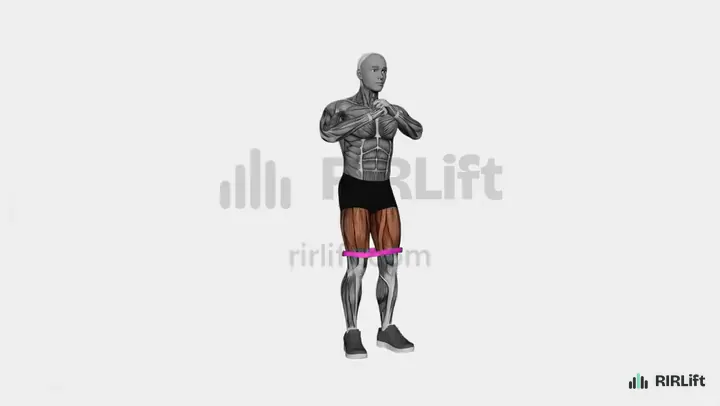
Band Squat

Quads

The loop above your knees makes your hips push out while you squat, so the thighs and the outer hips work together. Squat to a chair until you are confident with the depth.

How to do it

  1. Step into a mini loop band and slide it to just above your knees.
  2. Stand a little wider than hip-width with your hands together at your chest.
  3. Sit down between your heels, pressing your knees out against the band, as low as you can keep your heels down.
  4. Stand up, still pushing out on the band, and finish with a hard glute squeeze.

Cues

  • Knees push into the band
  • Sit between your heels
  • Tension never drops at the top

Common mistakes

  • Letting the band pull your knees together: use a lighter loop until you can hold them out.
  • Short reps: hit the same depth on every rep, then slow down to add difficulty.

Swap for: Band Spanish Split Squat, Bodyweight Squat, Goblet Squat

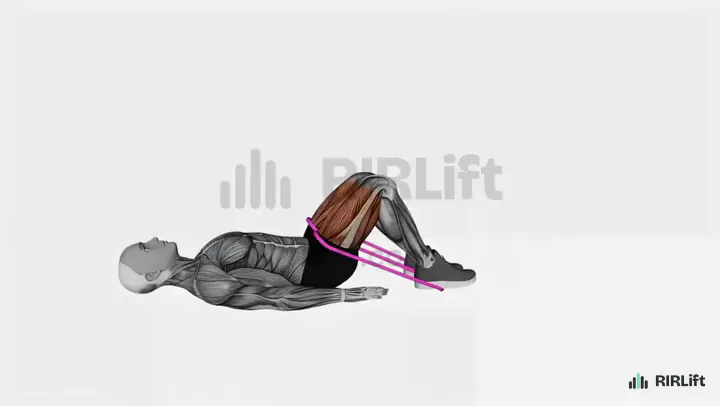
Quads, lying single-leg press

Band Leg Press

Quads

Pressing one foot against a band while lying down trains the thigh without any standing balance or load on the back. It is a useful leg exercise on days when standing work is hard.

How to do it

  1. Anchor a band low, behind your head, and lie face up with a cuff around one ankle and the band running over you.
  2. Pull that knee toward your chest with tension already in the band.
  3. Press the foot away until your leg is straight but not locked.
  4. Let the band bring the knee back toward your chest slowly. Do all reps, then switch legs.

Cues

  • Low back on the floor
  • Press through the heel
  • Slow return

Common mistakes

  • Lifting your hips off the floor as you press: keep both hips down.
  • Letting the band snap the knee back: resist it the whole way.

Swap for: Band Squat, Leg Press

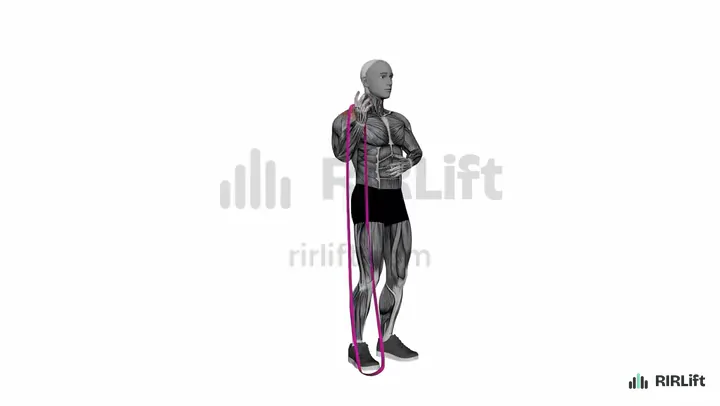
Hamstrings, standing curl

Band Leg Curl

Hamstrings

Curling a heel up against a loop band trains the back of the thigh while you hold a chair. It balances out all the squatting and costs nothing but a small band.

How to do it

  1. Put a mini loop around both ankles and stand tall, holding a wall or chair for balance.
  2. Keep your thighs side by side.
  3. Bend one knee and lift that heel toward your glutes as high as you can.
  4. Lower it slowly. Finish the set, then switch legs.

Cues

  • Knees side by side
  • Heel to glutes
  • Slow return

Common mistakes

  • Swinging the thigh back to finish the curl: keep both knees level.
  • Leaning forward: stand tall and hold onto support.

Swap for: Band Good Morning, Nordic Hamstring Curl, Stability Ball Leg Curl

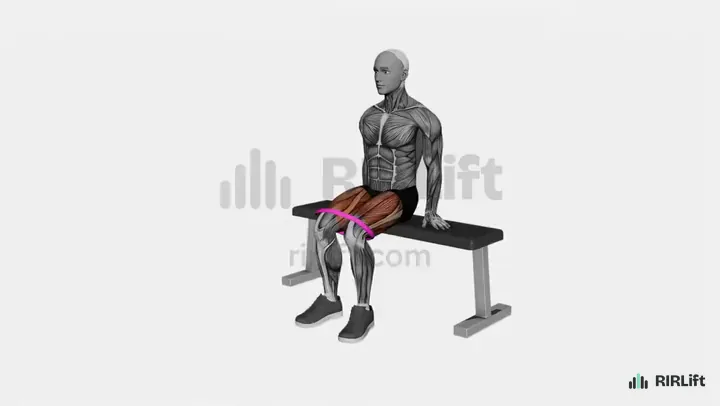
Outer hips, seated

Band Seated Hip Abduction

Glutes, Abductors

Pushing your knees apart against a band while you sit works the side hip muscles that keep you steady on one leg. Since you are seated, it suits anyone with balance worries.

How to do it

  1. Sit with a band above your knees and feet flat.
  2. Push your knees apart against the band.
  3. Return slowly.

Cues

  • Lean forward a little
  • Slow return

Common mistakes

  • Bouncing: hold a second at the widest point.

Swap for: Clamshell, Lateral Band Walk, Hip Abduction Machine

Hinges and bridges for the back of the body

Bending to lift something and pushing your hips forward to stand tall are the same two movements as these. Standing on the band for the deadlift and pinning it over your hips for the thrust lets you load them without any weights.

Glutes, hamstrings and back, hinge

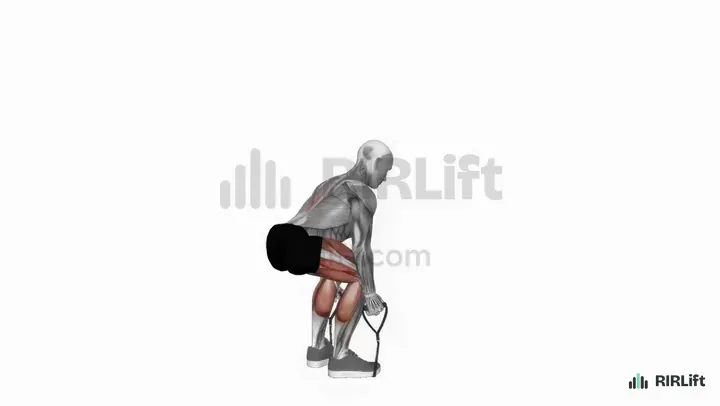
Band Deadlift

Glutes, Hamstrings, Lower Back

Standing on a band and standing up tall trains the exact motion of lifting something from the floor. The band is lightest at the bottom, which is where most people feel least sure.

How to do it

  1. Step onto the center of a handled band feet hip-width, a handle in each hand.
  2. Push your hips back and bend your knees until the handles are near your shins, with your back flat.
  3. Drive your hips forward and stand up tall, keeping the handles close to your legs.
  4. Lock out with a glute squeeze, then lower back down the same way.

Cues

  • Hips back, chest forward
  • Flat back
  • Lock out with your glutes

Common mistakes

  • Rounding your back to reach the bottom: bend your knees more and stop higher.
  • Leaning back at the top: stand tall and stop.

Swap for: Band Good Morning, Kettlebell Deadlift, Dumbbell Romanian Deadlift

Glutes, bridge

Band Hip Thrust

Glutes

Pinning a band across your hips turns the floor bridge into a loaded glute exercise. It builds the hip strength you use to stand up from a chair and climb stairs.

How to do it

  1. Lie on your back, knees bent, and pass a long loop band over your hips, pinning both ends under your hands or feet.
  2. Plant your feet about hip-width, heels close to your glutes.
  3. Drive through your heels to lift your hips until your body is straight from shoulders to knees.
  4. Hold the top for a second, then lower slowly.

Cues

  • Ribs down at the top
  • Push through the heels
  • Pause at full lockout

Common mistakes

  • Arching your lower back at the top: tuck your pelvis so the glutes finish the rep.
  • Pushing through your toes: move your feet closer so your heels drive.

Swap for: Band Pull-Through, Glute Bridge, Single-Leg Glute Bridge

Upper back and posture

Pulling exercises counter the forward slump that comes from sitting and reading. Rows build the big back muscles, while pull-aparts and face pulls work the smaller muscles between the shoulder blades.

Back, row

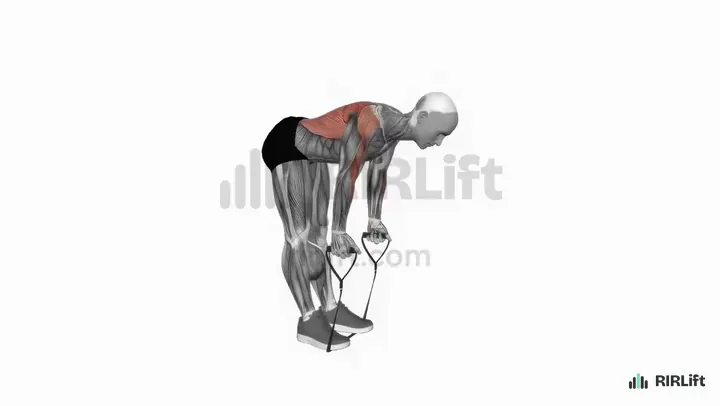
Band Bent-Over Row

Lats, Upper Back

The row is the main back builder with a band: stand on it, hinge forward and pull your hands to your ribs. A stronger upper back makes it easier to sit and stand tall.

How to do it

  1. Stand on the middle of a band, hold an end in each hand, and hinge forward with a flat back.
  2. Row your hands to your lower ribs with the elbows tucked near your body.
  3. Straighten the arms slowly and keep the hinge.

Cues

  • Elbows to your hips
  • Hold the hinge

Common mistakes

  • Standing up as you row: keep the same torso angle every rep.

Swap for: Dumbbell Bent-Over Row, Inverted Row, Seated Cable Row

Upper back and rear shoulders

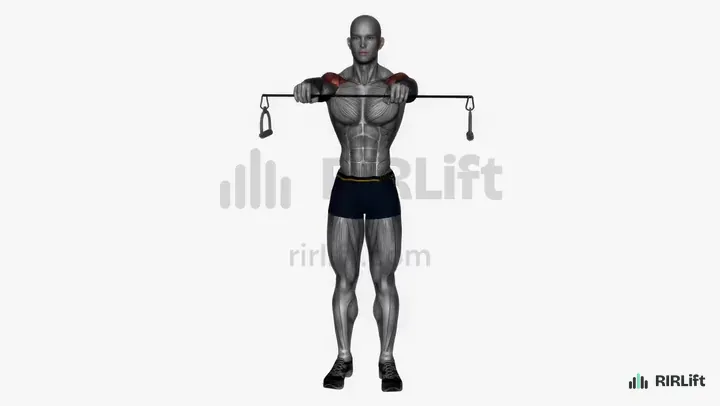
Band Pull-Apart

Shoulders, Upper Back

Pulling a light band apart in front of your chest works the muscles between your shoulder blades, the ones that pull rounded shoulders back. You can do it standing or sitting.

How to do it

  1. Hold a light band at shoulder height with straight arms and hands about shoulder width.
  2. Pull your hands apart until the band touches your chest.
  3. Let the band bring your hands back slowly.

Cues

  • Squeeze the shoulder blades together at the end.
  • Keep your ribs down.

Common mistakes

  • Bending the elbows to make it easier.

Swap for: Band Face Pull, Band Scapular Retraction

Rear shoulders and upper back

Band Face Pull

Shoulders, Upper Back

Anchoring the band in a door and pulling it toward your face trains the back of the shoulders and the muscles that turn your arms out. Those are the muscles that hold your shoulders back when you reach overhead.

How to do it

  1. Anchor a band at about face height in a door and hold an end in each hand, palms facing down.
  2. Step back until there is tension with your arms reaching forward.
  3. Pull the band toward your forehead, splitting your hands apart and lifting your elbows high and wide.
  4. Pause, then let the band return under control.

Cues

  • Elbows high and wide
  • Hands finish beside your ears
  • Pause at the face

Common mistakes

  • Pulling to the chest with the elbows low, which turns it into a row: aim the hands at your eyes.
  • Leaning back to move the band: stand tall and use a lighter band.

Swap for: Band Pull-Apart, Dumbbell Rear Delt Fly, TRX Face Pull

Chest, shoulders and arms

Pressing, lifting and carrying all need these muscles. Bands are easy on the shoulders and elbows because the pull is lightest where the joints are most stretched.

Chest, fly

Single-Arm Band Chest Fly

Chest

Sweeping one arm across your body against a band anchored behind you works the chest, the muscle you push with. Doing one arm at a time leaves the free hand to steady yourself on a chair back.

How to do it

  1. Anchor a band at chest height in a door or around a post, take the handle in one hand and stand with your back to the anchor.
  2. Step forward until the band is taut with your arm open wide and slightly bent.
  3. Sweep your hand across until it is in front of the middle of your chest.
  4. Let the band pull your arm back open slowly, finish your reps, then switch arms.

Cues

  • Reach across your body
  • Fixed elbow angle
  • Slow on the way back

Common mistakes

  • Standing so close the band goes slack at the stretch: step forward until it pulls the whole way.
  • Turning your torso to finish: brace and move only the arm.

Swap for: Incline Push-Up, Cable Fly

Shoulders, press

Band Overhead Press

Shoulders

Pressing a band handle overhead one arm at a time builds the shoulder strength you use to put things on a high shelf. One arm at a time also lets you match the band to each side.

How to do it

  1. Stand on one end of a handled band with your right foot and hold the handle at your right shoulder.
  2. Brace your stomach and squeeze your glutes.
  3. Press the handle straight up until your arm is nearly straight.
  4. Lower it slowly to your shoulder. Do all reps, then switch.

Cues

  • Ribs down
  • Press straight up
  • Shoulder finishes by your ear

Common mistakes

  • Leaning away from the working arm: brace harder or use a lighter band.
  • Pressing out in front: end with your arm over your shoulder, not your toes.

Swap for: Dumbbell Shoulder Press, Kettlebell Overhead Press

Side shoulders, raise

Band Lateral Raise

Shoulders

Raising your arms out to the sides works the side of the shoulder that lifts your arm away from your body. The band gets harder as you lift, so stop at shoulder height.

How to do it

  1. Stand on the middle of the band with both feet and hold an end in each hand by your thighs, palms facing your legs.
  2. Raise both arms out to the sides, leading with your elbows, until your hands reach shoulder height.
  3. Pause for a beat at the top.
  4. Lower over two seconds and keep a little tension at the bottom.

Cues

  • Lead with the elbows
  • Pinkies level with thumbs
  • Slow on the way down

Common mistakes

  • Shrugging the band up with your traps: keep your shoulders down and stop at shoulder height.
  • Letting the band go slack at the bottom: widen your stance so there is tension on every rep.

Swap for: Dumbbell Lateral Raise, Cable Lateral Raise

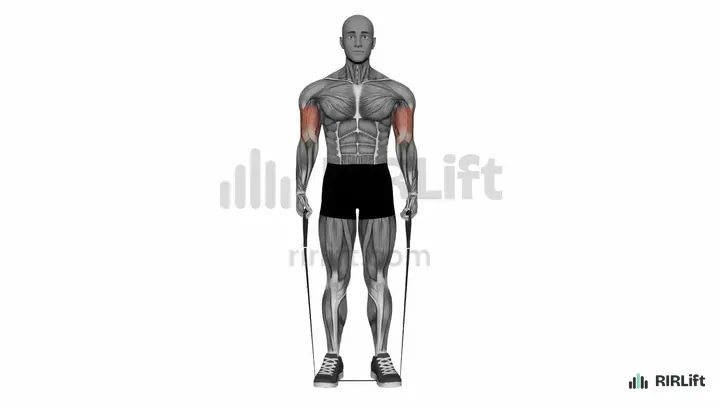
Biceps and forearms, curl

Band Hammer Curl

Biceps

Curling with palms facing each other works the biceps and forearms together, the muscles for carrying bags and lifting pots. It is a gentle grip for wrists and elbows.

How to do it

  1. Stand on a light band and hold the ends with palms facing each other.
  2. Curl one hand up toward your shoulder, keeping the elbow beside your ribs.
  3. Lower slowly and alternate sides.

Cues

  • Elbows still
  • Squeeze, then lower slow

Common mistakes

  • Swinging the band up with your hips: use a lighter band.

Swap for: Hammer Curl, Bodyweight Bicep Curl, Dumbbell Curl

Put them together: example sessions

Each session below picks from the exercises above for one situation, with the sets, reps, rest and RIR filled in.

Session 1

Full body at home, two days a week

  • Workouts2× a week
  • Working sets23 a week
  • Per workout~25 min
  • EquipmentResistance Bands

You have a set of resistance bands, you are new to strength training or coming back to it, and you want one program for your whole body.

Two sessions give every major muscle 4 to 6 sets a week, 23 working sets in total. That is a strong start for adults over 60, and 10 to 15 reps per set suits bands, which work best at moderate effort with control.

Day A
ExerciseSets × repsRIRRest
Band SquatSquat to a chair to start. 3 × 10–15 3 90 s
Band Bent-Over Row 3 × 10–15 2 75 s
Band Hip Thrust 2 × 12–15 2 75 s
Band Overhead PressPer arm. 2 × 8–12 2 1 min
Band Pull-Apart 2 × 12–15 2 1 min
Day B
ExerciseSets × repsRIRRest
Band Deadlift 3 × 10–15 3 90 s
Single-Arm Band Chest FlyPer arm. 2 × 10–15 2 1 min
Band Leg CurlPer leg. 2 × 10–15 2 1 min
Band Face Pull 2 × 12–15 2 1 min
Band Hammer Curl 2 × 10–15 2 1 min
How to run it
Do Day A and Day B on two days with at least a day between them, such as Monday and Thursday. Each takes about 30 minutes; walk for 5 minutes first.
How to progress
Use double progression: add reps until every set reaches 15 with 2 to 3 reps still in reserve. Then make the band harder, by choosing the next color, doubling it, or standing on it with a wider stance, and drop back to 10 reps.

Session 2

Balance worries: everything next to a chair

  • Workouts2× a week
  • Working sets24 a week
  • Per workout~25 min
  • EquipmentResistance Bands

Standing on one leg or bending forward with a band under your feet makes you uneasy, and you want every exercise done sitting or with a chair to hold.

Six exercises, 2 sets each, give 12 working sets a session and cover legs, hips, back, shoulders and arms. Twice a week is 24 sets, matching the full-body plan without any hinging or bending forward over the band.

Chair session
ExerciseSets × repsRIRRest
Band SquatSit down to the chair each rep. 2 × 8–12 3 90 s
Band Seated Hip Abduction 2 × 12–15 2 1 min
Band Leg CurlPer leg. Hold the chair. 2 × 10–15 2 1 min
Band Pull-ApartSeated. 2 × 12–15 2 1 min
Band Lateral RaiseBack against a wall. 2 × 10–15 2 1 min
Band Hammer CurlBack against a wall. 2 × 10–15 2 1 min
How to run it
Do it twice a week with a sturdy chair against a wall. Sit for the hip abduction and pull-apart, stand with your back to a wall for the raise and curl, and hold the chair back for the leg curl.
How to progress
Add reps up to 15 per set while keeping 2 to 3 in reserve, then move to a stronger band. For the squat, use a lower chair before a stronger band.

Session 3

Ten minutes a day, three days a week

  • Workouts3× a week
  • Working sets18 a week
  • Per workout~10 min
  • EquipmentResistance Bands

You would rather do a short workout most days than a long one twice a week.

Three 10-minute routines rotate legs, pulling and pushing, so each day has 6 sets and each area gets 6 hard sets a week. Short sessions are easier to keep doing, and consistency matters more than session length.

Legs
ExerciseSets × repsRIRRest
Band Squat 3 × 10–15 2 1 min
Band Hip Thrust 3 × 12–15 2 1 min
Pull
ExerciseSets × repsRIRRest
Band Bent-Over Row 3 × 10–15 2 1 min
Band Face Pull 3 × 12–15 2 1 min
Push
ExerciseSets × repsRIRRest
Band Overhead PressPer arm. 3 × 8–12 2 45 s
Single-Arm Band Chest FlyPer arm. 3 × 10–15 2 45 s
How to run it
Do the three routines on three different days, in order, for example Monday, Wednesday and Friday. Keep the bands in sight so starting takes no setup.
How to progress
When both exercises in a routine reach 15 reps on all sets with 2 reps left, use the next band for that routine only. Each routine moves up on its own schedule.

Make it fit you

Questions

Should seniors use resistance bands?

Yes. Bands are light, cheap, easy on the joints and come in steps of resistance, so they suit adults starting strength training at any age. They build real strength as long as the last reps of each set are hard.

What's the best exercise for a 70 year old?

A squat to a chair, done with or without a band. It trains the legs you need to stand up, walk and climb stairs. Pair it with a row for the upper back and you have the two most useful exercises.

What are the best exercise bands for seniors?

A set of long bands with handles plus one or two loop bands covers every exercise here. Fabric loop bands roll less on the legs, and padded handles are easier on the hands.

What is a good 10-minute resistance band workout for seniors?

Pick two exercises and do 3 sets each, such as squats and hip thrusts one day, rows and face pulls the next. The ten-minute plan on this page rotates three of those pairs across the week.

Are resistance bands as good as weights for older adults?

For most of the body, yes, at least until you outgrow the heaviest band. Legs are usually the first to outgrow them, which is a good sign of progress.