
Reverse curl: how to do it, what it works, and how to program it
Published October 19, 2026
A reverse curl is a barbell curl done with your palms facing down. The overhand grip puts the biceps in a weaker position, so the brachialis under the biceps and the brachioradialis on top of the forearm do more of the lifting. Keep your elbows at your sides and your wrists straight, curl the bar to shoulder height, and lower it slowly.
- WorksBiceps, Forearms
- EquipmentBarbells
- Start with3 × 10–15, 1 in reserve, 90 s rest
How to do the reverse curl
Flipping your grip palms down shifts the curl away from the biceps and onto the muscles that make the upper arm look thick from the side and the forearm look full from the front. It is the most direct way to load the top of the forearm with a barbell, and it trains grip at the same time.
Steps
- Hold a straight bar palms down, hands roughly shoulder-width, and stand tall with the bar resting against your thighs.
- Pin your elbows to your sides and set your wrists in line with your forearms, knuckles pointing forward.
- Bend your elbows to raise the bar in an arc until your forearms are about vertical and the bar is near shoulder height.
- Pause for a beat at the top without letting your elbows drift forward.
- Lower the bar over two to three seconds until your arms are straight again.
Cues
- Knuckles up, wrists flat
- Elbows stay at your ribs
- Slow on the way down
Common mistakes
- Letting the wrists bend back under the bar: drop the weight until you can keep your knuckles in line with your forearms for every rep.
- Swinging the hips to start the rep: the reverse curl uses much less weight than a normal curl, so pick a load you can lift with your arms alone.
- Elbows sliding forward at the top: that turns the end of the rep into a front raise; stop where your forearms are vertical.
Swap for: Hammer Curl, Zottman Curl, EZ-Bar Curl
Muscles the reverse curl works
The reverse curl works the brachioradialis, the thick muscle on the thumb side of the forearm, and the brachialis, which sits under the biceps and pushes it up. The biceps still help, but less than in a palms-up curl. Your wrist extensors on the back of the forearm work hard to keep the wrists straight, which is why grip and forearms fatigue fast.
Sets, reps and reps in reserve for the reverse curl
| Goal | Sets × reps | RIR | Rest |
|---|---|---|---|
| Build muscle | 3 × 10–15 | 1–2 | 90 s |
| Keep the bar light enough that your wrists never fold; add reps before weight. | |||
| Forearm and grip focus | 2–3 × 12–20 | 0–1 | 60–90 s |
| Finish an arm day with it, or pair it with wrist curls for a short forearm block. | |||
| Elbow-friendly accessory | 2 × 15–20 | 2–3 | 60 s |
| Use a light bar or EZ bar and a smooth tempo when regular curls irritate your elbows. | |||
Reverse curl variations
-
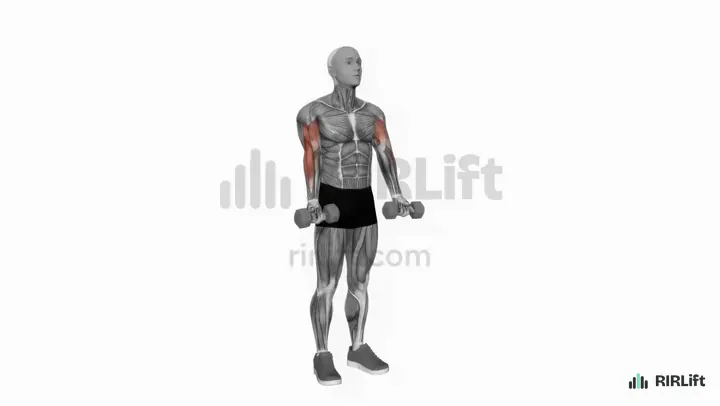
Zottman Curl
Curl dumbbells palms up and lower them palms down when you want the heavier biceps curl and the slow overhand lowering in one rep.
Build a session with it -
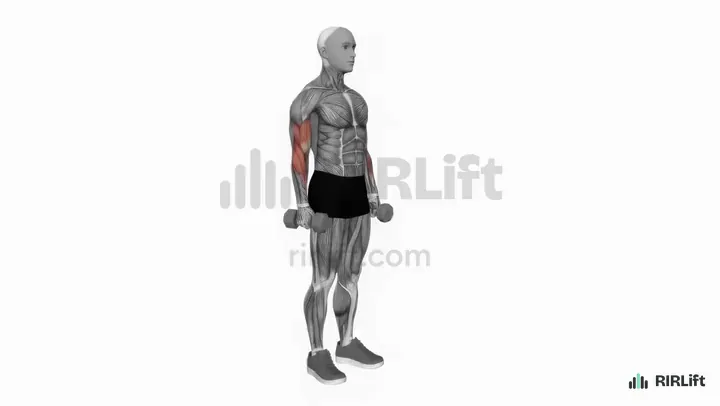
Hammer Curl
Hold dumbbells with palms facing in when the overhand grip bothers your wrists; it hits the same brachialis and brachioradialis with a stronger grip.
Build a session with it -
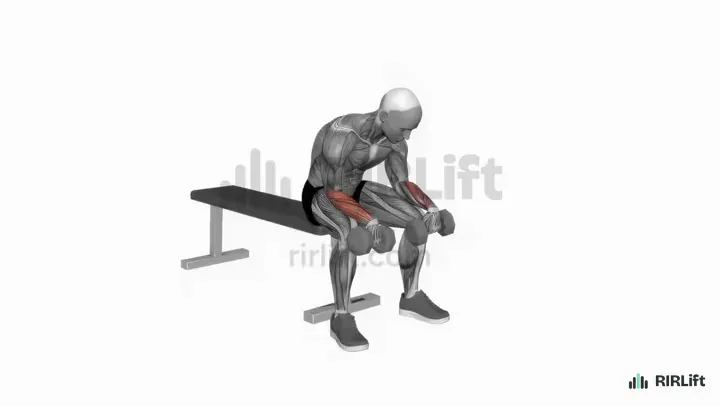
Reverse Wrist Curl
Move only at the wrist with a dumbbell when you want to isolate the back of the forearm after your reverse curls.
Build a session with it
Reverse curl alternatives
Biceps curls
-
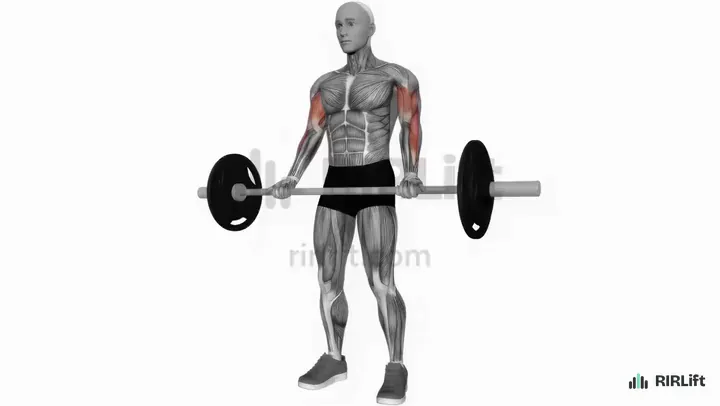
Barbell Curl
Turn your palms up when the goal is biceps size rather than forearm and brachialis work.
Build a session with it -
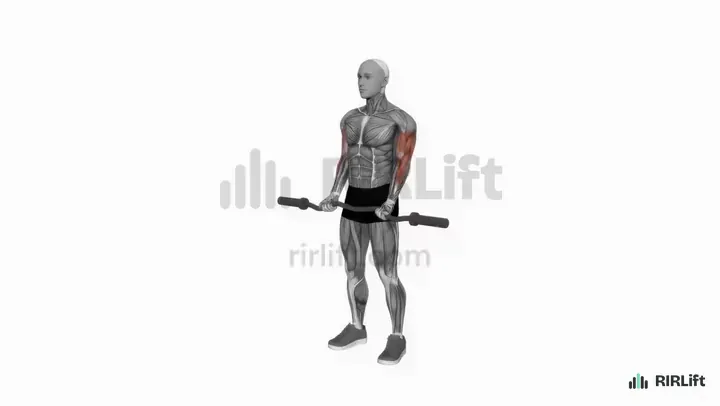
EZ-Bar Curl
Use the angled bar when a straight bar strains your wrists on any curl.
Build a session with it
Forearm and grip
-
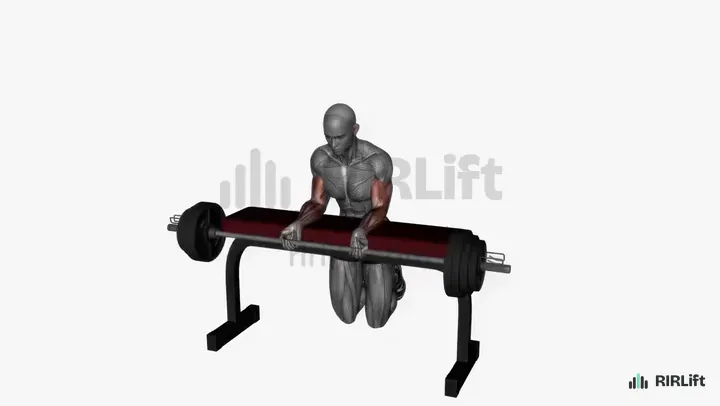
Wrist Curl
Curl the bar with your wrists only, palms up, to train the forearm flexors that the reverse curl leaves alone.
Build a session with it -
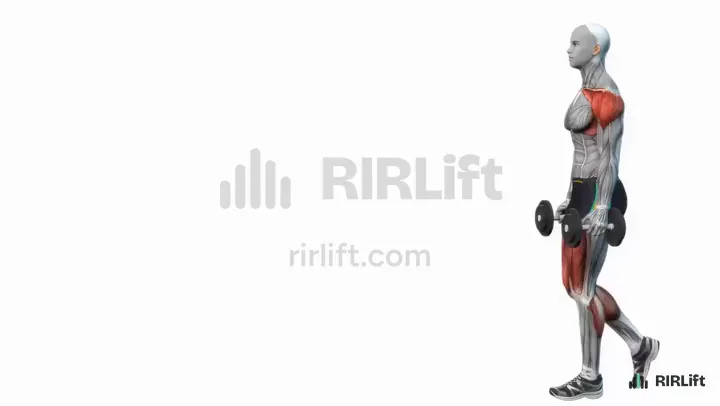
Farmer's Walk
Carry heavy dumbbells for distance when you want grip strength without more elbow bending.
Build a session with it
Reverse curl vs hammer curl
Both curls take the biceps out of its strongest position and move work to the brachialis and brachioradialis. The reverse curl does it with palms down, which makes the forearm extensors work harder to hold the wrist and limits the load more. The hammer curl uses a neutral grip, so you can lift more and it is easier on the wrists.
If you want the thickest forearms, do reverse curls. If you want heavier work for the side of the upper arm, or your wrists complain, do hammer curls. Many lifters keep one of each in a week.
Straight bar, EZ bar or dumbbells?
A straight bar is the classic reverse barbell curl and loads both arms evenly. An EZ bar tilts your hands slightly, which many people find easier on the wrists without losing much of the effect. Dumbbells let each arm work alone and let you set your own hand angle; grip them close to the thumb side so the forearm does the work.
Questions
What does a reverse curl work?
Mainly the brachioradialis on top of the forearm and the brachialis under the biceps. The biceps and the wrist extensors on the back of the forearm work too.
Do reverse curls still hit the biceps?
Yes, but less than a regular curl. The overhand grip puts the biceps at a mechanical disadvantage, so the other elbow flexors take a bigger share of the load.
Are reverse curls and hammer curls the same?
No. A hammer curl uses a palms-in grip and a reverse curl uses a palms-down grip. Both emphasize the brachialis and brachioradialis, but the reverse curl works the forearm extensors more and uses less weight.
Do reverse curls build forearms?
Yes. They are one of the most direct ways to grow the brachioradialis, which is much of the forearm's visible size near the elbow, and they challenge grip on every rep.
Are reverse curls harder than regular curls?
Yes. Most people reverse curl noticeably less than they curl palms up, because the biceps cannot pull as well and the wrists have to hold a weaker position.
What is the best forearm exercise?
No single lift covers the whole forearm. Pair a palms-down elbow curl like the reverse curl with a wrist curl and a heavy carry, and you train the top, the underside and grip.
Related templates
-
Hammer curl: how to do it, what it works, and what to swap it for
The neutral-grip curl that hits the same muscles with a heavier load.
-
Forearm exercises with dumbbells: wrist curls, hammer curls and carries
More ways to train grip and forearms around your reverse curls.
-
Zottman curl: how to do it, what it works, and when to use it
A dumbbell curl that combines a palms-up lift with a palms-down lowering.
-
The best workout for forearms, for your situation
A full forearm session that uses reverse curls.
-
How to use RIR
How to judge the reps you leave in reserve on every set.