
Zottman curl: how to do it, what it works, and when to use it
Published October 19, 2026
A Zottman curl is a dumbbell curl where you lift with your palms facing up and lower with your palms facing down. Curl both dumbbells to your shoulders with an underhand grip, turn your wrists over at the top, then lower slowly with an overhand grip and turn back at the bottom. The way up trains the biceps; the slow way down, palms down, trains the brachialis and the forearm muscles, so one exercise covers both.
- WorksBiceps, Forearms
- EquipmentDumbbells
- Start with3 × 10–15, 1 in reserve, 90 s rest
How to do the zottman curl
You can lower more weight than you can lift with palms down, so pairing a normal curl with an overhand lowering gives the forearm and brachialis a heavy, slow eccentric they rarely get. It is an efficient pick when you only have time for one curl and want both the biceps and the forearms worked.
Steps
- Stand with one dumbbell per hand, arms straight at your sides, palms facing forward.
- Keeping your upper arms still at your sides, curl both dumbbells up to your shoulders.
- At the top, turn your wrists so your palms face down.
- Lower the dumbbells slowly, taking about three seconds, with your palms still facing down and your wrists straight.
- At the bottom, turn your palms forward again and start the next curl.
Cues
- Palms up to lift, palms down to lower
- Three seconds on the way down
- Elbows stay at your sides
Common mistakes
- Rushing the lowering: the slow overhand descent is the point of the exercise; if you can't take three seconds, the dumbbells are too heavy.
- Turning the wrists halfway down instead of at the top: finish the rotation at shoulder height so the whole descent is palms down.
- Letting the wrists bend back while lowering: keep your knuckles in line with your forearm so the forearm muscles do the work.
Swap for: Hammer Curl, Reverse Curl, Dumbbell Curl
Muscles the zottman curl works
The lifting phase works the biceps, with the brachialis helping. The palms-down lowering shifts the load to the brachialis, the brachioradialis on the thumb side of the forearm, and the wrist extensors on the back of the forearm. Your grip works throughout.
Sets, reps and reps in reserve for the zottman curl
| Goal | Sets × reps | RIR | Rest |
|---|---|---|---|
| Biceps and forearms together | 3 × 8–12 | 1–2 | 90 s |
| Pick the weight you can lower palms down in three seconds, not what you can curl. | |||
| Forearm focus | 3 × 10–15 | 1 | 60–90 s |
| Slow the lowering to four seconds and use lighter dumbbells. | |||
| Arm-day finisher | 2 × 12–15 | 1–2 | 60 s |
| Do it last, after your heavier curls, when the forearms are already warm. | |||
Zottman curl variations
-
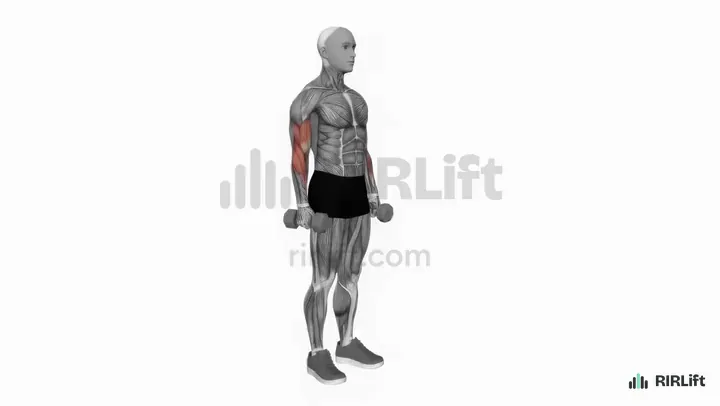
Hammer Curl
Keep a thumbs-up grip both ways when you want to load the brachialis heavier with a simpler movement.
Build a session with it -
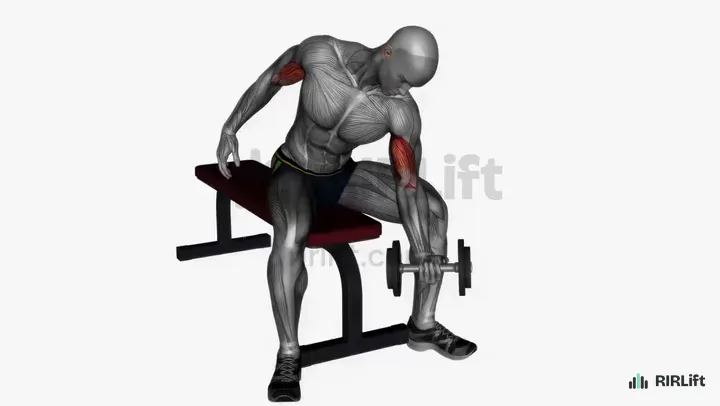
Concentration Curl
Brace your elbow on your thigh and curl palms up when you want the biceps alone with no forearm emphasis.
Build a session with it -
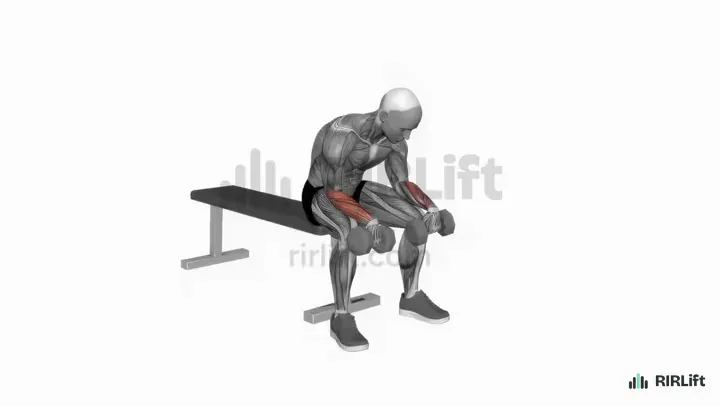
Reverse Wrist Curl
Lift a dumbbell with only your wrist, palm down, when you want to isolate the forearm extensors.
Build a session with it
Zottman curl alternatives
Forearm and brachialis
-
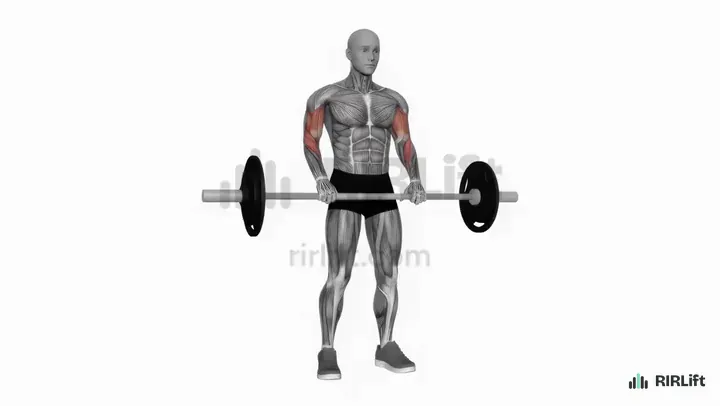
Reverse Curl
Curl a barbell palms down both ways when you want the overhand part loaded harder.
Build a session with it -
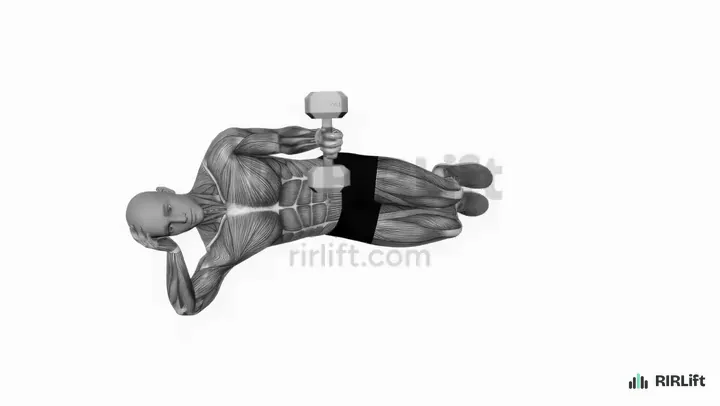
Dumbbell Wrist Pronation-Supination
Rotate a dumbbell from palm up to palm down when you want the forearm rotators alone.
Build a session with it
Biceps curls
-
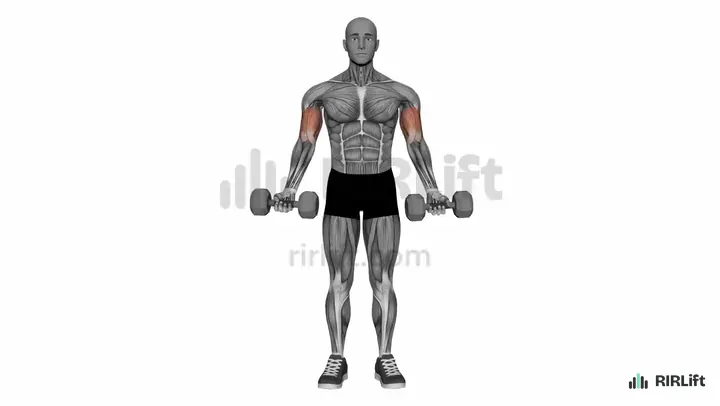
Dumbbell Curl
Do a regular dumbbell curl when you want to use more weight for the biceps.
Build a session with it -
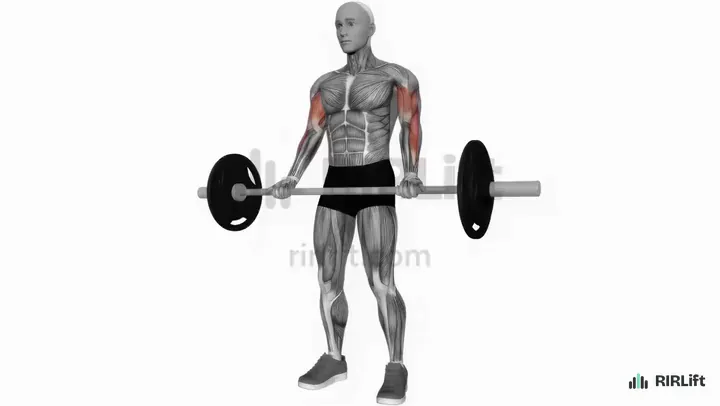
Barbell Curl
Curl a barbell when you want the heaviest biceps work in one lift.
Build a session with it
Zottman curl vs hammer curl
A hammer curl keeps your thumbs up the whole rep, loading the brachialis and brachioradialis in both directions and letting you use heavier dumbbells. A Zottman curl splits the rep: palms up for the biceps on the way up, palms down for the forearms on the way down.
If your goal is thicker arms with simple, heavy sets, the hammer curl is easier to progress. If you want the biceps and the forearm extensors trained in one exercise, or your grip and forearms lag, the Zottman curl covers more in less time.
What weight to use
Choose by the lowering, not the lifting: the palms-down half is the weak link. Most people use 40 to 60 percent of what they would use for a regular dumbbell curl. If you can curl the weight up but it drops on the way down, go lighter.
Questions
Is the Zottman curl better than the bicep curl?
Not better, broader. A regular curl lets you load the biceps heavier; the Zottman curl adds forearm and brachialis work on the way down. Many people use both.
What's better, Zottman curls or hammer curls?
Hammer curls are easier to load heavy for the brachialis. Zottman curls train the biceps and the back of the forearm too. Pick hammer curls for heavier sets, Zottman curls for forearms and grip.
What is the Zottman curl good for?
Training the biceps and forearms in one exercise, especially the brachioradialis and wrist extensors that most curls miss.
What is a good weight for a Zottman curl?
One you can lower palms down for about three seconds on every rep. For most people that is roughly half of their normal dumbbell curl weight.
What muscles does the Zottman curl work?
The biceps and brachialis on the way up; the brachialis, brachioradialis and wrist extensors on the way down.
Can you do Zottman curls one arm at a time?
Yes. Alternating arms lets you focus on one rotation at a time and is a good way to learn the timing.
Related templates
-
Hammer curl: how to do it, what it works, and what to swap it for
The thumbs-up curl for heavier brachialis work.
-
Reverse curl: how to do it, what it works, and how to program it
A palms-down barbell curl for the forearms.
-
Forearm exercises with dumbbells: wrist curls, hammer curls and carries
More dumbbell lifts for grip and forearms.
-
The best workout for forearms, for your situation
A full forearm session.
-
Dumbbell bicep exercises: curls for the stretch, the squeeze and arm thickness
More curls to pair with the Zottman curl.