Rugby warm up: move, prepare for contact, then accelerate

A solid rugby warm up runs about 15 minutes before the team's unit work: 4 minutes of easy jogging with high knees, 4 minutes of walkouts, leg swings, cossack squats and arm circles, 4 minutes of bear crawls, plank shoulder taps, push-up pluses and Copenhagen planks to get the shoulders and trunk ready for contact, then frog jumps, box jumps and three accelerations over 20 to 30 meters at rising speed. Contact drills come after that, never first.

  1. Running Quads, Hamstrings, Calves
  2. Walkout Abs, Shoulders, Chest
  3. Cossack Squat Quads, Adductors
  4. Arm Circles Shoulders
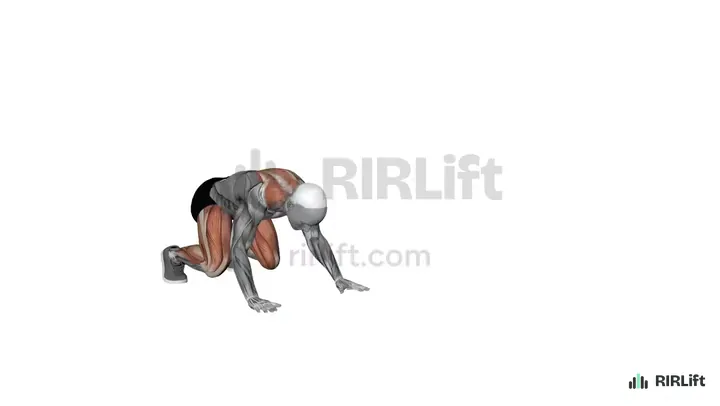
  5. Bear Crawl Abs, Shoulders
  6. Plank Shoulder Tap Abs
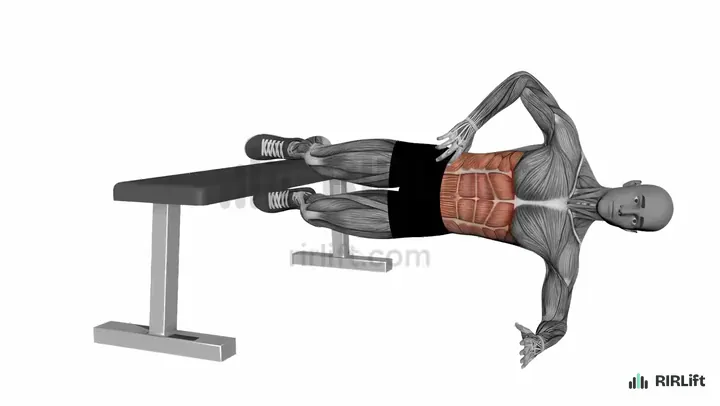
  7. Copenhagen Plank Adductors, Abs
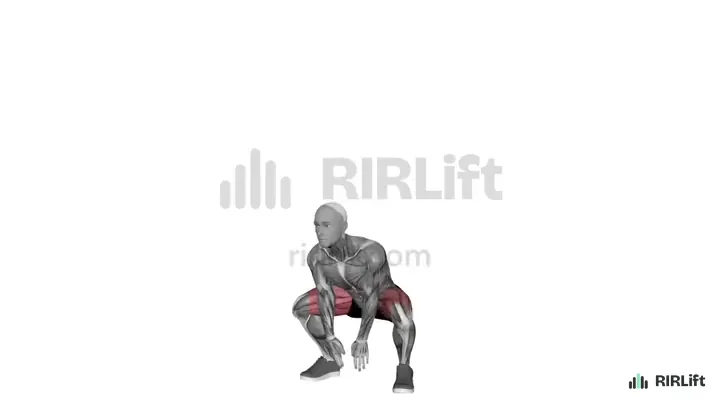
  8. Frog Jump Quads, Glutes, Calves
Raise: jog and high knees

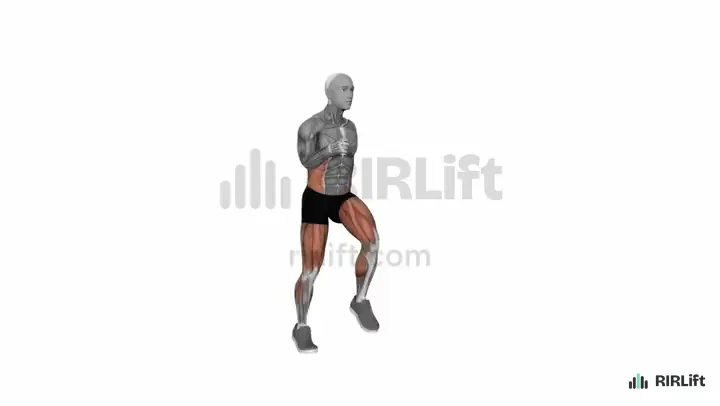
Start with four minutes of easy jogging across the pitch with high knees mixed in every second length. Easy enough to talk. This raises body temperature before you move anything into a big range.

Raise, jog

Running

Quads, Hamstrings, Calves

Easy jogging across the pitch is how almost every team starts, and for good reason: it warms up the muscles you will run with for 80 minutes.

How to do it

  1. Jog easily around the field, court or a lap of the area you have.
  2. Mix in some backward jogging and side shuffles if you have room.
  3. Keep the arms swinging forward and back, not across your body.
  4. Finish the block a little faster than you started.

Cues

  • Easy and loose
  • Arms forward and back
  • Build gradually

Common mistakes

  • Turning the jog into a race with teammates: save speed for the primers.
  • Running with your chin up and shoulders tight: let the shoulders drop.

Swap for: High Knees, Jump Rope, Stationary Bike

Build a session with Running

Raise, hip flexors

High Knees

Quads

High knees lift the heart rate and wake up the muscles that drive the knee into a sprint.

How to do it

  1. Set up tall with a slight forward lean from the ankles.
  2. Pull one knee up in front of you while the other foot pushes off the floor.
  3. Alternate quickly with a short ground contact on every step.
  4. Hold good posture for the whole interval rather than chasing speed.

Cues

  • Push the floor away
  • Short contacts
  • Posture first

Common mistakes

  • Knees drifting low as you tire: slow down and get the height back.
  • Heavy heel strikes: stay up on the forefoot.

Swap for: Skipping in Place, Butt Kicks, Running

Mobility: hips, hamstrings and shoulders

Rugby asks for low body positions in rucks and scrums, long strides in open play and shoulders that can take a hit. Walkouts, leg swings, cossack squats and arm circles move each of those joints through the range they need in about four minutes.

Hamstrings, shoulders and trunk

Walkout

Abs, Shoulders, Chest

A walkout stretches the hamstrings and puts the shoulders and trunk under load in a plank, all in one move.

How to do it

  1. From standing, fold forward and plant your hands in front of your feet.
  2. Crawl your hands out until your shoulders are over your wrists.
  3. Pause, then crawl them back in and roll up to standing.
  4. Move steadily through the reps, reaching a little farther each time.

Cues

  • Shoulders over wrists at the end
  • Brace your middle
  • Roll up slowly

Common mistakes

  • Walking out so far your lower back arches: stop at a straight plank.
  • Jumping the feet in to save time: walk the hands back.

Swap for: Bear Crawl, Plank to Push-Up, Leg Swings

Build a session with Walkout

Hip and hamstring mobility

Leg Swings

Hamstrings, Glutes

Swings loosen the front and back of the hips for open-field running and kicking.

How to do it

  1. Stand side-on to a wall, fence or post and rest one hand on it.
  2. Swing the outside leg forward and back like a pendulum, starting small.
  3. Let each swing go a little higher as your hip loosens.
  4. Do all the swings on one leg, then turn around and do the other.

Cues

  • Pendulum from the hip
  • Start small, grow the arc
  • Stand tall

Common mistakes

  • Rounding the lower back to kick higher: keep your torso upright and let the hip do the work.
  • Flinging the leg as hard as possible on the first swing: build the height over the set.

Swap for: Standing Cable Hip Flexion, Walkout, Cossack Squat

Low, wide hip range

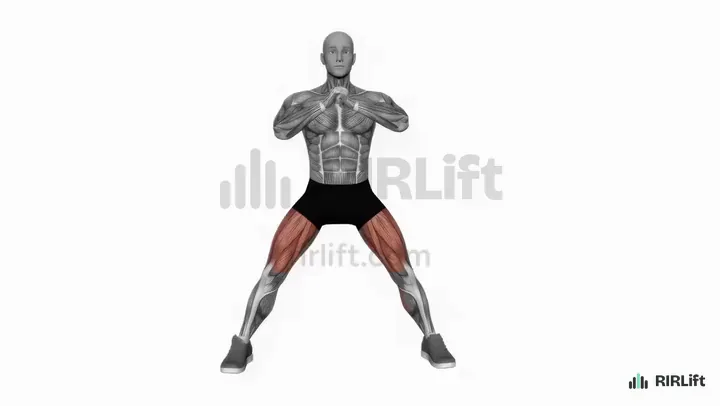
Cossack Squat

Quads, Adductors

Rucks and scrums need you low and wide. The cossack squat works that range one side at a time.

How to do it

  1. Take a very wide stance with your hands together in front of your chest.
  2. Bend one knee and slide your hips over that foot, keeping the opposite leg long.
  3. Pause at the bottom of your range for a moment.
  4. Rise and shift across to the other side, alternating each rep.

Cues

  • Long leg, toes up
  • Slide the hips sideways
  • Pause at the bottom

Common mistakes

  • Bouncing into the bottom: lower slowly and own the position.
  • Folding the chest onto the thigh: stay as upright as you can.

Swap for: Dumbbell Lateral Lunge, Barbell Lateral Lunge, Kettlebell Lateral Lunge

Shoulder mobility

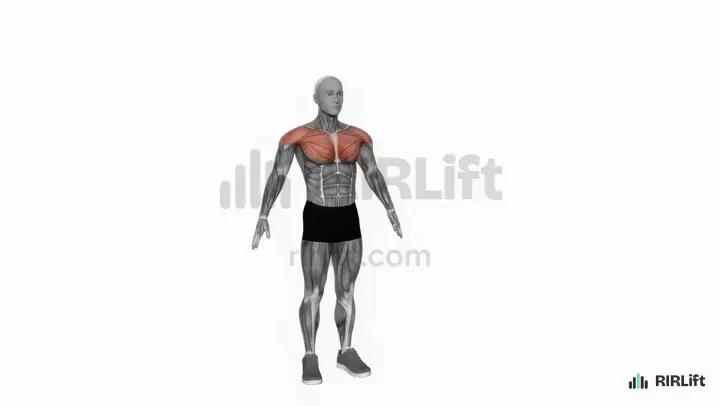
Arm Circles

Shoulders

Circles take the shoulders through their full range before tackling and lineout lifting.

How to do it

  1. Stand tall with your arms straight out sideways at shoulder height.
  2. Make small forward circles, then let each circle grow larger.
  3. After half the set, reverse and circle backward.
  4. Keep your neck relaxed and your ribs down.

Cues

  • Small to big
  • Forward, then back
  • Shoulders away from ears

Common mistakes

  • Shrugging your shoulders up: keep them low.
  • Arching the lower back on the big circles: keep the ribs tucked.

Swap for: Band Pull-Apart, Plate Halo, Dumbbell Around the World

Contact prep: shoulders, trunk and groin

Before contact, the shoulders and trunk need to be switched on. Short bear crawls, plank shoulder taps and push-up pluses get the shoulders bearing weight and the trunk resisting rotation, and a Copenhagen plank wakes up the groin for the side-to-side work of the breakdown. Leave long static holds for after the match.

Shoulders and trunk under load

Bear Crawl

Abs, Shoulders

Crawling forward and back with the knees low makes the shoulders and trunk work together, a lot like driving in a ruck.

How to do it

  1. Get on all fours, then lift your knees an inch off the ground with your back flat.
  2. Move forward by stepping one hand and the opposite foot at the same time.
  3. Keep the knees low and your hips level with your shoulders.
  4. Crawl forward for the distance, then crawl backward.

Cues

  • Knees an inch off the ground
  • Opposite hand and foot
  • Flat back

Common mistakes

  • Hips shooting up high: keep them at shoulder height.
  • Taking huge steps: short steps keep you stable.

Swap for: Walkout, Plank Shoulder Tap, Gorilla Walk

Anti-rotation trunk

Plank Shoulder Tap

Abs

Shoulder taps make the trunk resist twisting while one arm moves, the job it does in a tackle.

How to do it

  1. Get into a high plank with your feet a little wider than hip width.
  2. Lift one hand and tap the opposite shoulder.
  3. Put it down and tap with the other hand.
  4. Keep your hips as still as you can the whole time.

Cues

  • Hips don't rock
  • Wide feet help
  • Slow taps

Common mistakes

  • Swaying side to side with each tap: widen the feet and slow down.
  • Piking the hips up: hold a straight line.

Swap for: Plank, Bear Crawl, Plank to Push-Up

Shoulder blade control

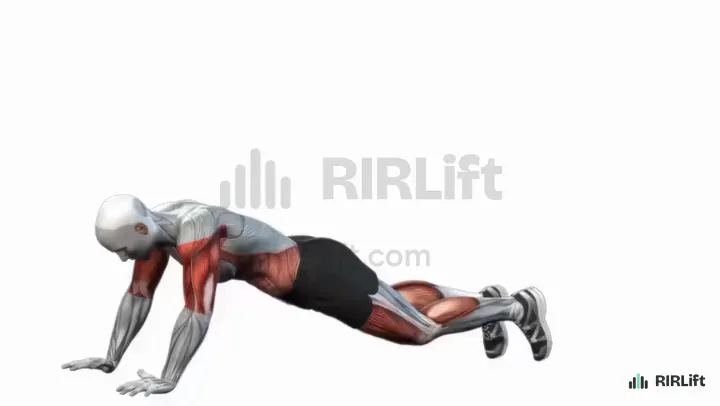
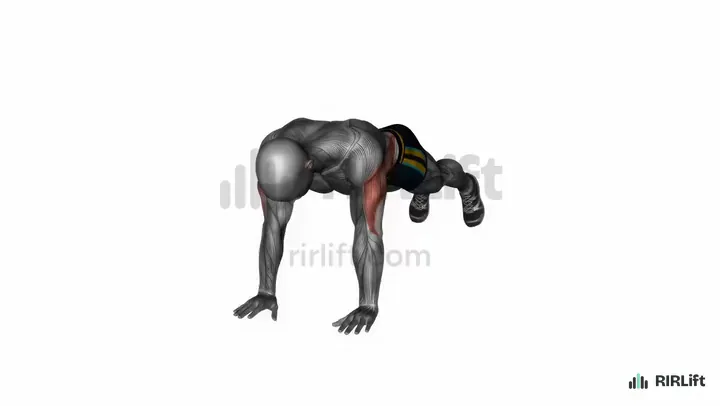
Push-Up Plus

Chest

Push-up pluses switch on the muscle that holds the shoulder blade against the ribs, which helps the shoulder take impact in a good position.

How to do it

  1. Set up in a push-up position with hands under your shoulders.
  2. Do a push-up, and at the top push the floor away a little further so your upper back rounds slightly.
  3. Let the shoulder blades slide back together before the next rep.
  4. Keep your body in a straight line throughout.

Cues

  • Push the floor away at the top
  • Blades spread, then return
  • Straight body

Common mistakes

  • Skipping the extra push at the top: that last bit is the point.
  • Hips sagging: brace as you would in a plank.

Swap for: Push-Up, Plank to Push-Up, Kneeling Push-Up

Groin activation

Copenhagen Plank

Adductors, Abs

A short Copenhagen hold per side gets the inner thigh ready for side steps and holding your ground at the breakdown.

How to do it

  1. Lie on your side and rest your top leg on a bench at about knee height, or the inside of your foot for the harder version.
  2. Prop yourself on your forearm with the elbow under your shoulder.
  3. Squeeze the top leg down into the bench and lift your hips so your body is straight.
  4. Hold for the set time, then switch sides.

Cues

  • Press the top leg down
  • Hips high and straight
  • Breathe

Common mistakes

  • Letting the hips sag toward the floor: shorten the hold or use the knee position.
  • Rotating the chest toward the floor: stay stacked.

Swap for: Side Plank, Band Hip Adduction, Hip Adduction Machine

Power primers: jumps and accelerations

Finish with power: a few frog jumps, a few box jumps, then three 20 to 30-meter accelerations at 70, 80 and 90 percent with a walk back. Then join the unit warm-up and contact drills.

Primer, low-position power

Frog Jump

Quads, Glutes, Calves

Frog jumps start deep and explode upward, close to driving out of a low position.

How to do it

  1. Stand with feet wider than your hips and squat until your hands come near the floor.
  2. Jump straight up, driving your arms.
  3. Land softly back in the low squat with your hands reaching toward the floor, pause, and repeat.

Cues

  • Deep load, big jump
  • Land low
  • Reset each rep

Common mistakes

  • Landing with straight legs: sink back into the squat on each landing.
  • Rounding the back at the bottom: chest up.

Swap for: Box Jump, Med Ball Jump, Star Jump

Build a session with Frog Jump

Primer, vertical power

Box Jump

Quads, Glutes, Hamstrings

Box jumps bring the legs to full power with soft landings, ready for lineouts and kick chases.

How to do it

  1. Face a sturdy box with your feet about hip width apart.
  2. Load your hips back as your arms swing behind you, then explode up.
  3. Bring the knees up and land on the box in an athletic stance.
  4. Step off and take a few breaths before the next jump.

Cues

  • Explode up
  • Athletic landing
  • Full reset

Common mistakes

  • Rushing the reps: each jump is fresh and fast.
  • Landing on your toes on the edge: land with your whole foot on the box.

Swap for: Lateral Box Jump, Single-Leg Box Jump, Med Ball Jump

Build a session with Box Jump

In the weight room: ramp up the first lift

In the gym, the warm-up leads into the trap bar deadlift: lighter sets of the lift that climb to the working weight before the heavy work starts. RIRLift logs those lighter sets as warm-up sets, separate from your working sets.

Hip and leg strength for contact

Trap Bar Deadlift

Quads, Glutes

In the gym, the warm-up leads into the trap bar deadlift: lighter sets of the lift that climb to the working weight before the heavy work starts..

How to do it

  1. Step inside the trap bar with the handles beside your feet.
  2. Push your hips back, bend your knees, and grip the handles.
  3. Flatten your back, take the slack out, and stand up by pushing the floor away.
  4. Lower under control. Each warm-up set adds weight toward your working sets.

Cues

  • Push the floor away
  • Flat back
  • Slack out before you pull

Common mistakes

  • Yanking the bar off the floor: pull the slack out first.
  • Rounding the back as the weight climbs: hold the ramp until the setup is solid.

Swap for: Barbell Deadlift, Romanian Deadlift, Kettlebell Deadlift

Put them together: example sessions

Each session below picks from the exercises above for one situation, with the sets, reps, rest and RIR filled in. Open one in the session builder to change a pick, price it from a recent set, and add it to RIRLift.

Session 1

Match day, before the unit warm-up

Open in the session builder
  • Workouts1× a week
  • Working sets16 a week
  • Per workout~20 min
  • EquipmentPlyo Box

Your team warm-up is about 40 minutes and you have 15 minutes to yourself first.

This is the page in order, every set at 3 to 5 reps in reserve. Contact prep comes before the team's contact drills so the shoulders and trunk are already switched on when the first hit-shield drill starts. Power and acceleration finish it, so you go into team drills fast.

Match Warm-Up
ExerciseSets × repsRIRRest
RunningSeconds. Easy jog. 4 × 60 5 0 s
High KneesSeconds. 1 × 20 4 10 s
Walkout 1 × 4 4 0 s
Leg SwingsPer leg. 1 × 10 5 0 s
Cossack SquatPer side. 1 × 6 4 10 s
Arm CirclesEach direction. 1 × 10 5 0 s
Bear CrawlSeconds. 1 × 20 4 15 s
Plank Shoulder TapTaps per side. 1 × 10 4 15 s
Push-Up Plus 1 × 8 4 15 s
Copenhagen PlankSeconds per side. 1 × 15 4 15 s
Frog Jump 1 × 4 3 30 s
Box JumpStep down every rep. 2 × 3 3 30 s
How to run it
Start about 45 minutes before kickoff. Then join forwards or backs.
How to progress
Keep it the same every match. If you feel heavy, add one more acceleration at 90 percent.

Session 2

Training night

Open in the session builder
  • Workouts2× a week
  • Working sets26 a week
  • Per workout~15 min
  • EquipmentBodyweight

You train twice a week with the club and want the warm-up to build a little strength too.

On training nights the contact-prep block gets a second set at 2 to 3 reps in reserve. Across a season, those extra sets of bear crawls, pluses and Copenhagens build the shoulders and groin, not just warm them. The power primers are trimmed because training drills follow.

Training Warm-Up
ExerciseSets × repsRIRRest
RunningSeconds. 3 × 60 5 0 s
Walkout 1 × 4 4 0 s
Leg SwingsPer leg. 1 × 10 5 0 s
Arm CirclesEach direction. 1 × 10 5 0 s
Bear CrawlSeconds. 2 × 20–30 3 20 s
Push-Up Plus 2 × 8–12 2 20 s
Copenhagen PlankSeconds per side. 2 × 15–30 2 20 s
Frog Jump 1 × 4 3 0 s
How to run it
Do it on the touchline before the session starts.
How to progress
Add 5 seconds to the Copenhagen hold each week, up to 30 seconds.

Session 3

Gym session

Open in the session builder
  • Workouts2× a week
  • Working sets22 a week
  • Per workout~25 min
  • EquipmentPlyo Box, Trap Bar

You lift twice a week and open with a trap bar deadlift.

In the gym, the warm-up is shorter and points at the first lift. Mobility and trunk work come first, a couple of box jumps follow while you are fresh, then the trap bar deadlift opens with three ramp-up sets logged as warm-up sets. Working sets stop at 2 to 3 reps in reserve so strength rises without wrecking you for training.

Gym Day
ExerciseSets × repsRIRRest
RunningSeconds. Easy jog. 2 × 60 5 0 s
Walkout 1 × 5 4 0 s
Cossack SquatPer side. 1 × 6 4 10 s
Plank Shoulder TapTaps per side. 1 × 10 4 15 s
Box JumpStep down every rep. 3 × 3 3 45 s
Trap Bar Deadlift3 warm-up sets firstWorking sets after the ramp-up. 3 × 5 2 3 min
How to run it
Use it before every lower-body gym session.
How to progress
Add 5 to 10 pounds when every working set reaches 5 reps at 2 or more in reserve.

Make it fit you

Questions

What is a good pre-match rugby warm-up?

An easy jog, then walkouts, leg swings, cossack squats and arm circles, then bear crawls, plank shoulder taps, push-up pluses and Copenhagen planks to prepare for contact, then jumps and accelerations. Unit and contact drills come after.

How long should a rugby warm-up be?

Most team warm-ups run 30 to 40 minutes including unit drills. Your own part, before the team's drills, takes about 15 minutes.

How do you prepare your shoulders for rugby contact?

Arm circles for range, then bear crawls, push-up pluses and plank shoulder taps to get the shoulders bearing weight and the trunk braced. Then build into contact drills at rising intensity.

What are four warm-up exercises for rugby?

A jog, walkouts, bear crawls and accelerations. If you only have time for four, those cover warm-up, mobility, contact prep and speed.

Should rugby players static stretch before a match?

Move rather than hold before playing; long static holds fit better after the match.