Warm up exercises for football: from stretch lines to first-step speed

The best warm up exercises for football fit into about 15 minutes: 3 minutes of jumping jacks, high knees and butt kicks, 4 minutes of walkouts, leg swings, cossack squats and bear crawls, 3 minutes of lateral band walks and dead bugs, then fast feet, box jumps and skater hops before a few 10-yard starts out of your stance at rising speed. Do it before position drills, so the first snap is not the first time you explode off the line.

  1. Jumping Jack Calves, Quads
  2. High Knees Quads
  3. Walkout Abs, Shoulders, Chest
  4. Leg Swings Hamstrings, Glutes
  5. Cossack Squat Quads, Adductors
  6. Bear Crawl Abs, Shoulders
  7. Fast Feet Calves, Quads
  8. Box Jump Quads, Glutes, Hamstrings
Raise: jacks, knees and kicks

Most football warm-ups start in lines. Run a minute of jumping jacks, then high knees and butt kicks over 10 to 15 yards and back. You want sweat starting and the heart rate up before anything fast.

Raise, whole body

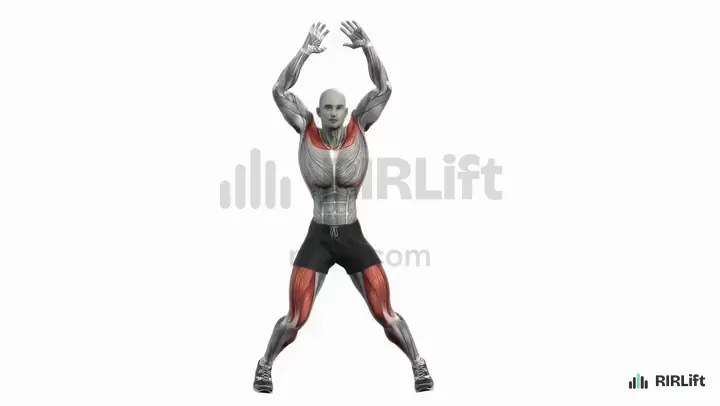
Jumping Jack

Calves, Quads

Jacks get the whole team warm in a minute and move the shoulders overhead, a gentle start before contact.

How to do it

  1. Stand with feet together and arms by your sides.
  2. Hop your feet out wider than your shoulders while your arms rise overhead.
  3. Hop back to the start as your arms come down.
  4. Keep a steady, easy rhythm and land softly each time.

Cues

  • Out and up, in and down
  • Soft knees
  • Steady rhythm

Common mistakes

  • Landing stiff-legged: bend the knees a little on every landing.
  • Half-raising the arms: take them all the way overhead.

Swap for: Star Jump, Jump Rope, Skipping in Place

Raise, hip flexors

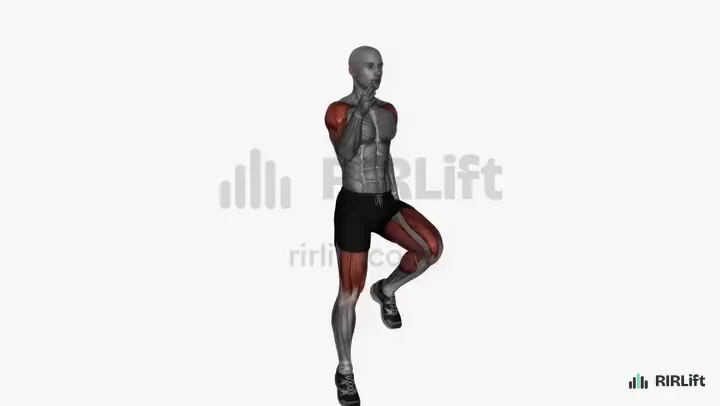
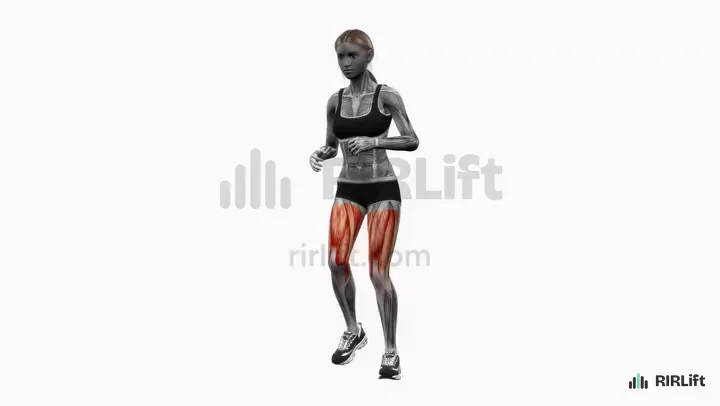
High Knees

Quads

High knees wake up the muscles that drive the knee forward in a sprint.

How to do it

  1. Stand with feet under your hips and arms bent.
  2. Run in place, bringing each knee up toward hip height.
  3. Stay on the balls of your feet and pump the arms in time with the legs.
  4. Start at a jog tempo and finish the last few seconds quicker.

Cues

  • Knees to hip height
  • Tall chest
  • Fast, light feet

Common mistakes

  • Leaning back to get the knees up: keep your torso stacked over your hips.
  • Sprinting from the first second: build the pace.

Swap for: Skipping in Place, Butt Kicks, Running

Raise, quads

Butt Kicks

Hamstrings

Butt kicks warm the quads through a full bend, ready for deep stances and hard stops.

How to do it

  1. Stand tall and jog in place.
  2. Bring each heel up toward your glutes as the foot leaves the ground.
  3. Keep your knees pointing down at the floor rather than forward.
  4. Swing your arms easily and build the tempo over the set.

Cues

  • Heels to glutes
  • Knees point down
  • Quick turnover

Common mistakes

  • Bending forward at the waist: stay upright.
  • Pulling the knee forward like a high knee: the thigh stays roughly vertical.

Swap for: High Knees, Skipping in Place, Running

Mobility: hips, hamstrings and shoulders

Getting low in a stance, opening the hips to run a route and driving through contact all need range. Four walkouts, ten leg swings per leg, six cossack squats per side and two short bear crawls cover the hips, hamstrings and shoulders in about four minutes.

Hamstrings, shoulders and trunk

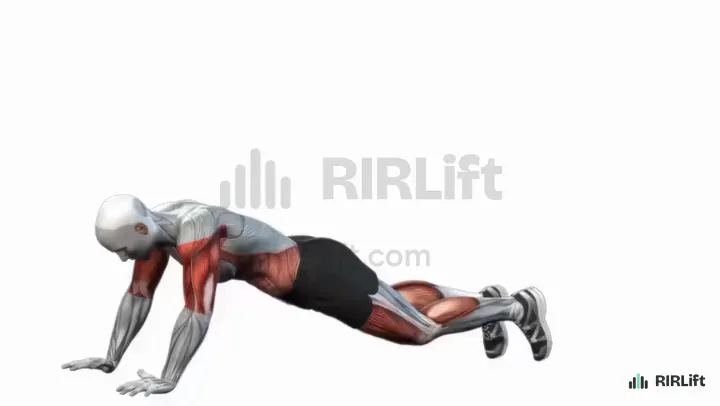
Walkout

Abs, Shoulders, Chest

Walkouts stretch the backs of the legs and load the shoulders and trunk, which helps before blocking and tackling.

How to do it

  1. From standing, fold forward and plant your hands in front of your feet.
  2. Crawl your hands out until your shoulders are over your wrists.
  3. Pause, then crawl them back in and roll up to standing.
  4. Move steadily through the reps, reaching a little farther each time.

Cues

  • Shoulders over wrists at the end
  • Brace your middle
  • Roll up slowly

Common mistakes

  • Walking out so far your lower back arches: stop at a straight plank.
  • Jumping the feet in to save time: walk the hands back.

Swap for: Bear Crawl, Plank to Push-Up, Leg Swings

Build a session with Walkout

Hip flexor and hamstring mobility

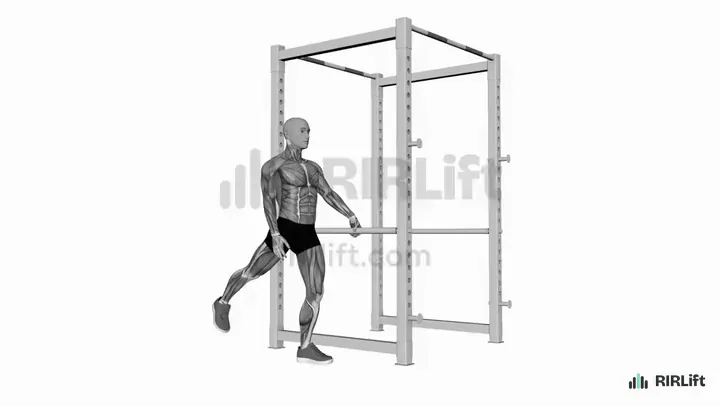
Leg Swings

Hamstrings, Glutes

Swings take the hips through a sprinting range without holding a static stretch.

How to do it

  1. Stand side-on to a wall, fence or post and rest one hand on it.
  2. Swing the outside leg forward and back like a pendulum, starting small.
  3. Let each swing go a little higher as your hip loosens.
  4. Do all the swings on one leg, then turn around and do the other.

Cues

  • Pendulum from the hip
  • Start small, grow the arc
  • Stand tall

Common mistakes

  • Rounding the lower back to kick higher: keep your torso upright and let the hip do the work.
  • Flinging the leg as hard as possible on the first swing: build the height over the set.

Swap for: Standing Cable Hip Flexion, Walkout, Cossack Squat

Side-to-side hip range

Cossack Squat

Quads, Adductors

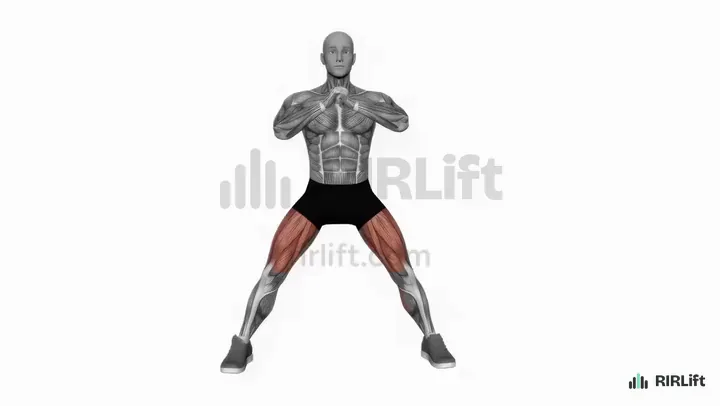
Linemen and linebackers move low and wide. The cossack squat moves the hips through that range one side at a time.

How to do it

  1. Stand with your feet about twice shoulder width apart, toes turned out slightly.
  2. Shift your weight to one side and sit down into that hip while the other leg stays straight.
  3. Let the toes of the straight leg point up as you sink as low as you comfortably can.
  4. Push back through the bent leg to the middle and go to the other side.

Cues

  • Sit into the hip
  • Heel of the bent leg stays down
  • Chest up

Common mistakes

  • Lifting the heel of the working foot: only go as low as you can with the foot flat.
  • Collapsing the knee inward: keep it over your toes.

Swap for: Dumbbell Lateral Lunge, Barbell Lateral Lunge, Kettlebell Lateral Lunge

Shoulders and trunk under load

Bear Crawl

Abs, Shoulders

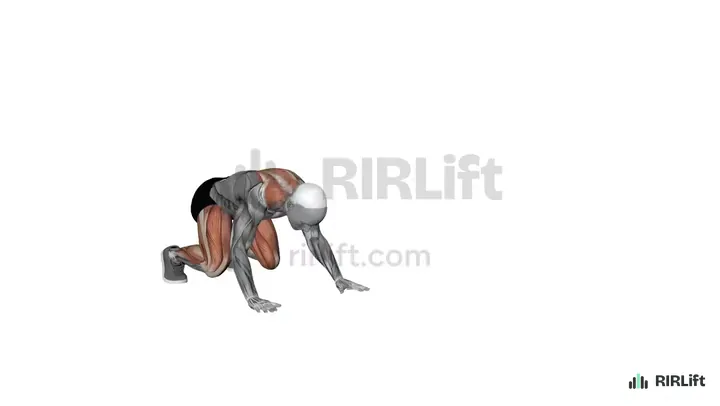
A short bear crawl warms the shoulders and trunk in a low, braced position, a lot like getting into and out of contact.

How to do it

  1. Get on all fours, then lift your knees an inch off the ground with your back flat.
  2. Move forward by stepping one hand and the opposite foot at the same time.
  3. Keep the knees low and your hips level with your shoulders.
  4. Crawl forward for the distance, then crawl backward.

Cues

  • Knees an inch off the ground
  • Opposite hand and foot
  • Flat back

Common mistakes

  • Hips shooting up high: keep them at shoulder height.
  • Taking huge steps: short steps keep you stable.

Swap for: Walkout, Plank Shoulder Tap, Gorilla Walk

Activation: glutes and trunk

Lateral band walks wake up the side of the hip you push from on every cut and pass set, and dead bugs teach the trunk to stay braced while the arms and legs move. Two short sets each. Long static stretches belong after the game.

Glute activation for cuts

Lateral Band Walk

Abductors

A band around the knees makes the side of the hip work with every step, the same muscles that push you through a cut or a pass set.

How to do it

  1. Loop a light band around both ankles and bend the knees slightly.
  2. Take a short step to the side, leading with the heel.
  3. Bring the other foot in until your feet are hip width again.
  4. Walk the full distance, then reverse.

Cues

  • Lead with the heel
  • Short steps, constant tension
  • Level hips

Common mistakes

  • Rocking the torso side to side: keep your shoulders still.
  • Turning the toes out: point them ahead.

Swap for: Band Standing Hip Abduction, Clamshell, Fire Hydrant

Trunk bracing

Dead Bug

Abs

Dead bugs teach the trunk to stay still while the limbs move, the same job it does when you take a hit.

How to do it

  1. Lie on your back with arms pointing at the ceiling and knees bent at 90 degrees above your hips.
  2. Press your lower back gently into the floor.
  3. Lower one arm behind you and the opposite leg toward the floor at the same time.
  4. Bring them back and switch sides without letting the lower back lift.

Cues

  • Low back stays down
  • Opposite arm and leg
  • Exhale as you reach

Common mistakes

  • Arching off the floor as the leg lowers: reach less far.
  • Moving fast: each rep takes a few seconds.

Swap for: Plank, Bear Crawl, Reverse Crunch

Build a session with Dead Bug

Primers: feet, jumps and starts

Finish at game intent: quick feet, a few box jumps, skater hops side to side, then three or four starts from your stance over 10 yards at 70, 80 and 90 percent. Walk back between reps. Then go to individual drills.

Primer, foot speed

Fast Feet

Calves, Quads

Quick feet raise your tempo before the first drill and get you on the balls of the feet.

How to do it

  1. Drop into a ready position, weight on the front of your feet.
  2. Chop your feet as fast as you can without moving from the spot.
  3. Hold your posture and keep your eyes up.
  4. Stop crisp when the time ends, then rest.

Cues

  • Chop the feet
  • Eyes up
  • Crisp stop

Common mistakes

  • Letting the heels touch down: stay on the forefoot.
  • Hunching forward: chest up, hips back.

Swap for: Agility Ladder Drill, High Knees, Skater Hop

Build a session with Fast Feet

Primer, explosive hip extension

Box Jump

Quads, Glutes, Hamstrings
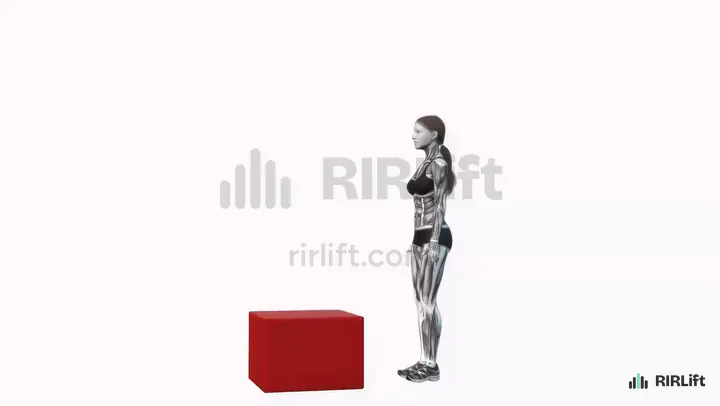
Three or four box jumps bring the hips and legs to full power, the same extension as coming off the ball.

How to do it

  1. Stand a short step from a box or bench of modest height.
  2. Swing your arms back, dip into a quarter squat, and jump up onto the box.
  3. Land softly with both feet flat and your knees bent.
  4. Stand up, step down, and reset before the next jump.

Cues

  • Swing, dip, jump
  • Land quiet
  • Step down, don't jump down

Common mistakes

  • Choosing a box so high you land in a deep squat: pick one you land on in a quarter squat.
  • Jumping down off the box between reps: step down each time.

Swap for: Lateral Box Jump, Single-Leg Box Jump, Med Ball Jump

Build a session with Box Jump

Primer, lateral push

Skater Hop

Glutes, Quads, Abductors

Skater hops rehearse a hard push and landing on one leg, like a jump cut or a change of direction.

How to do it

  1. Begin in a small single-leg squat on one foot.
  2. Bound laterally to the other foot and swing the free leg behind the standing one.
  3. Touch the floor with the hand opposite the landing foot if you like.
  4. Bound back and keep alternating, getting a little farther each time.

Cues

  • Lateral push
  • Soft landing
  • Grow the distance

Common mistakes

  • Knee falling inward on the landing: keep it over your second toe.
  • Bouncing straight out without a pause: control the landing first.

Swap for: Lateral Box Jump, Single-Leg Jump, Fast Feet

In the weight room: ramp up the first lift

On weight room days the warm-up ends at the squat rack: three lighter sets of the back squat that climb to your working weight, after the body warm-up and the box jumps. RIRLift logs those lighter sets as warm-up sets, separate from your working sets.

Lower-body strength for the line of scrimmage

Barbell Back Squat

Quads, Glutes, Adductors

On weight room days the warm-up ends at the squat rack: three lighter sets of the back squat that climb to your working weight, after the body warm-up and the box jumps..

How to do it

  1. Set the bar on your upper back below the bony part of your neck and step out of the rack.
  2. Stand with feet about shoulder width and brace your trunk.
  3. Sit down between your heels to your usual depth.
  4. Drive up to standing. Use the warm-up sets to climb toward your working weight.

Cues

  • Brace before every rep
  • Knees follow the toes
  • Climb the weight gradually

Common mistakes

  • Jumping straight to the working weight: take the ramp sets.
  • Losing the brace at the bottom: breathe in and hold before you descend.

Swap for: Front Squat, Goblet Squat, Box Squat

Put them together: example sessions

Each session below picks from the exercises above for one situation, with the sets, reps, rest and RIR filled in. Open one in the session builder to change a pick, price it from a recent set, and add it to RIRLift.

Session 1

Game day, before position drills

Open in the session builder
  • Workouts1× a week
  • Working sets15 a week
  • Per workout~20 min
  • EquipmentResistance Bands, Plyo Box

You have a team warm-up window before individual and group work.

This is the page's full order at 3 to 5 reps in reserve: warm-up, mobility, activation, then explosive primers that climb to near full speed. Keeping every block short and the effort light means you show up to the first snap fast, not tired.

Game Warm-Up
ExerciseSets × repsRIRRest
Jumping JackSeconds. 1 × 60 4 0 s
High KneesSeconds. 1 × 20 4 10 s
Butt KicksSeconds. 1 × 20 4 10 s
Walkout 1 × 4 4 0 s
Leg SwingsPer leg. 1 × 10 5 0 s
Cossack SquatPer side. 1 × 6 4 10 s
Bear CrawlSeconds. 1 × 20 4 15 s
Lateral Band WalkSteps each way. 1 × 10 4 15 s
Dead BugPer side. 1 × 6 4 15 s
Fast FeetSeconds. 2 × 8 3 15 s
Box JumpStep down every rep. 2 × 3 3 30 s
Skater HopPer side. 2 × 5 3 20 s
How to run it
Run it as a team in lines, then split into position groups.
How to progress
Keep it identical every week. If you feel slow early, add one more start at 90 percent before position drills.

Session 2

Practice day

Open in the session builder
  • Workouts5× a week
  • Working sets50 a week
  • Per workout~10 min
  • EquipmentResistance Bands

You practice four or five days a week and need a warm-up that fits before team periods.

Practice days repeat this many times a week, so the version drops the box jumps (the first drills will do that job) and adds a second set of band walks and dead bugs at 2 to 3 reps in reserve. Those few extra sets each day add up across a season.

Practice Warm-Up
ExerciseSets × repsRIRRest
Jumping JackSeconds. 1 × 60 4 0 s
High KneesSeconds. 1 × 20 4 10 s
Walkout 1 × 4 4 0 s
Leg SwingsPer leg. 1 × 10 5 0 s
Bear CrawlSeconds. 1 × 20 4 15 s
Lateral Band WalkSteps each way. 2 × 10–15 2 20 s
Dead BugPer side. 2 × 6–10 2 20 s
Fast FeetSeconds. 1 × 8 3 0 s
How to run it
Do it before stretch lines or in place of them.
How to progress
Add a step to the band walks and a rep to the dead bugs each week, up to 15 and 10.

Session 3

Weight room day

Open in the session builder
  • Workouts2× a week
  • Working sets20 a week
  • Per workout~25 min
  • EquipmentResistance Bands, Plyo Box, Barbells

You lift in season or off-season and want to warm up for squats.

The body warm-up shrinks to what the squat needs, then the back squat opens with three ramp-up sets logged as warm-up sets, climbing from the empty bar to your working weight. Working sets stop at 2 to 3 reps in reserve so you keep strength rising without leaving the legs dead for practice.

Lift Day
ExerciseSets × repsRIRRest
Jumping JackSeconds. 1 × 60 4 0 s
Walkout 1 × 5 4 0 s
Cossack SquatPer side. 1 × 6 4 10 s
Lateral Band WalkSteps each way. 1 × 10 4 15 s
Box JumpStep down every rep. 3 × 3 3 45 s
Barbell Back Squat3 warm-up sets firstWorking sets after the ramp-up. 3 × 5 2 3 min
How to run it
Do this before the lifting session. The box jumps go before the squat so the jumps are fresh and fast.
How to progress
When every working set reaches 5 reps at 2 or more in reserve, add 5 to 10 pounds next session.

Make it fit you

Questions

What are some good warm-ups for football?

Jumping jacks, high knees, butt kicks, walkouts, leg swings, cossack squats, bear crawls, band walks, dead bugs, quick feet, box jumps and starts from your stance. In that order they warm you up, open the hips, switch on the glutes and trunk, then build to full speed.

What are good 5-minute warm-ups for football players?

One minute of jacks, one of high knees and butt kicks, one of walkouts and leg swings, one of band walks, and one of fast feet with a couple of starts. It is short, but it covers every stage.

How do you warm up before a football game?

Start with easy movement, then dynamic mobility, then glute and trunk activation, then explosive primers like jumps and starts at rising speed. Position drills follow.

Should football players static stretch before games?

Before the game, moving drills prepare you better. Long holds are better after the game.

What are fun warm-up drills for kids playing football?

Relay races with high knees and bear crawls, follow-the-leader through the moves, and starts on a whistle. Keep the order, make it a game.