
Seated cable row alternatives for the gym and home
Published October 23, 2026
The best seated cable row alternative is a chest-supported row machine: you stay upright and supported and can row just as heavy. If only a low pulley is free, do a standing cable row; at home, an incline dumbbell row or a one-arm dumbbell row is the closest match. With no weights, row a band, suspension straps or your body under a bar.
- Row station taken Chest-Supported Row Supported, upright and just as heavy.
- Any free low pulley Standing Cable Row Same cable pull from a hinge, no seat needed.
- Barbell and a bench Seal Row Chest down on the bench, so your lower back stays out of it.
- Dumbbells and a bench Incline Dumbbell Row The closest home match: torso supported, no swing.
- One dumbbell One-Arm Dumbbell Row Your heaviest row at home, with a long stretch.
- Just a band Band Bent-Over Row Gets harder at the squeeze, the way a cable does.
- Suspension straps TRX Row Your bodyweight as the load, adjusted with your feet.
- Pull-up bar only Archer Pull-Up Heavy one-side pulling with no weights at all.
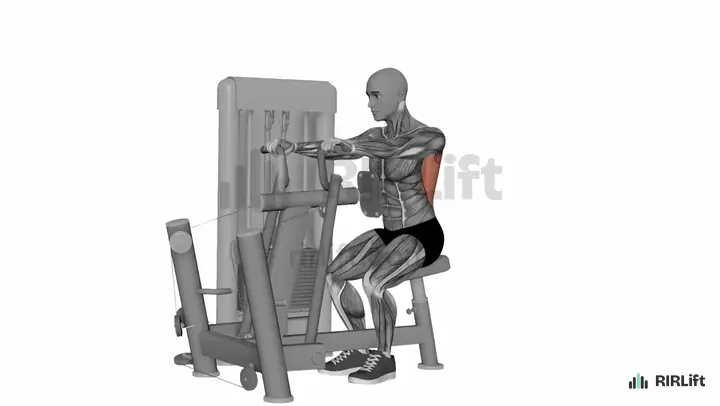
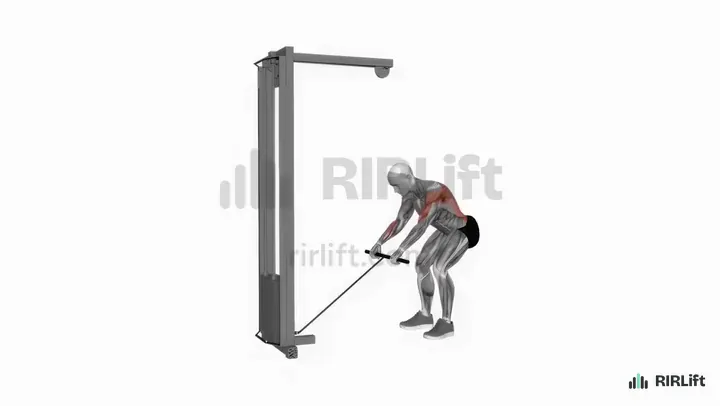
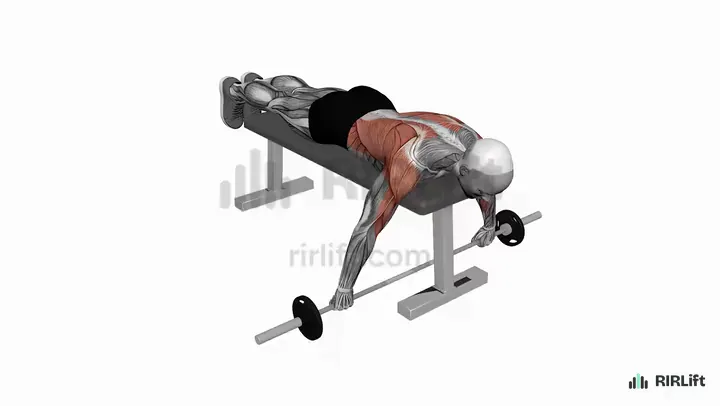
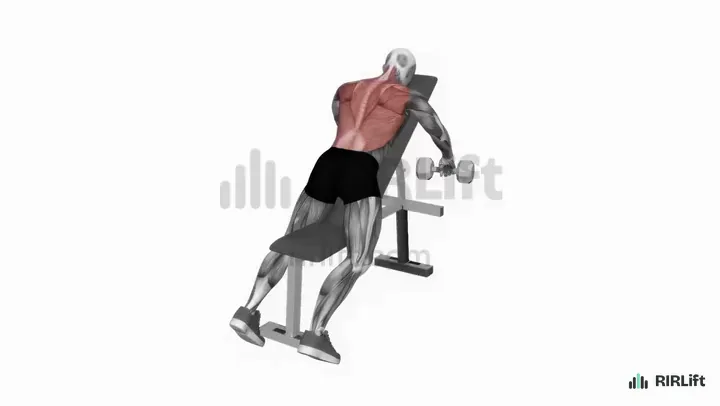
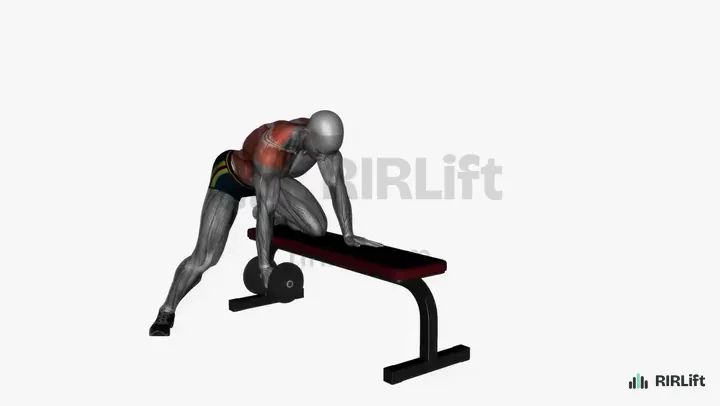
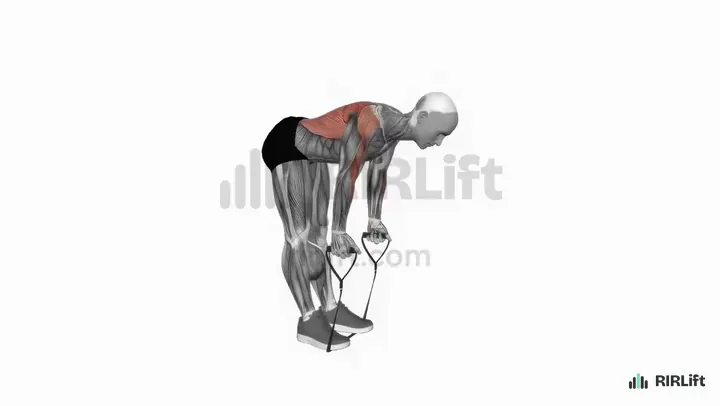
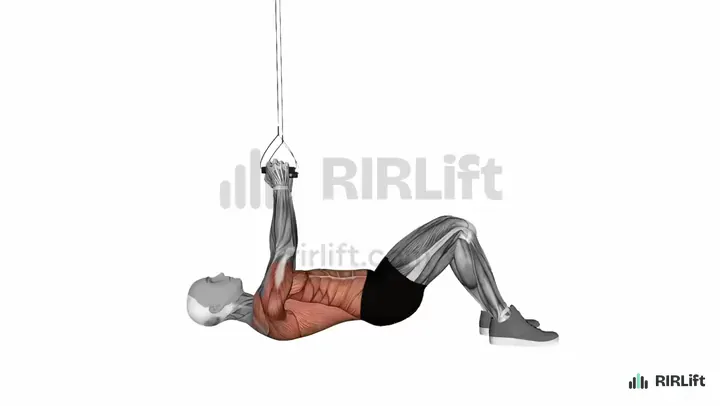
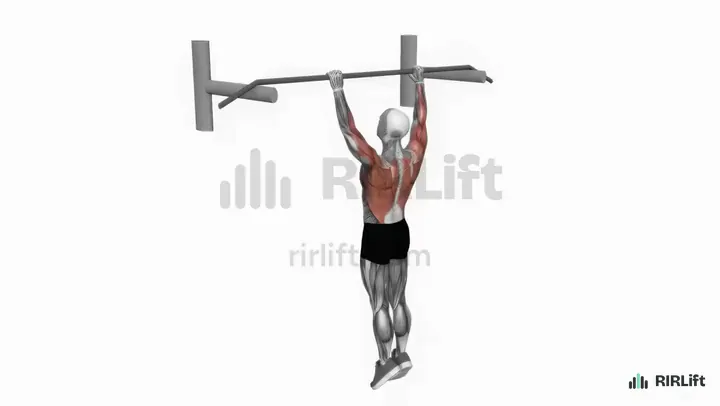
What a seated cable row alternative has to replace
The seated cable row trains your mid back (rhomboids and middle traps) and your lats, with your rear delts and biceps helping. The cable pulls all the way, so the muscles stay loaded both at the squeeze and at the front, where your shoulder blades are stretched forward. Sitting upright with your feet braced keeps your lower back out of it.
A replacement should let you pull your elbows past your torso against real load and reach long at the start of each rep.
Example sessions without the seated cable row
-
Session 1
Gym, row station always taken
You train in a busy gym and the seated cable row is never free when you need it.
2× a week · 22 sets a week · ~30 min
-
Session 2
Home, dumbbells and a bench
You have adjustable dumbbells and a bench that inclines, and no cables.
2× a week · 22 sets a week · ~25 min
-
Session 3
Home, no weights at all
You have a pull-up bar, a set of suspension straps and a long band, and no weights.
3× a week · 33 sets a week · ~25 min
Session 1
Gym, row station always taken
- Workouts2× a week
- Working sets22 a week
- Per workout~30 min
- EquipmentSeated Row Machine, Lat Pulldown, Cable Row
You train in a busy gym and the seated cable row is never free when you need it.
The chest-supported row machine takes the seated row's place at the same reps, because it is the closest match. A lat pulldown adds the overhead pull and a standing cable row on any free pulley finishes the session. 11 working sets.
| Exercise | Sets × reps | RIR | Rest |
|---|---|---|---|
| Chest-Supported Row1 warm-up set first | 4 × 8–12 | 2 | 2 min |
| Lat Pulldown | 4 × 8–12 | 2 | 90 s |
| Standing Cable Row | 3 × 10–12 | 2 | 90 s |
- How to run it
- Once or twice a week as your back session, or split across two upper-body days.
- How to progress
- When every set of a lift reaches the top of its rep range at the RIR shown, add the smallest weight jump next session and start again at the bottom of the range.
Session 2
Home, dumbbells and a bench
- Workouts2× a week
- Working sets22 a week
- Per workout~25 min
- EquipmentDumbbells, Incline Bench
You have adjustable dumbbells and a bench that inclines, and no cables.
The one-arm row is the heavy lift here, since one hand on the bench lets you use your heaviest dumbbell. The incline row copies the seated row's supported torso, and a bent-over row with both dumbbells adds volume at higher reps. 11 working sets.
| Exercise | Sets × reps | RIR | Rest |
|---|---|---|---|
| One-Arm Dumbbell Row1 warm-up set firstSets are per arm. | 4 × 8–12 | 2 | 90 s |
| Incline Dumbbell Row | 4 × 10–15 | 1 | 75 s |
| Dumbbell Bent-Over Row | 3 × 12–15 | 1 | 1 min |
- How to run it
- Twice a week on non-consecutive days.
- How to progress
- Add reps until every set reaches the top of its range, then go up a dumbbell. At your heaviest pair, slow the lowering to three seconds.
Session 3
Home, no weights at all
- Workouts3× a week
- Working sets33 a week
- Per workout~25 min
- EquipmentPull-Up Bar, Suspension Trainer, Resistance Bands
You have a pull-up bar, a set of suspension straps and a long band, and no weights.
Archer pull-ups put the most load on your back without weights, so they come first at low reps. Strap rows and band rows then copy the seated row's horizontal pull at higher reps, with every set close to failure. 11 working sets.
| Exercise | Sets × reps | RIR | Rest |
|---|---|---|---|
| Archer Pull-UpReps are per side. | 4 × 3–6 | 2 | 2 min |
| TRX Row | 4 × 10–20 | 1 | 1 min |
| Band Bent-Over Row | 3 × 15–25 | 1 | 45 s |
- How to run it
- Two or three times a week.
- How to progress
- On archer pull-ups, add a rep per side each week until you reach 6, then slow the lowering. On strap and band rows, go to the top of the range, then walk your feet forward or use a thicker band.
Make it fit you
-
Lower back tires on bent-over rows
Stay with the supported options: the chest-supported machine, incline dumbbell row, seal row or one-arm row braced on a bench.
-
More upper back or more lats
Elbows out to about 45 degrees and pulling to your lower chest works the upper back. Elbows tucked and pulling toward your hips works the lats.
-
No bench at home
Use the two-dumbbell bent-over row or the band row, or brace one hand on a sturdy chair for the one-arm row.
-
Light dumbbells only
Row one arm at a time, pause two seconds at the top and lower over three seconds, and take sets to 15 to 20 reps.
-
Keep one swap for the block
Pick one main row and keep it for six to eight weeks, so the weight you log on it shows real progress.
Questions
What can I do instead of a seated cable row?
A chest-supported row machine is the closest swap. Other good picks are the standing cable row, seal row, incline dumbbell row and one-arm dumbbell row.
How do you do seated rows at home without a machine?
Lie chest-down on an incline bench and row two dumbbells, or brace one hand on a bench and row one. With no weights, row a long band or suspension straps.
How do you do a seated row with dumbbells?
You cannot copy the seated position exactly, but the incline dumbbell row gets closest: chest on the bench, arms hanging long, elbows driving past your ribs.
Can you do seated cable rows without a bench?
Yes. Sit on the floor with your feet braced against something solid, or do a standing cable row from a hinge at any low pulley.
How effective are seated cable rows?
Very. They load the mid back and lats through a full range with your torso supported. Any of the swaps here can do the same job if you take sets close to failure.
What is a good alternative to hammer strength low rows?
The chest-supported row machine, a one-arm dumbbell row or a one-arm cable row. All three keep the low, supported pull with a long stretch.
Related templates
-
Seated cable row: form, grip and the best alternatives
Form and programming for the row these swaps replace.
-
One-arm cable row: how to do it standing, seated or kneeling
The full how-to for the single-arm cable swap.
-
Dumbbell row: how to do the one-arm row and get your back to do the work
The one-arm dumbbell row, set up step by step.
-
The best workout for back: width, thickness and traps
Full back sessions combining these rows with pulldowns.
-
Back exercises at home: with a bar, weights, bands or no equipment
More rows and pulls for a home setup.