
Shoulder exercises for women: shape, strength and posture
Published October 19, 2026
The best shoulder exercises for women are the lateral raise in its dumbbell, cable or machine version for the rounded side of the shoulder, the dumbbell or machine shoulder press for strength, and the reverse pec deck and face pull for the back of the shoulder and posture. Two short sessions a week of one press, one or two side raises and one rear delt move, 2 to 3 sets each, ending 0 to 2 reps short of failure, is enough to see the shoulders change.
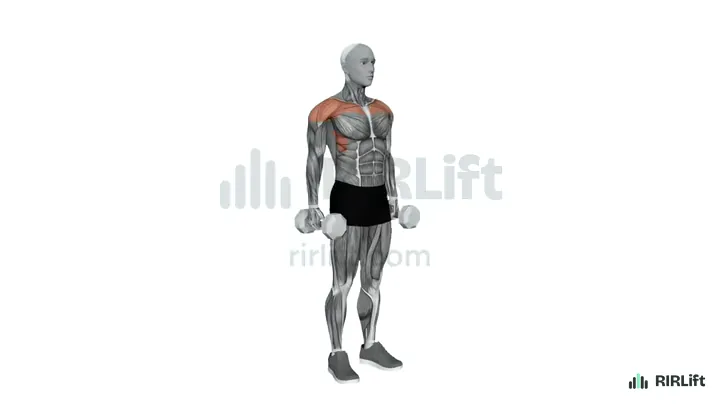
- Dumbbell Lateral Raise Shoulders
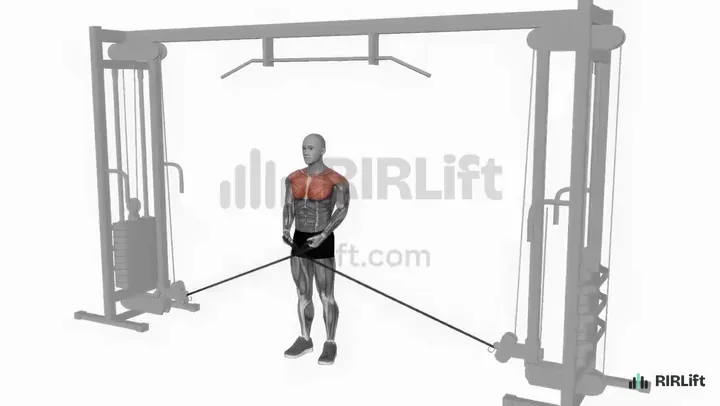
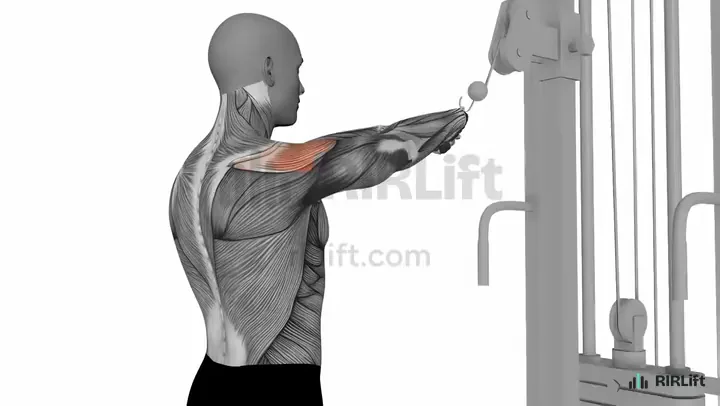
- Cable Lateral Raise Shoulders
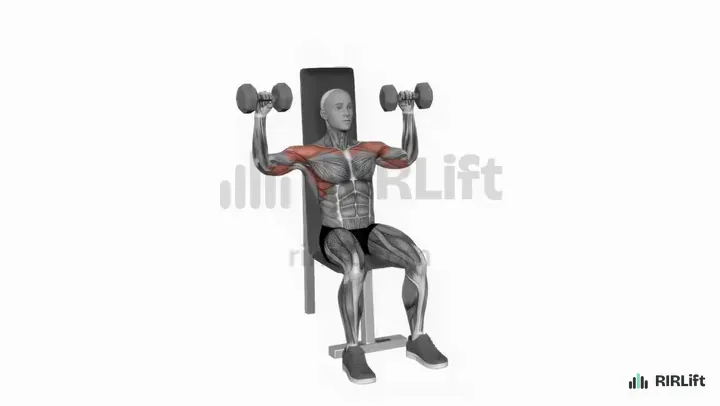
- Dumbbell Shoulder Press Shoulders
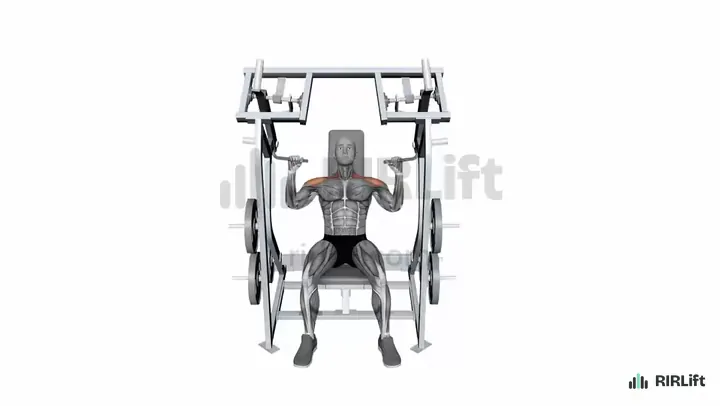
- Machine Shoulder Press Shoulders
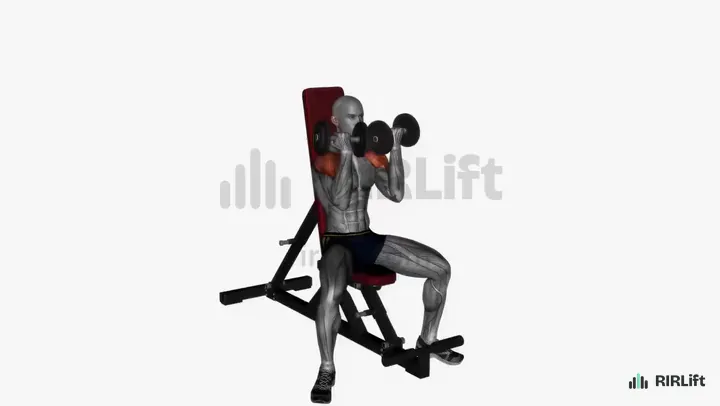
- Arnold Press Shoulders
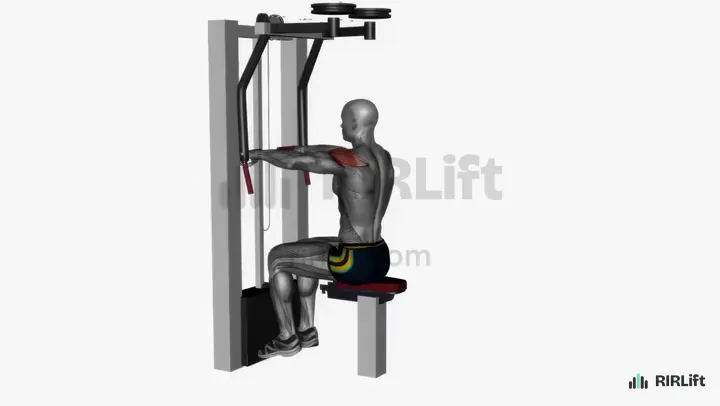
- Reverse Pec Deck Shoulders
- Face Pull Shoulders, Upper Back
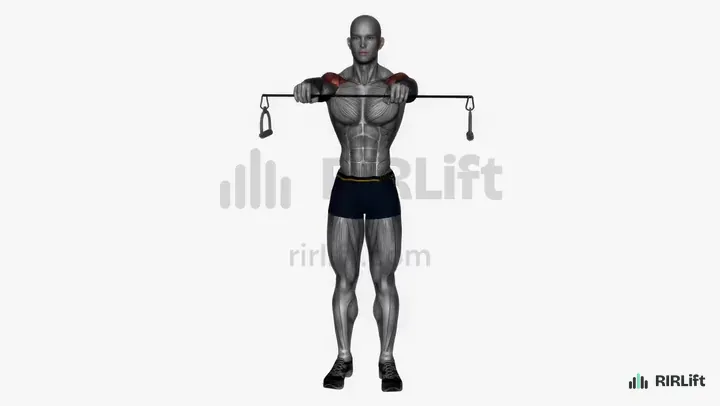
- Band Pull-Apart Shoulders, Upper Back
Put them together: example sessions
Each session below picks from the exercises above for one situation, with the sets, reps, rest and RIR filled in. Open one in the session builder to change a pick, price it from a recent set, and add it to RIRLift.
-
Session 1
At the gym, machines and cables
You train at a gym and want a shoulder session you can do with confidence, without free-weight pressing.
2× a week · 26 sets a week · ~30 min
-
Session 2
At home, dumbbells and a band
You have a few pairs of dumbbells, an adjustable bench and a light band at home.
2× a week · 18 sets a week · ~20 min
-
Session 3
20 minutes after a lower-body day
Your program focuses on glutes and legs, and you want to add shoulders without another gym day.
2× a week · 24 sets a week · ~15 min
Session 1
At the gym, machines and cables
- Workouts2× a week
- Working sets26 a week
- Per workout~30 min
- EquipmentShoulder Press, Lateral Raise Machine, Adjustable Cable, Fly Machine
You train at a gym and want a shoulder session you can do with confidence, without free-weight pressing.
Machines guide the path, so this plan puts effort into the muscle rather than balance. The machine press is the heavy lift. The side delts get two exercises because they shape the shoulder most. The reverse pec deck and face pull cover the back. Machines are safe to push close to failure, so the isolation sets go to 0 to 1 RIR.
| Exercise | Sets × reps | RIR | Rest |
|---|---|---|---|
| Machine Shoulder Press1 warm-up set first | 3 × 8–12 | 2 | 2 min |
| Machine Lateral Raise | 3 × 12–15 | 1 | 1 min |
| Cable Lateral RaisePer arm. | 2 × 12–20 | 0 | 1 min |
| Reverse Pec Deck | 3 × 12–20 | 1 | 1 min |
| Face Pull | 2 × 12–20 | 1 | 1 min |
- How to run it
- Do it once or twice a week, on its own or after a lower-body day. Keep the order: press first, then side delts, then rear delts.
- How to progress
- Add a rep each session until you reach the top of the range, then add the smallest weight step. The machine press can move up every week or two at first.
Session 2
At home, dumbbells and a band
- Workouts2× a week
- Working sets18 a week
- Per workout~20 min
- EquipmentDumbbells, Resistance Bands
You have a few pairs of dumbbells, an adjustable bench and a light band at home.
The dumbbell press and Arnold press give two different pressing angles with the same weights. The lateral raise is done at 0 RIR, since it is light and safe to push. The rear delt fly and pull-apart cover the back of the shoulder without a machine. Two sessions give each part of the shoulder at least 6 sets a week.
| Exercise | Sets × reps | RIR | Rest |
|---|---|---|---|
| Dumbbell Shoulder Press1 warm-up set first | 3 × 8–12 | 1 | 2 min |
| Dumbbell Lateral Raise | 3 × 12–20 | 0 | 1 min |
| Dumbbell Rear Delt Fly | 3 × 12–20 | 1 | 1 min |
Open Day A in the session builder
| Exercise | Sets × reps | RIR | Rest |
|---|---|---|---|
| Arnold Press | 3 × 10–12 | 1 | 90 s |
| Dumbbell Lateral RaiseLighter, 3 s down. | 3 × 15–20 | 0 | 1 min |
| Band Pull-Apart | 3 × 15–25 | 1 | 45 s |
Open Day B in the session builder
- How to run it
- Alternate Day A and Day B, two days a week with at least one day between.
- How to progress
- Work every set to the top of its rep range, then move up one dumbbell. If the jump is too big for the lateral raise, do higher reps with the old weight and slow the lowering.
Session 3
20 minutes after a lower-body day
- Workouts2× a week
- Working sets24 a week
- Per workout~15 min
- EquipmentLandmine, Adjustable Cable, Dumbbells
Your program focuses on glutes and legs, and you want to add shoulders without another gym day.
This plan adds shoulders to the end of your lower-body sessions. Each exercise is paired with another, so 20 minutes is enough. The landmine press needs little setup and goes easy on the shoulders after a tiring leg day. The Y-raise and lateral raise build shape; the face pull covers the back. RIR is 1 to 2 so it doesn't eat into recovery for your next leg day.
| Exercise | Sets × reps | RIR | Rest |
|---|---|---|---|
| A1 Landmine PressPer arm. | 3 × 8–12 | 2 | 30 s |
| A2 Face Pull | 3 × 12–20 | 1 | 1 min |
| B1 Dumbbell Chest-Supported Y Raise | 3 × 10–15 | 1 | 30 s |
| B2 Dumbbell Lateral Raise | 3 × 12–20 | 1 | 1 min |
- How to run it
- Do it after two of your lower-body sessions each week. Run each pair back to back, then take the listed rest.
- How to progress
- Add a rep per session until the top of the range, then add weight. If your legs are what you are focused on, keep the sets the same and just add load over time.
Make it fit you
-
New to lifting
Start with the gym machines plan. Machines let you push hard with little technique to learn; move to dumbbell presses after a few weeks when the machine path feels natural.
-
Training shoulders with a glute focus
Use the add-on plan after leg days rather than a separate shoulder day. Shoulders recover quickly from 10 to 12 sets a week, so they fit around heavy lower-body work.
-
Overhead pressing feels uncomfortable
Swap the dumbbell press for the landmine press, and use cable or machine lateral raises. Keep the rear delt work, which most people tolerate well.
-
Want defined shoulders
Prioritize lateral raises and keep the sets close to failure. Training builds the muscle; how visible it is depends on body fat, which changes with diet across your whole body rather than with extra shoulder reps.
-
Log RIR on every set
Log each set's reps and RIR in RIRLift. Lateral raises use small weights, so a set that drops from 2 RIR to 0 at the same weight tells you more about your progress than the number on the dumbbell.
Questions
Will shoulder exercises make women look bulky?
Not without years of deliberate effort. Building noticeably large shoulders takes heavy training, lots of sets and eating more than you burn for a long time. Two or three shoulder sessions a week mostly add shape and definition, and you can stop adding volume whenever you like the look.
How can I get defined shoulders?
Train the side delts directly with lateral raises at least twice a week, take sets close to failure, and keep the rear delts in balance with face pulls or reverse flies. Visible definition also depends on overall body fat.
What are 7 good exercises for strengthening the shoulders?
The dumbbell shoulder press, machine shoulder press, landmine press, lateral raise, chest-supported Y-raise, reverse pec deck and face pull. Together they train the front, side and rear delts and the upper back.
How often should women train shoulders?
Twice a week works well for most people. The shoulders recover quickly, and splitting the weekly sets into two sessions keeps each one short and the quality high.
What weight should I use for lateral raises?
Lighter than most people expect: often 2 to 6 kg to start. Pick a weight you can lift level with your shoulders, smoothly, for 12 to 20 reps, stopping 1 to 2 reps short of failure.
Should women train shoulders differently from men?
No. The exercises, sets and effort that build shoulders work the same way for everyone. What changes is the goal: if shape is the priority, spend more of your sets on lateral raises and rear delts than on heavy pressing.
Related templates
-
Upper body exercises for women: back, chest, shoulders and arms
Add back, chest and arm work around these shoulder moves.
-
Arm exercises for women: firm, strong arms at home or at the gym
Pair the shoulder plans with biceps and triceps work.
-
Lateral raises: how to do them, and what to do instead
Every lateral raise variation for the side delts.
-
The best workout for women, for your week
Full programs that already include shoulder sessions.
-
Shoulder exercises at the gym: machines, cables and bars
More machine and cable options for the shoulder.