Shrug alternatives: other ways to build your traps

The best shrug alternative is the trap bar shrug, because the handles sit at your sides and the bar holds more weight than any pair of dumbbells. With dumbbells, a standing or incline dumbbell shrug trains the same upper traps. If shrugging hurts your shoulders, farmer's walks and rack pulls load your traps heavy without moving your shoulders up and down; face pulls add the middle traps shrugs miss.

What a barbell shrug alternative has to replace

Upper traps, direct barbell work

Barbell Shrug

Traps

Holding a heavy bar at arm's length and lifting your shoulders straight up loads your upper traps more directly than any other lift. It is the movement every swap below is trying to replace.

How to do it

  1. Deadlift the bar to standing or lift it from a rack at hip height, hands just outside your thighs.
  2. Stand tall with your arms straight and shoulders relaxed down.
  3. Raise your shoulders vertically toward your ears, all the way up, and hold for a second.
  4. Lower slowly to a full stretch at the bottom.

Cues

  • Shoulders to your ears
  • Pause at the top
  • Arms stay straight

Common mistakes

  • Rolling the shoulders in circles: shrug straight up and down; rolling adds nothing.
  • Bending the elbows to help: the arms are only hooks, so keep them straight.

Swap for: Dumbbell Shrug, Trap Bar Shrug, Farmer's Walk

The barbell shrug trains your upper traps, the muscle between your neck and shoulders, by lifting your shoulders straight up under a heavy load. It works hardest at the top, so a replacement needs either a full shrug with a pause or a heavy load your traps have to hold.

Other shrugs

Same movement, different tool. Shrug straight up, hold the top for a second and lower slowly.

RIRLift's swap with dumbbells

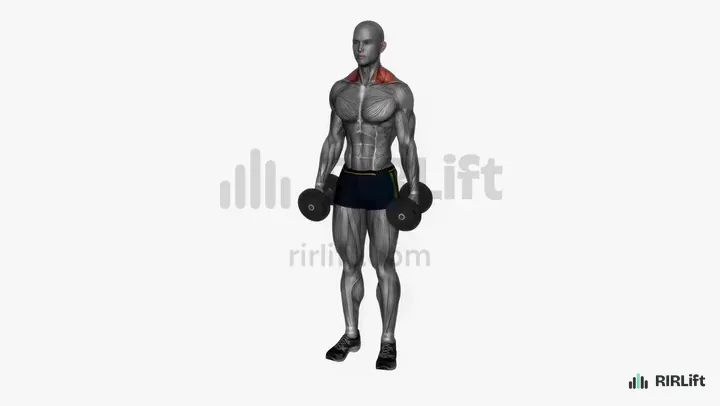
Dumbbell Shrug

Traps

The same straight-up shrug with the weights at your sides instead of in front of your thighs, so nothing rubs your legs and your shoulders can rise a little higher. This is what RIRLift puts in the barbell shrug's place when you train with dumbbells.

How to do it

  1. Stand tall holding a dumbbell at each side, palms facing in, arms straight.
  2. Lift your shoulders straight up toward your ears as high as they go.
  3. Hold the top for one full second.
  4. Lower slowly until your shoulders are fully dropped, then repeat.

Cues

  • Straight up, not rolled
  • One-second hold at the top
  • Arms stay straight

Common mistakes

  • Rolling the shoulders in a circle: it adds nothing for the traps and is hard on the joint. Up and down only.
  • Bending the elbows to lift the dumbbells higher: that is your biceps helping. Lighten the load and keep the arms long.

Heaviest swap, easy setup

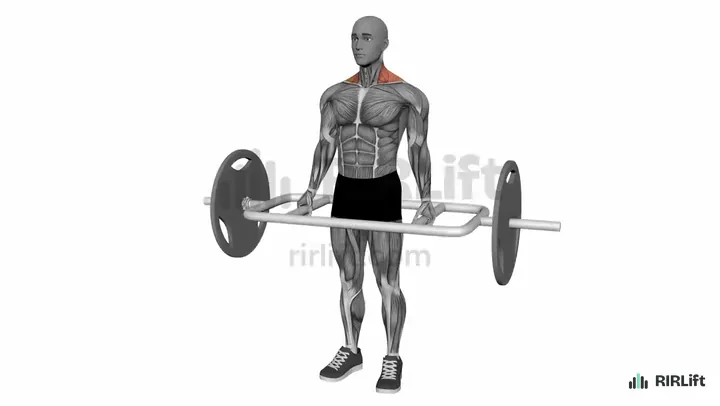
Trap Bar Shrug

Traps

The handles sit at your sides like dumbbells, but the bar loads in plate jumps well past most dumbbell racks. Pick it when your gym has a trap bar and you want to shrug heavy.

How to do it

  1. Load the trap bar, step into the middle and set your feet about shoulder-width apart.
  2. Squat down with a flat back, take the handles palms-in and stand up tall with the bar at arm's length.
  3. Lift your shoulders straight toward your ears as high as they go, arms long.
  4. Hold for a second, then lower until your traps are fully stretched, and repeat.

Cues

  • Stand in the center
  • Straight up, straight down
  • Pause at the top

Common mistakes

  • Standing off-center so the bar tips forward or back: shift until it hangs level before the first rep.
  • Bending the knees to bounce the weight up: keep your legs still and let only the shoulders move.

With kettlebells

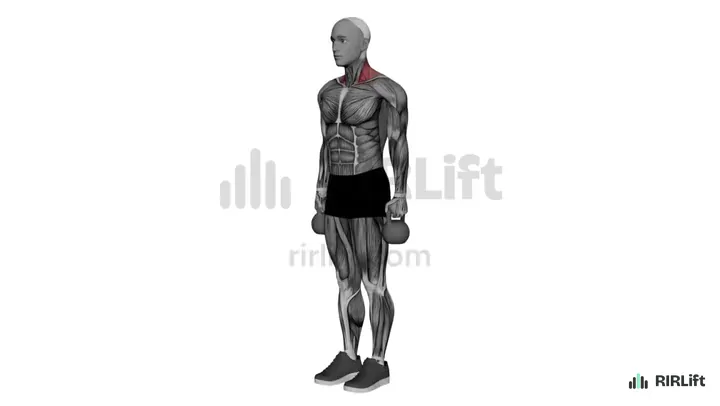
Kettlebell Shrug

Traps

A bell in each hand at your sides trains the same upper traps. Use it when kettlebells are what you own.

How to do it

  1. Stand tall holding a kettlebell in each hand at your sides.
  2. Keep your arms straight.
  3. Lift your shoulders straight up toward your ears as high as they go.
  4. Hold for a second, then lower all the way down.

Cues

  • Straight up, not rolled
  • Hold one second
  • All the way down

Common mistakes

  • Rolling your shoulders in circles: just lift and lower.
  • Bending the elbows to help: arms stay long; the traps do it.

Upper and middle traps

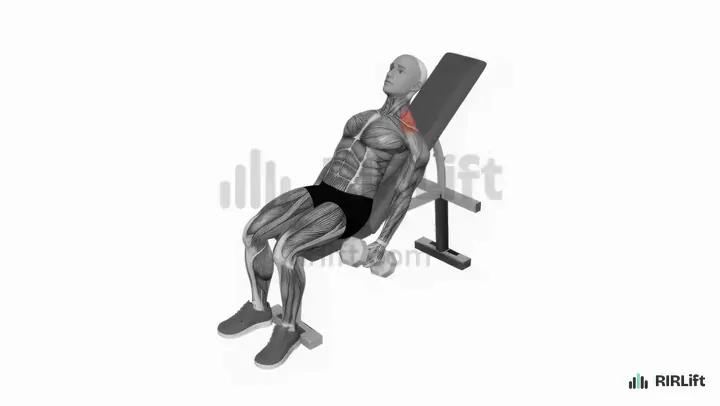
Incline Dumbbell Shrug

Traps

Sitting back against an incline bench lets you shrug up and slightly back, which brings in more of the middle traps than a standing shrug. The bench also keeps you from leaning or bouncing.

How to do it

  1. Set a bench to about 45 degrees and sit back against it, a dumbbell in each hand, arms hanging at your sides.
  2. Shrug your shoulders up and slightly back toward the bench, keeping your arms straight.
  3. Hold for a second at the top.
  4. Lower under control until your shoulders are fully stretched, then repeat.

Cues

  • Back stays on the pad
  • Up and back, toward the bench
  • Two seconds down

Common mistakes

  • Lifting your back off the pad to get the dumbbells higher: the range is short on purpose. Stay on the bench.
  • Letting the dumbbells drop at the bottom: control the lowering so the traps work on the way down too.

Traps with the bar overhead

Barbell Overhead Shrug

Traps

Shrugging with the bar locked out above your head trains the traps in the position they hold a press, with far less weight than a regular shrug. Use it if regular shrugs feel like nothing or you press overhead a lot.

How to do it

  1. Press or push a light barbell overhead with a grip a little wider than your shoulders.
  2. Lock your elbows and brace your abs so your ribs stay down.
  3. Lift the bar a few inches higher by raising your shoulders toward your ears, keeping your arms straight.
  4. Pause for a second, lower your shoulders back down without bending your elbows, and repeat.

Cues

  • Arms locked the whole set
  • Shoulders up toward your ears
  • Ribs down, no arch

Common mistakes

  • Bending the elbows so it turns into a short press: lock them and move only your shoulders.
  • Leaning back to keep the bar up: start lighter and keep your body stacked under the bar.

Heavy pulls and carries

These load your traps with more weight than a shrug, either by holding it or by pulling it fast. Good when shrugging itself bothers your shoulders.

Traps with power

Barbell High Pull

Traps

A fast pull from the floor that ends in a shrug and a high elbow pull trains your traps explosively, with your hips doing the first part. Pick it if you want speed and size together.

How to do it

  1. Set up as for a deadlift with a grip a bit wider than your shoulders.
  2. Stand up with the bar, and as it passes your thighs, extend your hips hard and shrug.
  3. Let the momentum carry the bar up as you pull your elbows high and out, finishing near chest height.
  4. Lower the bar back to your thighs, then to the floor, and reset before the next rep.

Cues

  • Hips first, then arms
  • Elbows high and wide
  • Reset every rep

Common mistakes

  • Pulling with the arms before your hips extend: the arms take over only after the bar passes mid thigh.
  • Going so heavy the bar stalls at the belly: pick a load you can get to chest height every rep.

Heaviest traps work with a barbell

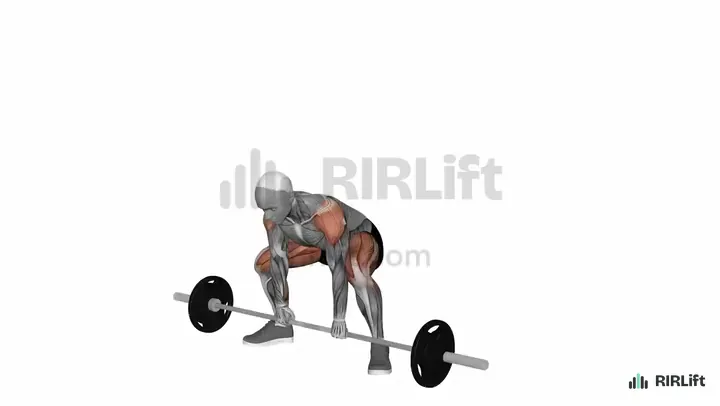
Rack Pull

Glutes, Lower Back, Traps

Pulling a bar from pins below your knees lets you hold far more weight than a shrug, and your traps work hard to keep your shoulders from being dragged down.

How to do it

  1. Set the bar on rack pins or blocks just below your knees.
  2. Stand close with your feet under your hips and grip the bar overhand just outside your thighs.
  3. Hinge until your back is flat and your shoulders are slightly in front of the bar.
  4. Drive your hips forward and stand up, pulling your shoulders back at the top, then lower the bar to the pins under control.

Cues

  • Shoulders ahead of the bar
  • Finish tall, shoulders back
  • Set it down, do not drop it

Common mistakes

  • Turning the top of each rep into a lean back: stand straight and let your traps hold the weight.
  • Loading so heavy the bar bends off the pins every rep: keep it to weights you can pull smoothly for the full set.
Build a session with Rack Pull

Swap when shrugging hurts

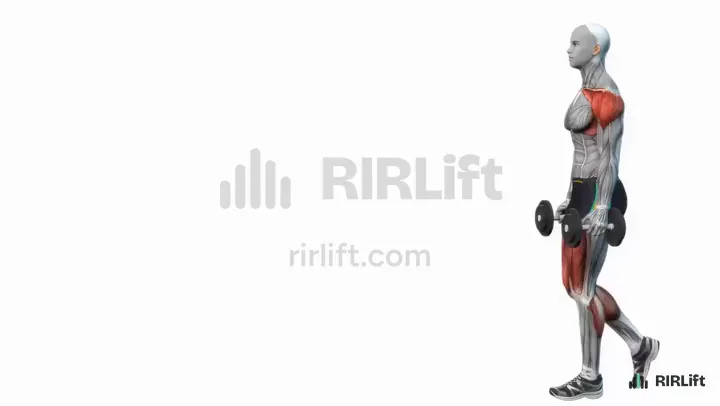
Farmer's Walk

Forearms, Traps, Shoulders

Your traps hold heavy dumbbells at your sides for the whole walk, without your shoulders moving up and down. Pick it if your shoulders click or grind on shrugs.

How to do it

  1. Pick up your two heaviest dumbbells and let them hang at your sides.
  2. Stand tall, chest up, shoulders pulled down away from your ears.
  3. Walk with short, controlled steps for the target time or distance.
  4. Set the dumbbells down with a flat back.

Cues

  • Tall posture
  • Crush the handles
  • Short steps

Common mistakes

  • Leaning to one side: hold weights of equal size.
  • Letting your shoulders round forward: pull them back as you walk.

Upright rows and face pulls

Upright rows load the upper traps with your side delts; face pulls cover the middle traps shrugs leave out.

Middle traps and rear shoulders

Face Pull

Shoulders, Upper Back

Shrugs train the top of your traps; face pulls train the middle and the rear shoulders. Add them if your goal is a thicker upper back, not just a taller neck line.

How to do it

  1. Set a rope at about forehead height on a cable and grab both ends with palms facing down.
  2. Step back until your arms are straight and there is tension on the cable.
  3. Pull the rope toward your face, spreading the ends apart and finishing with your hands beside your ears and elbows high.
  4. Return slowly to straight arms and repeat.

Cues

  • Hands beside the ears
  • Elbows high
  • Pause at the face

Common mistakes

  • Pulling toward the chest with low elbows, which turns it into a row: aim at the eyes.
  • Leaning far back to move a heavy stack: use a lighter weight and stand tall.
Build a session with Face Pull

Traps and side delts with dumbbells

Dumbbell Upright Row

Shoulders, Traps

Leading with your elbows up to shoulder height works your upper traps and side delts together. Stop at shoulder height or lower if it pinches.

How to do it

  1. Stand with one dumbbell per hand resting on your thighs, palms facing your body.
  2. Raise your elbows up and out, letting the dumbbells follow close to your body.
  3. Stop when your elbows reach shoulder height and the dumbbells are around chest level.
  4. Lower slowly to straight arms.

Cues

  • Elbows above the hands
  • Dumbbells stay close
  • Stop at shoulder height

Common mistakes

  • Pulling the elbows well above shoulder height: if your shoulder pinches, stop lower.
  • Swinging the weight up with a lean back: stand tall and lighten the dumbbells.

Bands only

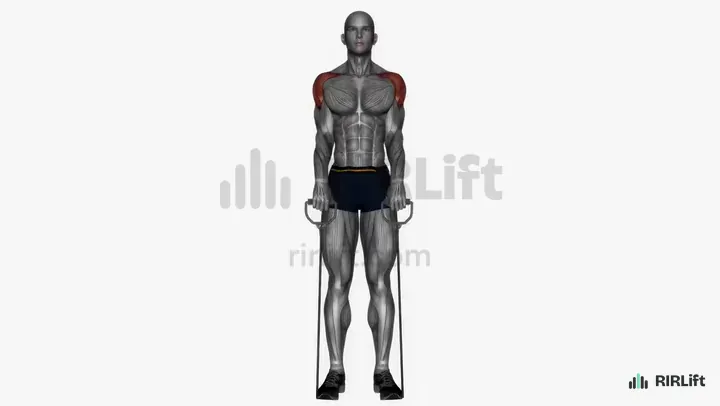
Band Upright Row

Shoulders, Traps

Standing on a band and lifting your elbows up and out loads the upper traps with no weights. The band is hardest at the top, so pause there.

How to do it

  1. Plant both feet on the middle of the band, roughly under your hips, and grip the ends palms-in toward your thighs.
  2. Keep your hands near each other and the band brushing your thighs.
  3. Lift your elbows up and out, leading with them, until your hands reach lower chest height.
  4. Pause, then lower slowly to straight arms.

Cues

  • Elbows lead, hands follow
  • Stop at chest height
  • Shoulders up toward your ears at the top

Common mistakes

  • Pulling the hands higher than your chest: stop where your elbows are level with your shoulders.
  • Leaning back to finish reps: use a lighter band or step on it with your feet closer together.

Example sessions without the barbell shrug

Session 1

Gym, shrugs bother your shoulders

Open in the session builder
  • Workouts2× a week
  • Working sets20 a week
  • Per workout~30 min
  • EquipmentBarbells, Dumbbells, Adjustable Cable

You train in a gym and barbell shrugs make your shoulders click, grind or ache.

The rack pull and farmer's walk load your traps heavy without your shoulders moving up and down, and face pulls cover the middle traps and rear shoulders. 10 working sets.

Traps and upper back
ExerciseSets × repsRIRRest
Rack Pull2 warm-up sets first 3 × 5–8 2 3 min
Farmer's WalkReps are steps. Heaviest pair you can. 3 × 20–30 1 90 s
Face Pull 4 × 15–20 1 1 min
How to run it
Add it to the end of a back or pull day, or run it as a short upper-back session once or twice a week.
How to progress
Add 5 to 10 pounds to the rack pull when every set reaches 8 reps. On the farmer's walk, add steps up to 30, then move to heavier dumbbells.

Session 2

Home, dumbbells and a bench

Open in the session builder
  • Workouts2× a week
  • Working sets20 a week
  • Per workout~20 min
  • EquipmentDumbbells, Incline Bench

You train at home with adjustable dumbbells and a bench, and no barbell.

Standing dumbbell shrugs take the barbell shrug's place, the upright row loads your traps and side delts together, and incline shrugs finish with more middle traps. Home dumbbells are often light for traps, so reps run high and close to failure. 10 working sets.

Traps
ExerciseSets × repsRIRRest
Dumbbell Shrug1 warm-up set firstOne-second hold at the top. 4 × 12–20 1 1 min
Dumbbell Upright Row 3 × 10–15 2 1 min
Incline Dumbbell Shrug 3 × 12–15 1 1 min
How to run it
Twice a week, after your back or shoulder work.
How to progress
Add reps until every set reaches the top of the range, then move up a dumbbell. At your heaviest pair, hold the top of each shrug for three seconds.

Session 3

Home gym, barbell and a rack

Open in the session builder
  • Workouts2× a week
  • Working sets20 a week
  • Per workout~30 min
  • EquipmentBarbells

You have a barbell and a rack and want something better than plain shrugs.

The high pull trains your traps fast and heavy, the overhead shrug works them in the press position with a light bar, and rack pulls give them the heaviest load you can hold. 10 working sets.

Traps
ExerciseSets × repsRIRRest
Barbell High Pull1 warm-up set firstEvery rep fast. 4 × 3–6 2 2:30 min
Barbell Overhead Shrug 3 × 10–15 2 75 s
Rack Pull 3 × 6–10 2 2:30 min
How to run it
Once or twice a week. Do the high pulls first while you are fresh, and keep every rep fast.
How to progress
On the high pull, add weight only when every rep still reaches chest height. On the rack pull, add 5 to 10 pounds when all sets reach 10 reps.

Make it fit you

Questions

What can I do instead of shrugs?

Trap bar shrugs, dumbbell shrugs and incline shrugs keep the same movement. Farmer's walks, rack pulls and high pulls load your traps heavy without a shrug.

What are the best types of shrugs?

The trap bar shrug for heavy loads, the dumbbell shrug for a full range at home, and the incline shrug for more of the middle traps. Pause at the top whichever you pick.

What muscles do incline shrugs work?

Your upper traps and more of your middle traps than a standing shrug, because you shrug up and slightly back against the bench.

What are some alternatives to dumbbell shrugs?

Kettlebell shrugs, incline dumbbell shrugs, dumbbell upright rows and farmer's walks. With a gym, the trap bar shrug lets you go heavier.

What is a better exercise than shrugs?

For the top of your traps, nothing beats a heavy shrug with a pause. For the whole upper back, rack pulls, farmer's walks and face pulls together train more of it.

Are upright rows bad for your shoulders?

They can pinch when your elbows go above shoulder height. Take a wider grip and stop with your elbows at shoulder height or lower; if it still pinches, use shrugs or farmer's walks instead.