Strength training for bone density: heavy, simple lifts done twice a week

Strength training builds bone density best with heavy, progressive lifts that load the hips and spine: the trap bar deadlift, the back squat or goblet squat, the overhead press, the leg press, rows, step-ups or lunges, back extensions and the farmer's walk. Train 2 or 3 times a week, 2 to 3 sets per lift, and work toward weights you can lift only 5 to 8 times with 1 or 2 reps to spare, because studies find the biggest bone gains near 80 to 85 percent of your one-rep max. Start lighter, keep your back flat, and add weight every week or two.

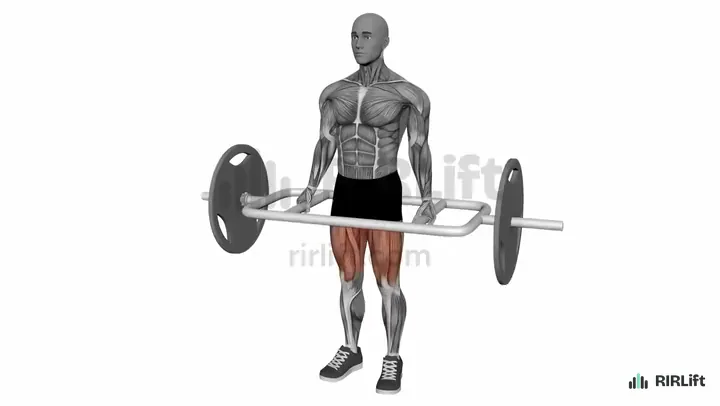
  1. Trap Bar Deadlift Quads, Glutes
  2. Barbell Back Squat Quads, Glutes, Adductors
  3. Goblet Squat Quads, Glutes
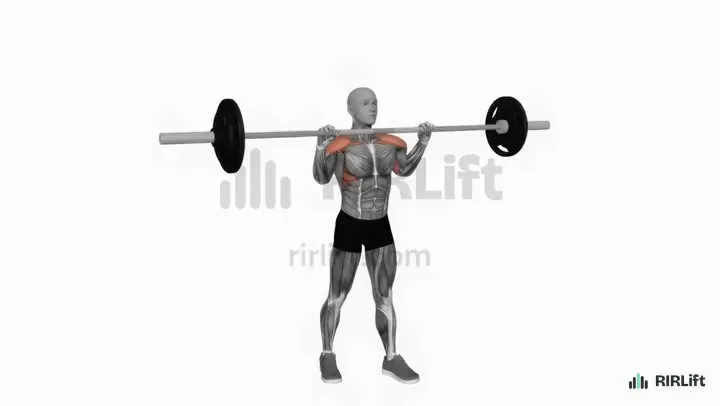
  4. Barbell Overhead Press Shoulders
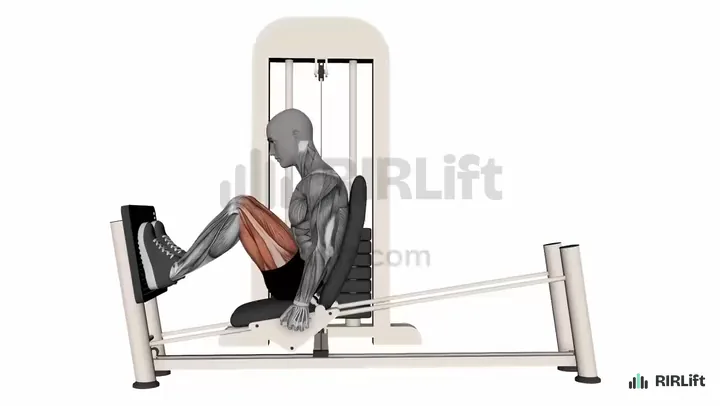
  5. Leg Press Quads, Glutes
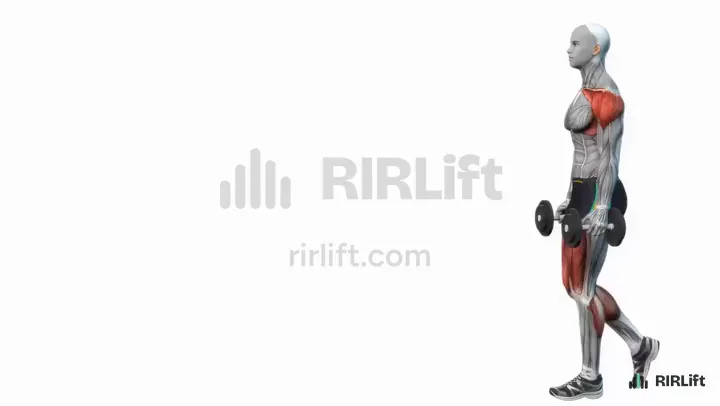
  6. Farmer's Walk Forearms, Traps, Shoulders
  7. One-Arm Dumbbell Row Lats, Upper Back
Squats: the hips and spine under load

A squat puts a heavy load through the spine, pelvis and thigh bones at once, the exact sites where bone density is measured. The back squat lets you load the most, the goblet squat is the home version with a dumbbell, and the leg press adds heavy leg work without the bar on your back.

Quads, glutes and spine, barbell squat

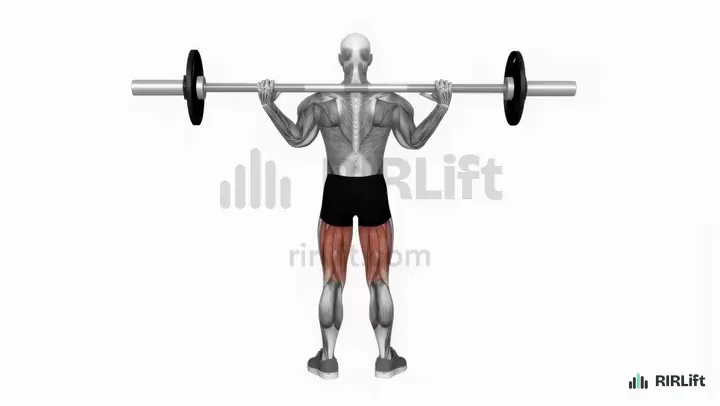
Barbell Back Squat

Quads, Glutes, Adductors

With the bar across your upper back, your spine and hips carry the load from top to bottom, and it is the lift you can load the most over time. Learn it with an empty bar and a box or bench behind you, then add weight in small steps.

How to do it

  1. Set the bar across your upper back below the neck, hands just outside your shoulders, and unrack it.
  2. Stand with your feet about shoulder-width apart, toes turned out a little.
  3. Breathe in, tighten your stomach as if bracing for a punch, and sit down between your heels.
  4. Stand back up keeping your chest and hips rising together.

Cues

  • Breathe and brace
  • Chest and hips rise together
  • Whole-foot pressure

Common mistakes

  • Hips shooting up first out of the bottom: lighten the bar and keep your chest rising with them.
  • Letting the stomach go soft between reps: re-brace at the top of each one.

Swap for: Front Squat, Box Squat

Quads and glutes, dumbbell squat

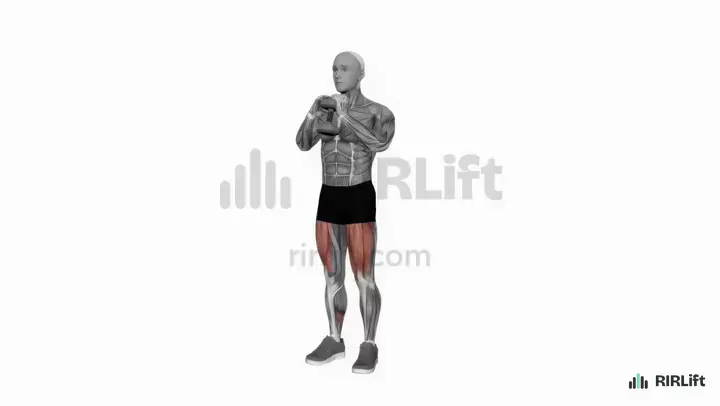
Goblet Squat

Quads, Glutes

One heavy dumbbell held at the chest loads the hips and spine without a rack or barbell, so it is the home squat for bone. Once the heaviest dumbbell you have becomes easy for 12 reps, slow the lowering to 3 seconds or move on to the back squat.

How to do it

  1. Hold a dumbbell or kettlebell vertically against your chest.
  2. Sit down between your knees, elbows inside them at the bottom.
  3. Stand up tall.

Cues

  • Elbows nudge the knees out at the bottom.
  • Chest stays up behind the weight.

Common mistakes

  • Letting the weight pull you forward.

Swap for: Bodyweight Squat, Barbell Back Squat

Quads and glutes, machine press

Leg Press

Quads, Glutes

You can push far more on the leg press than you can squat, which makes it a good way to load the hips and thigh bones heavily while you are still building up to barbell squats. Keep your lower back flat on the pad.

How to do it

  1. Sit in the machine with your whole back against the pad and your feet hip-width on the platform.
  2. Release the safety handles and bend your knees, bringing the platform toward you under control.
  3. Lower until your knees are bent to about 90 degrees or a little deeper, without your lower back curling off the pad.
  4. Press the platform away until your legs are nearly straight, and repeat.

Cues

  • Lower back stays on the pad
  • Whole foot pushes
  • Stop just short of locking out

Common mistakes

  • Going so deep that your hips roll up off the seat: stop where your back stays flat.
  • Snapping the knees straight at the top: keep a soft bend.

Swap for: 45-Degree Leg Press, Hack Squat, Barbell Back Squat

Deadlifts and back extensions

Lifting a heavy weight from the floor loads the hips and the whole spine through the muscles that hold it straight. The trap bar keeps the weight centered and your torso more upright than a straight bar, which makes it the easiest deadlift to load heavily. The 45-degree back extension trains the spinal muscles without a bar.

Glutes, hamstrings and spine, deadlift

Trap Bar Deadlift

Quads, Glutes

Lifting a heavy bar from the floor loads the hips and the full length of the spine. The trap bar puts the weight at your sides and lets you stand more upright than a straight bar, so it is the deadlift most people can load heaviest with a flat back.

How to do it

  1. Step inside the trap bar with the handles beside your feet.
  2. Push your hips back, bend your knees, and grip the handles.
  3. Flatten your back, take the slack out, and stand up by pushing the floor away.
  4. Lower under control. Each warm-up set adds weight toward your working sets.

Cues

  • Push the floor away
  • Flat back
  • Slack out before you pull

Common mistakes

  • Yanking the bar off the floor: pull the slack out first.
  • Rounding the back as the weight climbs: hold the ramp until the setup is solid.

Swap for: Barbell Deadlift, Romanian Deadlift, Kettlebell Deadlift

Spinal muscles and glutes, back extension

45-Degree Back Extension

Glutes, Hamstrings

Lowering forward from the hips and lifting back to a straight line trains the long muscles of the spine through a full range. Strong spinal muscles help hold your back straight, and holding a plate at your chest makes it a loaded exercise.

How to do it

  1. Set the pad so it sits just below your hip bones, then hook your heels under the foot rollers.
  2. Fold your arms over your chest and stand straight in line with the bench.
  3. Bend forward at the hips until you feel a stretch in your hamstrings.
  4. Lift your torso back to a straight line with your legs, squeezing your glutes, and stop there.

Cues

  • Hinge at the hips
  • Stop at a straight line
  • Squeeze your glutes at the top

Common mistakes

  • Arching back past a straight line at the top: the rep ends when your body is straight.
  • Setting the pad too high so it blocks your hips: you should be able to fold freely over it.

Swap for: Back Extension, Superman, Weighted Back Extension

Step-ups, lunges and calf raises

Standing on one leg puts your whole body weight, plus whatever you hold, through one hip, without needing a heavy bar. Step-ups and reverse lunges load each hip in turn, and calf raises load the shin and ankle bones.

Quads and glutes, single-leg step

Step-Up

Quads, Glutes

Standing up onto a box with one leg puts your body weight plus the dumbbells through one hip. That makes a modest pair of dumbbells a meaningful load for bone, which is why it suits home training.

How to do it

  1. Stand facing the bench with two dumbbells.
  2. Place one whole foot on the bench.
  3. Lean forward a little and push through the top foot to stand up on the bench.
  4. Bring the other foot up only to touch, then lower it back to the floor.
  5. Finish all reps on one leg before switching.

Cues

  • Whole foot on the bench
  • Push through the top heel
  • Lower slowly, do not drop

Common mistakes

  • Pushing off the floor with the back foot: that halves the work. Keep the trailing foot light.
  • Using a bench so high that your knee is far above your hip: you will rock instead of step.

Swap for: Barbell Step-Up

Quads and glutes, step-back lunge

Dumbbell Reverse Lunge

Quads, Glutes

Each rep loads one hip as you lower and push back up, and stepping back keeps the front knee comfortable. It adds a second single-leg exercise so the hips get loaded from more than one angle.

How to do it

  1. Start tall with a dumbbell hanging from each hand and your feet under your hips.
  2. Step one foot back and lower until your back knee is just above the floor and your front thigh is near parallel.
  3. Keep your front heel flat and your chest tall.
  4. Push through your front foot to bring the back foot forward to the start, then alternate or finish all reps on one side.

Cues

  • Front shin stays vertical
  • Back knee kisses the floor
  • Drive through the front heel

Common mistakes

  • Taking a short step so the front knee shoots forward and the heel lifts: step farther back.
  • Letting the torso twist or lean to the side as you tire; keep both dumbbells hanging straight down.

Swap for: Step-Up, Dumbbell Split Squat, Bulgarian Split Squat

Calves, standing raise

Dumbbell Standing Calf Raise

Calves

Rising onto your toes with dumbbells in your hands loads the bones of the shins, ankles and feet. Do it on a step so the heels drop below the edge, and hold the top for a second.

How to do it

  1. With a dumbbell hanging from each hand, put the balls of both feet on a step or two stacked books, hip-width apart.
  2. Let your heels sink below the step until the calves are fully stretched, and pause.
  3. Press up onto your toes as high as you can with straight knees, and hold the top briefly.
  4. Lower slowly back into the stretch and repeat.

Cues

  • Tall body, straight knees
  • Slow down, quick up
  • Weight over the big toes

Common mistakes

  • Cutting the bottom short because the step feels unstable: use a wider step or touch the wall with a fingertip.
  • Bending the knees to help at the end of a set: that turns it into a little jump and stops loading the calf.

Swap for: Single-Leg Calf Raise, Kettlebell Calf Raise

Overhead presses and rows

The wrist is one of the sites most likely to fracture, and leg exercises never load it. Pressing a weight overhead loads the arms and puts the spine under compression from above; rowing loads the arms and the upper back muscles that pull on the shoulder blades and spine.

Shoulders and triceps, standing press

Barbell Overhead Press

Shoulders

Pressing a barbell overhead while standing loads the arms and wrists and puts the whole spine under compression, with your trunk bracing to hold you straight. It is the upper-body lift that loads the most bone sites at once.

How to do it

  1. Set the bar in a rack at collarbone height and grip it just outside your shoulders, wrists stacked over your elbows.
  2. Unrack it onto your upper chest, take one step back and set your feet about hip width apart.
  3. Squeeze your glutes, brace your abs so your ribs stay down, and take a big breath.
  4. Press straight up, pulling your chin back so the bar clears your face.
  5. Once the bar passes your forehead, push your head through until the bar sits over the middle of your foot with your arms locked.
  6. Lower it along the same line to your upper chest and re-brace before the next rep.

Cues

  • Glutes tight, ribs down
  • Chin back, bar straight up
  • Head through at the top

Common mistakes

  • Leaning back to finish reps, which turns the lift into an incline press: lower the weight until your torso stays vertical for the whole set.
  • Pressing the bar forward around your face: pull your chin back and keep the bar close enough to brush your nose.
  • Stopping short of lockout: finish every rep with the bar over your mid-foot and your arms straight, or the rep doesn't count in your log.

Swap for: Dumbbell Shoulder Press, Landmine Press, Machine Shoulder Press

Shoulders and triceps, seated press

Dumbbell Shoulder Press

Shoulders

Pressing dumbbells overhead while seated against a backrest is the gentler version: the arms and wrists are loaded, and the back is supported. Use it at home or while you build up to the standing barbell press.

How to do it

  1. Set a bench upright or one notch back from vertical, sit with your feet flat, and rest a dumbbell on each thigh.
  2. Kick one knee up at a time to bring the dumbbells to shoulder height, then set your back against the pad.
  3. Turn your elbows slightly forward so they sit a little in front of your torso, palms facing forward or angled in.
  4. Drive both weights overhead on a slight inward arc until your elbows are straight, keeping your ribs down and your back on the pad.
  5. Lower slowly until the dumbbells are around ear height or a bit below, then press again.

Cues

  • Ribs down, back on the pad
  • Elbows a little forward
  • Press up and slightly in

Common mistakes

  • Arching your lower back off the pad to finish reps: that turns it into an incline press, so lighten the weight and keep your ribs stacked over your hips.
  • Flaring the elbows straight out at shoulder height: bring them a little forward so the shoulder joint stays comfortable at the bottom.
  • Stopping each rep well above your ears: lower to around ear height so the delts work through a full range.

Swap for: Barbell Overhead Press, Machine Shoulder Press, Landmine Press

Upper back and lats, one-arm row

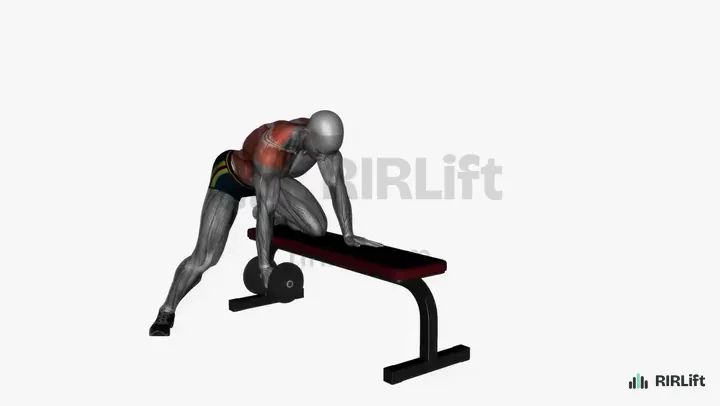
One-Arm Dumbbell Row

Lats, Upper Back
Rowing a heavy dumbbell loads the arm and wrist and works the upper back muscles that pull on the shoulder blades and spine. Supporting yourself on a bench keeps your back flat so you can row heavy.

How to do it

  1. Put one hand and the same-side knee on a bench, or your hand on a chair seat with both feet on the floor, so your back is flat.
  2. Hold a dumbbell in the other hand with your arm hanging straight.
  3. Pull your elbow back toward your hip until the dumbbell reaches your ribs.
  4. Lower it until your arm is straight again, finish all reps, then switch sides.

Cues

  • Elbow to your hip
  • Back flat as a table
  • Full stretch at the bottom

Common mistakes

  • Twisting your chest open to lift the dumbbell higher: keep both shoulders level.
  • Shrugging the shoulder up toward your ear: pull the elbow back, not the shoulder up.

Swap for: Band Bent-Over Row, Dumbbell Bent-Over Row, Seated Cable Row

Heavy carries

The farmer's walk loads your whole skeleton from the hands down while you walk, and it is easy to make heavy. It finishes any session in a few minutes.

Grip, spine and legs, heavy carry

Farmer's Walk

Forearms, Traps, Shoulders

Holding heavy dumbbells while walking loads your hands, arms, spine, hips and legs all at once. It is one of the simplest exercises to make heavy, and it loads the wrists and forearms that leg work never reaches.

How to do it

  1. Pick up two heavy dumbbells with your back flat.
  2. Stand tall with your ribs down and walk with short, quick steps.
  3. Set the weights down with a flat back when the time or distance is up.

Cues

  • Ribs down
  • Crush the handles
  • Quick steps

Common mistakes

  • Letting the shoulders round forward.
  • Walking so slowly the dumbbells start to swing.

Swap for: Dumbbell Suitcase Carry, Dumbbell Single-Arm Overhead Carry

Put them together: example sessions

Each session below picks from the exercises above for one situation, with the sets, reps, rest and RIR filled in.

Session 1

Gym, heavy barbell lifts twice a week

  • Workouts2× a week
  • Working sets22 a week
  • Per workout~40 min
  • EquipmentTrap Bar, Barbells, Dumbbells, Hyperextension

You train in a gym with a trap bar and squat rack, you have learned the lifts or are willing to learn them with a coach, and you want the loading approach that showed the largest bone gains.

Two sessions with 10 to 11 sets each, built on 3 heavy sets of 5 to 8 reps on the deadlift, squat and press. That is the 80 to 85 percent range trials link to bone gains, with 1 to 2 reps in reserve so you never grind. Warm-up sets ramp up to the working weight on the deadlift and squat.

Day A
ExerciseSets × repsRIRRest
Trap Bar Deadlift3 warm-up sets firstFlat back, push the floor away. 3 × 5–8 2 3 min
Barbell Overhead PressStanding, glutes squeezed. 3 × 5–8 2 2:30 min
One-Arm Dumbbell RowPer arm. 3 × 8–10 2 90 s
Farmer's WalkWalk 30 meters, heavy. 2 × 1 2 2 min
Day B
ExerciseSets × repsRIRRest
Barbell Back Squat3 warm-up sets firstBox behind you for depth if needed. 3 × 5–8 2 3 min
Dumbbell Reverse LungePer leg. 3 × 8–10 2 2 min
45-Degree Back ExtensionHold a plate at your chest when 12 is easy. 3 × 10–12 2 90 s
Dumbbell Standing Calf Raise 2 × 10–15 1 1 min
How to run it
Day A and Day B twice a week, with two or three days between them. Spend the first two weeks at 8 reps with 3 reps in reserve to learn the lifts.
How to progress
When all three sets reach 8 reps at the target reps in reserve, add 5 to 10 pounds and drop back to 5. Keep a weekly log: bone responds to loads that keep rising over months.

Session 2

At home with dumbbells and a bench

  • Workouts2× a week
  • Working sets22 a week
  • Per workout~30 min
  • EquipmentDumbbells, Flat Bench

You train at home with adjustable dumbbells and a sturdy bench or box, and you want to load your bones without a barbell.

Dumbbells cannot match a barbell for load, so this plan leans on single-leg exercises, which put your body weight and the dumbbells through one hip at a time, and slow lowering. Each day has 11 sets at 1 to 2 reps in reserve, and the week totals 3 sets of squats, 6 of single-leg work and 5 of pressing.

Day A
ExerciseSets × repsRIRRest
Goblet Squat1 warm-up set firstHeaviest dumbbell you can hold at your chest. 3 × 8–12 2 2 min
Dumbbell Shoulder Press 3 × 8–12 2 90 s
Step-UpPer leg. Knee-height bench. 3 × 8–12 2 90 s
Farmer's WalkWalk 30 meters. 2 × 1 2 90 s
Day B
ExerciseSets × repsRIRRest
Dumbbell Reverse LungePer leg. 3 × 8–12 2 2 min
One-Arm Dumbbell RowPer arm. Hand and knee on the bench. 3 × 8–12 2 90 s
Dumbbell Shoulder Press3 s down. 2 × 8–12 2 90 s
Dumbbell Standing Calf RaiseOn a step. Pause 1 s at the top. 3 × 10–15 1 1 min
How to run it
Day A and Day B twice a week in total, on non-consecutive days.
How to progress
Work up to the top of each rep range, then go up one dumbbell size. When you reach your heaviest pair, add a 3-second lowering and a pause at the bottom before adding reps.

Session 3

Osteopenia, building up to heavier loads

  • Workouts2× a week
  • Working sets26 a week
  • Per workout~35 min
  • EquipmentLeg Press, Dumbbells, Flat Bench, Hyperextension

A scan showed lower-than-normal bone density, you are new to lifting, and you want to build up to heavier loads over a few months rather than start heavy.

Machines and supported lifts first: the leg press, seated press, supported one-arm row and back extension let you train the hips, spine and arms at moderate loads while you learn to brace. One routine of 13 sets, twice a week. Reps start at 10 to 12 with 2 to 3 reps in reserve and come down as you get stronger.

Bone Build-Up
ExerciseSets × repsRIRRest
Leg PressBack flat on the pad. 3 × 10–12 2 2 min
Step-UpPer leg. Low box, hand on a rail. 2 × 8–12 3 90 s
45-Degree Back ExtensionRise to a straight line, no higher. 2 × 10–12 3 90 s
Dumbbell Shoulder PressSeated against an upright bench. 2 × 10–12 2 90 s
One-Arm Dumbbell RowPer arm. 2 × 10–12 2 90 s
Farmer's WalkWalk 20 to 30 meters. 2 × 1 2 90 s
How to run it
Do the routine twice a week, three or four days apart. Walk briskly on most other days.
How to progress
Months 1 and 2: add weight whenever every set reaches 12 reps. From month 3, move to 8 to 10 reps and 2 reps in reserve. When the leg press and back extension feel solid, start learning the trap bar deadlift from the heavy plan with a light bar.

Make it fit you

Questions

What exercises increase bone density the most?

Heavy lifts that load the hips and spine: deadlifts, squats, overhead presses and lunges, plus impact work such as jumping if your bones allow it. Moderate weights help, but trials show the clearest gains with heavy loads near 80 to 85 percent of your maximum, built up gradually.

What exercises increase bone density in the spine?

Lifts where the spine carries the load: the deadlift, the back squat, the standing overhead press and the farmer's walk, plus back extensions that train the spinal muscles. In the research, the spine may respond to strength training more than the hip does.

Is it ever too late to build bone density?

No. In studies of postmenopausal women, strength training two or three times a week for a year maintained or raised bone density at the spine and hip. Progress is slower than at 30, and the starting loads are lower, but bone still responds to load.

How heavy should you lift for bone density?

Work toward weights you can lift 5 to 8 times with 1 or 2 reps to spare. Start lighter, with 10 to 12 reps, while you learn each lift, and increase the load every week or two. Light weights for many reps build muscle endurance but load bone much less.

What should you avoid with low bone density?

Lifting with a rounded back, sit-ups and crunches, and hard twisting under load. Those place forward-bending stress on the spine. Keep your back flat and long in every lift and progress the weight instead of the range.

How long does it take to improve bone density?

Bone remodels slowly: the trials that show changes ran from six months to a year or more of training 2 or 3 times a week. Strength improves within weeks, which is a good sign the loads are doing their job.