
Strength training for metabolism: build the muscle that keeps it running
Published October 29, 2026
Strength training supports your metabolism by building and keeping muscle, which burns more energy at rest than fat and is what you lose with dieting and age. The lifts that do it best train the most muscle at once: trap bar deadlifts, goblet squats, the leg press and walking lunges for the legs, dumbbell presses, push-ups, pulldowns and rows for the upper body, and kettlebell swings, thrusters, renegade rows and farmer's walks for faster circuits. Two or three full-body sessions a week with steadily heavier weights is enough.
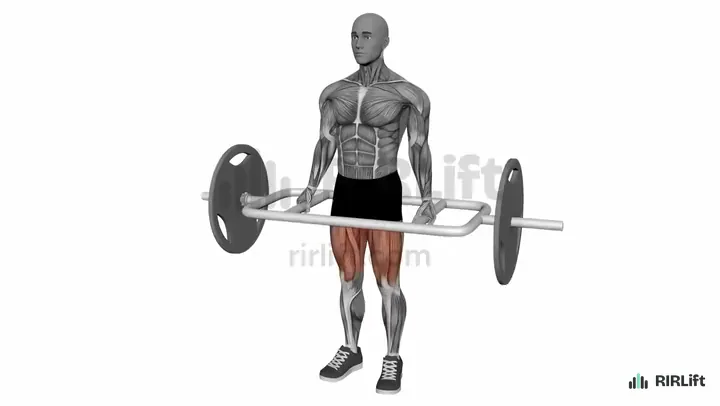
- Trap Bar Deadlift Quads, Glutes
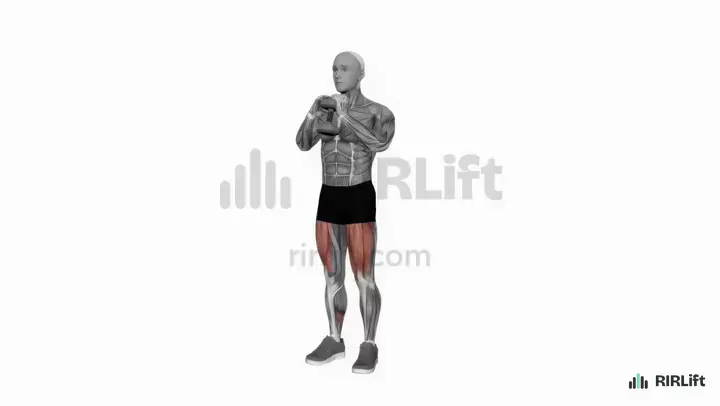
- Goblet Squat Quads, Glutes
- Walking Lunge Quads, Glutes
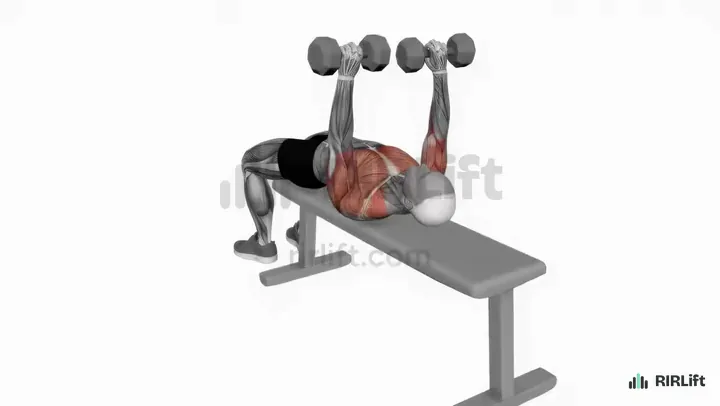
- Flat Dumbbell Press Chest
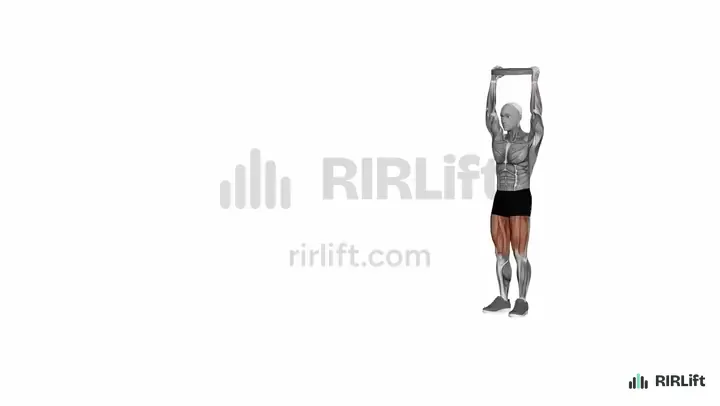
- Lat Pulldown Lats
- Kettlebell Swing Glutes, Hamstrings
- Farmer's Walk Forearms, Traps, Shoulders
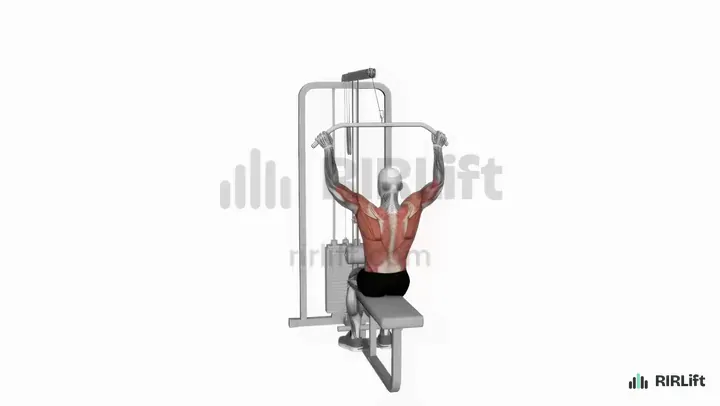
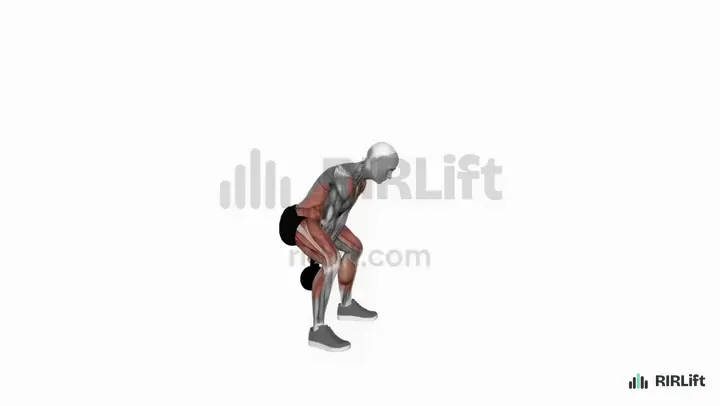
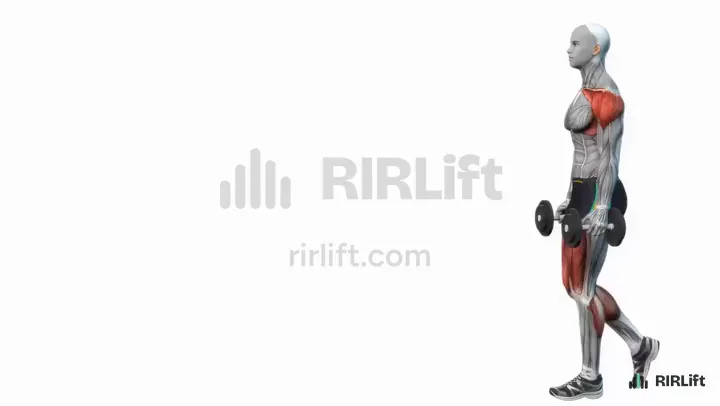
Put them together: example sessions
Each session below picks from the exercises above for one situation, with the sets, reps, rest and RIR filled in.
-
Session 1
Busy adult, two heavy sessions a week
You have about two hours a week for the gym and want the training that does the most for your muscle, and so your metabolism, in that time.
2× a week · 28 sets a week · ~40 min
-
Session 2
Metabolic circuits at home, three days
You train at home with a kettlebell and a pair of dumbbells and want sessions that build muscle and work your heart and lungs at the same time.
3× a week · 36 sets a week · ~20 min
-
Session 3
Over 50 and keeping muscle
You are 50 or older, want to hold on to the muscle that age takes, and prefer supported lifts to heavy barbells.
3× a week · 39 sets a week · ~35 min
Session 1
Busy adult, two heavy sessions a week
- Workouts2× a week
- Working sets28 a week
- Per workout~40 min
- EquipmentTrap Bar, Dumbbells, Flat Bench, Lat Pulldown
You have about two hours a week for the gym and want the training that does the most for your muscle, and so your metabolism, in that time.
One full-body session done twice a week trains every major muscle with 3 hard sets per lift, about 6 per muscle weekly. That is a low dose, but taken close to failure it builds muscle in beginners and holds it later, in about 55 minutes.
| Exercise | Sets × reps | RIR | Rest |
|---|---|---|---|
| Trap Bar Deadlift2 warm-up sets first | 3 × 5–8 | 2 | 3 min |
| Flat Dumbbell Press | 3 × 8–12 | 2 | 2 min |
| Lat Pulldown | 3 × 8–12 | 1 | 90 s |
| Walking LungePer leg. | 3 × 8–12 | 2 | 90 s |
| Farmer's WalkSeconds of walking. | 2 × 30–45 | 2 | 90 s |
- How to run it
- Do it on two days at least two days apart, such as Monday and Thursday. Walk on as many other days as you can; daily movement adds more to your energy use than any single workout.
- How to progress
- Double progression: when every set reaches the top of the rep range with 2 reps in reserve, add 5 to 10 pounds to the deadlift or one dumbbell size elsewhere, and start back at the bottom of the range.
Session 2
Metabolic circuits at home, three days
- Workouts3× a week
- Working sets36 a week
- Per workout~20 min
- EquipmentKettlebells, Dumbbells
You train at home with a kettlebell and a pair of dumbbells and want sessions that build muscle and work your heart and lungs at the same time.
Circuits with short rest keep your heart rate up while each muscle still gets hard sets. Two alternating circuits of three moves, four rounds each, give 12 working sets in about 25 minutes, three days a week.
| Exercise | Sets × reps | RIR | Rest |
|---|---|---|---|
| A1 Kettlebell Swing1 warm-up set first | 4 × 15–20 | 2 | 30 s |
| A2 Push-Up | 4 × 8–15 | 2 | 30 s |
| A3 Goblet Squat | 4 × 10–15 | 2 | 90 s |
| Exercise | Sets × reps | RIR | Rest |
|---|---|---|---|
| A1 Kettlebell Thruster1 warm-up set first | 4 × 8–12 | 2 | 30 s |
| A2 Renegade RowPer arm. | 4 × 6–10 | 2 | 30 s |
| A3 Walking LungePer leg. | 4 × 8–12 | 2 | 90 s |
- How to run it
- Alternate Circuit A and B on Monday, Wednesday and Friday. Move from one exercise to the next with 30 seconds of rest and take 90 seconds after each round.
- How to progress
- Add reps within each range first. When every round reaches the top at 2 reps in reserve, move up a weight size. If you cannot, add a fifth round before shortening the rest.
Session 3
Over 50 and keeping muscle
- Workouts3× a week
- Working sets39 a week
- Per workout~35 min
- EquipmentLeg Press, Dumbbells, Flat Bench
You are 50 or older, want to hold on to the muscle that age takes, and prefer supported lifts to heavy barbells.
The leg press and a braced row keep the back supported, so you can push your legs and back hard. Three sessions a week of 13 working sets give the chest and back 9 hard sets weekly and the legs 15, enough to build muscle and keep it.
| Exercise | Sets × reps | RIR | Rest |
|---|---|---|---|
| Leg Press1 warm-up set first | 3 × 10–12 | 2 | 2:30 min |
| Flat Dumbbell Press | 3 × 10–12 | 2 | 2 min |
| One-Arm Dumbbell RowPer arm. | 3 × 10–12 | 2 | 90 s |
| Goblet SquatTo a bench if needed. | 2 × 10–12 | 2 | 90 s |
| Farmer's WalkSeconds of walking. | 2 × 30–40 | 2 | 90 s |
- How to run it
- Do it on Monday, Wednesday and Friday, or on two days if recovery is slow. Warm up 5 minutes on a bike and do one light set of the leg press.
- How to progress
- Stay at 2 reps in reserve on every set. When all sets reach the top of the range, add the smallest increase the machine or dumbbells allow. Expect slower jumps than younger lifters, and keep making them.
Make it fit you
-
While dieting
A calorie deficit is when muscle is most at risk. Keep the weights you lift as high as you can, even if you cut a set or two, because heavy loads are what tell your body to keep its muscle.
-
Afterburn in perspective
Hard circuits raise your energy use for a while after the session, but the extra is small. The lasting effect comes from the muscle you build and keep, so judge your training by your strength going up.
-
Steps count too
Walking, standing and moving around during the day make up a large part of the energy you burn. Lifting two or three times a week and staying active daily work better together than either alone.
-
Keep a record
Write down each set and how many reps you had left. RIRLift sets the next session's weights from that, so your loads keep climbing instead of drifting back to what feels comfortable.
Questions
Does muscle mass affect metabolism?
Yes. Muscle uses more energy at rest than fat, so more muscle means a somewhat higher resting burn. The bigger effect is avoiding the muscle loss that comes with dieting and aging, which would lower it.
What slows your metabolism down?
Losing muscle. Crash dieting without strength training, long stretches of sitting and poor sleep all make it easier to lose muscle and move less, which lowers the calories you burn each day.
What is the golden hour after exercise?
The idea that you must eat within an hour after training to get results. Getting enough protein across the day matters far more; a meal with protein within a few hours of lifting is fine.
What are some effective strength training programs?
Any program built on compound lifts with steadily increasing weight: two or three full-body days for beginners, or four upper/lower days for experienced lifters. The plans on this page are two- and three-day full-body examples.
How often should I lift weights to boost metabolism?
Two or three full-body sessions a week, each training the legs, a push and a pull. That is enough to build and keep muscle, which is what supports your metabolism over months and years.
Related templates
-
Strength training for body recomposition: build muscle while you lose fat
Building muscle and losing fat at the same time.
-
Strength training for weight loss: the lifts that keep muscle while the scale drops
Lifting plans set up for a calorie deficit.
-
Strength training for longevity: five movements, 30 to 60 minutes a week
Keeping muscle and strength into later decades.
-
Calories burned lifting weights calculator
Estimate what a session adds to your daily energy use.
-
Progressive overload workout plan
How to keep adding weight week after week.