Dumbbell upper back exercises: rows, rear delts and rotator cuff

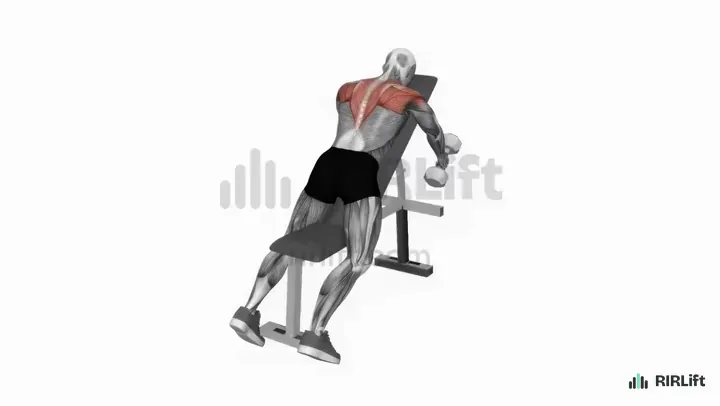
The best dumbbell upper back exercises are the incline (chest-supported) row and the bent-over row for thickness, the rear delt fly and rear delt row for the back of your shoulders, and the dumbbell face pull and external rotation for your mid traps and rotator cuff. To aim a row at the upper back rather than the lats, pull toward your lower chest with your elbows about 45 degrees out. One row plus one rear delt exercise per session covers it.

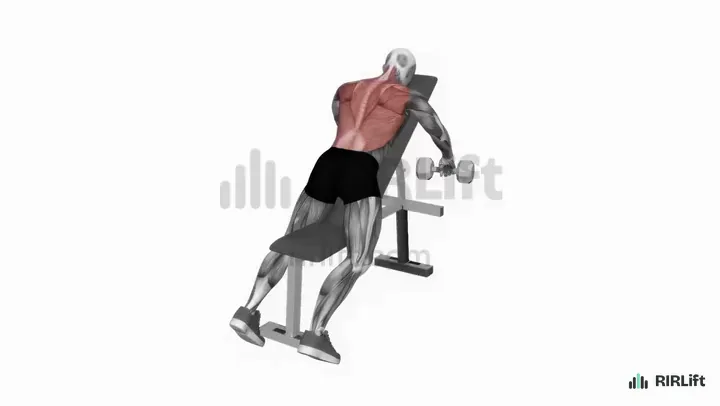
  1. Incline Dumbbell Row Upper Back, Lats
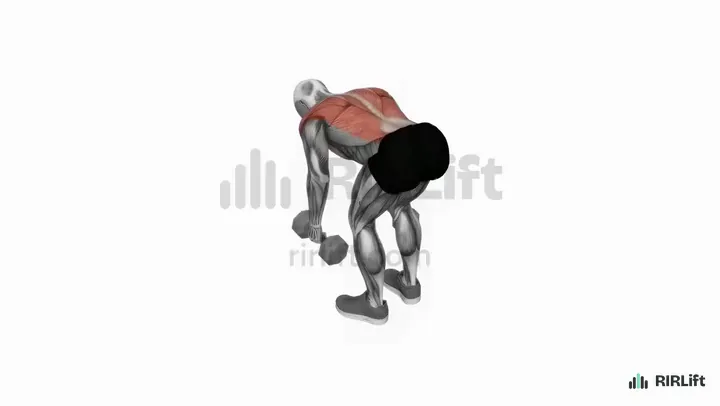
  2. Dumbbell Bent-Over Row Upper Back, Lats
  3. Dumbbell Rear Delt Fly Shoulders
  4. Dumbbell Face Pull Shoulders, Upper Back
  5. Dumbbell Rear Delt Row Shoulders
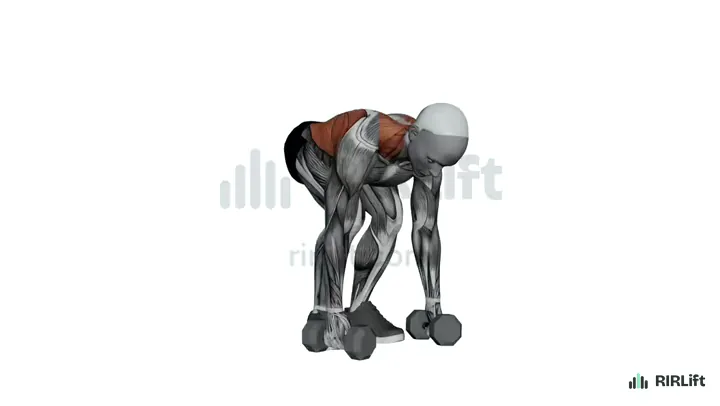
  6. Dumbbell Pendlay Row Lats, Upper Back
  7. Incline Dumbbell Rear Delt Raise Shoulders
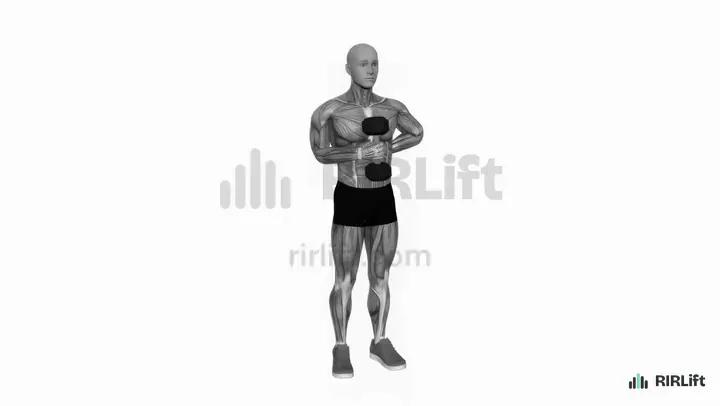
  8. Dumbbell External Rotation Shoulders
Dumbbell rows for the upper back

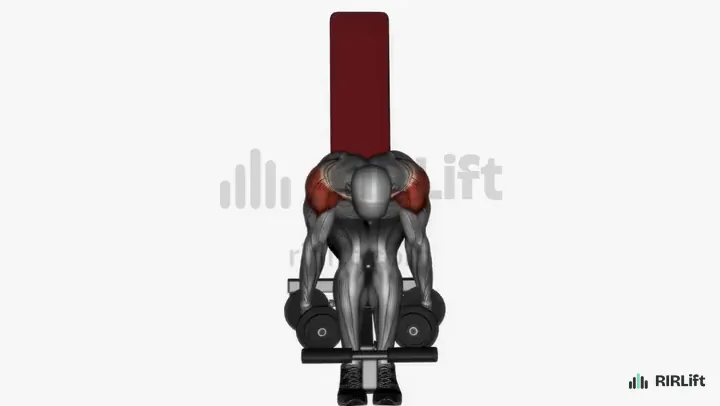
Rows build the thickness between and around your shoulder blades. For upper back work, pull toward your lower chest with your elbows about 45 degrees from your body; tuck them to your hips and the lats take over. The incline row is the best of these if you own a bench, and the bent-over row is the best without one.

Mid back and rhomboids, chest-supported row

Incline Dumbbell Row

Upper Back, Lats

Lying face down on an incline bench takes your lower back and legs out of the row completely, so the muscles between your shoulder blades are the only thing that can quit. Flare your elbows a little and row toward your lower chest to aim it at the upper back.

How to do it

  1. Set a bench to a low incline and lie face down with your chest on the pad and your toes on the floor.
  2. Let the dumbbells hang straight down, palms facing back or toward each other.
  3. Row with your elbows angled about 45 degrees out from your body, pinching your shoulder blades toward each other as you finish.
  4. Lower until your arms are straight and your shoulder blades spread apart.

Cues

  • Chest glued to the pad
  • Squeeze the blades together
  • Spread them at the bottom

Common mistakes

  • Lifting your chest off the bench to finish the rep: that is momentum; stay on the pad and lighten up.
  • Shrugging toward your ears: pull your shoulders back, not up.

Swap for: Dumbbell Bent-Over Row, Dumbbell Pendlay Row, Dumbbell Rear Delt Row

Upper back and lats, two-arm row with no bench

Dumbbell Bent-Over Row

Upper Back, Lats

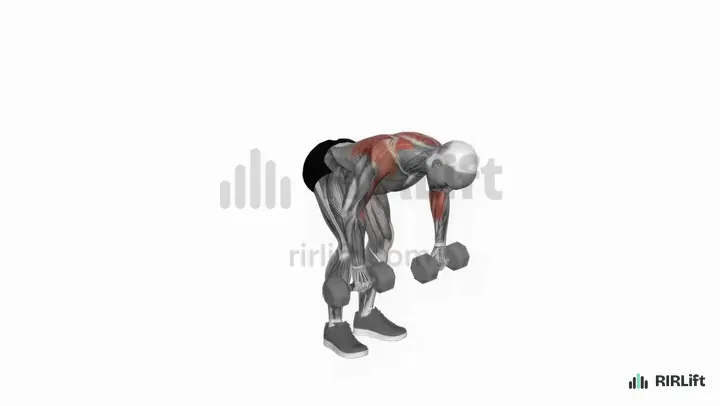
No bench, no problem: hinging forward and rowing both dumbbells covers the same muscles as the chest-supported row. For the upper back, let your elbows travel a little wider and pull toward the bottom of your ribcage.

How to do it

  1. Stand with the dumbbells in front of your thighs, bend your knees slightly and hinge until your torso is close to flat.
  2. Brace your midsection so your back stays still for the whole set.
  3. Row both dumbbells to the bottom of your ribs, elbows slightly away from your sides.
  4. Pause a beat with your shoulder blades pinched, then lower.

Cues

  • Flat back, still torso
  • Pinch, then lower
  • Elbows a hand's width out

Common mistakes

  • Bobbing your torso up and down: if your chest rises to finish the rep, the weight is too heavy.
  • Letting the shoulders roll forward at the top: finish with your chest open.

Swap for: Incline Dumbbell Row, Dumbbell Pendlay Row, One-Arm Dumbbell Row

Upper back, explosive row from a dead stop

Dumbbell Pendlay Row

Lats, Upper Back

Each rep starts with the dumbbells resting on the floor, so you cannot bounce out of the bottom. That forces a hard start from your mid back and traps, and the pause gives your lower back a short break between reps.

How to do it

  1. Set the dumbbells on the floor and hinge over them until your back is parallel with the floor.
  2. Grab them with straight arms, brace and keep your hips high.
  3. Pull both dumbbells fast to your lower chest, elbows out at roughly 45 degrees.
  4. Lower them back to the floor, let them settle for a moment, then go again.

Cues

  • Dead stop every rep
  • Fast up, controlled down
  • Back stays flat

Common mistakes

  • Standing up as you pull: keep your back angle fixed and let the arms and shoulder blades do the work.
  • Dropping the dumbbells to the floor: set them down quietly so each rep starts from tension.

Swap for: Dumbbell Bent-Over Row, Incline Dumbbell Row, Renegade Row

Lats and mid back, braced single-arm row

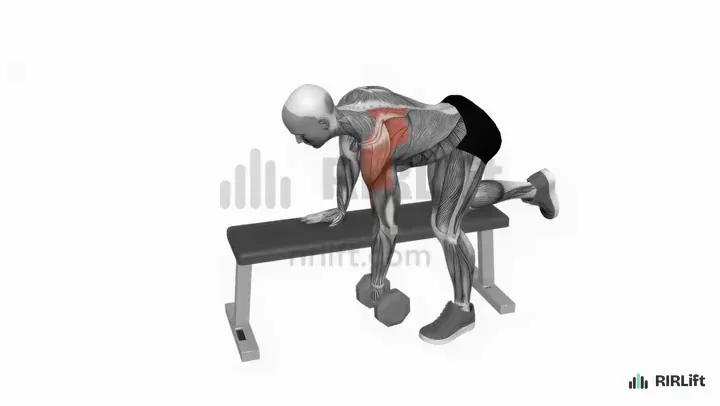
One-Arm Dumbbell Row

Lats, Upper Back

The braced one-arm row lets you handle the heaviest dumbbell of any row here. It is mainly a lat exercise, but if you pull toward your lower chest with the elbow slightly wider, your mid back takes a bigger share.

How to do it

  1. Brace one hand and the same-side knee on a bench, or one hand on a sturdy chair.
  2. Let the working arm hang long with the dumbbell under your shoulder.
  3. Row until your elbow passes your torso, finishing with the shoulder blade pulled toward your spine.
  4. Lower until the arm hangs straight and the shoulder blade glides forward.

Cues

  • Finish with the blade back
  • Long arm at the bottom
  • No twisting

Common mistakes

  • Rotating your chest toward the ceiling: keep your shoulders level and choose a lighter dumbbell.
  • Pulling only with the arm: start each rep by moving the shoulder blade, then bend the elbow.

Swap for: Dumbbell Lawnmower Row, Incline Dumbbell Row, Renegade Row

Upper back and core, row from a plank

Renegade Row

Lats, Upper Back

Rowing from a push-up position means your core has to stop your hips from rotating while your upper back pulls. You will use lighter dumbbells than any other row here, so treat it as a second row, not your main one.

How to do it

  1. Get into a high plank with your hands on two dumbbells and your feet set wider than your hips.
  2. Shift your weight onto one hand without letting your hips drop or turn.
  3. Row the other dumbbell to your ribs, then set it back down with control.
  4. Alternate sides, keeping your hips level the whole time.

Cues

  • Hips stay level
  • Wide feet
  • Set it down softly

Common mistakes

  • Twisting your hips toward the ceiling as you row: widen your stance and use lighter dumbbells.
  • Rushing from side to side: make each row slow enough that the plank never wobbles.

Swap for: One-Arm Dumbbell Row, Dumbbell Bent-Over Row, Dumbbell Pendlay Row

Dumbbell exercises for rear delts and mid traps

Flies, wide rows and face pulls move your arm out to the side instead of down to your hip, which trains the rear delts and the middle of your traps. These muscles respond to light weights and higher reps, so choose dumbbells you can control for 12 to 20 reps.

Rear delts and rhomboids, seated bent-over fly

Dumbbell Rear Delt Fly

Shoulders

Sitting on the end of a bench and folding forward lets you fly the dumbbells wide with your legs and lower back out of it. The rear delts do the lifting, and the squeeze at the top trains the muscles between your shoulder blades.

How to do it

  1. Perch at the end of a bench or chair with your feet together and lean your chest toward your knees.
  2. Hold light dumbbells under your legs, palms in and elbows softly bent.
  3. Lift your arms wide until they reach shoulder height.
  4. Lower slowly back under your legs.

Cues

  • Lead with your elbows
  • Arms out, not back
  • Light and slow

Common mistakes

  • Swinging heavy dumbbells with bent elbows: the movement becomes a row; keep the elbow angle fixed and go lighter.
  • Sitting up as you lift: stay folded so the rear delts stay in line with the pull.

Swap for: Incline Dumbbell Rear Delt Raise, Dumbbell Face Pull, Dumbbell Rear Delt Row

Rear delts, chest-supported fly

Incline Dumbbell Rear Delt Raise

Shoulders

Lying face down on an incline takes all momentum away from the rear delt fly. It is the strictest way to train the back of your shoulders with dumbbells, which is why such light weights feel heavy here.

How to do it

  1. Lie face down on an incline bench with a light dumbbell in each hand hanging below you.
  2. Turn your thumbs slightly toward each other and soften your elbows.
  3. Sweep your arms wide until they reach shoulder height.
  4. Lower under control without letting the dumbbells touch.

Cues

  • Thumbs a little down
  • Wide arc
  • No chest lift

Common mistakes

  • Squeezing your shoulder blades hard at the top: a little movement is fine, but the rear delts should do most of the lifting.
  • Picking dumbbells you can only move with a jerk: start with the lightest pair you own.

Swap for: Dumbbell Rear Delt Fly, Dumbbell Rear Delt Row, Dumbbell Face Pull

Rear delts and upper back, wide-elbow one-arm row

Dumbbell Rear Delt Row

Shoulders

This is a one-arm row with the elbow pointed away from your body and the dumbbell pulled toward your upper chest. That path moves the work from your lats to the rear delts and upper back, and you can load it heavier than a fly.

How to do it

  1. Brace one knee and one hand on a bench, with your torso flat.
  2. Hold the dumbbell with your palm facing your feet and the arm hanging straight.
  3. Pull your elbow straight out to the side and up until your upper arm is level with your back.
  4. Lower slowly to a straight arm.

Cues

  • Elbow out wide
  • Pull toward your shoulder
  • Palm faces back

Common mistakes

  • Tucking the elbow into your side: that turns it into a lat row; keep the arm out at roughly 90 degrees to your body.
  • Rotating your torso to get higher: stop where your upper arm is level with your back.

Swap for: Dumbbell Face Pull, Incline Dumbbell Rear Delt Raise, Dumbbell Rear Delt Fly

Rear delts and rotator cuff, bent-over face pull

Dumbbell Face Pull

Shoulders, Upper Back

The cable face pull has a dumbbell version: bent over, you row the dumbbells high and wide and then rotate your forearms up. It trains the rear delts, mid traps and the small external rotators in one movement.

How to do it

  1. Hinge forward with light dumbbells hanging under your shoulders, palms facing your legs.
  2. Pull the dumbbells up and out, with elbows wide, until your upper arms are level with your shoulders.
  3. At the top, rotate your forearms so the dumbbells point forward, as if making a goalpost with your arms.
  4. Reverse the rotation, then lower.

Cues

  • Row wide, then rotate
  • Make a goalpost
  • Keep it light

Common mistakes

  • Skipping the rotation: the turn at the top is what sets it apart from a rear delt row.
  • Using dumbbells heavy enough to force a swing: this works with 5 to 15 pounds for most people.

Swap for: Dumbbell Rear Delt Row, Dumbbell Rear Delt Fly, Dumbbell External Rotation

Dumbbell exercises for the rotator cuff

Two small exercises for the muscles that rotate your arm outward. They do not add much size, but they round out an upper back session and make a good warm-up before heavy rows and presses.

Rotator cuff, standing external rotation

Dumbbell External Rotation

Shoulders
Your rotator cuff steadies the shoulder in every row and press. Turning the arm outward against a small dumbbell trains the muscles that pull it back, and it fits as a warm-up or a finisher.

How to do it

  1. Stand holding a light dumbbell with your elbow bent to 90 degrees and tucked against your side.
  2. Keep the elbow pinned there throughout; a rolled towel under it helps.
  3. Rotate your forearm outward, away from your belly, as far as it goes without the elbow leaving your side.
  4. Return slowly to the start.

Cues

  • Elbow pinned
  • Turn, do not lift
  • Small weight, full turn

Common mistakes

  • Letting the elbow drift away from your side: the shoulder takes over; keep it touching your ribs.
  • Going heavy: a cuff exercise works with the lightest dumbbell you own.

Swap for: Dumbbell Lying External Rotation, Dumbbell Face Pull, Dumbbell Rear Delt Row

Rotator cuff, side-lying external rotation

Dumbbell Lying External Rotation

Shoulders

Lying on your side means gravity resists the rotation over the whole range, unlike the standing version where the load is lightest at the end. It is the strictest cuff exercise you can do with one dumbbell.

How to do it

  1. Lie on your side with your bottom arm supporting your head and your top elbow bent 90 degrees on your hip.
  2. Hold a light dumbbell in the top hand, forearm across your belly.
  3. Rotate the forearm up toward the ceiling, keeping your elbow on your hip.
  4. Lower slowly back across your belly.

Cues

  • Elbow stays on the hip
  • Slow both ways
  • Stop before the shoulder rolls back

Common mistakes

  • Rolling your whole body back to lift higher: stay stacked on your side.
  • Rushing the lowering: take two to three seconds down.

Swap for: Dumbbell External Rotation, Dumbbell Face Pull, Incline Dumbbell Rear Delt Raise

Put them together: example sessions

Each session below picks from the exercises above for one situation, with the sets, reps, rest and RIR filled in. Open one in the session builder to change a pick, price it from a recent set, and add it to RIRLift.

Session 1

Adjustable dumbbells and an incline bench

Open in the session builder
  • Workouts2× a week
  • Working sets22 a week
  • Per workout~25 min
  • EquipmentDumbbells, Incline Bench

You have adjustable or a full rack of dumbbells and a bench that inclines.

With a bench, every main exercise can be chest-supported, so the upper back fails before your lower back does. Each session pairs one heavy row with a rear delt movement and finishes with a cuff exercise. The rows stop at 1 RIR, the flies and face pulls at 0 to 1 because light isolation sets are safe to push, and the cuff work at 2 to keep it strict. That is 11 sets a session.

Upper Back A
ExerciseSets × repsRIRRest
Incline Dumbbell RowElbows 45 degrees. Pause at the top. 4 × 8–12 1 2 min
Incline Dumbbell Rear Delt Raise 3 × 12–20 0 1 min
Dumbbell Rear Delt RowPer arm. 2 × 10–15 1 1 min
Dumbbell Lying External RotationPer arm. 2 × 12–15 2 45 s

Open Upper Back A in the session builder

Upper Back B
ExerciseSets × repsRIRRest
Dumbbell Pendlay RowDead stop each rep. 4 × 6–10 1 2 min
One-Arm Dumbbell RowPer arm. Pull to lower chest. 3 × 8–12 1 90 s
Dumbbell Face Pull 2 × 12–20 0 1 min
Dumbbell External RotationPer arm. 2 × 12–15 2 45 s

Open Upper Back B in the session builder

How to run it
Run Upper Back A and Upper Back B once each per week, on their own or after your other upper body work.
How to progress
When every set of a row hits the top of its range at the listed RIR, go up one dumbbell step. On flies and face pulls, add reps up to 20 before adding weight.

Session 2

One light pair (10 to 20 pounds), no bench

Open in the session builder
  • Workouts2× a week
  • Working sets20 a week
  • Per workout~20 min
  • EquipmentDumbbells

You own one pair of light dumbbells and a chair, and that is it.

Light dumbbells still build the upper back when sets go close to failure, so reps run high and most sets end 0 to 1 RIR. The bent-over row and renegade row replace the bench rows, the seated rear delt fly uses a chair, and the face pull covers the mid traps and cuff together. Ten sets per session, done twice a week.

Upper Back
ExerciseSets × repsRIRRest
Dumbbell Bent-Over RowPause 1 s with the blades pinched. 4 × 12–25 1 90 s
Renegade RowPer arm. 2 × 8–12 1 1 min
Dumbbell Rear Delt FlySeated on a chair. 2 × 15–25 0 1 min
Dumbbell Face Pull 2 × 15–25 0 1 min
How to run it
Do the session twice a week with at least a day between. If 25 reps feels easy on the rows, switch to one arm at a time with both dumbbells in one hand.
How to progress
Add reps first. When a set passes the top of its range, lower over three seconds and pause one second at the top of every rep before you think about heavier dumbbells.

Session 3

Short add-on to sessions you already do

Open in the session builder
  • Workouts3× a week
  • Working sets15 a week
  • Per workout~10 min
  • EquipmentDumbbells

You already train, sit most of the day, and want more upper back work without a separate back day.

Three short add-ons a week give the upper back frequent practice without making any one session long. Each one has a single row and a single rear delt or cuff movement, both left 1 to 2 reps short of failure because they come after your main work. That totals 15 sets across the week.

Add-On A
ExerciseSets × repsRIRRest
One-Arm Dumbbell RowPer arm. Elbow slightly out. 3 × 10–15 1 1 min
Dumbbell Face Pull 2 × 12–20 1 45 s

Open Add-On A in the session builder

Add-On B
ExerciseSets × repsRIRRest
Dumbbell Rear Delt RowPer arm. 3 × 10–15 1 1 min
Dumbbell External RotationPer arm. 2 × 12–15 2 45 s

Open Add-On B in the session builder

Add-On C
ExerciseSets × repsRIRRest
Dumbbell Bent-Over Row 3 × 10–15 1 1 min
Dumbbell Rear Delt Fly 2 × 12–20 1 45 s

Open Add-On C in the session builder

How to run it
Add one block to the end of three sessions a week. It takes about 10 minutes.
How to progress
Each week, add a rep to one set of each exercise. Increase the dumbbell when every set reaches the top of the range.

Make it fit you

Questions

What are the top 5 exercises for the upper back?

With dumbbells: the incline row, the bent-over row, the rear delt fly, the rear delt row and the face pull. That covers a heavy row for thickness, two angles for the rear delts and one movement that adds the rotator cuff.

What are the top 3 back exercises with dumbbells?

For the upper back: the incline row (or bent-over row without a bench), the rear delt fly and the face pull. For the whole back, swap the face pull for a one-arm row aimed at your hip to add more lat work.

Can I build muscle with 5 kg dumbbells?

On rear delt flies, face pulls and cuff exercises, yes: 5 kg (about 11 pounds) is a normal working weight for them. On rows it runs out fast, so take sets to 0 to 1 reps in reserve, slow the lowering, and row one arm at a time with both dumbbells in one hand.

How do you do upper back with dumbbells?

Pick one row and one rear delt exercise, do 3 to 4 sets of each close to failure, and repeat twice a week. Pull rows toward your lower chest with elbows slightly out so the upper back does the work.

How often should I train my upper back?

Two to three times a week works well, since rear delt and mid back work recovers quickly. The add-on plan on this page spreads 15 sets over three short blocks.

Are shrugs an upper back exercise?

Shrugs train the upper traps, the part at the top of your shoulders. This page focuses on the mid back, rear delts and cuff; for shrugs and other trap work see the trap exercises page.